Listen to the podcast of this post by clicking on the player below, and you can also subscribe on Apple, Spotify, or Audible.
Pastors are called to be shepherd leaders. Karl Vaters points out that some pastors get caught up in “the green room syndrome” that disconnects them from their sheep.
Here is another clip from The Church Lobby Podcast where Karl and I talk about this.
The biblical passage I reference in this interview is John 10:1-16.
Check out other parts of my interview on The Church Lobby podcast here. Or check out the full conversation Karl and I had on The Church Lobby podcast here.
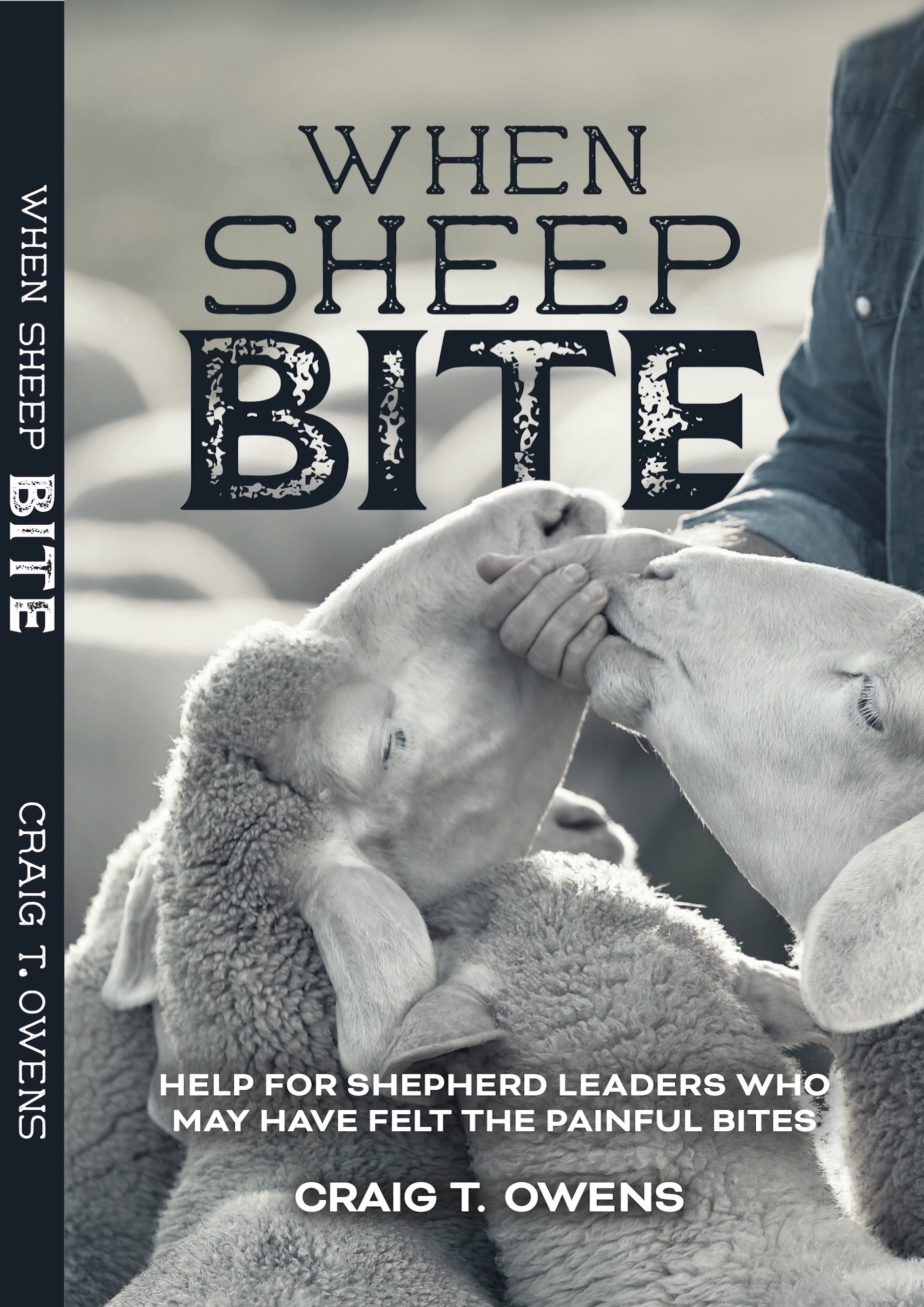
Get more information on Shepherd Leadershiphere. And pre-order my newest book When Sheep Bitehere.
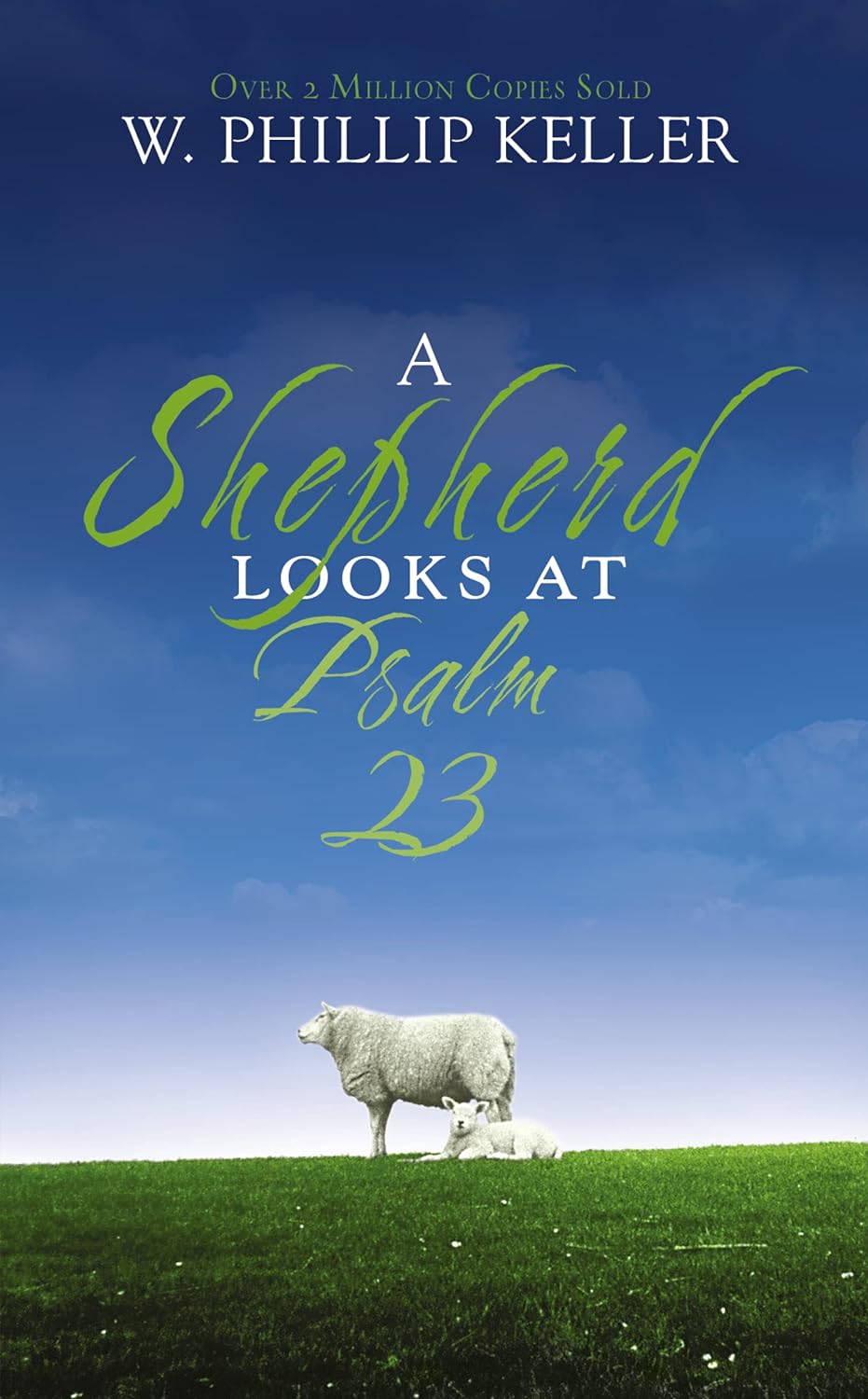
After I wrote the best-selling book Shepherd Leadership, I started naturally gravitating toward anything shepherd related. A Shepherd Looks at Psalm 23 was the perfect fit for me! But I think anyone will enjoy these beautiful insights on Psalm 23. Check out my full book review here.
Here are some quotes that especially caught my eye—
“Sheep do not ‘just take care of themselves’ as some might suppose. They require, more than any other class of livestock, endless attention and meticulous care. … From early dawn until late at night this utterly selfless Shepherd is alert to the welfare of His flock. … Above all, He is very jealous of His name and high reputation as the Good Shepherd. He is the Owner who delights in His flock. For Him there is no greater reward, no deeper satisfaction, than that of seeing His sheep contented, well fed, safe, and flourishing under His care. This is indeed His very ‘life.’ He gives all He has to it. He literally lays Himself out for those who are His. He will go to no end of trouble and labor to supply them with the finest grazing, the richest pasturage, ample winter feed, and clean water. He will spare Himself no pains to provide shelter from storms, protection from ruthless enemies and the diseases and parasites to which sheep are so susceptible.”
“A flock that is restless, discontented, always agitated and disturbed never does well. … When one startled sheep runs in fright, a dozen others will bolt with it in blind fear, not waiting to see what frightened them.”
“In the course of time I came to realize that nothing so quieted and reassured the sheep as to see me in the field. The presence of their master and owner and protector put them at ease as nothing else could do, and this applied day and night. … When my eyes are on my Master they are not on those around me. This is the place of peace.”
“Only those intimately acquainted with sheep and their habits understand the significance of a ‘cast’ sheep or a ‘cast down’ sheep. This is an old English shepherd’s term for a sheep that has turned over on its back and cannot get up again by itself.”
“Sheep are notorious creatures of habit. If left to themselves, they will follow the same trails until they become ruts; graze the same hills until they turn to desert wastes; pollute their own ground until it is corrupt with disease and parasites. … No other class of livestock requires more careful handling, more detail direction, than do sheep.”
My Patreon supporters had early access to these quotes, plus I have shared many more quotes from this book with these friends.
My newest book When Sheep Bite is releasing soon. You can pre-order a copy for yourself here.
Listen to the podcast of this post by clicking on the player below, and you can also subscribe on Apple, Spotify, or Audible.
Last week I shared a quote about this Kingdom Prayer from the YouVersion reading plan The Prayer That Turns The World Upside Down. Let me remind you of one phrase: “This prayer is dangerous, overturning the kingdom of the principalities and powers of this world.”
We live on Earth but we are citizens of the Kingdom of God. This prayer is a desire for that eternal Kingdom to be seen by Earthlings so that they will also obtain citizenship. So we saw last week that the phrase “Hallowed be Your name” is both an acknowledgement of God’s greatness and a request that we would display His greatness in our lives. The next phrase—Your Kingdom come (Matthew 6:10)—has that same two-part motivation: acknowledgment and request.
I wrote Shepherd Leadership to address the non-biblical practices in our churches that had taken on biblical weight. I think this is something that invades many Christian’s thinking about what “the Kingdom of God” actually is.
Here’s two things I know for sure: (1) Kingdom power ≠ political power, and (2) Kingdom power ≠ religious power.
A.W. Tozer wrote—
“In Christian circles today, the church that can show an impressive quantitative growth is frankly envied and imitated by other ambitious churches. Numbers, size and amounts seem to be very nearly all that matters…. The great goddess, Numbers, is worshiped with fervent devotion, and all things religious are brought before her for examination. Her Old Testament is the financial report, and her New Testament is the membership roll. To these she appeals as the test of spiritual growth and the proof of success or failure in most Christian endeavors. A little acquaintance with the Bible should show this up for the heresy it is.”
Jesus was clearly focused on His Father’s Kingdom. The phrase “Kingdom of God” is used over 50 times in the Gospels, and Jesus uses words like “Heaven,” “Hell,” and “eternal life” over 120 times.
In teaching us to pray, Jesus called us to focus on the eternal. We want people to see “Our Father in Heaven”—in all His hallowed majesty and glory—not merely in the ways we attempt to “Christianize” life on Earth.
Alan Redpath said, “Before we can pray, ‘Lord, Thy Kingdom come,’ we must be willing to pray, ‘My Kingdom go.’”
Jesus constantly taught like this, “The Kingdom of Heaven is like….” He said, “The coming of the Kingdom of God is not something that can be observed” (Luke 17:20). Or better stated: The Kingdom of God doesn’t arrive because I oversee something and announce it.
Peter summed up the ministry of Jesus like this, “How God anointed Jesus of Nazareth with the Holy Spirit and power, and how He went around doing good and healing all who were under the power of the devil, because God was with him” (Acts 10:38).
Jesus told us to live the same way—“When Jesus had called the Twelve together, He gave them power and authority to drive out all demons and to cure diseases, and He sent them out to proclaim the kingdom of God and to heal the sick” (Luke 9:2).
Our living Kingdom-focused is the answer to our prayer for God’s Kingdom to come.
For the kingdom of God is not a matter of talk but of power. (1 Corinthians 4:20)
We hallow God’s name and we make His Kingdom visible when we seek Him as our only priority. Both of these phrases are acknowledgments of His absolute sovereignty and our desire to be empowered to be anointed by the Holy Spirit to go around doing good and delivering all who are under the power of the devil.
I love this short verse from A.B. Simpson—
Help me to work and pray,
help me to live each day,
that all I do may say,
‘Thy kingdom come.’
Check out the other messages in our series Kingdom Prayingby clicking here.
Listen to the podcast of this post by clicking on the player below, and you can also subscribe on Apple, Spotify, or Audible.
Godly leaders are always striving to use their leadership power to serve others. What exactly does this look like? On a recent Craig And Greg Show episode, Greg and I discussed this important leadership tension.
Check out the full Craig And Greg Show episode here.
When I wrote my first book, my publisher asked me to write on “servant leadership,” but the more I dove into the topic, the more I kept coming back to Jesus as the ultimate example. But then I noticed that Jesus not only called Himself a shepherd, but many of the Old Testament prophecies foretelling His arrival also used shepherding terms. It was then that I pivoted to entitle my book Shepherd Leadership.
Ever since I immersed myself in the research for that book, I’ve been especially attentive to all things related to shepherding. In going through books from my Mom’s library, I stumbled upon A Shepherd Looks at Psalm 23 by Phillip Keller.
Oh my! I wish I would have discovered this amazing little book while I was writing my book! What a depth of insight I have gleaned from someone who looks after actual sheep!
As the title denotes, Keller uses the well-known Psalm 23 to give us so many eye-opening insights into our Good Shepherd. He goes phrase by phrase—“the Lord is my Shepherd,” “I shall not want,” “He makes me lie down in green pastures,” and so on—with each phrase adding a new level of intimacy with this One who cares for us so profoundly.
And as an added bonus for me, it was so sweet to see the highlights and notations my Mom had made as she read this book. This made A Shepherd Looks at Psalm 23 a double blessing for me.
(P.S. Check out some quotes I’ve shared from this book here.)
Are you looking for a Christmas gift for your pastor? Check out my book Shepherd Leadership. I have lots of new content every week, which you can check out on my YouTube channel.
“We rise no higher when we pull others down, yet when we stoop to serve, we conquer.” —Dick Brogden, in Proverbs: Amplified and Applied
“Truth is incontrovertible. Panic may resent it. Ignorance may deride it. Malice may distort it. But there it is.” —Winston Churchill
“Nothing is really work unless you would rather be doing something else.” —J.M. Barrie
“God has made His Word so precious that if I could not get another copy of it, I would not part with my Bible for all the world. There is life in the Word. There is power in it. I find Christ in it, and He is the One I need for spirit, soul, and body. It tells me of the power of His name and the power of His blood for cleansing.” —Smith Wigglesworth
“Christians can most directly affect the shape of our economy by practicing love for God and neighbor in all our transactions. Beyond that, we should make the most of every opportunity and means for influencing the shape of public policy so that honesty, fairness, justice, and love guide all the policies that bind us together as we the people.” —T.M. Moore
Christian apologist Sean McDowell goes head-to-head with ChatGPT—
Listen to the podcast of this post by clicking on the player below, and you can also subscribe on Apple, Spotify, or Audible.
Leaders earn some of their credibility when they lead through difficult or chaotic times. But it is also during these times that a leader can un-do all of the good things that he had already accomplished.
On a recent episode of The Craig And Greg Show, Greg Heeres and I discussed how leaders can learn to control their reaction. In this clip, I share one simple strategy that has been so helpful for my leadership growth.
This is just one example of the power of a leader’s storytelling. Check the full conversation Greg and I had on The Craig And Greg Show. I have lots of new content every week, which you can check out on my YouTube channel.
“We are all born ignorant, but one must work hard to remain stupid.” —Benjamin Franklin
George Jeffreys was born with a limiting speech impediment, but with the empowering of the Holy Spirit, George and his brother Stephen led incredible Pentecostal revivals in England and Wales. They were said to be the greatest evangelists since George Whitefield and John Wesley. Someone asked Jeffreys how long a revival should last, and he responded, “Thank God, a revival started in my heart 30 years ago, and it has never stopped; it will never end.” He continued by saying, “As long as Jesus is kept in the front, and made the center of fellowship and blessing and unity, the revival will never end.” Check out this mini biography about his life.
John Stonestreet uses the example of C.S. Lewis’ Aslan to talk about how God can speak to us through our pain. John writes, “Pain is never the point of God’s plans, any more than it is the purpose of physical exercise. Never pushing ourselves to the point that it hurts means never improving our health. On the other hand, seeking pain is more likely to do harm than to aid our wellbeing. In and of itself, pain is not good, but it is meaningful. Pain indicates that something is wrong and needs to be addressed.”
“The best way to make a dream come true is to wake up.” —Dame Anna Wintour
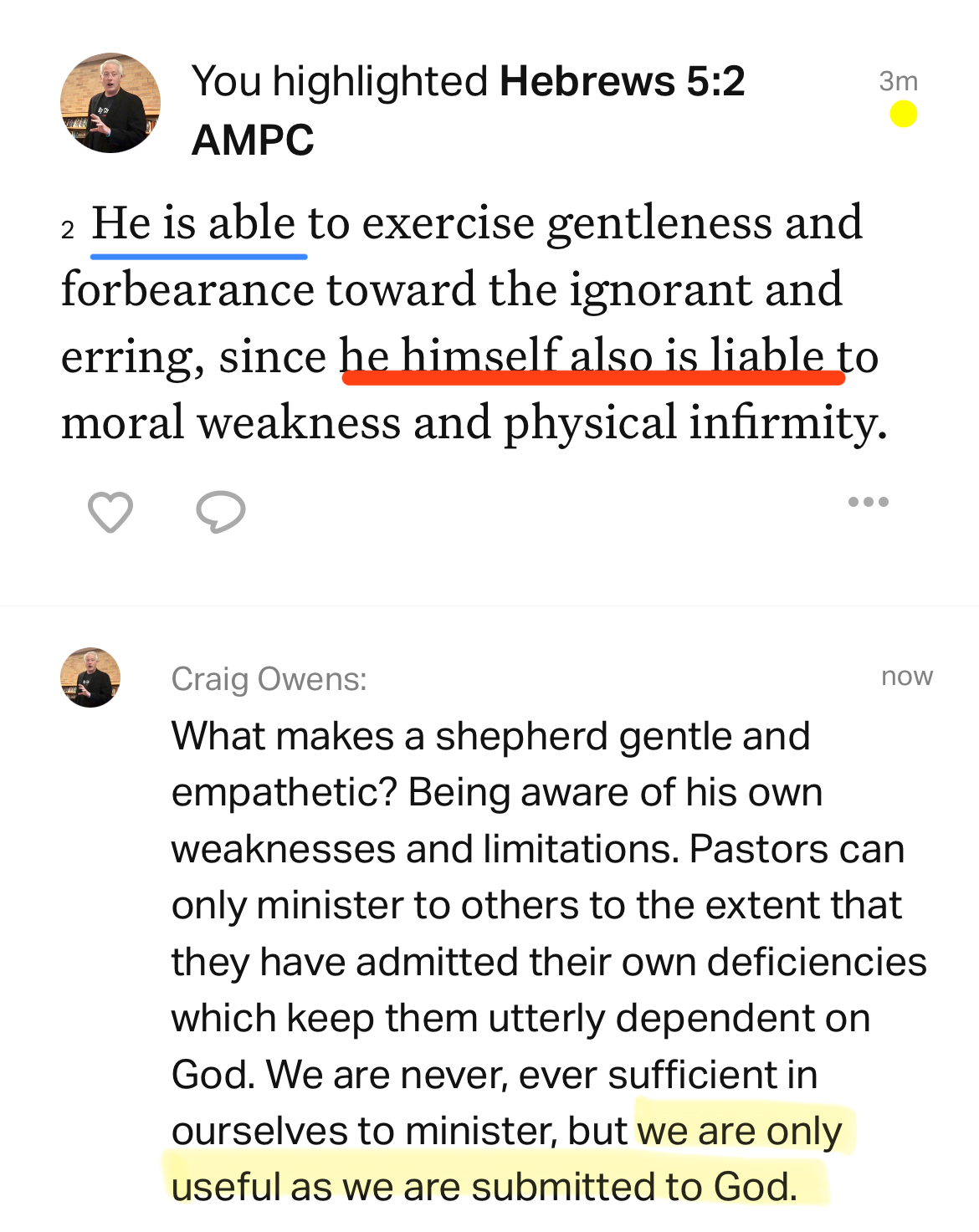
Because of the extensive prayer, research, and work I put into my book Shepherd Leadership, I am frequently drawn to passages of Scripture that reinforce the idea of pastors as shepherds. I was meditating on Hebrews 5:2 the other day, and I shared some of my thoughts with some of my pastor friends.
Listen to the podcast of this post by clicking on the player below, and you can also subscribe on Apple, Spotify, or Audible.
I think it is very instructive that Jesus began His three years of public ministry after thirty years of preparation, and that He began His daily ministry after an early-morning prayer session. If Jesus needed that kind of preparation time, what would make us think we could do with anything less?
Karl Vaters and I discussed Chapter 10 of my book Shepherd Leadership which is entitled “Can’t, Won’t, or Don’t” This chapter (and our conversation) covers the three main reasons leaders need to address to make sure they are being adequately prepared.
God made you uniquely YOU! You have been made on purpose and for a purpose. I have lots of new content every week, which you can check out on my YouTube channel.
“The wise recognize before the fight that adversity will come and therefore are not surprised by it. The wise recognize in the fight that adversity is a formidable foe and thus steel themselves for a long, hard struggle to the death. The wise recognize after winning a fight that the war is not over and so never let down their guard nor release their weapons.” —Dick Brogden, in Proverbs: Amplified and Applied
Astronomers have discovered planet-sized objects that are puzzling the best minds. In fact, they have had to create a new category for these objects: Jupiter Mass Binary Objects (JuMBOs). What is baffling the brightest minds is that these planets don’t orbit a star but appear to be gravitationally bound to other JuMBOs. My favorite line is this one: “The new phenomenon challenges current frameworks explaining how stars and planets form within nebula, with astrophysicists claiming such objects should not exist.” There is at least one who isn’t baffled: The One who created JuMBOs along with everything else in our universe.
T.M. Moore is in the midst of a series of posts about the Christian and the government. They are excellent! Here is just a short sample—“The Christian understands that government is a servant of God for good, and that God, therefore, must define the terms of goodness by which a government fulfills its appointed task. As Paul reminds us, the Law of God is holy and righteous and good (Romans 7:12). It is important, therefore, that Christians understand the Law of God and consider the best ways of bringing its influence to bear in the arena of public policy. … Public policy is not about what governments can do, but what they should do, that is, if they are to fulfill their callings as God’s servants for good. When it comes to applying the Law of God to public policy, Christians must make this first principle foundational in the logic with which they approach the work of influencing and shaping public policy.”
“The weak can never forgive. Forgiveness is an attribute of the strong.” —Mahatma Gandhi
Leaders are naturally wired to be either confident or humble. Both kinds of leaders need to remain coachable. Greg and I unpacked this idea on this episode of The Craig And Greg Show, and I also discuss it in greater depth in my book Shepherd Leadership.







 Craig T. Owens