Listen to the podcast of this post by clicking on the player below, and you can also subscribe on Apple, Spotify, or Audible.
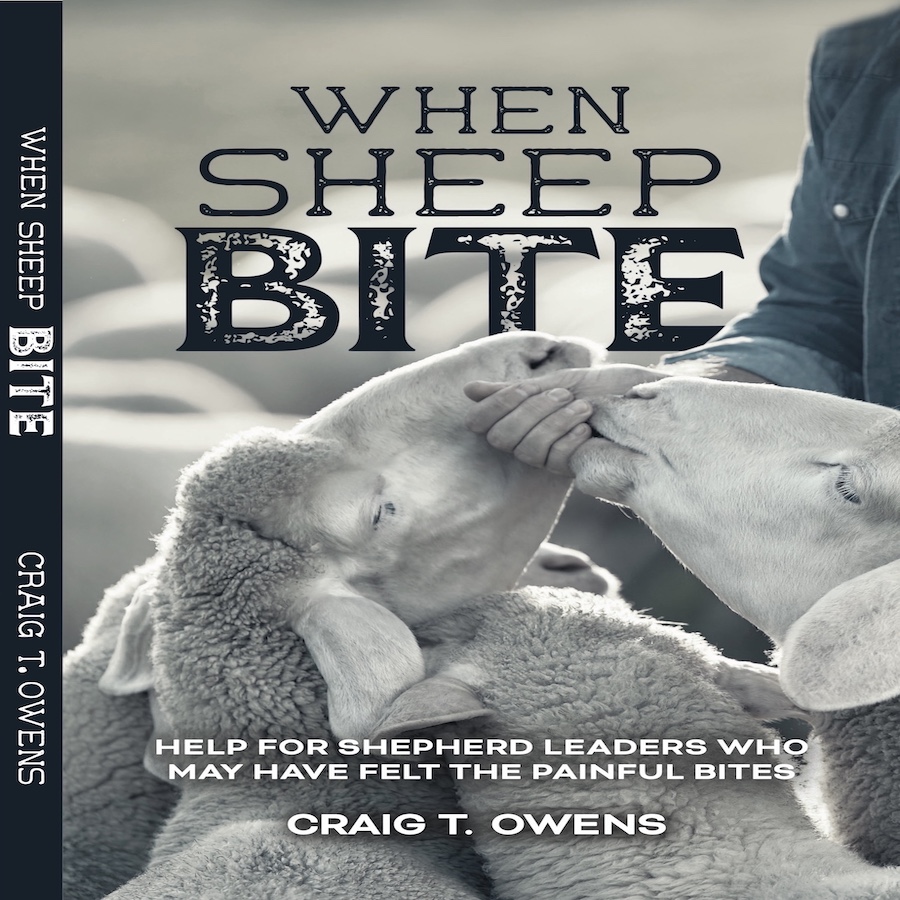
In my book When Sheep Bite, I not only wrote about biting sheep, but I also wrote about wolves dressed in sheep’s clothing, and wolves who aren’t trying to hide themselves at all! How are shepherd leaders to deal with these folks?
That was one of the topics I addressed on the Leading From Alignment podcast with John Opalewski and Jim Wiegand.
In the chapter of my book called ‘Driving Away the Wolves,’ I wrote:
Loving shepherds are constantly among their sheep so that the sheep can know their voice and so the shepherd can know the voice of each individual sheep. This has the two-fold benefit of the sheep knowing which voice is trustworthy, and for you as the shepherd to spot the off-key voice of the “meaningless talk and deception” of those wolves who are hiding out among the sheep.
Listen to the podcast of this post by clicking on the player below, and you can also subscribe on Apple, Spotify, or Audible.
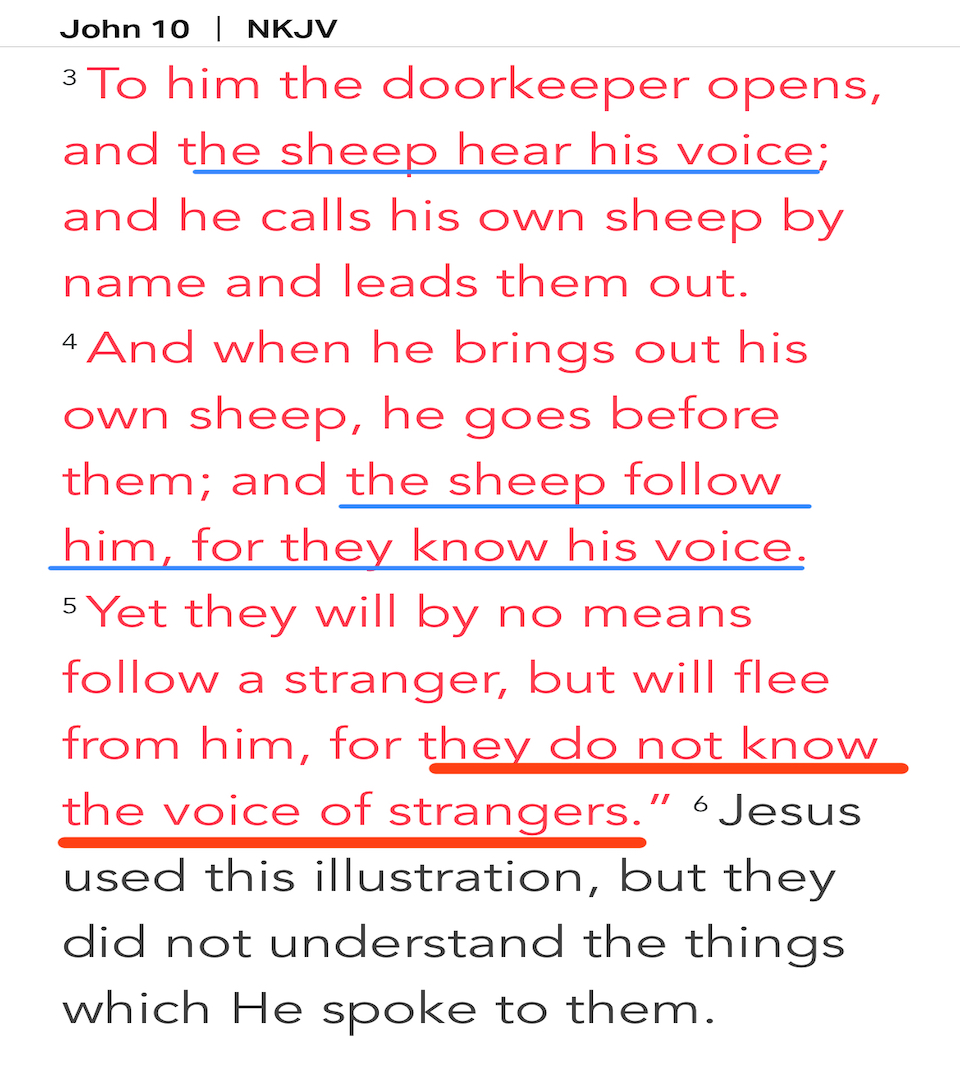
In John 10:1-18, Jesus calls Himself the Good Shepherd, and He refers to those who follow Him as His sheep.
Anyone who has ever seen a shepherd interact with his sheep knows that the sheep are listening for their shepherd’s voice to give them direction, but they will ignore or run away from a stranger’s voice.
This requires two-way communication. The shepherd must speak tenderly and convincingly, and the sheep must remain tuned in to their shepherd’s voice with an ear to follow.
This requires proximity. The shepherd cannot speak from a distance without raising his voice, and sheep will never be attracted to someone who yells at them.
This requires consistency. The shepherd needs to continually speak life-giving words, and the sheep need to consistently obey the shepherd’s words in order to reap the benefits.
This requires discernment. The sheep have to be able to know the difference between their shepherd’s voice and a stranger’s voice. The shepherd needs to speak “words of eternal life” (see John 6:68-69).
This requires patience. A shepherd’s directions really “get through” the first time, so the message needs to be patiently, lovingly, and creatively repeated.
This requires abiding. The shepherd needs to show himself trustworthy, and the sheep need to show themselves faithful in their abiding with their shepherd.
Jesus is the good and perfect Shepherd. There is no one else to whom I should be trusting, abiding with, listening to, and obeying.
The Good Shepherd will call some of His sheep to serve as His under-shepherds for other sheep. Those under-shepherds bring the Good Shepherd glory by shepherding just as Jesus models for them.
When shepherds and sheep remain in constant communication, there is a vitality and maturity that is readily apparent. And when the communication breaks down, the health of the sheep quickly deteriorates.
If you have been called to be an under-shepherd, please check out my books Shepherd Leadership and When Sheep Bite that will give you practical, biblical guidelines for you to thrive in this beautiful ministry.
Listen to the podcast of this post by clicking on the player below, and you can also subscribe on Apple, Spotify, or Audible.
There are some know-it-alls who want to tell pastoral leaders how they should have done things differently. Much like the “armchair quarterbacks” that seem to know all the right calls a team should make, even though they have virtually no experience.
Pastor, pay very little attention to those armchair quarterbacks that would speak into your life!
To put the quote that Jim shared from When Sheep Bite into context, here is the full passage—
Jesus is our perfect example of a Shepherd Leader. His example was to lay it all on the line, regardless of how the sheep were behaving or misbehaving: “I am the Good Shepherd. The Good Shepherd lays down His life for the sheep” (John 10:11). By contrast, Jesus warns us that those who are not willing to put their lives on the line for the sheep are worse than armchair pastors—Jesus calls them mere hired hands: “The hired hand is not the shepherd and does not own the sheep. So when he sees the wolf coming, he abandons the sheep and runs away. Then the wolf attacks the flock and scatters it. The man runs away because he is a hired hand and cares nothing for the sheep” (John 10:12-13).
If I am called to be a shepherd leader, attacks will come from both sheep and wolves. It’s what I do in those hard times that shows whether I am truly called or merely acting as an armchair shepherd.
A.W. Tozer said, “There’s an awesomeness about God which is missing in our day altogether; there’s little sense of admiring awe in the Church of Christ these days.” May we repent of little prayers and boldly pray to an awesome God who wants to do awesome things that will bring Him glory!
I have lots of new content every week, which you can check out on my YouTube channel.
This is a very informative Q&A session with cold case detective and Christian apologist J. Warner Wallace. But I especially like his answer to the first question: Do Christians have to investigate every other religion to be convinced that the Bible is true?
“Faith untried may be true faith, but it is sure to be little faith, and it is likely to remain dwarfish so long as it is without trials. Faith never prospers so well as when all things are against her: tempests are her trainers, and lightnings are her illuminators. … No flowers wear so lovely a blue as those which grow at the foot of the frozen glacier; no stars gleam so brightly as those which glisten in the polar sky; no water tastes so sweet as that which springs amid the desert sand; and no faith is so precious as that which lives and triumphs in adversity. … Faith increases in solidity, assurance, and intensity, the more it is exercised with tribulation. Faith is precious, and its trial is precious too.” —Charles Spurgeon
“Mature Christians can be recognized by a variety of indicators. They feast on the Word of God (Hebrews 5:14), persevere in love and good works (Hebrews 6:9-10), bear the fruit of the Spirit rather than the marks of the flesh (Galatians 6:16-23), use their gifts to help build the church (1 Corinthians 12:7-11; Ephesians 4:12-16), teach the things of Jesus to others (Hebrews 5:12: Acts 1:8), and more. This, the New Testament insists, is the condition toward which every Christian strives.” —T.M. Moore (check out all of the Scriptures T.M. references here)
“Now is the accepted time, not tomorrow, not some more convenient season. It is today that our best work can be done.” —W.E.B. Du Bois
Jesus shows us that only secure people can serve others. Insecure people won’t ever make themselves vulnerable, and so they miss out on God’s blessing. I address this in more depth in my book Shepherd Leadership.
No one wants what the gloomy person has. Joy is a Christian’s testimony—it’s what attracts others to Jesus! Check out this full message from my series on the Songs of Ascent.
I have lots of new content every week, which you can check out on my YouTube channel.
“At first glance, people may not see how these different forms of sexual violence connect to each other. But, in fact, experts are increasingly recognizing that they may all stem from one common source—sexual objectification. Sexual objectification occurs when people perceive others as sex objects rather than complex human beings deserving of dignity and respect.” Pornography is a major contributor to the sexual objectification which leads to sexual violence.
Dr. Brian Thomas describes why fossils are found where they are and why land animals may even be found near marine animals: “This fossil discovery [a bone from a South American megaraptor found near Cape Otway, Australia] fits well with a biblical history, which goes something like this: Around 2348 BC, a worldwide flood crushed and reshaped the earth’s surface, breaking up a single landmass (Pangaea) into continents and fossilizing countless living things. Prior to the Flood megaraptors roamed Pangaea, during the Flood they were fossilized, and in the late Flood stages the boundaries of new continents (along with their fossils) were roughly shaped. Unlike the standard story, the outlines of this history have been testified to by reliable eyewitnesses, and this testimony has been faithfully preserved in Genesis.”
“The more we let God take over us, the more truly ourselves we become—because He made us.” —C.S. Lewis
J. Warner Wallace shares two trends in American society that are contributing to the decline of religious adherence in America.
“There is no way around hard work. Embrace it.” —Roger Federer
Shame on my thoughts, how they stray from me!
During the Psalms, they wander on a path that is not right; they run, they distract…
One moment they follow the ways of loveliness, and the next the ways of riotous shame…
Swiftly they leap in one bound from earth to heaven…
O beloved Christ… may the grace of the sevenfold Spirit come to keep them in check!
Rule this heart of mine, O swift God of the elements, that You may be my love, and I may do Your will! —Anonymous, On the Flightiness of Thought, Irish, 8th-9th century
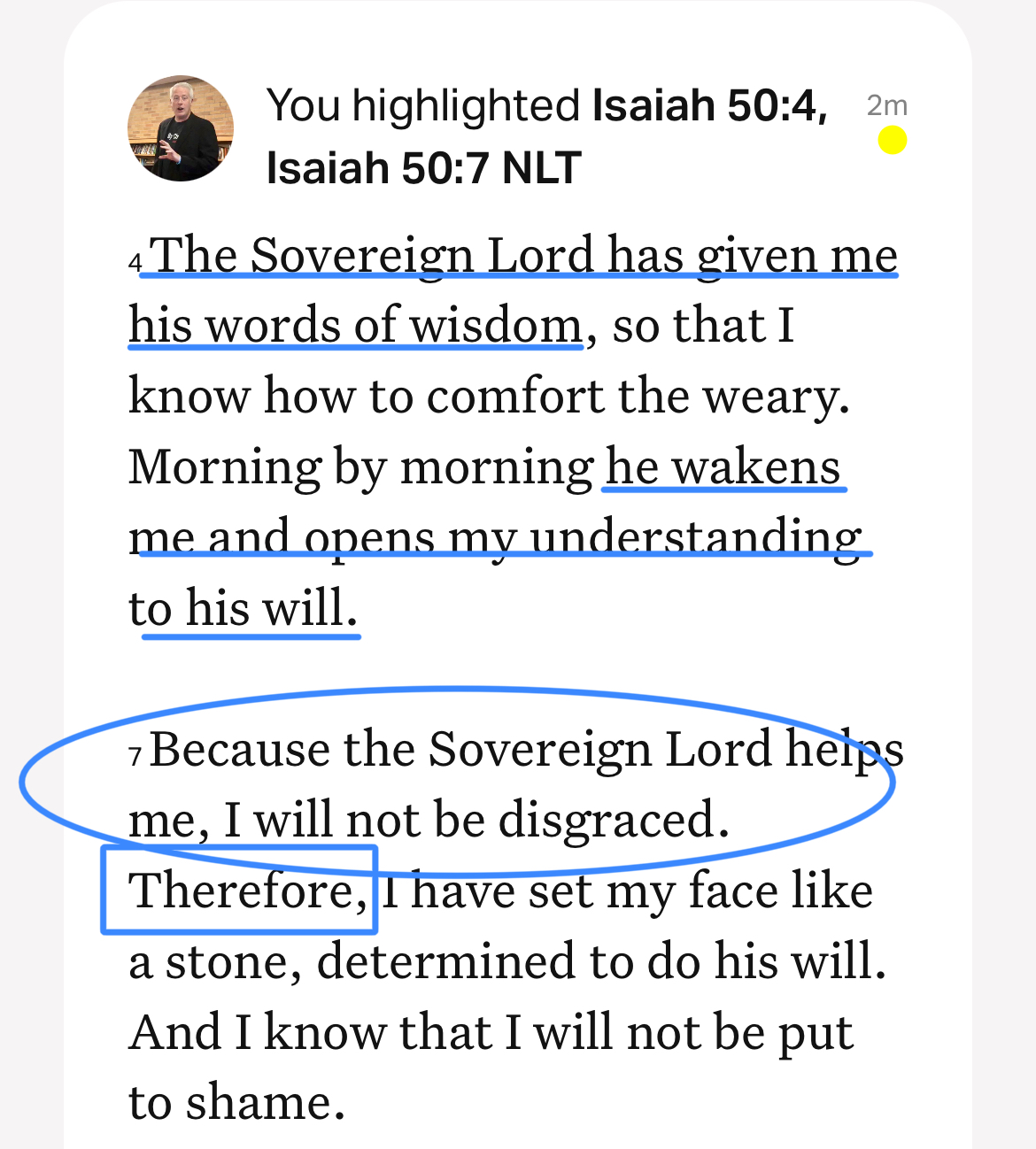
The Sovereign Lord has given me His words of wisdom, so that I know how to comfort the weary. Morning by morning He wakens me and opens my understanding to His will. … Because the Sovereign Lord helps me, I will not be disgraced. Therefore, I have set my face like a stone, determined to do His will. And I know that I will not be put to shame. (Isaiah 50:4, 7 NLT)
Listen to the podcast of this post by clicking on the player below, and you can also subscribe on Apple, Spotify, or Audible.
Karl Vaters and I share the same passionate belief that pastors—shepherd leaders—need to be in the pastures where God has placed them, faithfully caring for the sheep under their care.
Check out this clip from my interview on The Church Lobby—
In my book Shepherd Leadership, I wrote this—
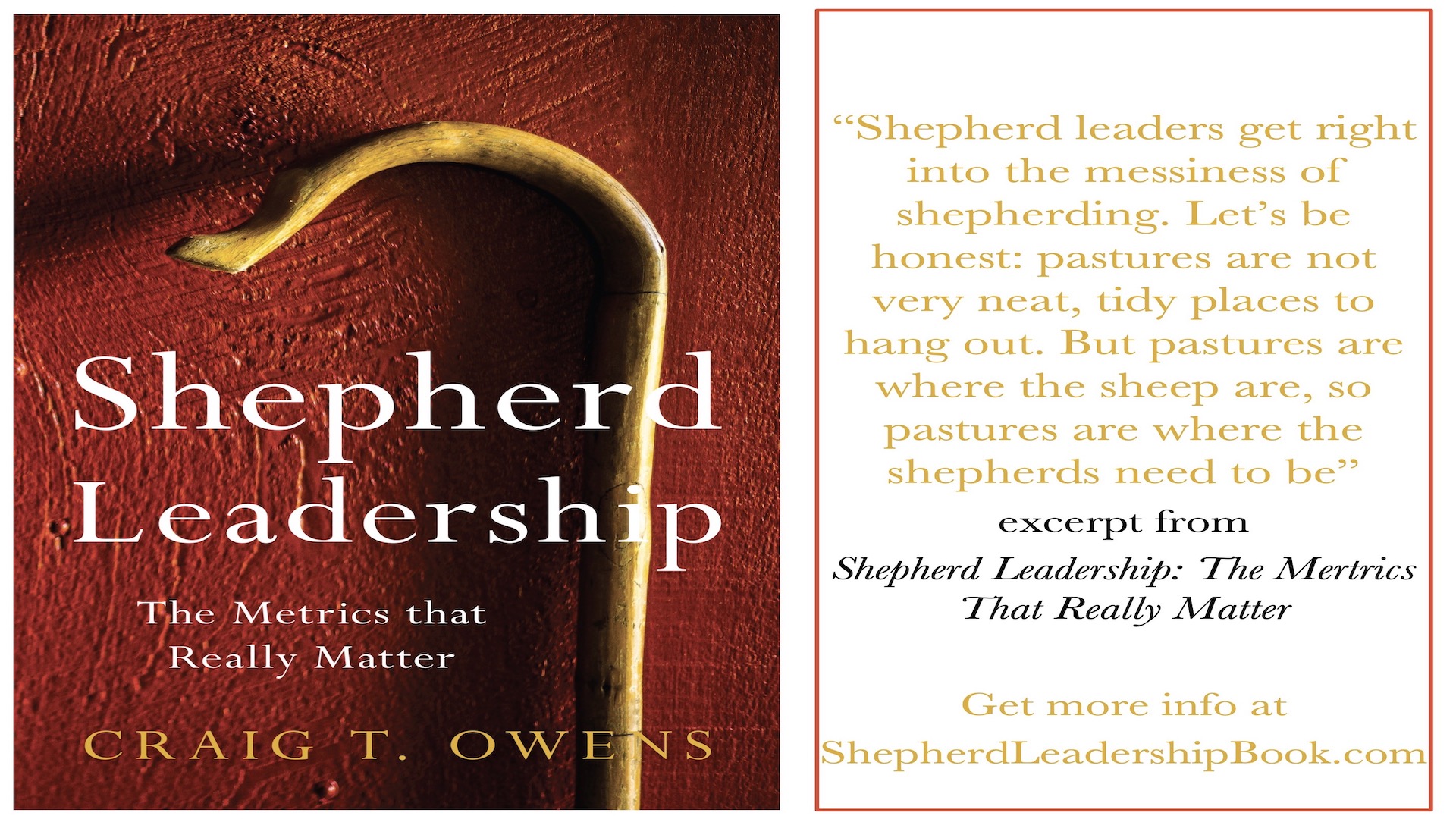
Jesus said not only that He knew His sheep, but that His sheep knew Him, too. Shepherd leaders get right into the messiness of shepherding. Let’s be honest: pastures are not very neat, tidy places to hang out. But pastures are where the sheep are, so that is where the shepherds need to be. If the only time you interact with others is when you want to make an announcement or someone needs to be corrected, your sheep will begin to either resent you or fear your arrival.
The best way to know the voice of each one of the sheep in your pasture (and the best way for those sheep to know your voice as well) is to be in the pasture as often as you can. This is what Jesus did at the Good Shepherd, and His under-shepherds honor Him when we follow His example.
You can check out more clips from this Church Lobby interview here.
Check out my book Shepherd Leadership for yourself or for a pastor that you love. And also check out my latest book When Sheep Bite, which I think of as the prequel to Shepherd Leadership.
Listen to the podcast of this post by clicking on the player below, and you can also subscribe on Apple, Spotify, or Audible.
Both physically and psychologically, our natural response to an attack, a surprise, or pain is to fight or flight.
Although this is a natural response, it’s not the best response for shepherd leaders. Think about it: when a sheep is biting you or misbehaving, although you would like to smack them on the fuzzy nose or run away from them, those are not healthy responses.
Jesus said that those who ran away in the face of attacks—either from sheep within or wolves without—aren’t worthy of the title “shepherd” (John 10:12-13). And Paul told Timothy that shepherd leaders “must not be quarrelsome but must be kind to everyone” (2 Timothy 2:24).
As I said, fight-or-flight is natural, but Jesus is calling His under-shepherds to a supernatural response. This will require God’s help, which He frequently provides for us in the timely counsel of wise friends who have experienced the same pain you are experiencing.
Check out this short video where I talked to a group of pastors about this topic.
I would like to invite you to join a cohort of pastors that will be dealing with the same painful sheep bites you have experienced. We’ll meet together online every other week for 10 sessions to discuss the biblical principles that will help us all respond in the supernatural ways that strengthen our leadership, heal our flocks, and bring glory to the Chief Shepherd.
This cohort is limited to just 10 pastors so that we can develop some solid friendships that will last well beyond the cohort, so please sign up today.
Check out more information on my book When Sheep Bitehere.
Listen to the podcast of this post by clicking on the player below, and you can also subscribe on Apple, Spotify, or Audible.
I would like to take you behind the scenes to the origin of my second book. In this video, you will hear how I first came up with the idea for When Sheep Bite, and how the Holy Spirit redirected my original book design.
Check out this episode of The Podcast.
I wrote this in the Introduction to Section One of When Sheep Bite—
I know that when you are in distress you are looking for immediate relief. You may be tempted to jump right to Section 2 of this book where I outline specific thoughts and strategies for handling the ways your sheep are biting and kicking, but I invite you to hold off. … It may appear from your perspective that the fault lies entirely with the attacking sheep—and that you feel that you haven’t done anything to provoke them. But these attacks can open our eyes to things we haven’t noticed before and teach us invaluable lessons, if we are willing to quiet ourselves before the Holy Spirit’s counsel. …
If we don’t have the heart of a shepherd leader, we will not only treat every bite and kick as if it is completely their fault, but we will never be looking for ways to bring healthy correction and restoration to that wayward sheep. Let me remind you that all of us were those wayward sheep—biting God’s hand, running away from Him—when Jesus put His very life on the line to bring us into the sheepfold (Romans 5:6-8). This kind of shepherding doesn’t come just because we outwardly try to do the right thing, but because we have a right heart attitude (Philippians 2:5).
I truly believe that When Sheep Bite will be a healing resource for shepherd leaders who are still feeling the pain of their latest sheep bite. If you are a pastor—or if you love your pastor—please pick up a copy today!
Shepherd leaders do know the voice of their sheep, and the sheep know the voice of their shepherd. Leaders, this is the value of regularly being around all the people on your team. Check out this full conversation Greg and I had on our leadership podcast. This idea is central to my book Shepherd Leadership.
I have lots of new content every week, which you can check out on my YouTube channel.
“Alice Reynolds Flower (1890-1991), the wife of [Assembly of God] pioneer J. Roswell Flower, is a shining example of motherhood. Affectionately known as ‘Mother Flower,’ she preached, taught Sunday School, led prayer meetings, wrote articles, penned poetry, authored books, and lived a godly example in front of her six children and everyone she came in contact with. As Mother’s Day approaches, it is good to consider an article that Mother Flower wrote for the Pentecostal Evangel in May 1952.” Check out Alice Flowers’ article here.
Kenneth Blanchard discusses when it is and isn’t a good time for a leader to be a micromanager. He concludes this insightful post by saying, “The best leaders know how to continually adjust their leadership style to fit each situation, helping to develop individuals who will ultimately achieve each goal and perform well on each task with little direction or support.”
“The pre-Flood world had some truly massive dinosaurs, and the largest of them were in the group Sauropodomorpha. Within this group were titanosaurs, which include the gigantic Argentinosaurus that is estimated to have weighed over 100 tons.” Read more about titanosaurs here.
What is it about morality that points humans higher and higher to find the Source? J. Warner Wallace, in this video based on his book God’s Crime Scene, makes the case that objective, transcendent morality is good proof for God. This reminds me of C.S. Lewis’ similar argument: “My argument against God was that the universe seemed so cruel and unjust. But how had I got this idea of just and unjust? A man does not call a line crooked unless he has some idea of a straight line. What was I comparing this universe with when I called it unjust? If the whole show was bad and senseless from A to Z, so to speak, why did I, who was supposed to be part of the show, find myself in such a violent reaction against it?”
Pastors, listen to this call to revival from the pen of Jonathan Edwards. Let us seek in prayer for a revival in our day! “The Scripture gives us great reason to think, that when once there comes to appear much of a spirit of prayer in the church of God for this mercy, then it will soon be accomplished…Spiritual waters and rivers are explained by the apostle John, to be the Holy Spirit…It is now a time of scarcity of these spiritual waters; there are, as it were, none. If God’s people, in this time of great drought, were but made sensitive of this calamity, and their own emptiness and necessity, and brought earnestly to thirst and cry for needed supplies, God would, doubtless, soon fulfill this blessed promise.”