Listen to the podcast of this post by clicking on the player below, and you can also subscribe on Apple, Spotify, or Audible.
…the fear of the Lord is the key to this treasure (Isaiah 33:6).
What treasure is Isaiah referring to? There is an amazing list of blessings in this chapter! Things like…
God’s graciousness
God’s strength
Salvation
God’s justice
God’s righteousness
A sure foundation
“A rich store of salvation and wisdom and knowledge”
Eternally secure in God’s presence
Seeing God’s beauty
Having evil people removed from my life
Peace
How do I get the key to this treasure? By placing my faith in Jesus. Jesus paid the price, so He could take the key from the devil and hold it securely. When I am in Him, I have access to this key to God’s riches!
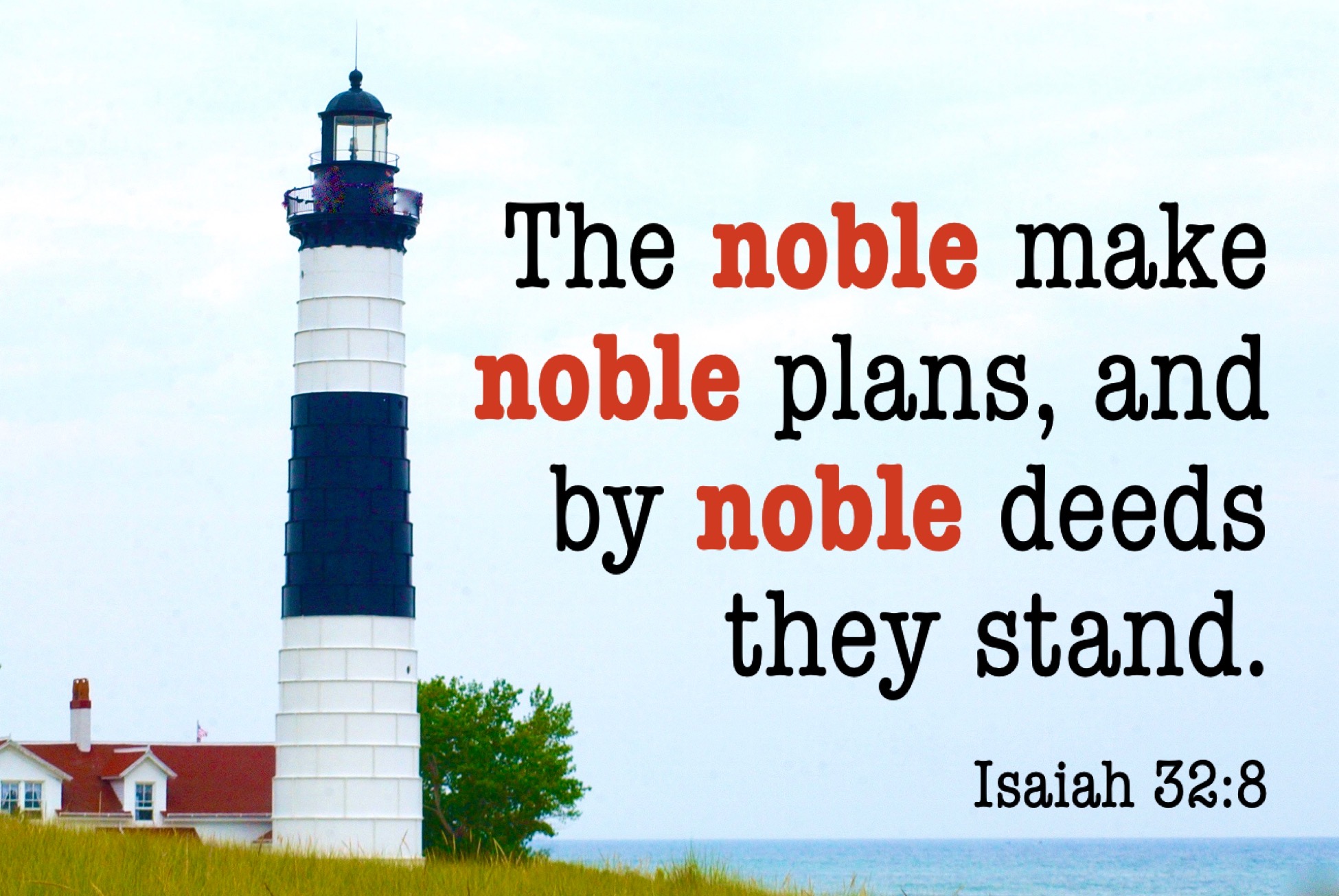
With all of this treasure accessible to me, how do I now live? In a word: Nobly. “But the noble make noble plans, and by noble deeds they stand” (Isaiah 32:8). I am a child of God, a joint-heir with Jesus. I lack no good thing, so I can live securely, gracefully, and nobly. I must live this way to bring glory to my Lord and my Master every single day!
Listen to the podcast of this post by clicking on the player below, and you can also subscribe on Apple, Spotify, or Audible.
My cousin Dick Brogden wrote in his book Missionary God, Missionary Bible, “Since good news must often indeed rectify bad news, the gospel message is both warning and invitation.” This is so appropriate when reading the prophet Zephaniah: He wanted to share some really, really good news, but first, he must make us confront the really bad news.
Zephaniah prophesied near the end of Judah’s decline toward exile. He saw the great revival in King Josiah’s day, and then watched his fellow Israelites once again turn their backs on God. If Jeremiah spoke to faithless Israelites, and Habakkuk spoke to faithful Israelites, then Zephaniah spoke to fake Israelites—those who appeared to be religious, but whose hearts were not actually devoted to God.
This whole book looks backward in history and forward to soon-to-be-fulfilled prophecy. Most of the time when God speaks, He is asking us to look forward to what is unavoidably coming. Zephaniah then takes God’s words as a call for us to apply them to our lives today.
In the first chapter, God’s forward-look is a warning of the judgment that most assuredly is coming. Built into His warning are two backward looks to the law of Deuteronomy (vv. 13 and 15 look back to Deuteronomy 28:29-30).
Zephaniah uses this warning as a wake-up call for us, telling us to “seek the Lord” and “seek righteousness, seek humility” before the day of God’s judgment comes (2:1-3).
The fact that God’s judgment would fall on godless people shouldn’t surprise anyone (2:4-15), but when Zephaniah says, “Woe to the city of oppressors” (3:1), he’s talking to the people of Judah! Zephaniah addresses his warning to the fake Israelites, the hypocritical people—those claiming God’s name but not God’s nature.
The apostle Paul sounds a similar warning to New Testament Christians:
Now these things occurred as examples to keep us from setting our hearts on evil things as they did. Do not be idolaters, as some of them were; as it is written: ‘The people sat down to eat and drink and got up to indulge in revelry.’ We should not commit sexual immorality, as some of them did—and in one day twenty-three thousand of them died. We should not test Christ,as some of them did—and were killed by snakes. And do not grumble, as some of them did—and were killed by the destroying angel. These things happened to them as examples and were written down as warnings for us, on whom the culmination of the ages has come. So, if you think you are standing firm, be careful that you don’t fall! (1 Corinthians 10:6-14)
The really bad news is ALL of us have sinned and we have ALL fallen short of God’s righteous standard. As a result, ALL of us would stand guilty before God on Judgment Day.
But the really, really good news is that Jesus allowed our penalty to fall on Him instead! So if we put our faith in Jesus, God’s judgment will be appeased in Christ instead of on us!
Christians, then, take the name of Jesus Christ, but we need to make sure we also take His nature.Fake—hypocritical—Christians are those who are “Christian” in name only.
I like the way Eugene Peterson paraphrased part of the 1 Corinthians passage above—These are all warning markers—danger!—in our history books, written down so that we don’t repeat their mistakes. Our positions in the story are parallel—they at the beginning, we at the end—and we are just as capable of messing it up as they were. Don’t be so naive and self-confident. You’re not exempt. You could fall flat on your face as easily as anyone else. Forget about self-confidence; it’s useless. Cultivate God-confidence. (The Message)
As we read those words, “So if you think you are standing firm, be careful that you don’t fall,” I’d like to suggest four action steps:
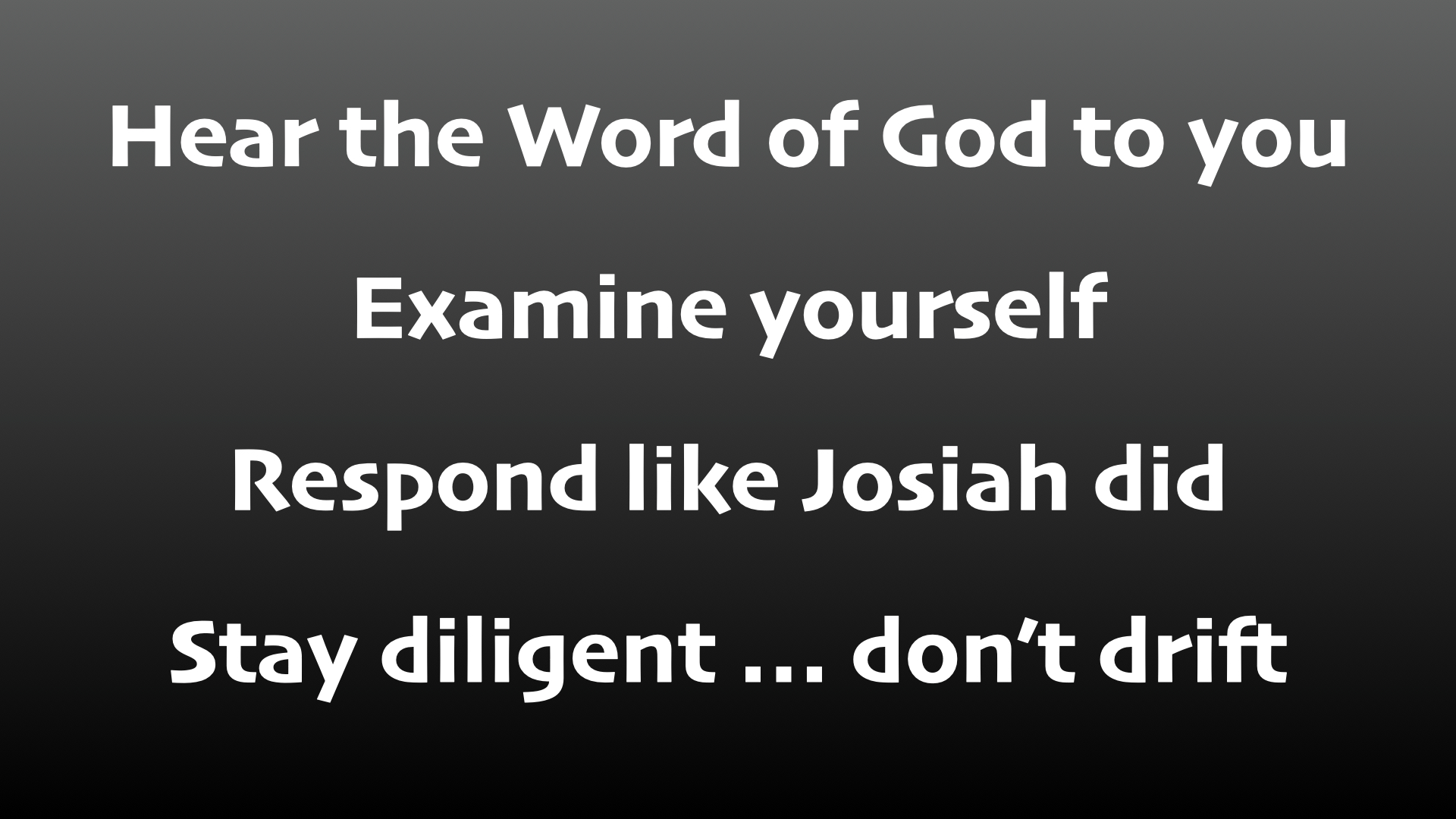
Hear the Word of God to YOU—not your neighbor—but you personally.
After you hear the Word, examine yourself to see if you are truly living in God’s nature and not just using His name.
Respond like King Josiah did when he heard God’s Word: He made a public commitment “to follow the Lord and keep His commands, statutes and decrees with ALL his heart and ALL his soul” (2 Kings 23:3).
Stay diligent—Hebrews 2:1 tells us, “We must pay the most careful attention, therefore, to what we have heard, so that we do not drift away.”
Don’t delay—the Day of the Lord is closer today than it’s ever been before! Pay attention to the really bad news that Judgment Day is coming, but then make certain you are standing in the nature of Jesus Christ on that day so that God’s judgment will pass over you.
Listen to the podcast of this post by clicking on the player below, and you can also subscribe on Apple, Spotify, or Audible.
Around the world we hear of Christians being persecuted for their faith in Jesus: Afghanistan … N. Korea … China … even in the USA, Christians like Jack Phillips and Barronelle Stutzman are being persecuted for standing up for what they believe.
Jesus said that our persecution should only come “on account of Me.” And Asaph notices the same thing in his prayer, using phrases like “Your enemies,” “Your foes,” “they conspire against Your people,” and “they form an alliance against You.”
I think the first thing we need to consider is our part in bringing on the persecution. I need to ask the Holy Spirit to reveal if I may have been the trigger to the anger of these wicked people. If I have done something, I need to repent, ask forgiveness, and see what I can do to make restitution.
Next, we need to Selah to consider this: It might look desperate, but God has handled these kinds of evil people before. Asaph mentions several enemies of God’s people whom God decisively defeated in the past. Our Selah pause will help us recall that God is the same today as He was yesterday—He is more than able to handle these persecutors.
With all of these bullies ganging up on Israel, you can understand why Asaph cries out for God’s strong action against them. But I want you to notice that the call for judgment is NOT vindictive but redemptive. Asaph asks for punishment “so that men will seek Your name, O LORD” and that they may “know that You, whose name is the LORD—that You alone are the Most High over all the earth.”
In other words, this isn’t a “Get ‘em, God” prayer, but a “Save ‘em, God” prayer!
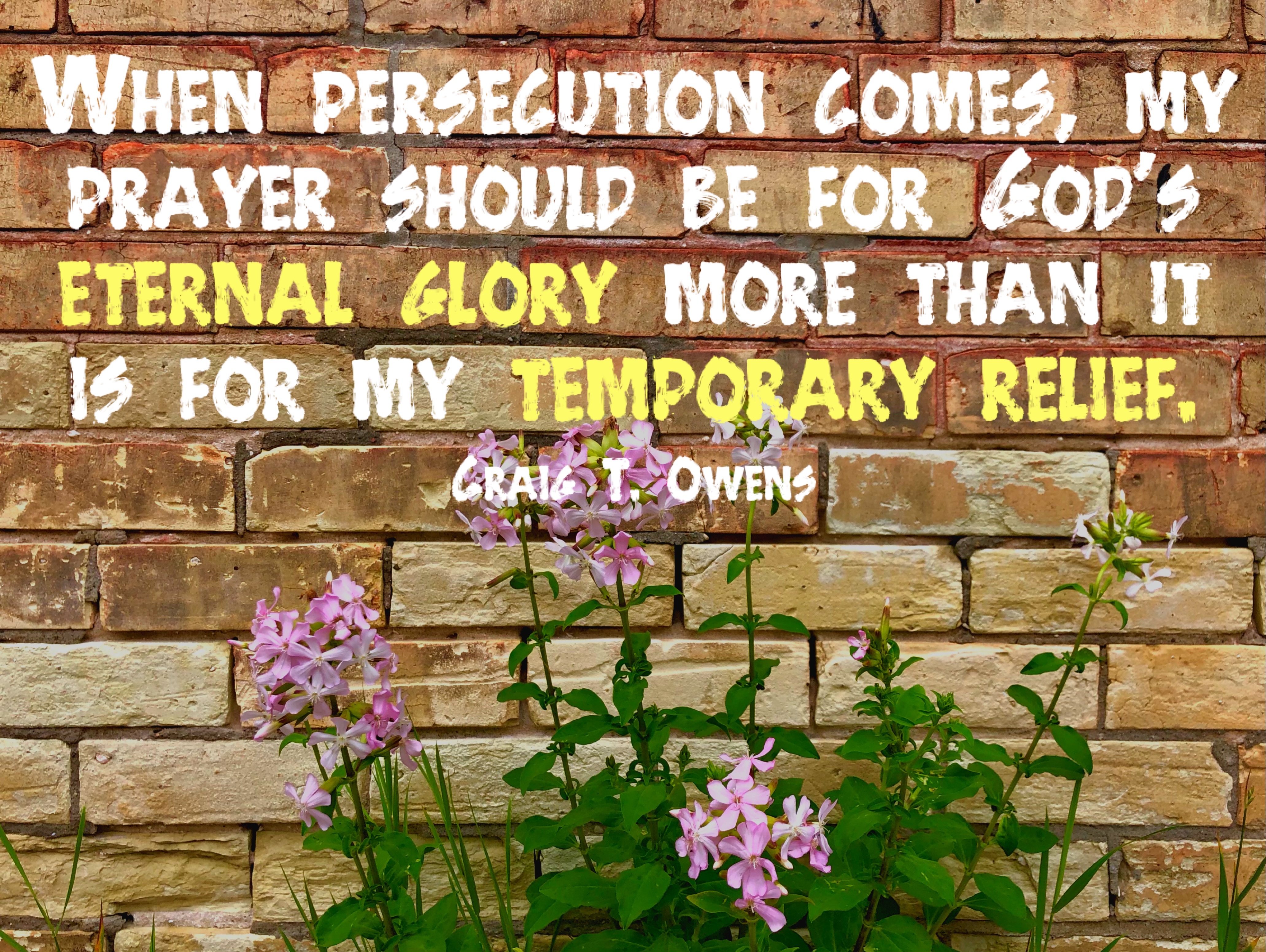
We’re not looking for relief for ourselves—that’s only temporary—but we’re looking for glory for God—that’s eternal!
Jesus and the apostle Peter both tell us that God’s desire is for no one to perish apart from a relationship with Him through Jesus Christ (John 3:16-17; 2 Peter 3:9).
The reason we need to Selah and ask that introspective question about our words or actions triggering our persecutor’s anger is because God will use our righteous response to persecution as a testimony.
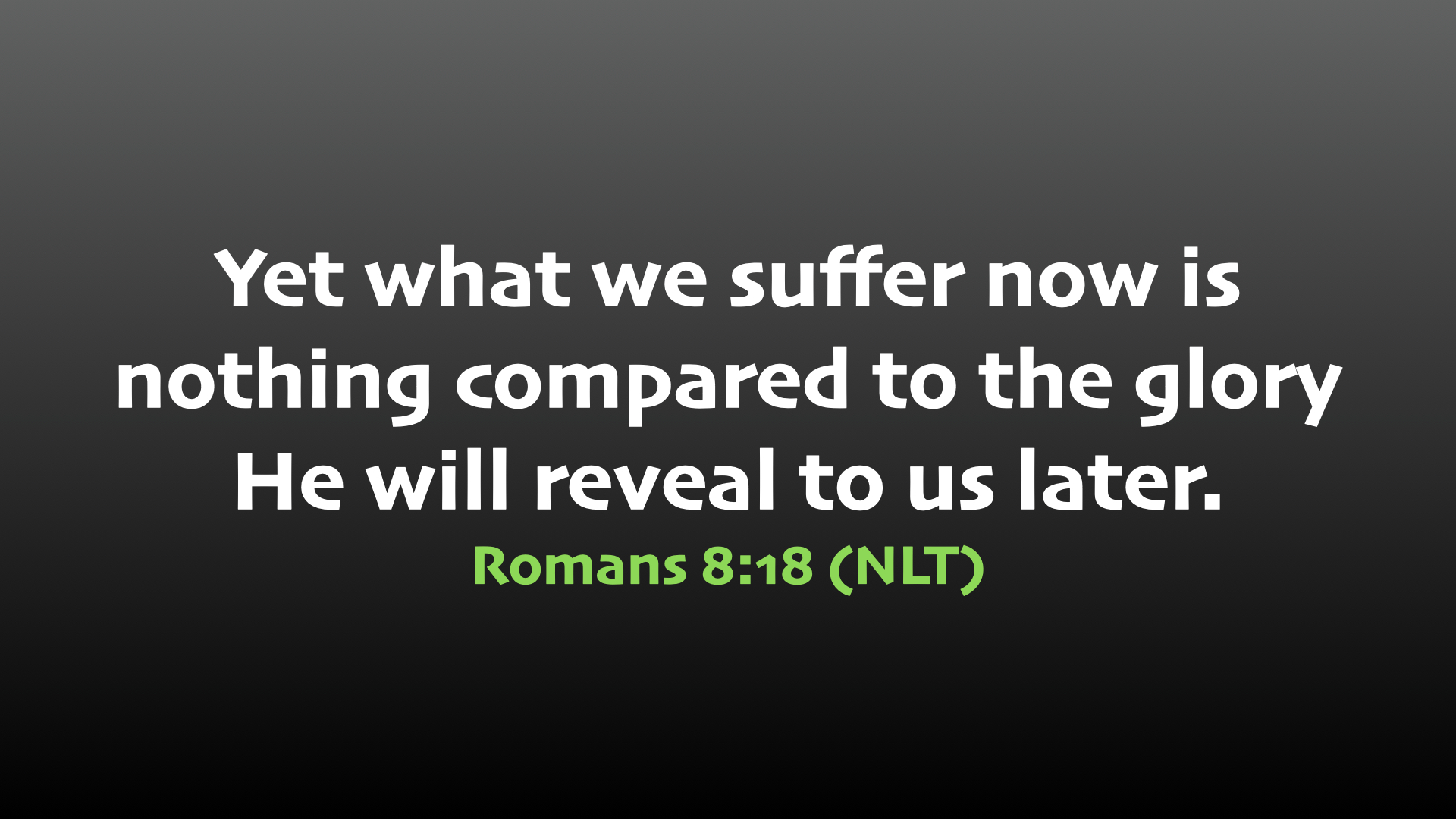
Jesus said our persecution should be because of Him, but He also told us that there would be a blessing in it (Matthew 5:11-12; Mark 13:13; Luke 21:17-19). And Paul tells us that this reward isn’t just a silver lining to a dark cloud, but a reward beyond compare (Romans 8:18).
Asaph went to prayer when Israel was attacked, and that should be our first response too.
But let’s Selah in that prayer to make sure we’re not the trigger, and then may our prayer be more for God’s eternal glory than it is for our temporary relief.
This is a weekly series with things I’m reading and pondering from Charles Spurgeon. You can read the original seed thought here, or type “Thursdays With Spurgeon” in the search box to read more entries.
Listen to the podcast of this post by clicking on the player below, and you can also subscribe on iTunes or Spotify.
We Are All Laborers
I planted, Apollos watered, but God gave the increase. So then neither he who plants is anything, nor he who waters, but God who gives the increase. Now he who plants and he who waters are one, and each one will receive his own reward according to his own labor. For we are God’s fellow workers; you are God’s field, you are God’s building. (1 Corinthians 3:6-9)
Remember that the ablest ministers, the most powerful evangelists, the most profound teachers are, after all, nothing but laborers together with God. Let your mind be set upon the Master and not upon the servants! Do not say, ‘We are for this man because he plants,’ or ‘We are for the other because he waters,’ or ‘We are a third party for nobody at all.’ But let us join in ascribing all honor and praise to God, Who works all our works in us, since every good gift and every perfect gift is from above and comes down from the Father of lights, to Whom be glory world without end! …
The church is God’s farm.… In the margin of the Revised Version, we read, ‘You are God’s tilled ground….’
We begin by considering that the church is God’s farm. The Lord has made the church of His sovereign choice to be His own by purchase, having paid an immense price for it. ‘For the Lord’s portion is His people; Jacob is the lot of His inheritance’ (Deuteronomy 32:9). Because the Lord’s portion was under mortgage, therefore the only begotten Son laid down His life as the purchase price and redeemed His people to be the Lord’s portion forever and ever. Henceforth it is said to all believers, ‘You are not your own. For you were bought at a price’ (1 Corinthians 6:19-20). Every acre of God’s farm cost the Savior bloody sweat, yes, the blood of His heart! He loved us and gave Himself for us; that is the price He paid! …
The Master’s commission is not ‘sit still and see the Spirit of God convert the nations,’ but ‘Go into all the world and preach the gospel to every creature’ (Mark 16:15).
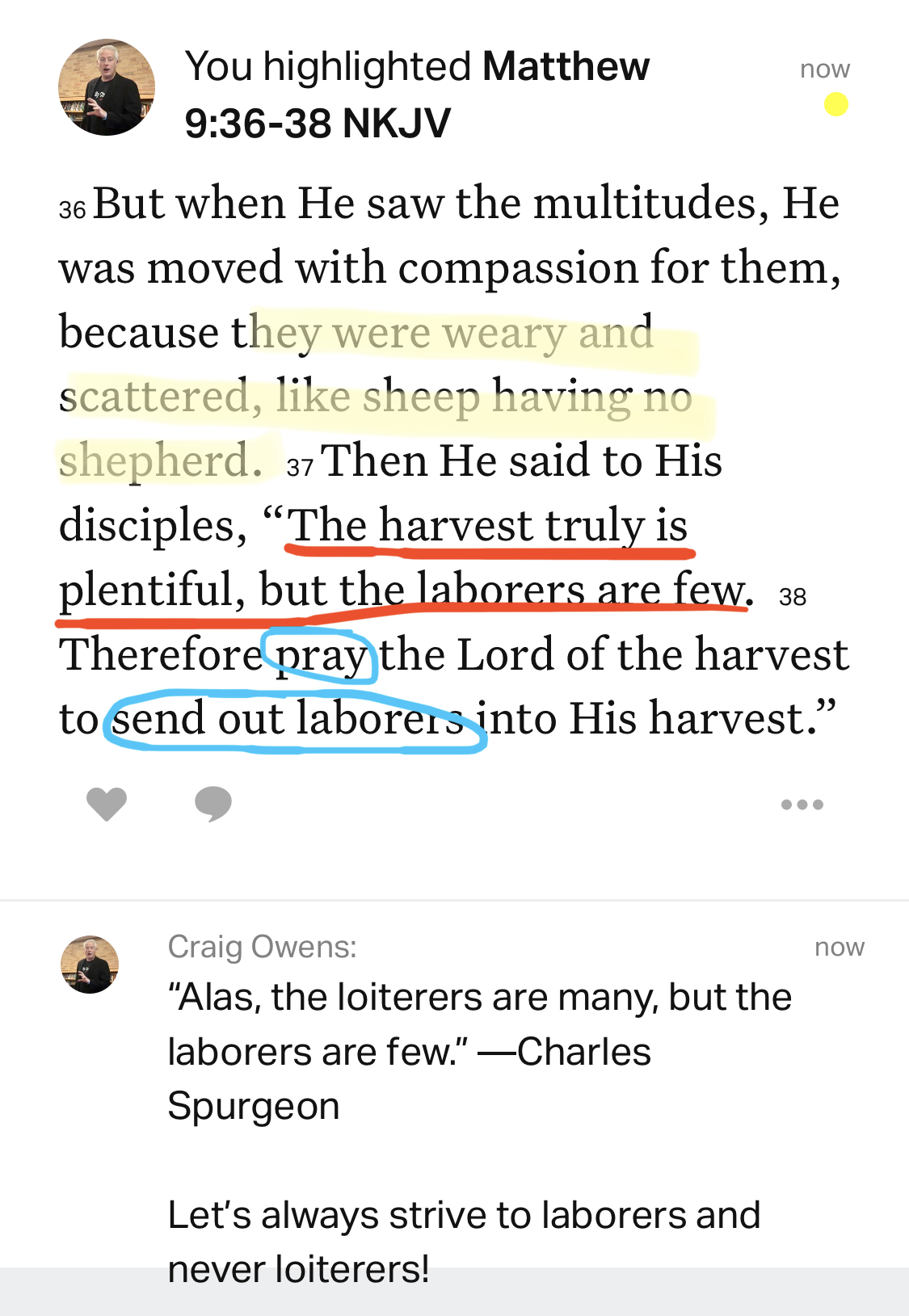
Alas, the loiterers are many, but the laborers are few.
From Farm Laborers
It’s sad how much time Christians spend on non-essential things. We church shop to find the pastor or the music that suits our tastes; we claim ownership over ministries and only allow others to work under us, but never alongside us; or we attend church and give our tithes and offerings and expect the pastor to do all of the ministry.
All of this is not only unbiblical but none of this is focused on eternity. And as C.S. Lewis said, “All that is not eternal is eternally useless.”
Jesus paid too high a price for us to keep the good news to ourselves, or claim that our ministry is superior to someone else’s, or to simply loiter and watch others do the work. All Christians are laborers in God’s field. God made an invaluable investment in the work Jesus did on the Cross, so He wants to see a return on His investment that will last for all eternity.
It’s time for us to stop squabbling, stop protecting our turf, and stop loitering. We must get to the work because the time is short and the Master is looking for eternal results.
Listen to the podcast of this post by clicking on the player below, and you can also subscribe on Apple, Spotify, or Audible.
During my freshman year of college, I was once the butt of a good-natured joke. I didn’t mind it so much except for the fact that there were several people in the room that didn’t know me, so they would have walked away thinking I was a jerk. As I vented to my roommate about this, his counsel was simply, “Just forgive ‘em, man!”
Yeah, right … easier said than done! I didn’t want forgiveness—I wanted payback! Ever been there?
The Hebrew word Selah is a call for us to pause and calmly think about what’s going on in our heart and mind. For instance, in those moments where we may want someone to get justice for the way they hurt us.
In Psalm 75, God is literally the One who speaks the Selah. In fact, God speaks twice in this short psalm: once in verses 2-5 and again in verse 10 to close this psalm. Putting together His two speeches, God says, “I choose the right time, I judge perfectly, I hold everything firm. Selah. I will cut off the horns of all the wicked, but the horns of the righteous will be lifted up.”
What is meant by “the horn of the wicked” or “the horn of the righteous”? Literally, it means a show of strength, but it can be used in both a negative or a positive sense.
In the negative sense it means:
boasting of your own power
standing in defiant opposition to all other powers
proudly trumpeting your own strength
the English words “arrogant” and “boast” in verse 5 are both the same word Hebrew word halal. This means to shine a light on yourself, literally to say “Hallelujah!” to or about yourself!
This pride is so dangerous! As C.S. Lewis said, “Pride is ruthless, sleepless, unsmiling concentration on the self.”
In the positive sense, a horn means the righteous person who shines a light on God, who concentrates on Him, who knows that anything good they have comes from Him.
The wicked lift up their own horn (literally lift up themselves), while the righteous bow their horn (literally lift up God). What does God do? God opposes the proud but shows favor to the humble (1 Peter 5:5).
This psalm essentially has God giving two warnings:
To the wicked He says, “Do not lift up your horn against Me.”
To the righteous He says, “Submit to Me and do not try to rush My timing.”
Notice that Asaph says “a cup of foaming wine” is coming to the wicked (v. 8). This symbolizes God’s judgment (Revelation 19:11-16). This was to be our just punishment too, but Jesus took the cup of God’s wrath Himself, and in its place gave us the cup of God’s blessing (Isaiah 51:22; Matthew 26:39-42; 1 Corinthians 10:16). This switching of the cups is what we celebrate every time we drink the cup of Communion.
God was patient with us and He is still being patient with the boastful wicked, which is why He warns them—and us—to Selah. We were rescued from judgment and now God calls upon us to tell others about Him, so that they may also be reconciled to Him through Jesus Christ (Proverbs 24:11-12; 2 Peter 3:9).
Here’s the call to Christians: Watch your horn! Don’t shine a light on yourself, but shine a light on Jesus Christ and remain on-mission to rescue those who persist in blowing their own horn.