For God so loved the world that He gave His one and only Son, that whoever believes in Him shall not perish but have eternal life. (John 3:16)
Then I said, “Here I am—it is written about Me in the scroll—I have come to do Your will, My God.” (Hebrews 10:7)
“How lowly did Jesus become to purge away our sins and that by Himself, too, using His own body to be the means, by His sufferings, of taking away our guilt. Not by proxy did He serve us, but by Himself. Oh, this is wondrous love!” —Charles Spurgeon
And by that will, we have been made holy through the sacrifice of the body of Jesus Christ once for all. (Hebrews 10:10)
Listen to the podcast of this post by clicking on the player below, and you can also subscribe on Apple, Spotify, or Audible.
Last week we talked about biblical beliefs carrying more weight that non-biblical or extra-biblical beliefs. Christians must stand firm on God’s Word to give biblical meaning to everything we say and do, otherwise we lose the true meaning of essential terms like Church and Christian. That means there are words we need to let go, and there is the Word for which we must stand without wavering or backing down.
Have you heard people make the “They say” claim? “Well, they say you said…,” “They say that Christians are…,” or “They say that Jesus said or did…” It’s always a good idea to get to the source of these statements.
This is what Jesus did in Matthew 16:13-14. Jesus asked His followers about the “they say” claims they had heard, especially in light of what Jesus had already addressed in Matthew 11:18-19.
Matthew 16:15 is a great question to ask others: What do you think of Jesus? By asking this question and truly listening to the answer, you may just be able to uncover some non-biblical “they say” thinking that you can help correct.
But this verse is also a great question for us to ask of ourselves! Why? Because there is a huge difference between a verbal confession and a lifestyle confession. Look at vv. 16-23 to see the difference between Peter’s verbal confession in verse 16 and his lifestyle confession in verse 22.
John may have had this exchange in mind when he wrote 1 John 1:5-10. Notice John’s contrast between the verbal confession (“If we claim”) and our lifestyle confession. Listen: Demons can make a verbal confession (Luke 4:41) but they will be confined in Hell for eternity (Matthew 25:41). In the same way, religious people can make a verbal confession and walk out a completely opposite lifestyle confession (Matthew 7:21-23).
A lifestyle confession can either amplify or cancel a verbal confession.
Jesus loved Peter’s verbal confession, but then He gave us a lifestyle confession in Matthew 16:24-28.
The essential confession is not just, “I believe You are the Christ the Son of the living God,” but also, “I will take up my cross and follow You!”
We lose our life when we live for Jesus’ words (“I will build My Church”) and not living for “they say” words. As Brennan Manning sad, “The greatest single cause of atheism in the world today is Christians: who acknowledge Jesus with their lips, walk out the door, and deny Him by their lifestyle. That is what an unbelieving world simply finds unbelievable.”
So let’s ask others, “What do you think of Jesus?” But let’s also ask ourselves that question. Let’s make sure that our verbal confession is being amplified by our lifestyle confession. Ask the Holy Spirit to search your vocabulary and your lifestyle. A great prayer for this is in Psalm 139:23-24.
If you’ve missed any of the messages in our series “I Will Build My Church”, you can find them all here.
Listen to the podcast of this post by clicking on the player below, and you can also subscribe on Apple, Spotify, or Audible.
Have you ever heard the phrase “in name only”? For instance, someone might say, “He’s the boss around here in name only, but the one who really calls the shots is someone else.” We might give the title “boss” to someone just for convenience because “The guy who thinks he’s in charge” is probably too awkward to keep saying! We know the true boss by what he or she says or does, and how people respond to him or her.
I think this is true when someone says, “God,” you might wonder just what they mean by that. Sennacherib’s field commander appeared to be confused by this, as he uses both “God” and “god” interchangeably in 2 Kings 18:19-22, 32-35. But the foretelling of the Advent of the Christ makes it perfectly clear to Whom the prophets were pointing (Isaiah 9:6-7).
Let’s consider the title Mighty God. The word God is the Hebrew word el. It is translated many ways, but let’s find out which definition is correct in this foretelling of Jesus.
A god-like person
A mighty hero
An angel
A manmade god
The One True God
We can eliminate “a god-like person” from Exodus 15:11.
We can eliminate “a mighty hero” from Psalm 82:1.
We can eliminate “an angel” from Psalm 29:1 and Isaiah 6:1-3.
We can eliminate “a manmade god” from Isaiah 14:12-15.
So it must mean He is The One True God! One of Isaiah’s favorite phrases is “the Lord Almighty” which he uses 61 times (e.g. Isaiah 47:4)!
Isaiah 40 is one of the most descriptive chapters of the Lord Almighty. In here we see that…
He forgives sin (vv. 1-2)
He is beyond description (v. 12)—holding the world’s 326 quintillion gallons of water in the hollow of His hand, fitting the 10 septillion stars of the cosmos across the breadth of His hand, and carrying the weight of the Earth (1.3 octillion pounds) easily in His basket!
He is distinguished from manmade gods (vv. 18-20, 25)
His strength is absolutely unrivaled (vv. 26, 28)
How do we know these descriptive words in Isaiah point to Jesus? Look at these First Testament Scriptures compared to Christ’s First Advent:
Isaiah 40:3-5 foretells the messenger who would herald Christ’s arrival. Zechariah is inspired by the Holy Spirit to make this connection to his son John (Luke 1:76-77), and then John lives this out (Mark 1:1-3).
Remember that 40:1-2 says that The One True God forgives sins, which is what John the Baptizer sees in Jesus (John 1:29).
In 41:10, 13-14 we read of God shining His light into darkness to set people free, which is another thing that Zechariah connects to Jesus (Luke 1:67-75).
Jesus wasn’t God in name only, but His words and action—and the response of those who saw and heard Him—affirmed that He is the Mighty God that was foretold (John 8:48-59; Mark 14:60-64).
Notice also how the early New Testament saints proclaimed Christ’s unique deity, stating clearly that He is the fulfillment of all of the prophetic words that point to Him as The One True God (Acts 4:8-10, 12, 18; 5:27-32).
Peter and John said, “We are witnesses of this.” We too are witnesses of this if we have accepted Jesus as our Lord and Savior. We get to proclaim His Lordship by our verbal testimony and our lifestyle. As C.S. Lewis said, “A man who was merely a man and said the sort of things Jesus said would not be a great man or a moral teacher. He would either be a lunatic—on the level with the man who says he is a poached egg—or else he would be the devil of hell. You must take your choice. Either this was, and is, the Son of God; or else a madman or something worse. You can shut Him up for a fool…or you can fall at His feet and call Him Lord and God.”
In Philippians 2:9-11, Paul points out that Jesus has the name above every name and that every knee must bow to Him and every tongue confess that He is Mighty God! Today, let us bow our knee to Him and lift our voices proclaiming that He is Lord and God until our One True God takes us home or returns at His Second Advent.
If you’ve missed any of the other message in our Advent series called Jesus Is…, you can find them all here.
Listen to the podcast of this post by clicking on the player below, and you can also subscribe on Apple, Spotify, or Audible.
We saw in part one of this two-part series that we quickly go into crisis mode when we forget that God is in control, so we need to remain full of thanks all the time (Ephesians 5:20 AMPC). We called gratitude our inoculation against the pull from contentment to crisis, but inoculation doesn’t mean that we never experience some pangs of anxiety when a moment of darkness hits. Maturing Christians are learning how to spot the beginning of anxiety and move back into the contentment zone earlier and earlier (Romans 5:3-5; James 1:2, 12).
James says we “will receive the crown of life” from Jesus. There’s no doubt about that! In a trial, it’s important to be reassured that the trial can never cause us to lose out with our Heavenly Father (Romans 8:38-39).
Psalm 107 starts out with this same assurance—“those He redeemed” (v. 2) is in the perfect tense. It’s complete and irrevocable! We walk out our redemption in circumstance after circumstance in a way that bring glory to God and draws others to Him as well. “Let the redeemed of the Lord say” is in the imperfect tense, which means giving thanks is an ongoing practice (v. 1).
Redeemed once, but giving thanks always!
Romans 8 gives a little snapshot of some of the situations that could have sent us spiraling into crisis mode, but remember the conclusion: None of those things can separate from God’s love.
Last week we saw how the psalmist linked prayer and gratitude in a repeated theme. This practice is backward looking (vv. 7-8, 14-15, 20-22, 29-32). When we look back to see how God has moved and then we contemplate Who He is (Hebrews 13:8; Isaiah 59:1).
Look at the closing verse (v. 43):
heed = guard, watch over attentively; this is an imperfect verb—which means we keep on doing it
consider = discern: totake apart the evidence and harvest the lessons
great love = God’s limitless lovingkindness
I love this verse in the New Living Translation: Those who are wise will take all this to heart; they will see in our history the faithful love of the Lord.
That means we…
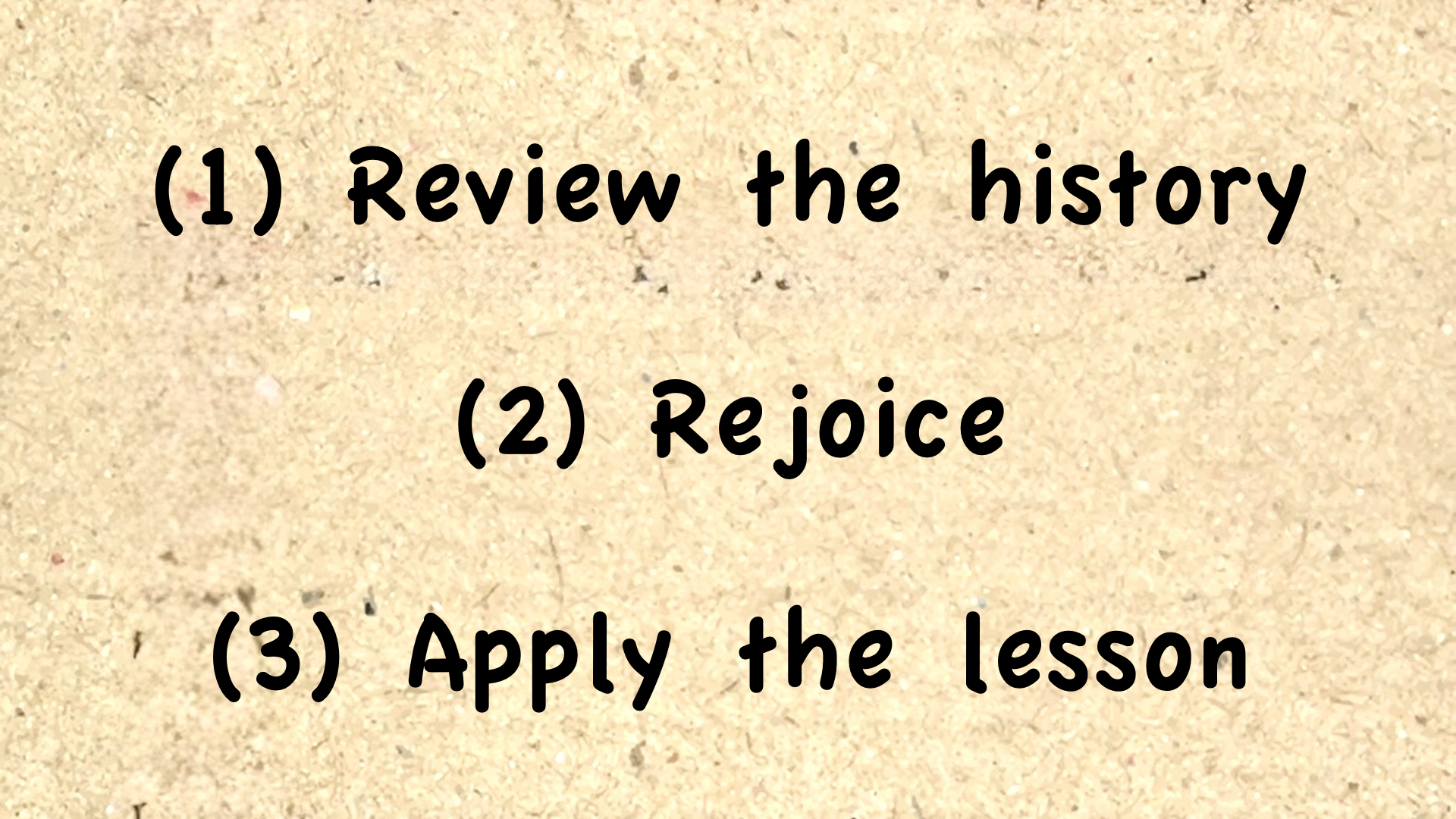
Review the history of God’s faithfulness
Rejoice over it
Apply it to your current circumstance
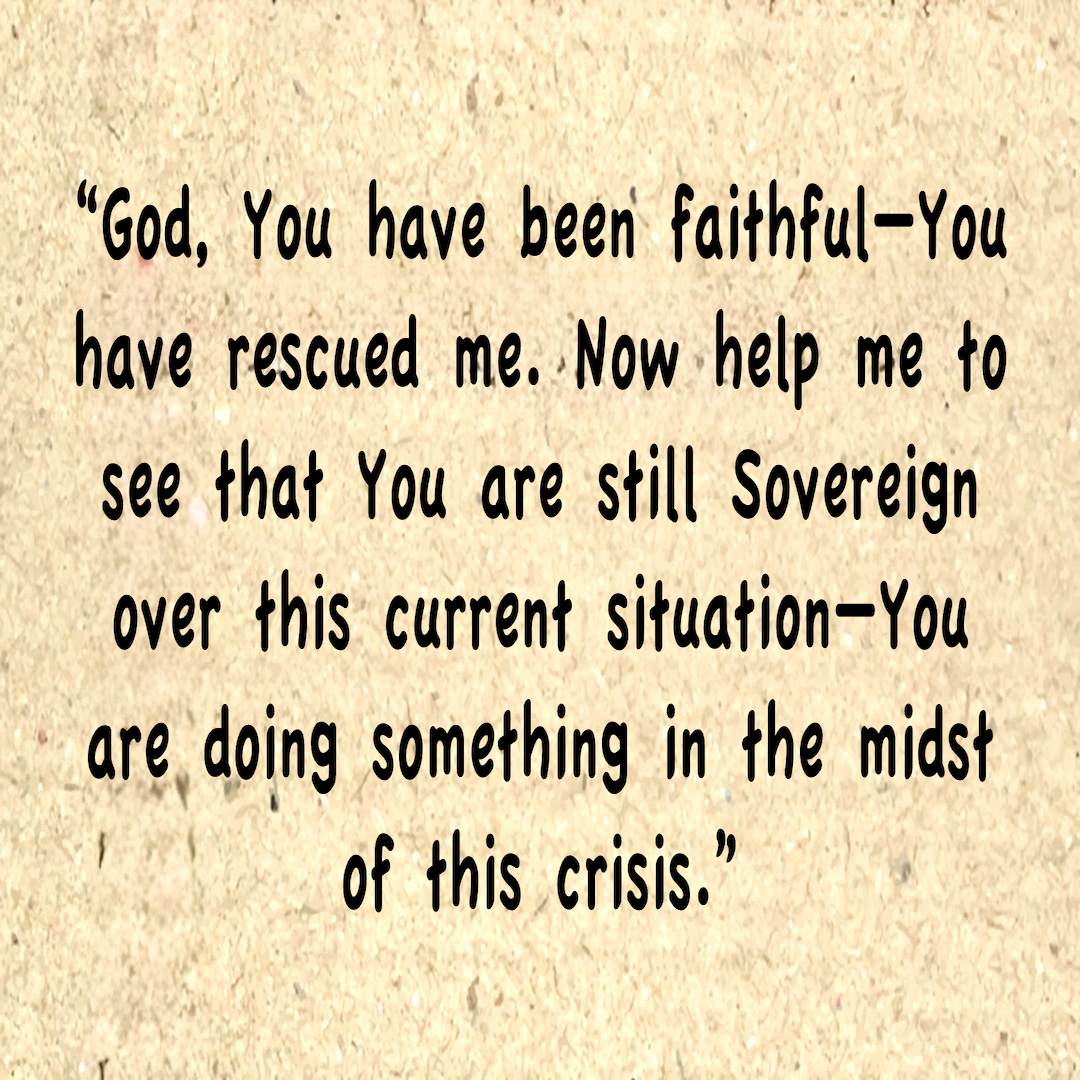
We can pray, “God, You have been faithful—You have rescued me. Now help me to see that You are still Sovereign over this current situation—You are doing something in the midst of this crisis.”
In Romans 8:28, Paul tells us that God is working together all of our circumstances for His glory and our our good. Oswald Chambers noted, “In the Christian life we have no aim of our own, and God’s aim looks like missing the mark because we are too shortsighted to see what He is aiming at.” Reviewing our history and then giving thanks helps assure our anxious heart that God is going to hit the mark (Philippians 1:6).
Praise the Lord! I will thank the Lord with all my heart as I meet with His godly people.How amazing are the deeds of the Lord! All who delight in Him should ponder them.Everything He does reveals His glory and majesty. His righteousness never fails.He causes us to remember His wonderful works. How gracious and merciful is our Lord! (Psalm 111:1-4 NLT)
Listen to the podcast of this post by clicking on the player below, and you can also subscribe on Apple, Spotify, or Audible.
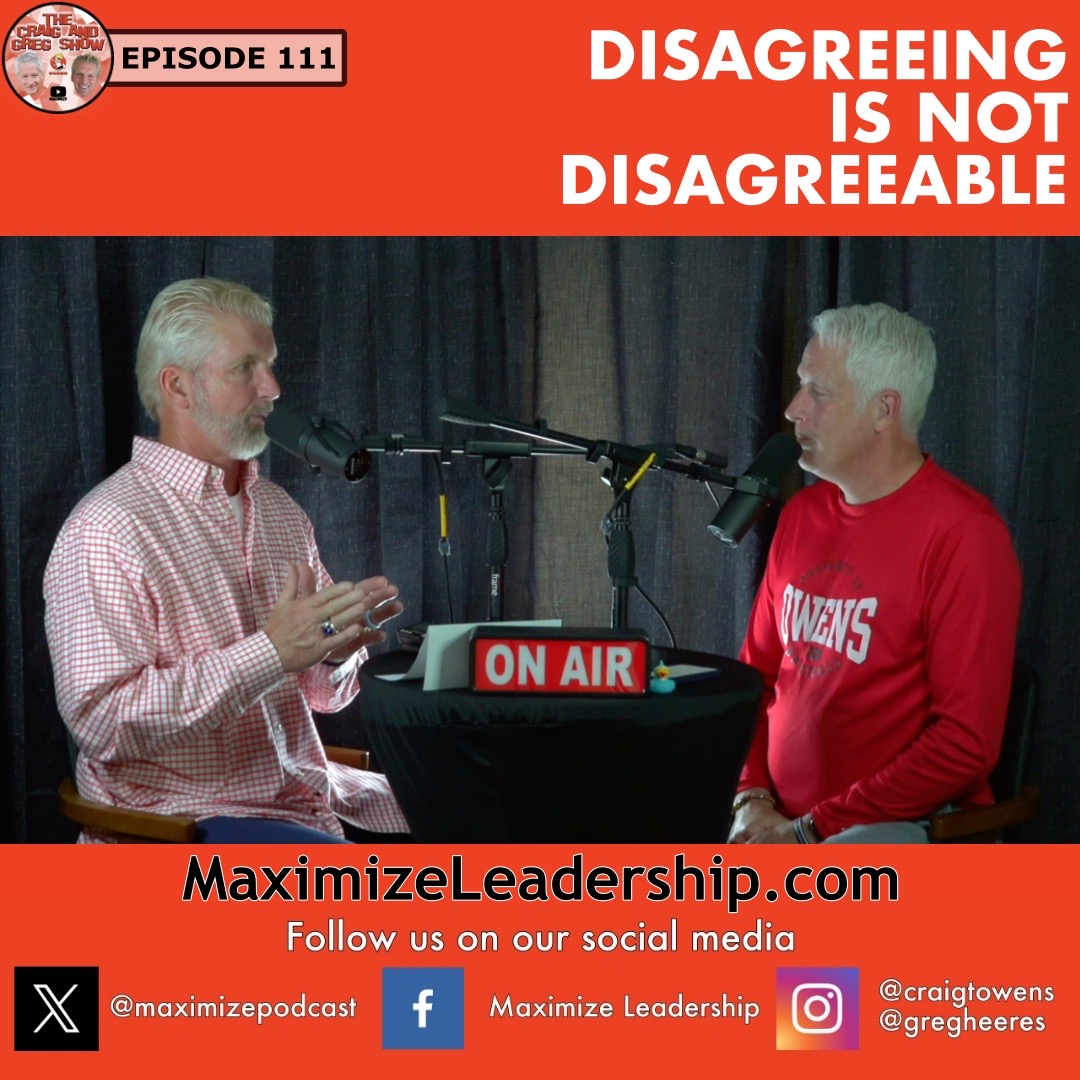
We can all agree that disagreeable people are some of the hardest to work with, constantly shooting down ideas without providing anything constructive in return.These types of people can quickly put a strain on any organization if left unchecked. However, we need to be careful not to lump disagreement into the category of disagreeable. In this episode Greg and I discuss why people in disagreement are actually the exact opposite of disagreeable, and are a valuable asset to your organization.
[0:00] Introduction
[1:02] A strong quote about “no men” from Dick Brogden—“Strong leaders respect and need ‘no’ men. It is weak leaders who surround themselves with the ever agreeable. Unity requires honorable disagreement. Otherwise, you don’t have unity; you just have uniformity.”
[2:06] Disagreeing people are not necessarily troublemakers.
[2:59] What bothers me about disagreeable people?
[3:49] Opinions vs facts have to be considered to determine if someone is disagreeable vs disagreeing.
[4:36] Leaders are required to listen more to people who disagree with them.
Listen to the podcast of this post by clicking on the player below, and you can also subscribe on Apple, Spotify, or Audible.
Leaders have an important balancing act to perform every day: remaining in control of their organization without becoming a controlling leader. Over-controlling leaders who micromanage end up stifling creativity that could be unleashed in their teammates.
Check out the full conversation on The Craig and Greg Show episode The Balance of Control.
Here’s that quote I shared from Tim Irwin’s book Derailed: “Lack of courage shows up in many organizations as micromanagement, failure to empower others, risk aversion, overcontrol, and perfectionism.”
Listen to the podcast of this post by clicking on the player below, and you can also subscribe on Apple, Spotify, or Audible.
Last week I challenged all of us to ask the Holy Spirit to check our attitude to ensure we indeed have the attitude of a secure servant. This is especially true when we remember that we are in the midst of a spiritual battle and that Jude writes this letter to us to encourage us to “contend for the faith.”
When Jesus told His parable about the sower, here’s what He said about the seed that fell on the hard path (Mark 4:15 AMPC). Jesus said the forces of evil want to try to bring down the Kingdom of God (Matthew 11:12).
Are we willing to engage in this intense battle? Will we strive with the forces of darkness for the sake of seeing lost people saved? God told Isaiah that it was so easy to give in—to throw our hands up (Isaiah 64:5-7). Paul extolled a Christian brother named Epaphras for his willingness to wrestle in prayer for the saints (Colossians 4:12).
Indeed wrestling for the saints is what Jude had in mind.
I like the phrase “contend for the faith” in the Message paraphrase: “Fight with everything you have in you.”
The Greek word Jude uses here is the only time it’s used in the New Testament. It means:
To enter a contest—1 Corinthians 9:24-26
Contend with adversaries—Colossians 4:12; Ephesians 6:12
Struggle through difficulties—Colossians 1:28-29
Endeavor with strenuous zeal to obtain victory—1 Timothy 6:12; 2 Timothy 4:7
The root word is agonizimai which sounds a lot like our English word “agonize.” This is an all-in mentality. Sitting on the sidelines, casually interacting, dabbling in it every once in a while won’t lead to victory.
The stakes are too high, our enemy is cunning and desperate, so nothing less than agonizing training that will not quit no-matter-what will do!
What exactly are we training to do?
Too many view salvation as just saved from Hell. That’s part of it, but not all of it. We’re also saved to display the glory of God. The first part is accepting Jesus as Savior; the second part is accepting Jesus as Lord. The salvation we share is not either-or, but it is both-and: Jesus is both our Savior and Lord.
We need to strive to obtain the fullness of Christ’s nature in us. People should be able to see and feel a difference in our lives without us even opening our mouths. Francis of Assisi said, “Preach always; if necessary, use words.” To that end, he offered this prayer—
“Lord, make me a channel of Thy peace, that
where there is hatred, I may bring love;
where there is wrong, I may bring the spirit of forgiveness;
where there is discord, I may bring harmony;
where there is error, I may bring truth;
where there is doubt, I may bring faith;
where there is despair, I may bring hope;
where there are shadows, I may bring light;
where there is sadness, I may bring joy.”
Will you be all-in?
Will you wrestle in prayer?
Will you let go of earthly things so you can cling to Jesus?
Will you display His light through your life?
Will you be ready to use words, if necessary?
Let’s make sure we are ready to contend for the faith the right way!
P.S. Speaking of prayer, my new book Amen Indeed is a prayer guide for pastors. Please consider giving a copy of this book to your pastor!
G.K. Chesterton wrote, “The whole difference between construction and creation is exactly this: that a thing constructed can only be loved after it is constructed; but a thing created is loved before it exists, as the mother can love the unborn child.”
God loved you before you were born. He had a plan in mind for your life before you were conceived.
For we are God’s handiwork, created in Christ Jesus to do good works, which God prepared in advance for us to do. (Ephesians 2:10)
Even as God formed you in your mother’s womb, He implanted in you all that you would need to live for His glory.
Your eyes saw my unformed body; all the days ordained for me were written in Your book before one of them came to be. (Psalm 139:16)
God couldn’t love you any more than He already does because His love for you is infinite and eternal❣️
Listen to the podcast of this post by clicking on the player below, and you can also subscribe on Apple, Spotify, or Audible.
Confuse them, Lord, and frustrate their plans, for I see violence and conflict in the city. Its walls are patrolled day and night against invaders, but the real danger is wickedness within the city… (Psalm 55:9-14 NLT)
David sees violence and conflict, but he is quick to conclude that the enemy is not “out there” but “in here.” Notice the phrases “in the city” and “within the city.”
This is why Jesus tells us to deal with the plank in our own eye first (the things in here), and then I can see clearly to address what may be out there (see Matthew 7:1-5). He also tells us to pay attention to the clear indicators that something is wrong “in here” in Matthew 15:18-20.
Yes, we should address false gods and evil practices. But G.K. Chesterton warns us to make sure we are addressing the right things—
“Idolatry is committed, not merely by setting up false gods, but also by setting up false devils; by making men afraid of war or alcohol, or economic law, when they should be afraid of spiritual corruption and cowardice.”
God-fearing leaders must always address their own areas of corruption as the first and highest priority. It’s only after this heart-check that we can truly lead people away from things which are holding them back from fully following God.
Holy Spirit, if I feel the need to point my finger at what’s wrong “out there,” may I first yield to Your finger pointing out what’s wrong “in here” in my own heart. Once I have recognized, confessed, and corrected what’s wrong in me, equip me to be a lovingly-strong and empathetic guide to help others around me.
Listen to the podcast of this post by clicking on the player below, and you can also subscribe on Apple, Spotify, or Audible.
Last week we were reminded that sanctification (or as I call it “saint-ification”) is an ongoing process that usually involves the help of other saints. There is something else we need to do with other saints: serve them.
We are all a part of the same Body so it is beneficial for the whole Body if we care for every part of the Body (1 Corinthians 12:25 AMPC; Ephesians 5:30).
In order to serve others, we are going to have to check our attitude. We have been called to have the attitude that Jesus had about the Church (Ephesians 5:29; Philippians 2:3-7; John 13:3-5, 14-17).
We must all know:
I have a gift—notice the phrase each of you in 1 Peter 4:10
I must use my gift to serve the Body of Christ (Luke 17:10)
In the early Church, we see so much togetherness that they rewrote the definition of the Greek word koinonia (see Acts 2:42). Here’s what koinonia looks like in the Church:
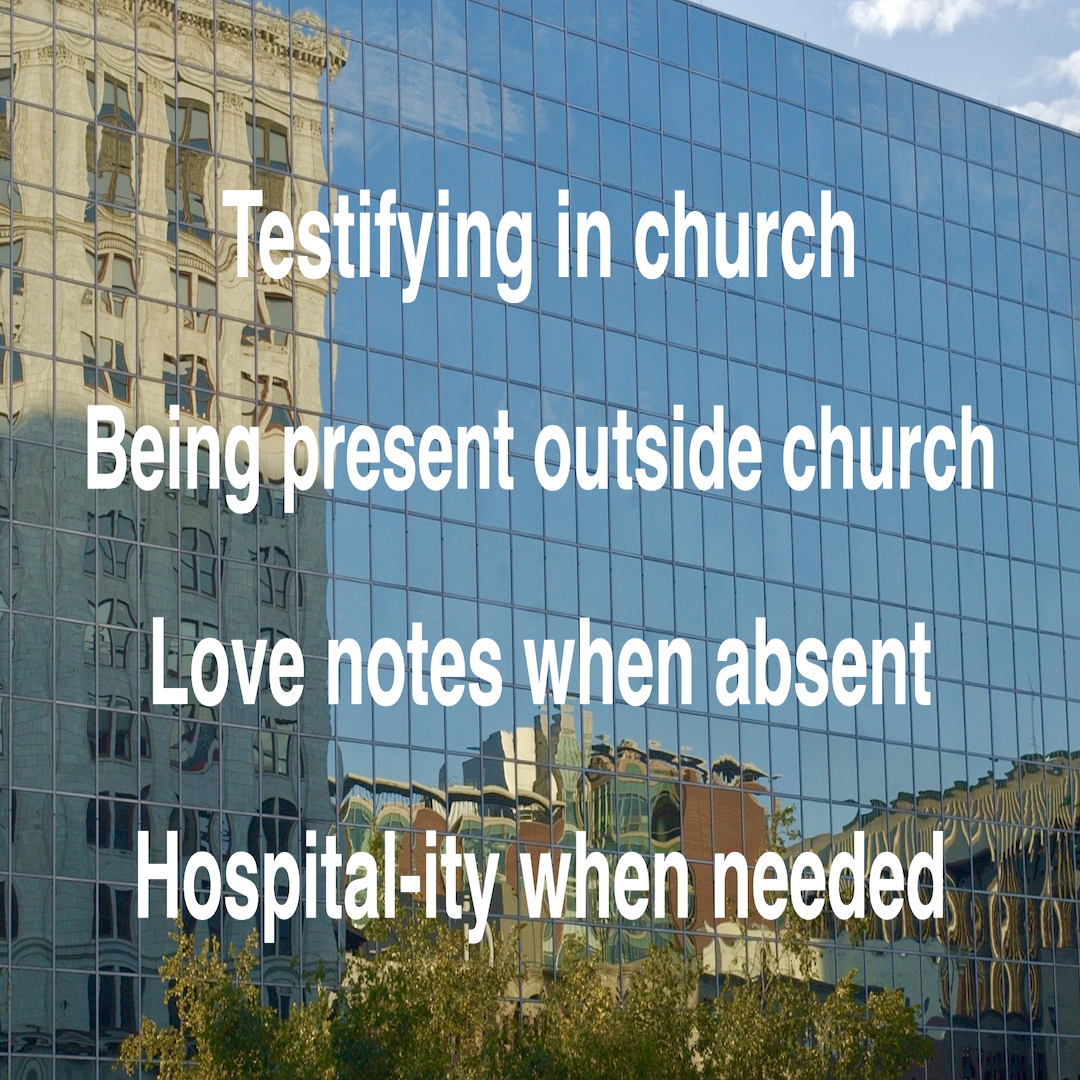
(1) Testifying in church (Psalm 40:9-10 NLT)
(2) Being present with saints outside of church. From Acts 20-28, the pronouns “we” and “us” are used over 80 times! Paul was blessed simply by Luke being with him, just as saints are blessed when you are truly with them.
(3) Love notes when a saint is absent. The apostle John was brilliant at this. Look at his three epistles:
dear children 9x in 1 John
chosen / dear lady 2x in 2 John
dear friend 4x in 3 John
(4) Hospital-ity whenever it’s needed. Be a place of healing and refreshment for the saints God has placed in your life, just as Philemon did (Philemon 2-7, 22).
What a testimony it is when we live this way (Romans 12:10, 13)!
Remember the saint-ification process brings fruitfulness, joy-fullness, and an enhanced testimony. I love this quote from Richard Stearns, “The beautiful simplicity of our faith is that it distills down to the exact same bottom line for both the brilliant theologian and the five-year-old child: love God and love each other—period. Everything else derives from that.”