Oh, how great is Your goodness, which You have laid up for those who fear, revere, and worship You, goodness which You have wrought for those who trust and take refuge in You before the sons of men! (Psalm 31:19 AMPC)
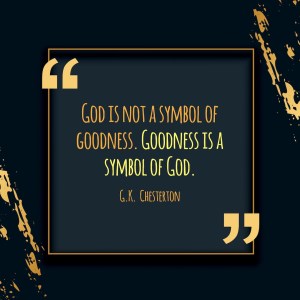
“God is not a symbol of goodness. Goodness is a symbol of God.” —G.K. Chesterton
Remember that all of the attributes of God existed before the words for those attributes existed. Words like love and awesome and power and goodness were created to point us to the I AM.
God is all of these attributes and infinitely more than any attributes we can ever describe or define.
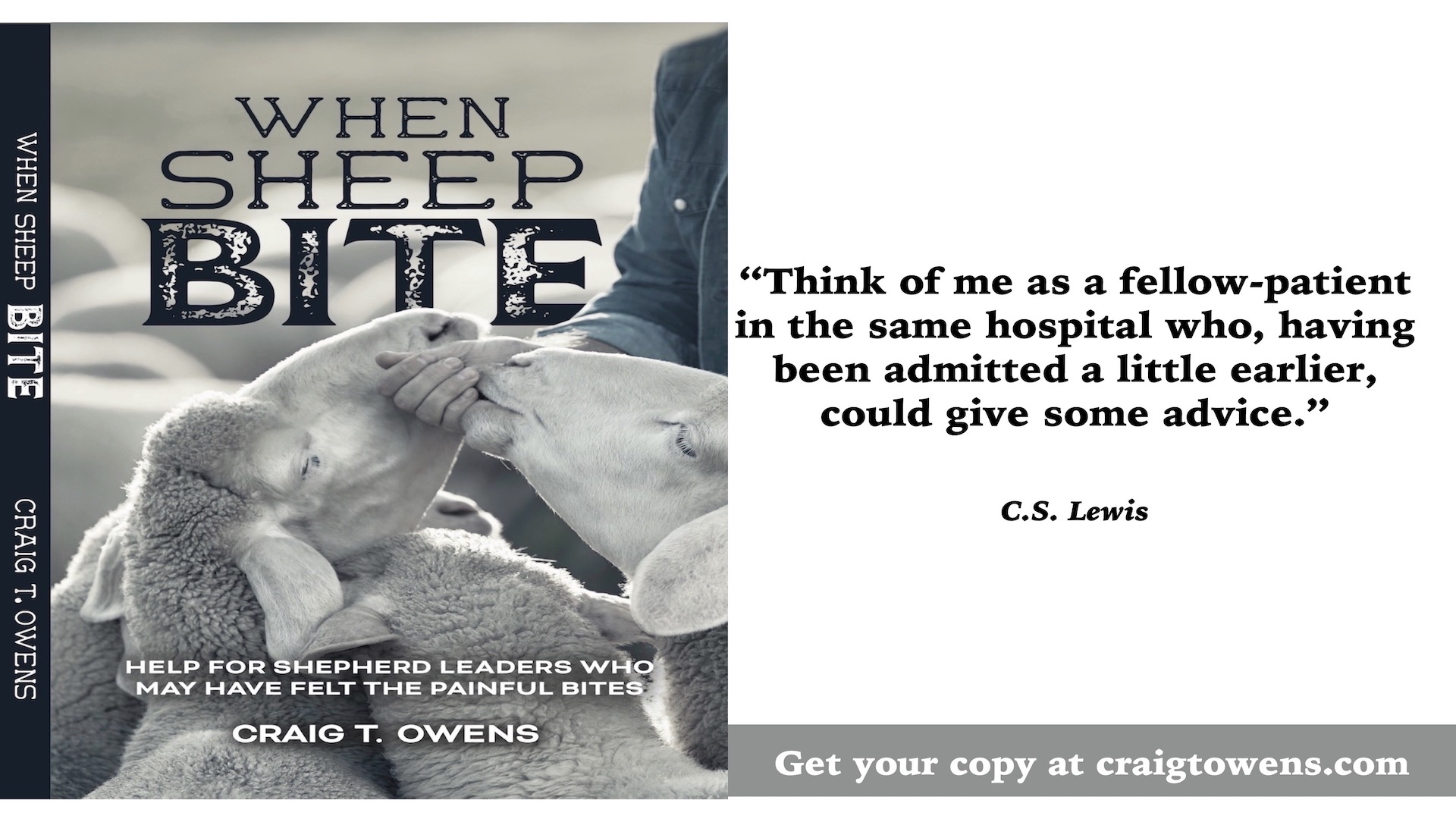
My book When Sheep Bite is all about recovering after difficulties—whether they were created by your mistakes or someone else’s mistakes. In the Introduction to my book I wrote:
I want to give you what I wanted when this happened to me: empathy, insight, a helpful perspective, and a manual of help that God has provided in the Bible. I don’t want to try to one-up your story of pain, because I’m confident that no one could truly know how deeply you’ve been hurt. But I do want to give you some assurance that I know what I’m talking about. …
Your pain and your circumstances are unique. Your pain is real, and it is incomparable to anyone else’s pain. But the biblical principles that God revealed to me—those things that helped me heal and the thoughts I want to share with you—are applicable for any shepherd. These tried-and-true principles can help you not just survive this pain but thrive in spite of this pain. I would say to you something that C.S. Lewis wrote, “Think of me as a fellow-patient in the same hospital who, having been admitted a little earlier, could give some advice.”
Listen to the podcast of this post by clicking on the player below, and you can also subscribe on Apple, Spotify, or Audible.
We rob ourselves and diminish the other person with whom we’re conversing if we aren’t fully listening. Listen, listen, and (really!) listen some more before you share your opinion.
Solomon said, “He who states his case first seems right, until his rival comes and cross-examines him” (Proverbs 18:17 AMPC).
And I like this thought from John Maxwell:
“The best way to understand people is to listen. The best way to learn from others is to listen. The best way to receive people’s best contribution is to listen. The best way to learn what others need from you is to listen. The best way to gain people’s buy-in is to listen.” —from John Maxwell’s book High Road Leadership
P.S. After posting this, I came across an article on the Desiring God website called Listen Well to Love Well. She wrote, “Listening is hard work. While our ears automatically welcome sound waves and ship them to our brains, it doesn’t mean we always hear other people. We might even wonder if listening well is worth the effort. … We have a long history with listening that makes it essential to who we are yet difficult to get right. Sarah Clarkson writes, ‘We are by nature a listening people. If we were spoken into being by the Word of God, then at our core we are to be listeners, and to attend to the word that spoke us into life.’”
Listen to the podcast of this post by clicking on the player below, and you can also subscribe on Apple, Spotify, or Audible.
After God created Adam, He said, “It’s not good for you to be alone.” That’s just as true today: God didn’t intend for us to journey on our own, but He gives us companions along the way.
Last week we saw that God has to sometimes cause us grief to get our attention when we are straying from His path. He sometimes puts people in our lives to do the same thing.
There’s a reason God puts the people in our lives that He does. We are called to speak the truth in love (Ephesians 4:15). But that sometimes means people will get upset with us (Galatians 4:16). “Real friends hurt each other. … Truth is the primary way faithful friends should wound each other—it is the help that hurts.” —Dick Brogden
The Corinthians thought they were super-spiritual, but Paul had to call them out on their foolishness (1 Corinthians 3:3; 5:1-2). Before Pauls’ letter, the Corinthians seemed happy. His letter caused them grief, but it was good grief that led to repentance and true joy (2 Corinthians 7:8-10).
To keep silent when a brother or sister is straying is not God-honoring. We are not to be the sin police, but we are to address sinful issues (James 5:19-20).
As King David flirted with the idea of how he could get something that he thought would make him happy, an anonymous attendant tried to get his attention. David ignored this and then tried to sweep it under the rug. In fact, he thought he got away with his sin (2 Samuel 11:1–12:7).
But God sent Nathan to speak a hard word to David. We don’t know when Psalm 141 was written, but we know that David did write it. Perhaps it was penned at the time of Nathan’s loving confrontation. He said, “Let a righteous man strike me—that is a kindness; let him rebuke me—that is oil on my head” (Psalm 141:5).
We do know that David wrote Psalm 51 after Nathan’s loving hard word, and in this prayer we see David’s confession, repentance, and a request for God’s joy to replace David’s grief.
So how do New Testament-era Christians use good grief to help fellow saints?
Examine yourself first (Matthew 7:1-5). Make sure you aren’t plagued by the same sin you have noticed in a brother or sister.
Cry before you confront, just as the prophet Samuel did before he had to deliver a hard word to King Saul (1 Samuel 15:10-11).
Confront in love with the goal of restoration, but make sure you are confronting someone who know you love them and who will receive your loving word(Proverbs 27:5; 9:8).
Pray that their grief will be turned to joy (Luke 22:31-32; Galatians 6:1; Psalm 51:12).
Friendships with fellow saints are precious and they are vital. We need iron to sharpen iron (Proverbs 27:17) so that we will all stand before the throne together for eternity.
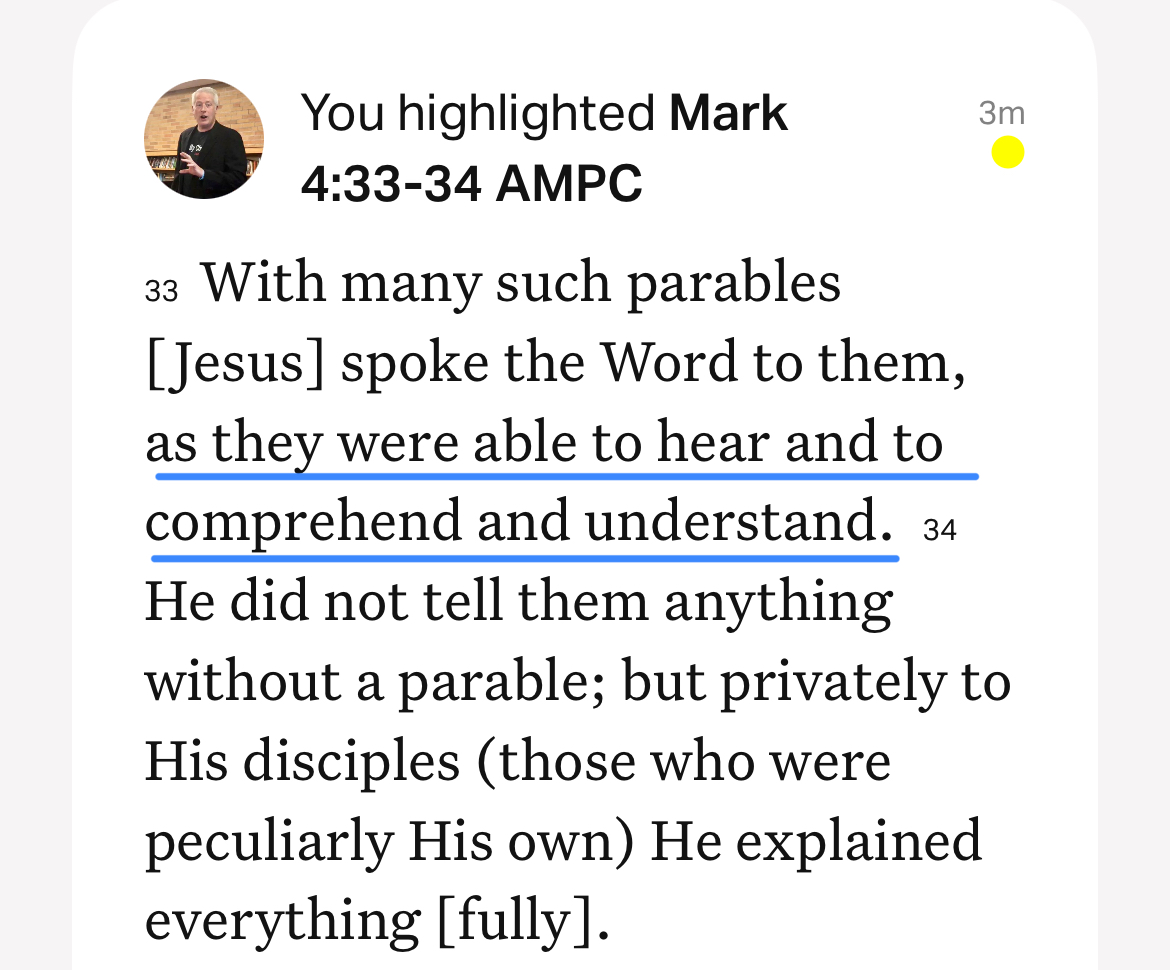
With many such parables Jesus spoke the Word to them, as they were able to hear and to comprehend and understand. He did not tell them anything without a parable; but privately to His disciples (those who were peculiarly His own) He explained everything fully. (Mark 4:33-34 AMPC)
We will “comprehend and understand” more when we are ready to handle it. There is a joy in the learning process—an excitement that comes as new depths of meaning are revealed to us. Be faithful and obedient with what has been revealed to you. Continue to abide in the presence of the Lord, meditating on His Word until He explains more to you.
Jesus wants us to understand His words.
There is a joy that comes through the prayerful pondering of and the searching through what He has said. Even if we don’t fully grasp all of the truth initially, what we do perceive is precious. And what we don’t fully understand, we keep searching. As G.K. Chesterton noted, “The riddles of God are more satisfying than the solutions of man.”
Then Jesus said—
“Things are hidden temporarily only as a means to revelation. For there is nothing hidden except to be revealed, nor is anything temporarily kept secret except in order that it may be made known. If any man has ears to hear, let him be listening and let him perceive and comprehend.” And He said to them, “Be careful what you are hearing. The measure of thought and study you give to the truth you hear will be the measure of virtue and knowledge that comes back to you—and more besides will be given to you who hear.” (Mark 4:22-24 AMPC)
Listen to the podcast of this post by clicking on the player below, and you can also subscribe on Apple, Spotify, or Audible.
Last week we saw that if we make prayer our priority, we can expect that our eyes will be opened to the answers that God has for us. Hagar and Eliezer seemed to get pretty quick answers. Nehemiah had to wait four months for the answer to his prayer.
We saw in Psalm 5 that David laid his requests before God first thing in the morning, and then he went out of his prayer closet in expectation of an answer (Psalm 5:1-3). But how long did he wait?
Psalm 6 may not happen historically right after Psalm 5, but listen to David’s heart, “Have mercy on me, LORD, for I am faint; heal me, LORD, for my bones are in agony. My soul is in deep anguish. How long, LORD, how long? (Psalm 6:2-3). And then again in Psalm 13:1-3, David asks, “How long?” four times in the first two verses!
When we read the training Jesus gave His disciples about prayer in Luke 11:9-10, we see how He implores them (and us) to keep on praying. It becomes even more emphatic in the Amplified Bible—
So I say to you, ask and keep on asking and it shall be given you; seek and keep on seeking and you shall find; knock and keep on knocking and the door shall be opened to you. For everyone who asks and keeps on asking receives; and he who seeks and keeps on seeking finds; and to him who knocks and keeps on knocking, the door shall be opened.
But once again we have to ask: how long are we to continue asking, seeking, and knocking? This is what Job asked in the middle of his trial (Job 6:8, 11-13).
Charles Spurgeon said, “God has measured the crosses of all His children: Israel in Egypt, 430 years; Joseph in prison, 3 years; Judah in Babylon, 70 years.” That means that God knows what He is doing, God knows His timing for answering, and that our part is to simply to continue to ask, seek, and knock as we throw our total trust on Him!
I remember my affliction and my wandering, the bitterness and the gall.I well remember them, and my soul is downcast within me.Yet this I call to mind and therefore I have hope.Because of the LORD’s great love we are not consumed, for His compassions never fail.They are new every morning; great is Your faithfulness.I say to myself, “The LORD is my portion; therefore I will wait for Him.” (Lamentations 3:19-24)
During these times of waiting, we need to keep recalling what we know:
God’s love is unfathomable—Romans 5:5, 8:38-39
God’s timing is perfect—Deuteronomy 32:4
God’s method is flawless—Romans 8:28
God’s gifts are good—Luke 11:11-13, 12:32
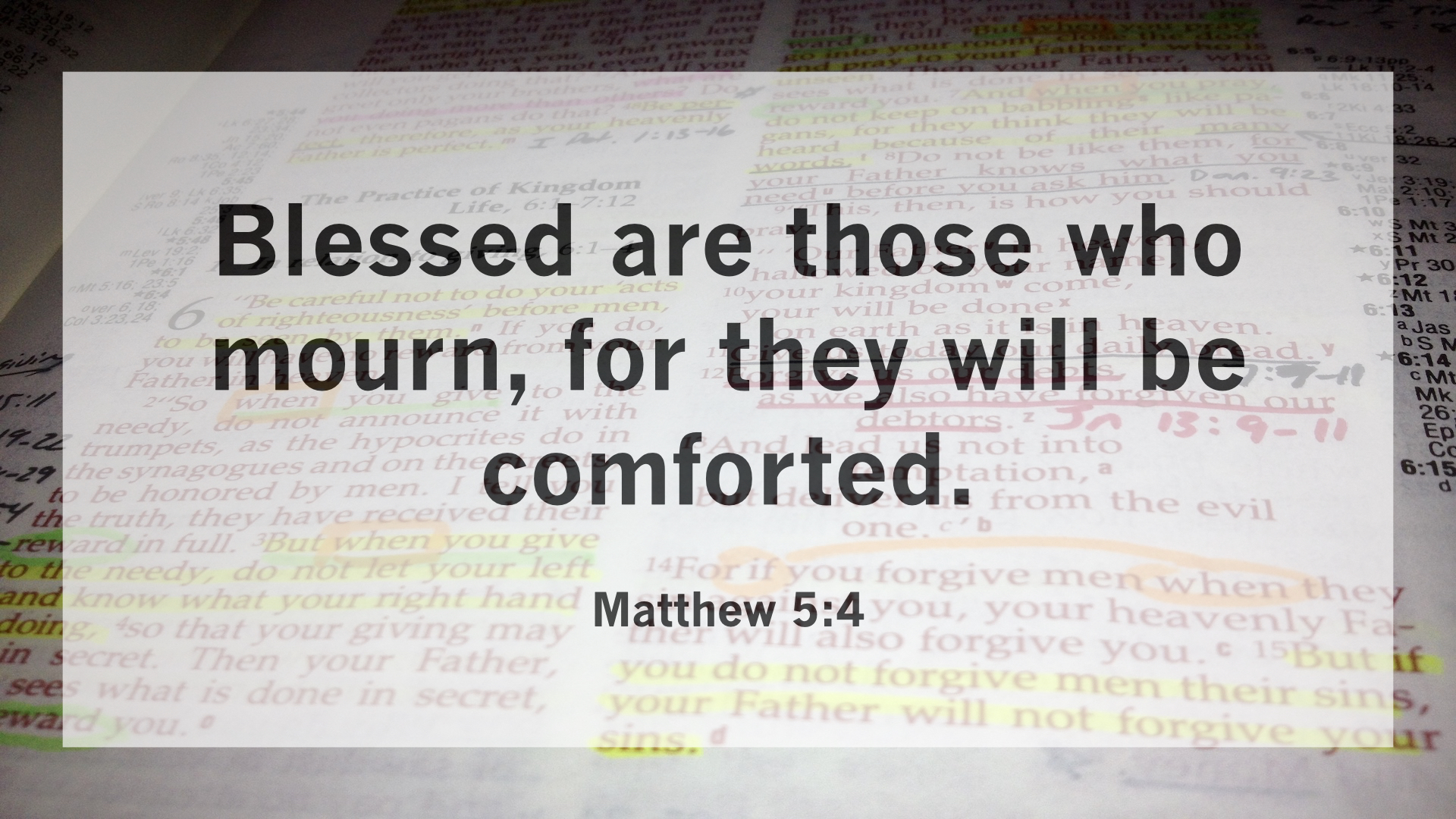
In Psalms 6 & 13, David doesn’t record any answers from God, but listen to this assurance from Jesus, “Blessed are those who mourn, for they will be comforted” (Matthew 5:4).
Jesus doesn’t tell us how or when God will bring us comfort, but He does assure us that we will be comforted!
In a couple of the examples from David, you can see this assurance as he continues his prayers (Psalm 6:2-4, 8-10; 13:1-6). Paul also experienced this confidence (2 Corinthians 12:7-10), and so did Jesus (Matthew 26:38-39, 50-54).
The writer of Hebrews assures us that Jesus was heard in His, “How long?” cries, and therefore He knows exactly how to intercede for us today as we lift up the same cry (Hebrews 5:7-8; 2:10, 14, 17-18)!
How long? Quite simply stated: Until God answers or until He lifts our burden.
In the meantime, the examples in Scripture and the assurance of Christ’s intercession for us us encourages us to…
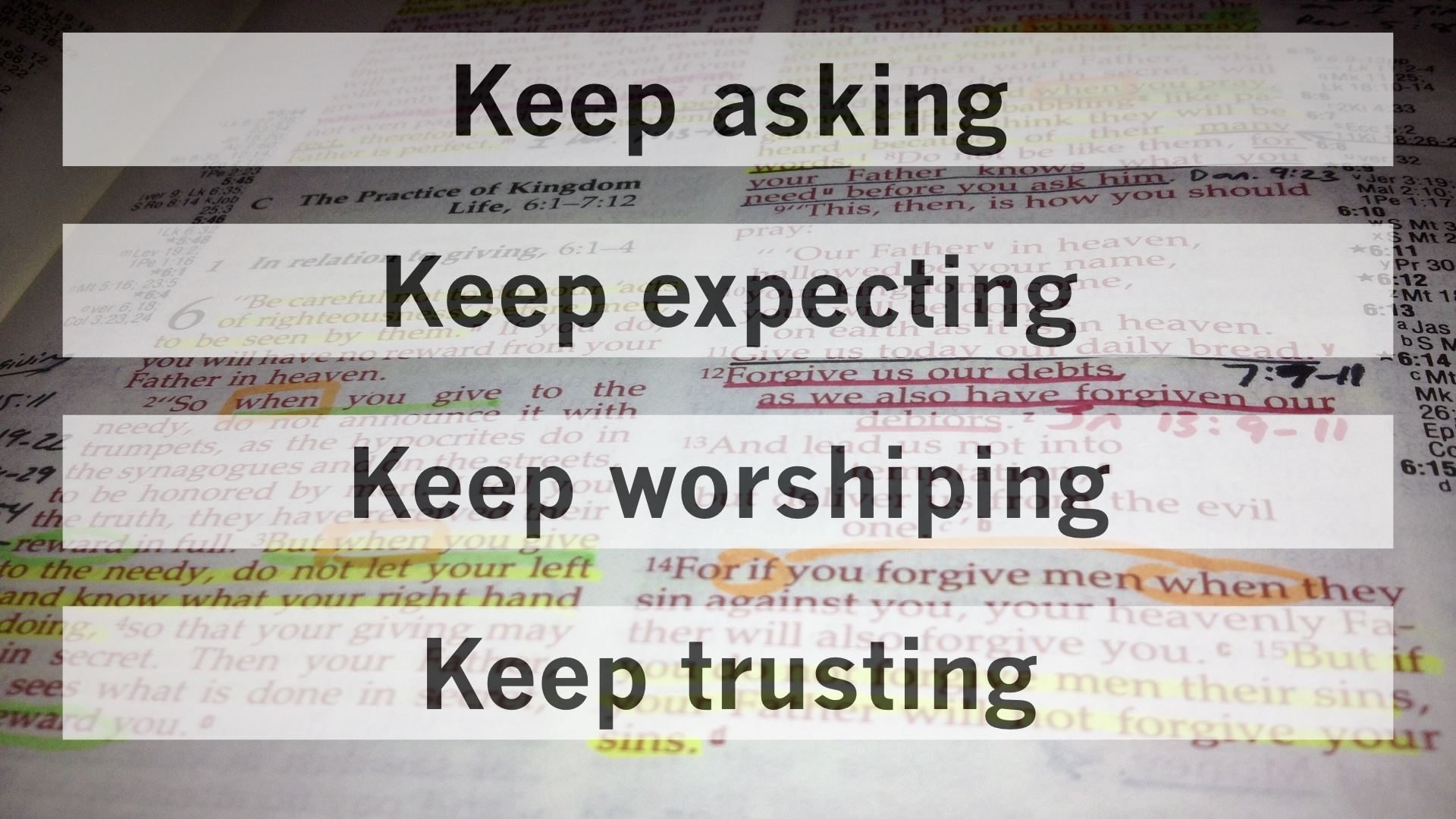
Keep asking with full confidence that God hears you
Keep expecting an answer
Keep worshiping God for Who He is
Keep trusting that your Heavenly Father wants to give you the very best!
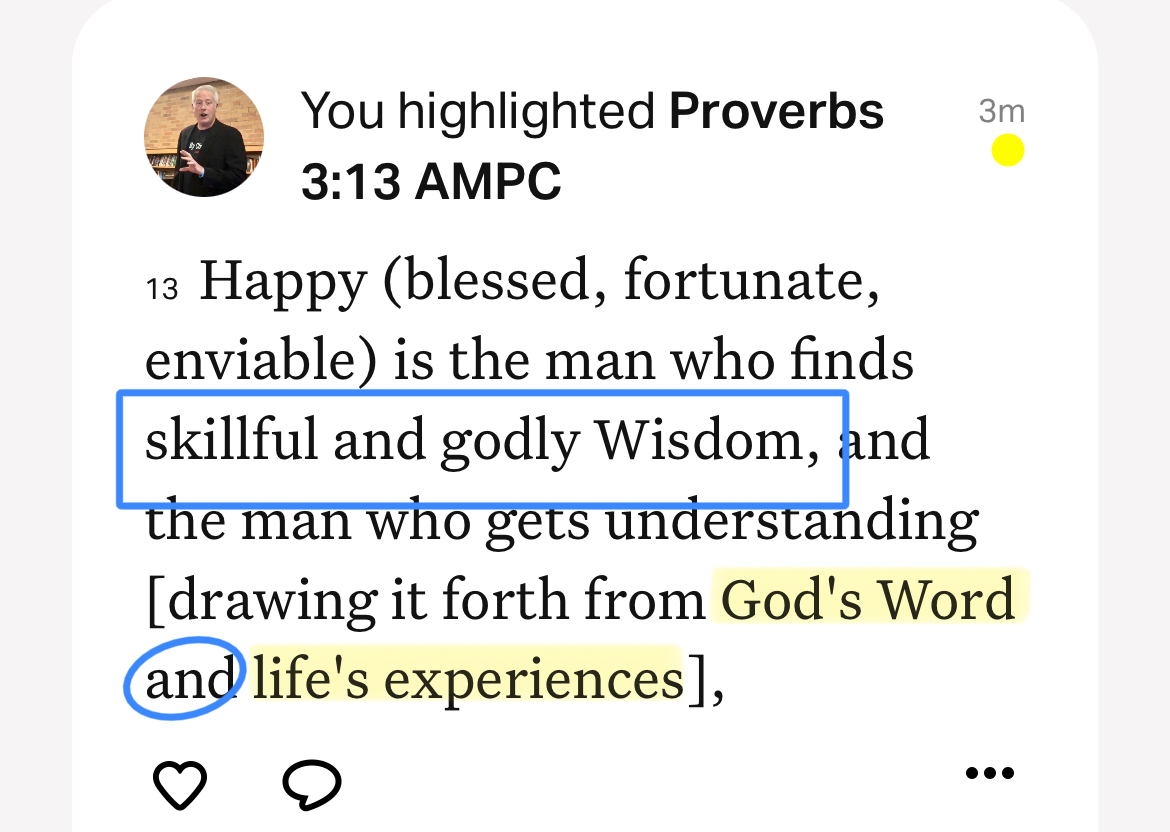
Happy (blessed, fortunate, enviable) is the man who finds skillful and godly Wisdom, and the man who gets understanding [drawing it forth from God’s Word and life’s experiences]. (Proverbs 3:13 AMPC)
Sir Francis Bacon wrote, “God has, in fact, written two books, not just one. Of course, we are all familiar with the first Book He wrote, namely Scripture. But He has written a second book called creation.”
God’s Word tells us about our life’s experiences, and it tells us about our observations of His creation and our experiences. These observations and experiences should take us back to God’s Book to fully appreciate and apply them in a manner which glories God.
Listen to the podcast of this post by clicking on the player below, and you can also subscribe on Apple, Spotify, or Audible.
It is so much easier to complain than to compliment. We can slide into the negative conversations almost without thinking about it.
In one of the last things that Paul wrote to Timothy—as he’s in prison, quite possibly awaiting execution—he warns his friend against the darkness of the last days (2 Timothy 3:1-5). We need to engage our minds, our wills, and our emotions to not go with the flow of culture’s negativity.
Remember the wise words from George Santayana: “Those who do not learn from history are doomed to repeat it.” The apostle Paul said this before Mr. Santayana (1 Corinthians 10:1-6). We need to learn the lessons of the dangers of forgetfulness that leads us to ingratitude.
Even before Paul, the Old Testament is filled with repeated reminders to remember God’s blessings and gratefully look to Him to supply every need. Let’s unpack some lessons on the importance of gratitude from Israel’s history in Psalm 106.
In Psalm 106:7, the Israelites forget what God has done for them in Egypt. Now that they appear to be pinned between the Red Sea and the onrushing Egyptian army, their forgetfulness becomes grumbling against God (Exodus 14:10-12).
In Psalm 106:13-14, instead of being grateful for the miraculous supply of manna, the Israelites are grumbling about the meat they don’t have (Numbers 11:4-6).
Here’s the lesson for us to learn: God wants to teach us to be thankful for His daily provisions for us (Joshua 5:12; Matthew 6:11).
In Psalm 106:21, 28-29, the next generation of Israelites didn’t remember to be thankful because they had seldom heard their parents express gratitude (Judges 2:10-11).
Here’s the lesson for us to learn: Our daily thankfulness fortifies future generations (Psalm 37).
Here is the repeated pattern we see—
Thankfulness → Forgetfulness → Fearful / Selfish attitudes → Susceptible to the temptation to grumble against God
Thankfulness → Remembering → Joyful / Secure attitudes → Fortified against the temptation to grumble against God
Jim Cymbala said, “Ingratitude to God is the first step toward backsliding and departure from God. So, it is to our benefit to have a thankful heart toward God.”
Let’s put into practice this lesson from King David: “Praise the Lord, O my soul, and forget bot all His benefits” (Psalm 103:2).
Listen to the podcast of this post by clicking on the player below, and you can also subscribe on Apple, Spotify, or Audible.
We’ve now learned about all three circles that help us discover our God-implanted gifts:
Passion—what thrills you?
Pain—what kills you?
Proficiency—what fulfills you?
What do you do with these gifts? What’s the whole purpose in learning about them? I think the goal as saints is to help the Body of Christ mature in ways that brings God glory (Ephesians 4:12-16).
Solomon also gives a great word picture of friends using their gifts for each other—“As iron sharpens iron, so a friend sharpens a friend” (Proverbs 27:17 NLT).
In an earlier message in this series, I talked about the thousands of enzymes in our human bodies. Each enzyme has just one task, and each task is indispensable to the health of the whole body. It is exactly the same in the Body of Christ—your gift-in-action is indispensable to the health of the whole Body.
How do you squander your grace gift? I think these are five basic ways:
Not discovering it—“I have a gift?”
Devaluing it—“My gift is nothing special.”
Overvaluing it—“My gift is super-important.”
Laziness—“My gift is fine just the way it is.”
Selfishness—“My gift is just for me.”
We need to discover our own gifts, but then we need to work on making the switch from “me” to “we.” I want to excel in using my gift so that I can help you excel in using your gift so that we can help another brother or sister excel in using their gift.
Oswald Chambers said, “The Book of God is insistent on this: we cannot develop a holy life alone, it would be a selfish life, without God in it and wrong. … Beware of isolation; beware of the idea that you have to develop a holy life alone. It is impossible to develop a holy life alone, you will develop into an oddity and a peculiarism, into something utterly unlike what God wants you to be. The only way to develop spiritually is to go into the society of God’s own children, and you will soon find how God alters your set.”
Frequently we need another brother or sister in Christ to help nudge us into discovering and using our gifts. For example, look how…
Mordecai assured Esther (Esther 4:13-14)
Matthias was chosen by those in the upper room (Acts 1:21-26)
The first deacons were unanimously chosen by the Church (Acts 6:3-6)
Barnabas and Saul were chosen by the Holy Spirit and confirmed by other prophets and teachers in the church (Acts 13:1-3)
Paul encouraged his proteges to appoint elders who were recognized by others in the church (Titus 1:5; 1 Timothy 3:1f)
Consider this poem—
For want of a horseshoe nail the shoe was lost.
For want of a shoe the horse was lost.
For want of a horse the rider was lost.
For want of a rider the message was lost.
For want of a message the battle was lost.
For want of a battle the kingdom was lost.
And all for the want of a horseshoe nail.
Listen to the Holy Spirit. Listen to the confirming words from fellow saints—words like “You are gifted,” “You are so good at…,” and “How did you know how to do that?” Then step out of your comfort zone and soar into your gift zone!
Listen to the podcast of this post by clicking on the player below, and you can also subscribe on Apple, Spotify, or Audible.
All leaders—but especially pastoral leaders—need to work on a better response when we are bitten by a sheep in our pasture. Our natural first response is usually not going to be very helpful for us or for the biting sheep.
When a painful attack suddenly confronts me, I go to the mirror. Instead of asking, “What’s wrong with them that they would bite me like this?” I go to prayer to ask, ‘“Did I do something that provoked this?’’ Sometimes I have literally gone into my bathroom, closed the door, and gotten nose-to-nose with myself to ask this question, and then listened for the Holy Spirit to speak to my heart.
My cousin Dick Brogden wrote, “Critics and skeptics are gifts to us, for in their aspersions they often bring to light a brokenness or a liability early on in its development in us. If we are secure enough to ferret out the truth through the condemnation of others, we remain healthy in the long term as our malady is exposed and dealt with before it becomes to serious.”
Remember that we are naturally self-protective, so this time of introspection will need to be supernaturally empowered by the Holy Spirit if we are going to see the true prompter of the attack. A prayer I have prayed more times than I can count is, “Search me thoroughly, O God, and know my heart! Try me and know my thoughts! And see if there is any wicked or hurtful way in me, and lead me in the way everlasting” (Psalm 139:23-24 AMPC).
Get a copy of my book here to help you heal from the painful sheep bites, and to learn how to respond better with each new biting experience.