The Difficulty In Answered Prayer

Often it is simply the answers to our prayers that cause many of the difficulties in the Christian life.

We pray for patience, and our Father sends demanding people our way who test us to the limit, ‘because…suffering produces perseverance’ (Romans 5:3). …

We pray to be unselfish, and God gives us opportunities to sacrifice by placing other people’s needs first and by laying down our lives for other believers. …

We pray to the Lord, as His apostles did, saying, ‘Increase our faith!’ (Luke 17:5). Then our money seems to take wings and fly away; our children become critically ill; an employee becomes careless, slow, and wasteful; or some other new trial comes upon us, requiring more faith than we have ever before experienced.

We pray for a Christlike life that exhibits the humility of a lamb. Then we are asked to perform some lowly task, or we are unjustly accused and given no opportunity to explain….

We pray for gentleness and quickly face a storm of temptation to be harsh and irritable. 

We pray for quietness, and suddenly every nerve is tested to its limit with tremendous tension so that we may learn that when He sends His peace, no one can disturb it.

We pray for love for others, and God sends unique suffering by sending people our way who are difficult to love and who say things that get on our nerves and tear at our heart. …

The way to peace and victory is to accept every circumstance and every trial as being straight from the hand of our loving Father.” —Lettie Cowman, in Streams in the Desert (emphasis added)

Be The 1-In-10

“…ten men who were lepers…” (Luke 17:12). 

Lepers were outcasts in society. Unable to participate in normal daily activities, unable to go to the temple to worship God, even unable to be with their family. These ten lepers encountered Jesus and did two positive things. But 9-of-10 lepers also did two sad things. 

(+) They knew to call on Jesus for help—“Jesus, Master, have pity on us!” 

(+) They took Jesus at His word. Their healing happened as they obeyed Christ’s words—“‘Go, show yourselves to the priests.’ And as they went, they were cleansed.” 

(-) Only one cleansed leper came back to praise God for his healing. 

(-) Only one was pronounced “well” by Jesus. All ten lepers were “cleansed,” which simply meant they were ceremonially clean and could once again participate in daily life and temple worship. But only one was made completely “well.” The Greek word is sozo, which means saved from eternal destruction. The same word is used to describe what Jesus came to do for us: “You shall call His name Jesus, for He shall save [sozo] His people from their sins” (Matthew 1:21). 

“What a rare thing is thankfulness.… ‘Were there not ten cleansed? But where are the nine?’ The lesson before us is humbling, heart-searching, and deeply instructive. The best of us are far too like the nine lepers. We are more ready to pray than to praise, and more disposed to ask God for what we have not, than to thank Him for what we have. … If we would be anxious for nothing, we must make our requests known to God not only with prayer and supplication, but with thanksgiving (Philippians 4:6).” —J.C. Ryle (emphasis mine) 

Probably all of us experience daily blessings from our good God, yet many of us never acknowledge Him as the Source of those blessings. We just accept the blessing and then keep on walking. 

Let’s be the 1-in-10! 

Let’s be quick to recognize God’s blessings. Let’s always remember that He does more than give us strength for today, but He saves [sozo] us entirely from eternal destruction. Let’s be the ones who always return—day after day after day—to give glory to God! 

Winning The Unseen Spiritual Battles

C.S. Lewis said, “If satan’s arsenal of weapons were restricted to a single one, it would be discouragement.” How true! In relation to our prayer time, satan tries to discourage with lies like—

    • “God has bigger things on His mind than your puny request!” 
    • “God helps those who help themselves; what have you done for yourself?”
    • “You created this situation and now you think God is going to bail you out?!?”
    • “Haven’t you prayed about this long enough already?” 
    • “Your prayers don’t really make a difference.” 

All of these lies are designed to discourage you, but always remember this—they are all lies! David said to God, “You keep track of all my sorrows. You have collected all my tears in Your bottle. You have recorded each one in Your book. My enemies will retreat when I call to You for help. This I know: God is on my side!” (Psalm 56:8-9) 

A great example of a man who prayed long and hard—and fought off the things that might discourage him to give up—was Daniel. 

Daniel had previously been given insight from God to interpret dreams, visions, and other messages from heaven, but on one particular instance, he was stuck. God gave Daniel a vision, but not the meaning of that vision. 

Daniel began to do two things in the physical realm that results in two unseen spiritual victories taking place. 

First, Daniel prayed. Daniel not only prayed boldly, but he also prayed long. Although Daniel prayed for 21 days, when an angel arrived with God’s answer, the angel said, “From the moment you decided to humble yourself to receive understanding, your request was heard in heaven. I have come in answer to your prayer.” 

Second, Daniel fasted. The word fast literally means “to cover the mouth.” In Daniel’s case, we know that for 21 days he abstained from meat and wine. But he also abstained from “choice food” (NIV). What are those? I think these might be our “comfort foods.” Foods we go to to help relieve stress. Foods that become substitute sources of help, instead of humbling ourselves to go to God and ask for wisdom. 

As Daniel was praying and fasting, it appeared that nothing was happening. But there were actually two victories won out of human sight. 

First, a spiritual battle was won. The angel sent to Daniel was locked in combat with a demon for 21 days before he broke free to come to Daniel. We are still involved in that kind of spiritual warfare today (see Ephesians 6:12-18). 

Second, Daniel was being refined and strengthened. When the angel arrived, he called Daniel “highly esteemed.” Don’t miss this—this greeting is the same Hebrew word used for what Daniel fasted (“choice food”). In other words, the temporary thing Daniel fasted turned into something of invaluable strength. 

What if Daniel had stopped praying after 2 days? 10 days? 20 days? 

Daniel—and you and I—may not see with our natural eyes the victories that are being won, but make no mistake about it: Our fasting and praying IS doing something amazing. 

Your prayers are being heard. Spiritual battles are being won. You are being refined. God IS going to accomplish something great. God IS being glorified. Don’t stop praying and fasting until God comes through!

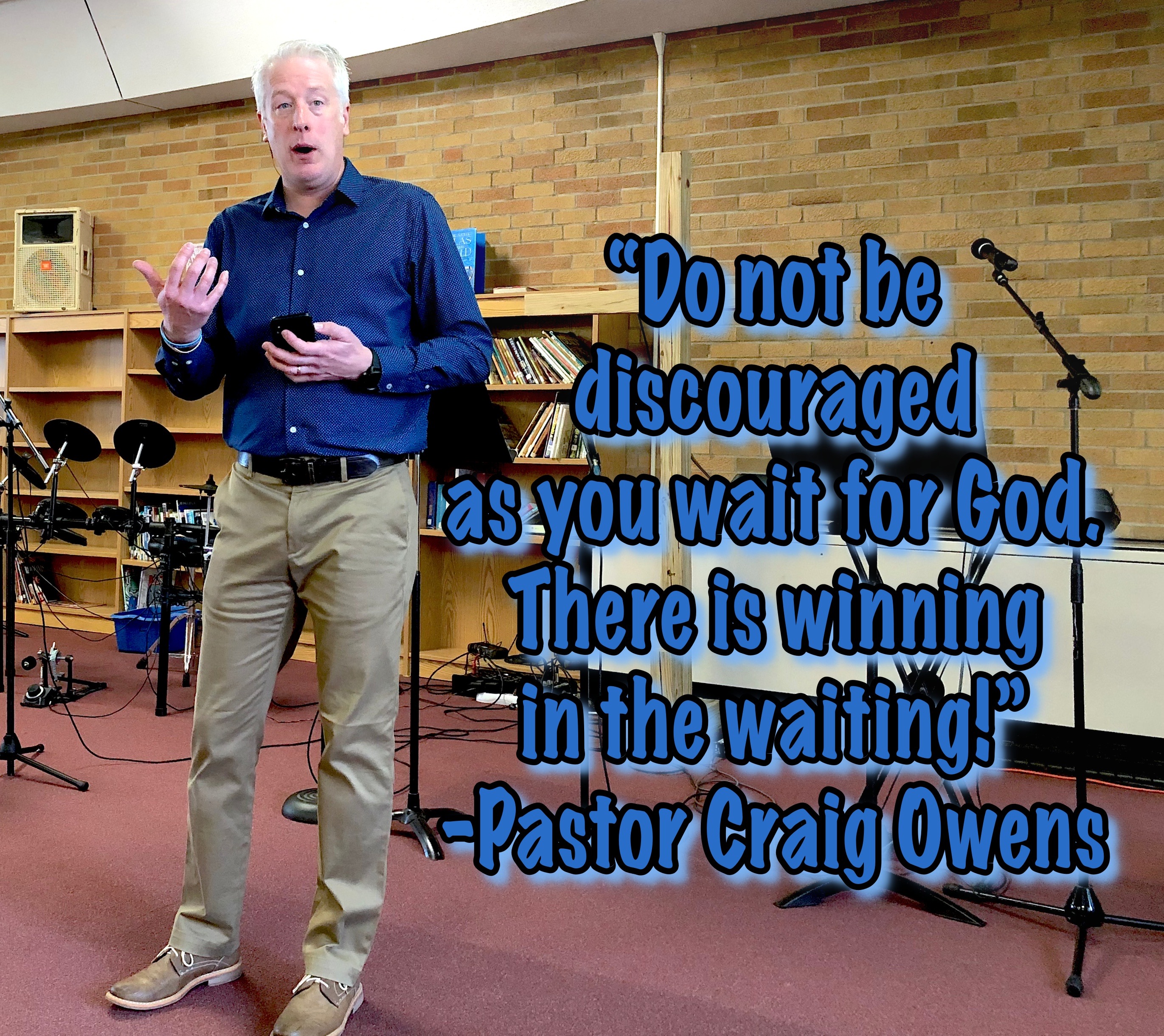
Do not be discouraged as you wait on God. There is winning even in the waiting!

Join me this Sunday as we conclude on series looking at the bold pray-ers in the Bible. 

What Place Does Prayer Have?

What is the place of prayer in your life? What prominence does it have in our lives? It is a question that I address to all. It is as necessary that it should reach the man who is well versed in the Scripture, and who has a knowledge of its doctrine and its theology, as that it should reach anyone else. What part does prayer play in our lives and how essential is it to us? Do we realize that without it we faint? Our ultimate position as Christians is tested by the character of our prayer life.

“It is more important than knowledge and understanding. Do not imagine that I am detracting from the importance of knowledge. I spend most of my life trying to show the importance of having a knowledge of truth and an understanding of it. That is vitally important. There is only one thing that is more important, and that is prayer. The ultimate test of my understanding of the Scriptural teaching is the amount of time I spend in prayer. As theology is ultimately the knowledge of God, the more theology I know, the more it should drive me to seek to know God. Not to know about Him, but to know Him. The whole object of salvation is to bring me to a knowledge of God. I may talk learnedly about regeneration, but what is eternal life? It is that they might know Thee, the only true God in Jesus Christ whom God has sent.

If all my knowledge does not lead me to prayer there is something wrong somewhere. It is meant to do that. The value of the knowledge is that it gives me such an understanding of the value of prayer, that I devote time to prayer and delight in prayer. If it does not produce these results in my life, there is something wrong and spurious about it, or else I am handling it in a wrong manner.” —Dr. Martyn Lloyd-Jones (emphasis added)

When Fear Must Go

Listen to the podcast of this post by clicking on the player below, and you can also subscribe on AppleSpotify, or Audible.

I love the balancing thought of being humbly confident in God’s presence (or if you like: being confidently humble).

Humble to know I have nothing in myself that gives me access to God’s presence and love and power, but confident to know that God through Christ’s work on the Cross desires to have me with Him. 

C.S. Lewis wisely noted: “Humility is not thinking less of yourself, it’s thinking of yourself less.” Fear comes in when I’m thinking about me—how unworthy I am, how I messed up, how I wish I would have….

Fear leaves when I set my thoughts on Christ—how absolutely worthy He is, how He has accomplished everything for me, how He is working all things together for good. 

There is no fear in love—dread does not exist—but full-grown, complete, perfect love turns fear out of doors and expels every trace of terror! For fear brings with it the thought of punishment, and so he who is afraid has not reached the full maturity of love—is not yet grown into love’s complete perfection. (1 John 4:18)

It is humbly confident (and confidently humble) to keep my mind off me and take all my thoughts to His perfect love. That’s when fear must go!

“The mark of God’s people is not incapacitating fear, but rather contrite courageous confidence in God. … The good news of the Bible is not that we are not worms, but that God helps worms who trust Him.” —John Piper, commenting on Isaiah 41:14

►► Would you please prayerfully consider supporting this ministry? My Patreon supporters get behind-the-scenes access to exclusive materials. ◀︎◀︎

God Is Preparing You To Be A Blessing

“God can never make me wine if I object to the fingers He uses to crush me with. … God puts us through discipline, not for our own sake, for the sake of His purpose and His call. Never debate about anything God is putting you through, and never try to find out why you are going through it. Keep right with God and let Him do what He likes in your circumstances, and you will find He is producing the kind of bread and wine that will be a benefit to others.” —Oswald Chamber, So Send I You

Bible Study Tools

I love to read (just take a peek at the number of books I read and reviewed last year). But without a doubt, hands-down, the clear runaway favorite read is my Bible. 

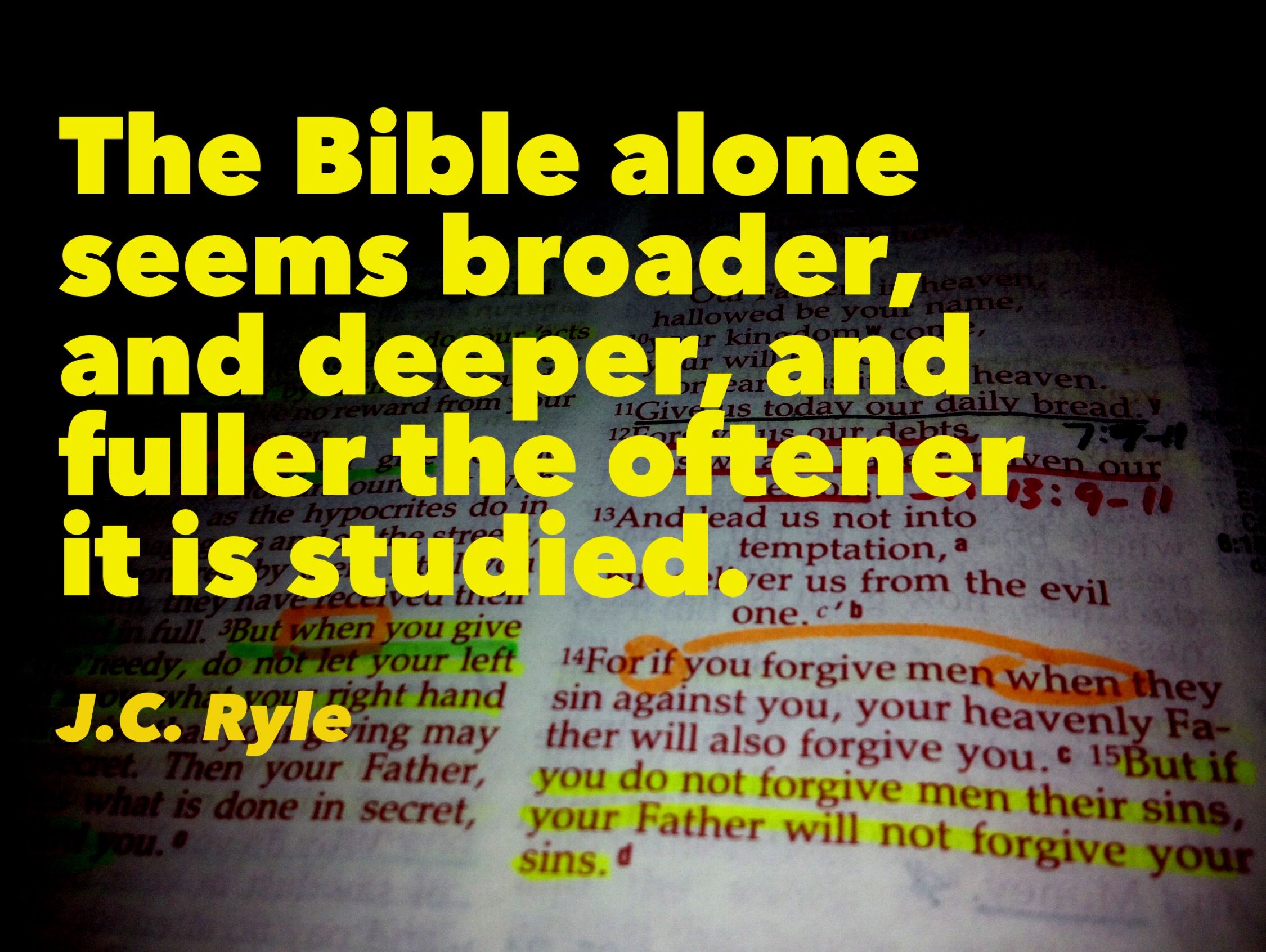
“The Bible alone seems broader, and deeper, and fuller the oftener it is studied. We have no need to look for allegorical and mystical meanings. The fresh truths that will constantly spring up before our eyes are simple, plain, and clear. Of such truths the Bible is an inexhaustible mine. Nothing can account for this but the great fact that the Bible is the Word, not of man, but of God.” —J.C. Ryle

I thought I’d share with you some of the current Bible study tools I’m utilizing—

  • I am reading through the Bible on YouVersion’s plan called As It Happened. This takes you through the Scripture in chronological order. 
  • Along with this chronological plan, I have also subscribed to the daily devotional called Missionary God—Missionary Bible. This comes as a daily email from premier missiologist Dick Brogden, and follows the readings of the chronological Bible.
  • I am reading through the John Maxwell Leadership Bible, where events and characters are studied through a leadership lens. 
  • Since I am presently in the Gospels in the Leadership Bible, I am also utilizing Jesus Through Middle Eastern Eyes by Kenneth Bailey, and Expository Thoughts On The Gospels by J.C. Ryle. 
  • I also utilize the Hebrew and Greek resources almost every day at Blue Letter Bible.
  • And I also love doing shared reading plans with family and friends on YouVersion. 

Please share in the comments what Bible study tools you are using so we can all learn and grow together. 

God Must Have Broken Things

“It is when a beautiful grain of corn is broken up in the earth by death, that its inner heart sprouts forth and bears hundreds of other grains. And thus, on and on, through all history, and all biography, and all vegetation, and all spiritual life, God must have broken things. Those who are broken in wealth, and broken in self-will, and broken in their ambitions, and broken in their beautiful ideals, and broken in worldly reputation, and broken in their affections, and broken ofttimes in health; those who are despised and seem utterly forlorn and helpless, the Holy Ghost is seizing upon, and using for God’s glory. ‘The lame take the prey,’ Isaiah tells us [33:23].” —Lettie Cowman, in Streams In The Desert

Battleground!

“Men think of the world, not as a battleground but as a playground. We are not here to fight, we are here to frolic. We are not in a foreign land, we are at home. We are not getting ready to live, we are already living, and the best we can do is to rid ourselves of our inhibitions and our frustrations and live this life to the full. …

That this world is a playground instead of a battleground has now been accepted in practice by the vast majority of evangelical Christians. They might hedge around the question if they were asked bluntly to declare their position, but their conduct gives them away. They are facing both ways, enjoying Christ and the world too, and gleefully telling everyone that accepting Jesus does not require them to give up their fun, and that Christianity is just the jolliest thing imaginable.” —A.W. Tozer, in Culture

(To read other quotes from this A.W. Tozer book, click here or here.)

The Value In Retreating

So He Himself often withdrew into the wilderness and prayed (Luke 5:16).

So”—in light of what just happened. What happened? Jesus was preaching everywhere, He healed a leper, and great multitudes came to hear Him speak and to be healed. So Jesus had to withdraw frequently to pray and be replenished.

All of us have only a finite amount of energy. When we are sensing that energy level is low, we also need a retreat. Otherwise, our low energy levels can sabotage us and diminish what God wants to do through us. 

Then check out the results after Christ’s time of replenishing:

  • God’s power was “present to heal” (v. 17)
  • People were saved (v. 20)
  • Jesus had holy perception (v. 22)
  • Miracles confirmed the word that Jesus preached (v. 24)
  • God was glorified (v. 26)
  • People followed Jesus (vv. 27, 28)
  • Jesus had enough grace and patience to handle criticism (v. 30)
  • Jesus had enough wisdom and patience to handle tricky theological questions (vv. 33-39)

J.C. Ryle noted, “The most successful workmen in the Lord’s vineyard are those who are, like their Master, often and much upon their knees.”

Healthy leaders are keenly aware of their own energy levels. 

So… A mark of a godly leader is one who frequently retreats. 

This is part 32 in my series on godly leadership. You can check out all of my posts in this series by clicking here.