Thursdays With Spurgeon—“All” Means All

This is a weekly series with things I’m reading and pondering from Charles Spurgeon. You can read the original seed thought here, or type “Thursdays With Spurgeon” in the search box to read more entries.

Listen to the podcast of this post by clicking on the player below, and you can also subscribe on iTunes or Spotify.

“All” Means All  

Forgiving one another, even as God for Christ’s sake has forgiven you. (Ephesians 4:32) 

     We pass on to observe what it is that we are told in the text has been done for us and to us, for Christ’s sake: ‘God for Christ’s sake has forgiven you.’ … Have you put your trust in the atoning sacrifice? Then God for Christ’s sake has forgiven you. You have not begun to be a Christian, I hope, with the idea that one day, at some future period, you may obtain forgiveness. No. ‘God for Christ’s sake has forgiven you.’ … Pardon is not a prize to be run for, but a blessing received at the first step of the race. If you have believed in Jesus, your sins are all gone—all gone. All your sins have been erased from the records of the past, never to be mentioned against you forever! …  

     I have sometimes heard it said that we were so forgiven when we first believed that there is no need to ask for further forgiveness. I will reply, we were so completely forgiven when we first believed that we ought continually to ask for the perpetuity of that one far-reaching act, that the Lord may continue to exert toward us that fullness of forgiving grace that absolved us perfectly at the first, that we may continue to walk before Him with a sense of that complete forgiveness, clear and unquestioned. … 

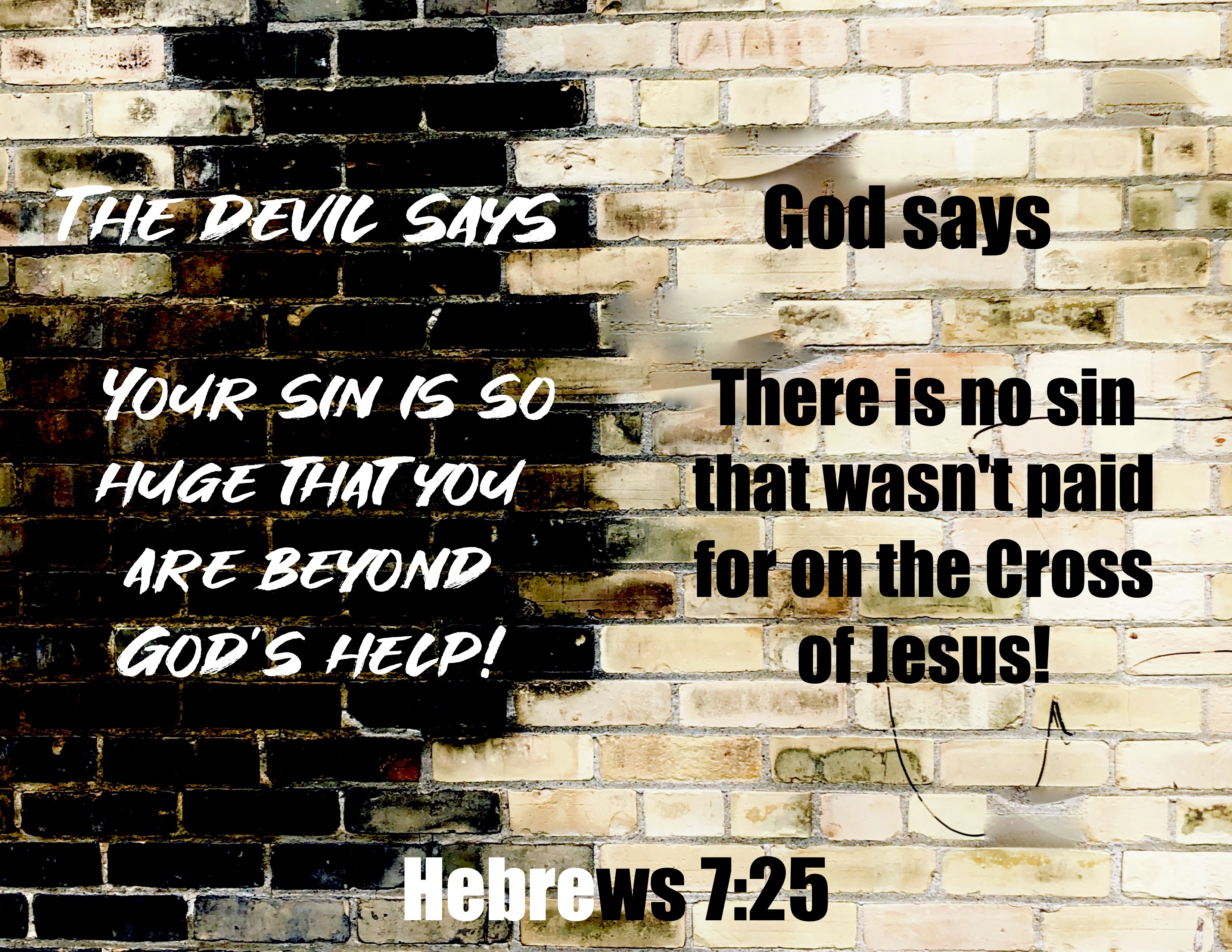
     O you believers, think of this, for the ‘all’ is no little thing. It includes sins against a holy God, sins against His loving Son, sins against gospel as well as against law, sins against man as well as against God, sins of the body as well as sins of the mind, sins as numerous as the sands of the seashore and as great as the sea itself, and all are removed from us as far as the east is from the west!

From Forgiveness Made Easy 

Let me drive home Charles Spurgeon’s point with two passages of Scripture and a stanza from an old hymn. 

[God] does not treat us as our sins deserve or repay us according to our iniquities. For as high as the heavens are above the earth, so great is His love for those who fear Him; as far as the east is from the west, so far has He removed our transgressions from us. (Psalm 103:10-12) 

For I will forgive their wickedness and will remember their sins no more. (Hebrews 8:12) 

When satan tempts me to despair 
And tells me of the guilt within, 
Upward I look and see Him there 
Who made an end of all my sin. 
Because the sinless Savior died, 
My sinful soul is counted free; 
For God the Just is satisfied 
To look on Him and pardon me, 
To look on Him and pardon me. (Charitie Lees Bancroft) 
 

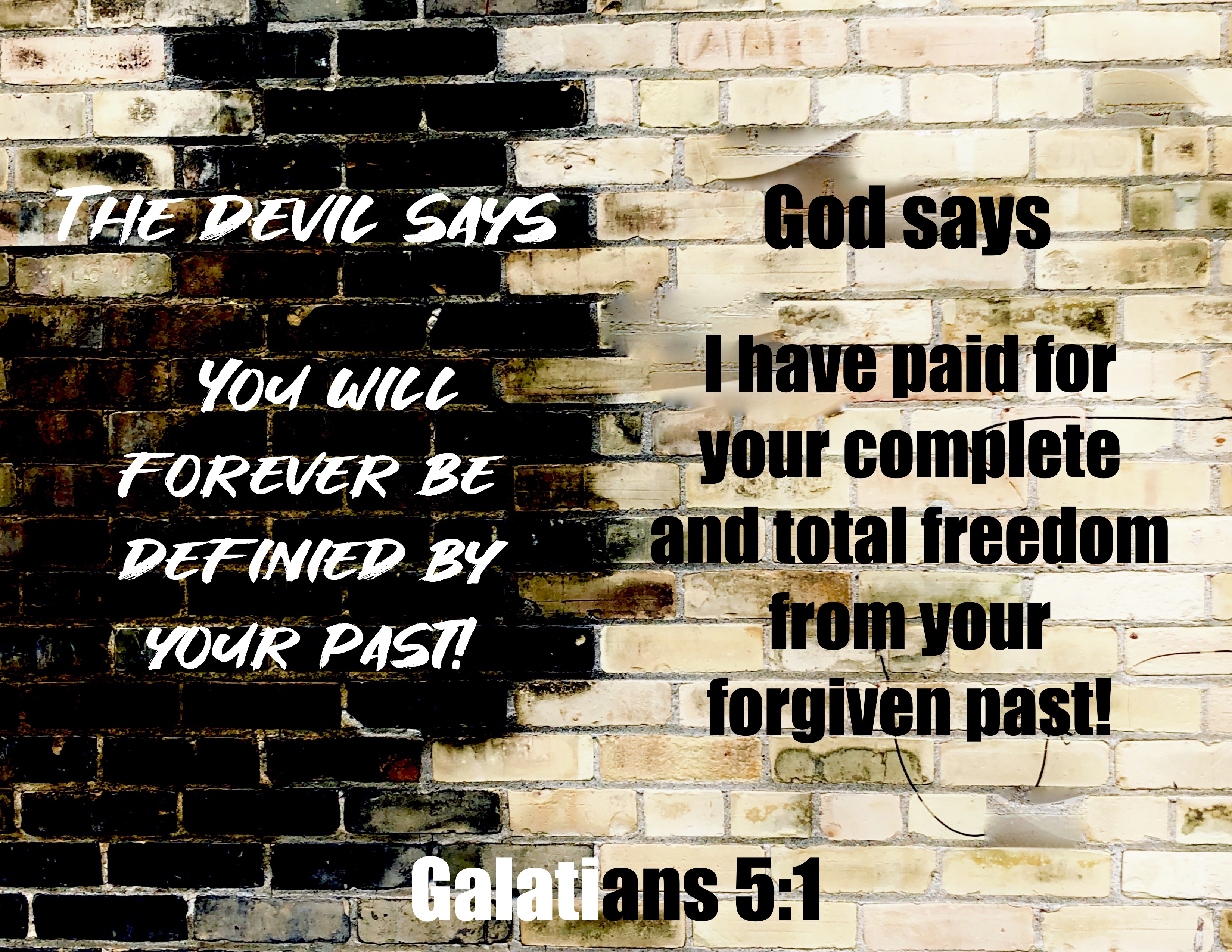
So I think this is a good conclusion—In this freedom Christ has made us free and completely liberated us; stand fast then, and do not be hampered and held ensnared and submit again to a yoke of slavery which you have once put off. (Galatians 5:1 AMP)

►► Would you please prayerfully consider supporting this ministry? ◀︎◀︎
 

Quieting The Storms

Listen to the podcast of this post by clicking on the player below, and you can also subscribe on AppleSpotify, or Audible. 

“Anxiety disorders are the most common mental illness in the U.S., affecting 40 million adults in the United States age 18 and older, or 18.1% of the population every year.” —Anxiety & Depression Association of America 

A multitude of factors go into someone’s anxiety: genetics, temperament, brain chemistry, life experiences. In addition to those factors, we have to keep in mind that humans are a three-part being—with a body, mind, and spirit—and a disease in one area does affect the other two areas. 

All of this means that there is no one-size-fits-all solution for anxiety. But there is one Healer: 

  • He may supernaturally heal your body, mind, or spirit 
  • He may direct you to a medical doctor, a mental health professional, or a spiritual counselor 
  • But always, He will walk through the challenges with you, strengthening you, and preparing you to minister to others going through a similar struggle (Psalm 23:1-6; 2 Corinthians 1:3-4) 

David wrote, “When I am afraid, I put my trust in You” (Psalm 56:3). Notice that he said “when” not “if.” David knows what you probably know too: we can be easily consumed by our anxiety, doubts, and fears. But David also knows (and I hope you do too) that at those moments, we can go to God as our trustworthy First Source. 

One of the dictionary definitions of anxiety is a feeling of disquiet. All of the conflicting thoughts make it hard to concentrate, the abundance of noise makes it difficult to talk to yourself, let alone talk to God. 

I’d like you to consider another psalmist’s words. Look at the first half of Psalm 94:19—

  • When anxiety was great within me… (NIV) 
  • In the multitude of my anxious thoughts… (AMP)
  • When doubts filled my mind… (NLT) 

The setting of this psalm is one of lots of disquieting voices: a desire to see the wrongdoers punished, listening to arrogant words, getting fed up with boasting words, seeing good people being trampled, hearing foolish words uttered about God (vv. 1-8). 

Experiencing anxiety is not sinful, but I do think that we grieve God’s heart when we immediately run to other sources for relief instead of going to our loving Heavenly Father first. After dealing with the disquiet in the opening verses of Psalm 94, the psalmist says, “My anxiety level was sky high!” But then notice how that verse concludes—

  • Your consolation brought me joy (NIV) 
  • Your comforts cheer and and delight my soul (AMP)
  • Your comfort gave me renewed hope and cheer (NLT)

Jesus told us about our Comforter who would always be with us (John 14:1, 16-17). A little further on in these same remarks Jesus also said, “These things I have spoken to you, that in Me you may have peace. In the world you will have tribulation; but be of good cheer, I have overcome the world” (John 16:33 NKJV). 

I like that phrase, “Be of good cheer.” That phrase is just one word in Greek, and sometimes it’s translated “be of good courage.” In every single instance, it’s only used by Jesus and it’s only used when He comes close to anxious people (Matthew 9:2, 9:22, 14:27; Mark 6:50, 10:49; Luke 8:48; John 16:33; Acts 23:11). 

A furious squall battered the boat, almost swamping it. The disciples were—to say the least—disquieted! In their anxious state they notice Jesus peacefully sleeping. They wake Him up with, “Don’t You care that we’re drowning?!” Jesus stands up and says to the storm, “Quiet. Be still.” 

Recall that one of the descriptions of anxiety was being disquieted. That prefix dis- means to be separated: our anxiety would seek to distance us from God’s presence, to make us feel like His help is too far away. But when we go to Jesus, He alone can say, “Quiet” to our disquieting thoughts. He can remove the “dis-” and bring us close to Him. Only His peace can X-out the noise of the storm and bring you to a place of quiet rest. 

After Jesus said, “Quiet. Be still,” notice this: “THEN the wind died down and it was completely calm” (Mark 4:39). And the great thing is this: Even if another storm begins disquieting us just a few minutes after the calm, we can go to Him again. There is no limit: We can continually go to the Eternal Source of peace, to the only One who can speak, “Quiet” to our anxious thoughts. 

Please follow along with us as we learn more about X-ing out our anxieties. 

►► Would you please prayerfully consider supporting this ministry? ◀︎◀︎

Thursdays With Spurgeon—Love So Amazing

This is a weekly series with things I’m reading and pondering from Charles Spurgeon. You can read the original seed thought here, or type “Thursdays With Spurgeon” in the search box to read more entries.

Listen to the podcast of this post by clicking on the player below, and you can also subscribe on iTunes or Spotify.

Love So Amazing  

Forgiving one another, even as God for Christ’s sake has forgiven you. (Ephesians 4:32) 

     The first phrase to think about is ‘for Christ’s sake.’ We use these words very often, but probably we have never thought of their force. … All the good things that God has bestowed upon us have come to us ‘for Christ’s sake.’ But especially the forgiveness of our sins has come ‘for Christ sake.’ …  

     It is His very love as well as His holiness and His justice that, if I may use such a term, compels Him to severity of judgment so that sin cannot and must not be blotted out till atonement has been presented. There must, first of all, be a sacrifice for sin, that, mark you, the great Father, to show His love, supplies, for it is His own Son who is given to die! And so the Father Himself supplies the ransom through His Son, that Son is one with Himself by bonds of eternal unity, mysterious but most intense. If God demands the penalty in justice, He Himself supplies it in love. … 

     I want you to consider, for a moment, how readily God may now blot out sin since Christ has died. … God, for Christ’s sake, has accepted us in Him, has forgiven us in Him, and looks upon us with infinite love, changeless in Him. This is how all our blessings come to us, in and through Christ Jesus. And if we are indeed in Him, the Lord does not only forgive us our sins, but He bestows upon us the boundless riches of His grace in Him. In fact, He treats us as He would treat His Son. He deals with us as He would deal with Jesus! … 

     And you, big evil sinner, if you will go to God at this moment and say, ‘Lord, I cannot ask You to forgive me for my own sake, but do it out of love for Your dear Son,’ He will do it…. Christ took the shame that He might magnify His Father, and now His Father delights to magnify Him by blotting out the sin.

From Forgiveness Made Easy 

I’ve lost track of the number of times someone has told me, “I’ve messed up for so long—I’ve done such atrocious things—there is no way God could forgive me.” This is one of satan’s lies that keeps people from accepting God’s forgiveness. 

Jesus took your penalty, He paid the price for your sin! The moment you believe that, you are clothed in Christ’s righteousness. So now when the Holy God looks at you, He says, “You look like My Son. I love to bless My Son. I love to do what He asks of Me. For His sake, I have forgiven you. Not only forgiven, but I’ve forgotten everything I’ve forgiven!” 

Don’t wait another moment: If you haven’t asked God to forgive you “for Christ’s sake,” do it right this very minute! I’d love to chat with you about this, so reach out to me and let’s talk more about this amazing new relationship you now have with Almighty God because you are forgiven for Christ’s sake. 

This reminds me of a song by Chris Tomlin—

He became sin Who knew no sin
That we might become His righteousness
He humbled Himself and carried a Cross
Love so amazing!

►► Would you please prayerfully consider supporting this ministry? ◀︎◀︎

 

Sword Of God

Listen to the podcast of this post by clicking on the player below, and you can also subscribe on AppleSpotify, or Audible. 

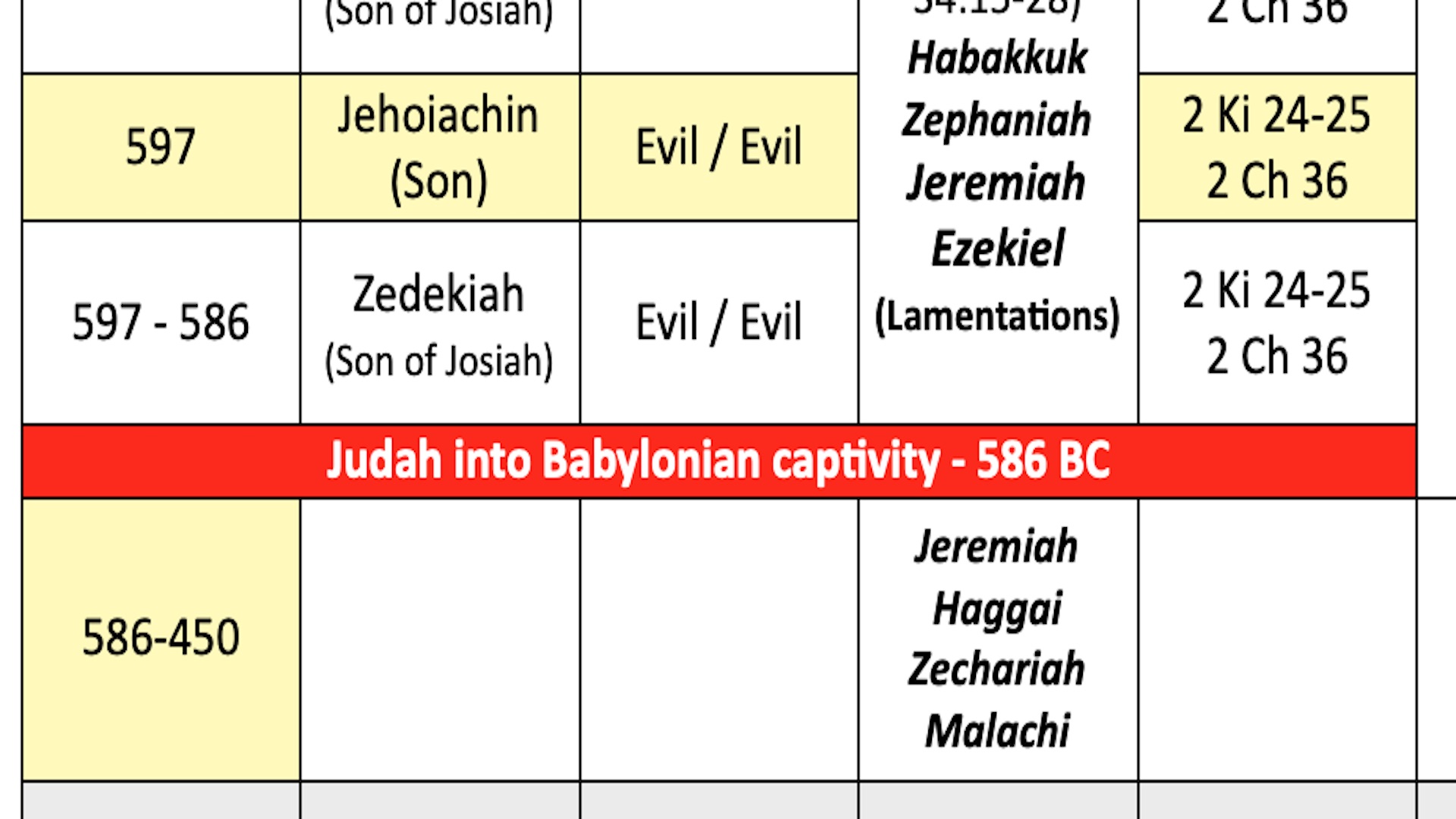
Zechariah is the longest book of the minor prophets. His ministry overlaps Haggai the prophet, Ezra the priest, Zerubbabel the governor, and Joshua the high priest. I point all of this out because we need to always keep in mind that the Bible isn’t a collection of stories. It’s a verifiable (or falsifiable) record of real people at real moments in history. Many of the stories in the Bible confirm and even amplify each other. 

Let me remind you of what we learned from our study of the minor prophet Haggai:

  1. Hear the Word 
  2. Consider the Word 
  3. Obey the Word 
  4. Stand assured, encouraged, and unmovable on God’s Word 

Aren’t you more assured of a message that has a confirmation? Like if one person gives you a compliment that you hadn’t considered before, and then later on someone else notices the same attribute. I think we are more ready to receive the word when it has a confirmation like that. 

Haggai delivered a word directed to Zerubbabel the governor, which we saw was a prophecy pointing to and ultimately fulfilled in Jesus. God called Zerubbabel “My signet ring—a mark of God’s supreme authority. 

That might have been a difficult thing for Zerubbabel to accept, so Zechariah is given a confirming word two months after Haggai’s prophecy (Zechariah 4:1-9). This prophecy affirms the message given through Haggai, and also points to its ultimate fulfillment in Jesus. 

But then Zechariah is also given an amplifying word, as he speaks a word from God to Joshua, the other “olive tree” in his God-given vision (Zechariah 3:1-9; 6:9-13). 

Zechariah confirmed and amplified Haggai’s message. And then Jesus fulfilled both of their prophecies! We have the benefit of seeing the prophecy and fulfillment, which should build our faith in ALL of the promises in God’s Word. 

The Word of God then become the (s)word of God in our mouths and hearts!  

Isaiah prophesied that Jesus would wield the sword of God, and this is the same blessing we can claim today. Jesus defeated satan’s temptations with the sword of God, and so do the saints of God today (Isaiah 49:2; Psalm 149:6; Ephesians 6:13, 17; Luke 4:1-12; Revelation 12:11). 

Because of these specific prophecies that have been fulfilled in Jesus Christ, we can now stand assured, encouraged, unmovable, and well-armed with the same sword of God. 

There isn’t a more effective sword or shield than God’s (s)word! 

If you’ve missed any of the messages in our series discovering the major lessons in the minor prophets, you can access the full list by clicking here. 

►► Would you please prayerfully consider supporting this ministry? ◀︎◀︎
People Of The Word

Listen to the podcast of this post by clicking on the player below, and you can also subscribe on AppleSpotify, or Audible.

Haggai appears on the historical scene for just five months, but what a bright light he shines! He is the first of three post-exilic prophets to encourage the Israelites who have returned to Jerusalem.

Before we talk about Haggai’s ministry, we need a brief grammar lesson. Specifically, let’s look at two prefixes: un- and non-. Both of them ultimately mean “not,” but there is a distinction that we need to consider when it comes to the Bible: 

    • unbiblical would mean something contrary to the teaching of the Bible 
    • non-biblical is something that may or may not be correct, but it’s not specifically mentioned in the Bible 

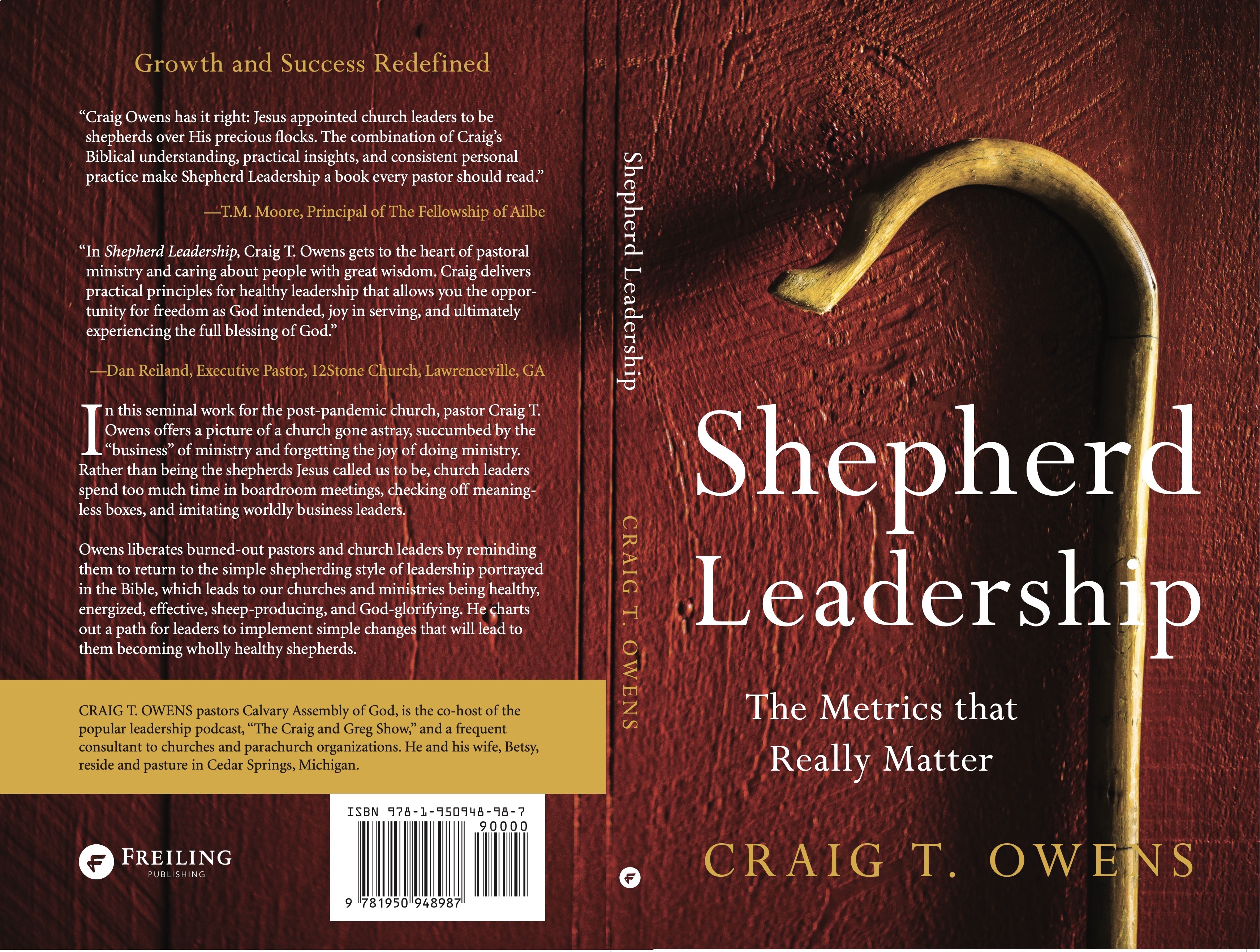
Let me give you an example from my book Shepherd Leadership: The Metrics That Really Matter. Chris asked me whether I preferred the title senior pastor or lead pastor. This is a non-biblical issue; that is, it doesn’t really matter to me because neither of those titles are found in the Bible. Technically, the word pastor isn’t in the Bible either. The word that is usually translated “pastor” is really a herdsman or a shepherd. 

The problem is that if we put too much focus on non-biblical things, those things can end up becoming unbiblical pursuits. Like when Jesus took the Pharisees to task for their focus on traditions over Scripture (see Matthew 15:1-6). I wrote Shepherd Leadership mainly to get pastors and church leaders to spot non-biblical metrics which may have sneakily turned into unbiblical pursuits, so that they could return to pure biblical principles. In the Preface of my book, I wrote—

“My larger concern is that churches, parachurch organizations, and nonprofit ministries that are largely founded to fulfill a biblical mandate are straying from the simple, freeing truths found in the Bible. Or maybe I should say that they are adding things to their ministries that aren’t in the pages of Scripture. Whichever way you want to say it, the result is the same: We are using the wrong metrics to define ‘success’ for our ministries. I fear that in our focus on unbiblical practices, we are missing the joy of really doing ministry.”

Haggai calls God’s people to return to God’s Word. This is the second-shortest book in the Old Testament (at just 38 verses long), yet Haggai says something like “this is what God says” 28 times in these 38 verses! 

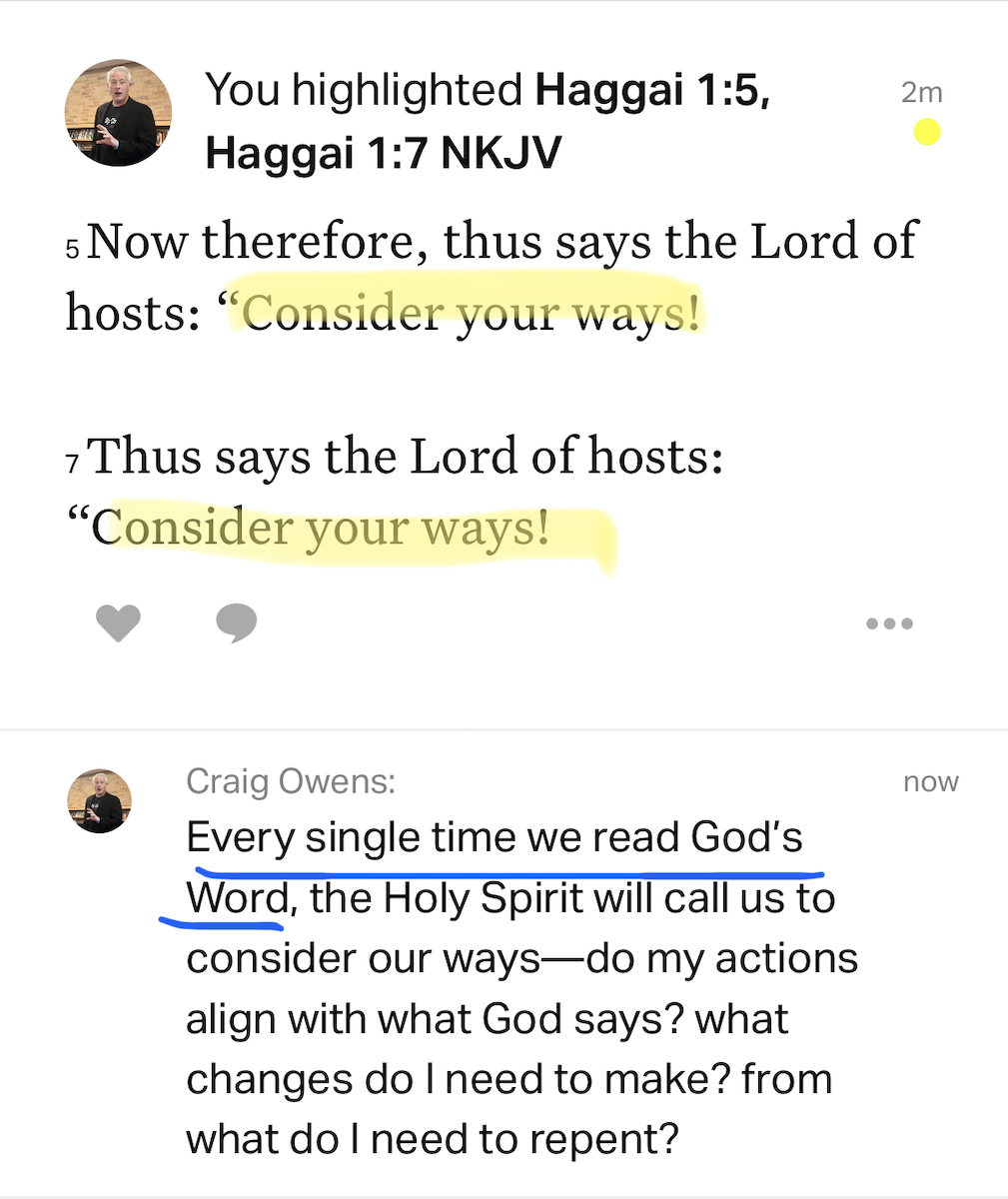
Haggai also records five times that God says, “Give careful thought to your ways.” This phrase literally means to take a strong hold on each thought and examine it intensely. This idea is always connected to a phrase like, “This is what the Lord Almighty says” (1:5, 7; 2:14-15, 17-18). In other words, we are to thoughtfully examine our lifestyle with God’s Word being THE standard of measurement. 

Paul made a similar connection in the New Testament: We demolish arguments and every pretension that sets itself up against the knowledge of God, and we take captive every thought to make it obedient to Christ (2 Corinthians 10:5). 

Jesus did this too. When speaking to the religious leaders, He said, “You are wrong because you know neither the Scriptures nor God’s power” (Matthew 22:29). And even with His own disciples, He had to open their minds to see how the Scriptures pointed to Him and were fulfilled in Him (Luke 24:25-27, 44-45). 

Indeed, the phrase “it is written” is used 75 times in the New Testament! 

That’s why Haggai’s words still ring true to us today: “Give careful thought” to how you live in light of how God says you should be living. Christians need to…

  1. Hear the Word of God every day 
  2. Consider their lives in light of the Word of God
  3. Obey what the Word of God is saying to us 

(check out Acts 17:11; Psalm 139:23-24; 1 Samuel 15:22) 

We must become people of the Word of God or else we run the very real risk of letting our non-biblical decisions spiral downward into a sinful, unbiblical lifestyle that grieves the heart of God. 

If you’ve missed any of the messages in our series Major Lessons From Minor Prophets, you can access the full list by clicking here. 

►► Would you please prayerfully consider supporting this ministry? ◀︎◀︎

Trainable

Listen to the podcast of this post by clicking on the player below, and you can also subscribe on AppleSpotify, or Audible. 

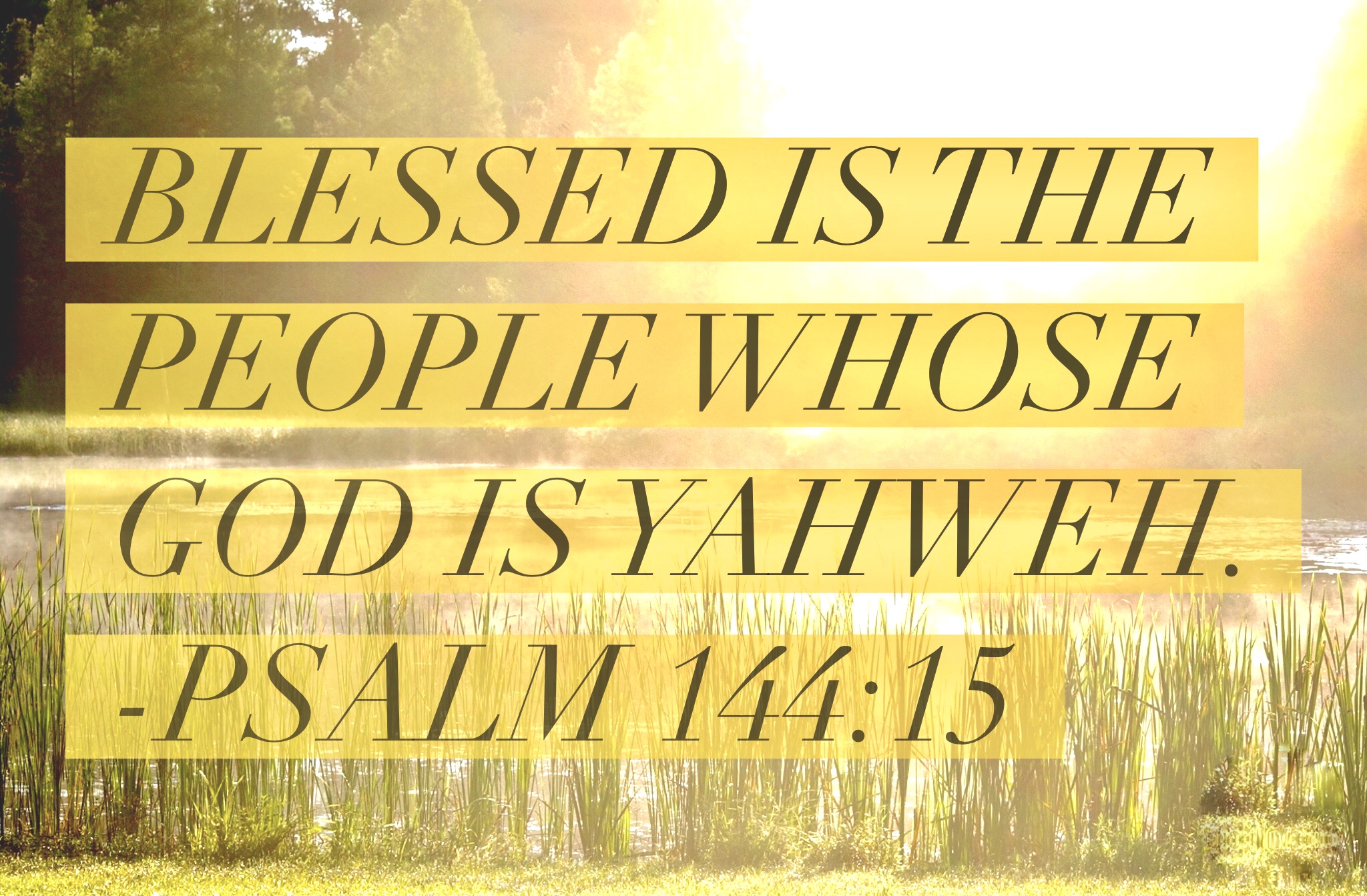
Blessed are the people of whom this is true… (Psalm 144:15). 

This is how David closes the 144th Psalm, but a good question for us to ask is, “Of whom what is true?” David explains that blessed people are those who are experiencing safety from their enemies, healthy, prosperous children, abundant harvests, and freedom.

Well, you might ask, how are these blessings to be obtained? David opened this psalm by thanking God this way: “Praise be to the Lord my rock, Who trains my hands for war, my fingers for battle.” In other words: Thank You, God, for giving me victory! 

This raises yet another question for me: Did David win all of these blessings of victory, or did God? The answer is quite simply, “Yes!” 

David recognized that God trains, but he had to be trainable. So too for us today, we have to be trainable to learn to discern God’s voice. Sometimes God says, “Attack,” and sometimes He says, “Stand still and watch My deliverance,” but in all cases, God is the ultimate Source of our victory and the blessings that flow from that victory. 

The blessings of God our Trainer flow to the people who have made themselves trainable.Blessed are the people of whom this is true; blessed are the people whose God is the Lord.” This blessing caused David to sing out in worship, as it still should for us today, “I will sing a new song to You, O God; on the ten-stringed lyre I will make music to You, to the One who gives victory to kings, who delivers His servant David from the deadly sword. 

If you want to experience more of God’s blessings, you need to regularly ask the Holy Spirit, “Am I trainable today?” As this psalm makes abundantly clear: Those who are trainable are also bless-able! 

►► Would you please prayerfully consider supporting this ministry? ◀︎◀︎
Thursdays With Spurgeon—Present Communion With Jesus

This is a weekly series with things I’m reading and pondering from Charles Spurgeon. You can read the original seed thought here, or type “Thursdays With Spurgeon” in the search box to read more entries.

Listen to the podcast of this post by clicking on the player below, and you can also subscribe on iTunes or Spotify.

Present Communion With Jesus

     The desire of a renewed soul is to find Christ and to be with Him. … Past communion with Christ is very well: ‘Therefore I will remember Thee from the land of Jordan…’ (Psalm 42:6). But these are only stale meats, and a loving soul wants fresh food every day from the table of Christ. … 

     A true loving soul, then, wants present communion with Christ. So the question is, ‘Tell me where You feed. Where do You get Your comfort from, O Jesus? I will go there. … Where do You feed Your flock? In Your house? I will go there, if I may find You there. In private prayer? Then I will not be slack in that. In the Word? Then I will read it night and day. Tell me where You feed; wherever You stand as the Shepherd, there will I be, for I want You. I cannot be satisfied to be apart from You. My soul hungers and thirsts to be with You.’

From The Church’s Love To Her Loving Lord

There are so many pictures in the Bible about our continual reliance on God’s presence—from the manna that was only good for each day, to Jesus teaching us to pray for “our daily bread,” to the vivid example of Christians being as dependent on Jesus as a branch is dependent on the vine (see Exodus 16:4-5, 14-17; Matthew 6:11; John 15:1-8).  

All of these mean that we need to constantly abide with our Savior. 

In my book Shepherd Leadership: The Metrics That Really Matter, I spend two chapters talking to leaders about the need to rest—or sabbath. In fact, I call it sabbathing to give it the emphasis on the ongoing nature of this activity. I wrote—

“Without building in sabbath breaks, we run down emotionally, spiritually, mentally, and physically, which means loving God becomes a chore, not a delight (Mark 12:30). This then means loving your neighbor becomes nearly impossible (Mark 12:31). Ultimately, this means that we aren’t able to be the compassionate, wise, strong shepherds that the sheep under our care need us to be. … 

“The goal of sabbathing is to infuse more vitality into the shepherd leader for the purpose of pasturing the sheep under that leader’s care. You cannot give hope to others unless you are hope-filled; you cannot give health to others unless you are healthy; you cannot consistently speak wisdom to others unless you are growing in wisdom. All of this healthy growth for the shepherd leader takes place while sabbathing….” 

To reiterate what Pastor Spurgeon said: “A true loving soul, then, wants present communion with Christ.” I hope you will always seek that for yourself.

►► Would you please prayerfully consider supporting this ministry? ◀︎◀︎
No One Can Help Me

Listen to the podcast of this post by clicking on the player below, and you can also subscribe on AppleSpotify, or Audible. 

David uses the phrase “no one” three times in verse 4 of the 142nd Psalm. This verse is also the middle verse of the psalm. Since Hebrew literature often puts the central message in the center, we should start with this verse and then see the message that radiates out from the center. 

In this middle verse, David realizes that no earthly help can sustain him: 

  • no one is at my right hand with any strength to lend to me
  • no one is truly concerned for my wellbeing 
  • no one can help my eternal soul 

Radiating out from this middle verse we see…

  • …God, You watch over me, and You are my refuge (vv. 3, 5)
  • …I pour out my complaint to You, God, and You listen and respond to me (vv. 2, 6) 
  • …God, I cry to You for mercy, and You set me free from my prison (vv. 1, 7)

I find it interesting that David calls it “my prison.” David has learned that God may allow affliction and shaking so that he will see that there is only One who is reliable and stable. Trusting in anything or anyone else becomes, in essence, a prison. 

In verse 7, David mentions God’s “goodness to me.” Sometimes this word for goodness is translated “bountiful,” and it comes from a Hebrew word that can mean “to be weaned.” David is sharing with us that our afflictions can wean us from all human help so that we can fully enjoy the bountiful goodness of our loving God! 

When it appears that there is no one around to help me, that is actually a good thing.

It’s a good thing because it means that now that everything else has been cleared out of my way, I can clearly see The Only One that truly cares about me both today and forevermore! 

►► Would you please prayerfully consider supporting this ministry? ◀︎◀︎
Abiding In God’s Omnipresence

Listen to the podcast of this post by clicking on the player below, and you can also subscribe on AppleSpotify, or Audible. 

Why do Christians say things like, “Let’s go to church” or “Let’s go meet with God”? 

Do we forget that Jesus said He would never leave us, or that He sent the Holy Spirit to be our constant Companion, or that our very heart is the temple of God’s presence (Matthew 28:20; John 14:16; 1 Corinthians 3:16)? We are naturally self-focused creatures. It takes discipline on our part to keep reminding and re-reminding ourselves that God is always with us. 

Psalm 84 and its two Selahs is one way of re-reminding ourselves of God’s abiding presence. The Selahs are reminders to pause and consider, “Where am I?” and to know that the answer can always be, “Surely I am in God’s presence!” 

This psalm is divided into three 4-verse stanzas. Stanzas 1 and 2 end with the call to Selah, and all three stanzas feature a powerful name for God: LORD Almighty. When we see LORD in all capital letters, that is God’s covenant name: Yahweh or Jehovah, which means that He is the “I AM that I AM.” Almighty signifies that He is the invincible, un-defeatable Captain of angel armies. 

In these two combined titles, we have the personal intimate God of love and the unstoppable God of limitless power! If He were just the God of love, we may not be able to trust His power. If He were just the God of power, we may not be able to approach Him. He is the All-Loving, Ever-Approachable Power. 

Another important recurring theme in Psalm 84 is the word blessed. It’s used three times in this psalm, more than in any other single psalm. This word means God’s unmerited favor, and the word either begins or ends each of the three stanzas.  

In stanza 1 (vv. 1-4), twice we have that combined title of LORD Almighty. But we must always remember that our God is not distant and unapproachable, but the sons of Korah call Him “my King” and “my God.” At the end of this first stanza, we are invited to Selah—a pause to praise our glorious King! 

Stanza 2 (vv. 5-8) begins with that reminder that we are blessed. The psalmists tell us that God’s blessings flow even in my Valley of Baca (or weeping). With God’s presence surrounding me, I can go fromstrength to strength” because the LORD Almighty hears my prayer and responds to my prayer! So at the end of this stanza, we are again invited to Selah—this time it’s a pause to pray to our listening God. 

In stanza 3 (vv. 9-12), another important word is featured that reminds us that our God is not a stingy King, but One who delights in His children and wants to lavishes them with His blessings: the word is favor. We read, “look with favor on Your anointed one” and “the LORD bestows favor and honor; no good thing does He withhold from those whose walk is blameless.” God’s favorable blessings flow toward us as eternally as He exists! 

This psalm is circular: it begins as it ends, so it invites us to continue to praise, continue to pray, and continue to abide in His presence. We’re called not just to know about God’s presence, but to rejoice in His presence. 

It’s one thing to know about God’s omnipresence, but it’s an entirely different thing to abide in God’s omnipresence! 

This isn’t something that happens overnight. Brother Lawrence reminds us that this is a progressive revelation for Christians: “One does not become holy all at once. … The more one knows Him, the more one desires to know Him. And as knowledge is commonly the measure of love, the deeper and more extensive our knowledge shall be, the greater will be our love: and if our love of God were great we should love Him equally in pains and pleasures.” 

I encourage you to Selah frequently so that you can move from mere head knowledge of God’s presence to becoming intimately aware of His closeness! 

If you’ve missed any of the messages in our series looking at the Selahs in the Psalms, you may find the full list by clicking here. 

►► Would you please prayerfully consider supporting this ministry? ◀︎◀︎
My Theme Song

Listen to the podcast of this post by clicking on the player below, and you can also subscribe on AppleSpotify, or Audible. 

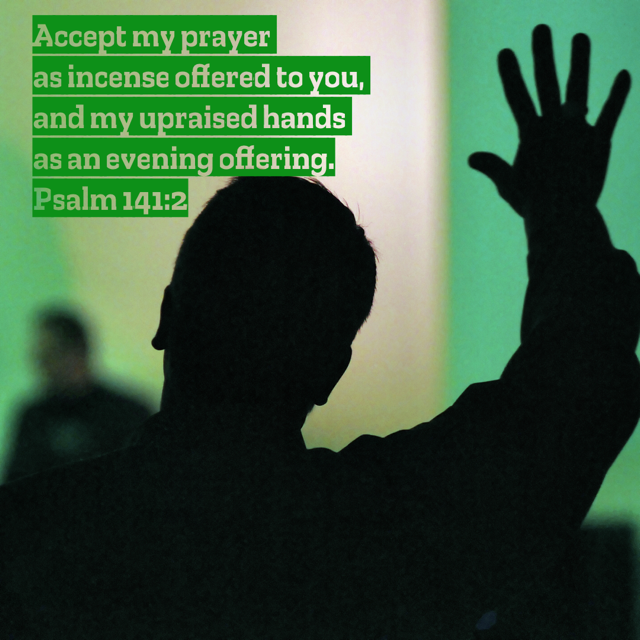
… my hands … my mouth … my lips … my heart … my head … my words … my eyes … (Psalm 141) 

David’s all-in attitude toward God reminds me of the words of Jesus: Love the Lord your God with all your heart and with all your soul and with all your mind and with all your strength (Mark 12:30). 

Clearly, David wants God to have full access—no part of his life is exempt from God’s lordship:

  • hands lifted in worship
  • mouth and lips free from ungodly words 
  • heart not drawn to unrighteousness 
  • head receptive to godly correction 
  • words always well-spoken and God-pleasing 
  • eyes fixed steadfastly on God 

This is also what the Holy Spirit wants to do for me in the process of sanctification: Bringing me into the place where no part of my life is exempt from His lordship. This reminds me of the words of an old hymn, “All to Jesus I surrender, all to Him I freely give.” 

May this ever be the theme song of my life! 

►► Would you please prayerfully consider supporting this ministry? ◀︎◀︎