Thursdays With Spurgeon—When God Seems Distant

This is a weekly series with things I’m reading and pondering from Charles Spurgeon. You can read the original seed thought here, or type “Thursdays With Spurgeon” in the search box to read more entries.

Listen to the podcast of this post by clicking on the player below, and you can also subscribe on AppleSpotify, or Audible. 

When God Seems Distant 

     You may possibly be in such a condition that every promise scowls at you as though it were transformed into a threat. When you turn over the pages of the Book once so full of comfort to you, it seems withered into a howling wilderness. … 

     Even those promises that you have been accustomed to offer to others in their time of need appear to shut their doors against you. ‘No admittance here,’ says one promise. Unbelief puts its burning finger right across another. Past sin accuses you and cries, ‘You cannot claim this word, for your transgression has forfeited it.’ So you may look through the whole Bible and find nothing upon which your souls may rest. … The fault is not in the promise but in us. …  

     Why does our gracious God permit this? Perhaps it is because you have been living without Him, and now He is going to take away everything upon which you have been in the habit of depending. Another reason may be that He wishes to drive you to Himself. … The prodigal was never safer than when he was driven to his father’s bosom, because he could find sustenance nowhere else. And, brothers and sisters, I think our Lord favors us with a famine in the land that it may make us seek after the Savior more. …

     When everything goes well with us, we frequently run a long way from God, but as soon as we are overtaken by trouble or see a lion in the way, we fly to our heavenly Father. I bless God for the mire and for my sinking in it, when it makes me cry out, ‘Deliver me, O my God, out of the deep mire, and let me not sink.’

From The Believer Sinking In The Mire

David said, “I keep my eyes always on the Lord. With Him at my right hand, I will not be shaken” (Psalm 16:8). And in another psalm he elaborated on this by saying, 

Yes, my soul, find rest in God; my hope comes from Him. Truly He is my rock and my salvation; He is my fortress, I will not be shaken. My salvation and my honor depend on God; He is my mighty rock, my refuge. Trust in Him at all times, you people; pour out your hearts to Him, for God is our refuge. (Psalm 62:6-8) 

God allows shaking so that we will recognize that He is the only sure foundation. The only things that shake and prove themselves to be untrustworthy are those things not standing on God. So if God seems distant, ask the Holy Spirit to show you if there are any idols in your heart. If there are, repent from trusting those and return to God alone. 

After this, the next step is to silence the voice of the enemy. Jesus said satan’s native language is lies and slander. As Spurgeon said, the enemy of your soul would love to tell you that God’s promises aren’t for you—that somehow you are disqualified from claiming them. 

We need to take every thought captive, and if those thoughts don’t line up with God’s Word we tear them down with the truth in Scripture. Once again, the Holy Spirit is our Counselor to remind us of the truth and assure our hearts that the promises are still for all of God’s children. 

As the words of the old hymn remind us:

Standing on the promises that cannot fail
When the howling storms of doubts and fear assail
By the living Word of God I shall prevail
Standing on the promises of God

►► Would you please prayerfully consider supporting this ministry? ◀︎◀︎
Thursdays With Spurgeon—Standing Firm

This is a weekly series with things I’m reading and pondering from Charles Spurgeon. You can read the original seed thought here, or type “Thursdays With Spurgeon” in the search box to read more entries.

Listen to the podcast of this post by clicking on the player below, and you can also subscribe on AppleSpotify, or Audible. 

Standing Firm 

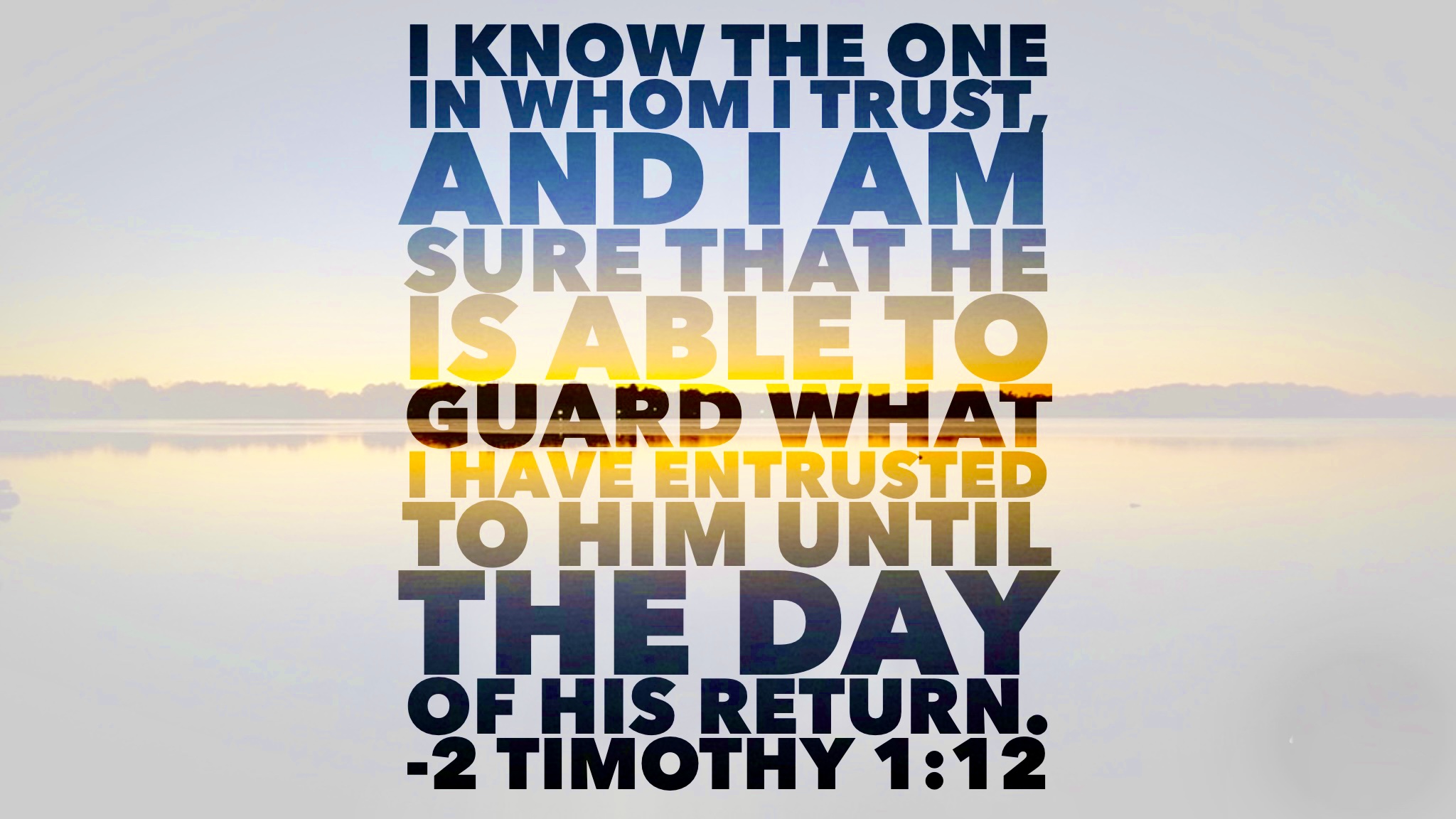
     Superficial brilliance is always afraid of fire, but gold is not. The paste gem dreads to be touched by the diamond, but the true diamond fears no test. People who have a kind of confectionery godliness will wish to be preserved from temptations, for they cannot endure them. But the Christian counts it all joy when he falls into different trials, knowing that ‘tribulation produces perseverance; and perseverance, character; and character, hope. Now hope does not disappoint, because the love of God has been poured out in our hearts by the Holy Spirit who was given to us’ (Romans 5:3-5). My dear friends, if your faith is only a sunshiny faith, get rid of it! … 

     So our gracious God, beloved, glorifies Himself by permitting His people to be subjected to trials and by enabling them to endure the strain. We would never know the music of the harp if the strings were left untouched. We would never enjoy the juice of the grape if it were never trod in the winepress. We would never discover the sweet perfume of cinnamon if it were not pressed and beaten. And we would never know the warmth of fire if the coals were not utterly consumed. The excellence of the Christian is brought out by the fire of trouble. The wisdom of the great Workman and the glory of His skill and power are discovered by the trials through which His vessels of mercy are permitted to pass. … 

     Depend upon it, beloved, those who suffer as I have described are the children of God, for they show it. They show it by the way in which they bear their trials. In the worst times there is always a clear distinction that marks them as separate from other men. If they cannot shout, ‘Victory!’ they bear patiently. If they cannot sing to God with their mouth, yet their hearts bless Him. There is a degree of light even in their worst darkness…. If they get into the mire, they do not perish there. They cry for help when their woes surround them, and in the very nick of time, when everything appears to be lost, their heavenly Father hastens to their aid.

From The Believer Sinking In The Mire

I shared a series of messages called Thankful In The Night. Another psalmist wrote, “Yet the Lord will command His loving-kindness in the daytime, and in the night His song shall be with me” (Psalm 42:8). 

Notice that this psalmist was praising God IN the night, not praising Him FOR the night. Many people have gone through what has been called “the dark night of the soul.” I don’t think anyone has ever given thanks because of being in a dark time, but certainly they have given thanks afterward because of the lessons learned in that dark time. 

Quite simply put, there are some things God wants to teach us that we can learn in no other way than to go through a dark night. So we can learn to be thankful even IN those nights. IN those nights, we can learn to say, as Spurgeon did, “I believe in my Lord because He is a God who cannot lie. He is faithful and true to His every word and, therefore, let the whole creation go to rack and ruin, my faith will not waver or give up its confidence.” 

Amen! Let us stand firm in that confidence.

►► Would you please prayerfully consider supporting this ministry? ◀︎◀︎
Thursdays With Spurgeon—Save Me!

This is a weekly series with things I’m reading and pondering from Charles Spurgeon. You can read the original seed thought here, or type “Thursdays With Spurgeon” in the search box to read more entries.

Listen to the podcast of this post by clicking on the player below, and you can also subscribe on AppleSpotify, or Audible. 

Save Me! 

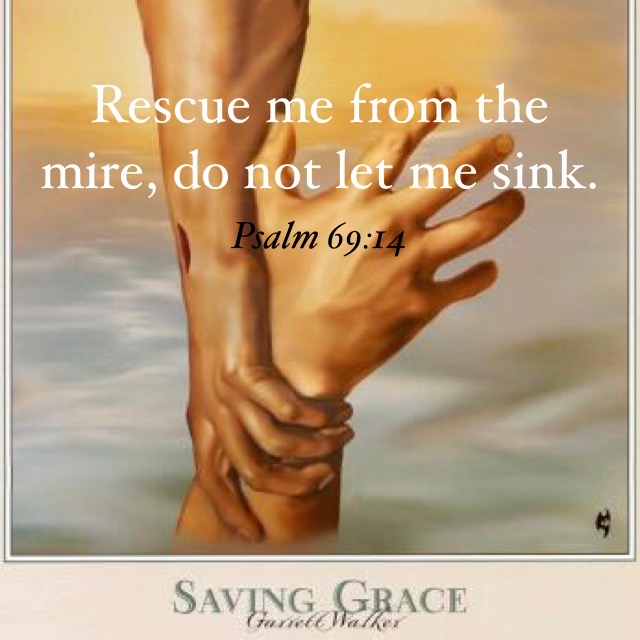
Deliver me out of the mire, and let me not sink (Psalm 69:14). 

     There have been thousands of eminent saints who have been attacked by unbelief and have been in doubt as to things that they once received as certain truths of God and that still in their heart of hearts they know to be true. They could have died for those truths one day. They could have established them beyond all doubt and question the next day. And yet upon the third they might be compelled, through strong temptation, to sit down and with tears streaming from their eyes, cry bitterly to their Helper, ‘Oh, God, save me from this accursed unbelief that robs me of every comfort and takes the foundations away and lays my glory in the dust! What can I do? If the foundations are removed, what can the righteous do? O settle my soul upon Your Word and establish me in Your truth, O You God of truth.’ …  

     Certain of my brethren are frequently in trouble. Their whole life is a floundering out of one slough of despond into another. You have a great many losses in business—nothing but losses, perhaps. You have had many crosses, disappointments, bereavements—nothing prospers with you. Well, brother, there is this consolation: You are one of a very large family, for many of God’s people pass through just such tribulation. … 

     O Lord, grant us divine grace to see much of our sins through the tears of repentance and to see much of the Savior through the eyes of faith, for if we see little of Him we will get into the plight of David when he was in the deep mire and cried, ‘Lord, deliver me out of the mire, and let me not sink.’ 

From The Believer Sinking In The Mire

David’s cry in verse 14—Deliver me out of the mire, and let me not sink—is certainly understandable in view of all that was going on in his life. Look at how Psalm 69 opens: 

Save me, O God! For the waters have come up to my neck. I sink in deep mire, where there is no standing; I have come into deep waters, where the floods overflow me. I am weary with my crying; my throat is dry; my eyes fail while I wait for my God. (vv. 1-3)

Have you been in that deep mire? I have, and here’s what I’ve learned. 

First, God is teaching me something in this desperate time that I could have learned in no other way.

Second, God wants to make me victorious in my struggle so that others will be encouraged. As the apostle Peter reminded Christians, “Stand firm against [the devil], and be strong in your faith. Remember that your family of believers all over the world is going through the same kind of suffering you are” (1 Peter 5:9). 

Finally, when I’m in over my head, there’s no where else to look but up! My times in deep mire have revealed to me what’s really important. I’ve come to discover again and again that Jesus is all I need!  

In your darkest, most desperate times, stop trying to rescue yourself. Lift up your eyes and call to God, “Deliver me,” and call on one of your Christian brothers or sisters to be by your side in this valley time. 

►► Would you please prayerfully consider supporting this ministry? ◀︎◀︎
Unburdened

Listen to the podcast of this post by clicking on the player below, and you can also subscribe on AppleSpotify, or Audible.

Let’s get on the same page with a few facts: 

  • Nearly 1-of-5 adults in the United States age 18 and older battle some form of anxiety disorder. 
  • Being anxious is not a sin but we can grieve God’s heart if we don’t train ourselves to turn to Him as our First Source. Notice that David said, “When [not “if”] I am afraid, I put my trust in You” (Psalm 56:3). 

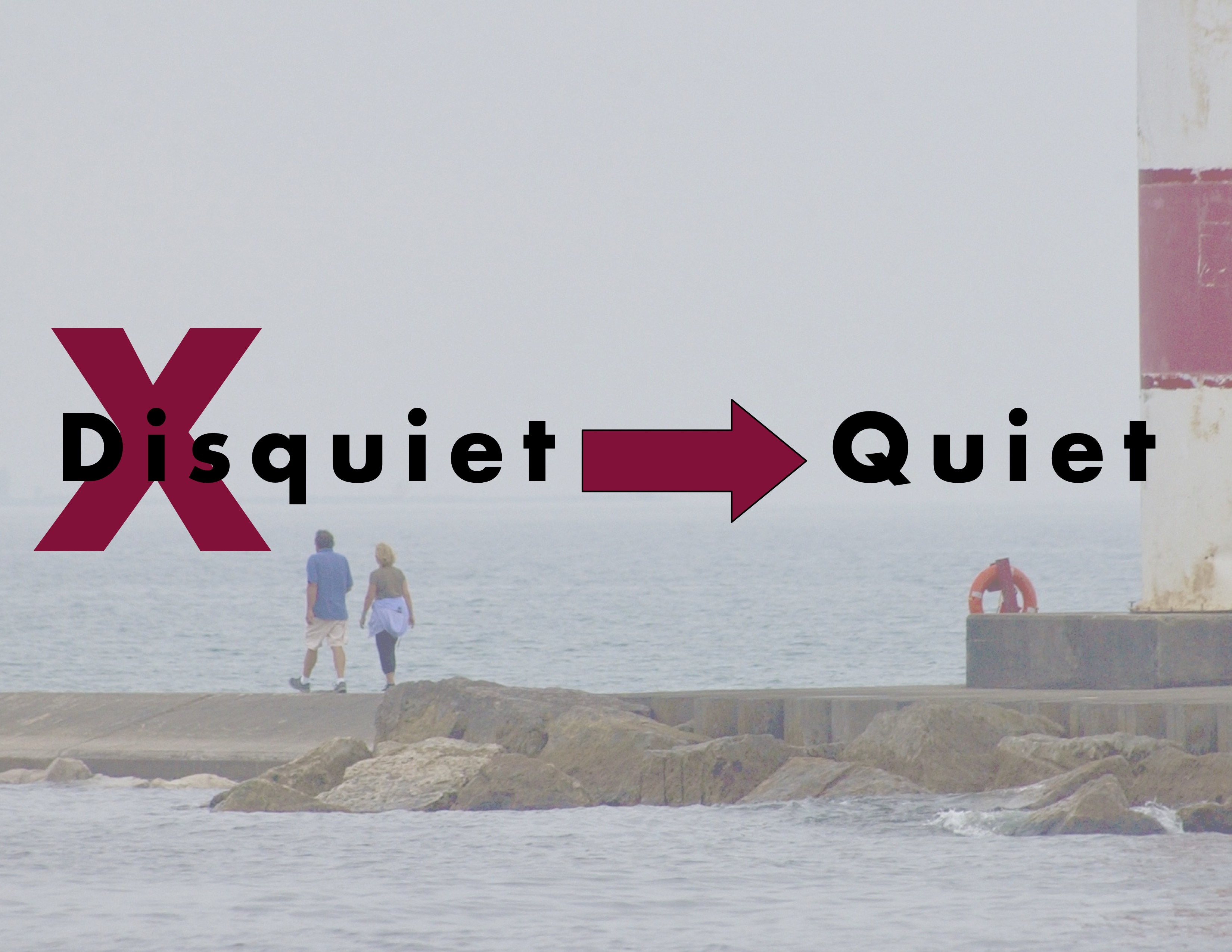
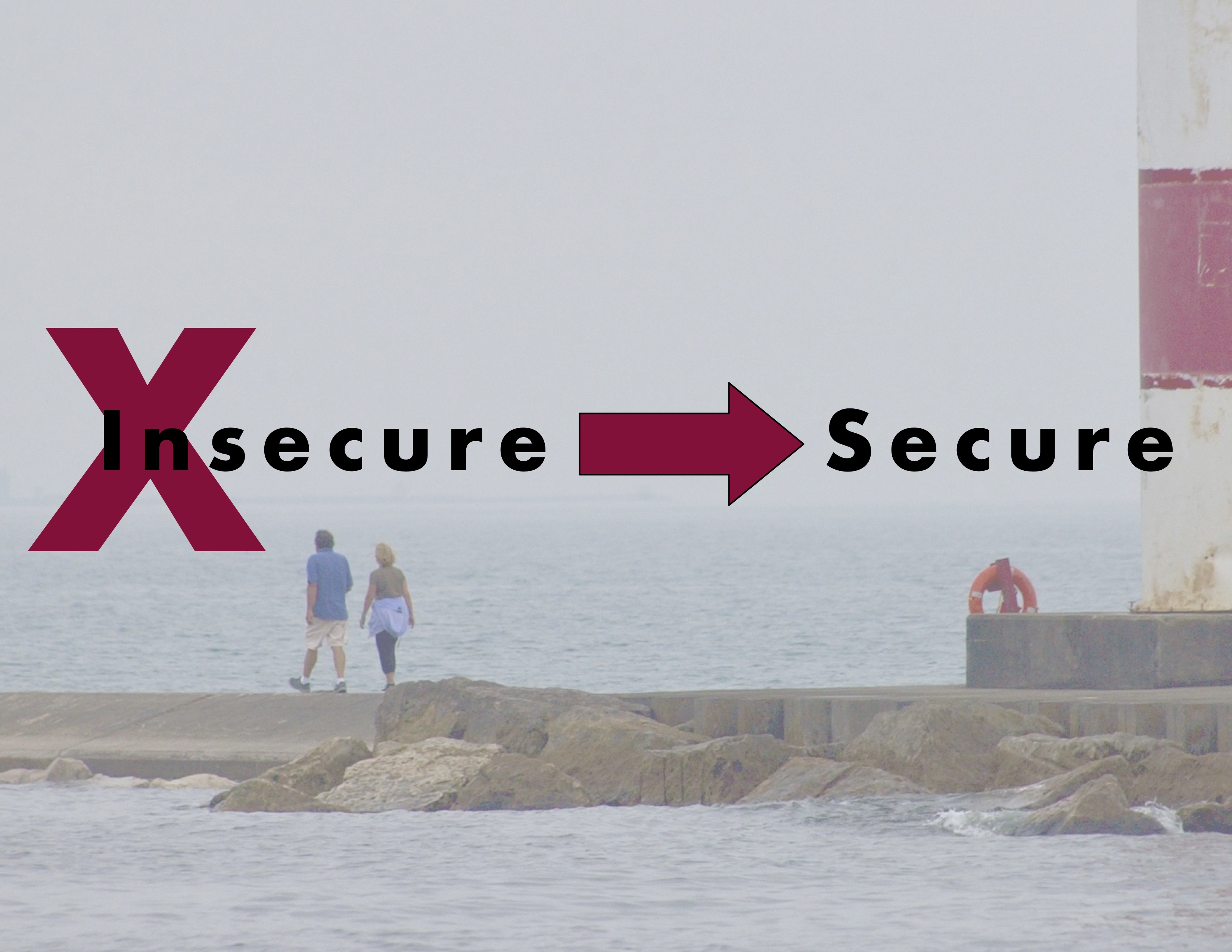
We’ve been looking at both the dictionary definitions and biblical definitions of anxiety. One definition is being disquieted, but we saw that coming close to Jesus Xs out the “dis-” and takes us to a place of quiet. A second definition is being insecure because we are so full of cares. Clinging to Jesus Xs out the “in-” and makes us secure when His strong arms are around us. 

A third definition of anxiety is found here: “Cast your cares on the Lord and He will sustain you; He will never let the righteous be shaken” (Psalm 55:22). This word for cares or anxieties is the only time this Hebrew word is used in the Bible. The idea is a heavy burden, which the Amplified Bible captures like this: “Cast your burden on the Lord—releasing the weight of it—and He will sustain you….”

We can be burdened because we pick up and carry things on our own. But the word for cares or burdens in Psalm 55:22 can mean not only things we pick up, but things given to us by God or allowed by God. You might ask, “Why would God give me a burden?” 

  • Sometimes it’s allowed—God allowed satan to afflict Job within limits, and He allowed Joseph’s brothers to ambush him (Job 1:8-12; 2:3-7; Genesis 50:20).  
  • Sometimes it’s given—God gave Jesus a bitter cup to drink, and He gave Paul a “thorn in the flesh” (Matthew 26:39-42; 2 Corinthians 12:7). 
  • In every instance, the limits are perfectly measured to accomplish what God wants to do. The way we respond glorifies Him and keeps us dependent on Him (Job 1:20; 2:10; Genesis 50:20; 2 Corinthians 12:8-10; Hebrews 10:10). 

(Check out all of the above biblical passages by clicking here.)

Still in the middle of this, the burdens can seem overwhelming and anxiety-inducing. That’s why God tells us what to do with these burdens: Cast them off! 

In Psalm 55:22, David gives us the word “cast” in the imperative mood, which means it’s a command. Literally, the word means to throw away or shed the burden. 

How often do we do this? David said he prayed “evening, morning, and noon” for God’s help (Psalm 55:16-17). 

What does God do when we cast off these burdens? He sustains and supports us—“He will sustain you; He will never let the righteous be shaken.” 

The apostle Peter quotes the opening words of this verse when he writes, “Cast all your anxiety on Him,” and then he tells us why we can do this: “Because He cares for you” (1 Peter 5:7). Just like David said he prayed for his burdens to be released “evening, morning, and noon,” the verb tense Peter uses implies the same thing. We don’t just release our burdens once, but we continue to do it again and again and again! 

The word Peter uses for “cast” is only used twice in all the New Testament. The word means not just to drop our burdens at our feet—where we may trip over them or be tempted to pick them up again—but to throw our burdens on someone else. The only other place this word is used is when on the day Jesus rode into Jerusalem the disciples “threw their cloaks on the colt and put Jesus on it” (Luke 19:35). 

Peter tells us that this casting off of our burdens requires us to humble ourselves before God. Pride makes us think we can handle it on our own, and that same pride robs God of the glory He would receive when He provides relief from our heavy load. We cast these burdens onto Jesus so that we can be alert to the enemy’s sneaky tactics, and help others who are also being attacked. And just as David said God supported and sustained him, Peter said the same thing (1 Peter 5:6-10). I especially like the wording from the King James Version—

But the God of all grace, Who hath called us unto His eternal glory by Christ Jesus, after that ye have suffered a while, make you perfect, stablish, strengthen, settle you. (1 Peter 5:10 KJV) 

Jesus can X-out the instability that comes with carrying heavy burdens and make us stablished, strengthened, and settled in Him. 

Don’t try to carry these anxiety-inducing burdens on your own, but cast them on Jesus every evening, morning, and noon. Let Him carry those burdens so you can live in a way that glorifies Him every single day. 

If you’ve missed any of the messages in our series X-ing Out Anxiety, you can find all of the messages by clicking here. 

►► Would you please prayerfully consider supporting this ministry? ◀︎◀︎

Honk Your Thanks

Listen to the podcast of this post by clicking on the player below, and you can also subscribe on AppleSpotify, or Audible. 

If anxiety kills joy, what kills anxiety? Anxiety—the joy-killer—is itself killed when joy is expressed.

Being grateful for what you have kills the anxiety of what you don’t have.

Being thankful for what you have kills the fear of what you may be missing.

Being grateful for what you have kills the anxiety of the bad stuff that may never even happen.

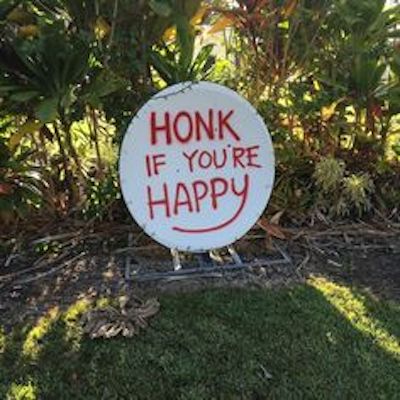
If joy kills anxiety, how can we develop more of it? Most people would say, “If you’re happy, give thanks” or “If you’re happy, honk.” But really it’s the other way around: “If you want to be happy, honk!”

Don’t fret or worry. Instead of worrying, pray. Let petitions and praises shape your worries into prayers, letting God know your concerns. Before you know it, a sense of God’s wholeness, everything coming together for good, will come and settle you down. It’s wonderful what happens when Christ displaces worry at the center of your life. (Philippians 4:6-7)

Honking your thanks is not only good for you, but it’s good for everyone around you who hears your “honk! honk!” of gratitude. David experienced this in Psalm 34:1-3. Even when he was at a low point, when he started praising God other anxious people began to experience joy as well.

This is a snippet from a longer message, which you can find by clicking here.

►► Would you please prayerfully consider supporting this ministry? ◀︎◀︎
Clinging To Jesus

Listen to the podcast of this post by clicking on the player below, and you can also subscribe on AppleSpotify, or Audible. 

Previously I shared with you that according to the Anxiety & Depression Association of America, nearly 1-of-5 adults in the United States age 18 and older battle some form of anxiety disorder. That means there’s a good chance that either you or someone close to you will be in this battle sometime during their life. 

We also learned from David that being anxious or afraid is not a sin. He said, “When [not ‘if’] I am afraid, I put my trust in You” (Psalm 56:3). But we can grieve God’s heart if we don’t train ourselves to turn to Him as our trustworthy First Source of help. 

We also saw in Mark 4:35-39 how the disciples of Jesus were caught in a raging storm, trying everything in their own power to rescue themselves, and yet Jesus was right there with them. He arose and said, “Quiet. Be still,” and “THEN the wind died down and it was completely calm.” From this we learned that only His peace can X-out the noise of the storm and bring us to a place of quiet rest. 

We see another aspect of anxiety here: “Anxiety weighs down the heart” (Proverbs 12:25). That word for “anxiety” means carefulness, but not in the idea of being cautious. It literally means someone who is full of cares. This state leads to a heaviness of heart, as the KJV of that same verse says, “Heaviness in the heart of a man maketh it stoop.”  

I don’t think anyone wakes up one day and says, “I’m going to take all of the cares of the world on my shoulders today.” Instead, we pick up just one thing. “This is just a small thing,” we tell ourselves. Then we wake up the next morning with just that one little thing, and we pick up one more little thing. And then we do it again the next day, and the next day, and the next day. Until before we know it we are bowed down because we are full of cares. This heaviness makes us stoop, makes us unsteady on our feet, and magnifies even the smallest of concerns into a huge crisis. 

We are clinging to our load of cares—our care-fullness—but our loving Heavenly Father desires us to cling to something else. He wants us to cling to Him!

  • Moses told the Israelites: Serve only the Lord your God and fear Him alone. Obey His commands, listen to His voice, and cling to Him. (Deuteronomy 13:4 NLT) 
  • David declared: I cling to You; Your right hand upholds me. (Psalm 63:8) 

We see a beautiful example of Paul clinging to the promises of God during his multiple trials in and around Jerusalem and then during his journey to Rome to stand trial yet again. While he was still in prison in Jerusalem, Jesus appeared to him and said, “Take courage! As you have testified about Me in Jerusalem, so you must also testify in Rome” (Acts 23:11). 

Paul knew he was going to arrive in Rome. But during the horrendous storm at sea on his way there, Paul received an added assurance. He told his shipmates—

“But now I urge you to keep up your courage, because not one of you will be lost; only the ship will be destroyed. Last night an angel of the God to whom I belong and whom I serve stood beside me and said, ‘Do not be afraid, Paul. You must stand trial before Caesar; and God has graciously given you the lives of all who sail with you.’ So keep up your courage, men, for I have faith in God that it will happen just as He told me.” (Acts 27:22-25) 

Jesus tells all of us to cling to Him and His secure promises (Matthew 11:28-30). When we cling to Him, we no longer cling to the cares of this world. We move from from full-of-cares to care-less. We go from insecurity over our future to the security that only Jesus can give us! 

Paul clung to those promises of Jesus: I will rescue you … You must testify about Me in Rome … I have given you all who sail with you. Likewise, we need to arm ourselves with the promises of God and tenaciously cling to them. I’ve shared just a few promises in the comments below, but feel free to reach out to me if I can help you find a promise in the Bible that you can cling to through your stormy times. 

If you’ve missed any message in our series about X-ing our anxieties, please click here to find the full list. 

►► Would you please prayerfully consider supporting this ministry? ◀︎◀︎
Thursdays With Spurgeon—“All” Means All

This is a weekly series with things I’m reading and pondering from Charles Spurgeon. You can read the original seed thought here, or type “Thursdays With Spurgeon” in the search box to read more entries.

Listen to the podcast of this post by clicking on the player below, and you can also subscribe on iTunes or Spotify.

“All” Means All  

Forgiving one another, even as God for Christ’s sake has forgiven you. (Ephesians 4:32) 

     We pass on to observe what it is that we are told in the text has been done for us and to us, for Christ’s sake: ‘God for Christ’s sake has forgiven you.’ … Have you put your trust in the atoning sacrifice? Then God for Christ’s sake has forgiven you. You have not begun to be a Christian, I hope, with the idea that one day, at some future period, you may obtain forgiveness. No. ‘God for Christ’s sake has forgiven you.’ … Pardon is not a prize to be run for, but a blessing received at the first step of the race. If you have believed in Jesus, your sins are all gone—all gone. All your sins have been erased from the records of the past, never to be mentioned against you forever! …  

     I have sometimes heard it said that we were so forgiven when we first believed that there is no need to ask for further forgiveness. I will reply, we were so completely forgiven when we first believed that we ought continually to ask for the perpetuity of that one far-reaching act, that the Lord may continue to exert toward us that fullness of forgiving grace that absolved us perfectly at the first, that we may continue to walk before Him with a sense of that complete forgiveness, clear and unquestioned. … 

     O you believers, think of this, for the ‘all’ is no little thing. It includes sins against a holy God, sins against His loving Son, sins against gospel as well as against law, sins against man as well as against God, sins of the body as well as sins of the mind, sins as numerous as the sands of the seashore and as great as the sea itself, and all are removed from us as far as the east is from the west!

From Forgiveness Made Easy 

Let me drive home Charles Spurgeon’s point with two passages of Scripture and a stanza from an old hymn. 

[God] does not treat us as our sins deserve or repay us according to our iniquities. For as high as the heavens are above the earth, so great is His love for those who fear Him; as far as the east is from the west, so far has He removed our transgressions from us. (Psalm 103:10-12) 

For I will forgive their wickedness and will remember their sins no more. (Hebrews 8:12) 

When satan tempts me to despair 
And tells me of the guilt within, 
Upward I look and see Him there 
Who made an end of all my sin. 
Because the sinless Savior died, 
My sinful soul is counted free; 
For God the Just is satisfied 
To look on Him and pardon me, 
To look on Him and pardon me. (Charitie Lees Bancroft) 
 

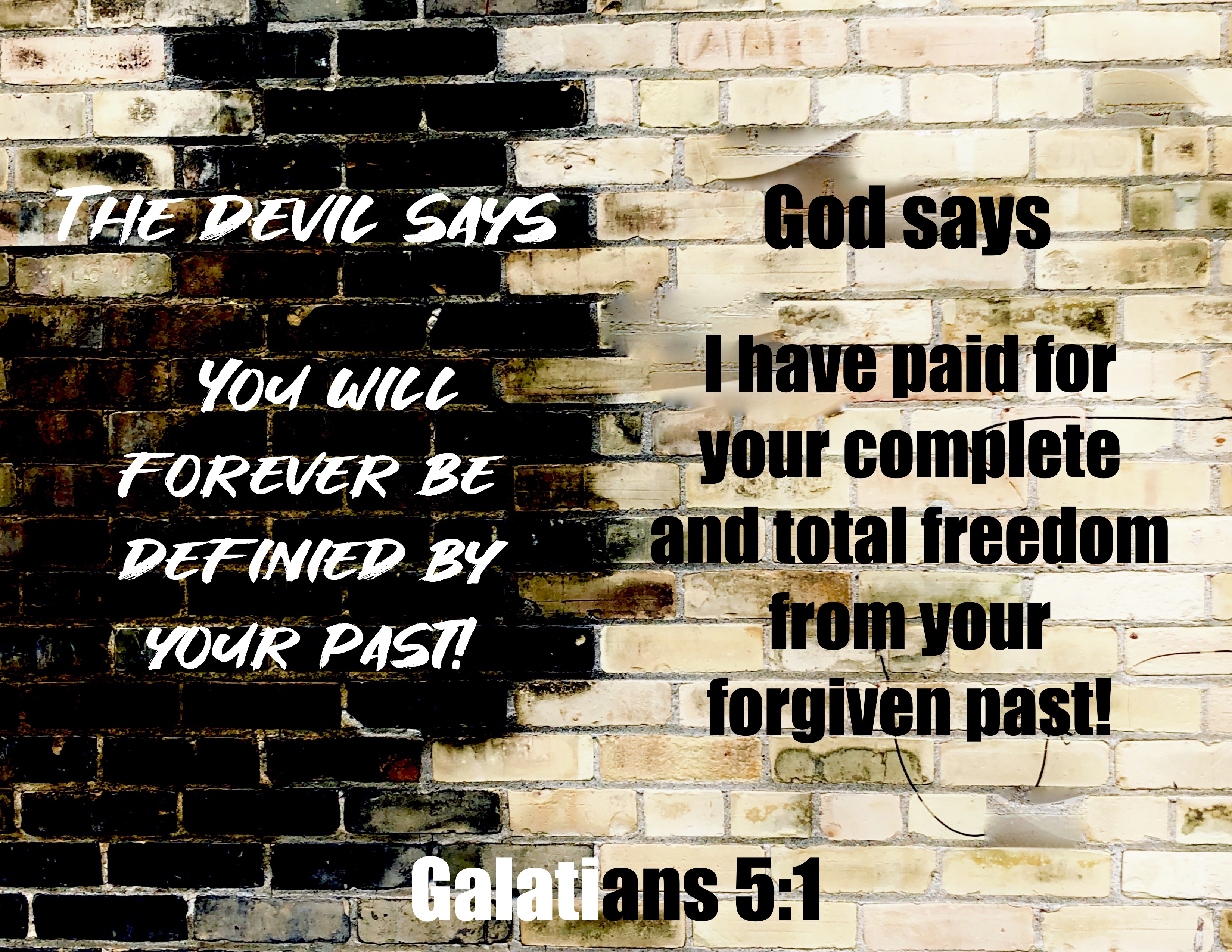
So I think this is a good conclusion—In this freedom Christ has made us free and completely liberated us; stand fast then, and do not be hampered and held ensnared and submit again to a yoke of slavery which you have once put off. (Galatians 5:1 AMP)

►► Would you please prayerfully consider supporting this ministry? ◀︎◀︎


Quieting The Storms

Listen to the podcast of this post by clicking on the player below, and you can also subscribe on AppleSpotify, or Audible. 

“Anxiety disorders are the most common mental illness in the U.S., affecting 40 million adults in the United States age 18 and older, or 18.1% of the population every year.” —Anxiety & Depression Association of America 

A multitude of factors go into someone’s anxiety: genetics, temperament, brain chemistry, life experiences. In addition to those factors, we have to keep in mind that humans are a three-part being—with a body, mind, and spirit—and a disease in one area does affect the other two areas. 

All of this means that there is no one-size-fits-all solution for anxiety. But there is one Healer: 

  • He may supernaturally heal your body, mind, or spirit 
  • He may direct you to a medical doctor, a mental health professional, or a spiritual counselor 
  • But always, He will walk through the challenges with you, strengthening you, and preparing you to minister to others going through a similar struggle (Psalm 23:1-6; 2 Corinthians 1:3-4) 

David wrote, “When I am afraid, I put my trust in You” (Psalm 56:3). Notice that he said “when” not “if.” David knows what you probably know too: we can be easily consumed by our anxiety, doubts, and fears. But David also knows (and I hope you do too) that at those moments, we can go to God as our trustworthy First Source. 

One of the dictionary definitions of anxiety is a feeling of disquiet. All of the conflicting thoughts make it hard to concentrate, the abundance of noise makes it difficult to talk to yourself, let alone talk to God. 

I’d like you to consider another psalmist’s words. Look at the first half of Psalm 94:19—

  • When anxiety was great within me… (NIV) 
  • In the multitude of my anxious thoughts… (AMP)
  • When doubts filled my mind… (NLT) 

The setting of this psalm is one of lots of disquieting voices: a desire to see the wrongdoers punished, listening to arrogant words, getting fed up with boasting words, seeing good people being trampled, hearing foolish words uttered about God (vv. 1-8). 

Experiencing anxiety is not sinful, but I do think that we grieve God’s heart when we immediately run to other sources for relief instead of going to our loving Heavenly Father first. After dealing with the disquiet in the opening verses of Psalm 94, the psalmist says, “My anxiety level was sky high!” But then notice how that verse concludes—

  • Your consolation brought me joy (NIV) 
  • Your comforts cheer and and delight my soul (AMP)
  • Your comfort gave me renewed hope and cheer (NLT)

Jesus told us about our Comforter who would always be with us (John 14:1, 16-17). A little further on in these same remarks Jesus also said, “These things I have spoken to you, that in Me you may have peace. In the world you will have tribulation; but be of good cheer, I have overcome the world” (John 16:33 NKJV). 

I like that phrase, “Be of good cheer.” That phrase is just one word in Greek, and sometimes it’s translated “be of good courage.” In every single instance, it’s only used by Jesus and it’s only used when He comes close to anxious people (Matthew 9:2, 9:22, 14:27; Mark 6:50, 10:49; Luke 8:48; John 16:33; Acts 23:11). 

A furious squall battered the boat, almost swamping it. The disciples were—to say the least—disquieted! In their anxious state they notice Jesus peacefully sleeping. They wake Him up with, “Don’t You care that we’re drowning?!” Jesus stands up and says to the storm, “Quiet. Be still.” 

Recall that one of the descriptions of anxiety was being disquieted. That prefix dis- means to be separated: our anxiety would seek to distance us from God’s presence, to make us feel like His help is too far away. But when we go to Jesus, He alone can say, “Quiet” to our disquieting thoughts. He can remove the “dis-” and bring us close to Him. Only His peace can X-out the noise of the storm and bring you to a place of quiet rest. 

After Jesus said, “Quiet. Be still,” notice this: “THEN the wind died down and it was completely calm” (Mark 4:39). And the great thing is this: Even if another storm begins disquieting us just a few minutes after the calm, we can go to Him again. There is no limit: We can continually go to the Eternal Source of peace, to the only One who can speak, “Quiet” to our anxious thoughts. 

Please follow along with us as we learn more about X-ing out our anxieties. 

►► Would you please prayerfully consider supporting this ministry? ◀︎◀︎

Thursdays With Spurgeon—Love So Amazing

This is a weekly series with things I’m reading and pondering from Charles Spurgeon. You can read the original seed thought here, or type “Thursdays With Spurgeon” in the search box to read more entries.

Listen to the podcast of this post by clicking on the player below, and you can also subscribe on iTunes or Spotify.

Love So Amazing  

Forgiving one another, even as God for Christ’s sake has forgiven you. (Ephesians 4:32) 

     The first phrase to think about is ‘for Christ’s sake.’ We use these words very often, but probably we have never thought of their force. … All the good things that God has bestowed upon us have come to us ‘for Christ’s sake.’ But especially the forgiveness of our sins has come ‘for Christ sake.’ …  

     It is His very love as well as His holiness and His justice that, if I may use such a term, compels Him to severity of judgment so that sin cannot and must not be blotted out till atonement has been presented. There must, first of all, be a sacrifice for sin, that, mark you, the great Father, to show His love, supplies, for it is His own Son who is given to die! And so the Father Himself supplies the ransom through His Son, that Son is one with Himself by bonds of eternal unity, mysterious but most intense. If God demands the penalty in justice, He Himself supplies it in love. … 

     I want you to consider, for a moment, how readily God may now blot out sin since Christ has died. … God, for Christ’s sake, has accepted us in Him, has forgiven us in Him, and looks upon us with infinite love, changeless in Him. This is how all our blessings come to us, in and through Christ Jesus. And if we are indeed in Him, the Lord does not only forgive us our sins, but He bestows upon us the boundless riches of His grace in Him. In fact, He treats us as He would treat His Son. He deals with us as He would deal with Jesus! … 

     And you, big evil sinner, if you will go to God at this moment and say, ‘Lord, I cannot ask You to forgive me for my own sake, but do it out of love for Your dear Son,’ He will do it…. Christ took the shame that He might magnify His Father, and now His Father delights to magnify Him by blotting out the sin.

From Forgiveness Made Easy 

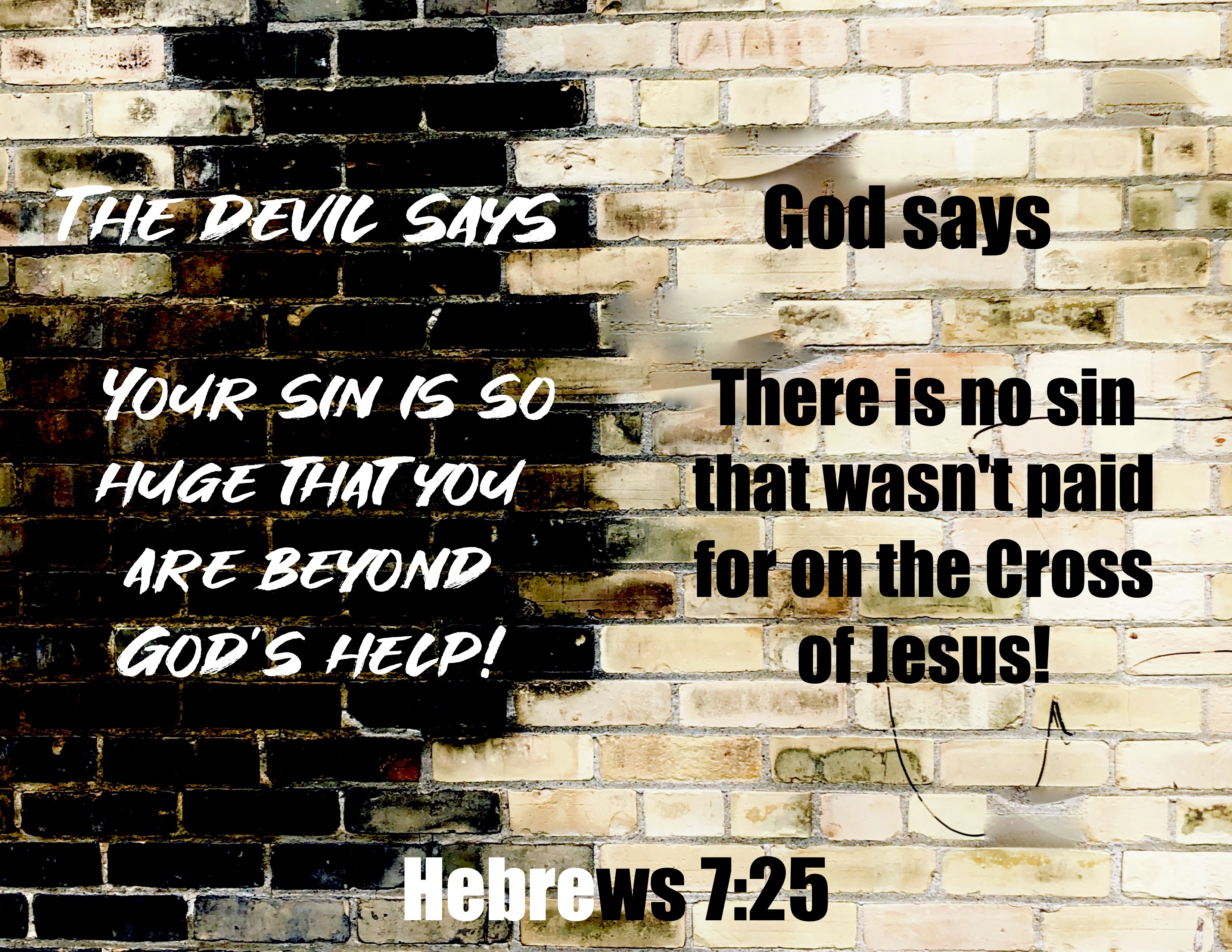
I’ve lost track of the number of times someone has told me, “I’ve messed up for so long—I’ve done such atrocious things—there is no way God could forgive me.” This is one of satan’s lies that keeps people from accepting God’s forgiveness. 

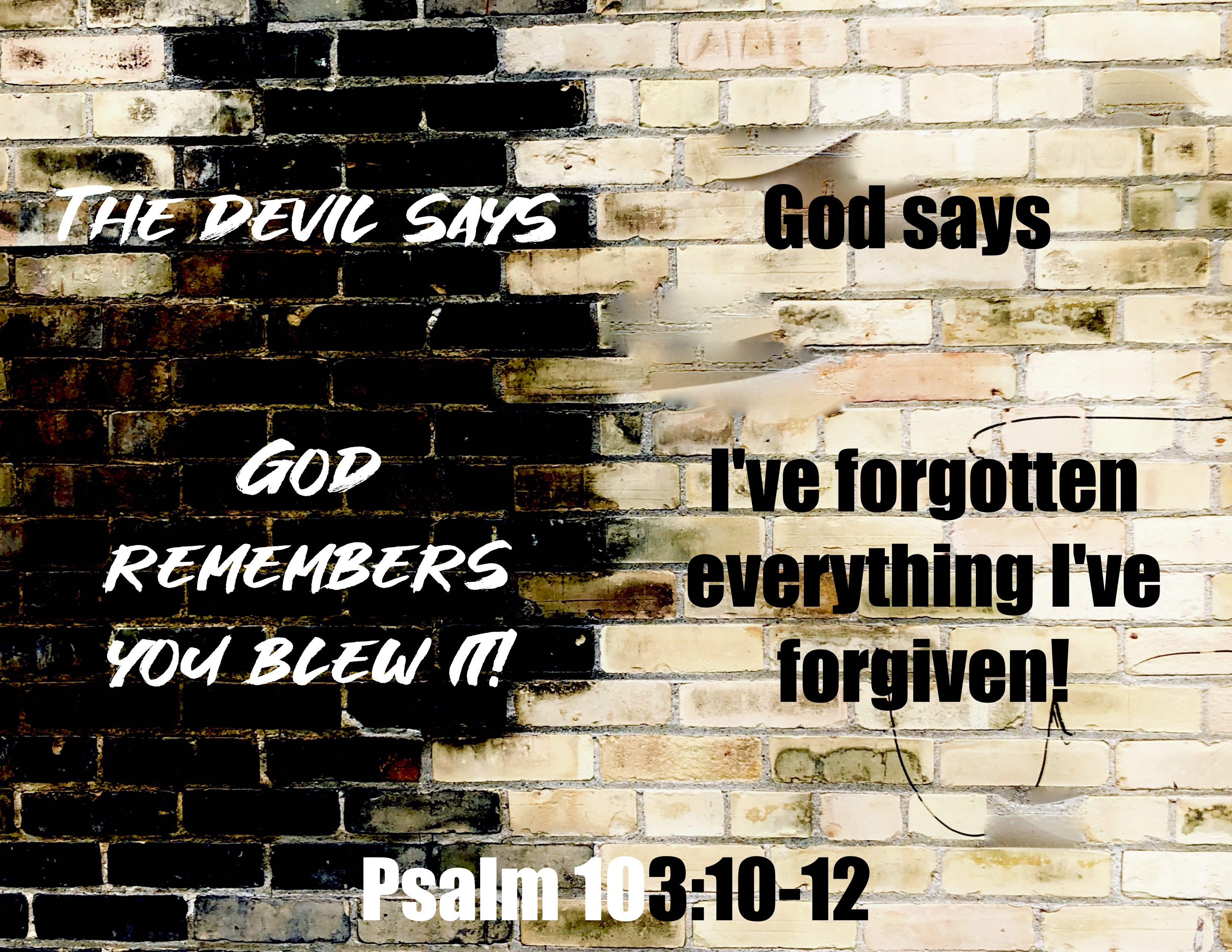
Jesus took your penalty, He paid the price for your sin! The moment you believe that, you are clothed in Christ’s righteousness. So now when the Holy God looks at you, He says, “You look like My Son. I love to bless My Son. I love to do what He asks of Me. For His sake, I have forgiven you. Not only forgiven, but I’ve forgotten everything I’ve forgiven!” 

Don’t wait another moment: If you haven’t asked God to forgive you “for Christ’s sake,” do it right this very minute! I’d love to chat with you about this, so reach out to me and let’s talk more about this amazing new relationship you now have with Almighty God because you are forgiven for Christ’s sake. 

This reminds me of a song by Chris Tomlin—

He became sin Who knew no sin
That we might become His righteousness
He humbled Himself and carried a Cross
Love so amazing!

►► Would you please prayerfully consider supporting this ministry? ◀︎◀︎
 

Sword Of God

Listen to the podcast of this post by clicking on the player below, and you can also subscribe on AppleSpotify, or Audible. 

Zechariah is the longest book of the minor prophets. His ministry overlaps Haggai the prophet, Ezra the priest, Zerubbabel the governor, and Joshua the high priest. I point all of this out because we need to always keep in mind that the Bible isn’t a collection of stories. It’s a verifiable (or falsifiable) record of real people at real moments in history. Many of the stories in the Bible confirm and even amplify each other. 

Let me remind you of what we learned from our study of the minor prophet Haggai:

  1. Hear the Word 
  2. Consider the Word 
  3. Obey the Word 
  4. Stand assured, encouraged, and unmovable on God’s Word 

Aren’t you more assured of a message that has a confirmation? Like if one person gives you a compliment that you hadn’t considered before, and then later on someone else notices the same attribute. I think we are more ready to receive the word when it has a confirmation like that. 

Haggai delivered a word directed to Zerubbabel the governor, which we saw was a prophecy pointing to and ultimately fulfilled in Jesus. God called Zerubbabel “My signet ring—a mark of God’s supreme authority. 

That might have been a difficult thing for Zerubbabel to accept, so Zechariah is given a confirming word two months after Haggai’s prophecy (Zechariah 4:1-9). This prophecy affirms the message given through Haggai, and also points to its ultimate fulfillment in Jesus. 

But then Zechariah is also given an amplifying word, as he speaks a word from God to Joshua, the other “olive tree” in his God-given vision (Zechariah 3:1-9; 6:9-13). 

Zechariah confirmed and amplified Haggai’s message. And then Jesus fulfilled both of their prophecies! We have the benefit of seeing the prophecy and fulfillment, which should build our faith in ALL of the promises in God’s Word. 

The Word of God then become the (s)word of God in our mouths and hearts!  

Isaiah prophesied that Jesus would wield the sword of God, and this is the same blessing we can claim today. Jesus defeated satan’s temptations with the sword of God, and so do the saints of God today (Isaiah 49:2; Psalm 149:6; Ephesians 6:13, 17; Luke 4:1-12; Revelation 12:11). 

Because of these specific prophecies that have been fulfilled in Jesus Christ, we can now stand assured, encouraged, unmovable, and well-armed with the same sword of God. 

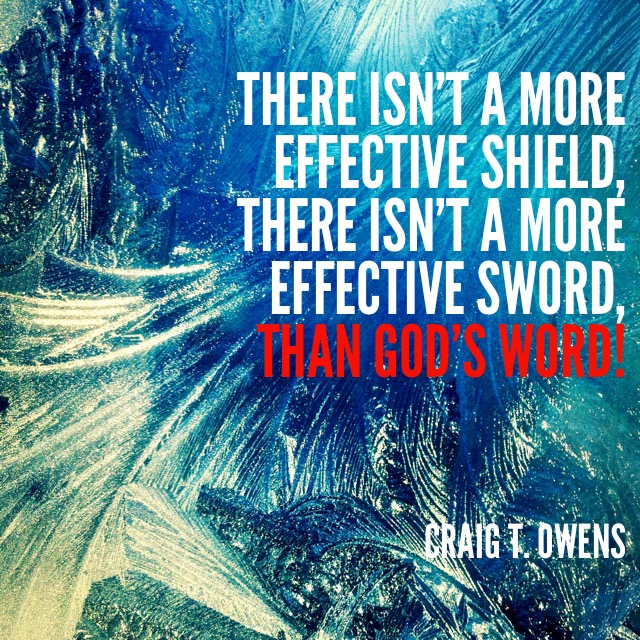
There isn’t a more effective sword or shield than God’s (s)word! 

If you’ve missed any of the messages in our series discovering the major lessons in the minor prophets, you can access the full list by clicking here. 

►► Would you please prayerfully consider supporting this ministry? ◀︎◀︎