Thursdays With Oswald—Jeremiah 23

Oswald ChambersThis is a weekly series with things I’m reading and pondering from Oswald Chambers. You can read the original seed thought here, or type “Thursdays With Oswald” in the search box to read more entries.

Jeremiah 23

[These are notes from Oswald Chambers’ lecture on Jeremiah 23.] 

     If the preaching of a servant of God does not make me brace myself up and watch my feet and my ways, one of two things is the reason—either the preacher is unreal, or I hate being better. At sometime or other all of us have had a detestation of being better. The rage produced by being faced with a life which in reality is better than our own, awakens either a desire to be like it, or else hatred without cause against that life. “They hated Me without a cause,” said Jesus. …  

     God makes His Word living by speaking it to you. There is a feeling of deep settled peace when the Holy Ghost brings a word, full of light and illumination, you know better than you can express, “The Lord said that to me.” …

     The Bible student must be careful to distinguish between the speculations of his own heart and the Word of God. … Be simple and obedient, and the Word of God will open to you as naturally as breathing. …  

     In reading God’s Word be careful of being guided by affinities instead of by the Holy Spirit. The Holy Spirit makes us face facts for which we have no affinity. …

     Never ridicule the way in which people say God guides them; all you know is that God does not guide you like that, but never ridicule. 

From Notes On Jeremiah 

In this chapter of Jeremiah, God is contrasting true and false prophets. In order for us to distinguish the true from the false today, we must be students of God’s Word ourselves. Don’t get God’s Word solely from a man’s or woman’s preaching (although that does have its place), but be a student of the Word for yourself. 

God wants to speak to you through His Word. The same Holy Spirit that inspired the biblical authors wants to illuminate that Word to your specific life and situation. Get into the Word and let the Word get into you.  

Thursdays With Oswald—Jeremiah 20

Oswald ChambersThis is a weekly series with things I’m reading and pondering from Oswald Chambers. You can read the original seed thought here, or type “Thursdays With Oswald” in the search box to read more entries.

Jeremiah 20

[These are notes from Oswald Chambers’ lecture on Jeremiah 20.] 

    O Lord…I am ridiculed all day long; everyone mocks me (Jeremiah 20:7b). Jeremiah came back to the city and repeated to all the people the message he gave to the elders (Jeremiah 19:14-15). For the first time Jeremiah is designated by his office—‘the prophet’ (20:2), and the action of Pashur is against him as a prophet for his public utterance. According to the people Pashur was right and Jeremiah a raving fanatic. How we select things out of the Bible! We have forgotten what Paul wrote—‘He was crucified in weakness … likewise, we are weak in Him’ [2 Corinthians 13:4]. A Christian is one who can be weak, an abject failure in the eyes of the world. …

     It takes the grace of God to go through disgrace unspoilt. … 

     O Lord, You deceived me, and I was deceived [v. 7a]. Jeremiah says in heart-breaking sobs before God, ‘I have been deceived in what I hoped Thou wouldst do.’ His cry is not the theological argument of a man’s mind, he is pouring it all out before God; there is no charge brought against God and no reply from God. ‘I spoke because the people were reproaching Thy Word, and now I see nothing but ridicule all day long.’ 

     Jeremiah is sensitive to the last degree to all the affinities of the people and he speaks out of perplexity—But if I say, ‘I will not mention him or speak any more in His name,’ His Word is in my heart like a fire, a fire shut up in my bones, and I am weary of holding it in; indeed, I cannot [v. 9]. 

     I hear many whispering… ‘Report him! Let’s report him!’ All my friends are waiting for me to slip, saying, ‘Perhaps he will be deceived; then we will prevail over him and take our revenge on him.’ ‘The people watch for inconsistencies in my life that they may say on that ground I am not preaching Thy truth.’ To be defamed means that if you stand for God you will not be able to stand for anything else. …

     But the Lord is with me like a mighty warrior [v. 11]—a sudden outburst of the devotion of Jeremiah’s heart for God. … When in communion with God His desires are a delight, he sees and enjoys deliverance.

From Notes On Jeremiah

Standing for God may mean that you stand alone. Are you ready?

Standing for God also mean that He stands with you like a mighty warrior. Are you ready now?!

Thursdays With Oswald—Isaiah 24-29

Oswald ChambersThis is a weekly series with things I’m reading and pondering from Oswald Chambers. You can read the original seed thought here, or type “Thursdays With Oswald” in the search box to read more entries.

Isaiah 24-29

[These are notes on Oswald Chambers’ lecture on Isaiah 24-29.] 

     The Bible reveals that the material world has been blighted by reason of man’s sin. … Man was intended by God to govern Nature (see Genesis 1:26); instead, he has infected it with his sin and it has become a partaker of the curse with him, so that “the whole creation groans and travails in pain together until now.”

     Men say “We are going to build a holy city on this earth”—you cannot; the earth is infected, it is a diseased chamber, and the holy city will never be on it until God has purged it with fire and taken the epidemic out of it. … God cannot bring in the Millennium by moral renovation, but only by cremation…. 

     The great note of the Bible revelation is not immortality but Resurrection. The doctrine of the Resurrection is that something comes from God Himself direct into the dust of death. … He has swallowed up death forever, the sovereign Lord will wipe away the tears from all faces; He will remove the disgrace of His people from all the earth. The Lord has spoken. In that day they will say, ‘Surely this is our God; we trusted in Him, and He saved us. This is the Lord, we trusted in Him; let us rejoice and be glad in His salvation’ (Isaiah 25:8-9). … 

     The judgments of God are for another purpose than the vindictive spirit of man would like to make out. … You never find that spirit in the prophets; if there is destruction and death it is for one purpose only—deliverance. God is on the line of salvation, not of damnation; He only damns the damnable things. … 

     In our own day we seem to have come to the conclusion that God has made a number of blunders and we have to put them right; we have private notions of our own which if put down in black and white would prove that we do not believe God is intelligent in allowing the history of the world to go on as it has, in allowing sin and war. … We won’t see that behind the whole thing is the wisdom of God, that neither bad men nor the devil himself can do one thing without the direct permission of God. … 

     The devil likes to make us believe that we are in a losing battle. Nothing of the sort! We have to overcome all the things that try to obscure God. The rugged truths of Isaiah point out not only the appalling state of the world as it is, but that we have to live a holy life in it by the power of God, not a sequestered life in particular temples or rituals, but real genuine magnificent men and women of God, no matter what the devil or the world or the flesh may do.

From Notes On Isaiah 

Are you letting God be God? Are you letting God resurrect you and make you holy? Are you giving in to the lie of the devil that you are losing the battle, or are you letting God speak to your mind that you are one of the real genuine magnificent men and women of God who are shining His light and love in a diseased world? 

Adapting Or Adopting

“Our job is not merely to adopt what’s trending in our culture. Leaders don’t just fit in. Our goal is to adapt, not adopt. …

“The fact is when we merely ‘adopt’ what’s happening, we tend to drift. Cultures do this; schools do this, and families to do this well. Years ago, Lawrence Miller wrote about this topic in Barbarians to Bureaucrats. He observes that companies, organizations and schools ‘evolve’ over time, but actually the evolution usually becomes a ‘drift’ away from the very premise it was built upon.

“The process starts with the ‘prophets.’ They’re the people with a vision for something new. They’re idea people. But they’re usually threatening to the existing order and are often ignored, criticized, frustrated or otherwise rejected.

“Eventually, however, people recognize the need for change. That’s when the ‘barbarians’ step in. They’re the ones with the influence to knock heads together, and again the power to implement the changes the prophets suggested earlier. They are often people like Steve Jobs, Ted Turner, or Oprah Winfrey. They conquer territory that some assumed could never be conquered and foster change.

“Following the ‘barbarians’ come the ‘builders’ and the ‘explorers.’ These people take the empire the ‘barbarians’ conquered and begin to build bridges, chart courses and develop systems that enabled the empire to grow and prosper.

“Next, come the ‘administrators.’ This type of person almost always follows, because the ‘builders’ and ‘explorers’ get bored and need someone who enjoys managing a system. They add no new ideas or wealth, but simply keep things running smoothly.

“Eventually, the ‘administrators’ give way to the ‘bureaucrats.’ These folks not only add no new ideas, but they actually suppress innovation and focus their efforts on maintaining control of the empire. Change is too messy or expensive. To keep money flowing, ‘bureaucrats’ tend to concentrate on cost-cutting and re-organizing, milking what’s left of the old ideas. It’s important to note—one of the chief goals of the bureaucrat is to suppress the rise of any new order of prophets.

“The final phase of this downward spiral is the shift from ‘bureaucrats’ to ‘aristocrats.’ They’re the ones who’ve inherited the wealth of the previous generation and occupy themselves with consuming the last benefits from the old ideas. Fortunately, they don’t last very long in a competitive climate because they get bumped off by new ‘barbarians’ who promote the ideas of outside prophets from other places. In short, change will either happened to us, or because of us.

“Adapting means we shift. Adopting means we drift.” —Tim Elmore, in Marching Off The Map

If you haven’t already, check out my review of Tim Elmore’s book here. I have shared several other quotes from this amazing book, which are all compiled here.

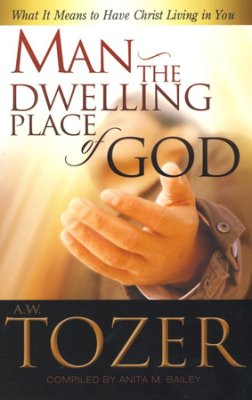
Man—The Dwelling Place Of God (book review)

It’s an awesome thing to ponder that Almighty God wants to live and commune with you and me! I can think of no better person to illuminate this amazing thought than the prophetic voice of A.W. Tozer in his book Man—The Dwelling Place Of God.

Although this book is 50 years old, the message still rings true for this generation. Tozer points out that God wants to dwell with man, to reveal Himself to us in powerful and personal ways, but this comes at a price. That price is not trying to control God, but letting Him be in charge.

The book is made up of 39 chapters, the majority of which are fairly short and can be read in just a few minutes. But the application of the truths in these short chapters will be something that you will need to ponder for quite awhile. God is Lord and Master; He is not a genie in a bottle that grants us our wishes if we rub the bottle the right way. God has laid out for us how He will bless us in His Word and, Tozer says, it’s time for us to take God’s Word more seriously.

Tozer makes it clear that we cannot live however we want to live and then ask God to bless our life with His presence. Instead, God has already shown us in His Word, in the life of His Son Jesus, and in the ongoing witness of the Holy Spirit the kind of life He longs to bless. It’s now up to us to place our lives in that place where God’s blessings and presence will flow.

A.W. Tozer speaks with the authority of a prophet of God, and for those who are willing to listen and apply his words, God’s presence and blessing can be expected.

40 Questions About Your Religion

The Mathematical Proof For ChristianityDan Delzell wrote a very thought-provoking book—The Mathematical Proof For Christianity—which gives skeptics a lot of evidence to contemplate. As I said in my review of this book (which you can read here), this is a good book for Christians to read with a skeptic as a great conversation-starter about the Christian faith.

Dan also presented this list…

“The true religion is a match to all 40 questions:

  1. Which religion was started by a prophet who never did anything wrong?
  2. Which religion produces scores of people who speak out against injustice and work hard to correct it?
  3. Which religion fulfills hundreds of prophecies that were written down hundreds of years before the prophet fulfilled them?
  4. Which religion produces followers who have established thousands of hospitals, orphanages, and homeless shelters?
  5. Which religion, when practiced correctly, empowers followers to turn the other cheek when being mistreated?
  6. Which religion began with a leader who died, but then came back to life?
  7. Which religion, when practiced correctly, produces followers who do not judge others or look down on them?
  8. Which religion produces a tender love for God in heaven, rather than lingering fear and trepidation?
  9. Which religion do people turn to in tough times and when disaster strikes?
  10. Which religion has done the most to advance the rights of women?
  11. Which religion details historic events that are supported by plenty of archeological evidence?
  12. Which religion is based upon documents that are better preserved and more numerous than any other ancient writings?
  13. Which religion began with a prophet who is loved and even worshipped by millions of followers?
  14. Which religion has been around for thousands of years and continues to expand around the world?
  15. Which religion teaches that eternal life in paradise is a free gift through faith in its prophet?
  16. Which religion has millions of followers who experience tremendous peace as a result of their prophet?
  17. Which religion, when practiced correctly, produces followers who are quick to forgive rather than to seek vengeance?
  18. Which religion offers the forgiveness of sins based solely on the goodness and sacrifice of the prophet?
  19. Which religion, when practiced correctly, produces genuine humility before God and man?
  20. Which religion teaches that you cannot earn your way to heaven?
  21. Which religion produces men and women of justice who speak out when others are committing atrocities?
  22. Which religion, when practiced correctly, lines up with the humble and compassionate attributes of the prophet?
  23. Which religion seeks to bring help to the hurting, comfort to the sorrowful, and encouragement to the downcast?
  24. Which religion, when practiced correctly, produces genuine love, joy, peace, and patience?
  25. Which religion requires divine revelation in order to understand it?
  26. Which religion rules not by force, but by love, as demonstrated by the prophet?
  27. Which religion has produced the most freedom of religion in the world?
  28. Which religion turns man’s body into a temple where the Spirit of God comes to reside?
  29. Which religion, when practiced correctly, has done the most to advance the rights of minorities?
  30. Which religion gives followers the grace to say ‘no’ to ungodly passions?
  31. Which religion produces people who long to improve the lives of those from other religions?
  32. Which religion cares as much for the unborn and elderly as it done for the youthful and strong?
  33. Which religion has done more than any other to help turn communities into places of freedom and safety for all?
  34. Which religion provides a personal assurance of salvation based solely on the sacrifice of the prophet?
  35. Which religion has a prophet whose name is used by many as a curse word?
  36. Which religion, when practiced correctly, produces followers who focus on their own sins rather than the sins of others?
  37. Which religion can turn a terrorist into a loving peacemaker?
  38. Which religion teaches that your works become ‘good’ in God’s eyes only after you accept the prophet through faith?
  39. Which religion will you wish you had followed on Judgment Day?
  40. Which religion is the answer to all 40 questions?”

To read some of the other quotes I shared from this book, please click here.

6 Quotes On Mourning From “The Blessing Of Humility”

The Blessing Of HumilityAs I stated in my review of Jerry Bridges’ book The Blessing Of Humility, reading through these thoughts slowly—Beatitude by Beatitude—would bring about the most life-changing impact. In that spirit, I will be sharing some noteworthy quotes one Beatitude at a time. Here are some quotes on blessed are those who mourn (Matthew 5:4)…

“The word that Jesus used in this Beatitude is the strongest word in the Greek language for mourning. It is the word for Jacob’s morning over what he thought was the death of Joseph (Genesis 37:35). … Jesus uses this word to show the intensity of mourning He blesses here. He is, however, actually talking about mourning not over death but over our sin.”

“To be ‘poor in spirit’ is to be convicted of one’s sin, whereas to ‘mourn’ is to be contrite for it.” —John Blanchard

“King David committed two sins: first adultery, and then (essentially) murder to try to cover up his adultery. God sent the prophet Nathan to confront him, and in his skillful accusation of David, Nathan twice used the word despised (2 Samuel 12:7-11). First, David despised the Word of the Lord—that is, he despised the law of God (verse 9). In so doing, he also despised the Person of God (verse 10). Why is this true? Despising the law of God is not only an expression of rebellion. It is also a despising of His very character, since His law is a reflection of His character. This is true not only of such heinous sins as adultery and murder, but also of our more refined sins: pride, selfishness, gossip, and the like. So let us pray that God will indeed allow us to see our sin as rebellion against the rule of God—a despising of God’s law and even of His character.”

“Failure to see our sin as primarily against God is, I believe, the reason we experience so little heartfelt grief over it. … But be it ever so small in our own eyes, whenever we sin we also break God’s law. And Scripture says, ‘Whoever keeps the whole law but fails in one point has become accountable for all of it’ (James 2:10). God’s law is seamless, one complete whole. So when we break any of it, we break the whole law.”

“Is mourning over sin just for those first coming to Christ? No, Jesus’ words are in the present active tense. We could literally translate them as ‘blessed are those who continue to mourn.’ He is pronouncing a blessing on those whose attitude toward their sin is characterized by mourning. One mark of a growing Christian, then, is a growing sense of his or her sin, and an attitude of mourning over it.”

“So mourning over our sin is truly a display of humility in action. We cannot be proud and mourn over sin at the same time. We cannot be judgmental toward other believers, or even toward unbelievers, if we are truly contrite and brokenhearted over our own sin.”

I just shared quotes on blessed are the poor in spirit. Quotes on the next Beatitude will be posted soon. Stay tuned…

11 Quotes From “The Duty Of Pastors”

The Duty Of PastorsJohn Owen has some fascinating insights on pastors and ministers (hint: they’re not the same thing) in his book The Duty Of Pastors. Here are some of the quotes I liked from this book. Remember this book was written in the 17th-century, so don’t let the Old English keep you from discovering the rich truths in these passages.

“Why should any speak where the Holy Ghost is silent? … Where things are obscured, it is a safer way to prove the practice of men by God’s precept, charitably supposing them to have been obedient, than to wrest the divine rule to their observation, knowing how prone men are to deify themselves by mixing their inventions with the worship of God.”

“The lights which God maketh are sufficient to rule the seasons for which they are ordained. As, in creating of the world, God ‘made two great lights, the greater light to rule the day, and the lesser light to rule the night;’ so, in the erection of the new world of His church, He set up two great lights, the lesser light of the Old Testament to guide the night, the dark space of time under the law, and the greater light of the New Testament to rule the glorious day of the gospel. And these two lights do sufficiently enlighten every man that cometh into this new world. There is no need of the false fire of tradition where God sets up such glorious lights.”

“All faithful ministers of the gospel, inasmuch as they are ingrafted into Christ and are true believers, may, as all other true Christians, be called priests; but this inasmuch as they are members of Christ, not ministers of the gospel. It respecteth their persons, not their function, or not them as such.”

“Thus, this metaphorical appellation of priests is, in the first place an intimation of that transcendent privilege of grace and favour which Jesus Christ hath purchased for everyone that is sanctified with the blood of the covenant.”

“Not to lose myself and reader in this digression, the sum is, the unspeakable blessings which the priesthood of Christ hath obtained for us are a strong obligation for the duty of praise and thanksgiving; of which that in some measure we may discharge ourselves, He hath furnished us with sacrifices of that kind to be offered unto God.” 

“That the name of priests is nowhere in the Scripture attributed peculiarly and distinctively to the ministers of the gospel as such. … And yet, when Christ ascended on high, He gave some to be prophets, for the edification of His body, Eph. iv. 11; none, as we find, to be priests. Priests, then (like prelates), are a sort of church-officers whom Christ never appointed.”

“Never fear the equity of what God sets thee upon. No excuses of disability or any other impediment ought to take place; the Lord can and will supply all such defects.”

“God never sendeth any but whom He doth so extraordinarily and immediately call and ordain for that purpose; and that this may be manifested unto others, He always accompanieth them with His own almighty power, in the working of such miracles as may make them be believed, for the very works’ sake which God by them doth effect.”

“We do not read of any such miracles wrought by the prophet Amos, and yet he stands upon his extraordinary immediate vocation, ‘I was no prophet, neither was I a prophet’s son, but the Lord took me,’ etc. It sufficeth, then, that they be furnished with a supernatural power, either in, 1. Discerning; 2. Speaking; or 3. Working. … The sum is, that seeing such men pretend that their revelations and miracles are from heaven, let us search whether the doctrine they seek to confirm by them be from heaven or no.”

“There is a general obligation on all Christians to promote the conversion and instruction of sinners, and men erring from the right way.”

“For a public, formal, ministerial teaching, two things are required in the teacher: first, Gifts from God; secondly, Authority from the church (I speak now of ordinary cases). He that wants either is no true pastor.”

Be sure to check out my review of The Duty Of Pastors by clicking here.

Links & Quotes

link quote

“Foretastes are good. Unless they become substitutes. O, don’t let all the sweet things of this season become substitutes of the final great, all-satisfying Sweetness. Let every loss and every delight send your hearts a-homing after heaven.” —John Piper

“Are you in a season of winter?  A lost job… A doctor’s report… A broken marriage? Maybe you feel stuck in winter, like Christmas may never come. As scripture says, God rewards those who diligently seek Him. So just like the wise men of the Christmas story…search for the Lord. Look for Him in the midst of your darkest nights and coldest winters. Hope may seem as distant as a star, but if the Christmas story tells us anything…God is still present. God is still working. And in this very moment, God is near.” —Max Lucado

“If there had been no prophet like Nathan—no piercing, prophetic word—David could have ended up like Saul: spiritually dead, with no Holy Ghost guidance, having lost all intimacy with God. … If you are being probed by God’s Word—if His Spirit isn’t letting you sit comfortably in your sin—then you are being shown mercy. It is the deep love of God at work, wooing you out of death and into life.” —David Wilkerson

“If regrets about yesterday’s decisions and actions help you do better work today, then they’ve served a useful purpose. … Most of the time, though, we use regrets to keep us from moving forward. They paralyze us in the face of possibility. We don’t want to do something if it reminds us of that black hole we have in our past. It’s useful if you can forgive yourself, because the regrets you’re carrying around are keeping you from holding onto the possibility that you can contribute even more tomorrow.” —Seth Godin

Live Action shares an important post: Abortion and the church—what can we do?

Nature shares some science myths that won’t die.

Ty Cobb is my all-time favorite Detroit Tiger. Here is a cool timeline of his life.

[VIDEO] Excellent word from Bobby Conway: How should a Christian vote?—

4 Notes On Haggai

(c) Laura Kranz at The Overview Bible Project (see my note below)

(c) Laura Kranz at The Overview Bible Project (see my note below)

The prophet Haggai wrote one of the shortest books in the Old Testament, and his recorded ministry only spans five months(!) in 520 B.C. But in this short book I find four really cool things—

(1) God uses His people at specific times for specific purposes. All of Haggai’s messages from God have a very precise date stamp on them, so we know exactly when  they were delivered. Also, most of his messages say something like, “The word of God came through Haggai to Zerubbabel [or to Joshua, or to the people, or to the priests].” If God used Haggai like this, isn’t it likely that He is using you or I at specific times and for specific purposes?

(2) God invites us to “give careful thought” to His messages. Five times God says, “Give careful thought to your ways” (1:5, 7; 2:15, 18). This phrase literally means to take a strong hold on each thought and examine it intensely. This thought process is always connected to another phrase: “This is what the Lord Almighty says….” In other words, we are to thoughtfully examine our lifestyle with God’s Word being the standard of measurement (cf. 2 Corinthians 10:5).

(3) Obeying God’s Word brings God’s “stirring.” When God says move and we move, His Spirit will energize our spirit, and empower our lives for action. God never calls us to do something without giving us the empowerment to do it.

(4) I need to act courageously. God calls us to “be strong” (three times in 2:4) “and work, for I am with you.” Courageous action after God has stirred us up drives out fear. On the flip side, inactivity because of fear almost always leads to more fear and more inactivity.

Don’t ever let the category “minor prophet” trick you into thinking God doesn’t have a major message to share with you. Just one word from God is more powerful than we can ever imagine!

(The portrait of Haggai in this post was created by Laura Kranz at The Overview Bible Project. She and her husband Jeffrey do some amazing things that will add insight to your Bible study time. Click here to read my review of their book The Illustrated Guide To The Authors Of The Bible. And while you’re on their website, subscribe to some of the cool guides that regularly get emailed out.)