If your mental health is struggling remember GIGO: garbage in, garbage out. We need to look at all our inputs: physical, emotional, and spiritual. Check out this full message by clicking here. And be sure to check out all of my videos on my YouTube channel.
In a post entitled The Quest For Immortality, John Stonestreet reminds us that we are more than just the physical bodies we have. He wrote, “Attempts to achieve immortality have continued (and continued to fail) right up to our own time. Medieval European alchemists believed they could produce ‘the philosopher’s stone,’ which would perfect the imperfect, turning lead into gold and making mortal life immortal. Enlightenment thinkers of the late 18th century rejected the mysticism of alchemy but continued to speculate about the means to attain physical immortality. Mary Shelley’s Frankensteinwas written as a cautionary tale about scientific hubris, in response to the more modern attempts of medicine and biology to preserve, extend, and improve life.” Check out this full post.
“You have to train your mind as much as your body.” —Venus Williams
“Peace is the normal condition and set of the soul of those who know the Kingdom’s presence in their lives. And only Jesus can give us the peace that overcomes the fears and troubles of the world, so that His Kingdom citizens may ‘be of good cheer’ [John 16:33] in all they do, come what may.”
“Hatred and anger are the greatest poison to the happiness of a good mind.” —Adam Smith
“Hard work beats talent when talent doesn’t work hard.” —Anonymous
I really love the He Gets Us presentation of Jesus. Check them out! I used the example Jesus showed us of proper self-care in my book Shepherd Leadership.
Shalom—the peace that comes from God—could be defined simply as “nothing missing.” But couldn’t it also be defined as “no one missing”? It sure could! What peace there is when no one is missing from Heaven! Check out more of this message here. And be sure to check out all of my videos on my YouTube channel.
“Despite the moon’s apparently simple shape, uniformitarian scientists have long had great difficulty explaining how it could form by natural processes apart from a supernatural Creator. One Harvard astrophysicist once quipped that the best explanation for the moon’s existence was observational error—the moon doesn’t really exist!” This is a very interesting post from the Institute for Creation Research.
“Do we not miss very much of the sweetness and efficacy of prayer by a want of careful meditation before it, and hopeful expectation after it? … We too often rush into the presence of God without forethought or humility. We are like people who present themselves before a king without a petition, and what wonder is it that we often miss the end of prayer? We should be careful to keep the stream of meditation always running, for this is the water to drive the mill of prayer. … Prayer without fervency is like hunting with a dead dog, and prayer without preparation is hawking with a blind falcon. Prayer is the work of the Holy Spirit, but He works by means. God made man, but He used the dust of the earth as a material. The Holy Ghost is the Author of prayer, but He employs the thoughts of a fervent soul as the gold with which to fashion the vessel. Let our prayers and praises be not the flashes of a hot and hasty brain but the steady burning of a well-kindled fire.” —Charles Spurgeon, in Spurgeon and the Psalms
What a powerful word to pastors from T.M. Moore’s post First Things First. “Pastors sometimes complain that their people don’t seem very hungry or thirsty for the things of the Lord. Sated on the junk food of getting-and-spending, generously ladled over with pop culture, God’s people have little appetite for Christ or His Word. But what about us? Does our hunger and thirst for Christ make them long for the same? Do they see in us that earnest desire to be with the Lord that tells them they’re missing something of great importance? Loving Christ and delighting to be with Him is infectious. If the people we serve see it in us, they’ll want it for themselves, more than anything this world might offer.”
We don’t read about Jesus getting angry that often, but what usually got Him upset was when people in need were being kept from the God who could meet their needs. Sadly, it was usually man-made rules and practices that kept people away. I don’t want to make Jesus angry, so I need to evaluate anything in my life that may be standing in the way of connecting needy people with a need-satisfying God.
“So in our broader culture, people no longer sin; they make mistakes. What about our Christian environment? In our case, sin is not denied. Instead it is often redefined to refer to the more flagrant sins of society. We tend to ignore our own sins of pride, selfishness, gossip, and the like. So, effectively, no one sins anymore. The reason is that we have lost sight of the biblical meaning of sin. Typically, if we are not actually murderers, felons, or adulterers, we tend to think of our common sins as no more serious than a parking violation. We are so used to living with pride, selfishness, envy, gossip, and a whole host of other ‘respectable sins’ that we don’t even think of them as sin. But the fact is that, as serial sinners, we are all as guilty before God as that murderer. You and I sin every day in thought, word, deed, and motive. And whether those sins appear great or small in our own sight, in reality every sin we commit is an act of rebellion against God, a rejection and attempted negation of His sovereignty and rulership over us.” —Jerry Bridges
Listen to the podcast of this post by clicking on the player below, and you can also subscribe on Apple, Spotify, or Audible.
Last week we saw the dark times in which Micah lived as he prophesied the advent of the Messiah. Israel was both surrounded by enemies as well as lots of practices within their borders that were heartbreaking to God. Many times, our lives can feel the same way: enemies of God all around us and our own turmoil and doubts inside our hearts and minds.
In this dark, hopeless time, the Messiah came as our Great Shepherd. Take a look at what this Shepherd brings us:
He will stand and shepherd His flock in the strength of the Lord, in the majesty of the name of the Lord His God. And they will live securely, for then His greatness will reach to the ends of the Earth. And He will be their peace. (Micah 5:4-5)
We see this idea of Jesus our Great Shepherd bringing peace to our hearts in the New Testament as well:
May the God of peace, who through the blood of the eternal covenant brought back from the dead our Lord Jesus, that Great Shepherd of the sheep, equip you with everything good for doing His will, and may He work in us what is pleasing to Him, through Jesus Christ, to Whom be glory for ever and ever. Amen. (Hebrews 13:20-21)
This peace is also implied in Psalm 23:1 when David wrote, “The Lord is my Shepherd, I shall not be in want.” That phrase “I shall not be in want” really captures the definition of peace.
The Hebrew word for peace is shalom. An easy-to-remember definition of shalom is “nothing lost, nothing missing.” Our Great Shepherd makes sure nothing is lost or missing that would cause us anxiety or doubt, so we can have total peace—we can have shalom!
Jesus said the devil’s agenda was for everything to be lost or missing—“the thief comes only to steal and kill and destroy”—but our Great Shepherd’s agenda is for there to be nothing lost or missing—“I have come that they may have life, and have it to the full” (John 10:10).
Isaiah, who was prophesying at the same time as Micah, sounded a similar note:
Therefore the Lord Himself will give you a sign: The virgin will conceive and give birth to a Son, and will call Him Immanuel. … And He will be called Wonderful Counselor, Mighty God, Everlasting Father, Prince of Peace. (Isaiah 7:14, 9:6)
When this Great Shepherd was born in Bethlehem, the shepherds in the field were the first to hear the good news. Notice what the angels announced: “Glory to God in the highest heaven, and on earth peace to those on whom His favor rests” (Luke 2:14).
Who has God’s favor? Those with faith in Him: “Without faith it is impossible to please God” (Hebrews 11:6). So those with faith in God have God’s favor.
Faith in what? In all that Jesus purchased for us by His blood shed on the Cross: “Therefore, since we have been justified through faith, we have peace with God through our Lord Jesus Christ” (Romans 5:1).
Faith comes from believing that God has made the promise of peace, that God has fulfilled the promise of peace through Jesus, and that God is bringing us to His eternal peace. So now our lives of peace in a world of turmoil can serve as a testimony to others.
Jesus called His followers to be peacemakers (Matthew 5:9) but we cannot do this while we are experiencing anxiety or doubts. To be peacemakers we must be full of peace because of our relationship with the Prince of Peace, who has ensured that nothing is lost and nothing is missing!
If you feel anxious, remember that Bethlehem is your proof that the Prince of Peace has come to remove doubts, anxiety, fear, and inner turmoil. Let every pang of anxiety be immediately a call to run to the Prince of Peace. He has paid an incalculable price to purchase your peace, so don’t leave this gift unopened and unused. A dark, anxious world is looking for peace. Know the author of shalom so that you can introduce others to this Prince of Peace.
Tomorrow I will release a new full-length video exclusively for my Patreon supporters. This video will tell us how and why we can live as peaceful influencers in a culture that is dark and confused.
For just $5 per month, you can have access to all of my exclusive content as well. Get all the details here.
Listen to the podcast of this post by clicking on the player below, and you can also subscribe on Apple, Spotify, or Audible.
The Israelites fought constantly with the Philistines throughout Saul’s lifetime… (1 Samuel 14:52).
Have you ever worked in a hostile environment? I was involved with one organization where all of the staff members called the weekly meeting the “staff beating” instead of the staff meeting. This was largely because the senior leader started off every meeting by asking for problems that needed to be addressed, but then he “addressed” the problem by attacking the person who shared the problem.
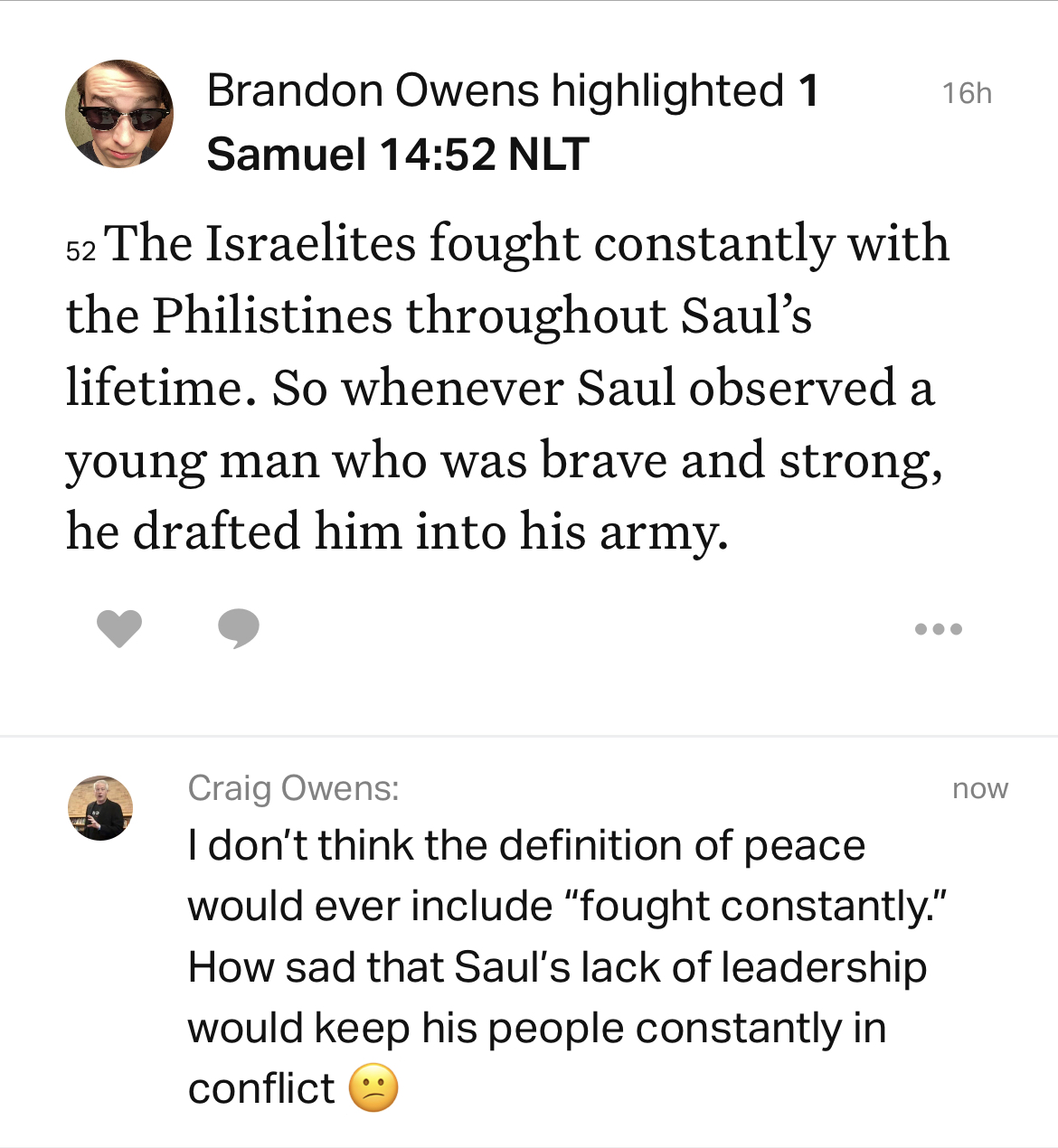
I was reminded of this recently when I was scrolling through YouVersion and saw that my son had highlighted 1 Samuel 14:52 that said that Saul’s reign as king was noted for the constant fighting. I added the comment, “I don’t think the definition of peace would ever include ‘fought constantly.’ How sad that Saul’s lack of leadership would keep his people constantly in conflict.”
Make no mistake about it: It was his poor leadership that created this environment. We often read of his jealousy of anyone else who was successful, and we see that although he had a loyal army, he kept them bottled up.
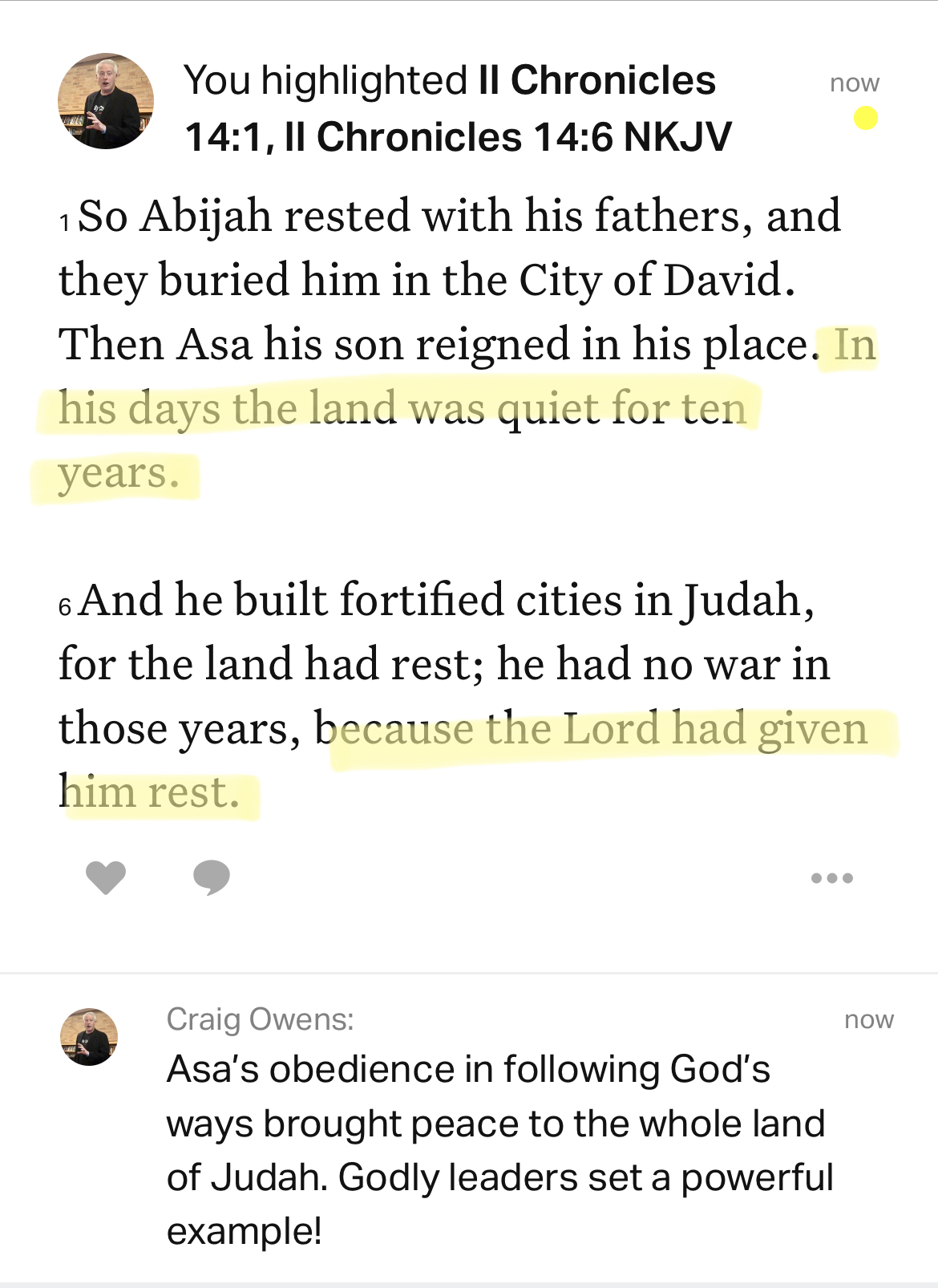
On the other hand, consider this statement about the reign of king Asa: “In his days the land was quiet for ten years. … He had no war in those years, because the Lord had given him rest” (2 Chronicles 14:1, 6). This peace and quiet and rest is directly tied to Asa’s obedience to God’s laws.
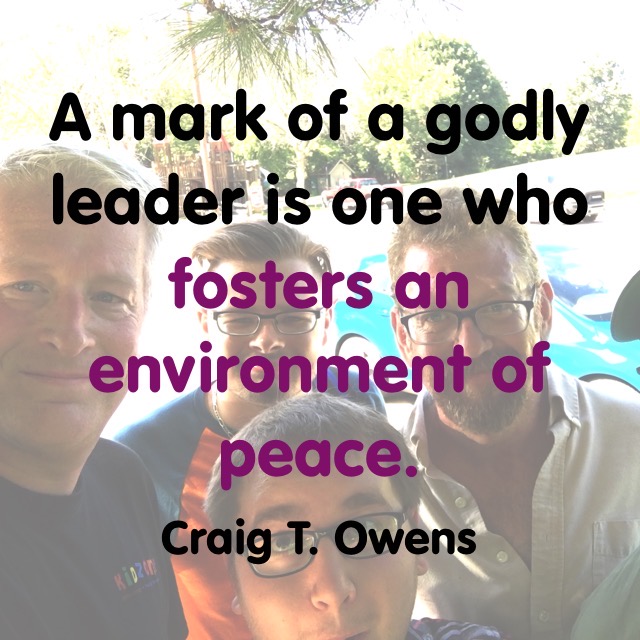
A mark of a godly leader is one whose obedience to God fosters an environment of peace for his people.
This is part 62 in my series on godly leadership. You can check out all of my posts in this series by clicking here. And I would also encourage you to check out my book Shepherd Leadership: The Metrics That Really Matter, where I outline in more detail the characteristics of godly leadership.
Listen to the podcast of this post by clicking on the player below, and you can also subscribe on Apple, Spotify, or Audible.
…the fear of the Lord is the key to this treasure (Isaiah 33:6).
What treasure is Isaiah referring to? There is an amazing list of blessings in this chapter! Things like…
God’s graciousness
God’s strength
Salvation
God’s justice
God’s righteousness
A sure foundation
“A rich store of salvation and wisdom and knowledge”
Eternally secure in God’s presence
Seeing God’s beauty
Having evil people removed from my life
Peace
How do I get the key to this treasure? By placing my faith in Jesus. Jesus paid the price, so He could take the key from the devil and hold it securely. When I am in Him, I have access to this key to God’s riches!
With all of this treasure accessible to me, how do I now live? In a word: Nobly. “But the noble make noble plans, and by noble deeds they stand” (Isaiah 32:8). I am a child of God, a joint-heir with Jesus. I lack no good thing, so I can live securely, gracefully, and nobly. I must live this way to bring glory to my Lord and my Master every single day!
Listen to the podcast of this post by clicking on the player below, and you can also subscribe on Apple, Spotify, or Audible.
All this also comes from the Lord Almighty, whose plan is wonderful, whose wisdom is magnificent (Isaiah 28:29).
Throughout the Scripture, God always makes clear the two options we have: Our way or His way.
Man’s way is described like this: “For it is: do this, do that, a rule for this, a rule for that, a little here, a little there” (v. 10). In other words, man says, “We’ve got this all figured out. We have a plan for everything.”
Until they don’t.
Until the world is not going according to plan, and worldwide panic sets in, and a new plan needs to be formulated. In the meantime, people are fearful, angry, confused, and panicking.
God describes His way like this: “See, I lay a stone in Zion, a tested stone, a precious cornerstone for a sure foundation; the one who relies on it will never be stricken with panic” (v. 16).
So here’s the decision everyone will have to make: Will I trust the puny plans of a finite human, and experience the panic that sets in when those plans fail? Or will I put my trust in the only One whose plans are never thwarted? One plan leads to panic, and the other leads to peace.
“Love of the Word appears preeminently in our Lord and Savior Jesus Christ. He read it publicly. He quoted it continually. He expounded it frequently. He advised the Jews to search it. He used it as His weapon to resist the devil. He repeatedly said, ‘The Scripture must be fulfilled.’ Almost the last thing He did was to ‘open their minds so they could understand the Scriptures’ (Luke 24:45). I am afraid that man cannot be a true servant of Christ, who has not something of his Master’s mind and feeling towards the Bible.” —J.C. Ryle, Bible Reading
“The character of our praying will determine the character of our preaching. Light praying will make light preaching. …The preacher must be preeminently a man of prayer. His heart must graduate in the school of prayer. In the school of prayer only can the heart learn to preach.” —E.M. Bounds, Power Through Prayer
“Some pastors and preachers are lazy and no good. They do not pray; they do not read; they do not search the Scripture. … The call is: watch, study, attend to reading. In truth you cannot read too much in Scripture; and what you read you cannot read too carefully, and what you read carefully you cannot understand too well, and what you understand well you cannot teach too well, and what you teach well you cannot live too well. … The devil … the world … and our flesh are raging and raving against us. Therefore, dear sirs and brothers, pastors and preachers, pray, read, study, be diligent.” —Martin Luther
This is a weekly series with things I’m reading and pondering from Charles Spurgeon. You can read the original seed thought here, or type “Thursdays With Spurgeon” in the search box to read more entries.
Listen to the podcast of this post by clicking on the player below, and you can also subscribe on Apple, Spotify, or Audible.
Beautiful Homegoing
You shall come to the grave at full age, as a sheaf of grain ripens in its season. (Job 5:26)
The Christian’s death is always timely. ‘You shall come to the grave at full age.’
‘Ah,’ says one, ‘that is not true. Good people do not live longer than others. The most pious man may die in the prime of his youth.’ But look at my text. It does not say you will come to your grave in old age, but in a ‘full age.’ … All fruits do not get ripe and mellow at the same season. So it is with Christians. They are at a ‘full age’ when God chooses to take them home. …
There are two mercies to a Christian. The first is that he will never die too soon. And the second is that he will never die too late. …
‘But,’ say some, ‘how useful might they have been had they lived.’ Ah, but how damaging they might have been! And were it not better to die than to do something afterward that would disgrace them and bring disgrace to the Christian character? Were it not better for them to sleep while their work was going on than to break it down afterward? …
Again, the Christian never dies too late. … God is too good a Husbandman to leave His wheat in the field too long and let it shale out. …
Now the last thing is that a Christian will die with honor. … I think there are two funerals for every Christian: one is the funeral of the body, and the other of the soul. Funeral, did I say, of the soul? No, I meant not so. I meant not so. It is a marriage of the soul. For as soon as it leaves the body, the angel reapers stand ready to carry it away. They may not bring a fiery chariot as they had for Elijah. But they have their broad spreading wings. I rejoice to believe that angels will come as convoys to the soul across the ethereal plains. … I think the most honorable and glorious thing we will ever behold, next to Christ’s entrance into heaven and His glory there, is the entrance of one of God’s people into heaven.
From The Death Of The Christian
As I mentioned last week, this sermon was so providential in its timing for me because my precious mother went Home to be with Jesus just days before I opened to this sermon from Charles Spurgeon.
We are comforted by the promises Rev. Spurgeon shares because they are based on the truth in God’s Word. “Good people pass away; the godly often die before their time. But no one seems to care or wonder why. No one seems to understand that God is protecting them from the evil to come. For those who follow godly paths will rest in peace when they die” (Isaiah 57:1-2).
At my Mom’s graveside committal service I shared this—
One of my favorite authorsC.S. Lewis made a comment, “You don’t have a soul. You are a soul. You have a body.”
This part that we called Claudia Owens was just the body that carried around who she really was. What a beautiful soul that we got to experience for 78 years. What shined through was so sweet and graceful and wonderful. What a glimpse we got! But a joy to know that it was only a glimpse. That the part of my Mom that was so beautiful that we got to see, was only a fraction of her full beauty! The part that was really her, that is at Home with her Savior Jesus now is shining in all its brilliance. …
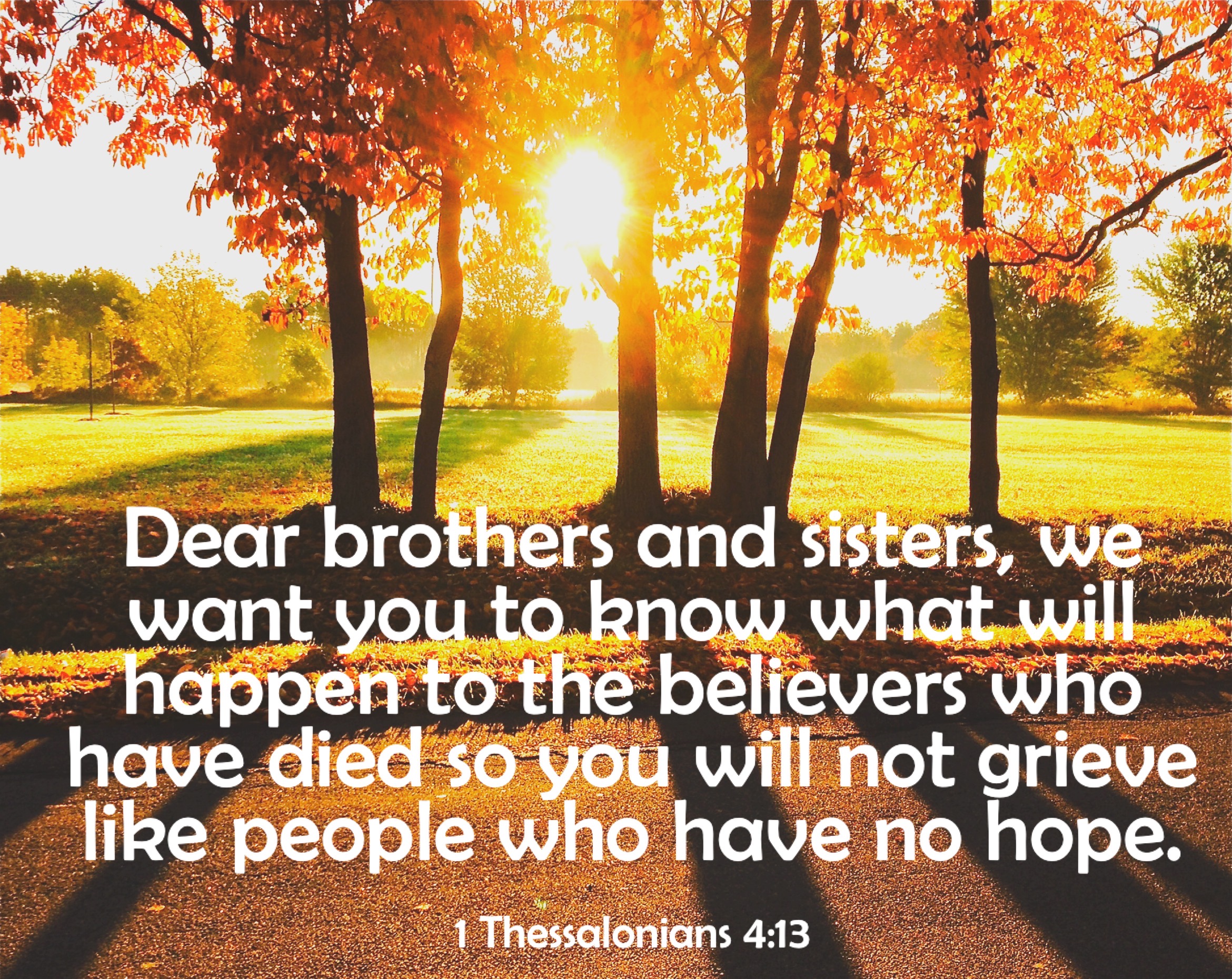
We will all miss her and we will grieve our loss. But as the apostle Paul reminded us, we don’t grieve as those who have no hope. We know that to be absent from the body is to be present with the Lord. We know that this body is sown perishable ravaged by the disease of cancer, but that my Mom is now in a place with no more tears or disease. We know that the same Savior that prepared a place for Claudia has prepared a place for us.
And we concluded with this prayer that can be offered up for every Christian who has died at their “full age”:
Heavenly Father,
We commit this body to the ground with the full assurance that her soul is in your everlasting presence. Holy Spirit, help us in our grief to be reminded of the hope of eternal life that we all share. Thank You, Jesus, for purchasing this hope on which we stand.
As I mentioned last week, if you don’t have this blessed assurance of the marriage of your soul when you take your last breath here on earth, please don’t hesitate to contact me.
So here are all of the sermon series that I shared in 2021. Clicking on each series title will take you to a list of all of the sermons in that series.
Foundation Stones—Any architect will tell you: You can’t build a great building on a weak foundation. This is just as true in the spiritual realm, which is why John Calvin warned, “Those who are strong only in fervor and sharpness, but are not fortified with solid doctrine, weary themselves in their vigorous efforts, make a great noise…[and] make no headway because they build without foundation.” We have had on the Calvary website since Day 1 a link to “What we believe,” but more than just having them listed there, it is important to discuss them.
Be A First Responder—There is a line in an old hymn that convicts me every time I sing it: “Oh, what peace we often forfeit; Oh, what needless pain we bear all because we do not carry everything to God in prayer.” Why are we so slow to drop to our knees in prayer when trouble strikes? It seems we fool ourselves into thinking the problem is small enough to handle on our own, or we think God isn’t concerned with something that may seem trivial, or we’ve been-here-done-this before and know the way to go. But this isn’t what our Heavenly Father desires; instead, He wants us to come to Him before we try anything else. Instead of making prayer our last resort, why don’t we strive to make it our first response!
Confessions Of A Dying Man—In our justice system, rarely will a judge allow hearsay testimony to be introduced in court. But there is one notable exception: a dying declaration. A dying declaration is the statement of a mortally injured person who is aware he or she is about to die. This statement is admissible testimony in court on the theory that a dying person has no reason not to tell the truth. Jesus was nailed to a Cross. Mortally injured, unable to escape, He had no reason to lie. In His dying moments, struggling to get enough air in His lungs to be able to speak, Jesus choked out seven statements that still have a profound impact on us today.
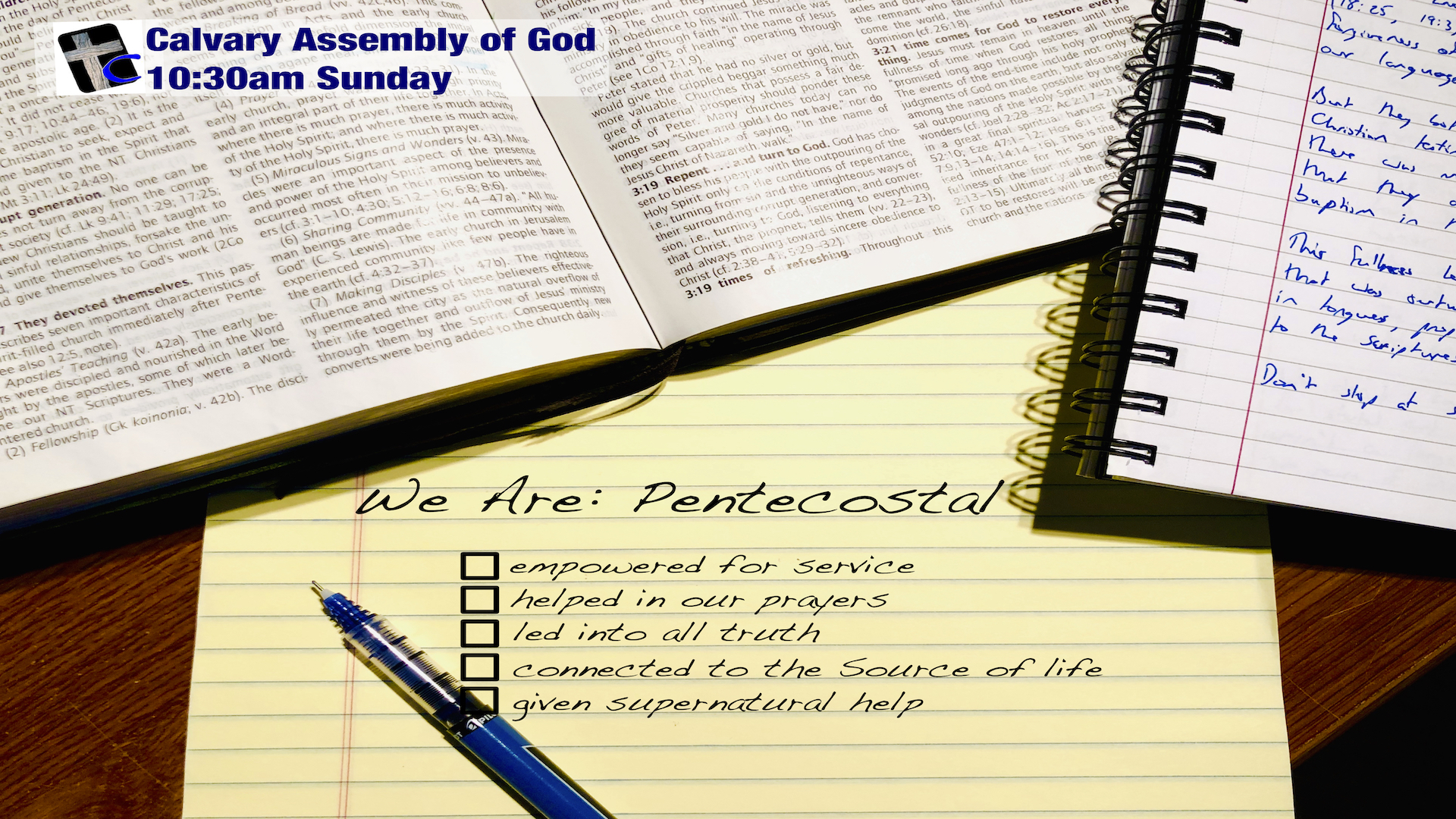
We Are: Pentecostal—Pentecost for over 1500 years was a celebration in Jerusalem that brought in Jews from all over the world. But on the Day of Pentecost that came just ten days after Jesus ascended back into heaven, the meaning of Pentecost was forever changed! Followers of Jesus—now empowered by an infilling of the Holy Spirit—began to take the good news of Jesus all over the world. These Spirit-filled Christians preached the Gospel and won converts to Christ even among hostile crowds, performed miracles and wonders, stood up to pagan priests and persecuting governmental leaders, and established a whole new way of living as Christ-followers. We, too, can be Pentecostal followers of Jesus Christ today.
Selah—The word Selah appears nearly 70 times in the Bible, almost exclusively in the Psalms. Although it is primarily a musical term, it applies beautifully to our summer series. It means a pause. Throughout the Psalms, Selah appears at the end of a verse, at the end of the psalm, or sometimes even mid-sentence. But each one of them is perfectly placed by the Spirit-inspired authors to get us to take a breath and deeply contemplate what we just read or sang.
Major Lessons From Minor Prophets—Sometimes the naming of things gives us an inaccurate picture of the thing being named. For instance, many people think the “old” in Old Testament means outdated or perhaps updated by the “new” in the New Testament. When in fact, both Testaments are needed to give us the full picture of God’s love and glory. A similar thing happens with the headings “major prophets” and “minor prophets.” It makes it sound like the major prophets have something major to say to us, while we could take or leave the minor messages of the minor prophets. In reality, they were given these headings simply because of the volume of writing—the five major prophets consist of 182 chapters, whereas the 12 minor prophets only have 67 chapters. The volume of their writing may be minor, but their content carries major messages of meteoric power!
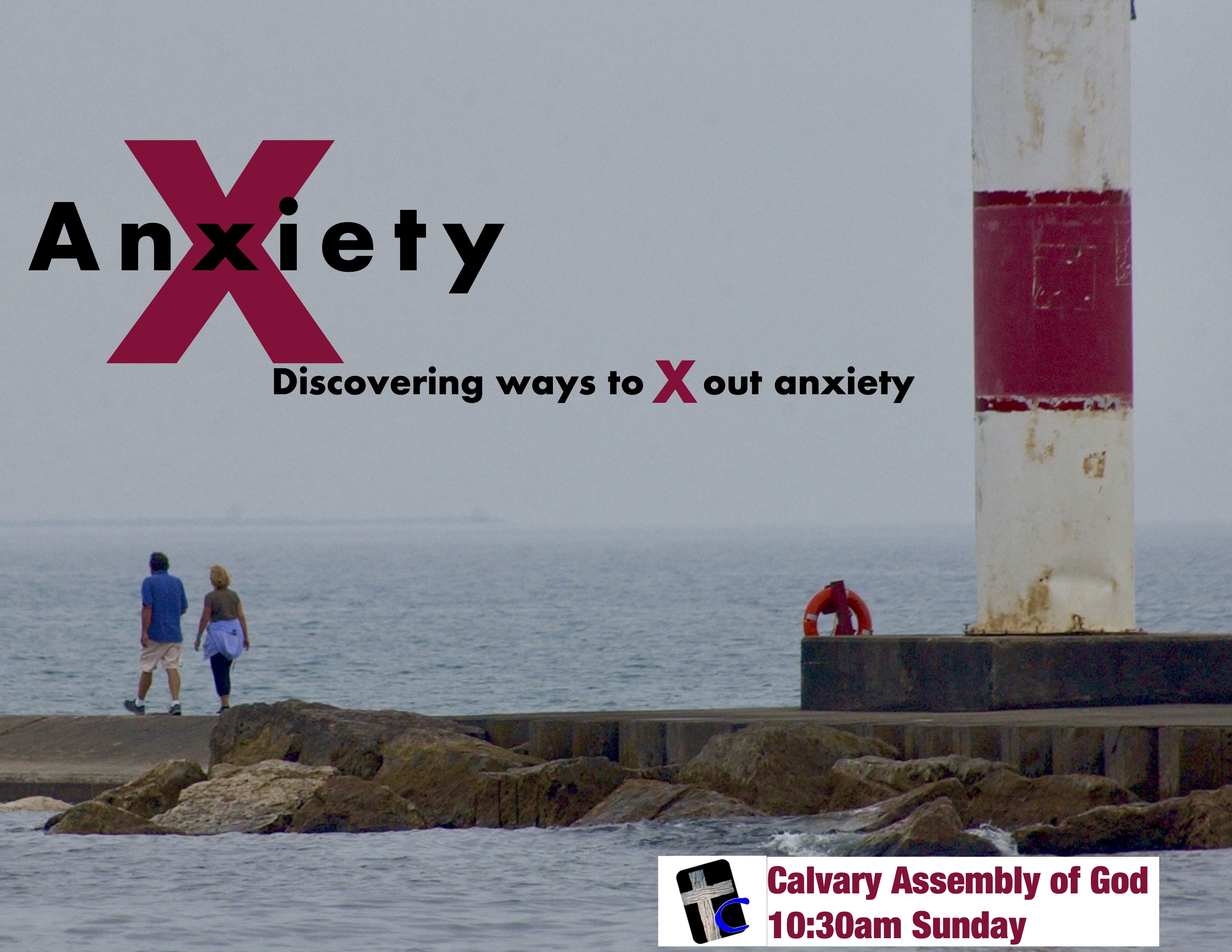
X-ing Out Anxiety—Two brothers—one a doctor and one a pastor—addressed the prevalence of anxiety in our culture. They wrote, “A recent survey of primary care physicians in the United States revealed that at least one-third of office visits were prompted by some form of anxiety.” Anxiety can negatively impact our relationships, our ability to think creatively, our physical health, and even our relationship with God. Thankfully, one of the titles given to Jesus is The Prince of Peace. Join us for this freeing series called X-ing Out Anxiety, where we will be learning what God’s Word says about getting free from the anxiety that is robbing us of life, and replacing that anxiety with His peace.
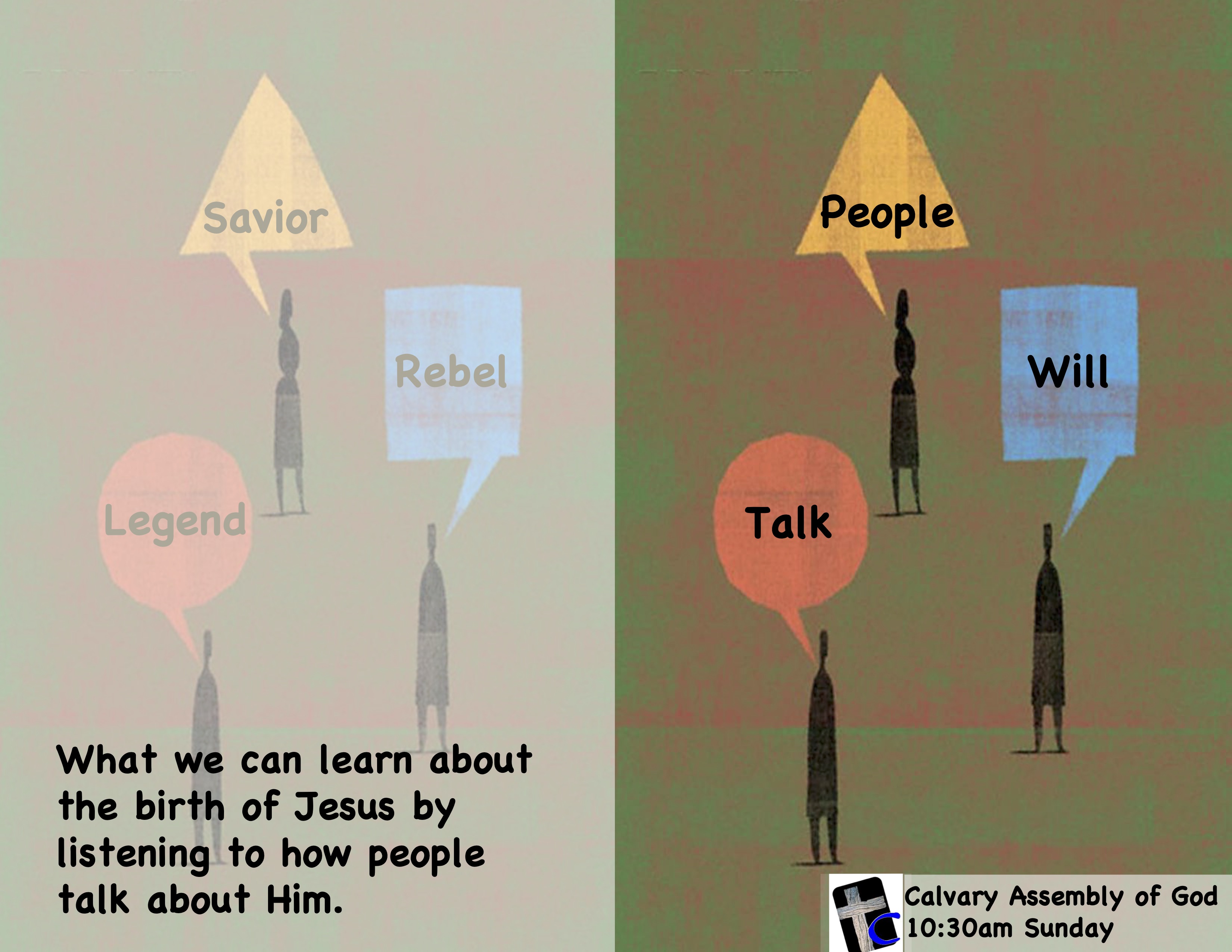
People Will Talk—Sometimes celebrities and other people in the public spotlight will hire a publicist to help promote their cause, build their brand, or present them in the best possible light. If you wanted to stretch the terms, you could say that some of the Old Testament prophets and the New Testament disciples could have been viewed as the “publicists” for Jesus. At least, that’s what critics might point to. But despite the best efforts and high salaries of publicists—both ancient and modern—they cannot control the “word on the street.” What people are actually saying about the one in the spotlight is usually the best evidence of who that person truly is. As we celebrate this Advent season, we are going to look at what the people on the street were saying about Jesus at the time of His birth. Before He ever performed a miracle or presented a parable—before any of His “publicists” could try to make Him look good—people were already talking. And what they said about Him is truly enlightening.
We will be returning to a couple of these series in 2022, and we’ll be launching some brand new ones as well. In either case, if you don’t have a home church in the northern Kent County area, I would love to have you join us!




 “Hatred and anger are the greatest poison to the happiness of a good mind.” —Adam Smith