One Saturday In Bethany

Six days before His crucifixion and burial, Jesus was prepared for His burial by the most unlikely of people. This story takes place in Bethany, where Jesus spends a lot of time during His earthly ministry. 

As was customary, the most influential men in the village would try to entice visiting guests to join them for dinner. Simon—a Pharisee and a former leper—was the one who extended the invitation to Jesus. Simon is a former leper because one who still had active leprosy wouldn’t have been allowed in his own home, let alone allowed to host guests. I think (as you will see in a moment) that Simon had been healed of his leprosy by Jesus.

Although it was customary for someone like Simon to host visiting guests, in this case, the religious leaders were scheming to arrest Jesus. In other words, there was an ulterior motive for Simon to have Jesus in his home.

Which is probably why Simon neglected his host’s duties: No welcoming kiss, no foot-washing, no anointing. All normal hospitality is ignored. Jesus appears to ignore the snub and simply recline at the table. But another guest takes Simon’s incredible rudeness personally. 

Mary was standing or sitting along the wall in Simon’s house, as many common villagers would in that day. Luke tells us that Mary had lived a sinful life. But while sitting at Jesus’ feet earlier she heard the good news that Jesus could forgive sins, she placed her faith in Him, and her lifestyle changed 180-degrees 

Mary is overcome by emotion at the inhospitable—rude!—way Jesus is being treated and tears began to well up in her eyes. Since Jesus is reclining at the table, His feet would have been pointed in her direction, and she began to use her tears to wash His feet. Then—horror of horrors—she uncovers and lets down her hair in public(!) and begins to dry His feet. 

Simon the Pharisee judges Mary by her past. Simon twice says, “Does Jesus even know what kind of woman she is? Does He know she is a sinner?” Mary is in big trouble: she is publicly pointing out the rudeness of the host, she is touching a man that is not her husband, and she has uncovered and let down her hair in public. 

Jesus responds not to Mary, but to Simon: “Simon, I have something to tell you,” He says and then shares a short but powerful parable of a creditor who had two debtors. One owed him the equivalent of a year-and-a-half’s wages, and the other owed about two months’ wages. Since neither could pay, the creditor forgave both of them. 

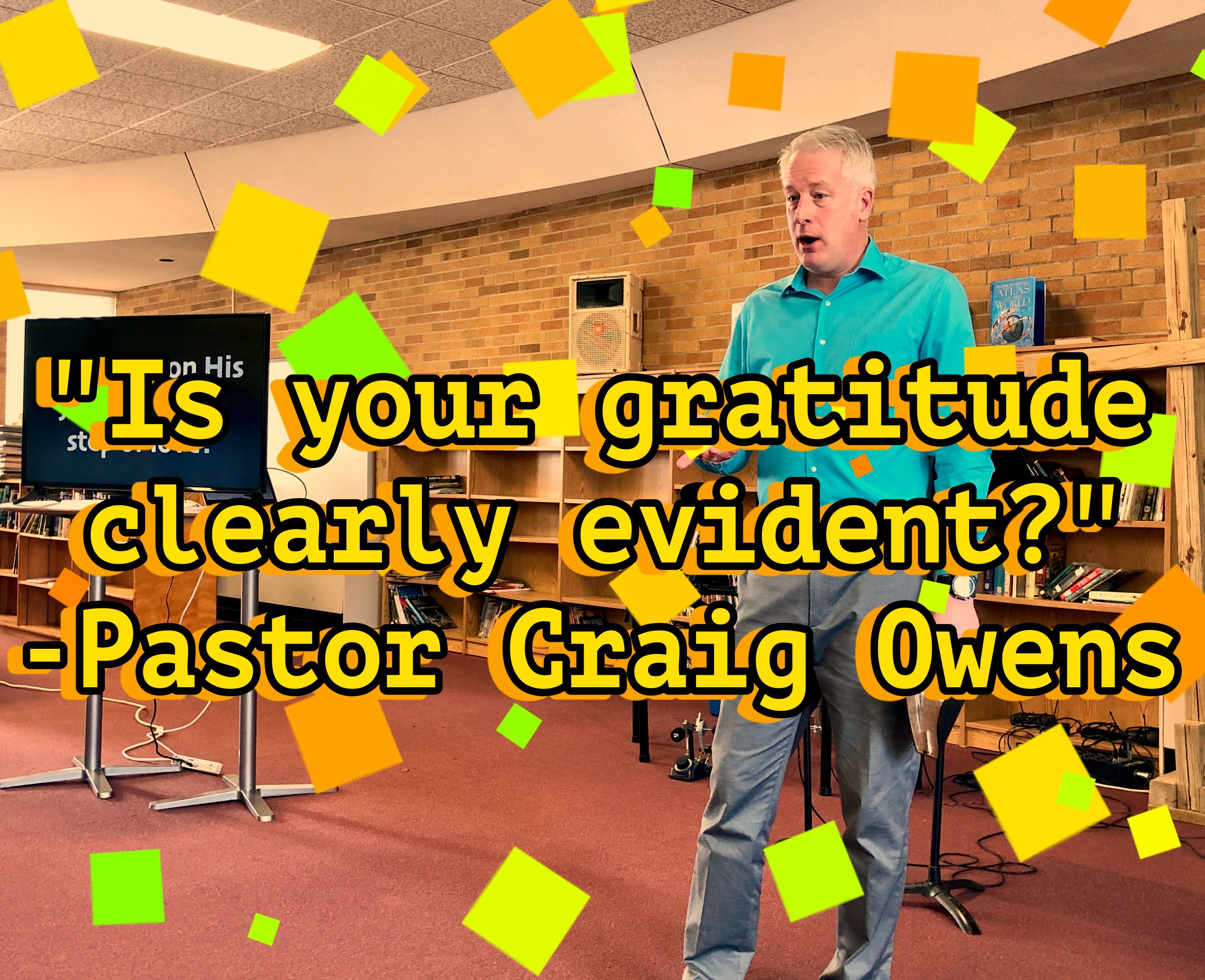
Jesus asked Simon, “Which of the two forgiven debtors do you think would be most grateful?” Simon correctly responds, “The one who was forgiven more.” 

Jesus points out that Mary’s acts didn’t bring her forgiveness, but that her acts were a loving response to the forgiveness she had already received. Jesus said things like, “You have been forgiven,” and “Your sins are forgiven,” and “Your faith has saved you.” 

Jesus took the anger that was focused on Mary and redirected it to Himself, as Isaiah prophesied the Messiah would do (see 53:4-5).

At the same time He is also challenging Simon, “Don’t you have something to be grateful for? Weren’t you once a physical leper? Mary was a spiritual leper, but she has been forgiven and is now overwhelmingly grateful. What about you?” 

Mary was forgiven. She gave all she had in worship. Her anointing oil was lavishly poured out. It was worth a year’s wages, but she spent it all on Jesus. She anointed Him for His burial. The aroma of the oil remained on Jesus throughout His Passion Week and through His crucifixion. The aroma remained on Mary’s hands and hair. The aroma remained in Simon’s house. The memory was fixed in the memories of everyone in that room. 

What about Simon? Did he ever acknowledge his gratitude? Or was he more concerned with receiving praise from men? 

Have you received the forgiveness Jesus offers you? Can people tell you’ve been forgiven by your willingness to stand up for Him? Can people tell you’ve been forgiven by your willingness to give up everything for Him? 

I hope you can join me this Sunday as we continue our slow, deliberate walk alongside Jesus on His passionate journey to the Cross and the resurrection. 

15 Quotes On Prayer From J.C. Ryle

In my current Bible reading time, I am reading J.C. Ryle’s Expository Thoughts On The Gospels as a read-along companion with my Bible. Bishop Ryle correctly feels the weight and effectiveness of prayer in the life of a Christian. Here are some of his quotes regarding prayer. 

“If afflictions drive us nearer to Christ, the Bible, and prayer, they are positive blessings.” 

“It is not for us to prescribe either the time or the way in which our requests are to be answered.… Let us rather ‘continue in prayer,’ ‘watch unto prayer,’ ‘pray always and not faint.’” 

“Why is it that there is so much apparent religious working and yet so little result in positive conversions to God—so many sermons, and so few souls saved—so much machinery, and so little effect produced—so much running here and there and yet so few brought to Christ? Why is all this? The reply is short and simple: there is not enough private prayer. The cause of Christ does not need less working, but it does need among the workers more praying. … The most successful workmen in the Lord’s vineyard are those who are, like their Master, often and much upon their knees.” 

“If we would have good ministers we must remember our Lord’s example and pray for them. Their work is heavy. Their responsibility is enormous. Their strength is small. Let us see that we support them and hold up their hands by our prayers.” 

“Let us bear these rules in mind every Sunday morning before we go to hear the Word of God preached. Let us not rush into God’s presence careless, reckless, and unprepared, as if it mattered not in what way such work was done. Let us carry with us faith, reverence, and prayer. If these three are our companions, we shall hear with profit and return with praise.” 

“Let a petition for more faith form a part of all our daily prayers. As ever we would have peace, and calmness, and quietness of spirit, let us often say, ‘Lord, increase our faith.’” 

“Let us strive and pray that the same mind may be in us which was in our blessed Master. Like Him, let us be willing to go anywhere, do anything, suffer anything when the path of duty is clear and the voice of God calls. Let us set our faces steadfastly to our work when our work is plainly marked out, and drink our bitter cups patiently when they come from a Father’s hand.” 

“We must seek to have knowledge as well as zeal. Zeal without knowledge is an army without a general, and a ship without a rudder. We must pray that we may understand how to make a right application of Scripture.”

“Prayer is one of the best and most powerful means of helping forward the cause of Christ in the world. … Not all believers have money to give to missions. Very few have great intellectual gifts or extensive influence among men. But all believers can pray for the success of the Gospel—and they ought to pray for it daily.” 

“Prayer is one of the principal weapons which the minister of the Gospel ought to use. To be a true successor of the apostles, he must give himself to prayer as well as to the ministry of the Word (Acts 6:4). He must not only use the sword of the Spirit, but pray always, with all prayer and supplication (Ephesians 6:17, 18). This is the way to win a blessing on his own ministry. This, above all, is the way to procure helpers to carry on Christ’s work.” 

“Daily bread and daily mercy are by far the first and principal things that mortal man needs. He is the rich man who possesses them. He is the wise man who is not ashamed to pray for them every day.” 

“Nothing that concerns God’s people is too little for Him to manage or for them to bring before Him in prayer.”

“‘He spoke a parable to this end: that men ought always to pray, and not to give up.’ These words, be it remembered, are closely connected with the solemn doctrine of the second advent, with which the preceding chapter concludes. It is prayer without fainting during the long weary intervals between the first and second advents which Jesus is urging His disciples to keep up.” 

“Let us often pray that we may have wisdom from above in order to answer rightly when perplexing questions are put to us. The servant of Christ must expect a portion like his Master. He must count it no strange thing if the wicked and worldly-minded endeavor to entangle him in his talk, and to provoke him to speak unadvisedly with his lips.” 

“Whatever other means of relief we use, let us pray. The first Friend we should turn to ought to be God. The first message we should send ought to be to the throne of grace.” 

How Is Your Heart Hearing?

Therefore take heed how you hear… (Luke 8:18).

Therefore—when I see this word, I need to ask, “What came before?” Jesus has just shared the parable of the sower and given its fuller explanation to His disciples. Now Jesus is speaking privately to His disciples and telling them, “Be very attentive to how you are hearing My words.”  

Why would Jesus tell them that? He says that the way we pay attention to His words can either bring more blessing to our lives, or cause us to miss out on His blessings: “For whoever has, to him more will be given; and whoever does not have, even what he seems to have will be taken away from him” (v. 18). 

In other words, every single one of us has the capacity to have hearts like all four types of soil Jesus talked about in His parable: hard, rocky, thorny, productive. 

I must be attentive to how I’m listening to Christ’s words…

  • …with a prepared (plowed) heart 
  • …not preoccupied with worldly things
  • …ready to obey what He says
  • …ready to share the blessings of what I hear with others

Lord, my heart is ready. Speak to me. I am ready to hear, ready to obey, and ready to share. Give me more insight into what You are saying to me.

The Q Series—Parables, End Times, And Prayer

Our annual Q Series is where folks send their questions to me on a variety of subjects and we do our best to answer them. This week we tackled questions like:

  • What does Christ’s Parable of the Sower mean?
  • Can people lose their salvation?
  • Are micro-chips implanted in humans the start of “the mark of the beast”?
  • What does “666” stand for?
  • Why aren’t all of my prayers answered?

Here’s what we discussed, along with the time this discussion appears on the video:

  • The Parable of the Sower [1:27]
  • What is a parable? [2:19] **Be sure to check out What Was Jesus Teaching In The Parables? on Biblegateway
  • Who is the farmer in this parable? [4:30]
  • “The best commentary on Scripture is Scripture” [5:14]
  • Can someone lose their salvation? [7:42]
  • Keep sowing seed [11:51]
  • Eternal security? [13:50]
  • The Scripture has “a lot of faces” [17:20]
  • Are micro-chips “the mark of the beast”? [20:37]
  • What is gematria? How does this fit with 666? [22:58]
  • 666 falls short of God’s perfection [25:54]
  • The antichrist is a parody of Jesus Christ [26:08]
  • What is the significance of 666 on the right hand and forehead? [27:31]
  • To understand the future, look to an historic event [29:05]
  • A lesson from the socialism of the Nazis and Adolf Hitler [29:49]
  • A quote from Dr. Erwin Lutzer [31:15]
  • Why did Jesus talk about material possession so much? [32:48]
  • Why aren’t all my prayers answered? [36:36] **Be sure to check out Praying With Authority on Biblegateway.
  • How do we pray “in Jesus’ name”? [37:07]
  • How did Jesus speak to His Father in prayer? [39:10]
  • James on unanswered prayers [41:32]
  • Perseverance in prayer [43:30]

We will be answering your questions one more time next Sunday. Please click here to find all the ways you can submit your questions.

The Gospels Side-By-Side (book review)

Gospels Side By SideI love reading. But hands-down, without a doubt, my favorite book to read is the Bible. So I’m always intrigued by any resource that can help me get more out of my time in the Scriptures. In The Gospels Side-By-Side by Rose Publishing, I found a goldmine.

This short pamphlet is chockfull of graphics, charts, maps and historical background information  that helped me see the bigger picture of the story of Jesus that the Gospel writers were conveying to us. It begins with the unique perspective of each Gospel writer, and launches us deeper into the Bible from there.

In this book you will see things like:

  • The events of Christ’s life, and which Gospel tells particular events
  • The miracles of Jesus
  • The parables of Jesus
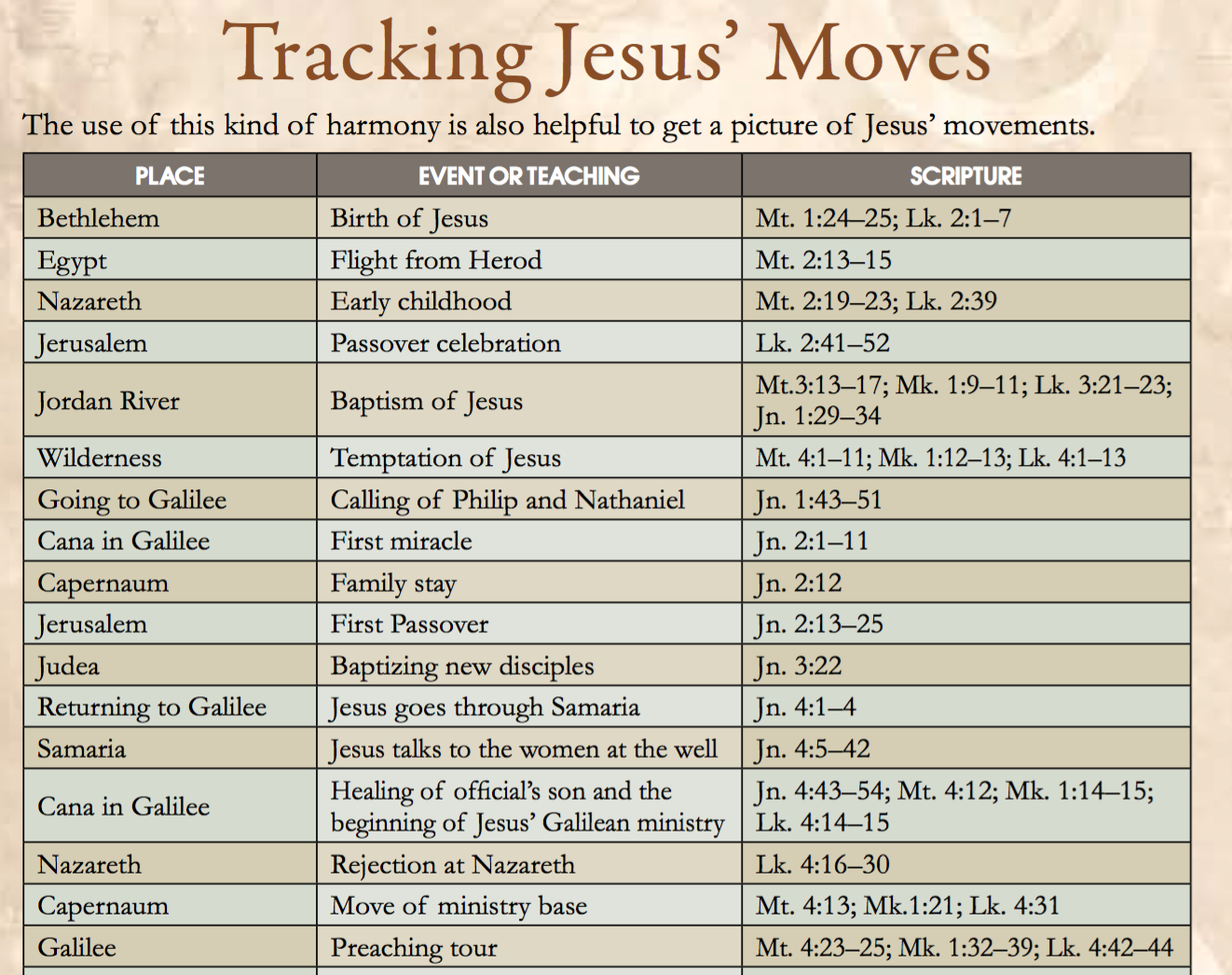
  • The chronological movements of Jesus
  • How Jesus celebrated Passovers during His public ministry
  • How these biblical biographies compare to other biographies of the era
  • Even the historical harmony of the Gospel message in the post-apostolic age

This should bring new life to any Bible student’s reading time! I highly recommend you check out not only this pamphlet, but many of the other resources available at Rose Publishing.

Here are a couple of screenshots from the book…


Screen Shot -Christ's movesScreenshot - gospel writers

The Lesson Of The Lost Brooch

Corrie ten BoomCorrie ten Boom shares this memorable story about patience in her book I Stand At The Door And Knock

The old story of the lost brooch really helped me.

A lady lost a valuable brooch at the theater. She noticed it was missing when she arrived home. Early the next day she rang the caretaker of the theater and asked if he had found the brooch. “No,” he said, “but where was your seat? I will go and have a look if it is under your seat.”

“My seat was on the fifth row, number two.” The man went to have a look and found the brooch.

He went to the telephone and said, “Yes, I am pleased to tell you I found your brooch. Hello? Hello?”

There was no reply; she had impatiently hung up the phone. She will never know that her brooch was found.

The Holy Spirit teaches us to have great expectations for the Lord. Listen to the Lord. If you don’t hear His voice immediately, wait patiently. Waiting for the Lord is a blessing too. He is a good Shepherd. And a good Shepherd speaks to His sheep. Don’t put the receiver down too quickly. He loves you and has so much to say to you.

Right-Brain Leadership

Right-Brain LeadershipI read a fascinating article in Influence, written by Mark Batterson, called “Right-Brain Leadership.” If you are involved in any type of speaking or teaching role, you should check out what he has to say about the power of creativity.

Here are some quotes I especially liked…

“Creativity is the natural, supernatural by-product of a Spirit-filled life.”

“Loving God with half your mind doesn’t cut it. Half-minded is no better than half-hearted. God wants to sanctify your right brain imagination so you can see visions and dream dreams.”

“Neuroimaging has shown that as we age the center of cognitive gravity tends to shift from the imaginative right brain to the logical left brain. That neurological tendency presents grave spiritual problems for leaders: At some point, most of us stop living out of imagination and start living out of memory. Instead of creating the future, we start repeating the past. Instead of living by faith, we start living by logic. Instead of going after our dreams, we do it the way it’s always been done.”

“Uniqueness if God’s gift to you. Creativity is your your gift back to God.”

“What to say is content. How to say it is creativity. Part of my calling as a writer and as a preacher is to say old things in new ways. I think that’s precisely what Jesus did with the parables. Most of them are no more than 250 words, but hear them once and you’ll remember them for ever. Jesus was the master of metaphors.”

“The brain processes print on a page at 100 bits per second, but it processes pictures at a billion bits per seconds. That means that a picture isn’t worth a thousand words; it’s worth 10 million.”

T.M. Moore On Using Time

T.M. Moore“We measure time, from the human perspective, in various ways—seconds, minutes, days, weeks, months, years, and so forth. But these are not true quantitative measurements of some material quantity—like a half gallon jug measures a certain amount of milk. Our measures of time are more on the order of estimates (as we think of the future), experiences (with respect to the present), and records (as we think about the time that is gone by).

“All time comes from the Word of God (John 1:1-3), is sustained by the Word of God (Hebrews 1:3), and returns—like the talents in Jesus’ parable—to its Creator and true Owner (Romans 11:34-36). There is as yet no future time, and the time we’ve used up is gone forever; we cannot return to it. Every moment of your time comes fresh from the Word of God, and returns immediately to Him for His review.

“The only time we ever have is the present moment, and each of those is supplied for us, as an act of free grace, by the eternal God and His Word.” —T.M. Moore

Links & Quotes

link quote

“When we go through the trial of faith we gain so much wealth in our heavenly banking account, and the more we go through the trial of faith the wealthier we become in the heavenly regions.” —Oswald Chambers

“The promise that frees us from an unforgiving, bitter, vengeful spirit is the promise that God will settle our accounts. He will do it more justly and more thoroughly than we ever could. Therefore we can back off and leave room for God to work.” —John Piper, commenting on Romans 12:19

“‘Revenge is sweet;’ but not to the man who has tasted Christ, for he says, ‘How can I have vengeance upon my fellow, when Christ has put away my sin?’ Now, forgiveness is sweet, and he loathes malice, and turns aside from it as from venom itself.” —Charles Spurgeon

The Isaiah 53:5 Project reblogged one of my all-time favorite blog posts: The Parable Of The Lifeguard. Thanks, James!

Melinda Penner reminds us of the dangers of abusing our freedom. “If there is nothing objective to constrain our freedom, then there’s nothing objective to constrain the government. Our rights become whatever we declare them to be and whatever the government at any time and place declares them to be, changing with the fashions of the day.”

I Missed It

Greg Koukl does a good job explaining how the books of the Bible were compiled in this video.

The Parable Of The Lifeguard

Listen to the podcast of this post by clicking on the player below, and you can also subscribe on Apple or Spotify.

The waters looked choppy, the waves seemed so strong, and the rocks where the surf crashed on the shore seemed like cruel, dull, black teeth. And who knew what was under the surface of the water that I couldn’t see? Just the thought of swimming in those murky gray-green waters made my stomach twist into knots! But my friend announced, “I’m going for a swim.”

I tried to talk him out of it, “You’re joking, right? Do you realize how dangerous that is?”

“Relax,” my friend tried to reassure me with an unconvincing smile, “I know what I’m doing. I’ve swum in waters like these before, lots of times. I can handle it.” He headed off toward that pounding, angry sea with what seemed to be a swagger of confidence, but there was something in his eyes that seemed to be silently imploring me, “Please, save me!”

My friend had been going through a rough patch. His business which started out so well was now on the brink of closing in this crummy economy. Instead of realizing there was not much he could do in this downturn, my friend began to think that he was the failure. Recently at church—where turning from one’s sordid past is supposed to be celebrated—some scoundrels dredged up his past and used it as a cruel weapon against him. These mean-spirited, unforgiving people were jealous of my friend’s success in allowing Jesus to help him turn his life around. My friend did nothing wrong, but the spiteful words of these hypocritical church-attendees made him relive his forgiven past. Although he didn’t say it, I knew these hurtful words caused him to second-guess his value to God. And now, just last week, my friend happened to be in the wrong place at the wrong time and was charged by the police with a minor misdemeanor. No jail time nor fines were going to be imposed on him, just a few hours of community service. But yet again my friend’s self-esteem took a hit as he walked through this embarrassing process.

So now here he is feeling beat up, thinking to himself, “I’m a worthless failure,” walking toward something dangerous. I can’t understand why. Is he trying to escape reality? Does he really feel that poorly about himself? Doesn’t he see how much his wife and his friends love him? Does he feel so dead inside that this dangerous behavior makes him feel something again? Or does he feel too much and this dive into risky waters is merely an attempt to numb the pain, to self-medicate away the accusing thoughts?

While I was contemplating all of this, I didn’t realize what my friend had done. He had not only reached the shore and waded into the swirling waters, but he was now bobbing quite far from shore. All I could see was his head and shoulders. And his blank, lifeless, passionless face.

He seemed to be bobbing further and further away from me, and closer and closer to those vicious teeth-like rocks.

I ran down to the shore, as close to that angry ocean as I could get, and yelled. I don’t know whether he was ignoring me or couldn’t hear me, but he didn’t respond. He bobbed farther away and I yelled louder and waved my arms. I pointed at the rocks looming closer and closer with every swell of the sea. I screamed until my throat was raw. He drifted farther from me. He waved. And I heard just two distinguishable syllables above the pounding surf and howling wind, “…okay….”

“Okay?! Do you think it’s okay?! You’re killing yourself! It’s not okay!” My friend’s face changed. No longer was it a blank stare, there was emotion there now. I blinked my eyes against the spray of the ocean; I looked intently at my friend’s face. Then I saw it etched in the lines on his forehead. I saw it in his eyes. Panic!

I stared at him, my mind racing what to do. And then I heard it: two more syllables distinguishable above the roar. Two syllables that shot me into action: “Help me!”

I frantically looked around and spotted a tattered, faded orange life vest. It was really only half a life vest, but at least it still floated. It was tangled in seaweed and stained with muddy sand. I grabbed it, ran toward the shore, and flung the life vest toward my friend. It wasn’t a very good throw. Whether it was the wind or my weak attempt, the orange vest didn’t get very close to him. But even so, what was more disturbing was that my friend didn’t even make a movement toward it.

I got frustrated and stomped my foot in anger. Angry at my poor first attempt at a rescue, and angry that my friend made no attempt to reach out for what I had thrown him. I looked around again. I spotted an unattended lifeguard station 75 yards away. I raced to it and found an intact white life ring with a bright red cross emblazoned on it. I grabbed the life ring, sprinted back as close to my friend as I could get, and heaved the life ring as far as I could. It flew through the air. It seemed unimpeded by the wind, and landed within a few feet of my friend! The white and red ring stood out clearly in the dark waters!

I almost let out a shout of victory! Salvation for my friend was within arm’s reach of him! Yet my friend didn’t move. He wouldn’t reach for the help that was right there.

“Does your friend need help?” a strong voice behind me asked.

I wheeled around to see a tall, athletic man. A Lifeguard! “Yes! Yes, he needs help!”

The Lifeguard looked out across the churning waves and saw my friend getting closer and closer to those jagged rocks. It seemed like the next swell of the sea would dash him on those black sea-teeth. “Yes,” the Man said, “I can help him.”

My heart leaped and then seemed to stop in the very next heartbeat. The Lifeguard wasn’t moving. He just stood there looking at my friend.

“I can help him,” he repeated, “If he will simply ask for My help.”

“He did ask for help,” I argued. “I’ve been trying to help him.”

“No, he really doesn’t want help,” the Lifeguard said. “I can save him, but he has to ask Me to do it. And,” he added turning to look at me, “you have to leave.”

“What? He’s my friend! I’m not leaving him!”

“If he is your friend, you have to. You have to love him enough to leave him to Me. He’s been here before, and I have rescued him before. But as long as you’re here throwing flotation devices to him he will keep the rescue attempts alive without ever actually allowing himself to be rescued. The most loving thing you can do for your friend is leave him to Me.”

“How long?” I asked quietly, knowing in my heart that noble Lifeguard was right.

“That all depends on him,” the Lifeguard said. “As soon as you leave, that may get his attention and he may call out for My help immediately. Or he may wait until things get even more desperate. It’s his choice. I am the only One who can save him from this surf now. But he must call on Me before he is smashed on the rocks. I will not leave this spot. I will not sleep or become distracted. I will never leave your friend because I love him. I love him even more than you love him. So the sooner you leave him to Me, the sooner he can cry out for My help.”

I stood there weighing the Lifeguard’s words. I knew He was right, yet I didn’t want to leave my friend. And then He repeated, “The most loving thing you can do for your friend is leave him to Me.”

So I walked away.

That was last night. No word from the Lifeguard or my friend yet. I’m still waiting—and praying—that my friend will cry out for help to the only Lifeguard that can save him now.

I did the most loving thing I could have done. I left my friend to Him.

►► Would you please prayerfully consider supporting this ministry? ◀︎◀︎