Listen to the podcast of this post by clicking on the player below, and you can also subscribe on Apple, Spotify, or Audible.

We’ve just looked at two back-to-back bold statements of Jesus. To the Sanhedrin, He said, “I am the I AM,”and to Pontius Pilate, He said, “I am a king.” Christ’s third bold claim essentially amounts to, “And I don’t have to prove either of these to you; I don’t have to argue with you about it.”
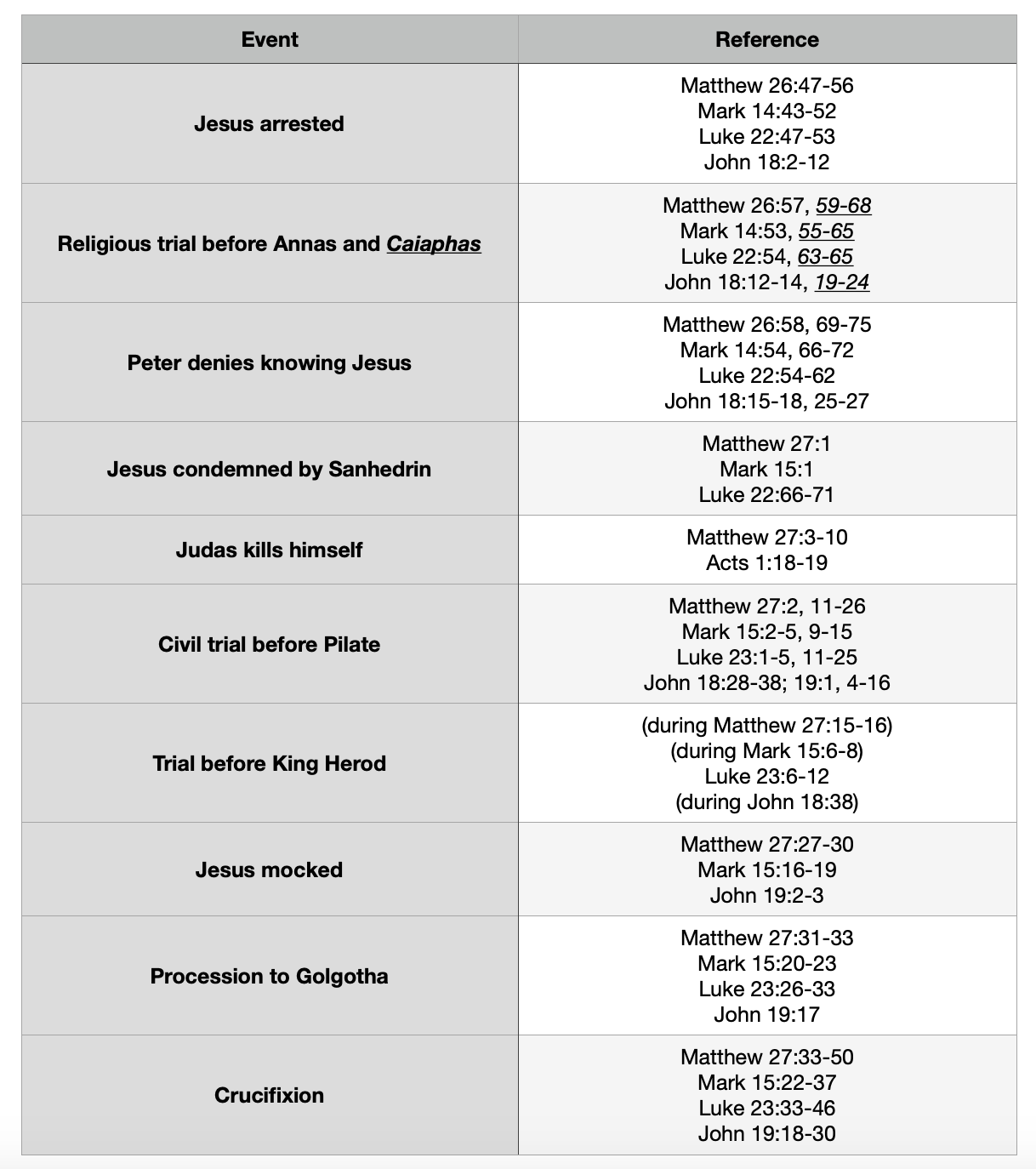
After He was arrested, there was a back-and-forth shuttling of Jesus from the Sanhedrin to Pilate, then from Pilate to King Herod, and then back to Pilate again. Pilate told the Sanhedrin, “I find no basis for a charge against Him.” But the Sanhedrin countered, “But He is stirring up trouble all the way from Galilee to here in Jerusalem!” (see Luke 22:67-23:11).
Pilate was looking for “an out”—a way he could safely discharge or punish Jesus that would keep both the Sanhedrin and his Roman superiors happy. So when Pilate heard that Jesus was from Galilee, he was more than happy to pass this “hot potato” to King Herod. When Jesus was hauled before Herod, we read that he was greatly pleased to see Jesus.
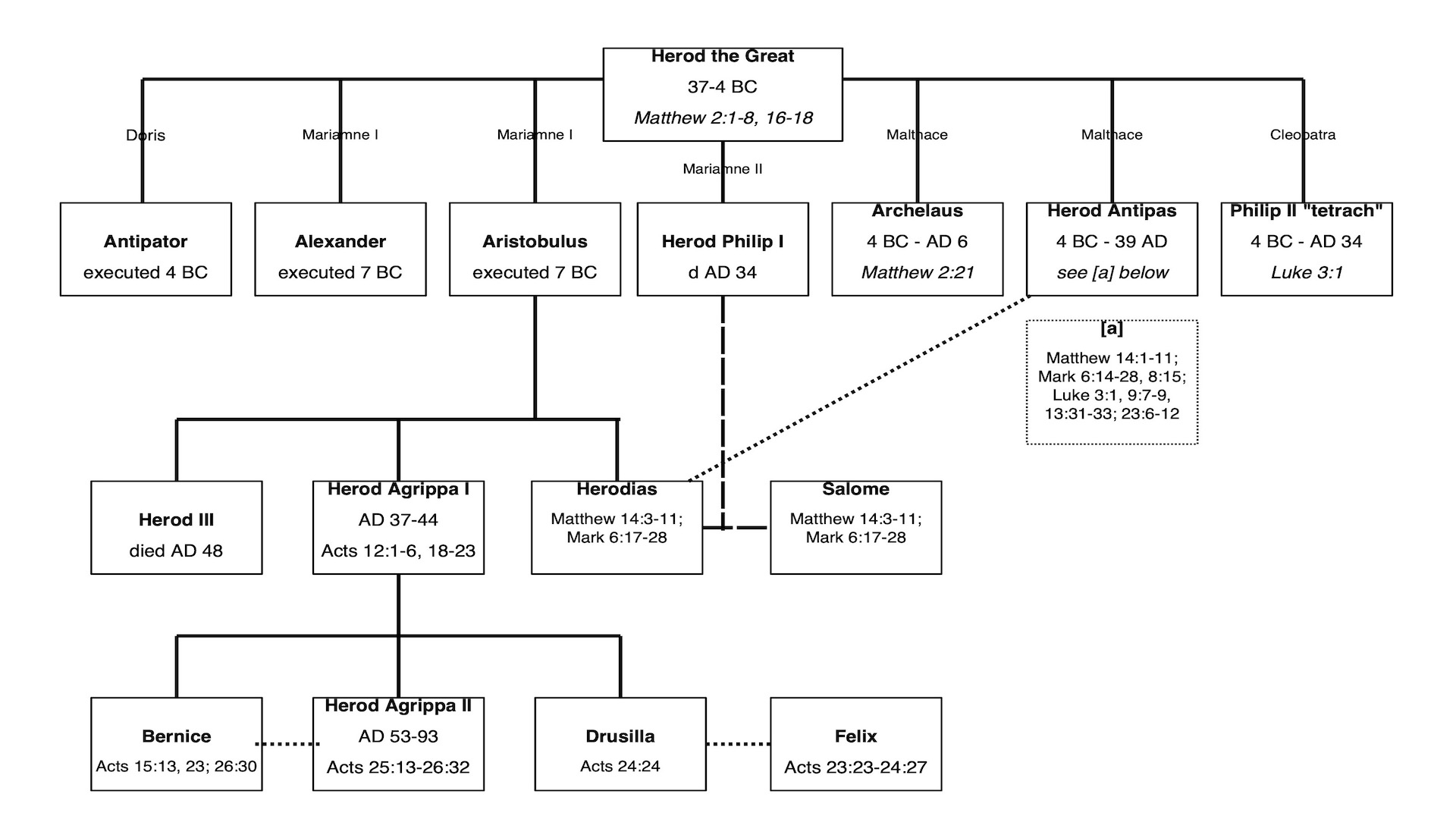
Why was that? To answer that question, we need to understand who Herod was. His name is Herod Antipas, and he was the son of Herod the Great. Herod the Great was king when Jesus was born, and he was the one who attempted to kill Jesus.
Herod Antipas was infamous for having seduced his sister-in-law Herodias, whom he married after divorcing his wife. Shortly after this, Herod arrested John the Baptist for calling out this marriage as sinful. Herodias especially was embarrassed by this and wanted John killed, but Herod feared the backlash from the people if he did this. Eventually Herodias got her way and Herod was forced to have John beheaded (Matthew 14:5; Mark 6:17-28).
When news about Jesus began to reach his ears, Herod thought that Jesus was John reincarnated and he wanted to see him (Luke 9:9). So now when Jesus is brought before him, Herod is looking for a magic trick—Jesus remains silent. Then the religious leaders resume their accusations against Jesus, and still He remains silent. Then Herod and his soldiers began mocking and ridiculing Jesus, and amazingly, He still doesn’t say a word.
Jesus knew the Scriptures that make it clear that there is nothing to be gained by bantering with fools. For instance, Solomon wrote,
Do not answer a fool according to his folly, or you yourself will be just like him. … Don’t waste your breath on fools, for they will despise the wisest advice. (Proverbs 26:4, 23:9).
So here is the next bold claim from Jesus: {Eloquent silence.}
Even in the face of accusation, ridicule, and mocking, Jesus refused to engage in meaningless arguing with Herod or the Sanhedrin’s false witnesses. His silence was so eloquent that it got the attention of Governor Pilate:
“Then Pilate asked [Jesus], ‘Don’t You hear the testimony they are bringing against You?’ But Jesus made no reply, not even to a single charge—to the great amazement of the governor.” (Matthew 27:13-14)
Let’s learn from Jesus: Sometimes the best thing to say is NO thing!
Peter pointed Christians to this example of Jesus when he wrote—
To this you were called, because Christ suffered for you, leaving you an example, that you should follow in His steps. “He committed no sin, and no deceit was found in His mouth.” When they hurled their insults at Him, He did not retaliate; when He suffered, He made no threats. Instead, He entrusted Himself to Him who judges justly. (1 Peter 2:21-23)
Jesus called us to let our good deeds shine brightly to bring glory to God. Fools will ridicule and mock and accuse us, just as the religious crowd did to Jesus. Let’s not let our bantering with fools put out the light of our testimony.
When I was a little kid in Sunday School, we used to sing a song called This Little Light Of Mine. We would hold up our pointer finger like a candle as we sang.But holding up our pointer finger across our lips is also a way to let our light shine too. Your silence in the face of foolish ridicule will speak so eloquently!
Let’s learn this lesson from Jesus. Instead of bantering with fools, entrust yourself to the perfect Judge who is perfectly keeping track of every word. He is the One who can add eloquence to your silence as you shine brightly for Him.
“In what year was Jesus born, and when was He crucified? These are long-standing historical questions. The seemingly obvious answer to the first—that He was born in A.D. 1 (there is no year 0)—is incorrect, however, since the calculations on which our modern calendar is based were faulty. …
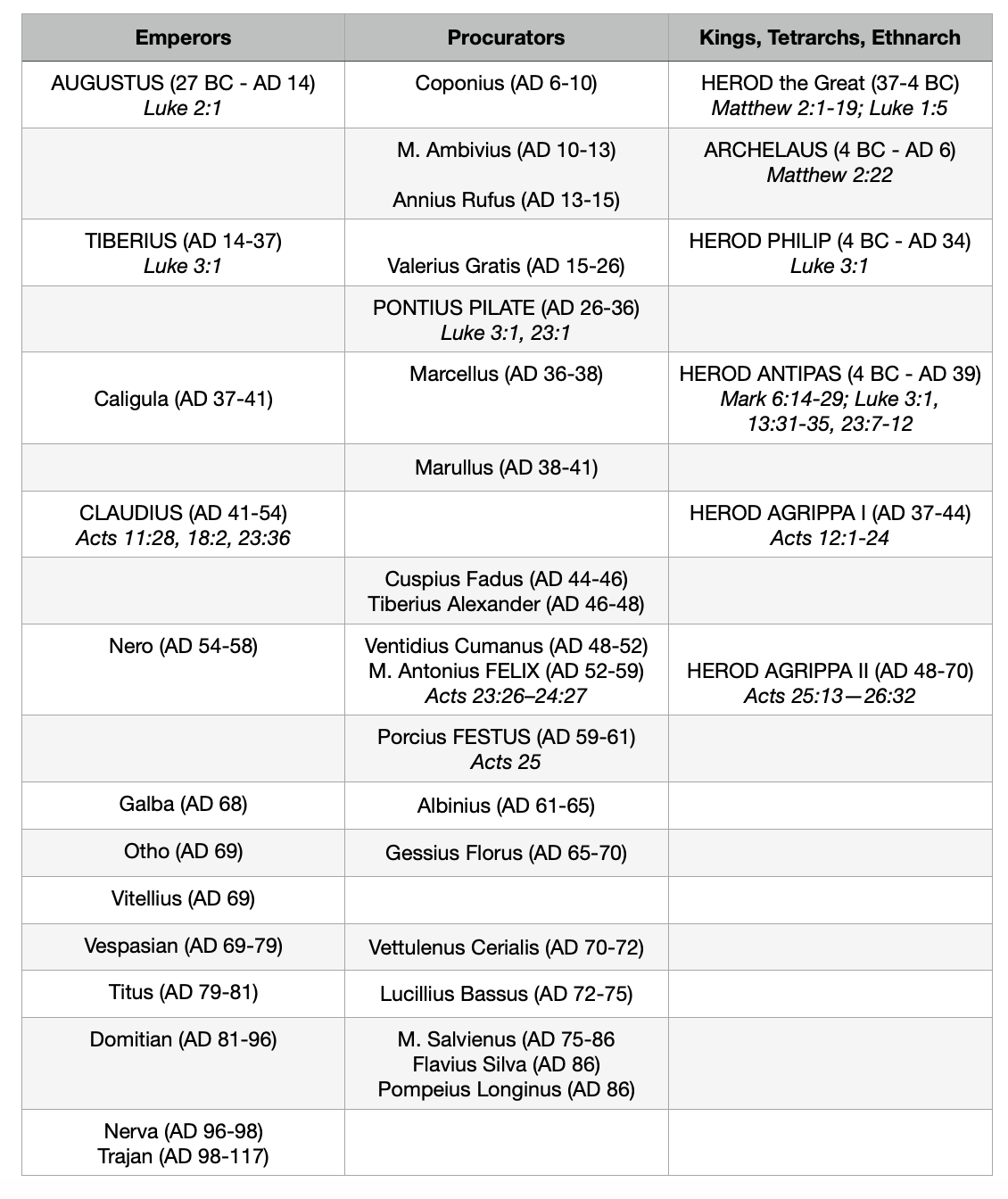
“The chronology of Jesus’ life, though clear in outline, cannot be fixed with absolute precision. Matthew and Luke both inform us that Jesus was born before the death of Herod (4 B.C.), though it would appear that His birth occurred toward the final years of Herod’s reign, suggesting an approximate date of 6-4 B.C. The next chronological marker comes from Luke 3:1, where we learn that John the Baptist’s ministry began during the fifteenth year of the reign of the emperor Tiberius. Since A.D. 14 is the generally accepted date for Tiberius’ accession to the throne, John’s ministry would have commenced between August A.D. 28 and December of 29. Jesus began His own ministry shortly after John had embarked on his, at some point in A.D. 28 or 29, making Jesus about 32 or 33 years old at the time. This fits well with Luke’s statement that Jesus was ‘about 30 years old’ (Luke 3:23).
“The duration of Jesus’ public ministry was approximately three years. While the exact chronology of this period is difficult to ascertain, the final phase of His ministry allows for closer scrutiny. It is clear that Jesus was crucified under Pontius Pilate, who governed Judea from A.D. 26-36. …
“Taking Friday, Nisan 14, as the day of the crucifixion, astronomical data informs us that the only years from A.D. 29-36 that could have seen Nisan 14 on a Friday are A.D. 30, 33 and 36. A.D. 36 is easily dismissed as too late, while A.D. 30 seems too early (although some who begin Jesus’ ministry in A.D. 28 and shorten His public ministry find it acceptable). This leaves A.D. 33 as the most likely date for the year of Jesus’ death and resurrection.”
As you celebrate the victory over sin and death that Jesus won by His sacrificial death on the Cross, rejoice also that this is an actual historical event that bought your freedom from your sin. It is indeed miraculous, but it is also historic. Let’s never lose sight of either of those facets.
Listen to the podcast of this post by clicking on the player below, and you can also subscribe on Apple, Spotify, or Audible.
What people were saying about Jesus right from His birth—before He preached a sermon, performed a miracle, or stepped on the toes of religious or political leaders—was revealing the truth.
Daniel served under multiple kings, even as the regimes changed from Babylonian, to Median, to Persian. He never waiver in his adherence to the Truth that God had spoken. He fearlessly told these world leaders, “The Most High is sovereign over all kingdoms on earth and gives them to anyone He wishes” (Daniel 4:25).
Most leaders forget this the moment they obtain power. Such is the case of the man the Magi met: King Herod the Great. Listen to how William Barclay describes this monarch:
“Herod the Great was always despised by the pure-blooded Jews because he was half an Edomite; and we can see the importance that even Herod attached to these genealogies from the fact that he had the official registers destroyed, so that no one could prove a purer pedigree than his own. …
“He had made himself useful to the Romans in the wars and civil wars of Palestine, and they trusted him. He had been appointed governor in 47 B.C.; in 40 B.C. he had received the title of king. …
“But Herod had one terrible flaw in his character. He was almost insanely suspicious. He had always been suspicious, and the older he became the more suspicious he grew, until, in his old age, he was, as someone said, ‘a murderous old man.’ … He murdered his wife Mariamne and her mother Alexandra. His eldest son, Antipater, and two other sons, Alexander and Aristobulus, were all assassinated by him. Augustus, the Roman Emperor, had said, bitterly, that it was safer to be Herod’s pig than Herod’s son. …
“When he was seventy he knew that he must die. … He gave orders that a collection of the most distinguished citizens of Jerusalem should be arrested on trumped-up charges and imprisoned. And he ordered that the moment he died, they should all be killed. He said grimly that he was well aware that no one would mourn for his death, and that he was determined that some tears should be shed when he died.”
Lord Acton famously said, “Power tends to corrupt and absolute power corrupts absolutely. …Despotic power is always accompanied by corruption of morality.” This is so obvious in Herod! So we can understand why the city of Jerusalem was disturbed when the Magi arrived! Whether Herod knew the prophecy of the coming Messiah or not, it’s inescapably true that his days and his legacy were numbered (see Isaiah 9:2-7).
When King Herod heard the announcement from the Magi, his reaction was violent. Perhaps Herod lashed out so ferociously because these words of Truth from the Magi reminded him his end was near, his power was not absolute, he had to answer to The Most High who is sovereign over all.
We are no better. Oswald Chambers defines sin as “my claim to my right to myself.” We want absolute sovereignty over ourselves, but Jesus will allow no rival to His throne! He is either King over all or else He is not King at all.
Beware of your own reaction when the Holy Spirit convicts you of a rival to Christ’s throne in your heart. If you lash out like Herod, dismiss it, or try to justify it, that is proof that you needed to hear that word of Truth. Don’t delay: Repent and allow Christ to have His rightful throne.
Jesus came as a Baby and a Savior at his First Advent. He opened the way for us to enter the presence of The Most High God, but it will cost us something to enter. Oswald Chambers tells us:
“Redemption is easy to experience because it cost God everything, and if I am going to be regenerated it is going to cost me something. I have to give up my right to myself. I have deliberately to accept into myself something that will fight for all it is worth, something that will war against the desires of the flesh, and that will ask me to go into identification with the death of Jesus Christ, and these things produce a struggle in me.”
Christ’s Second Advent will be as the conquering King and righteous Judge of all humanity. We have precious little time to tell others the good news. People may react violently like Herod did, but that is simply proof that they needed to hear that Truth.
I have frequently made the assertion that God is sovereign over all history, or as I like to say it… All History is His Story!
When we are reading the Bible, it is important to keep in mind that these are not “once upon a time” stories, nor are they set “a long time ago in a galaxy far, far away,” but we are reading the accounts of actual people in actual moments of history.
Listen to the podcast of this post by clicking on the player below, and you can also subscribe on Apple or Spotify.
In our system of law, special attention is given to someone’s dying declaration. If our legal system gives such weight to the last words of an imperfect man, it seems to me that we should take special note of the dying declarations of the only truly innocent Man who ever walked this earth: Jesus Christ.
After being nailed to the Cross, the first dying declaration from Jesus was: Father, forgive them, for they do not know what they are doing (Luke 23:34).
Let’s say that Billy is dying on a hospital bed after being fatally shot, and all he can muster the strength to do is point at Johnny and whisper, “He… shot… me….” We would know who the “he” was in that situation, but who exactly is the “them” in this declaration of Jesus?
Who offended Jesus? Who mortally wounded Him? Who caused Him such anguish? Maybe it was…
His disciples who couldn’t stay awake to pray with Him
Judas who betrayed Him with a kiss
the nine disciples who ran away
Peter who denied three times that he knew Jesus
the false witnesses in Caiaphas’ house
the members of the Sanhedrin who hit Him and spit on Him
the members of the Sanhedrin who were silent
the temple guards who mocked Him
those who spewed lies when Jesus stood before Pilate
those who lied about Jesus when He stood before Herod
Herod and his soldiers who mocked Him
the Roman soldiers who abused Him
the Roman soldiers who stripped Him naked and crucified Him
Listen to how Peter described the response of Jesus to all of this: When they hurled their insults at Him, He did not retaliate; when He suffered, He made no threats… (1 Peter 2:23). That word for insults means to heap abuse on Him or to pile on. This was a fulfillment of a 700-year-old prophecy: He was oppressed and afflicted… (Isaiah 53:7). Isaiah uses similar words, where oppressed means tyrannized, and afflicted means a humiliating, painful loss of dignity.
Christ’s own disciples afflicted Him, and so did the temple guards, and Pilate, and King Herod, and the Roman soldiers… and you and me. All of this mistreatment and humiliation and tyrannizing was handed out by us too (see Isaiah 53:6; 1 Peter 2:24-25). That’s why His arms were spread so wide when He said, “Father, forgive them,” because there were so many that needed forgiveness!
When Jesus said forgive, He was asking His Father to take away our guilt that kept us out of God’s presence. Think of a courtroom scene where God the Father is the Judge, satan is the prosecutor, Jesus is the victim, and I am the defendant. The evidence is overwhelming and incontrovertible, and I am pronounced guilty. My punishment is a death sentence. When Jesus says, “Father, forgive him,” He is taking the death penalty in my place!
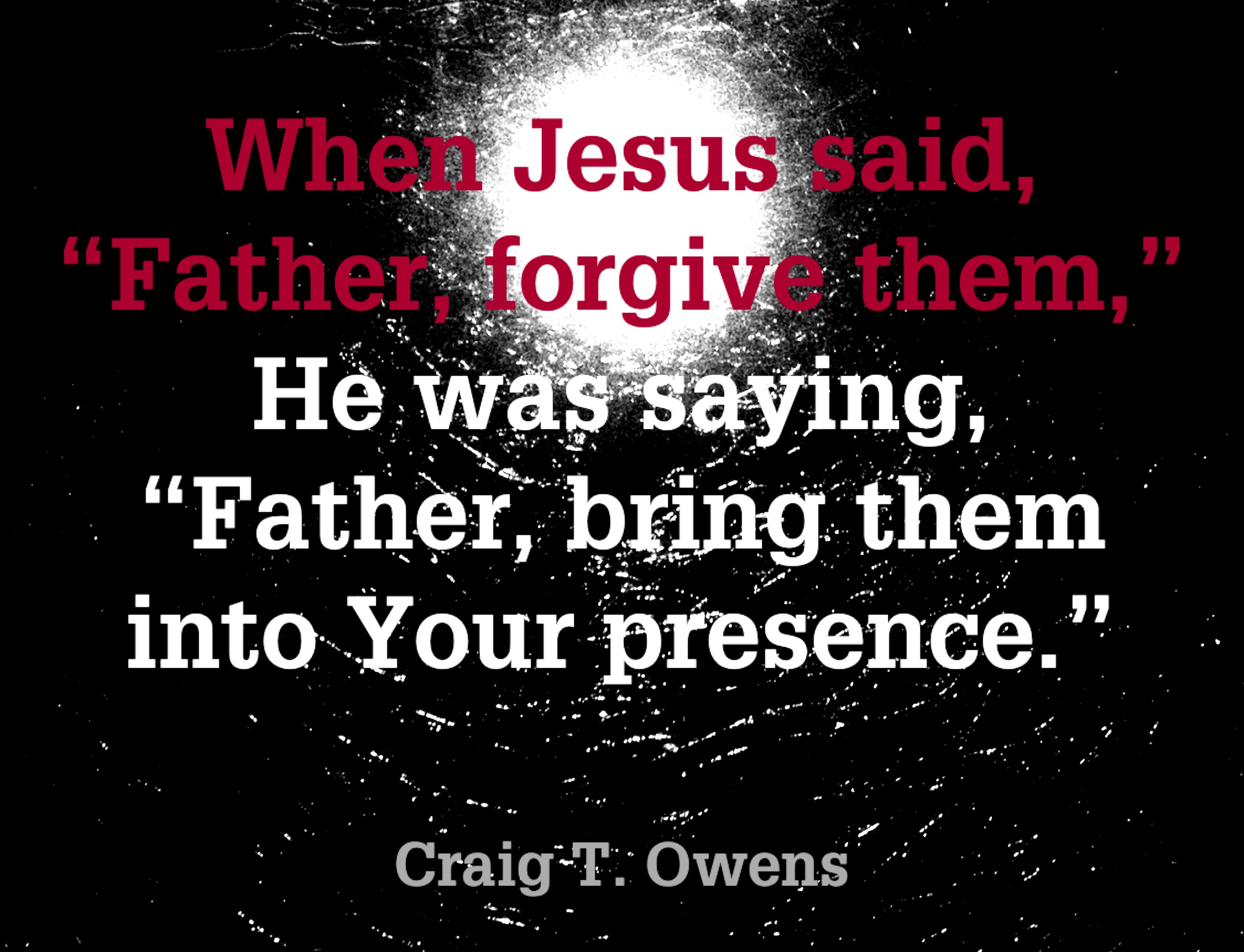
When Jesus said, “Father, forgive them,” He was saying, “Father, bring them into Your presence!”
You and I need to accept by faith the atoning work done on the Cross, the forgiveness of sins that was purchased for us. Jesus didn’t come to condemn us, but to lovingly restore us, and for that we are eternally and humbly grateful.
Although most nativity scenes show the wise men visiting Jesus alongside the shepherds the night He was born, in reality the Magi showed up much later.
They came first to Israel’s capital city—Jerusalem—and went to the man who currently bore the title King of the Jews—Herod—with an odd question, “Where is He who has been born King of the Jews? We’ve come to worship Him.”
The call to come to worship the Christ has always stirred different responses in people’s hearts. But I have noticed that the responses today aren’t any different than they were over 2000 years ago at Christ’s first Advent.
King Herod—when King Herod heard this he was disturbed.
The word disturbed means an inward commotion, someone robbed of any calmness; someone who has become restless and agitated.
King Herod wasn’t all that different from a lot of people today who have their personal lives organized according to their own plans. They have everything figured out. They are masters of their own fate. They know how everything is supposed to work. They are god of their own world.
But inside it’s a different story. They may not acknowledge it to anyone else, but they are uneasy. King Herod was political, not religious. He knew how to play the games with the right Jewish leaders and Roman politicians to get and keep his throne. So when he hears, “Where is He who is born KING OF THE JEWS?” you can understand why he instantly becomes so agitated! He feels like his well-ordered world and best-laid plans are about to crash in on him!
All Jerusalem—King Herod…was disturbed, and all Jerusalem with him.
The people of Jerusalem had a love-hate relationship with King Herod. If you were on his side, he could be quite generous with his gifts and favorable with his influence. But if you were against him, he could be incredibly cruel (just take a look at verse 16!).
So when Herod got upset, you can imagine why the citizens of Jerusalem were as well. They all longed for the Messiah—the Christ—to come and set them free, but in the meantime they were trying to keep their options open. They wanted the Messiah, if they could have Him, but they didn’t want to abandon Herod yet, just in case the Messiah couldn’t follow through.
Religious leaders—Herod…called together all the people’s chief priests and teachers of the law.
Of all the people looking for the Christ, you would think the chief priests and teachers of the law would be the most excited! When Herod asked them for the birthplace of the Messiah, they immediately knew the answer, but after they delivered this information to King Herod they aren’t mentioned again in this narrative. Bethlehem was only 6 miles away, but they didn’t do a single thing! The Messiah being born in such a lowly manner didn’t fit the image they had concocted in their minds. Later on, Jesus would challenge them on this (see John 5:38-40).
Magi—Magi from the east came to Jerusalem.
Whereas the Jewish religious leaders were only 6 miles away, the Magi that came from the east might have been anywhere from 400-800 miles away. They left the comforts of their home to travel perhaps as long as 4 months. But, Oh! the journey was so worth the effort! They got to see the Christ with their very own eyes! We read that they were overjoyed, and that they bowed down and worshiped Him and opened their treasures.
What’s your idea about Jesus?
King Herod wanted a Savior that would enable him to continue to run his own life, but he didn’t want a King that would call the shots.
The people of Jerusalem wanted access to God’s power, but they didn’t want to give their full allegiance to Jesus.
The religious leaders wanted Jesus to fit their mold, but they didn’t want to have to change anything about their own lives.
Only the Magi accepted Jesus as both Savior and King, willingly laying everything at His feet.
What about you? What’s your idea about Jesus? He isn’t just a Baby in a manger; He’s also King and Judge and Ruler and Lord. When you hear the call to come worship Him, what will your response be?
Listen to the podcast of this post by clicking on the player below, and you can also subscribe on Apple, Spotify, or Audible.
I have a friend who has a photo album on Facebook called “Me.” The description says, “Sometimes it is just all about me.” And, sure enough, all of the pictures in that album are just her. I know her well enough to know that this is tongue-in-cheek, because she is not a self-absorbed prima donna.
Sadly, some Christian leaders exhibit the It’s-All-About-Me attitude. This really irks me, especially because we see the exact opposite characteristic in Jesus.
Let me key in on just one example from His public ministry. John the baptizer has just been martyred by King Herod. John was Jesus’ cousin. I’m not sure if you’ve ever had a loved one martyred or even murdered, but I’m sure we’ve all lost a loved one at some point. It might be a little easier to take if we saw it coming, but the sudden deaths always jar us the most. We have to have time to grieve our loss.
Jesus had all of the same emotional responses that you and I have, and He wanted some time away to grieve. He got into a boat with His disciples and headed to a remote place on the other side of the lake. Looking for a little time alone to grieve the death of His cousin, Jesus was met by a huge crowd. He would have been perfectly justified in saying, “Not today.” Or even in saying, “I’m going to let My disciples pray with you today.” Instead,Jesus put the needs of others first.
Jesus healed all who were sick
He taught them
Then He provided food for the nearly 10,000 people who were there
After the meal, Jesus sent His disciples (who also needed some grieving time) back across the lake without Him
Jesus stayed behind and dismissed the entire crowd. I sort of imagine Him hugging people, shaking hands, and continuing to listen to the questions and concerns of everyone
It was onlyafter this that Jesus went up into the hills to spend some time alone in prayer.
I unpack this idea in even great detail in my book Shepherd Leadership. If you want to be used as a leader, you must allow the Holy Spirit to cultivate this others-first attitude in you.