Thursdays With Oswald—Jeremiah 9

Oswald ChambersThis is a weekly series with things I’m reading and pondering from Oswald Chambers. You can read the original seed thought here, or type “Thursdays With Oswald” in the search box to read more entries.

Jeremiah 9

[These are notes from Oswald Chambers’ lecture on Jeremiah 9.] 

    Jeremiah states that wisdom and enlightenment are not to be found among the infatuated people, they have been swept away from right judgment by false prophets who taught that everything develops along a natural rational line. That was the infatuation in Jeremiah’s day, and in our own day the proclaimers of the truth of God are in the minority; men won’t listen to them.

     There are those who say there is no such thing as the supernatural incoming of Jesus Christ, either in history or in the human heart. Our Lord Jesus Christ is not Someone Who has sprung from human nature by evolution: He is Someone Who has come crushing into the human nature by the superb miracle of the Incarnation. The supernatural is the only explanation of our lives if we are right with God, and at any moment God may tumble our lives up as He likes. The question is, are we willing to let Him? We have to maintain our personal relationship to God in Christ Jesus, no matter what happens. The one thing that is of value to God in a human life is a personal relationship of holiness to God, and every part of physical, mental, moral life and of Christian work that is not so related will be desolated and burnt as rubbish.

     The characteristic of life today is that the gospel of, ‘Cheer up, look on the bright side,’ is being preached on all sides. Our Lord says, in effect, that every happiness and peace and well-being that is based on the ignoring of a relationship to God will end in dirges and woes, disasters and terrors.

From Notes On Jeremiah

This statement arrested my attention—At any moment God may tumble our lives up as He likes. The question is, are we willing to let Him?

That is the true question for all followers of Jesus Christ: Am I willing to let Him have His way with my life?

Love Gives

For this is how God loved the world: He gave(John 3:16 NLT)

My beloved friends, let us continue to love each other sincelove comes from God. Everyone who loves is born of God and experiences a relationship with God. The person who refuses to love doesn’t know the first thing about God, because God is love—so you can’t know Him if you don’t love. This is how God showed His love for us: God sent His only Son into the world so we might live through Him. (1 John 4:7-9 MSG)

Thursdays With Oswald—Jeremiah 8

Oswald ChambersThis is a weekly series with things I’m reading and pondering from Oswald Chambers. You can read the original seed thought here, or type “Thursdays With Oswald” in the search box to read more entries.

Jeremiah 8

[These are notes from Oswald Chambers’ lecture on Jeremiah 8.] 

     Wherever I banish them, all the survivors of this evil nation will prefer death to life (Jeremiah 8:3). 

     Our Lord Jesus used these burning words, “The worms that eat them do not die, and the fire is not quenched,” [Mark 9:44, 46, 48] in reference to the condition of people who deprive themselves of right judgment by persistently going wrong (see also 2 Thessalonians 2:11). In the prophecies of Jeremiah we have the same great revelation, that eternal issues are involved in temporal living, but in a different connection. If we are going to remain true disciples of Jesus Christ, we will have to remain alien to the day we live in.

     Such terrible suggestions as these verses contain [verses 1-3] serve as a very wholesome awakening, and bring men to the understanding of the need of Redemption. …  

     The subject of the Second Coming is the one the average unholy Christian cannot stand, and the tendency is to listen, as the people did in Jeremiah’s day, to the false prophets (2 Peter 3:3-6). …  

     The modern scholar pretends to be expounding the Word of God, but in reality he is writing with a lying pen, he builds his wisdom out of his own rationalism, and takes out of the law of God only what agrees with it. …  

     Paul says the same to Timothy—“For the time will come when men will not put up with sound doctrine. Instead, to suit their own desires, they will gather around them a great number of teachers you say what their itching ears want to hear” (2 Timothy 4:3). 

     They dress the wound of My people as though it were not serious. “Peace, peace,” they say, when there is no peace (Jeremiah 8:11). That is the perpetual peril at all times, relieving present pain by a temporal fictitious cure, when what is needed for an effectual cure is a surgical operation. …  

     All Christians are not Christian workers, but those who are called to be workers need the courage of the Holy Ghost to face life from God’s standpoint. We have to keep our hearts and minds faced with the awful condition of human life apart from the Cross of Christ. We must get into our souls the iron of God which makes us strong enough to present Jesus Christ to men. …  

     The majority of us know nothing about shame and repentance, consequently we drift from the central point because we more easily get into sympathy with men than with God, and that is slander against God. To save the world cost Jesus Christ His life, and if we teach that the world can be saved in any other way we slander God.

From Notes On Jeremiah

Oh God, help us—all of us, but especially Your workers—to preach sound doctrine that would save lost people from an eternal Hell. 

No Pity Parties, Please

And do you seek great things for yourself? Do not seek them… (Jeremiah 45:5). 

Baruch faithfully obeyed God and faithfully stood by Jeremiah, but now that the heat was on he was having a bit of a pity party—“Woe is me now! For the Lord has added grief to my sorrows. I fainted in my sighing and find no rest.”

In essence, Baruch was saying, “Things are not working out as I had planned.” God reminds Baruch that His plans are much bigger, and He graciously assures him that He will protect his life where ever He sends Baruch. 

A mark of a godly leader is one who quickly leaves his pity parties.

Instead, my posture should always be: I will obey God and then say, “I am an unworthy servant who is simply doing my Master’s duty” (see Luke 17:7-10). 

This is part 24 in my series on godly leadership. You can check out all of my posts in this series by clicking here.

UPDATE: In my book Shepherd Leadership: The Metrics That Really Matter, I tell a story about a pity party I briefly hosted on my leadership journey in a chapter called “Stick-to-it-iveness.” I think you will really like it!

What Is Church?

All across the world on Sunday morning, people met for church? But what exactly is church? Is it a place we go to? Is it something that only happens on Sundays? 

The Greek word for church is ekklesia. It meant an assembly of citizens. Luke used the term when he recorded a government official saying, “If there is anything further you want to bring up, it must be settled in a legal assembly” (Acts 19:39). But in the New Testament, it came to mean “a community based on a special religious idea and established in a special way” (Dr. Marvin Vincent). It can also mean either a local group of Christians or “the whole body of Christians scattered throughout the earth” (Dr. James Strong). 

Church never means a building. Nowhere does the phrase “go to church” appear in the New Testament. Instead, church carried the idea of a living, growing organism because church was wherever a follower of Jesus was. Sometimes the church met collectively in one location, and sometimes individual believers were out in the community. But wherever the Spirit of God went, church was happening. 

If church is not something we go to, it’s also not something that takes place only one day per week. Look at what Jesus did on the Sabbath day: 

But we also see Jesus doing all of these things EVERY day of the week. 

For Jesus, neither the day of the week nor the location determined the way He lived. Peter summed it up this way, “God anointed Jesus of Nazareth with the Holy Spirit and with power. Then Jesus went around doing good and healing all who were oppressed by the devil, for God was with Him” (Acts 10:38). 

In fact, before they were called Christians the church was simply called “the Way” letting us know that the church was a way of life, not a day of the week. 

Based on how Jesus lived and how the Apostle taught, I think we can see the Church Way like this: 

In other words, EVERY day and in EVERY place the followers of Jesus were being enriched in their own lives so that they could reach out to the hurting so that they could come to know Jesus personally so that their lives could be enriched so that they too could reach out to others, and on, and on, and on it goes! 

Limiting “church” to a specific location or to a specific day of the week is way too small-minded. Church as Jesus intended it was a powerful force that would set people free EVERY day and in EVERY place from the power of the devil and introduce them to God’s eternal life! 

Thursdays With Oswald—Jeremiah 7

Oswald ChambersThis is a weekly series with things I’m reading and pondering from Oswald Chambers. You can read the original seed thought here, or type “Thursdays With Oswald” in the search box to read more entries.

Jeremiah 7

[These are notes from Oswald Chambers’ lecture on Jeremiah 7.]

     To seek a place instead of a Person is the first peril in the spiritual life, and to sentimentalize over places where God has met you is the beginning of spiritual twist. Beware of relying on a principle saving you from moral wrong, for it never can. A personal relationship to a personal Savior is the only power that can shield the soul from moral peril. The golden rule is, my personal Savior in every place, not that in certain places I meet my Savior. …  

     Self-deception always arises by ignoring the personal relationship to God….

     Self-examination is the only exercise for a soul who would remain true to the light of God. … The hardest thing in a saint’s life is to maintain a simple belief in Jesus until he realizes the one relationship is—my Lord and I; then His joy will be fulfilled in us.

From Notes On Jeremiah 

We have to be very careful about making a special landmark out of a place, an experience, or even a passage of Scripture where God met us in a profound way. Those special encounters are intended for one specific purpose: to draw us more deeply into a relationship with the Person of Jesus Christ. 

We are on the road to self-deception if we keep seeking experiences. The road to spiritual health is paved with Spirit-inspired self-examination where we ask, “How did that experience lead me closer to Jesus?” When all the other stuff is stripped away, that’s where we will feel Christ’s joy fulfilled in us.

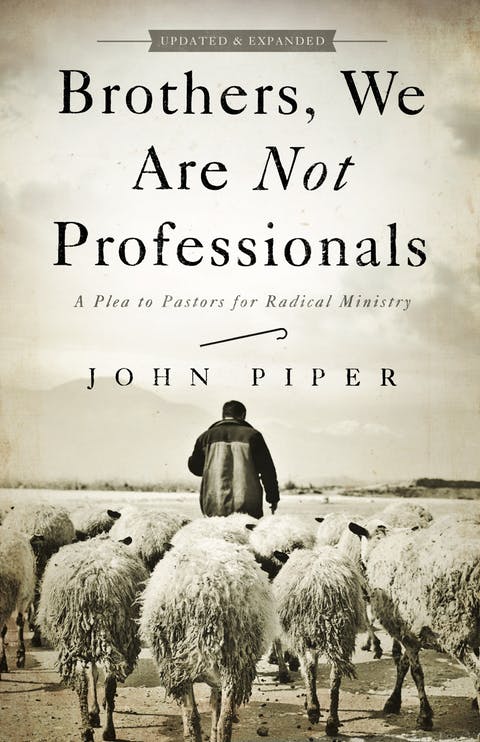
9 More Quotes From “Brothers, We Are Not Professionals”

Those in pastoral ministry are ministers; they are not professional, career-minded, corporate ladder-climbers. John Piper has written a book that I believe every pastor should read: Brothers, We Are Not Professionals. Here are a few more quotes from this excellent book. 

“Is not our most painful failure in the pastorate the inability to weep over the unbelievers in our neighborhoods and the carnal members of our churches? …  

“I must feel the truth of hell—that it exists and is terrible and horrible beyond imaginings forever and ever. ‘These will go away into eternal punishment’ (Matthew 25:46). Even if I try to make the ‘lake of fire’ (Revelation 20:15) or the ‘fiery furnace’ (Matthew 13:42) a symbol, I am confronted with the terrifying thought that symbols are not overstatements but understatements of reality. …

“I say to you, on the authority of Scripture, remember, remember, remember the horrid condition of being separated from Christ, without hope and without God, on the brink of hell. ‘Remember that you were at that time separated from Christ, alienated from the commonwealth of Israel and strangers to the covenants of promise, having no hope and without God in the world’ (Ephesians 2:12). … 

“When the heart no longer feels the truth of hell, the gospel passes from good news to simply news.” 

“Warning has value in stirring us up to take the glories of holiness and heaven seriously so that we come to see them for what they are and delight in them. But it is the delight in them that causes the true grief when we fall short.” 

“Pastors, you will know your people’s souls best by knowing your own. So try to be ruthlessly honest with yourself.” 

“If the heart is without passion, it will produce lifeless, jargon-laden spontaneity. And if the heart is aflame, no form will quench it.” 

“We ought to experience the deepest emotions about the deepest things. And we ought to speak often, and publicly, about what means most to us, in a way that shows its value.” 

“Eating, exercising, and sleeping are more spiritually relevant in the ministry than we may think. … The point is that we be intentional about how our eating affects the ability of our body to be a helpful partner in seeing the glory of God.” 

“When we say that what we do on Sunday morning is to ‘go hard after God,’ what we mean is that we are going hard after satisfaction in God, and going hard after God as our prize, and going hard after God as our treasure, our soul-food, our heart-delight, our spirit’s pleasure. Or to put Christ in His rightful place—it means that we are going hard after all that God is for us in Jesus Christ, crucified and risen.” 

“It will transform your pastoral leadership in worship if you teach your people that the basic attitude of worship on Sunday morning is not to come with your hands full to give to God but with your hands empty to receive from God.” 

“Brothers, we are leaders, and the burden of change lies most heavily on us.” 

You can read my full book review of Brothers, We Are Not Professionals by clicking here, and you can check out some other quotes from this book here. 

Cold-Case Christianity (book review)

From Perry Mason and Dragnet to Blue Bloods and Law & Order, I’ve always been a fan of watching detectives and attorneys sorting through all of the evidence to find the truth. I’m also passionate about Christian apologetics, so Cold-Case Christianity by J. Warner Wallace is totally in my wheelhouse! 

Wallace is a cold-case detective and he’s also a Christian, but criminal investigative work was a part of his life long before he had a relationship with Jesus. In fact, Wallace grew up as an avowed atheist and openly mocked Christians for their “faith.” That is until someone challenged him to investigate the claims of the Bible regarding Jesus as he would investigate one of his cases. 

The similarities are fascinating. In most cases, Wallace cannot interview eyewitnesses, but has to rely on other evidence. Slowly, diligently, he tracks down each lead to come to the most reasonable conclusion. It was exactly the same with the biblical claims about Jesus: the eyewitnesses have long since died. Using his talents for successfully solving crimes which had been left unsolved for years and years, Wallace one day told his wife, “I think it might be true. I think Jesus is who the Bible says He is.” 

Wallace now shares with his readers how they too can use the same skills to explain to skeptics why the biblical case for the authenticity of Jesus is reasonable. He takes us out to the crime scenes as we look for evidence, into the interview room to talk to witnesses, and into the jury box to weigh all of the evidence. 

Skeptics of Christianity will find this book eye-opening, and Christians will find this book informative and helpful to them as they become Christian case makers. This book reads like a detective story to me, and I think others will be just as fascinated with the content as I was.

Thursdays With Oswald—Jeremiah 5

This is a weekly series with things I’m reading and pondering from Oswald Chambers. You can read the original seed thought here, or type “Thursdays With Oswald” in the search box to read more entries.

Jeremiah 5

[These are notes from Oswald Chambers’ lecture on Jeremiah 5.] 

     The Bible is not so much a revelation about God as a revelation of God who is adequate to deal with the worst. …  

     The tumbling and turmoil in human history is caused everywhere by the consuming fire of God rather than by the futile rage of the devil. In reading history the saint sees that the great presence and power is God, not the devil. …

     Hordes of barbarians and powers of worldly dominion are unconscious of God, but God uses them for His own purpose. Nothing happens by chance. When our Lord stood before Pilate He said, “You would have no power over Me if it were not given to you from above” (John 19:11). The tyranny of the Roman Empire over God’s people was the providential order of God, and Jesus recognized that this was so, He did not start a revolution, or say, “We must fight against this” (John 18:36). Perils are clear to God’s mind alone, but they mean panic to everyone who does not know the mind of God. …  

     We learn the marvelous truth that we may become more than conquerors through our right relationship to God over everything that may come against us. …  

     In order to make proper changes in a nation’s life, you must change the people’s wants. 

From Notes On Jeremiah 

All over the globe, it appears that evil is holding sway and that sin is running rampant. It could appear as if the devil is winning, and Christians are just desperately trying to hold on to the end. But is that what it means when the Bible says that we are more than conquerors? 

Let’s be clear about this—God is in control. 

God may use barbarians, dictators, and evil people to accomplish His purposes, but they are all under His control. These forces have bounds past which they may not go. Any power they have has been given to them from above. 

If we forget this, we can easily fall into a hand-wringing panic. But let’s remind ourselves again and again that God is in control! If our relationship with Him is right, then we truly soar over these temporal upheavals; we become more than conquerors through Him Who loves us!

10 More Quotes From “The Christian In Complete Armour”

I loved this book! Check out my review of The Christian In Complete Armour by clicking here. You can also check out the other sets of quotes from this book by clicking here. 

“If you are a saint, you do not need to fear that satan will infiltrate your soul. God will not permit it. But the devil can and does attack along the borders of your faith. Though you are not the proper subject of his power, you are and always will be the chief object of his wrath. He wrestles with you at every opportunity, and you will only overcome him as long as God supplies His strength on your behalf.”

“Power is the rightful attribute of God alone. We mortals make a poor showing when we claim it as our own…. Tremble, therefore, at any power you have unless you use it for God. A plague of locusts is no more destructive in a field of ripened wheat than prideful power is to a man’s grace. Are you powerful? How do you spend this gift from God? On His work, or on the satisfaction of your own lusts?”

“God uses the tribulation instead to sand and polish your faith, so that in the end it is finer and more precious than ever.”

“The boundaries of satan’s empire are circumscribed and limited. First, the time this prince rules is ‘in this world,’ not hereafter. Second, the place he rules is ‘in this world,’ not heaven. And third, the subjects whom he rules are ‘the darkness of this world,’ not the children of light.”

“What is heaven worth if you cannot bear a little shame? If they spit on your face, Christ will wipe it off. They may laugh at you now, but not later. The final outcome has already been declared, and you have sided with the Victor.”

“The bee will not sit on a flower that has no nectar. Neither should the Christian entertain a thought that does not feed his spirit.”

“satan has a habit of stopping the ears from hearing sound doctrine before he opens them to listen to corrupt.”

“Pride must have the most and best of everything to satisfy its appetite. This voracious lust will devour your spirit of praise. When you should be blessing God, you will be applauding yourself. It will eat up Christian love, and cause you to disdain the fellowship of other Christians. It will keep you from acknowledging the gifts of others, because that would take away some of the glory you want for yourself. Ultimately, pride so distorts our taste that we can relish nothing drawn from another’s dish.”

“Another indicator that you are caught in the trap of spiritual pride is envy of others’ gifts. … Envy is an affront to the character and person of God. When you envy, you are questioning God’s right to administer His gifts as He sees best. You are also maligning the goodness of God. You are angry that God wants to bless someone besides you. Would you not have God be good? You might as well say you would not have Him be God, for He can no more cease to be good than He can cease to be God! When your envy prods you to belittle the gifts of other Christians, you are really belittling God who gave them.”

“Count on the strength of your own godly attributes, and you will grow lax in your duties for Christ. Knowing you are weak keeps you from wandering too far from Him.”