Listen to the podcast of this post by clicking on the player below, and you can also subscribe on Apple, Spotify, or Audible.
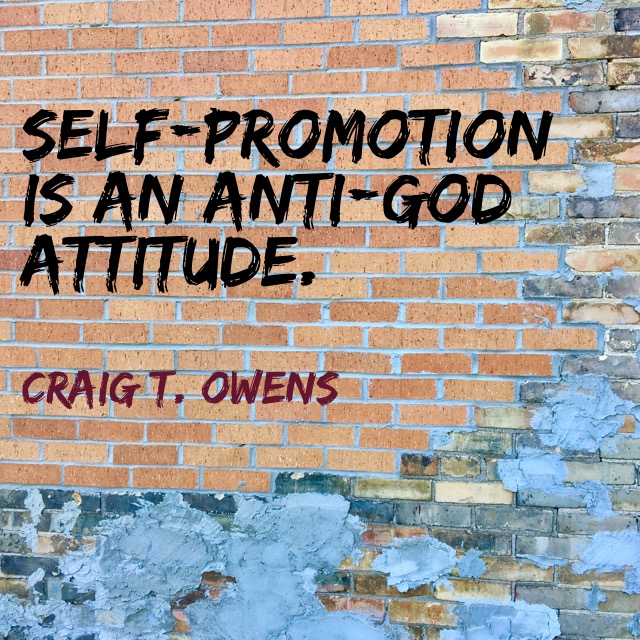
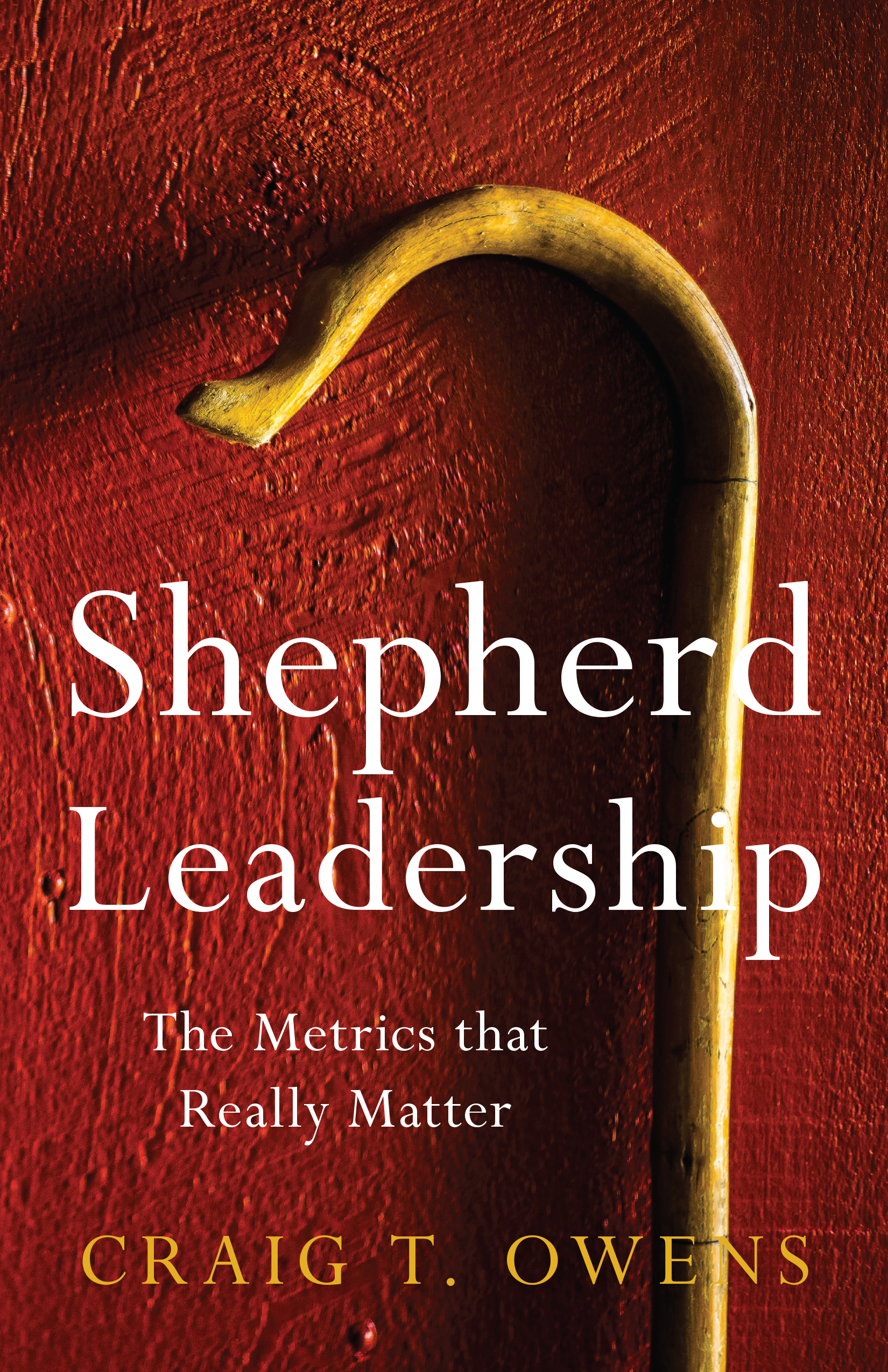
My book Shepherd Leadership: The Metrics That Really Matter opens with a chapter ‘The Wrong Ladder.’ This chapter is a reminder that we don’t have to figure out which ladder to climb in order to be successful. The last chapter of my book is entitled ‘Applause,’ which begins with the words, “Self-promotion is an anti-God attitude.”
Often we see God taking obscure people and vaulting them to a position of prominence. Sometimes they will remain in that position until the day they die, and sometimes God will remove them after a rather short period of time.
God prepares people, God promotes people, and God removes people as He sees best.
This is never more true than in the story of Daniel. “So Daniel prospered during the reign of Darius and the reign of Cyrus the Persian” (Daniel 6:28). In fact, for most of Daniel’s life, he is in a prominent leadership position. Daniel prospered, but he did so because God promoted him. Daniel never sought a position, and even if he was removed from a position, he didn’t try to retain it nor regain it.
Daniel knew God was in control, and he trusted His timing.
I’ve been sharing a series of leadership lessons from the life of Daniel with my Patreon supporters. Check out this brief clip from a lesson I entitled “No Self-Promotion.”
If you are a Christian leader, I challenge you to stop polishing up your résumé. Whether you have a résumé that looks great or not, God will still place you where He needs you, when He needs you to be there. Remember: “Self-promotion is an anti-God attitude.”
Listen to the podcast of this post by clicking on the player below, and you can also subscribe on Apple, Spotify, or Audible.
Last week I said, “You are God’s gift to the world IF you are revealing God’s Gift to the world in everything you say and do.”
That “IF” is a big one.
I’ll be the first one to admit that I struggle with consistency in this! But before we all get frustrated, throw up our hands and say, “This is so hard! Why even try?” I’ve got a word of encouragement for you: God’s Gift in us is both perfect and being perfected.
In order to explain this, I need to go back in time. In fact, I need to go all the way back to when Time began. The opening words of the Bible are, “In the beginning God created the heavens and the earth” (Genesis 1:1). God the Father, the Nicene Creed says, is “the Maker of heaven and earth.”
But God the Son is involved in Creation, as is God the Holy Spirit (John 1:1-3; Genesis 1:2). Again, the Nicene Creed quotes John 1 about Jesus, “Through Him all things were made,” and the Creed also says the Holy Spirit is “the Giver of life.”
So the Father created everything through His Word and by His Spirit.
All of the Godhead is also involved in our salvation too. The Father loved us and gave us His Son. Jesus paid the price for our atonement and justified us with the Father. And the Holy Spirit draws us to the Father through the Son as He sanctifies us.
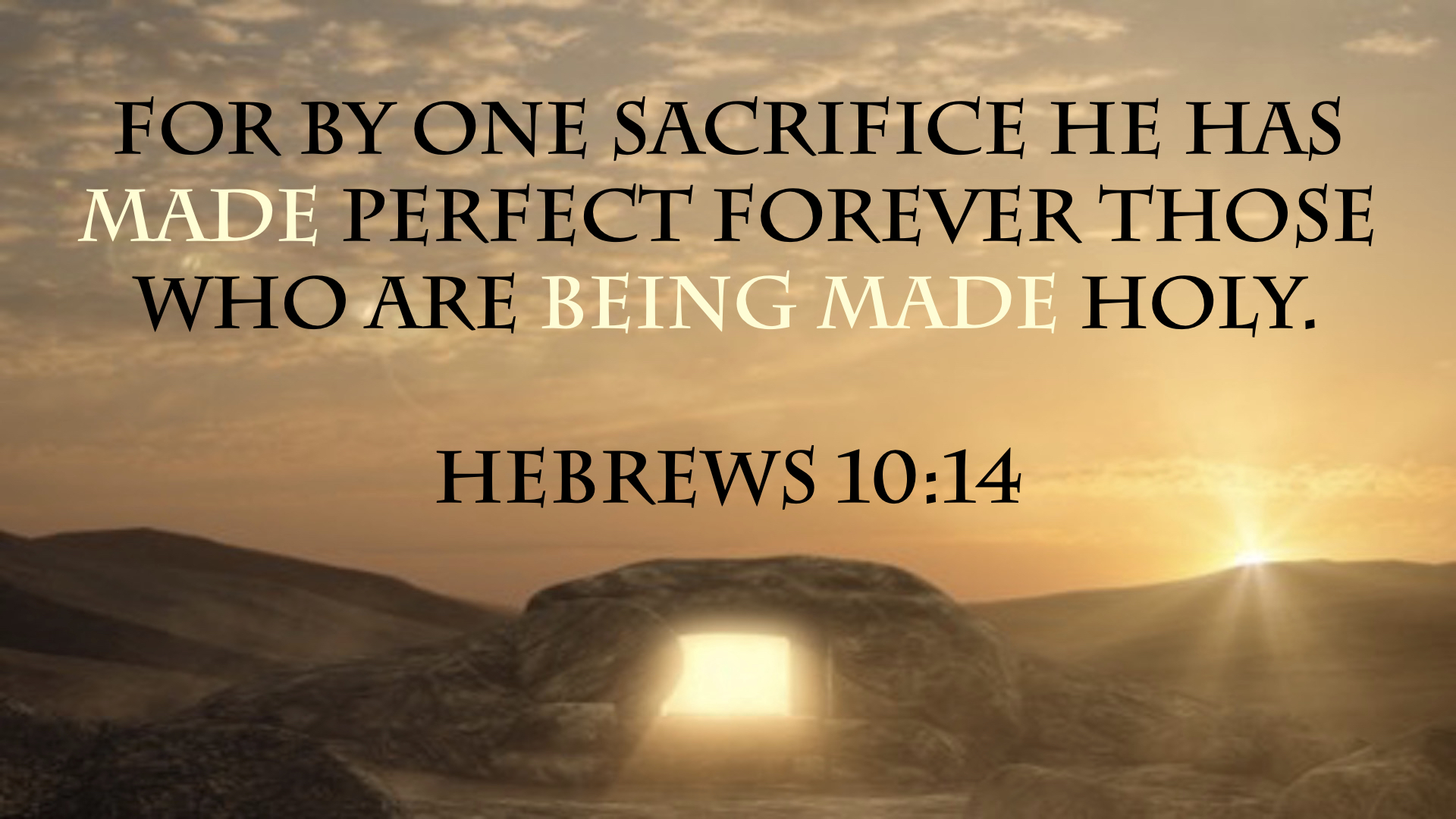
The reason I said the Gift in us is both perfect and being perfected is because when Jesus said, “It is finished,” nothing was left to be done: it is a perfect Gift, fully paid for. “The law is only a shadow of the good things that are coming—not the realities themselves. For this reason it can never, by the same sacrifices repeated endlessly year after year, make perfect those who draw near to worship. … [But] by one sacrifice He [Jesus] has made perfect forever those who are being made holy” (Hebrews 10:1, 14).
Do you see those verb tenses? Jesus made our atonement perfect, but we are now being made holy by the Holy Spirit.
When I serve as a coach or a consultant, I tell people up front, “There is going to be a time that you won’t like me very much because I’m going to keep uncovering things that you’ve overlooked. It’s going to get uncomfortable before we see improvement. But if you will stick with me, I promise you that there will be a noticeable improvement on the other side of this uncomfortableness.”
God disciplines those He loves. He wants His Son’s Gift to be seen by the world, so the Spirit must keep saint-ifying us. He will continue to hover over us, never letting us get complacent, vivifying us so that more and more of Jesus is increasingly seen in our lives.
It’s going to get uncomfortable before we see improvement!
Instead, listen to this prayer from the apostle Paul and make it your own prayer—
For this reason we…have not ceased to pray and make special request for you, asking that you may be filled with the full, deep, and clear knowledge of His will in all spiritual wisdom—in comprehensive insight into the ways and purposes of God, and in understanding and discernment of spiritual things.
That you may walk, live, and conduct yourselves in a manner worthy of the Lord, fully pleasing to Him and desiring to please Him in all things, bearing fruit in every good work and steadily growing and increasing in and by the knowledge of God with fuller, deeper, and clearer insight, acquaintance, and recognition.
We pray that you may be invigorated and strengthened with all power according to the might of His glory, to exercise every kind of endurance and patience, perseverance, and forbearance with joy, giving thanks to the Father, Who has qualified and made us fit to share the portion which is the inheritance of the saints—God’s holy people—in the Light. (Colossians 1:9-12 AMP)
You are God’s gift to the world IF you are revealing God’s gift to the world in everything you say and do. The Gift in you has already been made perfect, and now the Holy Spirit is going to help you demonstrate this Gift more perfectly. Your fruitfulness is being made holy through His loving work in you.
Listen to the podcast of this post by clicking on the player below, and you can also subscribe on Apple, Spotify, or Audible.
I had a great time on the Ailbe Podcast with Rusty Rabon.
Rusty wanted to dig a little deeper into the five chapters I wrote about a shepherd’s health. Quite simply, we cannot give to others what we do not possess ourselves, so if the shepherd isn’t mentally, physically, spiritually, and emotionally healthy, he cannot give health to the sheep under his care.
Rusty and I specifically chatted about what Jesus did to remain at optimal physical health, because as I point out, without physical health it’s hard to be healthy in any of the other areas.
I’ll be sharing more clips from this interview soon, so please stay tuned. If you would like to check out the other clips I have already shared, they are located here, here, here, and here. Shepherd Leadership: The Metrics That Really Matter is available in print or ebook, and in audiobook through either Audible or Apple.
I came across a passage from a blog post I wrote 10 years ago, but it is still so timely for today: “Pastors, we can become so focused on the next sermon, the next appointment, the next Board meeting, the next outreach that we are actually worshiping the ministry instead of worshiping God through our ministry. When we are more focused on the work than on God, we can easily begin to feel over-worked and under-appreciated.”
“Stay with your Lord, however long the night, for only in Him have you hope of the morning!” —Charles Spurgeon
“I shall not demean my own uniqueness by envy of others. I shall stop boring into myself to discover what psychological or social categories I might belong to. Mostly I shall simply forget about myself and do my work.” —Clyde Kilby
Jonathan Edwards wrote words that resonate with my message about pastors following the example of the Great Shepherd Jesus. “The ministers of Christ should be persons of the same spirit that their Lord was of: the same spirit of humility and lowliness of heart; for the servant is not greater than his Lord. They should be of the same spirit of heavenly-mindedness and contempt of the glory, wealth, and pleasures of this world: they should be of the same spirit of devotion and fervent love to God: they should follow the example of His prayerfulness; of whom we read from time to time of His retiring from the world, away from the noise and applauses of the multitudes, into mountains and solitary places, for secret prayer, and holy converse with his Father….” —Jonathan Edwards
“Wonderful things are told in this book [Daniel]. To those who find it difficult to believe these things, we say: let us remember that for one thousand years God had been nurturing the Hebrew nation for the purpose of establishing, through that nation, in a world of idol-worshiping nations, the idea that God is God. Now God’s nation had been destroyed by a nation that worshiped idols. That was plain evidence to all the world that the gods of Babylon were more powerful than the God of the Jews. It was a crisis in God’s struggle with idolatry. If ever there was a time when God needed to do something to show who He is, it was during the Babylonian exile. Strange indeed it would have been if nothing unusual had happened. Hard as it may be to believe these miracles, it would be harder to believe the rest of the story without them.
“At least the Jews, who from the very beginning had always been falling into idolatry, were now at last, in the Babylonian exile, convinced that their own God was the true God. These miracles also had a powerful influence on both Nebuchadnezzar and Darius (3:29; 6:26).” —Halley’s Study Bible
This is a weekly series with things I’m reading and pondering from Charles Spurgeon. You can read the original seed thought here, or type “Thursdays With Spurgeon” in the search box to read more entries.
Listen to the podcast of this post by clicking on the player below, and you can also subscribe on Apple, Spotify, or Audible.
Your Daily Companion
The words of the Lord are flawless, like silver purified in a crucible, like goldrefined seven times. (Psalm 12:6)
In this psalm our text stands in contrast with the evil of the age. The psalmist complains, ‘The godly man ceases! For the faithful disappear from among the sons of men’ (12:1). It was a great grief to him, and he found no consolation except in the words of the Lord. So what if men fail, the Word of the Lord abides! … Live in communion with the Word of God, and even in the absence of Christian friends, you will not lack for company. …
Furthermore, the verse stands in fuller contrast still with the words of the ungodly when they rebel against God and oppress His people. They say, ‘With our tongue will we prevail; our lips are our own; who is Lord over us?’ (12:4). …
So, dear friend, if at any time your lot is cast where the truths you love so well are despised, get back to the prophets and apostles, and hear through them what God the Lord will speak. The voices of earth are full of falsehood, but the word from heaven is very pure. … Make the Word of God your daily companion….
The Word of the Lord is so instinct with everlasting life and eternal freshness, that it is as vocal and forceful in the heart of the saint today as it was to the ear of Abraham when he heard it in Canaan, or to the mind of Moses in the desert, or to David when he sang it on his harp. … By the Holy Spirit the words of Scripture come to us with a present inspiration—not only has the Book been inspired, it is inspired. This Book is more than paper and ink, it talks with us. Was not that the promise, ‘When you awake, they will speak with you’ (Proverbs 6:22)? We open the Book with this prayer, ‘Speak, Lord; for Your servant hears.’ … May the Holy Spirit at this hour speak to you yet again!
From The Bible Tried And Proved
I cannot say, “Amen!” loudly enough to convey just how much I agree with Spurgeon’s thoughts about the Bible. It is—without a close second—my favorite Book!
I spent a week blogging about this Book of books: how it helps us pray, and think, and be more creative and insightful than others, and how it helps us process our strong emotions.
The Bible also helps us fight victoriously. Do you want to fight like Jesus? Then get the Word of God in your heart and mind, and wield it like a sword the way Jesus did! Whether it was satan, or scribes and Pharisees, or even His own doubting disciples, Jesus returned to the Scripture time and time again.
Just as the Scriptures were to Jesus, let’s make the Word of God our daily companion!
Listen to the podcast of this post by clicking on the player below, and you can also subscribe on Apple, Spotify, or Audible.
C.S. Lewis said, “Friendship is born at that moment when one person says to another, ‘What! You too? I thought I was the only one!’” Truly there is a special bond when we find someone who “gets” us—someone who not only knows what we’re feeling, but how to help us too.
Jesus is described as One who went through all of the human suffering we will ever have to go through (Hebrews 2:14, 17-18). So no matter what you’re going through, Jesus “gets” you. He’s been through it and He knows exactly what you’re feeling and what help you need.
This is wonderful news for all of us! But isn’t it also comforting when we have a human companion that “gets” us too? One that will come alongside us through the challenging and painful times to help us?
In His love for His sheep, Jesus has given us under-shepherds. These are sheep that He has called and equipped to care for His flock. He did this with David—
He chose David His servant and took him from the sheep pens; from tending the sheep He brought him to be the shepherd of His people Jacob, of Israel His inheritance. And David shepherded them with integrity of heart; with skillful hands he led them. (Psalm 78:70-72)
David never forgot that his source of strength was the Chief Shepherd, and he penned a beautiful psalm of praise and reliance on Him (Psalm 23). David also made it a priority to point the sheep under his care to the Chief Shepherd. He prayed:
The Lord is my strength and my shield; my heart trusts in Him, and He helps me. My heart leaps for joy, and with my song I praise Him. The Lord is the strength of His people, a fortress of salvation for His anointed one. Save Your people and bless Your inheritance; be their Shepherd and carry them forever. (Psalm 28:7-9)
David “got” the needs of the sheep and with skill and integrity he both shepherded them as he was strengthened by the Chief Shepherd, and he entrusted them into the care of the Chief Shepherd.
In the foreword to my book Shepherd Leadership, Dick Brogden wrote, “God plucked David from the sheepfold. God chose a sheep to be a shepherd. And though we all are stupid sheep, when God plucks us out of obscurity to serve others, we can have the humble confidence for as long as we are asked to lead that God has chosen us. That confidence both faithfully drives us to our knees and fearlessly propels us against our giants.”
If you have been called by the Chief Shepherd to be an under-shepherd, make sure you remain a sheepish shepherd—one that “gets” his or her sheep. Don’t be distant from the flock, but stay close by them in the pasture so that you can care for them, pray for them, and lead them to the Chief Shepherd.
I adapted David’s beautiful 23rd Psalm into a prayer that I hope all under-shepherds will use to gain the strength they need for the work to which the Chief Shepherd has called them—
BecauseYou are my Chief Shepherd, I lack nothing that is needed to care for the sheep You have placed under my care.
Just as You provide food for me in green pastures, and quiet waters for my thirst, I am equipped to feed the hungry and give drink to the thirsty.
You continually refresh my soul, so I can offer refreshing hospitality to those who have been beat up along life’s journey.
You guide me along the right paths for Your name’s sake, so I can show others the path into Your presence.
Even when I walk through the darkest valleys, I never fear because You are with me; You comfort me and provide all that I need so that I can care for the sick, the downhearted, and the weary without ever lapsing into my own pity party.
You continually prepare a table before me, even when I’m in the midst of enemies. You have anointed my head with oil and caused my cup of blessing to overflow, so I have more than enough to share with others.
I am secure that Your goodness and Your love will follow me all the days of my life, so I am equipped to lead others to the place where they too will dwell in Your house forever.
This is a weekly series with things I’m reading and pondering from Charles Spurgeon. You can read the original seed thought here, or type “Thursdays With Spurgeon” in the search box to read more entries.
Listen to the podcast of this post by clicking on the player below, and you can also subscribe on Apple, Spotify, or Audible.
My Element
But our citizenship is in heaven. And we eagerly await a Savior from there, the Lord Jesus Christ, Who, by the power that enables Him to bring everything under His control, will transform our lowly bodies so that they will be like His glorious body. Therefore, my brothers and sisters, you whom I love and long for, my joy and crown, stand firm in the Lord in this way, dear friends! (Philippians 3:20—4:1).
Do you know what it is to feel that the life that is in you is first in Christ and still flows from Him, even as the life of the branch is mainly in the stem? ‘I live; yet not I, but Christ lives in me’ (Galatians 2:20). This is to be in Christ! …
This expression is very short but very full: ‘In Christ.’ Does it not mean that we are in Christ as the birds are in the air that buoys them up and enables them to fly? Are we not in Christ as the fish are in the sea? Our Lord has become our element—vital and all surrounding! In Him we live, move, and have our being. He is in us, and we are in Him. We are filled with all the fullness of God because all fullness dwells in Christ and we dwell in Him.
From The Watchword For Today: “Stand Fast”
Years ago I was taking a class, and the teacher asked us to write down some of the different roles we had in our life. I wrote down things like son, brother, employee, team captain. After everyone had finished their lists, the teacher asked the students to share some of their roles. As each one listed a role, the rest of the class would raise a hand if that role also applied to them. One person said, “Christian,” and nearly every hand in the classroom went up. Except mine.
Being a Christian is not a role I step into; it’s who I am. It impacts everything I think and everything I do.
Birds don’t step into the air when they want to fly. Fish don’t run to the water when they want to swim. Birds and fish always live in their element. We are in our element in Christ when we can always say, “In Him I live, and move, and have my being.”
The devil has always used doubt and uncertainty—“Did God really say…” he asked Eve, and “Are you really the Son of God,” he mocked Jesus. He wants to do the same thing to you today, making you think you have somehow missed out on being in Christ.
But if Christ is your Savior and your Lord, stand fast in that. Let nothing move you. Counteract the devil’s doubt-inciting accusations with truthful as-it-is-written statements from God’s Word. Immerse yourself in Christ and make Him your constant element—just as a branch connected to a stalk, or a bird in the air, or a fish in the ocean. You are in Christ, Christ is in you, and Christ is in the Father. Which means Jesus has taken you into the Father with Him. Live, and move, and have your very being in His presence every single moment!
Listen to the podcast of this post by clicking on the player below, and you can also subscribe on Apple, Spotify, or Audible.
In the movie Groundhog Day, Bill Murray’s character (Phil) is stuck in a small town where February 2 keeps repeating. Phil tries desperately to get out of this town and out of this day, but nothing he seems to do gets him out of the endless loop. He becomes smarter and richer each day, but at the end of the day, everything resets to the beginning.
It’s frustrating!
God’s people of the Old Testament had their own “Groundhog Day”—the Day of Atonement that came every single year. This was the day their sins were confessed, forgiven, and atoned for, and had a very specific set of sacrifices and rituals. Much like Phil in the movie, they began to go through these motions almost entirely without thinking.
Year after year, millennia after millennia “the same sacrifices repeated endlessly year after year, [couldn’t] make perfect those who draw near to worship” (see Hebrews 10:1-4).
Even those who were God-fearing and tried their best to live perfectly righteous lives could find in the law provision for those who “sin unintentionally” (Leviticus 4:2, 13, 22, 27; 5:15, 18, 22, 24, 27-29). It was just another reminder that the loop of sin-confession-repentance-forgiveness-atonement was never ending.
And as if all the requirements of the Torah weren’t enough, Jesus came on the scene and seemed to raise the bar, telling us even though our outward actions might look righteous, our inward thoughts and attitudes made us just as sinful (Matthew 5:21-22, 27-28). And then Jesus even dropped this on us, “Be perfect, therefore, as your heavenly Father is perfect” (Matthew 5:48)!
Perfect?! As perfect as God?! This could easily make people throw their hands up in resignation, “I give up! Why even try?”
Through Ezekiel, God prophesied an internal change. This wasn’t something I must do, but something GOD will do—
I will give you a new heart and put a new spirit in you; I will remove from you your heart of stone and give you a heart of flesh. And I will put My Spirit in you and move you to follow My decrees and be careful to keep My laws. (Ezekiel 36:26-27)
The solution to our endless loop of sin-confession-repentance-forgiveness-atonement must become internal. It’s no use trying to correct the fruit if the root is still evil! That requires an inside job.
On Good Friday, the last words Jesus spoke before His death were, “It is finished” (John 19:30).
What was finished? Our struggle to get ourselves out of this endless loop. The writer of Hebrews had this to say about Jesus:
But when this Priest had offered for all time one sacrifice for sins, He sat down at the right hand of God. … For by one sacrifice He has made perfect forever those who are being made holy. (Hebrews 10:12, 14)
Remember Jesus told us we had to be perfect like God? The root word for “perfect” in that verse is telos. When Jesus cried out, “It is finished,” He said one word in Greek: tetelestai. This also comes from the root word telos. Jesus perfectly finished all that was necessary for us to become perfect in God’s sight.
Christians often use the the phrase “I invited Jesus into my heart” as an expression of their faith in what Jesus did for them on the Cross. That word “IN” is a good reminder.
Jesus comes IN and the fear of punishment—the fear of being eternally stuck in the endless loop—has to go out. “There is no fear IN love. But perfect love drives out fear, because fear has to do with punishment. The one who fears is not made perfectIN love” (1 John 4:18).
The word “perfect” in that verse is also from the same root word telos.
Not only does Jesus come IN to our hearts to make them new, but He also takes us IN to His perfection. “Looking away from all that will distract to Jesus, Who is the Leader and the Source of our faith—giving the first incentive for our belief—and is also its Finisher—bringing it to maturity and perfection…” (Hebrews 12:2 AMP).
Jesus shared a last supper with His disciples. His last supper was the first Communion. At this time Jesus told them He was establishing a “new covenant.” How do we square this with His previous statement that He didn’t come to abolish the law but to fulfill it?
Jesus said this new covenant was IN His blood. His blood doesn’t abolish the law, but it perfects the law. His perfect blood makes out hearts new and takes us out of the external loop and IN to His prefect righteousness.
Jesus accomplished all that was needed to make us perfect inside, and then to perfectly take us into God’s presence. As the hymn The Old Rugged Cross reminds us, “In that old rugged Cross, stained with blood so divine, a wondrous beauty I see. For ’twas on that old Cross Jesus suffered and died to pardon and sanctify me!”
May we always cherish the perfection that was purchased for us on that Cross.
“It were a good strife amongst Christians, one to labor to give no offense, and the other to labor to take none. The best men are severe to themselves, tender over others.” —Richard Sibbes
This is a weekly series with things I’m reading and pondering from Charles Spurgeon. You can read the original seed thought here, or type “Thursdays With Spurgeon” in the search box to read more entries.
Listen to the podcast of this post by clicking on the player below, and you can also subscribe on Apple, Spotify, or Audible.
No Other Name
But our citizenship is in heaven. And we eagerly await a Savior from there, the Lord Jesus Christ, Who, by the power that enables Him to bring everything under His control, will transform our lowly bodies so that they will be like His glorious body. Therefore, my brothers and sisters, you whom I love and long for, my joy and crown, stand firm in the Lord in this way, dear friends! (Philippians 3:20—4:1).
What is it to be in the Lord? Well, brothers and sisters, we are in the Lord vitally and evidently when we fly to the Lord Jesus by repentance and faith and make Him to be our refuge and hiding place. Is it so with you? Have you fled out of self? Are you trusting in the Lord alone? Have you come to Calvary and beheld your Savior? … There is no shelter for a guilty soul but in His wounded side! Have you come there? Are you in Him? Then stay there. You will never have a better refuge! In fact, there is no other. No other name is given under heaven among men whereby we must be saved [Acts 4:12]. I cannot tell you to stand fast in the Lord unless you are there. Hence my first inquiry is, are you in Christ? Is He your only confidence? In His life, His death, and His resurrection, do you find the grounds of your hope? Is He Himself all your salvation and all your desire? If so, stand fast in Him.
From The Watchword For Today: “Stand Fast”
I am reminded of two of the stanzas from a Charles Wesley hymn:



 My book Shepherd Leadership: The Metrics That Really Matter opens with a chapter ‘The Wrong Ladder.’ This chapter is a reminder that we don’t have to figure out which ladder to climb in order to be successful. The last chapter of my book is entitled ‘Applause,’ which begins with the words, “Self-promotion is an anti-God attitude.”






 Craig T. Owens