J.C. Ryle On Prayer

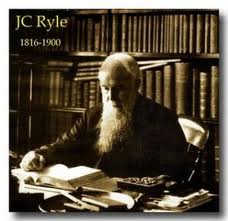
J.C. RyleSome great quotes from J.C. Ryle…

“No prayers can be heard which do not come from a forgiving heart.” —J.C. Ryle

“No time is so well spent in every day as that which we spend up on our knees.” —J.C. Ryle

“If saints could only see their souls as the ten afflicted lepers saw their bodies, they would pray far better than they do.” —J.C. Ryle

“Let us beware of selfish prayers—the prayers which are wholly taken up with our own affairs, and in which there is no place for other souls beside our own. …The greatest kindness we can do to anyone is to speak for them to our Lord Jesus Christ.” —J.C. Ryle

“If Jesus is to save you, you must pray. If your sins are to be forgiven, you must pray. If the Spirit is to dwell in your heart, you must pray. If you are to have strength against sin, you must pray. If you are to dwell with God in Heaven, your heart must talk with God upon earth by prayer. Oh! do not be a prayerless Christian, whatever others may think right.” —J.C. Ryle

“Praying and sinning will never live together in the same heart. Prayer will consume sin or sin will choke prayer.” —J.C. Ryle

“Let us pray more heartily in private, and throw our whole souls more into our prayers. There are live prayers and there are dead prayers; prayers that cost us nothing, and prayers which often cost us strong crying and tears. What are yours?” — J.C. Ryle

“What is the cause of most backslidings? I believe, as a general rule, one of the chief causes is neglect of private prayer.” —J.C. Ryle

“Diligence in prayer is the secret of eminent holiness.” —J.C. Ryle

“Prayer obtains fresh and continued outpourings of the Spirit. He alone begins the work of grace in a man’s heart. He alone can carry it forward and make it prosper. But the good Spirit loves to be entreated. And those who ask most will have most of His influence.” —J.C. Ryle

Links & Quotes

link quote

“Why, do you not believe there may be as much pride in rags as in an alderman’s gown? Is it not just as possible for a man to be proud in a dust cart, as if he rode in her Majesty’s chariot? A man may be just as proud with half a yard of ground as Alexander with all his kingdoms, and may be just as lifted up with a few pence as Croesus with all his treasure. Pray against pride, dear friends, wherever you may be. Pride will grow on a dunghill, as well as in the king’s garden. Pray against pride and vainglory, and God give you grace to keep it under!” —Charles Spurgeon

“How numerous are the tears of unbelief! We manufacture troubles for ourselves by anticipating future ills which may never come…. We get supposing what we should do if such-and-such a thing occurred, which thing God has determined never shall occur. We imagine ourselves in positions where providence never intends to place us, and so we feel a thousand trials in fearing one.” —Charles Spurgeon

“Usually, an adolescent wants ‘freedom’ but not ‘responsibility.’ Real maturity and genuine leadership are only transferred from adult to student, however, when kids receive both of these elements. We’ve not truly helped a young person mature until we’ve passed on ownership.” Reader from Tim Elmore’s post The Single Most Important Ingredient for Maturity.

Eric Metaxas points out that Planned Parenthood is trying to clean-up the image of its founder Margaret Sanger. But the facts about Ms. Sanger are quite alarming.

Ever feel like you are going through hell? Check out what David Wilkerson says in his post Out Of The Belly Of Hell.

The new HumanitarianismMurray Vassar shows us what the new humanitarianism looks like. Sadly true.

[VIDEO] Bobby Conway has a really good answer to the question what’s the big deal about premarital sex—

Tears And Humility

History of ReshJust has God sent His holy Son “below the line” to rescue us, so we who are in Jesus have been sent below the line to those who are staggering to death. If we are going to be effective rescuers, what must our attitude be?

John Bradford, when he saw a convicted criminal on his way to the gallows said, “There, but for the grace of God, go I.” He also said to those who questioned his deep emotional response when preaching, “You blame me for weeping, but how can I help it when you will not weep for yourselves, though your immortal souls are on the verge of destruction?”

Isn’t a humble, empathetic rescuer going to be more effective in reaching those staggering to their eternal demise than one who stands aloof, saying, “You got yourself into this mess”?

Resh (Psalm 119:153-160) shows us our posture: It signifies a head bowed; it means we are confidently humble. Confident that God delivers us, defends us, redeems us, preserves us, and saves us (vv. 153-154); but humble enough to know that we could never have earned this!

We have to have this confidently humble posture in order to be effective as His holy rescuers. We grieve for those who are without God because of what they face—

  • “Salvation” is only gibberish to the wicked because they’ve never looked it up in Your dictionary. (v. 155, MSG)
  • They don’t know His compassion is great (v. 156), nor how great is Your tender mercy and loving-kindness (AMP).
  • They become the foes who persecute Christians (v. 157). How they will grieve on Judgment Day, if they don’t repent!
  • Their actions are loathed (not them as a person!). What God said of the Israelites who went into captivity will be true for those who don’t accept Jesus before they die—Then in the nations where they have been carried captive, those who escape will remember Me—how I have been grieved by their adulterous hearts, which have turned away from me, and by their eyes, which have lusted after their idols. They will loathe themselves for the evil they have done and for all their detestable practices. (Ezekiel 6:9, emphasis added)

Tears and humility will keep us in the proper position to reclaim these lost treasures for our King! 

I will be continuing our series on Psalm 119 in our P119 Spiritual Workout next Sunday. Hope you can join me!

If you are interested in watching the entire message, the video is below—

If you have missed any of the messages in our P119 series, you can access them all by clicking here.

14 Quotes From “The Printer And The Preacher”

The Printer And The PreacherI loved this book! It’s a great historical story of how Benjamin Franklin and George Whitefield’s lives intertwined at such a pivotal time in history. America exists the way it does politically and religiously today because of the influence of these two titans. You can read my full book review here. Below are a few quotes from this remarkable book.

“The Faith you mention has doubtless its use in the world…. But I wish it were more productive of good works than I have generally seen it: I mean real good works, works of kindness, charity, mercy, and public spirit; not a holiday-keeping, sermon-reading or hearing, performing church ceremonies, or making long prayers. … Your great Master thought much less of these outward appearances and professions than many of His modern disciples. He preferred the doers of the Word to the mere hearers…and those who gave food to the hungry, drink to the thirsty, raiment to the naked, entertainment to the stranger, and relief to the sick.” —Benjamin Franklin, in a letter to pastors

There are many who “perhaps fear less the being in Hell, than out of the fashion.” —Benjamin Franklin

“The alteration in the face of religion here is altogether surprising. Never did the people show so great a willingness to attend sermons, nor the preachers greater zeal and diligence in performing the duties of their function. Religion is become the subject of most conversations. No books are in request but those of piety and devotion; and instead of idle songs and ballads, the people are everywhere entertaining themselves with Psalms, hymns and spiritual songs. All of which, under God, is owing to the successful labors of the Reverend Mr. Whitefield.” —Benjamin Franklin, in a newspaper article

The Body of
B. Franklin
Printer;
Like the Cover of an old Book,
Its Contents torn out,
And stript of its Lettering and Gilding,
Lies here, Food for Worms.
But the Work shall not be wholly lost:
For it will, as he believ’d, appear once more,
In a new& more perfect Edition,
Corrected and Amended
By the Author. —Benjamin Franklin, the Epitaph he wrote for himself at age 22

“I have seen your Epitaph. Believe on Jesus, and get a feeling possession of God in your heart, and you cannot possibly be disappointed of your expected second edition finally corrected, and infinitely amended.” —George Whitefield 

“You blame me for weeping, but how can I help it when you will not weep for yourselves, though your immortal souls are on the verge of destruction?” —George Whitefield

Those who hear the gospel “have more need of heat than light. Would to God we had as much warmth in our hearts, as light in our understandings!” —George Whitefield

“If we are truly converted, we shall not only be turned and converted from sinful self, but we shall be converted from righteous self. That is the devil of devils: For righteous self can run and hide itself in its own doings, which is the reason self-righteous people are so angry with gospel preachers.” —George Whitefield

“Let your practice correspond to your profession.”—George Whitefield

“Oh pray, dear Mr. H., that God would always keep me humble, and fully convinced that I am nothing without Him, and that all the good which is done upon earth, God doth it Himself.” —George Whitefield, in a letter to Gabriel Harris, when his popularity was growing

“Will it not in the end destroy brotherly love, and insensibly take from us that cordial union and sweetness of soul, which I pray God may always subsist between us? … How glad would the enemies of the Lord be to see us divided? How many would rejoice, should I join and make a party against you? And in one word, how would the cause of our common Master every way suffer by our raging disputes about particular points of doctrines? … I write not this, honored Sir, from heat of spirit, but out of love. At present, I think you are entirely inconsistent with yourself, and therefore do not blame me, if I do not approve of all that you say.” —George Whitefield, in correspondence with John Wesley over doctrinal differences

“I find that you grow more and more famous in the learned world. As you have made a pretty considerable progress in the mysteries of electricity, I would now humbly recommend to your diligent unprejudiced pursuit and study the mystery of the new-birth. It is a most important, interesting study, and when mastered, will richly answer and repay you for all your pains. One at Whose bar we are shortly to appear, hath solemnly declared, that without it, ‘we cannot enter the kingdom of heaven.’ You will excuse this freedom. I must have aliquid Christi [something of Christ] in all my letters.” —George Whitefield, in a letter to Benjamin Franklin

“satan is angry. I am now mimicked and burlesqued upon the public stage. All hail such contempt! God forbid that I should glory, save in the Cross of Jesus Christ.” —George Whitefield, in a letter after a play was produced in London making fun of him

“Whitefield and Franklin were not just the two most famous people in America in their time—they were also the most significant. The effects of their lives and their work are still being felt today … If America was born as a Christian nation, it’s because many of its people were genuinely, powerfully Christians. It had less to do with the language in any founding documents and more to do with the fact that George Whitefield had been tromping from town to town, inviting people to hear the call of God. It had even less to do with church membership. God was grabbing lives. People’s hearts were flying open. No one was imposing Christianity on society. The power came from within.” —Randy Peterson

Humility Misunderstood

Tsadhe [close up]Humility has gotten a bad reputation. Many people think of a humble person as someone who never speaks up for himself, someone that can be taken advantage of, someone who becomes a doormat for everyone else. But the picture of a humble person in the Bible couldn’t be more different!

We all have to bow to someone or something. A godly humble person has chosen to bow to God and to follow God’s righteous standards.

One name for God is Jehovah Tsidkenu which means God is Righteous (see Psalm 119:137). The Hebrew word tsadhe is a part of God’s Righteous title, and it’s how we are called to live. Tsadhe means the humble, faithful servant.

In the section of Psalm 119 called tsadhe, the psalmist points out:

  • Your laws are right … they are fully trustworthy (vv. 137, 138).
  • Your promises have been thoroughly tested, and Your servant loves them (v. 140).
  • Your commands are my delight (v. 143).
  • The way You tell me to live is always right (v. 144).

Jesus lists a whole series of rewards for those who are humbly, faithfully dependent on God for help in Matthew 5:3-12. But I especially love how tsadhe looks when we zoom in on it—the Hebrew scribes wrote it with the faithful, humble, kneeling servant depicted with a crown! Rejoice and be glad, because great is your reward in heaven (Matthew 5:12).

Far from being pushed down, the humble person is the one God delights to exalt! God set the standard for righteousness, and then Jesus became our righteousness (Jeremiah 23:6; 1 Corinthians 1:30), so that we could receive the rewards of humble obedience to the Heavenly Father.

What a way to live!

If you have missed any of the messages in our P119 series, you can access them all by clicking here.

14 Quotes From John Maxwell In “Mentoring 101”

The Complete 101 SeriesI recently reviewed The Complete 101 Collection by John Maxwell. These are a great introduction to many of his more in-depth books (you can read my review by clicking here). Here are some quotes from Dr. Maxwell in Mentoring 101.

“Most people who desire success focus almost entirely on themselves, not others, when they start to make the journey. They usually think in terms of what they can get—in position, power, prestige, money, and perks. But that’s not the way to become truly successful. To do that, you have to give to others.”

“A person consumed with himself never considers spending time raising others up.”

“I believe that innate sense of motivation continues to exist in adults, but for too many people it has been beaten down by lack of support, busyness, stress, bad attitudes, lack of appreciation, scarce resources, poor training, or faulty communication. To get people excited about growing to their potential, you need to re-motivate them. Once you help them overcome the old things that knocked them down, they often motivate themselves.”

“As you develop people, remember that you are taking them on the journey towards success with you, not sending them. Stay with them until they’re ready to fly. And when they are ready, get them on their way.”

“The people closest to me determine my level of success or failure. The better they are, the better I am. And if I want to go to the highest level, I can do it only with the help of other people. We have to take each other higher.”

“When we examine ourselves, we naturally give ourselves the benefit of the doubt. Why? Because we see ourselves in the light of our intentions. On the other hand, when we look at others, we usually judge them according to their actions. Think about how much more positive our interaction with others would be if we believed the best in them and gave them the benefit of the doubt, just as we do for ourselves.”

“A study of 105 executives determined many of the characteristics shared by successful executives. One particular trait was defined as the most valuable: they admitted their mistakes and accepted the consequences rather than trying to blame others.”

“You can hire people to work for you, but you must win their hearts by believing in them in order to have them work with you.”

“Encouragement helps them reach their potential; it empowers them by giving them an energy to continue when they make mistakes. Use lots of positive reinforcement with your people. Don’t take acceptable work for granted; thank people for it. Praise a person every time you see improvement. And personalize your encouragement any time you can.”

“When you equip people, you teach them how to do a job. Development is different. When you develop people, you are helping them improve as individuals. You are helping them acquire personal qualities that will benefit them in many areas of life, not just their jobs.”

“There is no development without hard lessons. Almost all growth comes when we have positive responses to negative things.”

“When you don’t want to have a difficult conversation, you need to ask yourself: Is it because it will hurt them or hurt me? If it is because it will hurt you, then you’re being selfish. Good leaders get past the discomfort of having difficult conversations for the sake of the people they lead and the organization. The thing you need to remember is that people will work through difficult things if they believe you want to work with them.”

“Experience alone isn’t a good enough teacher—evaluated experience is. As the leader, you need to evaluate what looks like a win to make sure it is actually teaching what your employee needs to learn in order to grow and develop.”

“There is no greater accomplishment for mentors than when people they develop pass them by!”

Links & Quotes

link quote

“Criticism serves to make you harsh, vindictive, and cruel, and leaves you with the soothing and flattering idea that you are somehow superior to others. You must constantly beware of anything that causes you to think of yourself as a superior person. Criticism is one of the ordinary activities of people, but nothing is accomplished by it.” —Oswald Chambers

“The problem of reconciling human suffering with the existence of a God who loves, is only insoluble so long as we attach a trivial meaning to the word ‘love,’ and look on things as if man were the center of them. Man is not the center. God does not exist for the sake of man. Man does not exist for his own sake. ‘Thou hast created all things, and for thy pleasure they are and were created’ [Revelation 4:11]. We were made not primarily that we may love God (though we were made for that too) but that God may love us, that we may become objects in which the Divine love may rest ‘well pleased.’ To ask that God’s love should be content with us as we are is to ask that God should cease to be God: because He is what He is, His love must, in the nature of things, be impeded and repelled, by certain stains in our present character, and because He already loves us He must labor to make us lovable.” —C.S. Lewis

J. Warner Wallace asks a great question in light of us considering the truthfulness of the Gospels: Can a witness be trusted if he can’t be cross-examined?

A John Hopkins psychiatrist flatly denies that sex change is possible.

Links & Quotes

link quote

“People in the unbelieving world have witnessed a good bit of hypocrisy, shallowness, disingenuousness, dishonesty, and corruption among the members of the Church. Many of them have installed a spam filter on their brains which automatically blocks anyone calling himself a Christian as having anything meaningful or significant to say. The only way to remove that filter is through a credible life of goodness, sincerity, and love. … Our credible lives, by themselves, won’t lead anyone to a saving knowledge of Jesus Christ. For this, we must be bold to make God’s Good News known, and to make it make sense.” —T.M. Moore

A related post: 5 Big Things We Get Wrong When Talking To Atheists About God.

“God is a mountain spring, not a watering trough. A mountain spring is self-replenishing. It constantly overflows and supplies others. But a watering trough needs to be filled with a pump or bucket brigade. If you want to glorify the worth of a watering trough you work hard to keep it full and useful. But if you want to glorify the worth of a spring you do it by getting down on your hands and knees and drinking to your heart’s satisfaction, until you have the refreshment and strength to go back down in the valley and tell people what you’ve found. My hope as a desperate sinner hangs on this biblical truth: that God is the kind of God Who will be pleased with the one thing I have to offer—my thirst. That is why the sovereign freedom and self-sufficiency of God are so precious to me: they are the foundation of my hope that God is delighted not by the resourcefulness of bucket brigades, but by the bending down of broken sinners to drink at the fountain of grace.” —John Piper

Pornography destroys lives! Here are 5 ways porn devastates lives.

In his battle against pornography and gluttony, Jimmy Needham wrote, “Real freedom came for me when I began, by God’s grace, to see that my cravings were for more than just food or sex. All my appetites were, at root, for an all-satisfying God.” Read more in his post Our Odyssey Against Sexual Temptation.

“If America is to survive, we must elect…individuals who will seek Divine guidance in the affairs of state.” —Billy Graham

“God commands you to choose for rulers, just men who will rule in the fear of God. The preservation of a republican government depends on the faithful discharge of this duty; if the citizens neglect their duty and place unprincipled men in office, the government will soon be corrupted.” —Noah Webster

[VIDEO] John Maxwell shares one of my favorite anecdotes to make a good point about efficiency—

10 Quotes From John Maxwell In “Teamwork 101”

Teamwork 101The 101 Series of book from John Maxwell is a great introduction to the many topics which he address in greater depth in other books. Here are some quotes from Dr. Maxwell which I especially enjoyed.

“I believe that insecurity, rather than poor judgment or lack of intelligence, most often causes leaders to surround themselves with weak people.”

“On good teams, trust is a nonnegotiable. On winning teams, players extend trust to one another. Initially that is a risk because their trust can be violated and they can be hurt. At the same time that they are giving trust freely, they conduct themselves in such a way to earn trust from others. They hold themselves to a high standard. When everyone gives freely and bonds of trust are developed and are tested over time, players began to have faith in one another. They believe that the person next to them will act with consistency, keep commitments, maintain confidences, and support others. The stronger the sense of community becomes, the greater their potential to work together. Developing a sense of community in a team does not mean there is never conflict. All teams experienced disagreements. All relationships have tension. But you can work them out.”

“Create an environment that unleashes new leaders.” 

“Teams that don’t bond can’t build.”

“For a team to be successful, the teammates have to know they will look out for one another.” 

“In a sport such as basketball, the players on the team recognize that scoring is what is important. When a team is more effective at scoring than the opponent, it wins. Because the team members know that, they spend their time in improving and perfecting their ability to score. That is their focus. In contrast, in many organizational settings, the team members don’t know what it means to ‘score.’ They may have a list of duties, but they don’t know how those duties go together to make a score. It would be the equivalent of a basketball player who knew how to set a pick, dribble, and pass, but who never knew all the skills were used together to score baskets. If just one player on a basketball team doesn’t know what is important to the team, it makes him ineffective. And when he is in the game, it is impossible for the team to succeed. The same is true in any organization. Anyone who doesn’t know what’s important to the team not only fails to contribute to the team, but actually prevents the team from achieving success. That is why it is so important for leaders of the team to identify what is important to the team and to communicate that information to her team members.”

“People on the team must be made to feel that they are in an environment where it is safe to offer suggestions or criticism without feeling threatened.” 

“The key to being competitive is channeling it in a positive way. If you squash it, you lose an edge that motivates you to do some of your best work. If you let it run wild, you run over your teammates and alienate them. But if you control it and directed, competitiveness can help you succeed.”

“Don’t let the personality of someone you work with cause you to lose sight of the greater purpose, which is to add value to the team and advance the organization. If that means listening to the ideas of people with whom you have no chemistry, or worse, a difficult history, so be it. Set aside your pride and listen. And in cases where you must reject the ideas of others, make sure you reject only the idea and not the person.” 

“Being an encouraging leader and leading across is not about getting your own way. It’s not about winning at all costs. It’s about winning respect and influence with your peers so that you can help the whole team win. Should you be passionate and determined, believing in yourself and your ability to contribute? Definitely. Should you hold on to your deeply held values and stand on principle when those are in jeopardy? Absolutely. But never forget that having a collaborative spirit helps the organization. When you think in terms of our idea instead of my idea or her idea, you’re probably on track to helping the team win.”

The Counselor Makes Us Childlike

ChildlikeJesus loved being around kids! In fact, it still is the childlike nature that Jesus wants to see in all of us, and that’s one of the roles of the Holy Spirit as our Counselor.

There is a huge difference between being childish and childlike. Childish is being aware that what you’re doing is foolish; childlike is being innocently unaware.

Jesus was childlike.

  • He knew the kid’s songs in the street—Luke 7:32.
  • He wanted to have lot of kids around Him—Mark 10:14.
  • Most of His teaching examples were basic—farmers, birds, flowers, wedding parties.
  • Some were downright obvious—Matthew 15:16-17.
  • Some of His interactions with His adversaries were playful—Mark 11:27-33.

And when He described the way to Heaven—

He called a little child to Him, and placed the child among them. And He said: “Truly I tell you, unless you change and become like little children, you will never enter the kingdom of heaven. Therefore, whoever takes the lowly position of this child is the greatest in the kingdom of heaven. (Matthew 18:2-4)

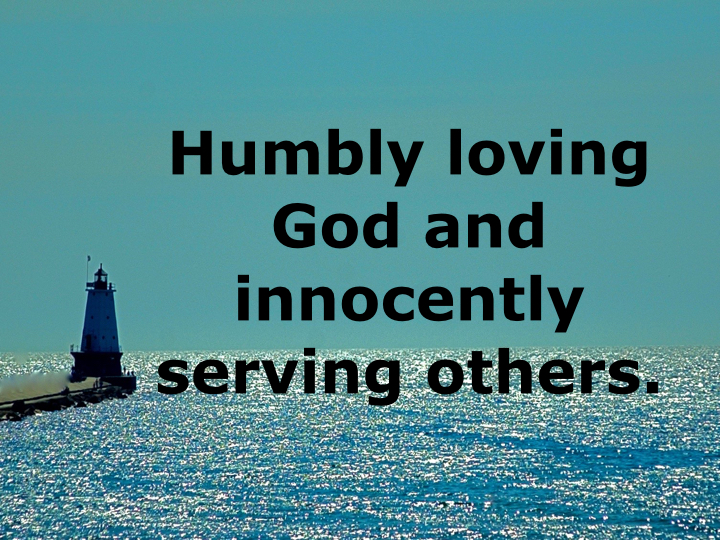
Humbly loving God and innocently serving others. Isn’t that the essence of what Jesus taught us the Kingdom of Heaven was? Loving God and loving others in a childlike way.

Here’s how The Counselor trains us to be childlike:

  • Think of everyone as your friendMatthew 5:9, 44.
  • Laugh more often because you have no burdens weighing you downMatthew 11:28-30.
  • Don’t use double entendrés—…be innocent (harmless, guileless, and without falsity)… (Matthew 10:16, AMP).
  • Be fascinated by natureLuke 12:27.
  • Exercise your imaginationMatthew 18:10; Acts 6:15; 7:55-60.

The Counselor will teach us Christ-like childlikeness; He will reprove us when we are too “adult” in our thinking; He will continually correct us when we cross the line into childishness; and He will train us to love God and love others in a childlike way.