Using The Bible To Pray

Listen to the podcast of this post by clicking on the player below, and you can also subscribe on AppleSpotify, or Audible.

During the first year of [Darius’] reign, I, Daniel, learned from reading the Word of the Lord, as revealed to Jeremiah the prophet, that Jerusalem must lie desolate for seventy years. So I turned to the Lord God and pleaded with Him in prayer and fasting. I also wore rough burlap and sprinkled myself with ashes. (Daniel 9:2-3 NLT) 

Reading the Word of God prompted Daniel to pray to the God that is revealed in the Word, and the prayer he offered to God was grounded in biblical promises—in God’s own promises (vv. 4-19). 

It’s like when children are speaking to their earthly fathers and say, “Dad, you promised,” it gets the attention of that father’s heart because he wants to keep his word. 

God hasn’t forgotten His promises; in fact, He is always at work to fulfill what He has said. But when we pray, “Father, according to Your promise to me,” we are praying words that resonate with His heart. He delights for His children to see Him at work. And He is glorified when we praise Him for fulfilling what He has promised. 

When we end our prayer with “in the name of Jesus, Amen,” that is not just some magical phrase that we tag on, but it is a reminder that we can come boldly before God’s throne with our petition. And prayers that are aligned with the heart of God—prayers that are grounded in the Word of God—have the “Amen” of Jesus added to them (Hebrews 10:19-22; 2 Corinthians 1:20). 

We never need to be at a loss for words when we go to our Heavenly Father in prayer. Read His Word, see the Holy Spirit illuminate and apply the Word to your circumstances, and then pray confidently in the name of Jesus.

For pastors and shepherd leaders, my book Amen Indeed contains over 100 biblically-based prayers for many of the situations we face in our ministries. My prayer for you is that this book will help you learn how to use the Bible as your Prayer Book.

►► Would you please prayerfully consider supporting this ministry? My Patreon supporters get behind-the-scenes access to exclusive materials. ◀︎◀︎

Links & Quotes

As I was studying the Book of Jude, I came across this phrase, “Though you already know all this, I want to remind you.” This prompted these three quick thoughts that I want to share with my fellow pastors.

I have a lot of new video content on my YouTube channel every week. Please check it out and subscribe so you don’t miss anything.

Using the words from Isaiah 40:10-11, Sarah Young has Jesus speaking these words to us: “Adverse circumstances become growth opportunities when you affirm your trust in Me no matter what.”

Ken Blanchard has long used a challenge for leaders to catch their teammates doing something right. That phrase has now become the title of a biography about Ken. He says, “Great leaders who want to encourage and motivate their people set up a positive cycle:

  1. A great leader catches someone doing something right and praises them. 
  2. The leader’s praise helps the person feel good about themselves. 
  3. People who feel good about themselves produce good results. 
  4. A great leader notices when people produce good results. 
  5. See #1.”

This is a very encouraging read for men! Scott Hubbard writes, “You may not have ability for preaching and teaching, as Timothy did. But the Holy Spirit does not leave any Christian giftless. … You may have a small vision for your life; God does not.”

An amazing series from T.M. Moore on the law in a Kingdom economy. T.M. writes, “Christians don’t keep the Law to be saved; we keep it because we are saved, because it is the path that Jesus walked (1 John 2:1-6); and we recognize its value for helping us realize more of the life of holy, righteous, and good works for which we have been redeemed (Romans 7:12; Ephesians 2:8-10).” 

Geologists have discovered what Creationists already proposed about plate tectonics related to the Flood described in the Bible. “Flood geologists have predicted that plate motion slowed at the end of the Flood year, and now conventional scientists are finding it to be true.”

The Assemblies of God has always responded to popular religious trends with solid biblical exegesis. The “latter day rain” movement in the 1940s is a good example.

“Mature leaders swallow their egos and recognize God as their power source. They walk confidently in His authority, but never assume credit for it. Faith enables them to stretch, while humility enables them to stoop.” —John Maxwell

The Servant Stands Strong

Listen to the podcast of this post by clicking on the player below, and you can also subscribe on AppleSpotify, or Audible. 

The second-to-last book of the New Testament is a short letter to the Church in which Jude felt urged by the Holy Spirit to challenge Christians to “contend for the faith that was once for all entrusted to the saints.” Does contend mean Christians are supposed to be combative about sharing their faith? We can learn a lot from the way Jude opens this letter. 

First, let’s look at who wrote this book. 

The names of the brothers of Jesus are listed twice (Mark 6:3; Matthew 13:55), and Jude is either the youngest or second youngest of these male siblings. He was a part of the family delegation that went to bring Jesus home because they thought He was out of His mind (Mark 3:21, 31). Later on, Jude would also mockingly taunt Jesus (John 7:5). 

(Check out all of the Scriptures in this post by clicking here.)

James is the oldest brother after Jesus. When Paul writes that Jesus appeared to James after the resurrection (1 Corinthians 15:7), it’s possible that it means Jesus appeared to all of his brothers, because Paul also mentions that the brothers of Jesus had become evangelists (9:5). It’s not surprising that Jude calls himself a brother of James, but it is quite shocking that he calls himself a servant of Jesus Christ. 

In fact, he calls Jesus:

  • our only Sovereign and Lord (v. 4) 
  • the One who gives us eternal life (v. 21) 
  • the only One who is our entrance into Heaven (vv. 24- 25) 

We need to adopt this servant’s mindset as we interact with others. 

Second, let’s notice who Jude’s audience is. 

Jude writes to people who are called, sanctified, preserved (NKJV). 

  • called = invited to the banquet 
  • sanctified = hagiazo = holy ones or saints 
  • preserved / kept = carefully attended to  

Finally, let’s consider how Jude expects saints to be living each day. 

Jude says in verse 2 that we are to live…

  • mercifully = not wanting people to get the punishment they deserve 
  • peacefully = having our soul so secure that we fear nothing from God 
  • lovingly = agape love like Jesus (John 3:16, 13:1) and like us (13:35, 15:9) 

And all of these things are to be in abundance—ever multiplying! 

After all of this, we are now in a place to consider how to live contending for the faith (v. 3). 

We are servants of Jesus, called to His banquet, set apart and preserved for His glory; we are intimately aware of His mercy, peace, and love, which we want others to know for themselves. 

Before we learn how to contend, let’s ask the Holy Spirit to check our attitude to ensure we indeed have the attitude of a secure servant. 

Follow along with all of the sermons in this series called Earnestly Contend. 

►► Would you please prayerfully consider supporting this ministry? My Patreon supporters get behind-the-scenes access to exclusive materials. ◀︎◀︎

Community Involvement

Listen to the podcast of this post by clicking on the player below, and you can also subscribe on AppleSpotify, or Audible. 

The letters we’ve looked at so far—B, A, S, and I—are bringing about greater fruitfulness and joy-fullness in our lives, which is then enhancing our personal testimony. So the B, A, S, and I all lead up to the C—community involvement. 

One of the first things we need to consider about our community is our role—both what the Bible says is and isn’t our area of concern. Jesus helps us with a parable about wheat and weed and its explanation a few verses later (Matthew 13:24-30, 36-43). 

(Check out all of the Scriptures in this post by clicking here.) 

From Jesus we learn that the world was created good—that’s what God said at each day of Creation. Since the fall of man, satan has sown his evil seeds alongside Christ’s good seeds. 

  • Our responsibility isn’t about pointing out what’s wrong in the world 
  • It isn’t about rooting out the evil in the world 
  • It isn’t about judging the evil or even the evildoers in the world 
  • Our responsibility is to proclaim how good our God is 
  • Our responsibility is to bear as much God-honoring fruit as we can 
  • Our responsibility is to embody biblical principles and proclaim the benefits of God’s Kingdom to others 

The apostle Paul helps us see our role in our community with his payer in Ephesians 1:17-20. Paul desires that we know…  

  1. The hope to which God has called us. A rock-solid, irrevocable, eternal hope! 
  2. The riches of His inheritance in His saints. The treasure is in us. We get to be God’s blessing to those around us. 
  3. God’s incomparably great power for us. We’re never lacking anything because His power is for us—God Himself is for us! 

When our eyes are opened to this, we can see better how to live in our communities. God has placed us and equipped us to proclaim His glorious Gospel in our Personal Mission Field. The PMF includes places like our: 

  • Family—John 1:35-42 
  • Friend group—John 1:43-46 
  • Neighborhood—Colossians 1:3-8 
  • Workplace—Ephesians 6:5-9 

How do we do this? 

  • We talk about the daily interactions you have with Jesus—make it clear that He is a real Person with Whom you have a relationship.  
  • We live out our biblical worldview. 
  • We stay in fellowship with out saints so that we are sharpened and prepared to give an answer for the reason for the hope we have. 
  • We continually monitor our conversation and attitude to make sure they are Christ-like. 

Let us saints be known for what we’re for more than for what we’re against! 

Instead of railing on the evil, proclaim the favor of God, proclaim the soul-satisfying joy of a relationship with Jesus, and proclaim the advantages of the Holy Spirit’s continual counsel. 

If you’ve missed any of the previous messages in our series B.A.S.I.C. Christianity, you can find them all here. 

►► Would you please prayerfully consider supporting this ministry? My Patreon supporters get behind-the-scenes access to exclusive materials. ◀︎◀︎

Interceding For Others

Listen to the podcast of this post by clicking on the player below, and you can also subscribe on AppleSpotify, or Audible. 

Sanctification (“saint-ification”) is an ongoing process that usually involves the help of other saints. We learn this by having a biblical worldview (that’s the “B”), being accountable with saints (“A”), and serving the Body of Christ (“S”). These are the things that bring out increased fruitfulness in our lives, make us more joy-full people, and enhance our testimony to others.   

What a blessing it is to be involved in all of these saint-ification things alongside other brothers and sisters. Isn’t nice to know that you’re not all alone on your journey? 

Two brothers walked up the hill to the park every afternoon to play baseball. One day a neighbor who lived near the bottom of the hill saw the younger brother pulling his older brother up the hill in a wagon. He observed this for a couple of days before he finally asked what was going on. 

The younger brother said, “My big brother broke his leg so I pull him in the wagon so he can watch us play baseball and can be our coach.” 

“He must be heavy,” the neighbor replied. 

“He’s not heavy,” the little boy said, “he’s my brother!” 

In the first brothers that the Bible shows us, we see the origin of the phrase “brother’s keeper.” Cain was jealous of the way God was blessing his younger brother, and so he murdered Able. God came to Cain and asked him, “Where is your brother Able?” 

Cain responded with another question, “Am I my brother’s keeper?” (Genesis 4:9). 

(Check out all of the Scriptures in this post by clicking here.)

The word brother is someone connected to me by blood or some other common bond. Cain used the same word for brother but then asked if He was supposed to be his brother’s keeper—his guard, helping to keep him in bounds, celebrating his victories. 

The clear teaching of Scripture is that the answer to Cain’s question is an emphatic “Yes!”  

That definition of brother’s keeper sounds a lot like the definition of an intercessor. In the Hebrew, that word mean to go to God on someone else’s behalf (Genesis 25:21; 2 Samuel 24:25). The Greek of the New Testament sounds more intense (hyperentygchano): to meet a person of the purpose of conversation in behalf of someone else. 

Remember that the Hebrew word for brother was pretty narrow? The Christians in the New Testament took the word for relative-by-blood (adelphos) and made it a synonym for fellow saint, regardless of where they are from (Acts 9:17; 2 Corinthians 13:11). 

John used Cain’s misunderstanding of brother’s keeper to show us the spiritual responsibility we have to our adelphos (1 John 3:12, 15-16). 

When we intercede for our adelphos—our fellow saints—we are participating in the same work as both the Spirit and Jesus (Romans 8:26-27, 34; Hebrews 7:25; 1 John 5:16). 

A couple of weeks ago we looked at Philemon’s service to the Body of Christ. Look at how Paul’s intercession may have released Philemon to do this (Philemon 7, 16, 20). 

As Paul said to Philemon, I say to you—

I appeal to you on the basis of love: Be your brother’s keeper! 

Guard your adelphos, keep them in bounds, and celebrate both their righteousness and God’s blessing on their lives. 

If you’ve missed any of the other messages in this series, you can find them all here. 

►► Would you please prayerfully consider supporting this ministry? My Patreon supporters get behind-the-scenes access to exclusive materials. ◀︎◀︎
The Enemy Within

Listen to the podcast of this post by clicking on the player below, and you can also subscribe on AppleSpotify, or Audible.

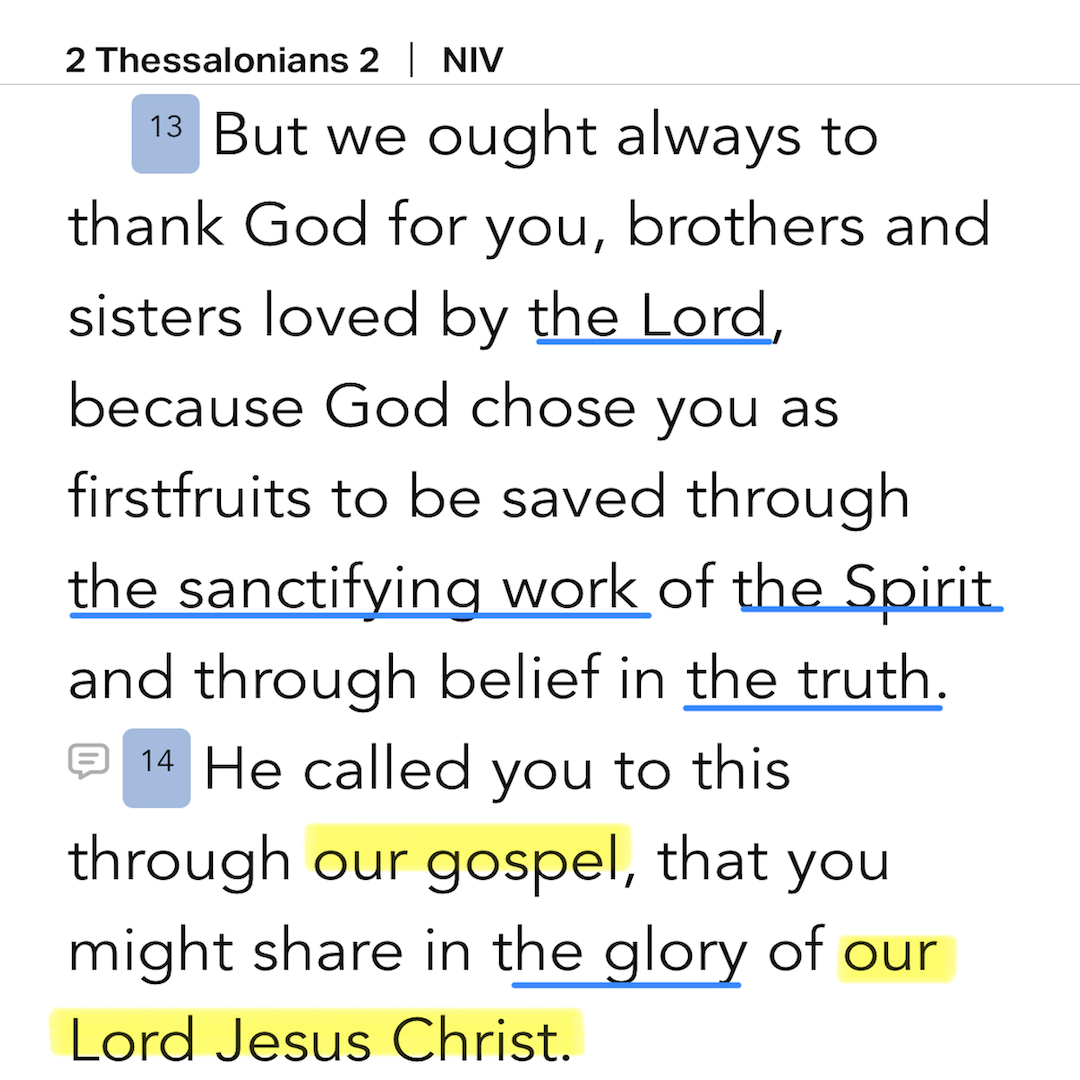
Confuse them, Lord, and frustrate their plans, for I see violence and conflict in the city. Its walls are patrolled day and night against invaders, but the real danger is wickedness within the city… (Psalm 55:9-14 NLT) 

David sees violence and conflict, but he is quick to conclude that the enemy is not “out there” but “in here.” Notice the phrases “in the city” and “within the city.” 

This is why Jesus tells us to deal with the plank in our own eye first (the things in here), and then I can see clearly to address what may be out there (see Matthew 7:1-5). He also tells us to pay attention to the clear indicators that something is wrong “in here” in Matthew 15:18-20. 

Yes, we should address false gods and evil practices. But G.K. Chesterton warns us to make sure we are addressing the right things—

“Idolatry is committed, not merely by setting up false gods, but also by setting up false devils; by making men afraid of war or alcohol, or economic law, when they should be afraid of spiritual corruption and cowardice.” 

God-fearing leaders must always address their own areas of corruption as the first and highest priority. It’s only after this heart-check that we can truly lead people away from things which are holding them back from fully following God. 

Holy Spirit, if I feel the need to point my finger at what’s wrong “out there,” may I first yield to Your finger pointing out what’s wrong “in here” in my own heart. Once I have recognized, confessed, and corrected what’s wrong in me, equip me to be a lovingly-strong and empathetic guide to help others around me. 

►► Would you please prayerfully consider supporting this ministry? My Patreon supporters get behind-the-scenes access to exclusive materials. ◀︎◀︎

Walk By The Spirit

Listen to the podcast of this post by clicking on the player below, and you can also subscribe on AppleSpotify, or Audible. 

Paul makes it so clear that the Holy Spirit is a Person with Whom I should be in regular and intimate conversation. In the span of just a few verses in Galatians, Paul uses five different Greek words to fill out the definition for what it means for a Christians to walk by the Spirit. 

(Check out all of the Bible verses in this post by clicking here.) 

(1) Walk by the Spirit (Galatians 5:16). This word means to conduct my life at the Spirit’s speed. Not rushing ahead; not lagging behind. As Solomon might say, “Trust the Holy Spirit with all your heart, and do not depend on your own understanding. Seek His will in all you do, and He will show you which path to take” (paraphrase of Proverbs 3:5-6). 

(2) Led by the Spirit (5:18). This means to be attached to the One Who is conducting my life. Just like Jesus explained about branches staying connected to the Vine in John 15:1-5. 

(3) Live by the Spirit (5:25). To consider the Holy Spirit as my one and only vitalizing Source. He is more important than the air I breathe, the food I eat, or the water I drink. 

(4) Keep in step with the Spirit (5:25). I march obediently as a soldier under direction from my Superior Officer; attuned to His voice to obey His every direction. 

(5) Live by the Spirit (6:1). This describes one who is filled with and governed by the Holy Spirit’s life-force. 

Christians who live this way cannot help but exhibit the fruit of the Spirit in such abundance that their very lives become a living, breathing testimony to others of the delight in walking by the Spirit on every single step of our life’s journey (5:22-23). 

!For me, there’s no other way to live! 

►► Would you please prayerfully consider supporting this ministry? My Patreon supporters get behind-the-scenes access to exclusive materials. ◀︎◀︎
Comforting The Distressed

Listen to the podcast of this post by clicking on the player below, and you can also subscribe on AppleSpotify, or Audible. 

Comfort is an important word in the apostle Paul’s letter to the saints at Corinth. In just five verses in the opening of his second letter to the Corinthians, he uses the word “comfort” nine times! 

   Praise be to the God and Father of our Lord Jesus Christ, the Father of compassion and the God of all comfort, who comforts us in all our troubles, so that we can comfort those in any trouble with the comfort we ourselves receive from God. For just as we share abundantly in the sufferings of Christ, so also our comfort abounds through Christ. If we are distressed, it is for your comfort and salvation; if we are comforted, it is for your comfort, which produces in you patient endurance of the same sufferings we suffer. And our hope for you is firm, because we know that just as you share in our sufferings, so also you share in our comfort. (2 Corinthians 1:3-7) 

The Greek word conveys the sense of someone who comes near to help us. They come physically near, their heart draws near to us in empathy, and even their words are right on target to provide the help we need. 

If that description sounds familiar, it may be because it comes from the same Greek word that Jesus uses for the Holy Spirit—

   And I will ask the Father, and He will give you another Comforter (Counselor, Helper, Intercessor, Advocate, Strengthener, and Standby), that He may remain with you forever. (John 14:16 AMPC) 

As Paul says, God is “the God of all comfort,” which we would expect. But notice that Paul also says that the Comforter comforts us for a specific purpose: “so that we can comfort those in any trouble with the comfort we ourselves receive from God.” 

We cannot give to others what we do not have. 

How do we get comfort? The Holy Spirit—the Comforter—comforts us. 

When does He comfort us? When we are in distress. 

What happens with this comfort we receive? Three things:

  1. We have something to give to others who are in distress
  2. It builds patient endurance in us
  3. It makes our hope in God more firm

Perhaps you’re in a time of distress right now and you’re wondering why you are going through this difficulty. Can I challenge you to reframe this thought: You are going through this so that you may increase your capacity to be a comforter to others. Your comforted distress is allowing you to come alongside another struggling saint with greater empathy and patience and understanding and strength than you would have had before your time of distress. 

This is why Paul says, “Praise be to the God and Father of our Lord Jesus Christ.” He is trying to help us see the blessings that can come from this time of distress that could have come in no other way. Don’t allow self-pity to rob you of the comfort the Comforter wants to give to you so that you are able to be a comforter to others who are in distress. 

►► Would you please prayerfully consider supporting this ministry? My Patreon supporters get behind-the-scenes access to exclusive materials. ◀︎◀︎

Biblical Worldview

Listen to the podcast of this post by clicking on the player below, and you can also subscribe on AppleSpotify, or Audible. 

The definition of salvation comes from Romans 10:9. When we believe in our heart that Jesus paid the penalty for our sins and we confess that with our mouth, we are now justified. I can now stand before God just as if I had never sinned. But the Christian life is more than merely going to heaven at some point. It’s about glorifying God and pointing others to Jesus while we’re on our way to heaven. 

(Check out all of the Scriptures in this post by clicking here.)

We are immediately justified but sanctification (or as I like to call it “saint-ification”) is an ongoing process. 

  • The sanctified life is fruitful 
  • The sanctified life is joy-filled
  • The sanctified life is a testimony to others  

Paul wrote to saints in Corinth (1 Corinthians 1:2; 2 Corinthians 1:1) but he also called them “mere human beings” in 1 Corinthians 3:1-3. Paul points out that there is a difference between viewing this life from a worldly viewpoint and a biblical viewpoint (2 Corinthians 5:16). 

A naturalistic world view is constantly shifting as new discoveries are made. A biblical worldview knows there is nothing new under the sun, that everything is addressed in Scripture. 

In order to not view this world through the lens of “mere human beings” we have to read, study, meditate on, and apply the whole counsel of God’s Word. We put it in and the Holy Spirit helps us live it out. Just like our prescription glasses won’t do a thing to correct our vision of they aren’t on our face, Scripture won’t help us navigate this world in a God-glorifying way if we haven’t put it in our heart. 

Each day before I ready my Bible I pray Psalm 119:18, which asks the Holy Spirit to open my eyes to the amazing things in Scripture. I read, I journal, and I pray over the passage that I have read. Then the Holy Spirit makes good application of that Scripture (John 14:26, 16:13; 1 John 4:6). I want to be sure to read the whole counsel of God’s Word, not just cherrypicking my favorite parts. And I always want to be going deeper (Hebrews 6:1). 

One place that we see contrasting world views—the natural worldview versus the biblical worldview—is in 2 Timothy 2:14-19. 

  • Natural worldview #1—quarreling about words 
  • Biblical worldview #1—correctly handling the Word of truth 
  • Natural worldview #2—engaging in godless chatter 
  • Biblical worldview #2—standing on the firm foundation of Scripture 

The results of a biblical worldview are amazing: 

  1. A sure foundation (Matthew 7:24-27) 
  2. The attention of others (Matthew 7:28-29) 
  3. Useful treasures to share with others (Matthew 13:52) 
  4. A strong defense against critics (Acts 6:9-10; Psalm 119:99) 

Let’s not get stuck in the “mere human being” level of a natural worldview, but let’s commit to studying our Bibles diligently so that the Holy Spirit can develop a robust biblical worldview in us. This worldview is fruitful, joyful, and enhances our testimony. 

Follow along with all the other messages in our series on B.A.S.I.C. Christianity by clicking here. 

►► Would you please prayerfully consider supporting this ministry? My Patreon supporters get behind-the-scenes access to exclusive materials. ◀︎◀︎

Is That God’s Voice?

Listen to the podcast of this post by clicking on the player below, and you can also subscribe on AppleSpotify, or Audible. 

How can we tell if God is trying to get our attention through the words of somebody else? Let’s unpack that on this episode of The Podcast. 

The Scriptures I reference in this episode—Numbers 22:21-30; 2 Chronicles 35:20-24; 2 Kings 18; James 1:19; Genesis 3:1-5; Matthew 4:1-10.

You may also want to check out my blog post and video The Value of Journaling where I talk about how I capture thoughts, prayers, conversations from others, Scripture verses and more when I’m facing a big decision. 

►► Would you please prayerfully consider supporting this ministry? My Patreon supporters get behind-the-scenes access to exclusive materials. ◀︎◀︎