Listen to the podcast of this post by clicking on the player below, and you can also subscribe on Apple, Spotify, or Audible.
In Philippians 4, Paul links together two important words: God and peace.
And the peace of God, which transcends all understanding, will guard your hearts and your minds in Christ Jesus. … Whatever you have learned or received or heard from me, or seen in me—put it into practice. And the God of peace will be with you. (Philippians 4:7, 9)
In Greek it’s the same two words: eirene Theos and Theos eirene.
God gives me a peace that is beyond what my natural mind can conceive, and it’s a peace that guards me and accompanies me wherever I go. Given the fact that the verse between these two mentions of the God of peace are about our thought life, it would seem that we need peace in our mind more than anywhere else. That sandwiched verse says:
Finally, brothers and sisters, whatever is true, whatever is noble, whatever is right, whatever is pure, whatever is lovely, whatever is admirable—if anything is excellent or praiseworthy—think about such things. (v. 8)
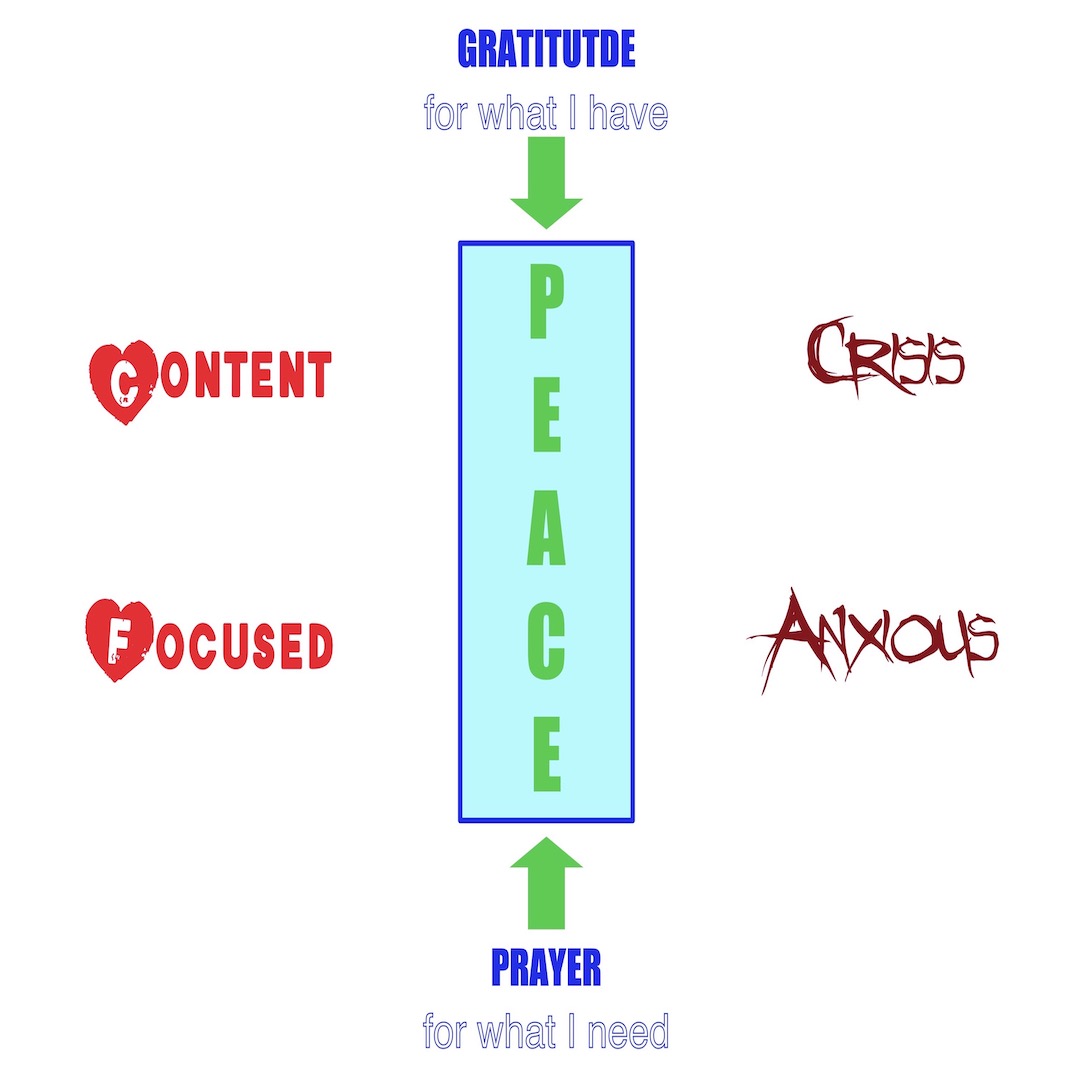
Peace is my protection from moving from contentment to crisis, or from focus on God to anxiety about His ability to provide for me. Crisis and anxiety are both peace robbers.
How is this protection of peace established? Verses 4-6 highlight two vital aspects:
Gratitude for what I have
Prayer for what I need
So if I find myself in crisis mode or feeling anxious, that means I have moved outside of the protection of peace that God wants to give me. In this place, if I were totally honest, my thoughts are probably the exact opposite of the list in verse 8. My peace-robbing thoughts are things that are false, feeble, and self-centered.
To step back into that place where peace protects me and guards my mind and heart, I have to focus on two vital aspects:
Gratitude for what I have
Prayer for what I need
God wants me to live in a place protected by His peace because it brings Him glory. Think of it this way: Is my life a better testimony when I live perpetually in crisis mode or when I am content with God’s blessings? When I am anxious about God’s ability to meet my needs, or when my attention is focused on the all-sufficiency of my loving Heavenly Father?
The next time you feel yourself slipping into a crisis or feeling anxious, check your thoughts: Are they good and lovely, or are they dark and ominous? If they are the latter, take time to intentionally express your gratitude for your blessings, and then expectantly take your needs to God in prayer. Then watch as the God of peace brings you back into a place where your contentment and your focus on Him becomes your protection and also a winsome testimony to draw others to the Prince of Peace.
Your gratitude blesses future generations. When you talk about the ways God has blessed you—and you are continually grateful for His provision—you are fortifying future generations as well.
“Wherever men are still theological, there is still some chance of their being logical.” —G.K. Chesterton
“We must not be too hot upon cold matters, but even this is better than to be cold upon matters that require heat.” —Charles Spurgeon
Clinton Manley says, “Although the teaching of Jesus in Matthew 5–7 is often called a sermon, these words are closer to Henry V on the battlefield than to a pastor in his pulpit.” Before you read the Beatitudes again, check out this background to this battlefield message from Jesus.
“The ping of a notification, the silent vibration in a pocket, the ambient awareness that something, somewhere, might require a response: these are not incidental features of modern life. They are now its architecture…. The mind never fully settles. It hovers in a state of anticipatory vigilance, perpetually primed for the next interruption.” —Carl Hendrick
Listen to the podcast of this post by clicking on the player below, and you can also subscribe on Apple, Spotify, or Audible.
I like to take some time at the end of each calendar year to both look back and look forward. Throughout biblical history, whenever God was ready to take His people into a new chapter, He always took time for them to review the ground they had already covered. So as we get ready to go into 2026, here is a look back at the things God taught us in 2025 through these sermon series I shared with the wonderful folks at Calvary Assembly of God.
Our Prayer Book. God has given us an amazing Book! The Bible addresses the human condition—all our desires, frustrations, hopes, and the only path on which we can find eternal and unfading joy. The Bible not only tells us how to live, but it also tells us how to pray. And it’s as we pray that the principles in the Scripture come alive with fresh applications for our daily life. We don’t have to fumble around, attempting to find the right words to pray and then wondering if those prayers were heard on high. We can learn to pray in agreement with God’s perfect will. God has spoken to us through His Word, and He invites us to use His words to form our prayers back to Him. I love beginning each new year with a reminder of the power of prayer.
When Sheep Bite Sheep. No one likes to be mistreated—especially when the one that hurts us is one we would have thought of as an ally or even a friend. These slights become even more painful when they take place inside the Christian community. When sheep bite sheep, our natural response is to lash out to try to even the scales of justice. But the Bible consistently and clearly calls Christians to pursue a supernatural response. This is a highly practical series of messages on how you can respond in a Christ-honoring way when you are bitten by another sheep in God’s pasture.
Grief Into Joy. At the end of your rope … down for the count … nothing but gray skies all around … unable to see any light at the end of the long, dark tunnel. Ever been there? The reality is, we all have been there. But the good news is that we don’t have to stay there! God is always at work to turn our apparent no-win, dark, hopeless situations into something bright and glorious! He is working in ways that no human mind could have dreamed up, and working on our behalf in a way no human power could ever hope to rival. God specializes in turning grief into joy! We are approaching the time of year where we remember the death of Jesus. Without a doubt that was the darkest, most grief-stricken day in all of history. Yet that time of mourning was completely forgotten in the overwhelming joy that exploded from an empty tomb on Resurrection Sunday!
We Are: Pentecostal. Pentecost for over 1500 years was a celebration in Jerusalem that brought in Jews from all over the world. But on the Day of Pentecost which came just ten days after Jesus ascended back into heaven, the meaning of Pentecost was forever changed! Followers of Jesus—now empowered by an infilling of the Holy Spirit—began to take the good news of Jesus all over the world. These Spirit-filled Christians preached the Gospel and won converts to Christ even among hostile crowds, performed miracles and wonders, stood up to pagan priests and persecuting governmental leaders, and established a whole new way of living as Christ-followers. We, too, can be Pentecostal followers of Jesus Christ today. We can experience an anointing and an empowering in our lives that turns ordinary Christianity into extraordinary Christianity!
All Hail King Jesus. The Bible closes with a vivid picture of Jesus as the undisputed King of kings, and we look forward to that time when all creation bows before Him. Even more so, we cannot wait to be with our King for ever and ever! The psalmists of Israel also foresaw the coming of this King, especially in the example they had in their King David. Many of the poetic words they penned esteemed Jesus as the King for Whom they longed. David himself not only saw the future coming of the Eternal King, but he also looked back in time to see Jesus reigning as King before time began. It is these royal psalms that we will be studying as we celebrate the first arrival on Earth of our King and as we anticipate the second coming of our Royal Majesty. The more clear our vision is of this King, the more we will worship Him, follow Him, and invite others to know Him as their own Lord and Master.
B.A.S.I.C. Christianity. When someone invites Jesus into their heart, they are immediately justified in God’s sight and have the assurance of Heaven as their eternal home. But then the question comes, “Now what?” Our justification is immediate but our sanctification is an ongoing, lifelong process. Sanctification is what brings fruitfulness to a Christian’s life and what allows that fruitful life to be a testimony to others. The Bible gives us the B.A.S.I.C.s of this Christian life, and that’s what we will be exploring over the next few weeks.
Earnestly Contend. Jude, the half-brother of Jesus, wrote a letter to the church. He said he was hoping to write about salvation, but looking at the conditions in the culture around him, he felt urged by the Holy Spirit to challenge Christians to “contend for the faith that was once for all entrusted to the saints.” What does this word “contend” mean for us today? Are Christians supposed to be combative about sharing their faith? Are they supposed to argue with anyone and everyone who disagrees with them on any point? Jude gives us Holy Spirit-inspired wisdom to understand how to deal with those who have departed from the purity of biblical truth.
What To Do In A Crisis. Look back through the pages of history and you will see a common theme. Whether it’s world history or your own personal history, you have so much for which you can give thanks. In tough times, we tend to become forgetful because we are so focused on the intensity of the moment. But if we will simply look back in time, we will see just how faithful God has been to us. We bring our focus back to Him in our trying times when we remember and rehearse “the wonderful things He has done” (Psalm 107). The season of Thanksgiving is a good time for us to be reminded of the powerful resource we have when we are giving thanks for our blessings. Thankful people are confident people because they choose hope in God’s faithful provision over grumbling about their current circumstances.
Jesus Is…. Over 700 years before He was born in Bethlehem, God spoke through the prophet Isaiah to describe the Messiah that was coming. Peter said that until the advent of Jesus, the prophets continued to scour the evidence of who this Messiah was going to be. When Jesus finally came to earth as a Man, young and old alike were thrilled to proclaim that the One they had been longing for had made His long-expected appearing! As Jesus lived on earth, died on Calvary, and was resurrected back to life, He continued to fulfill all that had been prophesied about Him. Isaiah said of Jesus: “He will be called Wonderful Counselor, Mighty God, Everlasting Father, Prince of Peace.” This Advent season we will take some time to unpack what each of these majestic titles mean. We will explore how Jesus demonstrates that He is truly worthy of each of these titles, and we will see how that knowledge should thrill our hearts as we celebrate His first Advent and eagerly long for His Second Advent.
If you live in northern Kent County and don’t have a home church, I would be thrilled for you to visit me at Calvary Assembly of God this year.
Listen to the podcast of this post by clicking on the player below, and you can also subscribe on Apple, Spotify, or Audible.
We saw in part one of this two-part series that we quickly go into crisis mode when we forget that God is in control, so we need to remain full of thanks all the time (Ephesians 5:20 AMPC). We called gratitude our inoculation against the pull from contentment to crisis, but inoculation doesn’t mean that we never experience some pangs of anxiety when a moment of darkness hits. Maturing Christians are learning how to spot the beginning of anxiety and move back into the contentment zone earlier and earlier (Romans 5:3-5; James 1:2, 12).
James says we “will receive the crown of life” from Jesus. There’s no doubt about that! In a trial, it’s important to be reassured that the trial can never cause us to lose out with our Heavenly Father (Romans 8:38-39).
Psalm 107 starts out with this same assurance—“those He redeemed” (v. 2) is in the perfect tense. It’s complete and irrevocable! We walk out our redemption in circumstance after circumstance in a way that bring glory to God and draws others to Him as well. “Let the redeemed of the Lord say” is in the imperfect tense, which means giving thanks is an ongoing practice (v. 1).
Redeemed once, but giving thanks always!
Romans 8 gives a little snapshot of some of the situations that could have sent us spiraling into crisis mode, but remember the conclusion: None of those things can separate from God’s love.
Last week we saw how the psalmist linked prayer and gratitude in a repeated theme. This practice is backward looking (vv. 7-8, 14-15, 20-22, 29-32). When we look back to see how God has moved and then we contemplate Who He is (Hebrews 13:8; Isaiah 59:1).
Look at the closing verse (v. 43):
heed = guard, watch over attentively; this is an imperfect verb—which means we keep on doing it
consider = discern: totake apart the evidence and harvest the lessons
great love = God’s limitless lovingkindness
I love this verse in the New Living Translation: Those who are wise will take all this to heart; they will see in our history the faithful love of the Lord.
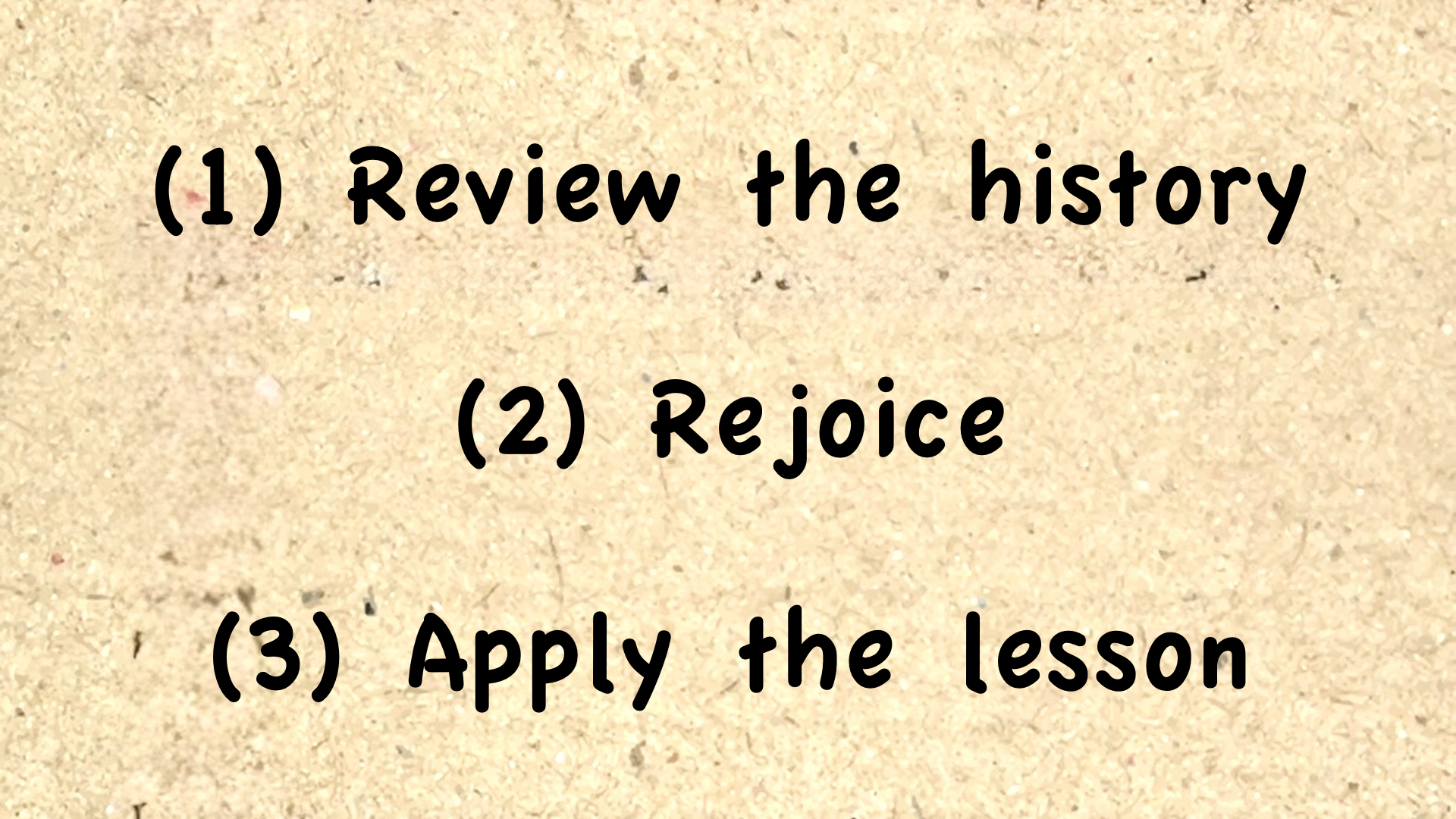
That means we…
Review the history of God’s faithfulness
Rejoice over it
Apply it to your current circumstance
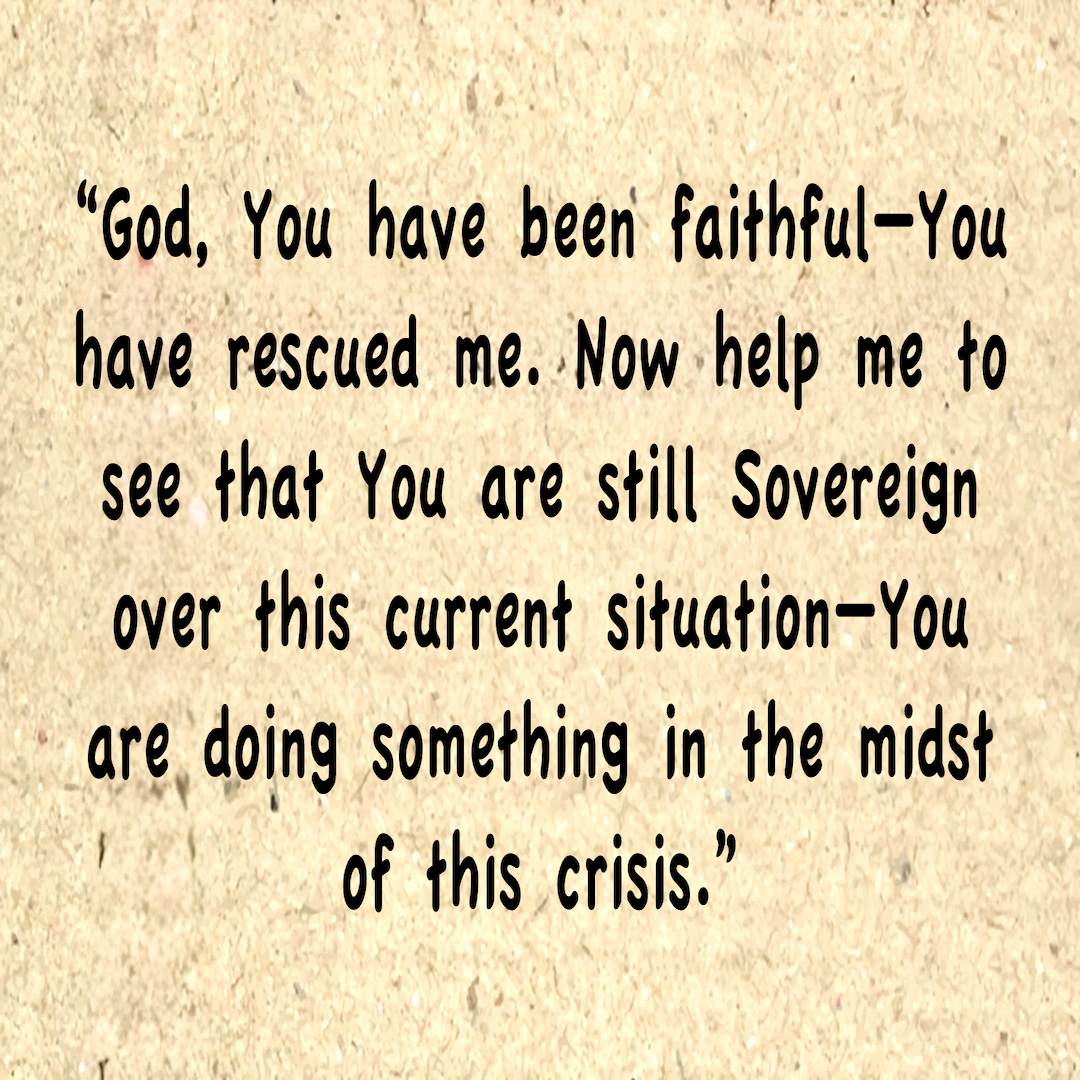
We can pray, “God, You have been faithful—You have rescued me. Now help me to see that You are still Sovereign over this current situation—You are doing something in the midst of this crisis.”
In Romans 8:28, Paul tells us that God is working together all of our circumstances for His glory and our our good. Oswald Chambers noted, “In the Christian life we have no aim of our own, and God’s aim looks like missing the mark because we are too shortsighted to see what He is aiming at.” Reviewing our history and then giving thanks helps assure our anxious heart that God is going to hit the mark (Philippians 1:6).
Praise the Lord! I will thank the Lord with all my heart as I meet with His godly people.How amazing are the deeds of the Lord! All who delight in Him should ponder them.Everything He does reveals His glory and majesty. His righteousness never fails.He causes us to remember His wonderful works. How gracious and merciful is our Lord! (Psalm 111:1-4 NLT)
Unhappy Christians rob God of glory because unhappy Christians don’t point people to God. Grateful Christians are happy and satisfied in God. Let your smile be your testimony of an all-good God.
Summer break is upon us! Jean Holthaus writes, “During the school year, your child’s entire day is structured. This can leave you feeling the need to schedule every minute of the summer as well … and quickly becoming overwhelmed by both the cost and logistics of trying to do so.” Check out Jean’s tips.
“Comradeship and serious joy are not interludes in our travel; but that rather our travels are interludes in comradeship and joy, which through God shall endure for ever.” —G.K. Chesterton
A neuroscientist explains how our left and right brain hear language differently, and how early childhood experiences can impact the way we hear and process language for the rest of our life.
“Does Christianity encourage morbid introspection? The alternative is much more morbid. Those who do not think about their own sins make up for it by thinking incessantly about the sins of others. It is healthier to think of one’s own. It is the reverse of morbid. It is not even, in the long run, very gloomy. A serious attempt to repent and really to know one’s own sins is in the long run a lightening and relieving process.” —C.S. Lewis
Listen to the podcast of this post by clicking on the player below, and you can also subscribe on Apple, Spotify, or Audible.
I was honored to be invited to offer the commencement address for some amazing students graduating from the Parent Teacher Co-op program.
I think we rush too quickly through our celebrations. It seems that at each milestone, we pause only briefly to move on toward the next milestone. But if we don’t celebrate well, we are actually setting ourselves up for a disappointing future.
It’s very telling that after the perfection of Creation, God took time to celebrate His own handiwork. And then He called us to do the same. That’s what a sabbath really is: A time to celebrate what God has done for us, and what He has empowered us to do for His glory. I think the reason many older people become more contemplative and nostalgic is because they rushed through their life without taking time for sabbath celebrations.
If you look at the history of the Israelites, you will see majestic mountain peaks followed by depressing valleys. What sent them sliding into their valley was one thing: forgetfulness. Time and time again, God sends His prophet to chastise the Israelites for failing to take a sabbath rest. They forgot to honor God and celebrate Him, but instead they rushed along to the next thing. What brought them out of their valley and back to the mountain was also one thing: remembering. Celebrating God for who He is.
So I challenged these graduates—and you—with this. At each milestone in your life…
Thank God for His blessings
Celebrate your own hard work.
Recognize the help you’ve received from others.
Determine which lessons to keep, which to enhance, and which to leave behind.
Find someone to share the journey with you.
Don’t forget to remember!
I would suggest at a minimum celebrating the sabbath each week as God gave us that example, but you may find that you have a moment to celebrate even a small win in the middle of the day in the middle of your week. If you do that, I think your appreciation for God’s blessings will keep you even more dependent on His abiding presence.
You may also be interested in a couple of related blog posts and videos:
Listen to the podcast of this post by clicking on the player below, and you can also subscribe on Apple, Spotify, or Audible.
I take some time at the end of each calendar year for a quick recap of everything we have learned during this year at Calvary Assembly of God. I do this because I want to make sure we are all on the same page with each other before we move into a new year. And I also think it’s very important that we are continually reminded and reassured of what God has done for us. In our series on gratitude we talked about the dangers of forgetting to remember and re-tell the blessings of God. We see in the letters from the apostles both a re-telling of their own words, and reusing and amplifying the words of Jesus and other apostles.
You can click on the sermon series title to find a list of all of the sermons in that series. Clicking on those individual sermons will give you a short written recap of that message, and it will also give you the link to watch the video of the full sermon.
Kingdom Praying. Jesus made it clear time and time again that He came to reveal the Kingdom of God to us. He described what the Kingdom was like and told us that He came to be the means by which we could enter God’s Kingdom. He also told us how God’s children could access the power and privileges of our Heavenly Father through the means of prayer. He assured us with words like, “Do not be afraid, little flock, for your Father has been pleased to give you the Kingdom” (Luke 12:32). Jesus said quite simply that we had access to our Father through prayer. And then to make sure we didn’t miss out on this awesome privilege, He instructed us, “This, then, is how you should pray” (Matthew 6:8).
Jots and Tittles. As we get closer to the death and resurrection of Jesus, there are an increasing number of prophecies that are fulfilled in these events. Jesus appears to have been very attentive to making sure that each and every one of these prophecies were fulfilled to the smallest detail. Near the beginning of His public ministry, Jesus noted that not one iota—or “one jot or tittle” in the Old English vocabulary—of any of God’s promises would be left unfulfilled (Matthew 5:18). It’s amazing that Jesus so carefully attended to all of these, but it’s also important to ask ourselves what these fulfilled prophecies mean to us today.
Takin’ Him to the Streets. Just before Jesus ascended to Heaven, He told His followers that they would have the joyful responsibility of taking the good news of forgiveness and eternal life to all the highways and byways of every nation. Later on, Paul would get more specific about all of the groups to which he was taking the message of Jesus (see Luke 24:46-47; 1 Corinthians 9:20-22). That commission is still in effect for Christians today: We are to share the gospel with everyone—from easy street to skid row, from Wall Street to Main Street, and every street in between. The streets on which you live and work are different from the streets where I travel. In fact, all of us live on different streets, but everyone we meet on every street needs to hear about Jesus. In this new series of messages, we are going to learn how the Holy Spirit can help us be ready to take Jesus to those on each street where God sends us.
Ascending. Every year, Jews from around the world made four pilgrimages up to Jerusalem for various feasts and sacrifices. These journeys reminded them of God’s goodness as they went to the Temple to worship, and they helped refocus on God’s ways as they returned to their regular routines. Jerusalem is over 2500 feet above sea level, so the pilgrimage there was a physical workout as well as a spiritual workout. These workouts were beneficial for God’s people, preparing them to minister in their cities in the following months. The Book of Psalms contains 15 songs that these pilgrims would sing to and with each other as they traveled up to Jerusalem. These Psalms of Ascent are still instructive for Christians today.
Living in your Gift Zone. God created each and every human being uniquely. We all come in different shapes and sizes, but we all share one thing in common: He created each of us with a unique personality and a unique gift package. By unique, I truly mean that we are all one-of-a-kind creations that have never existed in all of history! Here’s another thing we all have in common: We usually live in a comfort zone that is far smaller than our gift zone. Living this way keeps us from soaring through life in the way that God intended. He wants each of us to know our gifts, and to use our gifts in a way that benefits our world and brings Him glory. It starts with believing that we are indeed gifted by our Creator. Then we must have the courage to step out of our comfort zone into the much larger gift zone God has given us.
Is that in the Bible? A meme that makes me chuckle every time I see it is a “quote” attributed to Abraham Lincoln in which he says, “The problem with quotes found on the internet is that they are often not true.” (Not to spoil the joke for you, but unless Lincoln knew how to time travel to the future, I don’t think he knew about the modern internet!). I love this meme because it captures something that so many people fall into: a quick acceptance of a statement without verifying its source or thinking through the implications of the statement’s truthfulness. In this series I think you may be surprised to discover just how many phrases we call biblical aren’t, and how many phrases there are that we never realized are actually in the Bible.
Be Thankful. It’s so easy to spot the negative things. It’s so easy to gripe about the bad stuff with others. It’s so easy to complain about what’s wrong with the world. But the Bible repeatedly calls the saints of God to rise above this downward pull of negativity. In fact, for those who have a relationship with their Heavenly Father, who call Jesus their Savior, and who call the Holy Spirit their Counselor, there is really only one way to live: Grateful!
Christ’s Advents. The word Advent means the appearing—something that bursts onto the scene. At this time of year we are actually thinking about TWO Advents. We look backward in gratitude to celebrate the first Advent of Jesus when He was born in a manger in Bethlehem. And then we look forward in joyful expectation to the second Advent of Jesus when He will return to earth again as King of kings. As Christians live in this time between the two Advents, our celebration and expectation should bring four noticeable attributes from our lives: hope, peace, joy, and love.
This next year promises to be another amazing time of learning and growing. If you live in northern Kent County and don’t have a home church, I would love for you to visit us!
Christians aren’t celebrating just one Advent, but two. The First Advent of Jesus gives us cause to celebrate, but the expectation of His Second Advent gives us reason to anticipate. Let’s make sure we are always celebrating both of Christ’s Advents. Check out the full sermon on hope.
I have lots of new content every week, which you can check out on my YouTube channel.
“When we elevate the end over the means, we miss out, because often God does some of His greatest work along the way. For Him, it’s all about the process, and less about the final destination.” —The King Is Coming reading plan on YouVersion
“If you want a religion to make you feel really comfortable, I certainly don’t recommend Christianity.” —C.S. Lewis, in God In The Dock
I had never even heard of the heart cockle until I read this article. This amazing mollusk has a symbiotic partnership with a type of plankton that lives inside the shells. This plant needs photosynthesis to live and produce the food which the heart cockle needs to survive. But how does sunlight get through the solid shell of the heart cockle? Not surprisingly, our All-wise Creator designed the heart cockle with little “windows” perfect for letting in just the right amount of sunlight the S. corculorumrequires. Amazing!
The Reader’s Digest uncovers some bizarre laws surrounding the Christmas season. For instance, “In 1643, England passed an ordinance ‘encouraging’ citizens to treat Christmas as a solemn holiday, rather than a celebratory feast. By the next year, Christmas had been banned altogether. Christmas remained illegal in England until 1660. … In 1659, the Puritan government of the Massachusetts Bay Colony went so far as to outlaw Christmas in order to discourage ‘disorderly’ behavior that might be ‘offensive to God.’ Anyone who failed to show up for work or participated in feasting would be fined five shillings. The Christmas ban lasted until 1681 and Massachusetts didn’t make Christmas an official holiday until 1856.”
“The future of our country and the quality of our lives is not determined primarily by who is in public office. Politicians are the fruit of the tree, they are not the tree. Our future will be determined by the strength of our families, and we all have control over that. Be great husbands, wives, parents, friends, and neighbors. Live for others, and live as if your kids, and God, are always watching. God is always watching, and our kids are watching more than we realize. Find things to be grateful for and resist the temptations to complain. Go out of your way to make someone else’s life better and yours will be too, even if you don’t like who is in the White House. If our joy is dependent upon a political outcome, we’ll never be happy.” —Joseph Backholm
Listen to the podcast of this post by clicking on the player below, and you can also subscribe on Apple, Spotify, or Audible.
Gratitude is a great separator for leaders—it gives them a better vantage point from which to lead people and increases their effectiveness as a catalyst for organizational change.
In short, a grateful leader is a great leader.
Check out the full conversation Greg and I had on The Craig and Greg podcast episode We are Grateful.
And you may be interested in a whole series of posts and video where I talked about the psychological, physiological, emotional, and relational benefits of making gratitude our focus. The series was called Be Thankful.
Listen to the podcast of this post by clicking on the player below, and you can also subscribe on Apple, Spotify, or Audible.
Paul’s first visit to Philippi didn’t go so well!
It started off with some success—Lydia and her household accepted Jesus as their Messiah, and a demon-possessed girl was set free—but then things turned sour very quickly! Paul and Silas were falsely accused of subverting Roman law, and without any sort of trial they were beaten and thrown into prison.
Even after the local magistrates realized their mistake in mistreating Roman citizens in this way, they simply asked Paul and Silas to leave town. You can read this story in Acts 16:11-40.
But there were seeds planted in this city. Not just Lydia’s family, but the jailer’s family as well, became followers of Jesus. And what about the girl set free from demonic oppression? I have a hunch she joined with the Christians in praising God too! This group of believers then became the first financial supporters of Paul’s missionary work.
Paul knew that his brief imprisonment in Philippi had resulted in a thriving group of believers. And now as he writes a letter to these saints from a Roman jail, he is once again starting to see what God is going to do through this hardship—
Now I want you to know, brothers and sisters, that my circumstances have turned out for the greater progress of the gospel, so that my imprisonment in the cause of Christ has become well known throughout the praetorian guard and to everyone else, and that most of the brothers and sisters, trusting in the Lord because of my imprisonment, have far more courage to speak the word of God without fear. (Philippians 1:12-14)
Paul was not embittered by his imprisonment, but he was rejoicing in all of the good things God was accomplishing because of his imprisonment.
✅ An attitude of thankfulness allows our eyes to stay open to God’s blessings even in hardships.
❌ A grumbling attitude prevents us from acknowledging what God is doing.
Paul’s trust in God’s provision gave him an attitude of gratitude in a difficult place, and he now encourages his friends to adopt this same mindset. In the next chapter, he writes—
Finally, my brothers and sisters, rejoice in the Lord. To write the same things again is no trouble for me, and it is a safeguard for you. (Philippians 3:1)
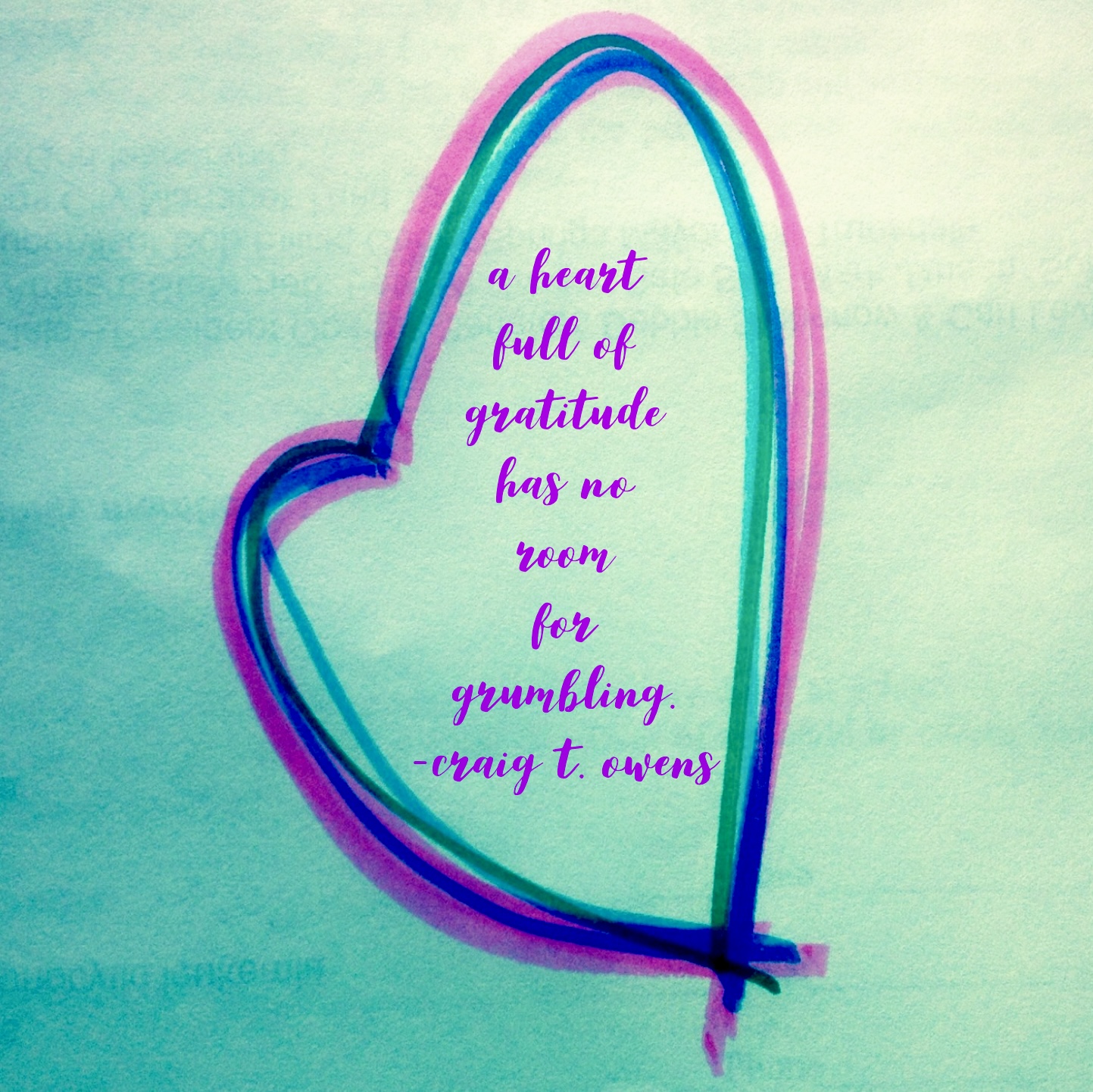
Paul knew that in a heart full of gratitude there is no room for grumbling. That’s why always rejoicing in the Lord is “a safeguard” for Christians. Rejoicing in God’s character and God’s blessings keeps our mind on Him, making it very difficult for any temptation to ambush us.
Let’s proactively keep a heart full of gratitude so that no grumbling can seep in. But if we do find ourselves in a dark place that may prompt us to grumble, let’s react quickly to turn any complaints into praying and singing hymns to God, just as Paul and Silas had done in the Philippian jail, and undoubtedly as they were also doing now in their Roman jail.



 In Philippians 4, Paul links together two important words: God and peace.





 Craig T. Owens