Ingratitude Can Mess Us Up

Fading gratitude can negatively impact our past, present, and future. Because when our gratitude to God begins to fade, so does our understanding of what God has already done for us, our appreciation of what He is still doing for us today, and our hope for what He will provide for us tomorrow. But we can flip the script—Our continual gratitude can begin to positively impact our past, present, and future! 

“Gratitude is from the same root word as ‘grace,’ which signifies the free and boundless mercy of God. Thanksgiving is from the same root word as ‘think,’ so that to think is to thank.” —Willis P. King 

The more we THINK about God’s grace in our lives, the more we can give THANKS for all He has done. Or said another way…

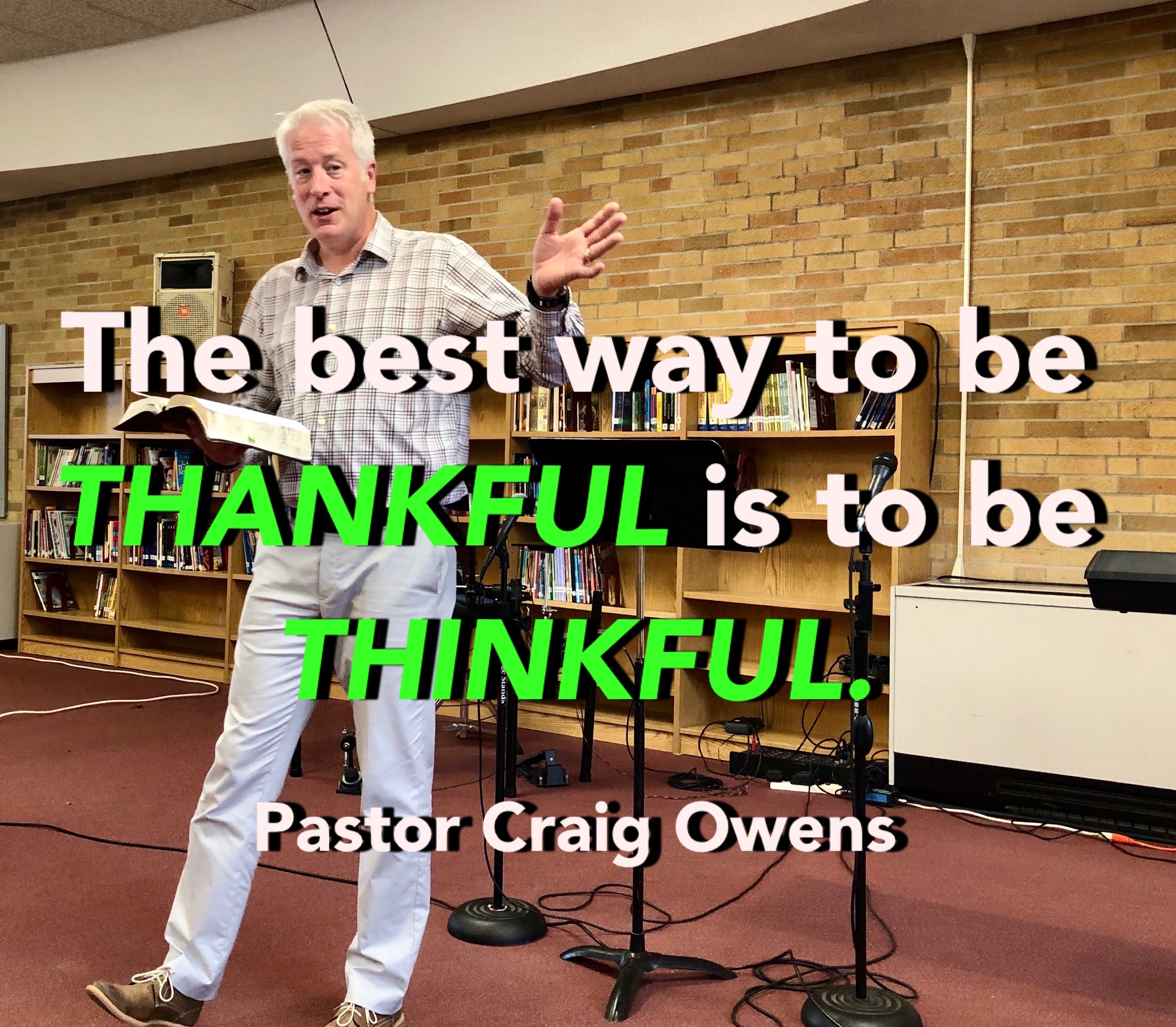
The best way to be THANKFUL is to be THINKFUL!

In Psalm 78, Asaph gives us a two-word reason for the up-and-down history of the Israelites: they forgot. The Israelites’ forgetfulness led to their lack of gratitude, which then caused yet another downward turn away from God. One of the examples he gives us is very informative: the daily provision of manna while the Israelites were in the wilderness (see Psalm 78:11-25; Exodus 16:4, 14-18). 

Every day God’s people had their food needs miraculously supplied for them, yet they begin to take this gift of God for granted. They stopped thinking about His provision, and then they began to ungratefully grumble (Numbers 11:4-6). Their grumbling actually caused them to want to return to slavery in Egypt! 

With fading gratitude, we can get stuck in the past. We even end up looking back at slavery and scarcity and call it “the good old days”! With fading gratitude for the past, sometimes we beat ourselves up. We say things like, “If I would have known then what I know now….” But you couldn’t know then what you know now. You only know now because of what you went through then, which makes another reason to be grateful. After all, God is using everything we have gone through to work out His plan (see Isaiah 46:9-10; Romans 8:28). 

We need to be thinkful about our past so that we can be thankful for what God is doing with it today.

Manna provided food every single day the whole time the Israelites were in the wilderness. It stopped immediately after they entered the Promised Land. For that daily provision, they should have been thankful but it was when they forgot to be thankful that they longed for the past and tried to do things on their own. 

The manna is a picture of Jesus. Not only is He our daily bread for today, but He is also our hope for eternity with God in Heaven. And for that, we should be daily thinkful AND thankful. 

If you’d like a fun idea of how to stay thinkful AND thankful, check this out.

http://https://youtu.be/vgvbTLe2yQo

Join us this Sunday as we learn more about the dangers of our fading gratitude. 

The Whole Story

When my father-in-law was still on his faith journey he asked me, “How can you reconcile the differences in God’s temperaments in the Bible? In the Old Testament He is full of judgment and in the New Testament He is all mercy.” 

Quite simply, both are God’s character. They are two sides of the same coin. In fact, we more dearly appreciate God’s mercy and grace when we’ve clearly seen how we are subject to His justice and wrath. 

Amos talked about both of these attributes, too, but he does so in a masterful way in which mercy and justice swirl around each other. It’s almost as if Amos can’t talk about justice without mentioning mercy or vice versa. 

How do we know God’s judgment is coming? Because God said so! Amos quotes God saying judgment is coming “because of three sins, even for four” (see these verses in Amos’ first and second chapters). Even as Amos uses that phrase he is pointing to God’s mercy. He’s stating, “God could have punished you the very first time you sinned, but He is giving you another chance, and another chance, and another chance….” 

But make no mistake: a day of judgment is coming. God concludes, “Now then I will crush you” (2:13). 

God tries to get people’s attention by sending famines and plagues and disasters, but after each one of these God sadly notes “yet you have not returned to Me”—five times He says this in Amos 4!

But even as God calls them out on their lack of repentance He reminds them twice of the solution—“Seek Me and live” (5:4-6). 

Finally, Amos concludes his book by letting us know God’s judgment IS coming, but so is God’s mercy (9:1-4, 11-15)!  

Dear Christians, our responsibility is to let people know that there is a Heaven to gain and a Hell to shun. We must boldly and lovingly tell people of…

  • … God’s justice AND His mercy 
  • … God’s wrath AND His grace 
  • … Heaven for the repentant AND Hell for the unrepentant 

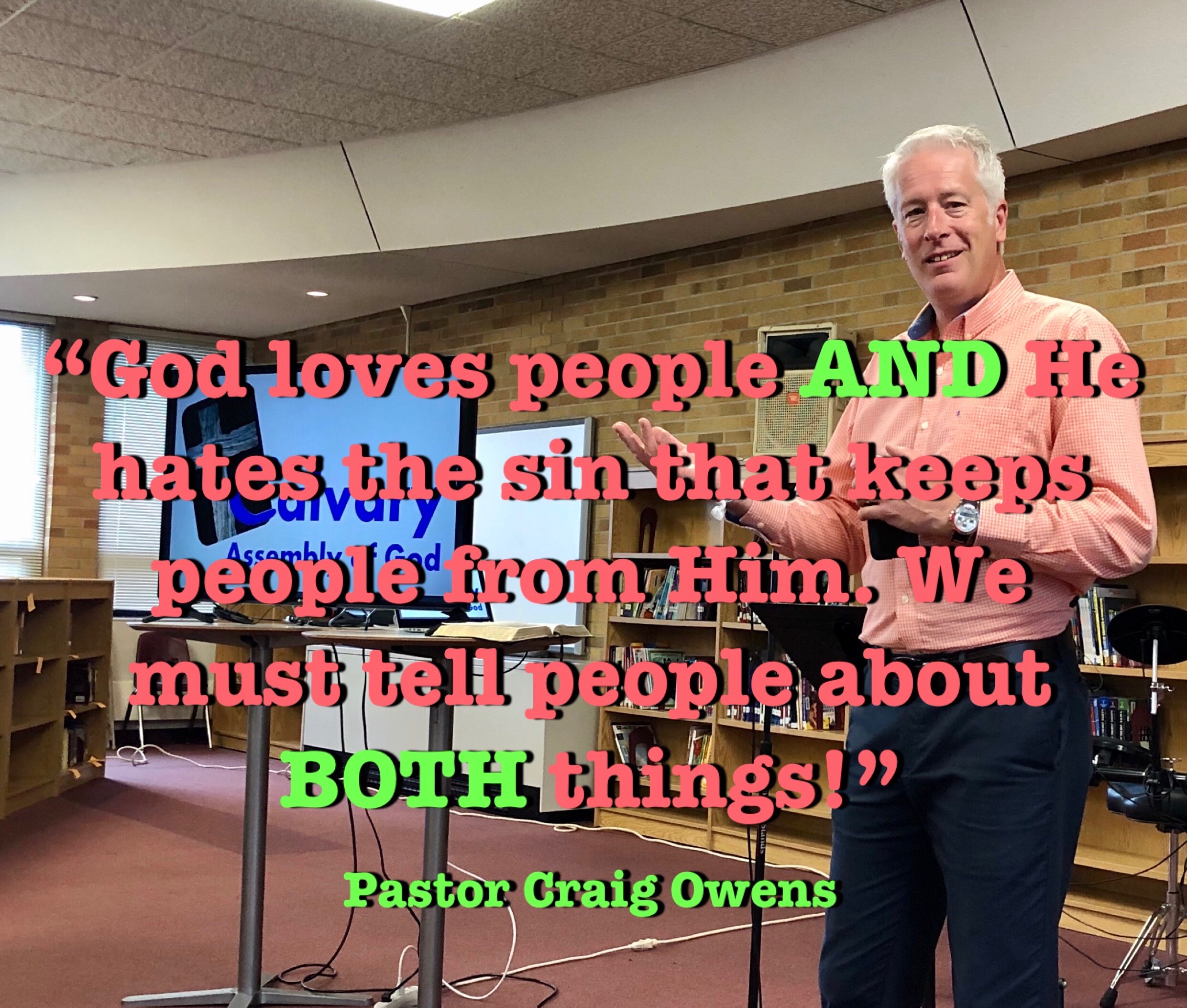
God loves people AND He hates the sin that keeps people from Him. It’s a message people need to hear, although they may not like to hear it. Like Amos, can God use you to warn this world of His judgment AND to woo this world by His love? Our world needs to hear BOTH-AND. They need to hear the whole story. 

Join me next week as we continue our journey of learning the major lessons that the minor prophets teach us. 

10 Quotes From “Start With The Heart”

Kathy Koch has given parents, teachers, and anyone who works with younger children, and excellent resource to improve your relationship with your kiddos and empower them to greater success. Check out my full book review of Start With The Heart by clicking here. 

“For your children to want what you want for them, for changes to occur, and for improvements to remain, your hearts must be intertwined. Your motivational power and influence over their obedience comes out of the love you have for each other.” [see Proverbs 23:26] 

“Affirm your children when they do use the character qualities you’re emphasizing and correct them when they don’t. … Specifically, look for gratitude and joy. The lack of one or both of these emotions causes children (and adults) to use character qualities inconsistently.” 

“Here is my list of understandings that can secure children’s hearts and increase your influence so you’ll be able to motivate them to be responsible, brave, and so much more.

  • Parent by faith
  • Parent with grace and mercy
  • Forgive quickly and often
  • Ask to be forgiven quickly and often
  • Tell your children you are confident in God
  • Prioritize children, not their behavior
  • You can dislike what children do while you still like and love them
  • Be who you want your children to be
  • Raise the children you were given, not the children you wish you had
  • Remember needs and wants are different
  • Listen when children are little if you want them to talk with you when they’re older
  • When children have a problem, remember they are not the problem
  • Teach children to fail well
  • Prioritize progress, not perfection” 

“Children are even more susceptible to the influences around them. We should have and model solid character so our behavior, attitudes, and decisions glorify God. We should also prioritize our character so we don’t lead a child astray. Making every effort to use these qualities ourselves matters. And, of course, apologizing when we don’t is key to maintaining a positive relationship.” 

“The desire to develop self-control is birthed in self-respect. Self-control makes it possible to use other character qualities successfully.” 

“Do we choose to see our children’s circumstances and respond appropriately? Although consistency is usually appropriate when raising and motivating children, if we don’t have compassion and individualize our reactions and decisions when it’s appropriate, why would our children? Modeling this character quality matters tremendously.” 

“Initiative: Children may never develop this quality if you remind them of everything they must do. Rather, it’s birthed when you help them grow in appropriate independence. … Is it possible that your children may not be motivated as you’d like because you rescue them to early, too often? … I know you value the things you worked hard for. Don’t rob children of that same satisfaction. Allow them to persevere.” 

“Prayer is a powerful tool—use it! Your personal and specific prayers for your children communicate your deep love for them and your dependence on God. Your prayers are a significant way your children learn who you hope they’ll be and what you hope they’ll do. Pray they’ll develop a heart for Christ. Model and teach what they need for their heart to be transformed into His likeness. This will change their character and, therefore, their motivation and motives, too.” 

“Just making statements like these can be empowering:

  • I need to take off arguing and put on first-time obedience.
  • I need to take off bullying and put on kindness.
  • I need to take off distractions and put on focus.
  • I need to take off ‘I don’t want to’ and put on ‘do it anyway.’” 

“This might surprise you, but all children are motivated. … It doesn’t help to ask, ‘How do I get my kids motivated?’ Rather, we need to ask, ‘How can I redirect their motivation?’” 

Stay tuned: more quotes coming soon…

Poetry Saturday—An Acrostic

I am a vile polluted lump of earth;
So I’ve continued ever since my birth;
Although Jehovah grace does daily give me,
As sure as this monster satan will deceive me.
Come therefore, Lord, from satan’s claws relieve me.
Wash me in Thy blood, O Christ,
And grace divine impart;
Then search and try the corners of my heart,
That I in all things may be fit to do
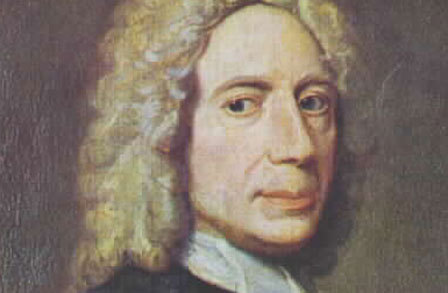
Service to Thee, and sing Thy praises too. —Isaac Watts (written at age 7)

Poetry Saturday—A Debtor To Mercy Alone

A debtor to mercy alone,
Of covenant mercy I sing,
Nor fear, with God’s righteousness on,
My person and off’rings to bring.
The terrors of law and of God
With me can have nothing to do;
My Savior’s obedience and blood
Hide all my transgression from view. 

The work which His goodness began,
The arm of His strength will complete;
His promise is Yea and Amen,
And never was forfeited yet.
Things future, nor things that are now,
Not all things below or above,
Can make Him His purpose forego,
Or sever my soul from His love. 

My name from the palms of His hands
Eternity will not erase;
Imprest on His heart, it remains
In marks of indelible grace.
Yes! I to the end shall endure,
As sure as the earnest is giv’n;
More happy, but not more secure,
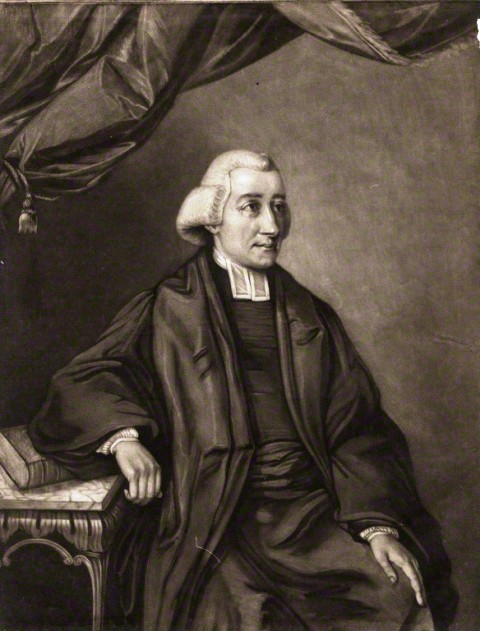
When all earthly ties have been riv’n. —Augustus Toplady

Poetry Saturday—Every Fallen Soul

Every fallen soul, by sinning,
Merits everlasting pain;
But Thy love without beginning,
Has redeem’d the world again:
Countless millions
Shall in life, through Jesus reign.

Pause, my soul, adore and wonder:
Ask, “Oh, why such love to me?” 
Grace hath put me in the number
Of the Saviour’s family:
Hallelujah!
Thanks, eternal thanks to Thee!

Since that love had no beginning,
And shall never, never cease;
Keep, oh, keep me, Lord, from sinning;
Guide me in the way of peace:
Make me walk in
All the paths of holiness.

When I quit this feeble mansion,
And my soul returns to Thee,
Let the power of Thy ascension
Manifest itself in me;
Through Thy Spirit,
Give the final victory.

When the angel sounds the trumpet;
When my soul and body join;
When my Saviour comes to judgment,
Bright in majesty divine,
Let me triumph
In Thy righteousness as mine. —Anonymous

9 Quotes From “Surprised By Paradox”

Jen Pollock Michel has given us a thought-provoking look into her thoughts of some of the and solutions to the either-or challenges many Christians face. Please be sure to check out my full book review by clicking here. 

“Allowing for paradox does not represent a weakened approach to theological understanding. On the contrary, it allows for a robust theology, one that is filled with the sort of awe that not only regards God as unimaginably wondrous but also awakens in us the same desire Moses had to see Him as He is.” 

“As psychologists have described it, awe is ‘the experience of encountering something so vast—in size, skill, beauty, intensity, etc.—that we struggle to comprehend it and may even adjust our world to accommodate it.’ Awe is our slack-jawed response to natural phenomena like waterfalls and childbirth. To feel awe is to confirm a beautiful, wild universe, a world we neither made nor control. … For those of us inclined to religious belief, awe nurtures our certainty about God.”

“Modernity gave us more certainty than uncertainty—or at the very least certainty in certainty. We’ve come to an unassailable confidence that mystery, by dint of inquiry and scientific effort, can be wrestled and pinned down and made to cry uncle. We are no longer victims of the unknowable: we are masters of our own understanding. The great modern lie is one of infinite human autonomy and control.” 

“It is an old sin seduced by an old lie that we can be like God, perfectly knowing as He knows.… As soon as we think we have God figured out, we will have ceased to worship Him as He is.” 

“I also get tricked into thinking that the world must quiet around me if I mean to meet God. I forget the paradox of the burning bush: that Moses met God at Horeb on an unspectacular day, that his encounter with God was less planned and more happenstance. God did not speak to Moses as the prophet sat cross-legged and silent, his hands folded in reverent to prayer. God blazed up in the landscape of an ordinary Wednesday afternoon. This seems to be how it goes with God: a spiritual life is a material one.” 

“The paradox of God’s story is that He’s chosen to write its timelessness in the ticking heart of His Son and that He’s choosing to write it in our ticking hearts too.” 

“If the kingdom is good news, it surely isn’t safe. Because there is no square inch of our lives Jesus doesn’t intend to rule.” 

“To define grace apart from the Cross would be to say that God is simply given to leniency. It would be to essentially say that there are rules which we break and break badly, but God reassures us kindly that ‘it’s no big deal.’… The Cross speaks a thundering word about the cosmic big deal that is sin.” 

“To receive grace, we need humility. The only prerequisite for grace is empty hands. We have done nothing to make God notice us, and He is not impressed by us.” 

14 Quotes From “Studies In The Sermon On The Mount”

Oswald Chambers has unlocked the Sermon on the Mount for me like no other Bible commentator has before—deeply and practically. Check out my full book review by clicking here. I have already shared numerous passages from this book in my weekly “Thursdays With Oswald” series, but here are some other quotes that caught my eye as well. 

“Beware of placing our Lord as a Teacher first instead of Savior. That tendency is prevalent today, and it is a dangerous tendency. We must know him first as Savior before His teaching can have any meaning for us, or before it can have any meaning other than that of an ideal which leads to despair. … If Jesus is a Teacher only, then all He could do is to tantalize us by erecting a standard we cannot come anywhere near. But if by being born again from above we know Him first as Savior, we know that He did not come to teach us only: He came to make us what He teaches we should be. The Sermon on the Mount is a statement of the life we will live when the Holy Spirit is having His way with us.” 

“The disadvantage of a saint in the present order of things is that his confession of Jesus Christ is not to be in secret, but glaringly public. It would doubtless be to our advantage from the standpoint of self-realization to keep quiet, and nowadays the tendency to say—‘Be a Christian, live a holy life, but don’t talk about it’—is growing stronger. Our Lord uses in illustration the most conspicuous things known to men—salt, light, and a city set on a hill—and He says, ‘Be like that in your home, in your business, in your church; be conspicuously a Christian for ridicule or respect according to the mood of the people you are with.’” 

“Our Lord goes to the root of the matter every time with no apology. Sordid? Frantically sordid, but sin is frantically sordid, and there is no excuse in false modesty, or in refusing to face the music of the devil’s work in this life. Jesus Christ faced it and He makes us face it too. Our natural idea of purity is that it means according to obedience to certain laws and regulations, but that is apt to be prudery. There is nothing prudish in the Bible. The Bible insists on purity, not prudery.” 

“All our righteousness is ‘as filthy rags’ unless it is the blazing holiness of Jesus in uniting us with Him until we see nothing but Jesus first, Jesus second, and Jesus third. Then when men take knowledge of us, they will not say that we are good men, that we have a wonderful whiteness, but that Jesus Christ has done something wonderful in us.” 

“The Spirit of God comes through the different writers with the one steady insistence to stir up our minds (Philippians 2:5; 2 Peter 1:12-13). … Unless we learn to think in obedience to the Holy Spirit’s teaching, we will drift in our spiritual experience without thinking at all. The confusion arises when we try to think and to reason things out without the Spirit of God.” 

“Jesus does not use the illustration of the birds and the flowers by accident, He uses it purposely in order to show the utter unreasonableness from His standpoint of being so anxious about the means of living. Imagine the sparrows and blackbirds and thrushes worrying about their feathers! Jesus says they do not trouble about themselves at all, the thing that makes them what they are is not their thought for themselves, but the thought of the Father in heaven. A bird is a hard-working little creature, but it does not work for its feathers, it obeys the law of its life and becomes what it is. Jesus Christ’s argument is that if we concentrate on the life He gives us, we will be perfectly free for all other things because our Father is watching the inner life. We have to maintain obedience to the Holy Spirit, Who is the real principle of our life, and God will supply the ‘feathers,’ for are we not ‘much better than they’?” 

“We enthrone common sense as Almighty God and treat Jesus Christ as a spiritual appendage to it.” 

“At the bar of common sense Jesus Christ’s statements are those of a fool; but bring them to the bar of faith and the Word of God, and you begin to find with awestruck spirit that they are the words of God.” 

“No man is born with character; we make our own character. When the man is born from above a new disposition is given to him, but not a new character; neither naturally nor supernaturally are we born with character. Character is what a man makes out of his disposition as it comes in contact with external things. A man’s character cannot be summed up by what he does in spots, but only by what he is in the main trend of his existence.” 

“The Holy Spirit does reveal what is wrong in others, but His discernment is never for purposes of criticism, but for purposes of intercession.” 

“Prayer is not only asking, it is an attitude of heart that produces an atmosphere in which asking is perfectly natural, and Jesus says, ‘everyone who asks receives.’” 

“Fasting is much more than doing without food, that is the least part, it is fasting from everything that manifests itself-indulgence.” 

“When we are saved by God’s grace, God puts into us the possibility of not sinning, and our character from that moment is of value to God. Before we were saved we had not the power to obey, but now He has planted in us on the ground of Redemption the heredity of the Son of God, we have the power to obey, and consequently the power to disobey. The walk of a disciple is gloriously difficult, but gloriously certain. On the ground of the perfect Redemption of Jesus Christ, we find that we can begin now to walk worthily.” 

“Never trust the best man or woman you ever met; trust the Lord Jesus only. … We are never told to follow in all the footsteps of the saints, but only in so far as they have obeyed God.” 

Thursdays With Oswald—Christ’s Idea Of Social Reform

Oswald ChambersThis is a weekly series with things I’m reading and pondering from Oswald Chambers. You can read the original seed thought here, or type “Thursdays With Oswald” in the search box to read more entries.

Christ’s Idea Of Social Reform

     Humility and holiness always go together. Whenever hardness and harshness begin to creep into the personal attitude towards another, we may be certain we are swerving from the light. The preaching must be as stern and true as God’s Word, never water down God’s truth; but when you deal with others never forget that you are a sinner saved by grace, wherever you stand now. If you stand in the fullness of the blessing of God, you stand there by no other right than the sheer sovereign grace of God. … 

     Today the great craze is socialism, and men are saying that Jesus Christ came as a social reformer. Nonsense! We are the social reformers; Jesus Christ came to alter us, and we try to shirk our responsibility by putting our work on Him. Jesus alters us and puts us right; then these principles of His instantly make us social reformers. They begin to work straightway where we live, in our relationship to our fathers and mothers, to our brothers and sisters, our friends, our employers, or employees. “Consider how God has dealt with you,” says Jesus, “and then consider that you do likewise to others” [Matthew 7:12]. 

From Studies In The Sermon On The Mount

Jesus taught us to pray, “Your kingdom come, Your will be done on earth as it is in Heaven.” Our lives are meant to be living answers to this prayer. 

We must be so immersed in God’s grace and love that we have a burning passion for everyone else to know this grace and love for themselves. I want to do for others what God has done for me. So as Jesus has changed my heart and my paradigm, I now become a “social reformer” in the places God has placed me—in my family, at my workplace, in my community. 

Jesus isn’t going to change society. The Holy Spirit changes us, and then we can lead God-honoring social reforms right where we are. 

“Consider how God has dealt with you, and then consider that you do likewise to others.”

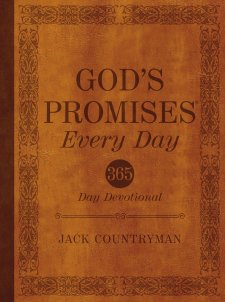
9 Quotes From “God’s Promises”

God’s Promises by Jack Countryman is a wonderful resource to help you use the Bible to enhance your prayer life and build your faith. Check out my full review of this fantastic book by clicking here.

“Each day we can look forward to God’s Spirit going before, clearing the way, leading the path, and giving us the guidance we need. … But God doesn’t stop at mere survival. He doesn’t just satisfy and strengthen. Though there will be difficulties and times of drought in our lives, God guides us to His living waters. He enables us to flourish ‘like a watered garden,’ where His blessings always bloom.” [Isaiah 58:11] 

“When life darkens our door with its troubles and trials, satan wants nothing more than for us to feel forsaken and alone—but we are not! God stands by our side; He guides, counsels, and comforts. Rest assured, no matter what you face in the coming year, nothing can separate you from the love of your Father (Romans 8:38-39). Therefore walk boldly into each new day, knowing that you follow the footsteps of the One who never leaves you.” [Deuteronomy 31:8] 

“Troubles are never pleasant at the time, but they quickly turn into tools when entrusted to God. Our Lord will take our times of troubles and trials—even the hard feelings we experience in them—then use them to teach us to fully rely on Him and His provision.” [Psalm 138:7] 

“Our God is a loving God, but He isn’t Santa Claus or a genie in a bottle. Our God loves to give good gifts, but in His economy the best gifts are not tangible or material. Yes, our God feels compassion when we hurt, but He still allows hardships into our lives that will refine our character and strengthen our faith. Against the backdrop of these truths, we can better understand the often-misread statement that God will give us the desires of our hearts. The real promise of this verse is that, as we pray, read His Word, and grow closer to the Lord, He will change our hearts so that what we desire for ourselves is what He desires for us.” [Psalm 37:4] 

“Mercy. We don’t deserve it. We haven’t done—can’t possibly do—anything to earn it. And yet we are promised that this unbelievably lavish gift is ours when we choose to follow Jesus. Why? Why would such a perfect and powerful God gives such a gift to ones so undeserving? He tells us in Titus 3:4: because of ‘the kindness and love of God our Savior toward man.’ And He not only gave us mercy, He also ‘poured out on us abundantly’ His own Spirit, to live and work within us, making us more and more like the Savior who died to save us.” [Titus 3:4-6] 

“Our God is not some fickle, capricious, changeable sort of God. He does not search out ways to be angry or displeased with His people. In fact, He so wants to be pleased with us that He gave us the example of His Son to follow.” [Ephesians 5:2] 

“When our burdens and sorrows seem too heavy for us to bear, God offers to carry them for us, inviting us to cast them upon Him (Psalm 55:22). And when the sorrow is so great that we feel we cannot put one foot in front of the other, God gives us this promise: ‘I will carry you; I will sustain you’ (Isaiah 46:4).” 

“Perhaps nothing is as devastating as being betrayed by someone you love and trust. Know that Jesus—betrayed by Judas, denied by Peter—fully understands. He will enable you to recover. The key, as hard as it is, is to pray for that person and ask God to bless him or her. When you pray to God—and you may have to do this again and again—you release the anger and disappointment that come with being betrayed. It is difficult to despise someone you lift up in prayer. And though retaliating is a natural response, it’s not a godly one. Praying is always the best option. Allow the Lord to receive your hurt and to replace it with His peace.” [Psalm 3:4, 6] 

“When we place our faith in Christ, the stormy seas of our lives—churned up by our own sins—are stilled. And while the storms may still rage around us in this sin-plagued world, they do not rage within us. That does not mean our troubles and tribulations are over, but it does mean we can rest in knowing God will see us through them.” [Romans 5:1]