Listen to the podcast of this post by clicking on the player below, and you can also subscribe on Apple, Spotify, or Audible.
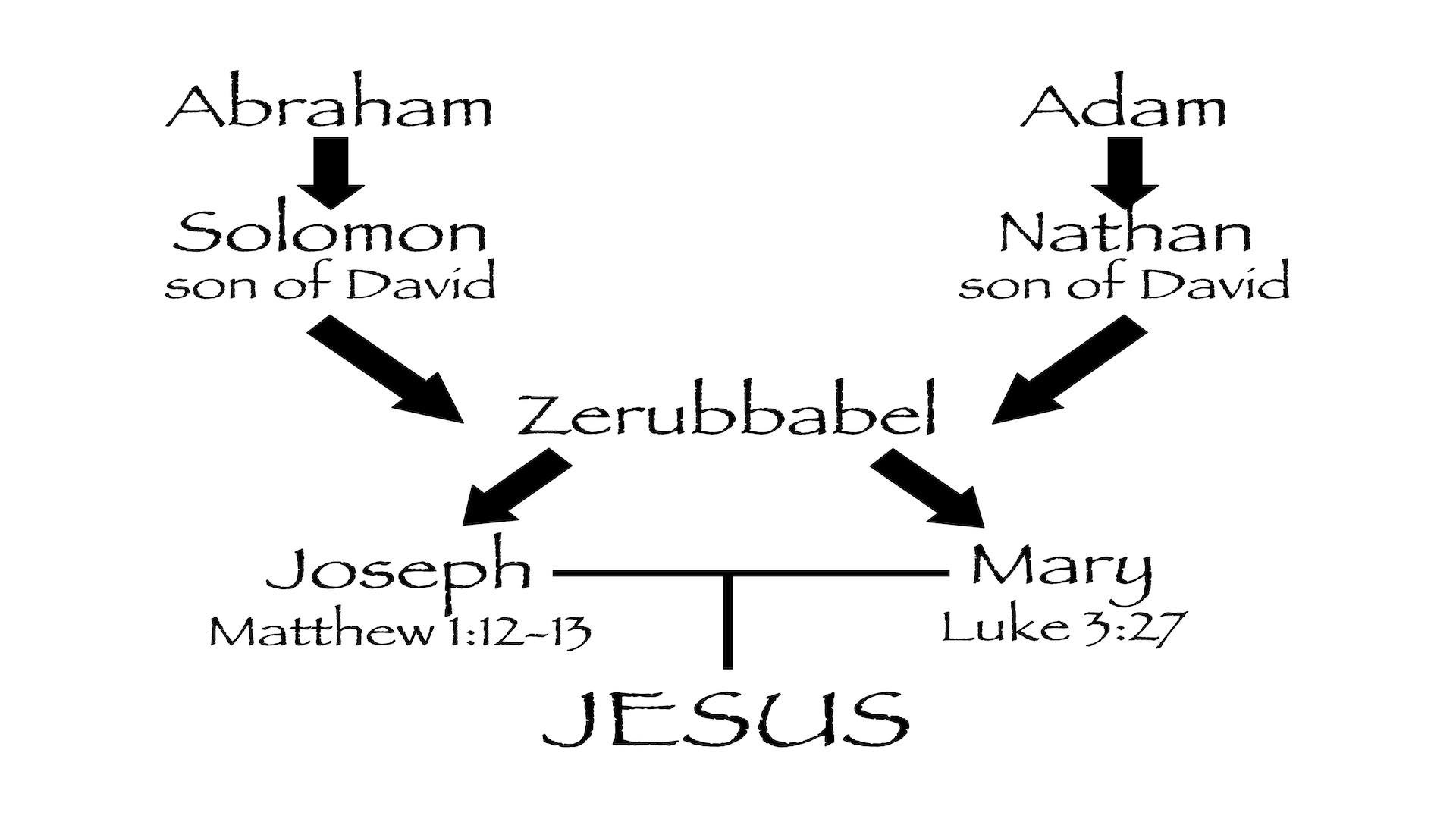
God foretells that He will make governor Zerubbabel “like My signet ring.” This means that Zerubbabel would have God’s supreme authority—he could speak for God.
How could this happen? Zerubbabel couldn’t do it himself, but God sovereignly placed him in the family lines of both Joseph and Mary. This family lineage of Jesus Christ carried BOTH the covenant-fulfilling, kingly authority that traced back to Abraham AND the satan-crushing promise given to Adam’s human line.
Jesus joined these two promises through Zerubbabel the signet ring. Jesus became God’s Ultimate Signet Ring so that now every promise is “Yes” in Him. This mens every time we pray and claim promises in God’s Word, Jesus adds His stamp of authority—His “Amen!”—to our prayers (see 2 Corionthians 1:20).
Listen to the podcast of this post by clicking on the player below, and you can also subscribe on Apple, Spotify, or Audible.
At the window of my house I looked out through the lattice. I saw among the simple, I noticed among the young men, a youth who lacked judgment. He was going down the street near her corner, walking along in the direction of her house at twilight, as the day was fading, as the dark of night set in. Then out came a woman to meet him, dressed like a prostitute and with crafty intent. …
With persuasive words she led him astray; she seduced him with her smooth talk. All at once he followed her like an ox going to the slaughter…. Many are the victims she has brought down; her slain are a mighty throng. Her house is a highway to the grave, leading down to the chambers of death. (Proverbs 7)
Solomon tells us that we know the place—her corner, her street, her house.
Solomon tells us that we know her goal—she came out to meet him with crafty intent.
Solomon tells us that we know her strategy—speaking lies with a brazen face, speaking words that are seductive, persuasive, smooth, and with an outfit to match the vocabulary.
Solomon tells us we know the outcome—her victim is brought down into the chambers of death.
The Bible never counsels us to fight sexual sin, but it says we should flee sexual sin. Stronger people than me have been sucked into the quicksand of sexual temptation.
It sounds innocent enough (“it’s just a little flirting”). It sounds harmless enough (“there’s no harm in looking”). It sounds tame enough (“who will ever know?”). But her slain are a mighty throng!
Solomon also tells us the way to avoid sexual sin—keep God’s words close by, store up His commands in your heart, keep wise and God-fearing friends around you, and stay away from her corner, her street, her house.
This is not a trivial thing. I’m no match for the silky seduction of sexual temptation! Flee! Run away! Don’t even get close to it! Jesus said that drastic steps may be needed—get rid of your computer, stop watching TV alone, get a new job.
Don’t fight it—flee it! Your best strategy is to stay as far, far away as possible. Let me say it again: You are no match for the crushing power of sexual temptation, so FLEE!
Listen to the podcast of this post by clicking on the player below, and you can also subscribe on Apple, Spotify, or Audible.
Have you ever heard this truism: The person with an experience is never at the mercy of the person with an argument?
There are, sadly, many who deny the reality of God’s divine healing for today. They may say God healed in the past, but that age has passed, or they may simply deny all supernatural activity. I have the best reply to these skeptics or deniers—and you may have this same reply: God does heal today; I know this is true because He has healed me!
Our truth statement about this says: “Divine healing is an integral part of the gospel. Deliverance from sickness is provided for in the atonement, and is the privilege of all believers.” Let me break this down into three parts.
(1) “Divine healing is an integral part of the gospel.” After that word “integral” I’d like to insert the word “indisputable.” When God does the miraculous, it is an undeniable proof of His love and power. A great story to prove this point is when Jesus healed a paralytic after He forgave him of his sins (Luke 5:17-26).
Notice how the people responded: Everyone was amazed and gave praise to God. This glory to God has always been the reason God performs miracles (see Mark 6:7-13; Acts 2:43; Acts 3:9-12).
(2) “Deliverance from sickness is provided for in the atonement.” I like to remember that the word atonement means “at-onement” and stands opposed to disease which I like to say as “dis-ease.” Sin is our ultimate dis-ease—the ultimate separator—so Jesus took care of both our spiritual dis-ease and our physical dis-ease when He died on the Cross for us, just as Isaiah prophesied. That’s why the New Testament also shows us salvation and healing frequently being linked together (Acts 10:38; 8:4-8).
(3) “And is the privilege of all believers.”ALL believers, not just a select few and not just those who lived at the time of the first apostles.
Divine healing has been—and always will be—an integral and indisputable part of the gospel precisely because it exalts God as THE Healer.
Many people today still believe what the disciples of Jesus believed: Disease is a consequence of personal sin. In addressing this misunderstanding, Jesus said that disease was “so that the work of God might be displayed” in the life of the one about to be healed. He said something similar while at the graveside of Lazarus, before he raised that dead man back to life (John 9:1-38; 11:4-45).
Sometimes God heals us now, but ALWAYS He heals us in our glorified bodies (2 Corinthians 12:9-10; 5:1-9; Revelation 21:4). Our patience and hope in our future, ultimate healing glorifies God in the present.
By faith in Jesus we can claim that “by His stripes we have been healed” (1 Peter 2:24). The verb tense Peter uses means we have been healed, we are being healed now, and we will be ultimately healed in Christ’s eternal presence. Whether we are healed here or not, we can live knowing that His healing power always brings Him glory and always draws people to Him, so don’t hesitate to keep on asking Him for His healing touch on your body and soul.
Listen to the podcast of this post by clicking on the player below, and you can also subscribe on Apple, Spotify, or Audible.
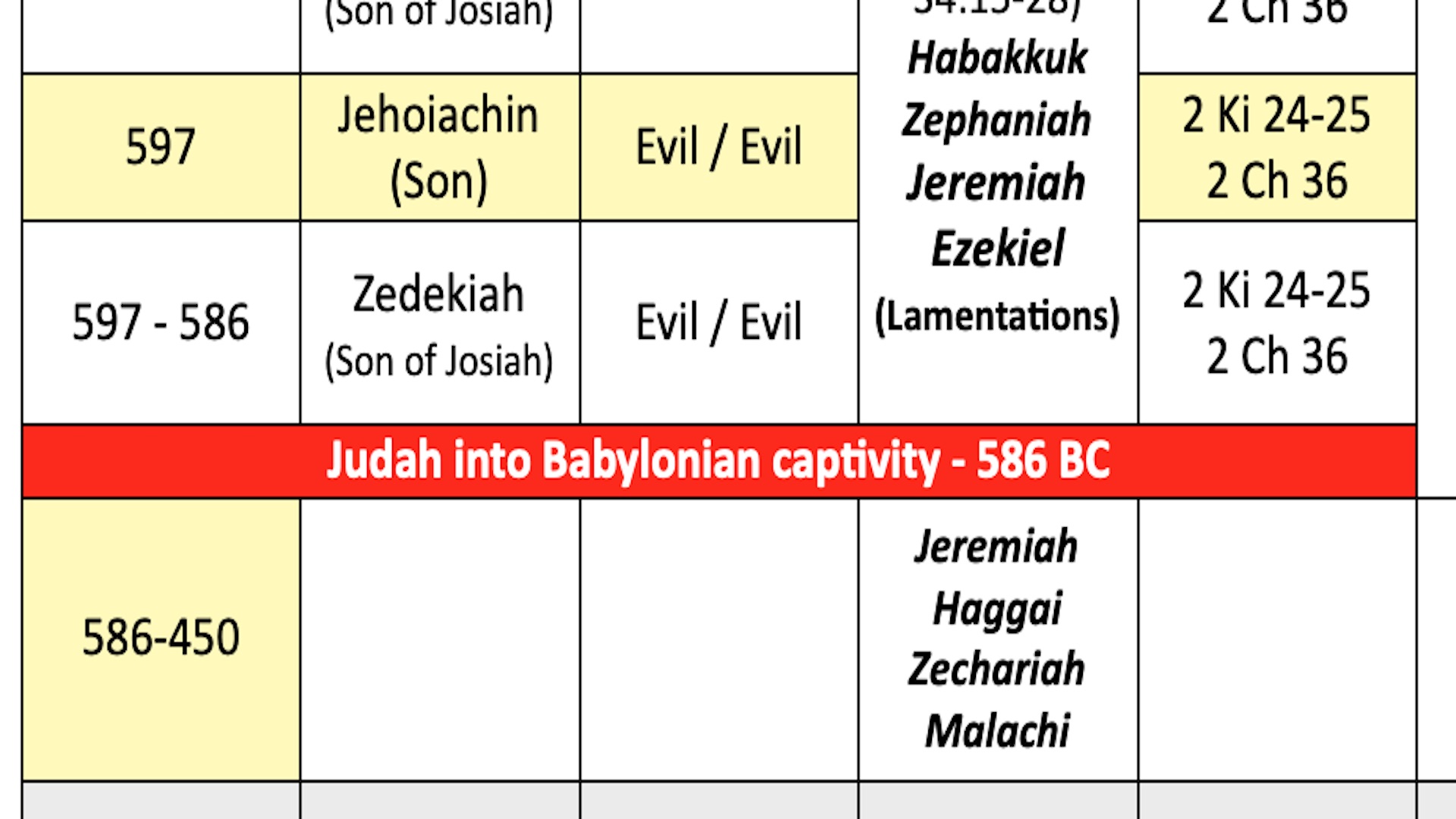
Haggai appears on the historical scene for just five months, but what a bright light he shines! He is the first of three post-exilic prophets to encourage the Israelites who have returned to Jerusalem.
Before we talk about Haggai’s ministry, we need a brief grammar lesson. Specifically, let’s look at two prefixes: un- and non-. Both of them ultimately mean “not,” but there is a distinction that we need to consider when it comes to the Bible:
unbiblical would mean something contrary to the teaching of the Bible
non-biblical is something that may or may not be correct, but it’s not specifically mentioned in the Bible
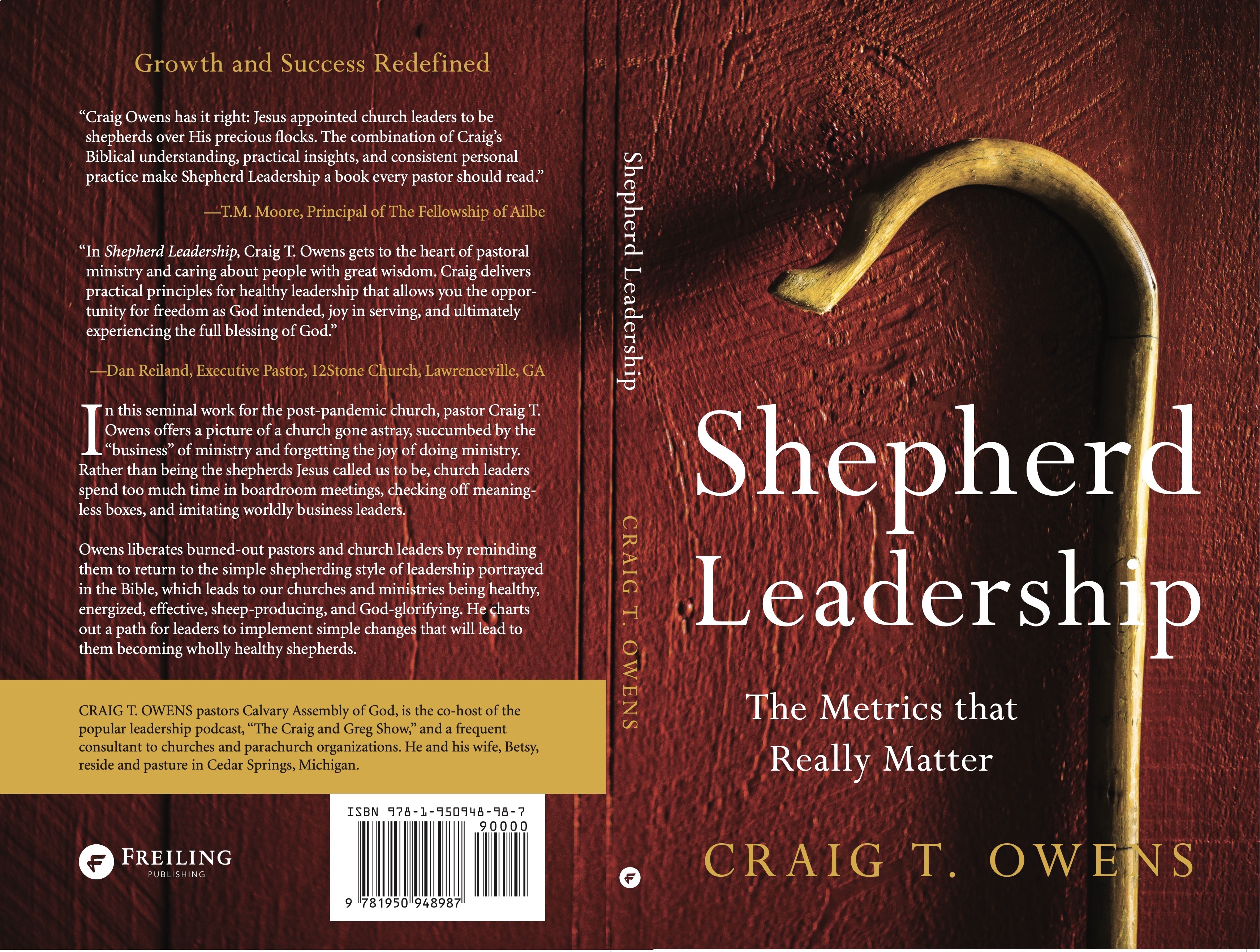
Let me give you an example from my book Shepherd Leadership: The Metrics That Really Matter. Chris asked me whether I preferred the title senior pastor or lead pastor. This is a non-biblical issue; that is, it doesn’t really matter to me because neither of those titles are found in the Bible. Technically, the word pastor isn’t in the Bible either. The word that is usually translated “pastor” is really a herdsman or a shepherd.
The problem is that if we put too much focus on non-biblical things, those things can end up becoming unbiblical pursuits. Like when Jesus took the Pharisees to task for their focus on traditions over Scripture (see Matthew 15:1-6). I wrote Shepherd Leadership mainly to get pastors and church leaders to spot non-biblical metrics which may have sneakily turned into unbiblical pursuits, so that they could return to pure biblical principles. In the Preface of my book, I wrote—
“My larger concern is that churches, parachurch organizations, and nonprofit ministries that are largely founded to fulfill a biblical mandate are straying from the simple, freeing truths found in the Bible. Or maybe I should say that they are adding things to their ministries that aren’t in the pages of Scripture. Whichever way you want to say it, the result is the same: We are using the wrong metrics to define ‘success’ for our ministries. I fear that in our focus on unbiblical practices, we are missing the joy of really doing ministry.”
Haggai calls God’s people to return to God’s Word. This is the second-shortest book in the Old Testament (at just 38 verses long), yet Haggai says something like “this is what God says” 28 times in these 38 verses!
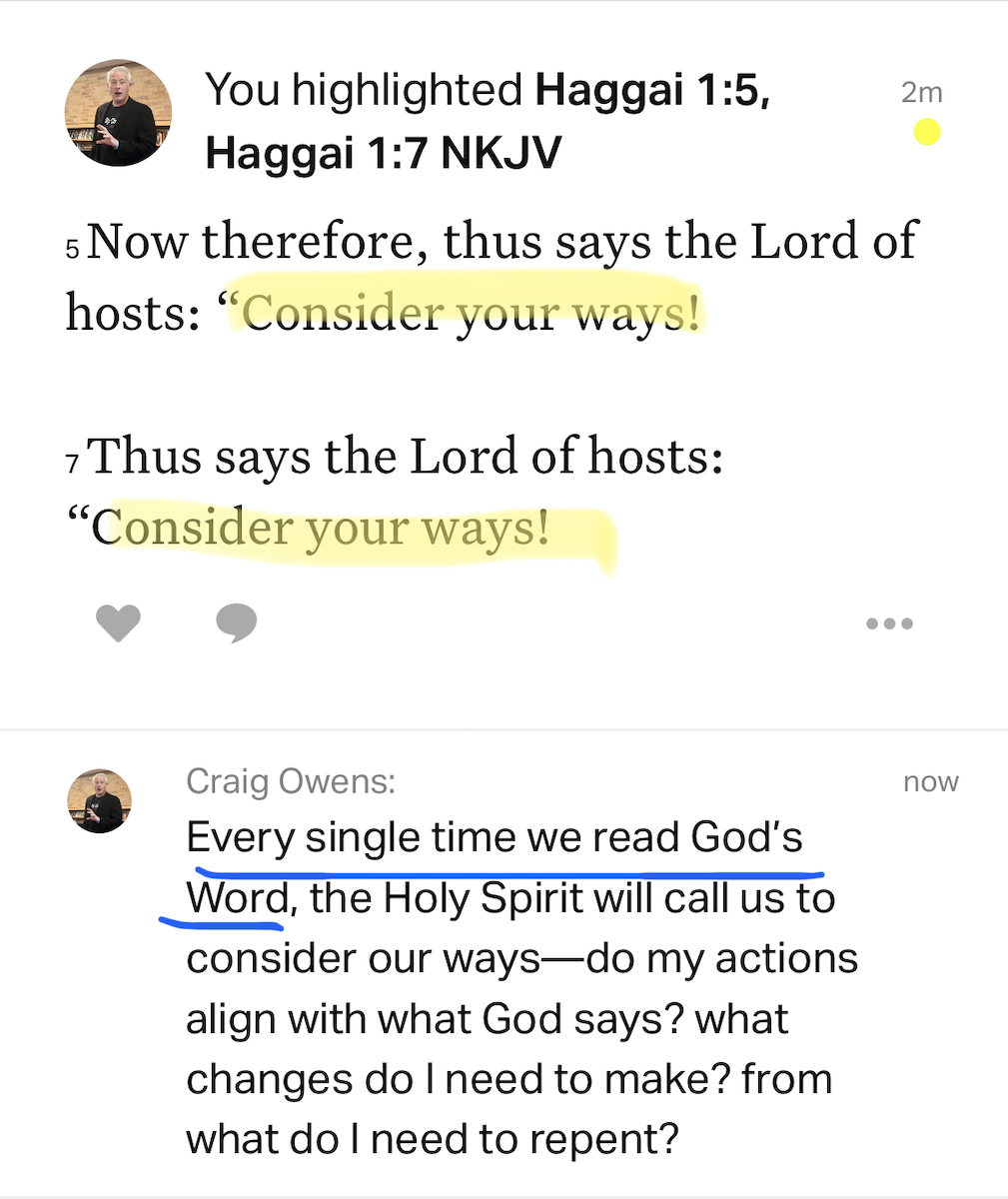
Haggai also records five times that God says, “Give careful thought to your ways.” This phrase literally means to take a strong hold on each thought and examine it intensely. This idea is always connected to a phrase like, “This is what the Lord Almighty says” (1:5, 7; 2:14-15, 17-18). In other words, we are to thoughtfully examine our lifestyle with God’s Word being THE standard of measurement.
Paul made a similar connection in the New Testament: We demolish arguments and every pretension that sets itself up against the knowledge of God, and we take captive every thought to make it obedient to Christ (2 Corinthians 10:5).
Jesus did this too. When speaking to the religious leaders, He said, “You are wrong because you know neither the Scriptures nor God’s power” (Matthew 22:29). And even with His own disciples, He had to open their minds to see how the Scriptures pointed to Him and were fulfilled in Him (Luke 24:25-27, 44-45).
Indeed, the phrase “it is written” is used 75 times in the New Testament!
That’s why Haggai’s words still ring true to us today: “Give careful thought” to how you live in light of how God says you should be living. Christians need to…
We must become people of the Word of God or else we run the very real risk of letting our non-biblical decisions spiral downward into a sinful, unbiblical lifestyle that grieves the heart of God.
Listen to the podcast of this post by clicking on the player below, and you can also subscribe on Apple, Spotify, or Audible.
My son, do not forget my teaching, but keep my commands in your heart (Proverbs 3:1).
A better translation of this verse would be like this: My son, keep on not forgetting my teaching, but keep on keeping my commands in your heart.
Or, as Jesus said it, “My Father is always working, and so am I” (John 5:17).
Always workING.
It’s a continuous action. We don’t make a one-time commitment and then coast through the rest of our life. To help us with this, in the third chapter of Proverbs, Solomon shows us God’s blessings on an “ING” lifestyle. That is, the blessings on the right kinds of “ING.”
If I am keepING God’s commands, He is prolongING my life and bringING me peace (vv. 1, 2).
If I am bindING love and faithfulness to my heart, I am winnING favor and a good name (vv. 3, 4).
If I am trustING God and leanING on His wisdom, He is directING me onto the best paths (vv. 5, 6).
If I am fearING God and shunnING evil, He is bringING health to me (vv. 7, 8).
If I am honorING God with my firstfruits, He is continually fillING me to overflowing (vv. 9, 10).
If I am not despisING God’s discipline, I am findING wisdom and gainING understanding (vv. 11-18).
If I am preservING sound judgment and discretion, I am walkING in safety, sleepING sweetly, and experiencING no fear (vv. 19-26).
If I am not withholdING good from those in need, not plottING harm against others, not accusING nor envyING my neighbor, then God is blessING my home, showING me favor, and making sure I am inheritING honor (vv. 27-35).
The apostle Paul reminds us, “So let’s not get tired of doING what is good. At just the right time we will reap a harvest of blessing if we don’t give up” (Galatians 6:9).
Listen to the podcast of this post by clicking on the player below, and you can also subscribe on Apple, Spotify, or Audible.
In the Foreword to my book Shepherd Leadership: The Metrics That Really Matter, Dick Brogden observes, “God plucked David from the sheepfold. God chose a sheep to be a shepherd. And though we all are stupid sheep, when God plucks us out of obscurity to serve others, we can have the humble confidence for as long as we are asked to lead that God has chosen us. That confidence both faithfully drives us to our knees and fearlessly propels us against our giants. It is good to be a sheep; it is good to be an under-shepherd. Just remember you are stupid, chosen by the Wise One, and as long as you serve as a shepherd, you and your flock will be safe.”
How true it is that all of us are sheep. The role of the shepherd is to care for the sheep and create a healthy environment for them. The role of healthy sheep is to reproduce more sheep. In this, both shepherds and sheep are ministers—we all minister to those God has placed around us.
God calls all Christians to be ministers. The Church is the sheepfold that equips us, but then we must go out to minister in a way that will bring lost sheep to a personal relationship with Jesus.
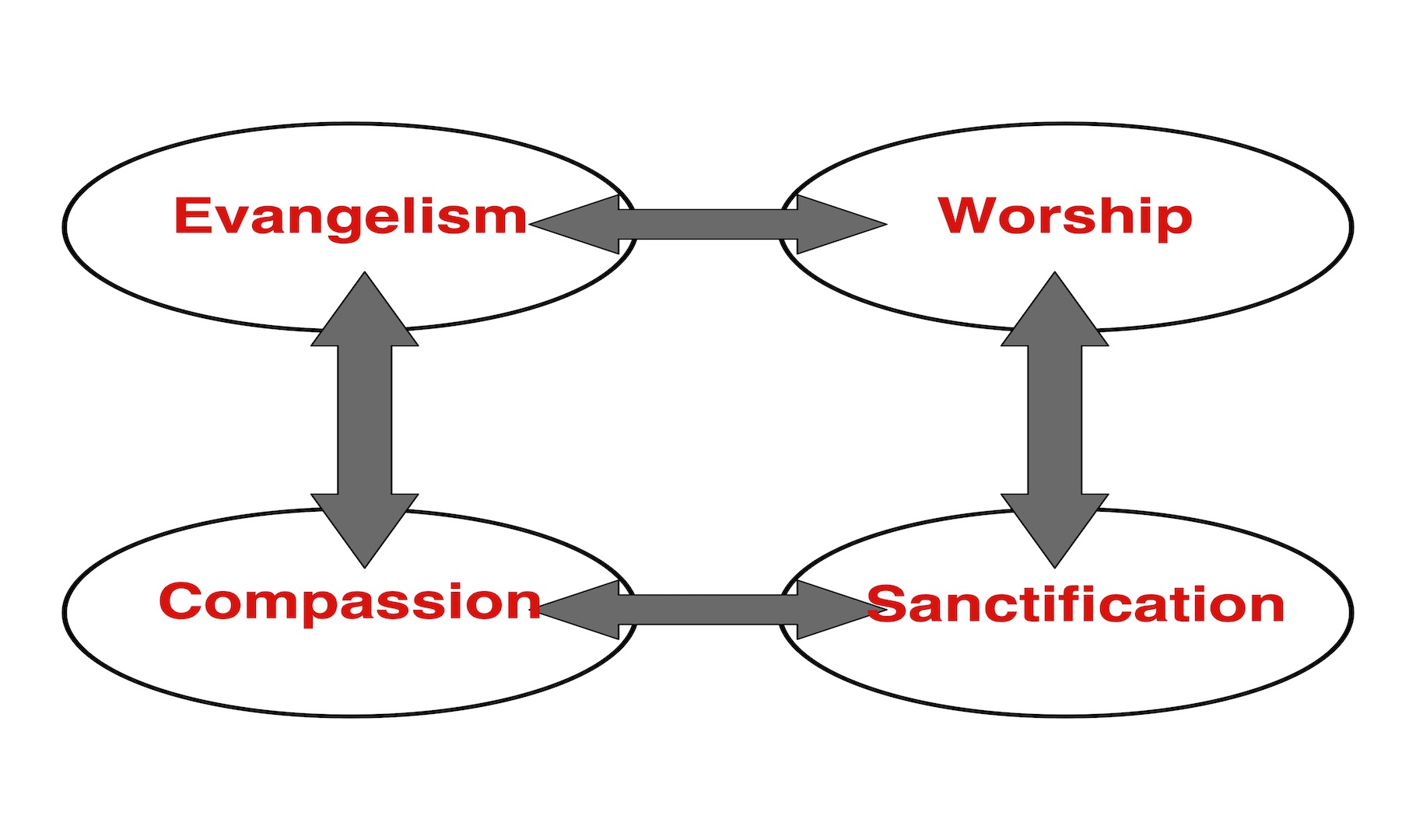
Our foundational truth statement about church ministry says: A divinely called and scripturally ordained ministry has been provided by our Lord for the fourfold purpose of leading the Church in evangelism, worship, sanctification, and compassion.
(1) Evangelism. When we looked at the foundational belief about the Church, we noted that it’s not either-or—evangelism or discipleship—but it’s both-and. Christians are being the Church when they are intentionally living in a way that makes Jesus known (Matthew 10:1, 7-8; 28:18-20).
(3) Sanctification. Remember that we are all in-process of becoming saints (I like to remember this by calling it saint-ification). We need each other to do this, which is why God gives gifts to bring out Christ-like maturity in us (Ephesians 4:1-7, 11-16).
So here are two important questions we need to ask ourselves: (1) Am I doing quality work? (2) Am I faithfully doing my work?
To help answer those questions, I like this thought from Leonard Sweet’s book I Am A Follower: “The most important metrics we must rely on, the crucial ‘deliverables’ we can present, must focus on the newly formed lives of the disciples we are making, the followers who are following Christ into a place of serving Him by serving others. The most important measure of our faithfulness to Christ must be the extent of transformation into the living image of Christ Himself. … The quantifiable fruit of our church is not found in the number of people we can gather on a weekly basis. What counts is what is happening in the lives of those who have gathered.”
These are questions we should all ask the Holy Spirit to reveal to us:
What is happening in my life?
Am I telling others about Jesus?
Am I worshipping God so consistently that everyone can see it?
Am I maturating as a saint and am I helping other saints mature?
Is my faith seen in my compassionate actions?
Our individual answers to those questions will determine the success of our individual churches, which will ultimately determine the effectiveness of the global Church of Jesus Christ. I hope you will take some time to consider these questions for yourself.
This is a weekly series with things I’m reading and pondering from Charles Spurgeon. You can read the original seed thought here, or type “Thursdays With Spurgeon” in the search box to read more entries.
Listen to the podcast of this post by clicking on the player below, and you can also subscribe on iTunes or Spotify.
Present Communion With Jesus
The desire of a renewed soul is to find Christ and to be with Him. … Past communion with Christ is very well: ‘Therefore I will remember Thee from the land of Jordan…’ (Psalm 42:6). But these are only stale meats, and a loving soul wants fresh food every day from the table of Christ. …
A true loving soul, then, wants present communion with Christ. So the question is, ‘Tell me where You feed. Where do You get Your comfort from, O Jesus? I will go there. … Where do You feed Your flock? In Your house? I will go there, if I may find You there. In private prayer? Then I will not be slack in that. In the Word? Then I will read it night and day. Tell me where You feed; wherever You stand as the Shepherd, there will I be, for I want You. I cannot be satisfied to be apart from You. My soul hungers and thirsts to be with You.’
“Without building in sabbath breaks, we run down emotionally, spiritually, mentally, and physically, which means loving God becomes a chore, not a delight (Mark 12:30). This then means loving your neighbor becomes nearly impossible (Mark 12:31). Ultimately, this means that we aren’t able to be the compassionate, wise, strong shepherds that the sheep under our care need us to be. …
“The goal of sabbathing is to infuse more vitality into the shepherd leader for the purpose of pasturing the sheep under that leader’s care. You cannot give hope to others unless you are hope-filled; you cannot give health to others unless you are healthy; you cannot consistently speak wisdom to others unless you are growing in wisdom. All of this healthy growth for the shepherd leader takes place while sabbathing….”
To reiterate what Pastor Spurgeon said: “A true loving soul, then, wants present communion with Christ.” I hope you will always seek that for yourself.
Listen to the podcast of this post by clicking on the player below, and you can also subscribe on Apple, Spotify, or Audible.
Why do Christians say things like, “Let’s go to church” or “Let’s go meet with God”?
Do we forget that Jesus said He would never leave us, or that He sent the Holy Spirit to be our constant Companion, or that our very heart is the temple of God’s presence (Matthew 28:20; John 14:16; 1 Corinthians 3:16)? We are naturally self-focused creatures. It takes discipline on our part to keep reminding and re-reminding ourselves that God is always with us.
Psalm 84 and its two Selahs is one way of re-reminding ourselves of God’s abiding presence. The Selahs are reminders to pause and consider, “Where am I?” and to know that the answer can always be, “Surely I am in God’s presence!”
This psalm is divided into three 4-verse stanzas. Stanzas 1 and 2 end with the call to Selah, and all three stanzas feature a powerful name for God: LORD Almighty. When we see LORD in all capital letters, that is God’s covenant name: Yahweh or Jehovah, which means that He is the “I AM that I AM.” Almighty signifies that He is the invincible, un-defeatable Captain of angel armies.
In these two combined titles, we have the personal intimate God of love and the unstoppable God of limitless power! If He were just the God of love, we may not be able to trust His power. If He were just the God of power, we may not be able to approach Him. He is the All-Loving, Ever-Approachable Power.
Another important recurring theme in Psalm 84 is the word blessed. It’s used three times in this psalm, more than in any other single psalm. This word means God’s unmerited favor, and the word either begins or ends each of the three stanzas.
In stanza 1 (vv. 1-4), twice we have that combined title of LORD Almighty. But we must always remember that our God is not distant and unapproachable, but the sons of Korah call Him “my King” and “my God.” At the end of this first stanza, we are invited to Selah—a pause to praise our glorious King!
Stanza 2 (vv. 5-8) begins with that reminder that we are blessed. The psalmists tell us that God’s blessings flow even in my Valley of Baca (or weeping). With God’s presence surrounding me, I can go from “strength to strength”because the LORD Almighty hears my prayer and responds to my prayer! So at the end of this stanza, we are again invited to Selah—this time it’s a pause to pray to our listening God.
In stanza 3 (vv. 9-12), another important word is featured that reminds us that our God is not a stingy King, but One who delights in His children and wants to lavishes them with His blessings: the word is favor. We read, “look with favor on Your anointed one” and “the LORD bestows favor and honor; no good thing does He withhold from those whose walk is blameless.” God’s favorable blessings flow toward us as eternally as He exists!
This psalm is circular: it begins as it ends, so it invites us to continue to praise, continue to pray, and continue to abide in His presence. We’re called not just to know about God’s presence, but to rejoice in His presence.
It’s one thing to know about God’s omnipresence, but it’s an entirely different thing to abide in God’s omnipresence!
This isn’t something that happens overnight. Brother Lawrence reminds us that this is a progressive revelation for Christians: “One does not become holy all at once. … The more one knows Him, the more one desires to know Him. And as knowledge is commonly the measure of love, the deeper and more extensive our knowledge shall be, the greater will be our love: and if our love of God were great we should love Him equally in pains and pleasures.”
I encourage you to Selah frequently so that you can move from mere head knowledge of God’s presence to becoming intimately aware of His closeness!
This is a weekly series with things I’m reading and pondering from Charles Spurgeon. You can read the original seed thought here, or type “Thursdays With Spurgeon” in the search box to read more entries.
Listen to the podcast of this post by clicking on the player below, and you can also subscribe on iTunes or Spotify.
Active Love
True love next shows itself in obedience. … ‘Tis love that makes our willing feet in swift obedience move.’ We can do anything for those we love, and if we love Jesus, no burden will be heavy, no difficulty will be great. We should rather wish to do more than He asks of us and only desire that He was a little more exacting that we might have a better opportunity of showing forth our affection. …
The apostle says, ‘Let us not love in word or in tongue, but in deed and in truth’ (1 John 3:18). Actions speak louder than words, and we will always be anxious to tell our love in deeds as well as by our lips. The true disciple asks continually, ‘Lord, what do You want me to do?’ (Acts 9:6). He esteems it his highest honor to serve the Lord. …
I believe in an active love that has hands to labor and feet to run as well as a heart to feel, eyes to glance, and ears to listen.
Listen to the podcast of this post by clicking on the player below, and you can also subscribe on Apple, Spotify, or Audible.
Around the world we hear of Christians being persecuted for their faith in Jesus: Afghanistan … N. Korea … China … even in the USA, Christians like Jack Phillips and Barronelle Stutzman are being persecuted for standing up for what they believe.
Jesus said that our persecution should only come “on account of Me.” And Asaph notices the same thing in his prayer, using phrases like “Your enemies,” “Your foes,” “they conspire against Your people,” and “they form an alliance against You.”
I think the first thing we need to consider is our part in bringing on the persecution. I need to ask the Holy Spirit to reveal if I may have been the trigger to the anger of these wicked people. If I have done something, I need to repent, ask forgiveness, and see what I can do to make restitution.
Next, we need to Selah to consider this: It might look desperate, but God has handled these kinds of evil people before. Asaph mentions several enemies of God’s people whom God decisively defeated in the past. Our Selah pause will help us recall that God is the same today as He was yesterday—He is more than able to handle these persecutors.
With all of these bullies ganging up on Israel, you can understand why Asaph cries out for God’s strong action against them. But I want you to notice that the call for judgment is NOT vindictive but redemptive. Asaph asks for punishment “so that men will seek Your name, O LORD” and that they may “know that You, whose name is the LORD—that You alone are the Most High over all the earth.”
In other words, this isn’t a “Get ‘em, God” prayer, but a “Save ‘em, God” prayer!
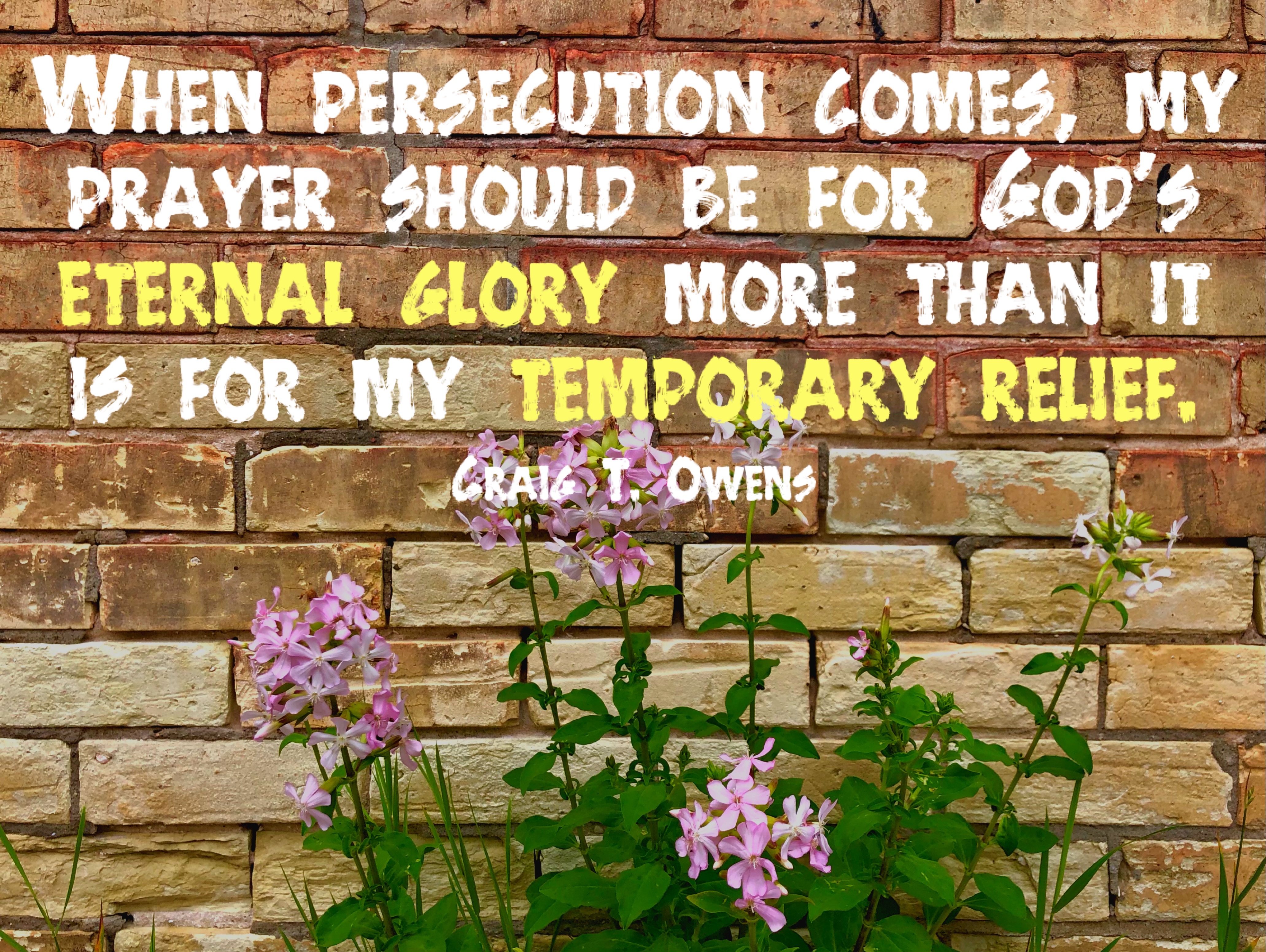
We’re not looking for relief for ourselves—that’s only temporary—but we’re looking for glory for God—that’s eternal!
Jesus and the apostle Peter both tell us that God’s desire is for no one to perish apart from a relationship with Him through Jesus Christ (John 3:16-17; 2 Peter 3:9).
The reason we need to Selah and ask that introspective question about our words or actions triggering our persecutor’s anger is because God will use our righteous response to persecution as a testimony.
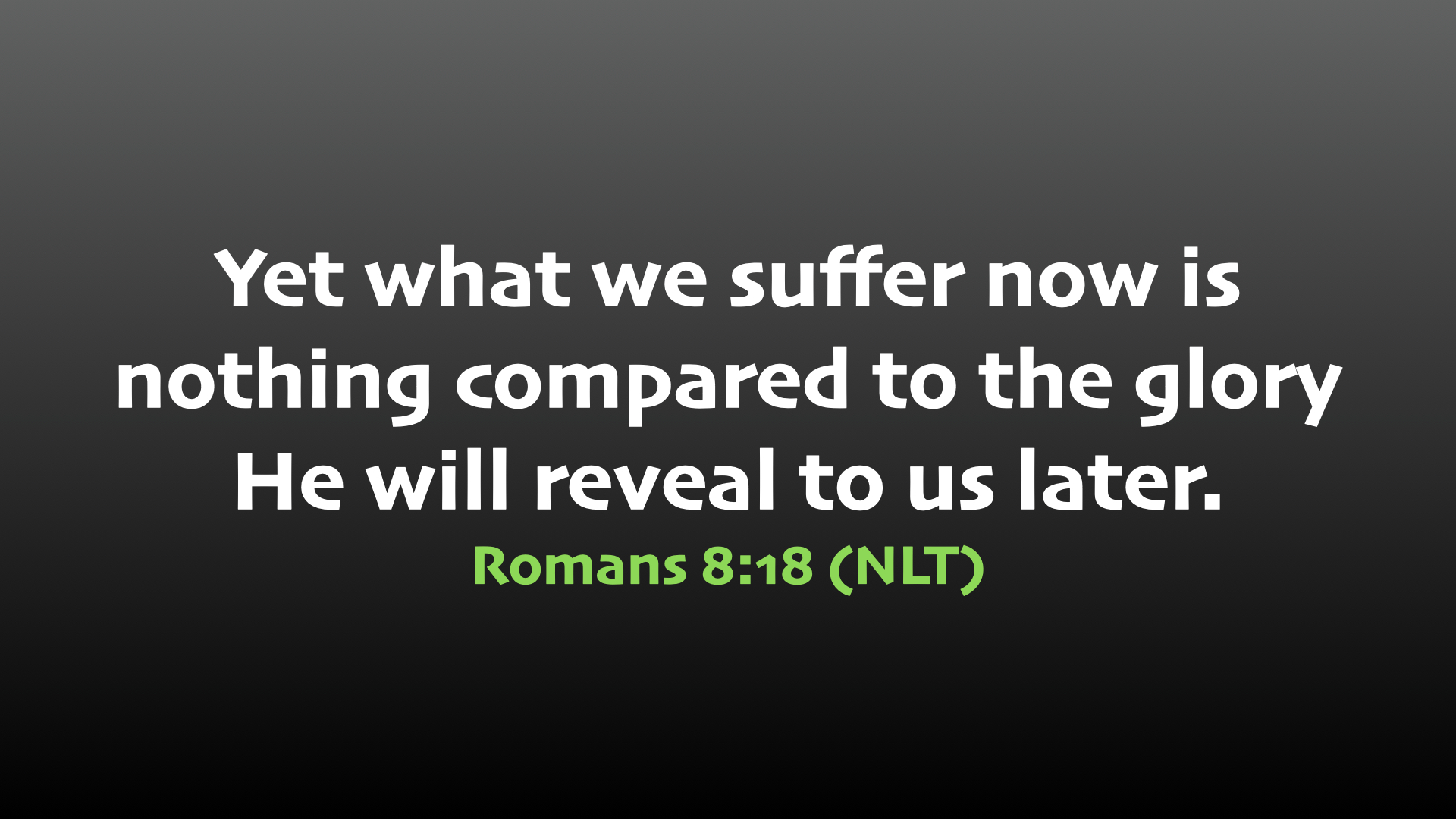
Jesus said our persecution should be because of Him, but He also told us that there would be a blessing in it (Matthew 5:11-12; Mark 13:13; Luke 21:17-19). And Paul tells us that this reward isn’t just a silver lining to a dark cloud, but a reward beyond compare (Romans 8:18).
Asaph went to prayer when Israel was attacked, and that should be our first response too.
But let’s Selah in that prayer to make sure we’re not the trigger, and then may our prayer be more for God’s eternal glory than it is for our temporary relief.



 God foretells that He will make governor Zerubbabel “like My signet ring.” This means that Zerubbabel would have God’s supreme authority—he could speak for God.