When you say, “I don’t know how to do this,” your mind stops looking for answers. But if we simply add one word—“I don’t know how to do this yet”—your mind will stay active. Adding this one word will unleash the creative, solution-finding part of your mind.
“Our preaching ought to have a voice for all classes, and all should have an ear for it. To suit our word to the rich alone is wicked sycophancy, and to aim only at pleasing the poor is to act the part of a demagogue. Truth may be so spoken as to commend the ear of all, and wise teachers seek to learn that acceptable style.” —Charles Spurgeon, Spurgeon And The Psalms
“How did Jesus live among us? He was different things to different people. See if you find yourself on this list.
This is a pretty long article, but it’s quite fascinating to see the engineering behind the artificial intelligence (AI) of ChatGPT.
“God is not afraid of my questions. Am I afraid of His answers?” —Betsy Owens
C.M. Ward was the speaker for the Revivaltime radio broadcast for a quarter of a century. Dan Betzer, who was also involved in these broadcasts, once said that he heard Rev. Ward preach on the story of the prodigal son in Luke 15 more than a dozen times without ever repeating himself. Here is a quick biographical sketch of this influential man’s ministry. I have also shared before my brief encounter with Rev. Ward when I was a young man.
A bonus quote from Charles Spurgeon: “‘No God’ means no law, no order, no restraint to lust, no limit to passion. Who but a fool would be of this mind? What a bedlam, or rather what a battleground, would the world become, if such lawless principles came to be universal!” —Charles Spurgeon, commenting on Psalm 53:1
Listen to the podcast of this post by clicking on the player below, and you can also subscribe on Apple, Spotify, or Audible.
I had a great time on the Thriving In Ministry podcast with Kyle Willis while his podcast partner Dace Clifton was on sabbatical.
There is a profound truth in a simple observation about how Jesus grew: “And Jesus grew in wisdom and stature, and in favor with God and man” (Luke 2:52). Jesus was healthy in all of these areas. That means He had the proper work-rest balance in each of these areas too.
We should learn from this example and find different ways to rest and recover mentally, physically, spiritually, and relationally, just as Jesus did.
I encourage you to take a listen to this part of our conversation.
How can you take a mental rest? Perhaps by reading or listening to something uplifting, or maybe simply taking time to think about what you’ve been thinking about.
For physical rest, you might take a nap, schedule a vacation, or contemplate changing something in your diet.
For spiritual rest, you could sing a worship song or quietly meditate on a passage of Scripture.
For relational rest, you could have breakfast with a good friend or go for a walk with your spouse.
And don’t forget to tap into the wisdom and expertise of others in these areas. Talk with a mental health professional about your mental health, see a doctor about your physical health, visit with a wise mentor to discuss your spiritual health, or see a counselor about your relational health. You don’t have to come up with all of the answers on your own.
The first mental health strategy we learned was asking the Holy Spirit to help us see a new path. Instead of thoughtlessly, automatically allowing our minds to go down the well-worn paths they have always gone down before, the Spirit of Truth can help us see a new path. Let me share our second strategy with you.
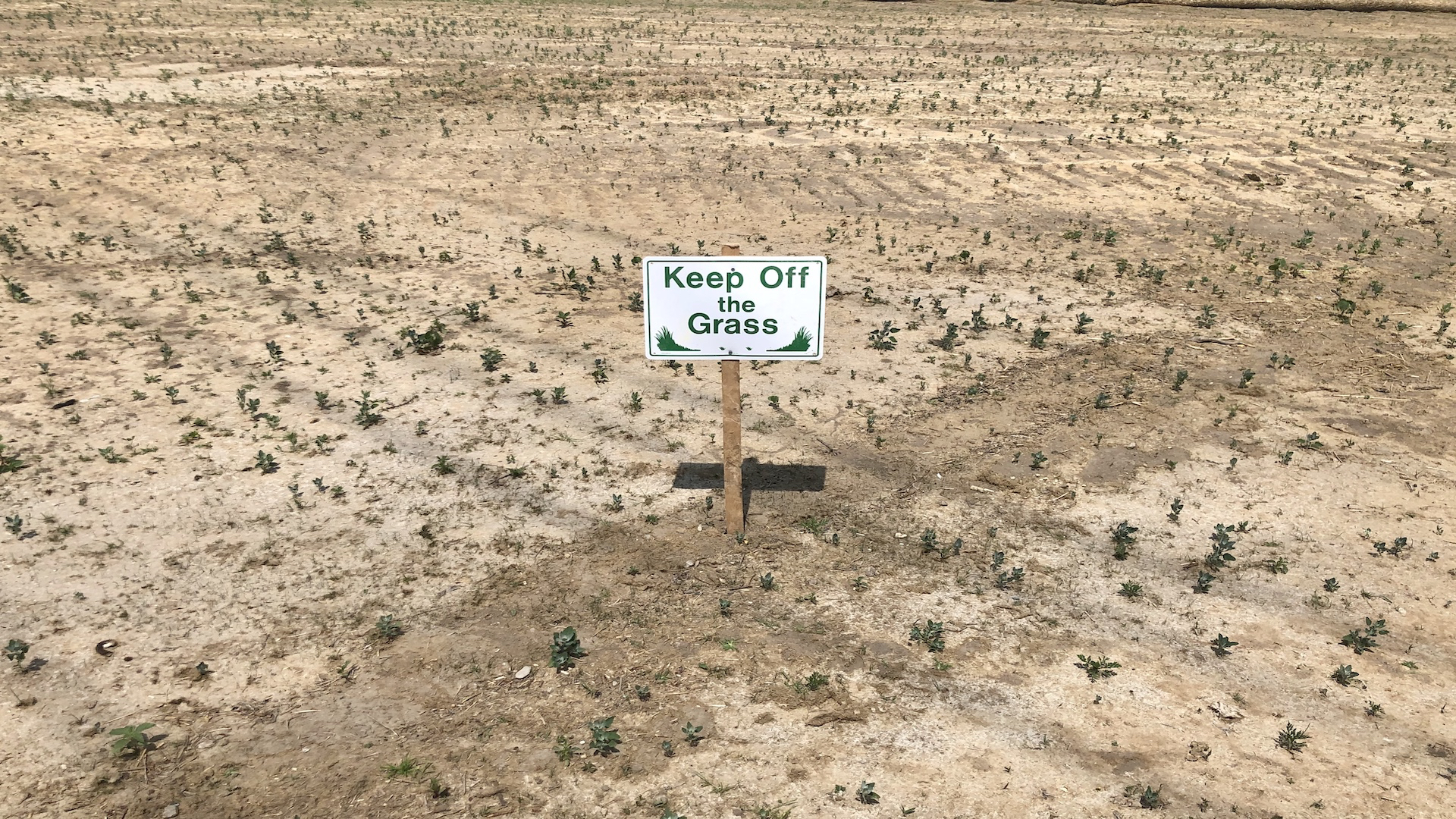
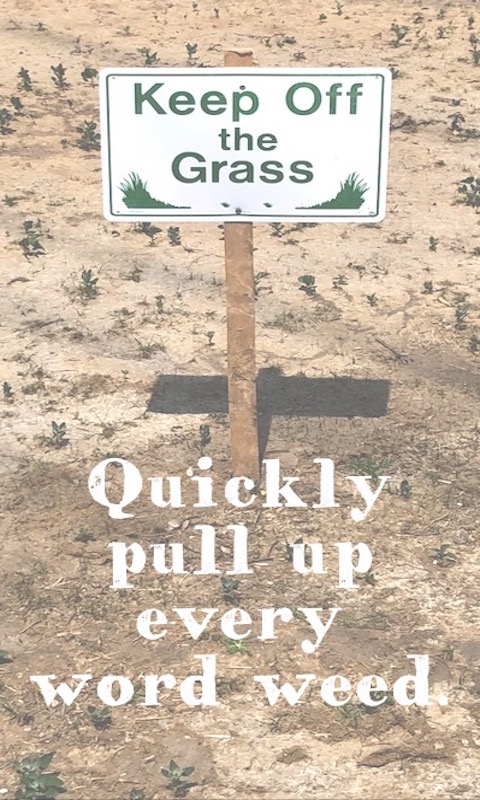
My wife and I had traveled to a neighboring community and when we got out of our car we saw an unusual sight. First of all, there was dirt and a few weeds where there used to be grass, and then there was this sign in the middle of that dirt field: Keep off the grass. That seemed like really wishful thinking to me! I may not have a green thumb—truthfully I probably have a “black thumb” when it comes to keeping plants alive—but I know enough to say that their grass wasn’t going to grow without a lot of effort.
Weeds grow by apathy, they are removed with continual effort. Fruit-bearing plants grow by careful attention, fertilization, and pruning. So if we don’t put in any effort at all, it’s the same thing as fertilizing the weeds.
Solomon made this observation: I went past the field of a sluggard, past the vineyard of someone who has no sense; thorns had come up everywhere, the ground was covered with weeds and the stone wall was in ruins (Proverbs 24:30-31).
Without effort on our part, weeds take over, sap the nutrients, and take up the space that could be used for fruit-bearing plants.
A farmer went out to sow his seed. As he was scattering the seed, some fell along the path, and the birds came and ate it up. Some fell on rocky places, where it did not have much soil. It sprang up quickly, because the soil was shallow. But when the sun came up, the plants were scorched, and they withered because they had no root. Other seed fell among thorns, which grew up and choked the plants. Still other seed fell on good soil, where it produced a crop—a hundred, sixty or thirty times what was sown. (Matthew 13:3-8)
When Jesus says that the thorns grew up and choked the plants, He uses a Greek word that means overwhelmed or suffocated. It’s the same word that is translated as drowning (see Luke 8:33). What weeds do to our gardens, weed thoughts do to our minds.
We all know that when we see a weed pop up above the ground, there is a root below the ground that is supporting it. The sooner we pull that weed, the more likely we are to remove the troublesome root as well.
What about our minds? What are the roots? Jesus identified the roots this way: For out of the heart come evil thoughts—murder, adultery, sexual immorality, theft, false testimony, slander (Matthew 15:19). Jesus taught that we murder, commit adultery, lust, and slander in our hearts long before it ever happens in our words or physical actions.
So when a “weed word” pops out, what do we do? If we do nothing, we fertilize that weed. If we ignore it, we allow that weed to strengthen its hold and begin to choke out the fruitful plants. If we simply say, “Oops, that was a slip of the tongue; I’ll do better to control it next time,” we haven’t pulled the weed, but we’ve fertilized it.
Remember that weeds flourish by apathy, but fruitfulness requires effort.
Back in the parable of the sower, what is the difference between the seed among weeds and the seed in fertile soil? It’s simply the presence of weeds or thorns! If we allow the Holy Spirit to help us pull the weeds, we’ve increased the amount of ground that can be fruitful and produce a crop—a hundred, sixty or thirty times what was sown.
Jesus concludes by reminding us that our ears need to hear—we need to hear His words, and we need to hear our own weed words that don’t align with His words. Then we have a choice: apathetically let the weeds remain, or allow them to be pulled up.
Allow me to share my paraphrase of a passage in Hebrews 12—
My son, do not make light of the Lord’s pruning, and do not lose heart when He weeds your mind, because the Lord prunes the one He loves, and He weeds the garden of everyone He accepts as His son so they can be more fruitful. (my paraphrase of Hebrews 12:5-6)
Our mental health matures when we acknowledge the word weeds we are shown, and then quickly allow the Father to prune those. The Holy Spirit can continue to help us weed the soil of our minds so that it remains a fertile growing place for the seed of God’s Word. By doing this, we will grow in God-pleasing fruitfulness.
If you would like to download the graphic of this reminder for your phone, simply leave me a comment with the model of the phone, and I’ll get the right-sized graphic right out to you. And if you missed the first message in this series, you can review that lesson by clicking here.
Listen to the podcast of this post by clicking on the player below, and you can also subscribe on Apple, Spotify, or Audible.
The disciples of Jesus heard His story and asked Him to explain to them what the parable meant. He said, “Don’t you understand this parable? How then will you understand any parable?” (Luke 8:9; Mark 4:13).
The parable in question was the one we refer to as the parable of the sower. According to Christ’s own words, this is the most basic and understandable of all of His parables. If this was a college class, this would be Parables 101.
The kingdom of heaven is so otherworldly, infinite, and utterly beyond a succinct description that even Jesus asked out loud, “What shall we say the kingdom of God is like, or what parable shall we use to describe it?” (Mark 4:30). Then time and time again, Jesus continued to reveal His kingdom with the phrase, “The kingdom of God is like….”
Before we move on to Parables 201 or Parables 301, let’s make sure we know this most basic parable intimately. According to Jesus, this parable is the key to unlocking the meaning of all of His other parables. Approach this one again as you ask the Holy Spirit to reveal something new to your heart.
For instance, as I read through this parable again this week I was captivated by those whom Jesus said had shallow roots. It reminded me that I need to temper my teaching with gentleness. If I’m too aggressive or too theologically deep, I may do damage these tender plants. On the other hand, if I’m too timid, I may leave these plants vulnerable to the ravages of disease or the scorching of the sun. Here again, I must rely on the Holy Spirit’s help. The message may be the same, but perhaps my delivery needs to be more appropriate to my audience.
Let me leave you with this challenge: When was the last time you saw something for the first time in this simplest of parables? If it’s been a while, it may be time for a quick refresher in Parables 101, then you will have the key to go deeper into the other parables. Try it and let me know how it works for you.
Listen to the podcast of this post by clicking on the player below, and you can also subscribe on Apple, Spotify, or Audible.
Our country has a policy of separation of church and state, and that appears to be a good thing. When the head of the government starts telling the church how to worship, or when the head of the church starts telling the government how to run its affairs, strife typically results.
There have been some notable examples of wise kings who were God-fearing rulers, and some examples of religious leaders who had the wisdom to make just laws. But history has most often shown us that when a king imposes on the church a mode of worship or a pastor imposes on the king religious ways of governing, clashes result. Some of them have been bloody civil wars and some have spread into international conflicts.
That being said, wouldn’t it be better for everyone if there was a way that one person could hold both of those offices simultaneously? If only there was some way to bring those different offices together. Very few people could ever accomplish this because it would require a perfect person with both absolute wisdom and complete God-honoring selflessness, someone so confident in both their wisdom and their relationship with God that they would never be swayed unfairly one way or the other.
Last week we saw the first bold claim from Jesus: “I am the I AM.” With this title and authority, Jesus claimed to be the Head of the Church. This is a title Paul uses several times in his letter to the church at Ephesus (Ephesians 1:22, 5:23). Paul goes on to remind us that our aim as the Church body is to grow into maturity under the Headship of Jesus (Ephesians 4:15).
Consider two other notable rulers during this same time period. As the high priest, Caiaphas would have laid claim to the title of “head of the church.” As the Roman governor, Pilate would have laid claim to the title of “head of the government in Judea.” Yet both of them clearly demonstrated that they had “become the symbol of those who make religious decisions based on political expediency rather than truth and justice,”as Dr. Donald Stamps noted.
Paul goes father than calling Jesus simply the Head of the Church—
And He [Jesus] is the head of the body, the church; He is the beginning and the firstborn from among the dead, so that in everything He might have the supremacy. (Colossians 1:18)
Not just Headship over the Church, but Headship over “everything.”
After the bold claim of Jesus that He was the I AM, the Sanhedrin wanted to have Him put to death, so they took Jesus to Pontius Pilate (Luke 22:71—23:2; Matthew 27:1-2; John 18:28-37).
Pilate “knew it was out of self-interest that they had handed Jesus over to him” (Matthew 27:18), but he still asked Jesus, “Are You the king of the Jews?” Just as Caiaphas was trying to save his position of power by keeping a delicate balance between the Jews and the Romans, Pilate was also trying to save his skin. Pilate was trying to appease both the Sanhedrin and Tiberius Caesar.
Jesus answers Pilate’s question in a way Pilate never expected. Twice Jesus says “My kingdom,” noting that His kingdom is other-worldly. His kingdom comes from outside this world and therefore supersedes any government of this world. Pilate clearly has never heard anything like this, so after hearing this statement he announces, “You are a king, then!”
Just as Jesus had answered the Sanhedrin with, “You are right in saying I am the Messiah,” now He answers Pilate, “You are right in saying I am a king.”
Combining those two bold claims—“I am God” and “I am a King”—Jesus is the only One who can perfectly hold both offices without any conflict. This is what the prophecy in Isaiah 9:1-7 foretold, and this is the fulfillment that John shows us at the end of time (Revelation 17:14, 19:11-16).
What does this mean for us? How are we now supposed to live knowing Jesus as our God and as our King? We should live confidently before our King and humbled before our God. We don’t fear earthly kings, but neither do we fight them. We don’t have to try to convince earthly kings to rule a certain way because they are God’s servants to accomplish God’s plan. We don’t have to get caught up in the politics of the day because this day will come to an end.
We are subjects of a kingdom not of this world, so the kings of this world don’t get to decide our final destiny!
(If you would like to explore this topic further, check out my series of messages from 1 Peter called Aliens and Strangers.)
Listen to the podcast of this post by clicking on the player below, and you can also subscribe on Apple, Spotify, or Audible.
“…He reached out His hand and touched the man…” (Mark 1:41).
Jesus touched a leper.
We have to be careful not to rush past this or make too light of this action. Those with leprosy were completely shut out of their old way of life—removed from their homes, from their places of work, and ostracized from their family and friends. Wherever they went, they lived with the shame of having to publicly cry out in a loud voice, “Unclean! Unclean!” so that everyone had a chance to scatter and not become contaminated by getting too close to them.
But this leper asked Jesus for healing. Jesus touched the untouchable man and healing immediately appeared! Leprosy was gone, and the man was restored to his former life, to his family, to his friends!
Look at the power of the touch of Jesus:
He touches the hand of a woman, and her fever immediately leaves (Matthew 8:15; Mark 1:31)
A woman with an incurable bleeding disorder touches Jesus, and immediately receives relief (Matthew 9:20–22; Mark 5:25–34; Luke 8:43–48)
Blind eyes are opened (Matthew 9:29–30, 20:34; Mark 8:22–25)
All manner of diseases are instantly cured (Matthew 14:35–36; Mark 3:10; 6:55–56; Luke 6:17–19)
Fear is banished (Matthew 17:7)
A mute tongue is loosed (Mark 7:33–35)
Children are blessed (Mark 10:13; Luke 18:15)
A dead man is raised back to life (Luke 7:13–15)
A severed ear is reattached and restored (Luke 22:50–51)
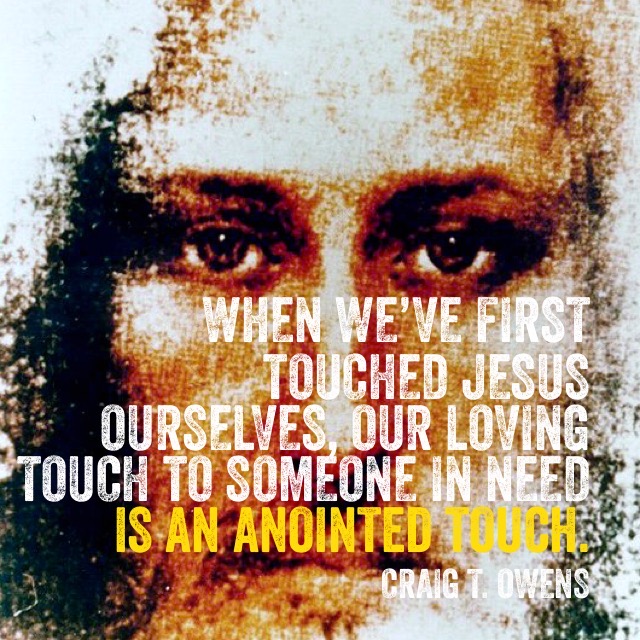
There is a power in touching someone that goes beyond words or any other actions.When we’ve first touched Jesus ourselves, our loving touch to someone in need is an anointed touch.
I am reminded of the words of the old song—
Oh to be His hand extended
Reaching out to the oppressed
Let me touch Him
Let me touch Jesus
So that others will know
And be blessed
My touch alone has very little lasting value. But when I’ve touched Jesus first, my touch carries His power and His love to the one whom I touch. Let us keep touching Jesus so that we can keep touching the untouchables around us and bringing to them the healing and deliverance and blessing that only Jesus can give.
Listen to the podcast of this post by clicking on the player below, and you can also subscribe on Apple, Spotify, or Audible.
We’ve all heard people make some audacious claims. But the real power is in being able to back up those claims. Without any proof, it’s all talk! As things were coming to a conclusion for Christ’s ministry—at least in the world’s eyes—there were some bold claims being made. Some were made by Jesus Himself, some by His rivals, and some by His supporters.
The first bold claim we’re going to consider was made by the high priest: a man named Joseph Caiaphas.
The Sanhedrin was the highest court in the land and was made up of 70 + 1 men. This comes from Numbers 11:16-17 (seventy leaders) plus Moses. After Moses, another person was always appointed to serve as the leader, which was usually the high priest.
By the time of Jesus, this ruling body had become more political than religious. Very frequently, leadership would change because of the whims of the Romans or their puppet leaders (someone like a King Herod). The high priest in Christ’s early years was a man named Annas, who served from AD 6-15. During all of the public ministry of Jesus, the high priesthood had transferred to Caiaphas (AD 18-36), who was Annas’ son-in-law. Yet both of them still shared considerable influence (see Luke 3:2; John 18:13, 24; Acts 4:6).
Caiaphas and his family were Sadducees. They didn’t hold to any beliefs of the supernatural—no angels or demons, no resurrection, no afterlife. Partly because of these unscriptural beliefs, the Jewish Qumran, who safeguarded the careful copying of the Scriptures, called Caiaphas “the wicked priest.”
Annas, Caiaphas, and their family member were the ruling party that wanted to stay in power. So their activities were always a balancing act: Trying to keep the Jewish community happy on one hand, while not offending the Romans or other political leaders on the other hand.
It’s with this backdrop that we read the story of Lazarus’ resurrection in John 11. Jesus knew this miracle would validate His ministry, and sure enough, after the resurrection of Lazarus, more and more people put their faith in Jesus. So much so that the religious leaders wanted to kill both Jesus and Lazarus (11:53; 12:9-11).
Ironically, these same religious leaders had previously asked Jesus for a sign to prove He was who He made the bold claim to be. To this demand, Jesus said that He would give them “the sign of Jonah” who was considered dead in the belly of the fish before he was “resurrected” to complete his mission (Matthew 12:38-40, 16:1-4).
Since the religious leaders viewed everything through a political lens, they thought Jesus was also going to instigate a political or military uprising. The following that Jesus would gather would challenge the Sanhedrin’s hold on power, so Caiaphas proposed a political solution disguised as a prophecy (John 11:49-53).
Caiaphas meant it like this: “We’re trying to keep the balance between the Jewish people and the powerful Romans. If we kill one Man (Jesus) in time, we may be a little out of favor with the Jews but we will save our position with the Romans. Later on, we’ll make things right with the common people.”
Even to this day, people are trying to balance, juggle, control, appease, and bargain their way to get or keep the life they want to live. They will use religious dressing to do political things, thinking they will “make it right” later on.
Caiaphas made this bold claim: “If Jesus dies, our position will be saved for us and our children.” But he had no power to back up his bold claim, so it was just talk.
But Jesus made this bold claim: “I will die so that your souls can be saved for eternity.” He, on the other hand, had the power to back up His bold claim (John 10:17-18).
Caiaphas’ plan sounded like it would be the end of Jesus and His mission, but “the end” was really just another step in fulfilling what God had already planned!
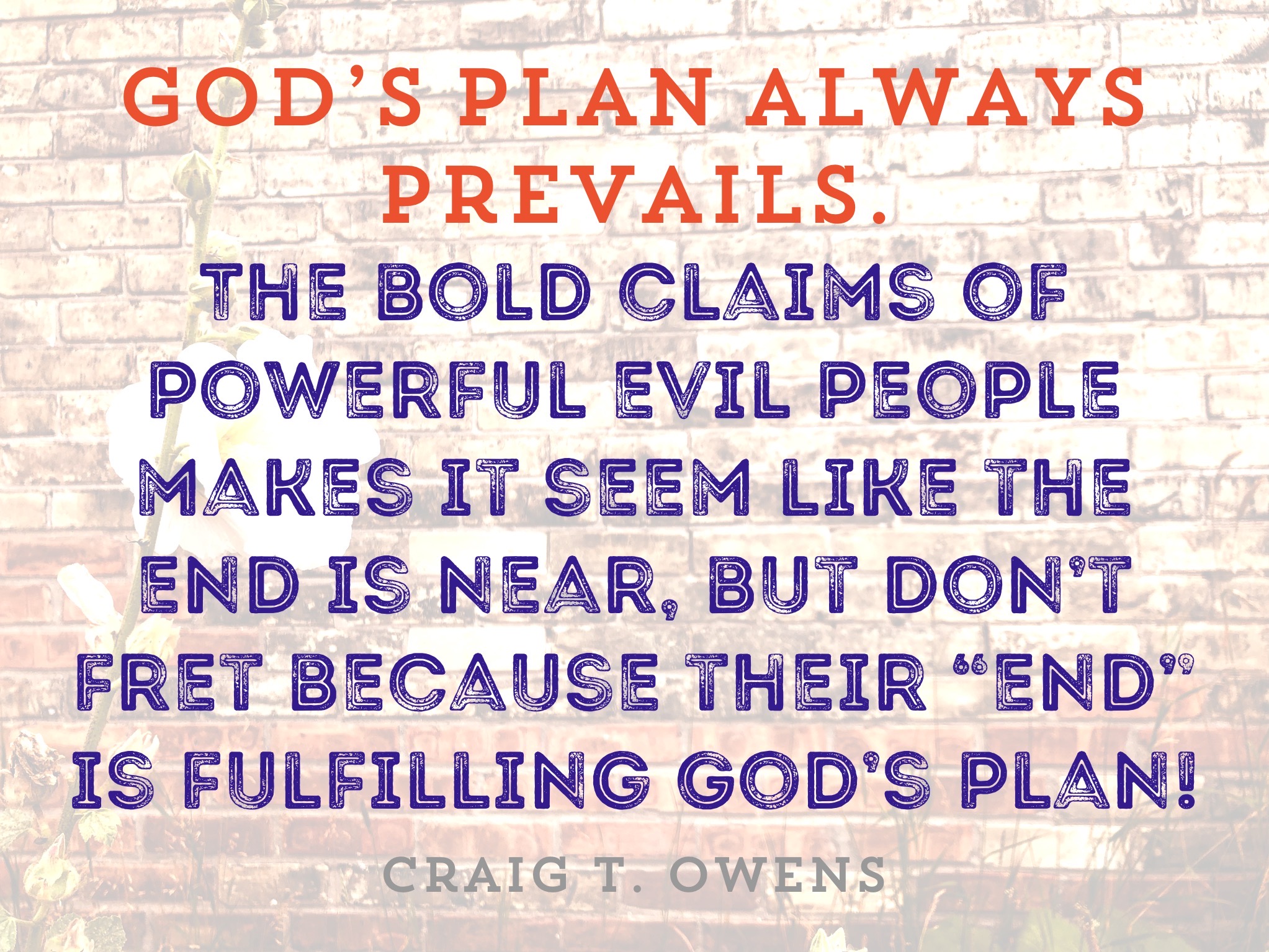
Let me say it again: God’s plan always prevails. The bold claims of powerful evil people may make it seem like the end is near, but don’t fret because their “end” is only fulfilling God’s plan!
If you are a pastor (or if you really want to encourage your pastor), I’ve got a super-special deal on my book Shepherd Leadership. Check it out by clicking here.
Listen to the podcast of this post by clicking on the player below, and you can also subscribe on Apple, Spotify, or Audible.
I don’t think there’s any arguing that Jesus must have been the healthiest Person to ever live. Dr. Luke records His growth in just one succinct verse: “And Jesus grew in wisdom and stature, and in favor with God and man” (Luke 2:52). Every word of Scripture is inspired, right down to the order the words are penned. So when Luke says first that “Jesus grew in wisdom,” that is our indication that a healthy mind is the foundation for every other aspect of health.
I recently received an email from a Christian brother asking for prayer and counseling in overcoming lust and pornography. I naturally agreed to pray with him, but I also said, “Before I offer you any strategies to try, let me ask you a quick question: What have you already tried to get victory over this?”
He replied, “I’ve tried praying, watching videos on it, and basically saying no to the devil. But the temptation comes when I am weak and I think, ‘I can just try again tomorrow!’ And then I fall into it. I am just tempted at times throughout the day, and sometimes I fight it with prayer, but other times I just fall right into it basically without even trying.”
What my friend is dealing with here is a natural, unconscious response. Our brains like well-worn paths because it’s very easy and comfortable for our minds to automatically respond as they have responded before. As in the case of my friend, it may be heading down a path of lust that leads to pornography. For others, it may be unhealthy choices made in response to certain triggers, or it may be the anger that flares up into biting words when a certain someone pushes your buttons.
We head down that well-worn path unconsciously and automatically. Our immediate response might bring some temporary relief, but usually, we’re not very happy with where we’ve ended up once again.
If we are going to make a new path—or a new, healthier response—we first need to become aware of the well-worn path we automatically go to. So my counsel to my friend who emailed me for help was to start keeping a journal. I wrote back:
Your willpower alone isn’t going to cut it (as you’ve probably realized). Here’s the first step I would suggest: keep a journal of every time you are tempted to lust or porn. Write down what you were feeling, was it day or evening, what was happening just before that, did you have time in prayer and Bible reading that day or not, how did you fight the temptation, were you successful or not? I think as you keep track of these things you will begin to see some triggers and some patterns. Maybe you were physically tired, or lonely, or hungry. Maybe it was a certain person you talked with or a show you watched. Maybe it was after checking your social medias or after a super-hard day at work. When you start to see patterns of what is causing you to go to porn for relief, you can recognize them earlier and head them off before they grip your mind so strongly.
Psychologists call it metacognition when we think about what we’re thinking about—when we think about why we are taking a certain well-worn path again.
We don’t think about our thinking very frequently. We keep thinking along those well-worn paths out of habit, not because we want to go down those paths. This is where the Holy Spirit is invaluable: He helps us see those well-worn paths, identify which paths are unhealthy or unproductive, and then help us begin to carve out a new path.
It’s not just thinking about right things, but thinking rightly about all things—even the painful things or the triggering things.
In Ephesians 4:22-25, Paul counsels us to take off the “old self” and “put on the new self, created to be like God in true righteousness and holiness. Therefore” (and this is an important conclusion) “each of you must put off falsehood and speak truthfully to his neighbor.”
Do you remember that Jesus taught us to love our neighbor as ourselves (Mark 12:28-31)? Paul says we are to speak truthfully to our neighbor, so doesn’t that mean that we have to first speak truthfully to ourselves? Yes, we do! If we are going to make new paths for our mind, we are going to have to talk to ourselves differently.
My cousin Dick Brogden wrote, “A primary theater of spiritual warfare is in our heads and thoughts. The primary weapon of the enemy is deceit. He starts with attractive little lies and half-truths, and works his way up to blatant, ridiculous, perverted nonsense. Winning the battle for truth in the mind is critical to winning the war. If we lose enough of the little skirmishes, we can believe and do any wicked thing. If we daily combat lies with light and truth, we will stand firm.”
The “little lies and half-truths” will keep us trapped on our old, well-worn paths. But identifying those lies, and speaking the truth to them, will help us travel down new paths that lead to health and freedom.
Let the Holy Spirit be your Counselor. Let the Holy Spirit help you think about what you’re thinking about when you’re triggered to unconsciously head down the unhealthy well-worn path. Let the Holy Spirit help you see a new path. And then let the Holy Spirit empower you to stick with it—to keep doing the hard work of blazing a new path.
I am going to build on this series of messages about a Christian’s mental health, but let’s start with this simple prayer:
Holy Spirit, help me make new paths.
As you pray this, listen to how the Holy Spirit will guide you away from the unhealthy, unconscious, well-worn paths, and will then lead you into the new, healthy path that brings you freedom.




 “How did Jesus live among us? He was different things to different people. See if you find yourself on this list.
 A reminder of just how amazing our Sun is! Our Creator perfectly fashioned our Sun and Earth and solar system to sustain the life we enjoy. Check out this amazing article from The Institute for Creation Research.






 Craig T. Owens