Thursdays With Spurgeon—Christ’s Momentary Pain, Your Eternal Gain

This is a weekly series with things I’m reading and pondering from Charles Spurgeon. You can read the original seed thought here, or type “Thursdays With Spurgeon” in the search box to read more entries.

Christ’s Momentary Pain, Your Eternal Gain

After Jesus said this, He looked toward heaven and prayed: “Father, the hour has come. Glorify Your Son, that Your Son may glorify You. (John 17:1) 

     The Son of God was glorified while He was dying, and it was one part of His glory that He should be able to bear the enormous load of human guilt. As a race we lay crushed beneath it.

     A thousand Samsons could not relieve us! Angels and archangels, cherubim and seraphim could never lift the stupendous mass! But this one Man alone, with no help, in weakness of body and in death pains, bore away the enormous load of human guilt! The chastisement of our peace was upon Him. The Lord laid on Him the iniquity of us all! What a load it was! And that He could bear it was, indeed, a display of His glory. The lost in hell cannot bear the wrath of God! An eternity of suffering will not have discharged the dreadful penalty, and yet He bore that burden in an hour! Oh, marvelous strength of the incarnate God! Glorious are You indeed, O Christ, upon Your Cross! …  

     I say He was glorified in His passion and His prayer was heard! The Father did glorify His Son even on the Tree! It was an hour of glory that might dazzle angels’ eyes; that hour when He said, ‘It is finished!’ (John 19:30) and gave up the ghost. What had He finished? He had finished that which saved His people! He had peopled heaven with immortal spirits who will delight in Him forever and had shaken the gates of hell! God indeed glorified His Son in enabling Him to bear, and bear so well, all the weight of sin and the penalty that was due to it. …  

     When He died, He did not render the redemption of His people possible, but He ransomed them completely. By His agonies and death He did not merely give a bare hope of the pardon of sin, but He hurled the sin of all His elect into the depths of the sea in that same moment! He did not merely make the salvation of men a possibility if they would, but He saved His people then and there! He finished the work that He came to do, and proof of it is written that ‘this Man, after He had offered one sacrifice for sins forever, sat down at the right hand of God’ (Hebrews 10:12).

From The Son Glorified By The Father And The Father Glorified By The Son 

The enemy of your soul would love for you to believe his lies that you have to do something to secure your salvation, or that your most recent sin somehow made your salvation iffy, or that God is angry with you. 

THOSE ARE ALL LIES! 

Jesus didn’t make your salvation possible; He made it yours. This is what glorifies God: when you believe that the death of Jesus is all that is needed for your complete and eternal salvation! 

Jesus paid it all
All to Him I owe
Sin had left a crimson stain
He washed it white as snow

Check All The Boxes

Then King Rehoboam consulted the elders … [and] consulted the young men… (1 Kings 12:6, 8). 

As King Rehoboam ascended Israel’s throne, the people met with him to ask if there could be a change in policies. They stated that Rehoboam’s father, King Solomon, had worked them hard building God’s temple and Solomon’s palace. They asked for a bit of reprieve. 

Rehoboam took this suggestion to both the elders who had consulted his father, as well as to his friends that were his own age. 

Sometimes the older generation wants to stick with “the way we’ve always done things” because it appears tried and true; they are usually hesitant to make any changes.

Sometimes the younger generation wants to change nearly everything because they think there must be a better way; they are usually anxious to make changes. 

So when the elders suggested a change from Solomon’s policies, Rehoboam should have taken notice. “This is not typical for the elders to suggest a change, so perhaps I should ponder this more closely.” For the young leaders to suggest a change was typical for their generation, so Rehoboam should have expected that. 

Also notice that the elders’ advice was toward servant leadership, while the young men’s advice was toward more top-down, heavy-handed leadership. Although there is no record of either Rehoboam nor his advisers seeking God’s counsel, the elders’ advice is clearly more in line with God’s heart. God spoke through Moses about how He carried (or served) His people (Exodus 19:4), so a reprieve from hard labor would have been more God-honoring. 

Sadly, Rehoboam rejected the advice of the elders, making the working conditions even harsher for the people of Israel. This terrible decision had disastrous consequences, as Israel was henceforth split into two nations: Israel in the north and Judah in the south. Rehoboam missed the cues from both the older and younger generations, as well as God’s own example, that could have preserved a united nation. 

For our decision making today we have the additional example of Jesus who came not to be served but to serve others, and who gave us a similar servant-hearted command (Mark 10:45; John 13:12–17). 

When God-fearing people are facing a key decision, here are three important things to consider: 

  1. Are the seasoned, God-fearing elders advocating a change? 
  2. Will this decision help me better serve the people I lead? 
  3. Is this decision exemplifying Christ’s servant-leadership? 

This is so important—I need a “YES” in all three boxes if I am going to move forward! 

If any box is unchecked, I need to seriously re-evaluate making a change.

Thursdays With Spurgeon—“The Hour Has Come”

This is a weekly series with things I’m reading and pondering from Charles Spurgeon. You can read the original seed thought here, or type “Thursdays With Spurgeon” in the search box to read more entries.

“The Hour Has Come” 

After Jesus said this, He looked toward heaven and prayed: “Father, the hour has come. Glorify Your Son, that Your Son may glorify You. (John 17:1) 

     Father, the hour is come.’ This is the hour ordained in the eternal purpose. The hour prophesied of which Daniel sought to know. The hour toward which all hours had pointed. The central hour—the hour up to which man dated and from which they will date again if they read time right. The hinge, pivot, and turning point of all human history! The dark yet delivering hour! The hour of vengeance and of acceptance! ‘The hour is come.’ …  

     You and I look into the hour of darkness, as a frequent rule, and see no further, for our eyes are dim through unbelief. But [Jesus] goes on beyond the hour and His prayer is, ‘Glorify Your Son, that Your Son also may glorify You.’ He fixes His eyes upon the glory that was yet to be revealed and for joy of which He counts even His death to be but an hour—looking upon it as soon to be over and lost in the glory of His Father! 

     In all this, brothers and sisters, let us imitate our Lord and let us keep our eyes not on the present, but on the future; not on this light affliction, which is but for a moment, but on the far more exceeding and eternal weight of glory that will come of it. And let us with holy confidence, whenever our hour of darkness arrives, resort to our God in secret. The best preparation for the worst hour is prayer! The best remedy for a depressed spirit is nearness to God! 

From The Son Glorified By The Father And The Father Glorified By The Son 

Solomon became depressed when his gaze went no higher than “under the sun.” We, too, can become quite overwhelmed by our trials if our eyes only look at the present hour of darkness. 

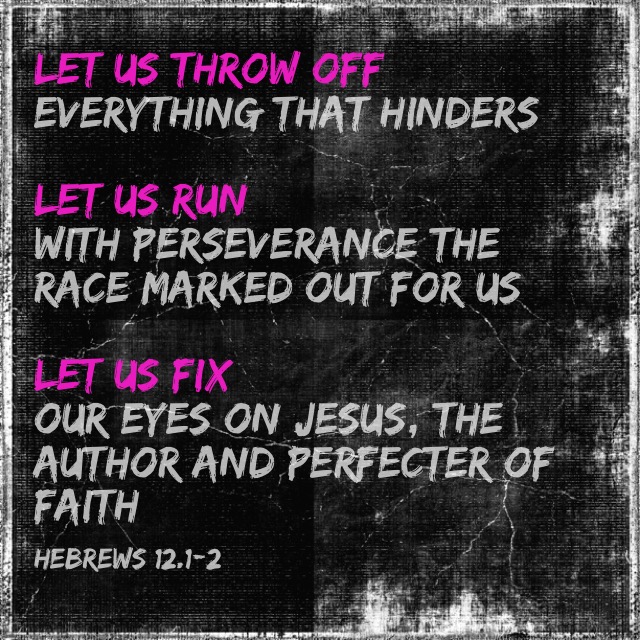
The writer of Hebrews tells us to keep our eyes on Jesus who conquered in His hour of darkness—Fixing our eyes on Jesus, the pioneer and perfecter of faith. For the joy set before Him He endured the Cross, scorning its shame, and sat down at the right hand of the throne of God. Consider Him who endured such opposition from sinners, so that you will not grow weary and lose heart (Hebrews 12:2-3). 

No matter what you are going through, keep your eyes on Jesus. Don’t give in to the darkness because Jesus has made you more than a conqueror if you will remain in Him (Romans 8:37-39). 


’…And Yet We May Not Be Christians’

Something serious for all Christians to ponder…

The disciples had life before our Lord breathed on them, but then they attained more. They had life before Pentecost, but then they obtained more. … Thus a man may be very like a saint and yet not be one. A church or a congregation may be very like a Christian one, with a fair appearance and compact organization; all in excellent bustling order, numerous, liberal, united, earnest after a sort; and yet lack one thing which neutralizes and paralyzes all the rest—the breath of life.

“Our creed may be sound, and yet we may not be Christians.

“Our religion may be externally complete, and yet we may not be Christians. … Mechanical religion may do for the gods of Greece and Rome, but not for the living and true God. … Your sanctuary attendance may be regular and reverent; but what if there be no breath in it? Your prayers and praises may be punctual and unexceptionable, but what if there be no breath in them? Will God accept them? Will they satisfy you? Will they make you happy? Will they not be irksome and intolerable? And the more you multiply them, the more intolerable.

“Our good works may be numerous and praiseworthy, yet we may not be Christians. It is not the work that makes the Christian, but the Christian that makes the work.

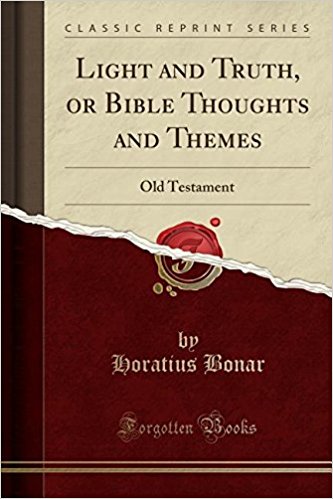
Our life may be exemplary, and yet we may not be Christians.” —Horatius Bonar, in Light & Truth—The Old Testament

[see Ezekiel 37:8, and this post that talks about the difference between the Holy Spirit being on a Christian versus in a Christian]

Thursdays With Spurgeon—Stick To The Revealed Word Of God

This is a weekly series with things I’m reading and pondering from Charles Spurgeon. You can read the original seed thought here, or type “Thursdays With Spurgeon” in the search box to read more entries.

Stick To The Revealed Word Of God

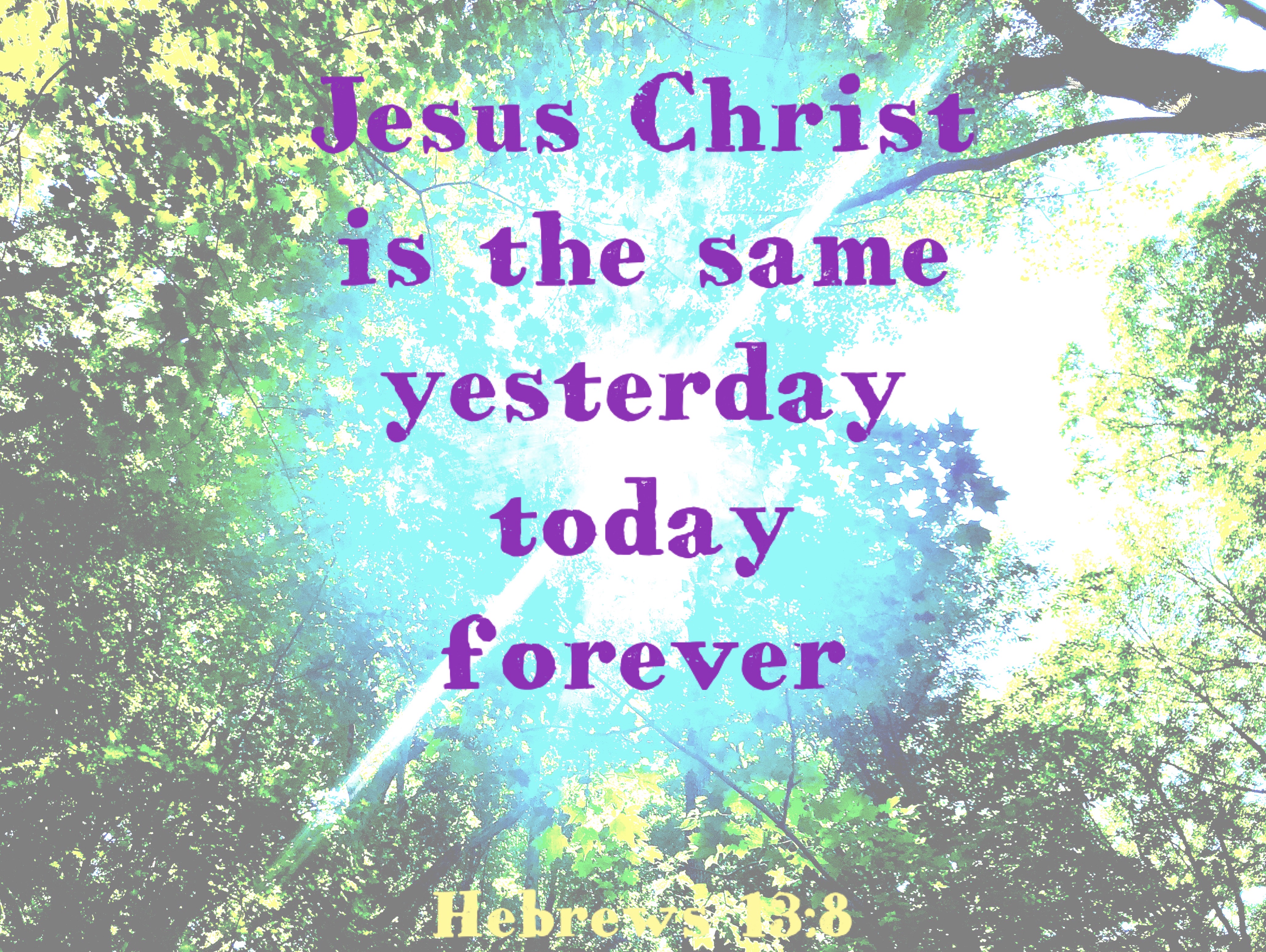
Remember your leaders, who spoke the Word of God to you. Consider the outcome of their way of life and imitate their faith. Jesus Christ is the same yesterday and today and forever. Do not be carried away by all kinds of strange teachings. It is good for our hearts to be strengthened by grace, not by eating ceremonial foods, which is of no benefit to those who do so. (Hebrews 13:7-9) 

     From the connection it is evident that our text refers to the teaching of Christ, who is ‘the same yesterday, today, and forever.’ This is not according to the so-called development folly. Theology, like every other science, is to grow, watered by the splendid wisdom of this enlightened age, fostered by the superlative ability of the gentlemen of light and leading of the present time, so much superior to all who came before them! 

     We think not so, brothers and sisters, for the Lord Jesus Christ was the perfect revelation of God. … In previous ages, God has spoken to us by His prophets, but in these last days He has spoken to us by His Son [Hebrews 1:1-2]. Now as to that which was a complete revelation, it is blasphemous to suppose that there can be any more revealed than has been made known in the Person and work of Jesus Christ, the Son of God! … And as He shuts up the book that contains the written revelation, He bids you never dare to take from it, lest He should take your name out of the Book of Life! And never dare to add to it, lest He should add to you the plagues that are written in this book [Revelation 22:18-19]!

From The Unchangeable Christ 

BEWARE when someone tells you they have discovered some new revelation from God that they—and they alone—have uncovered. God’s Word doesn’t need anyone’s “help.” 

But DO pray before you read the Bible to ask the same Holy Spirit that inspired the Word of God to now illuminate it to your mind as you read and study. 

(P.S. Oswald Chambers had some sobering words about false prophets.)


Thursdays With Spurgeon—Thoughtful Meditation And Application

This is a weekly series with things I’m reading and pondering from Charles Spurgeon. You can read the original seed thought here, or type “Thursdays With Spurgeon” in the search box to read more entries.

Thoughtful Meditation And Application

Remember your leaders, who spoke the word of God to you. Consider the outcome of their way of life and imitate their faith. Jesus Christ is the same yesterday and today and forever. (Hebrews 13:7-8) 

     Observe, then, that God’s people are a thoughtful people. If they are what they are to be, they do a great deal of remembering and considering. … I wish, in these days, that professing Christians remembered and considered a great deal more, but we live in such a flurry, hurry, and worry, that we do not give time for thought. …  

     Our great Master never aimed at originality—He said that He did not even speak His own words, but the words that He had heard of His Father [John 12:49]. He was docile and teachable. As the Son of God and the Servant of God, His ears were open to hear the instructions of the Father, and He could say, ‘I always do those things that please Him’ (John 8:29). … 

     There is no difference whatever in the relationship of the Lord Jesus Christ to His people at this time! He is just as ready to comfort us tonight as He was to comfort those with whom He dwelt when here below! Sister Mary, He is as willing to come down to your Bethany and help you in your sorrow about Lazarus as He was when He came to Martha and Mary whom He loved! Jesus Christ is just as ready to wash your feet, my brother, after another day’s weary travel through the foul ways of this world. He is as willing to take the basin and the towel and to give us a loving cleansing as He was when He washed His disciples’ feet! Just what He was to them, He is to us! Happy is it if you and I can truly say, ‘What He was to Peter, what He was to John, what He was to Magdalene, that is Jesus Christ to me—the same yesterday, today, and forever.’ 

From The Unchangeable Christ 

If Charles Spurgeon thought the 19th century was a time of “flurry, hurry, and worry,” what adjectives might describe the supersonic, multi-tasking, get-everything-done-now 21st century?! 

Today, more than ever, we need to take time to reflect on God’s Word. Read it slowly. Put yourself in the story. What would you have observed if you were there? What would you have felt? Look around at the others who were there: how would they have perceived what was happening? 

You don’t meditate on God’s Word so that you can find something original, but you meditate so that the Holy Spirit can reveal the original truths that are already there! The Holy Spirit can show you how to apply the Bible to your life, if you will only slow down to give Him time to do so. 

Don’t race through your Bible reading time—slow down and take it all in. Then let the Holy Spirit work out what He has helped you put in your heart and mind.


Doing Justice The Right Way

Once I was asked to teach a class on business ethics but I said, “I can’t because there’s no such thing as ‘business ethics.’ There is only ethics: Either something is right or it’s not.” 

I think the same concept holds true for “social justice.” There is no such thing: Either something is just or it’s not. 

For those situations that are truly unjust, the Bible tells us how to handle them. But first, let’s get a sense of what the Bible actually means by the word “justice.” 

Psalm 50 is a courtroom scene, with God Himself presiding as the Judge, summoning all of creation into His presence (see Psalm 50:1-6). Just before The Judge begins to speak, the psalmist Asaph calls on us to Selah—or pause to consider—after saying, “The heavens proclaim God’s righteousness.” 

The New Living Translation has this verse saying, “The heavens proclaim His justice…” and the Amplified Bible uses both words: “The heavens declare His righteousness (rightness and justice)….” So which word is it: righteousness or justice? 

The Hebrew word (tsedeq) means something that is ethically right. In other words, something for which God sets the objective standard for rightness and wrongness. There is another Hebrew word that is often very closely associated with tsedeq, and that is justice (mishpat): that is the penalty for violating tsedeq. 

But here’s where things get really interesting. We usually associate the idea of justice with retribution (or payback), but God’s justice is usually portrayed as restoration. 

In other words, God’s mercy is so strong and His desire for us to be restored into right standing with Him is so passionate, that His default is restorative mercy. 

God’s response to our acts of unrighteousness wasn’t to rain down retributive justice on us, but to send His Son to earth to make restorative mercy available! 

In his first public sermon, Jesus quoted the prophet Isaiah. The last words Jesus read about His mission on earth were “to proclaim the year of the Lord’s favor.” He left off the last phrase in Isaiah which said, “and the day of vengeance of our God.” Favor (restoration) now; judgment (retribution) later for those who would not accept the restoration Jesus made available. 

Back in the Psalm 50 courtroom, God tells us the wrong way to address injustice: with angry, demeaning words (Psalm 50:19-20).  

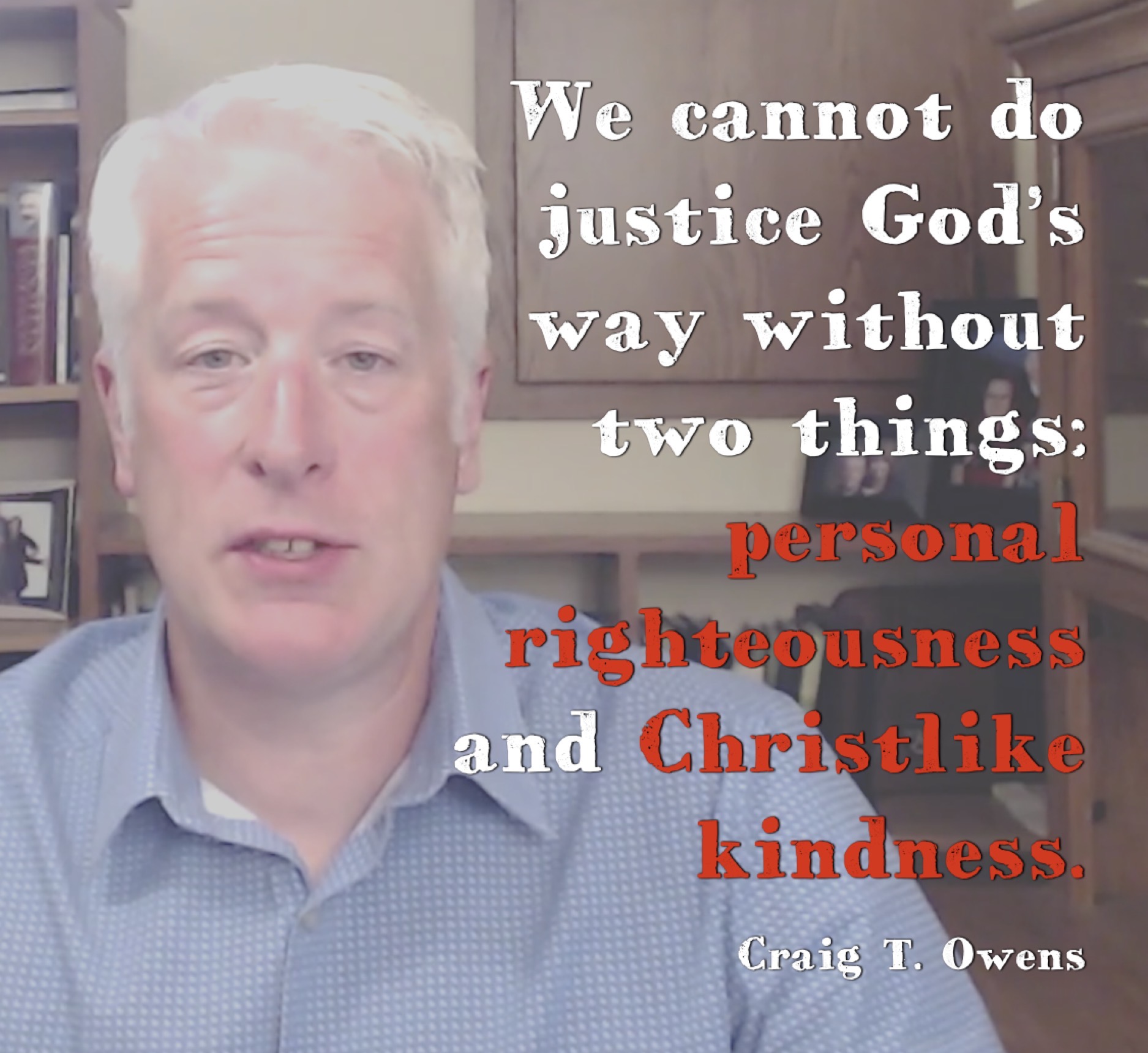
We CANNOT do justice God’s way without two things: 

  1. Personal righteousness which comes from Jesus in us (Romans 5:1); otherwise, we’re just hypocrites pointing out the exact same injustice that’s in ourselves. 
  2. Kindness. “But let the one who boasts boast about this: that they have the understanding to know Me, that I am the Lord, who exercises kindness, justice and righteousness on earth, for in these I delight,” declares the Lord. (Jeremiah 9:24)

And what does the Lord require of you but to do justly, and to love kindness and mercy, and to humble yourself and walk humbly with your God? (Micah 6:8)

The darkness of injustice is the absence of light. Jesus says to us, “You are the light of the world” (Matthew 5:14). 

The hate of injustice is the absence of love. Jesus says to us, “A new command I give you: Love one another. As I have loved you, so you must love one another. By this everyone will know that you are My disciples, if you love one another” (John 13:34-35). 

Here are my takeaways—

  1. Let God be The Judge. 
  2. Make sure I am in right standing with God through my relationship with Jesus Christ. 
  3. If I see injustice, address it with kindness, light, and love.

If you have missed any messages in this current series in the Selahs in the Psalms, you can get caught up by clicking here.

Prescribed & Personal Worship

But you are to seek the place the Lord your God will choose from among all your tribes to put His Name there for His dwelling (Deuteronomy 12:5).

THE place—not a place.

The Old Testament physical practices always point to the New Testament spiritual practices:

  • We cannot worship like everyone else does—You must not worship the Lord your God in their [pagan] way (v. 4) 
  • We cannot worship God like it’s always been done before—You are not to do as we do here today, everyone doing as they see fit (v. 8) 
  • We cannot worship God in a way that is cheap and convenient—Be careful not to sacrifice your burnt offerings anywhere you please (v. 13) 

Go to THE place the Lord will choose (v. 26). 

The exclusivity focus is on the Person not the place or the practice.

Jesus said, “Not here or in Jerusalem, but in spirit and in truth” (John 4:20-24). And He made clear that He is THE exclusive way to the Father (John 14:6).

The apostle Paul noted that the day of the week or the type of food doesn’t matter in our worship practices; THE focus on Jesus is what matters (Romans 14).

So worship of God is both prescribed and personal:

  • Prescribed in that it’s only THE work of Jesus that makes worship possible. 
  • Personal in that I worship God as me—as He created me—not by following a formula. 

Paul went on to say in Romans 14 that we shouldn’t judge the sincerity of another person’s worship. If they are glorifying God—great! If not—they will have to stand before THE Judge.

We only have access to God through THE High Priest Jesus Christ. Let us always make sure that He is THE focus.

Where’s God Today?

Transitions are always hard things. We are leaving the known for the unknown. Even if the known is unhealthy or painful, it’s still hard to go to the unknown. 

Why are these transitions so difficult? Perhaps it’s because I’ve learned how to cope with the known, or I’ve gotten used to this “normal” life, or even I’ve simply learned to navigate any dysfunctional areas.

But is that really living? Am I managing my life or is God? When I’m against transitions, aren’t I really saying that I’ve put God’s plan for my life in my box?

Those questions trigger even more questions in my mind: Where’s God in all of this? Why can’t He just make my known better? Why is He leading me (or maybe even pushing me) into this unknown? 

Jesus didn’t endure the unimaginable horrors of the Cross just so you could cope with life. Jesus came to bring us abundant life—not a barely-getting-by life or just a coping life!

How does He bring us into this abundant life? By leading us through transitions. And where is He in all our transitions? Closer than you think! 

Moses sang a song to conclude his sermon in Deuteronomy. In that song, he mentions God taking care of His people the way an eagle cares for its eaglets.

Adults eagles build their extremely large nests in the highest point they can find. Their nests are made of massive branches. In fact, they build some of the largest nests of all birds, and build them in the most inaccessible of places. Before their eggs are laid, the adult eagles will soften their nest with feathers pulled from their own body. From the time the eggs are laid until the eaglets leave the nest, they are never without a parent present—while one parent hunts, the other watches. 

Eaglets first test their stumpy wings by jumping around in the nest, mimicking their parents. Eventually they will start “branching”—jumping to nearby branches—and then “fledging”—taking their first short flights from the nest. All under the watchful eye of the parents. Finally, the adult eagles will “stir up” their nest by blowing away all of the comforts of their plucked feathers, encouraging the eaglets to soar. 

Moses said that this is how God cares for His children. First by shielding and guarding us, and then by stirring up our nest and encouraging us to soar! 

Much like when Jesus ascended back to Heaven. He was going to physically leave His disciples, but He knew He had adequately trained his “eaglets” to soar without Him with them in bodily form. 

But Jesus never leaves us spiritually. He said that His ascension back to heaven would allow for the Holy Spirit to be resident in each of His followers (see John 16:7-15). It is the Holy Spirit that continues to guide us, teach us, empower us, correct us, and lead us to SOAR into abundant, God-honoring, Christlike living. 

There are many, many times of transition as we soar, but He never leaves us. The Holy Spirit is our constant Counselor. God shows His love for us by caring for us. God also shows His love for us by making us uncomfortable with the status quo. 

May the times of transition cause us to rely even more on the very present help of the Holy Spirit.

Continue to follow along with me in a new series of posts looking at how the Holy Spirit helps us to soar!

Thursdays With Spurgeon—The Assurance In Christ’s Ascension

This is a weekly series with things I’m reading and pondering from Charles Spurgeon. You can read the original seed thought here, or type “Thursdays With Spurgeon” in the search box to read more entries.

The Assurance In Christ’s Ascension

     Our Savior descended when He came to the manger of Bethlehem, and further descended when He became ‘a Man of sorrows and acquainted with grief’ (Isaiah 53:3). He descended lower still when He was obedient to death, even the death of the Cross—and further yet when His dead body was laid in the grave. … Long and dark was the descent. There were no depths of humiliation, temptation, or affliction that He did not fathom. …  

     The time came for our Lord to continue His homeward, upward journey and return to the glory from which He had come down. From the Mount of Olives, ‘while they watched, He was taken up, and a cloud received Him out of their sight’ (Acts 1:9). The rest of His upward progress we cannot describe. Imagination and faith step in and conceive of Him as rising beyond all regions known to us, far above all imaginable height. … 

     How high He ascended after He passed the pearly portal Paul cannot tell us, save that he says God ‘seated Him at His right hand in the heavenly places, far above all principality and power and might and dominion’ (Ephesians 1:20-21). He describes our Master as ‘dwelling in unapproachable light’ (1 Timothy 6:16). The Man Christ Jesus has gone back to the place from where His Godhead came! …

     We are sure that the purpose of His love is secure or He would not have returned to His rest. The love that brought Him here would have kept Him here if all things necessary for our salvation had not been finished. …

     Remember that His assent to the Father is representative. Every believer rose with Him and grasped the inheritance. When He rose up, ascending on high, He taught our feet the way. At the last His people will be caught up together with the Lord in the air, and so will they be forever with the Lord. He has made a stairway for His saints to climb to their bliss, and He has traveled it Himself to assure us that the new and living way is available for us. In His ascension He bore all His people with Him.

From Our Lord’s Triumphant Ascension

Jesus told His Father that He had completed everything He was sent to complete (John 17:4). John also says that Christ’s “It is finished” cry from the Cross also marked the completion of everything that had been prophesied about Jesus (John 19:28-30). 

Such amazing love brought Jesus to earth! And His steadfast love also made sure that He left absolutely nothing undone that was needed for our salvation! 

There’s now no reason for us to live fearful or anxious or skeptical about what is coming next. When Jesus says, “I will never leave you nor forsake you” and when He promises that He has gone to prepare a place for us to bring us to be with Him, He has demonstrated His authority to make these claims in His death, resurrection, and ascension. 

Oh my friends, live every day in that glorious assurance!