Thursdays With Oswald—Redemption

This is a weekly series with things I’m reading and pondering from Oswald Chambers. You can read the original seed thought here, or type “Thursdays With Oswald” in the search box to read more entries.

Redemption

   Redemption is easy to experience because it cost God everything, and if I am going to be regenerated it is going to cost me something. I have to give up my right to myself. I have deliberately to accept into myself something that will fight for all it is worth, something that will war against the desires of the flesh, and that will ask me to go into identification with the death of Jesus Christ, and these things produce a struggle in me. …

   The result of the Redemption in my life must be that I justify God in forgiving me. …In what way are you different in your life? does the reality of the Redemption at work in you justify God in having forgiven you?

From Baffled To Fight Better and Biblical Ethics

I like to think of the death and resurrection of Jesus this way: It cost Him so much, and He wants everything He paid for.

Jesus didn’t coast through, He wasn’t wishy-washy about His decision to go to the Cross, neither was He forced into such a horrific death by crucifixion.

Jesus willingly and lovingly went “all in” to pay the redemption price for our sins. So I’m challenged by Oswald Chambers’ question: Does the reality of the Redemption at work in you justify God in having forgiven you? Does my life show how grateful I am for the price Jesus paid?

Such Wondrous Love

CrossAs I am preparing both a Good Friday message and an Easter message, I am immersed in the details of Christ’s passion for us. There are so many thoughts swirling through my head about the amazing, unequaled, undeserved, overflowing love that Jesus has for us.

See from His head, His hands, His feet / Sorrow and love flow mingled down! / Did e’er such love and sorrow meet, / Or thorns compose so rich a crown? (Isaac Watts, When I Survey The Wondrous Cross)

You see, at just the right time, when we were still powerless, Christ died for the ungodly. Very rarely will anyone die for a righteous person, though for a good person someone might possibly dare to die. But God demonstrates His own love for us in this: While we were still sinners, Christ died for us. (Romans 5:6-8)

That Christ should join so freely in the scheme / Although it meant His death on Calvary / Did ever human tongue find nobler theme / Than love divine that ransomed me?

Such love, such wondrous love / Such love, such wondrous love / That God should love a sinner such as I / How wonderful is love like this!

That for a willful outcast such as I / The Father planned, the Savior bled and died / Redemption for a worthless slave to buy / Who long had law and grace defied (C.Bishop, Such Love)

Because of the joy awaiting Him, Jesus endured the Cross, disregarding its shame. Now He is seated in the place of honor beside God’s throne. (Hebrews 12:2)

I hope this week you will reflect on God’s amazing grace, Christ’s great love, and the Holy Spirit’s persistent drawing of your heart. Jesus died for us so that we could be brought into a loving relationship with our Heavenly Father!

If you are in the Cedar Springs area, please join me in celebrating with our churches our combined Good Friday service, or our Easter morning breakfast drama called Conspiracy!

At Last!

Jesus is our atonementThe Day of Atonement was a very special day for the Jewish people. It was called by some the Sabbath’s Sabbath, as it was the most holy day of the year. It was the day everyone looked forward to, because finally they could have forgiveness for their sins.

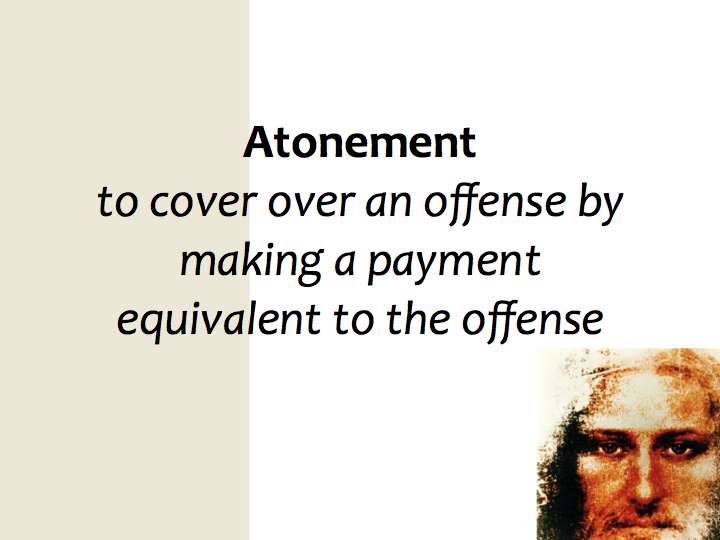
The word atonement in the Hebrew meant that a payment was made that was equivalent to the offense that was committed. The offense was huge: Sin was open rebellion against Almighty God, it was to spit in the face of our Heavenly Father, it was to slap away His hands that were reaching out to embrace us. Nothing short of a death could atone for that sort of offense!

So the high priest would go through an elaborate ceremony of washing himself and putting on special garments that were only to be worn on this Day of Atonement. Because the high priest was also a sinner himself, his first sacrifice was a bull. The blood from this sacrifice was taken by the high priest into the Most Holy Place of the temple to cover his own sins, before he could even approach God to ask for the forgiveness of the sins of anyone else.

After having completed this step, the high priest could then proceed. He would sacrifice a goat as a sin offering for the people. As he did with the bull’s blood, he would take the goat’s blood back into the Most Holy Place to ask God to show mercy toward people who had sinned, to turn away His holy wrath against their rebellion. Then the priest would lay his hands on a second goat, one that was still alive, and confess all of the sins of the people. This goat (called the scapegoat) was then taken out into the desert. This symbolized the removal of the people’s guilt, making it possible for them to be in relationship with God once again.

This was repeated year after year after year. It was repeated because the people continued to sin. It was repeated because these rituals were only a shadow of what God really wanted to accomplish. David wrote about the futility of these sacrifices—

Sacrifice and offering You did not desire—but a body You have given me—burnt offerings and sin offerings You did not require. Then I said, “Here I am, I have come—it is written about me in the scroll. I desire to do Your will, my God; Your law is within my heart.” (Psalm 40:6-8)

A beautiful thing happened through the ministry of Jesus on earth. Jesus came to be both the perfect high priest (one without sin, who did not need to purify Himself), and the perfect sacrifice. Jesus is called the once for all sacrifice of atonement for us, as He embodied the cry David made nearly 1000 years earlier. Hebrews 10:5-7 says that the words uttered by David prophetically were repeated by Jesus: “Here I am, I have come—it is written about me in the scroll. I desire to do Your will, my God; Your law is within my heart. I will be the once for all sacrifice.”

When Jesus told us the the new covenant was in His shed blood on Calvary’s Cross, He was saying that no longer would we have to wait until the Day of Atonement to find forgiveness; no longer would we have to wait upon an imperfect earthly priest to offer a sacrifice for us; no longer would we have to carry around the guilt of our sin and feel separated from God’s presence while waiting for a special ceremony. AT LAST! We can have immediate forgiveness, eternal redemption, and an everlasting relationship with God because of what Jesus did for us once for all!

As you celebrate Holy Week, be thrilled with the truth that Jesus’ death on the Cross makes it possible for you to have complete atonement. Our Savior has redeemed us AT LAST!

If you have missed any of the messages in this series called Who Is Jesus?, you can find them all here.

11 Quotes From “Jesus Is _____”

Jesus Is _____Judah Smith has a fresh, clear way for us to view Jesus and His love for us. You can read my full review of Jesus Is _____ by clicking here. Below are 11 quotes from this book that got me thinking—

“The Pharisees were zealous for the law, but they didn’t understand the love of God. They imposed judgment without mercy, punishment without love, criticism without understanding. In the name of hating sin, the Pharisees ended up hating sinners. Perhaps worst of all, they concluded that their aloofness from sinners was what made them holy. The measuring stick of their goodness was the badness of the people they rejected. …Before we get too furious at the Pharisees, though, realize that inside each of us is a Pharisee trying to get out. It’s happened to me. No sooner do I conquer a bad habit than I become the biggest critic of anyone who still does what I just stopped doing. I find that righteous indignation comes a lot easier than humility and compassion. Mentally chastising the bad deeds of other people is more comfortable than dealing with my own.”

“Rather than rejecting people out of a false sense of superiority, rather than judging and condemning those whose lives don’t measure up to my standard of holiness, I need to remember that I am still desperately in need of Jesus’ grace.”

“Besides writing off bad people, we too quickly write off ourselves. We swing from the self-righteous side of the pendulum (That filthy sinner deserves to go to hell!) to the self-condemning side (I’m a filthy sinner who deserves to go to hell!). Both extremes come from focusing on rules rather than on a relationship with Jesus.”

“I think if Jesus had one shot at fixing us, He’d tell us how much He loves us. …Jesus loves us right now, just as we are. He isn’t standing aloof, yelling at us to climb out of our pits and clean ourselves up so we can be worthy of Him. He is wading waist-deep into the muck of life, weeping with the broken, rescuing the lost, and healing the sick.”

“When we realize that grace is a Person, not a principle, abusing grace is no longer an option. It’s easy to abuse a principle, to manipulate a system, or to excuse away a doctrine. But it’s much harder to abuse a person or violate a relationship.”

“Rules are not bad, but they can’t save anyone. The best a rule or a law can do is set a boundary and threaten punishment for crossing that boundary. People still decide to obey the rule or not. …Rules are meant to lead us to relationship, not to replace relationship. …Focusing too much on rules and too little on grace tells children that what they do is more important than who they are. …These principles aren’t just for parenting. This is how our relationship with God works. For God, it’s more about relationship than about rules. Far more.”

“When we make up rules because we are afraid people will sin, we end up doing an end run around faith. It’s not fear that saves us—it’s faith. Fear of failure has a sneaky way of becoming a self-fulfilling prophesy. …Make rules and follow rules as needed, but don’t focus on rules. Focus on faith. Focus on grace. Focus on Jesus. …Here’s the bottom line: everything that rules can do, grace can do better, and more besides.”

“Rules address behavior, but they don’t deal with the heart. They don’t adjust attitudes. They don’t heal the inconsistencies and fractures deep in our souls that could destroy us in the end. Grace, on the other hand, is internal. It works on a heart level. Where rules attempt to force us to do the opposite of what we want, grace actually changes what we want. It creates internal consistency and integrity. Doing what is right becomes much easier. …When we focus on Jesus instead of a code of conduct, when grace changes our desires so we are internally motivated and not just externally restrained, we become a lot more fun to be around.”

“Grace wasn’t free for Jesus. It cost Him everything. That is precisely why we should receive it freely. The most insulting thing we could do is reject this costly gift and say, ‘No thanks, God, I got this.’ Please don’t tell me Jesus was beaten and mutilated and tortured so we could try to save ourselves through our paltry good deeds. Don’t cheapen Jesus’ sacrifice by trying to pay Him back.”

“The point isn’t to quit thinking about sin. It’s to quit thinking about self and to think about Jesus. It’s to become God-conscious, not me-conscious. Do you know what law does? Law makes us self-conscious. When we are self-conscious, we become sin-conscious. We take our eyes off Jesus, and we focus on our failures, our weaknesses, our shortcomings. And we end up sinning even more because that’s all we can think about. But grace makes us God-conscious. When we live by grace, we are continually amazed by the love, goodness, and holiness of God. When we think about Him, that motivates us to act like Him. Are you struggling with sin? You don’t need more willpower. You need more of Jesus. Loving Jesus, not avoiding sin, is the focal point of our lives.”

“Holiness results in happiness, and happiness is an expression of holiness. The two go together. I am happier because I am holy, and it’s easier to be holier because I am happy. Because of the good news, because of Jesus, I can be both holy and happy—what a concept!”

O Lord, Forgive

A friend of mine gave me some solid counsel a number of years ago that has always stuck with me: The mark of a maturing Christian is one who is closing the gap between sin and repentance.

Sin is open treason against God. Why would I want to overlook it or excuse it?! Once I recognize it as sin, why would I want to hold on to it?!

If we freely admit that we have sinned and confess our sins, He is faithful and just (true to His own nature and promises) and will forgive our sins—dismiss our lawlessness—and continuously cleanse us from all unrighteousness—everything not in conformity to His will in purpose, thought, and action. (1 John 1:9 AMPC) 

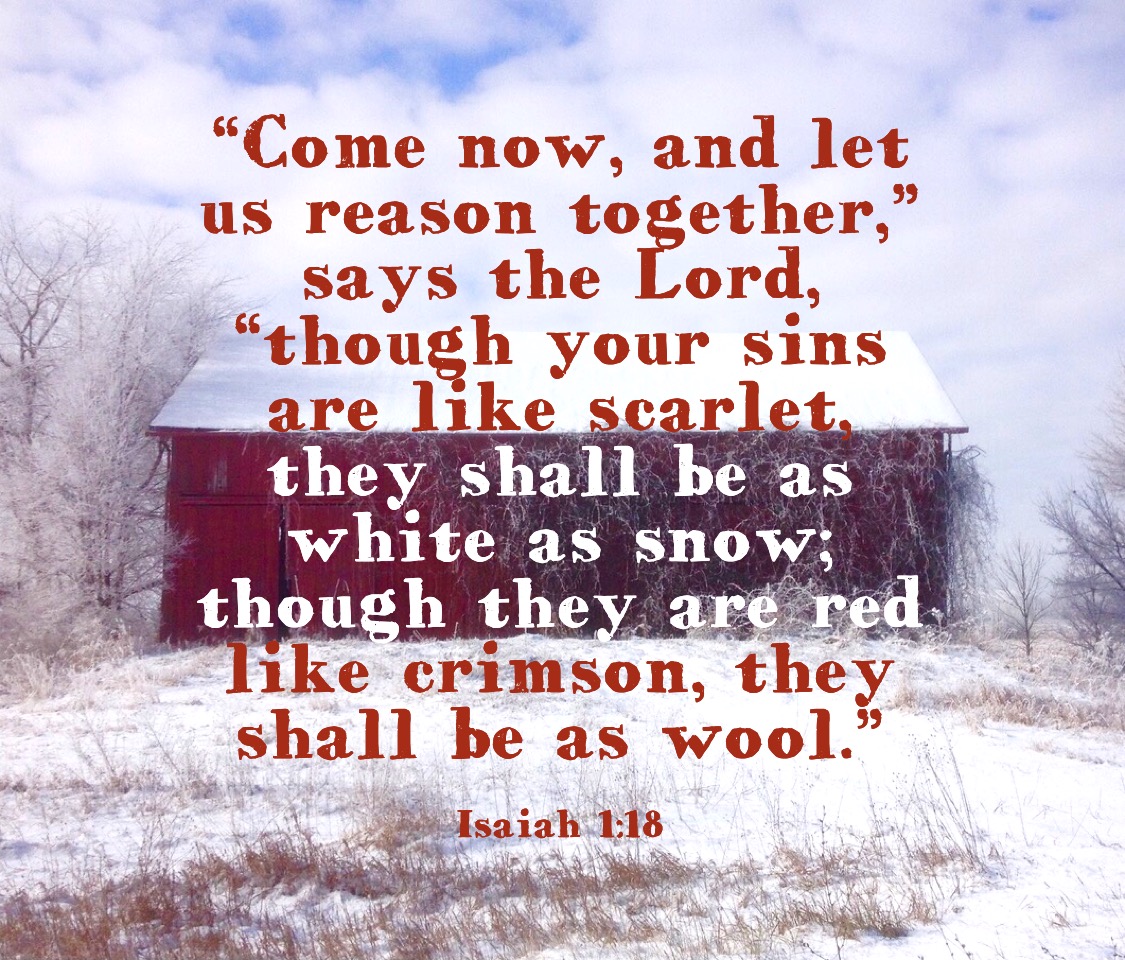
“Come now, let’s settle this,” says the Lord. “Though your sins are like scarlet, I will make them as white as snow. Though they are red like crimson, I will make them as white as wool.” (Isaiah 1:18) 

May we all take the time to reflect on our words and actions to see if we have sinned, and then to quickly confess that sin and ask for our loving God’s forgiveness.

“If my soul has turned perversely to the dark;

If I have left some brother wounded by the way;

If I have preferred my aims to Yours;

If I have been impatient and would not wait;

If I have marred the pattern drawn out for my life;

If I have cost tears to those I loved;

If my heart has murmured against Your will,

O Lord, forgive.” —F. B. Meyer

Love Is… (part 2)

Love is… worksheet 2We are taking a practical look at the incredible definition of love in 1 Corinthians 13. We’re doing this in the context of learning how to love the “unloveable”—or maybe I should say, loving those who are the most resistant to real love. If we can show them love, how much more will the love of Jesus be seen!

All of these verbs are present tense verbs. That means they aren’t exhausted in the past, and they aren’t waiting for future conditions to improve—they are in operation NOW.

Far too many people know Christians more by what we’re against than by what we’re for. So where the biblical text say “love does not” or “love isn’t,” I’ve changed it into the positive “love is.”

You can read about the first five attributes love love by clicking here.

The next five attributes are:

Love is graceful

  • The root word means something that should be covered up, or something we’re ashamed of. Because our words and actions are graceful, they are things we wouldn’t have to defend, or explain, or apologize for later. They are words and actions that wouldn’t embarrass us.
  • Agape will do nothing that misbecomes it.” —Matthew Henry

Love knows our relationship > my rights

  • True love “does not demand its own way” (New Living Translation) nor does it “insist on its own rights” (Amplified Bible). Instead it always seeks ways that the relationship can be repaired or enhanced, even if that means giving up something I consider to be “my right.”
  • NOTE: I’m not saying that you become a doormat. This is not a license for someone to abuse you, but it is a call for us to balance our responses. Romans 12:18 says as far as it depends on you, live at peace with everyone.
  • Here are some great balancing verses. Balance Proverbs 26:4-5 (here is a video where I expand on this idea), and then balance Philippians 2:3-4.

Love is even-tempered

  • The Amplified Bible says it well: love is not touchy or fretful or resentful.
  • This Greek word means not getting stirred up or exasperated. So we need to lighten up!
  • There are some places where we’ve become too sensitive, too touchy, too short-fused. The fire of hurt has replaced the fire of love. So Matthew Henry advises us: “Where the fire of love is kept in, the flames of wrath will not easily kindle, nor long keep burning.”

Love is forgiving

  • The New International Version says love keeps no record of wrongs.
  • This Greek phrase speaks of an accountant tallying up the hurts (where there is an overdrawn account), seeing there is a debt to be paid back, and then appointing himself as the bill collector. True love cancels those IOUs.
  • We don’t forgive others because they deserve forgiveness, but we forgive others because we received forgiveness from God that we did not deserve!
  • For if you forgive people their trespasses [their reckless and willful sins, leaving them, letting them go, and giving up resentment], your heavenly Father will also forgive you. (Matthew 6:14 AMP)

Love is God-honoring

  • Agape loves what God loves and hates what God hates.
  • Agape loves when people find God’s truth, and hates anything that blocks that pursuit.
  • Agape loves the sinner and hates the sin.
  • “The sins of others are the grief of an agape spirit [not] its sport or delight; they will touch it to the quick….” —Matthew Henry

Here’s where the real test comes in: How will you apply these attributes of love to someone in your life? More specifically: to someone you think is “unloveable”?

I know you have someone in your life that you think is unloveable. With that person’s face clearly in mind, how will you fill in the blanks:

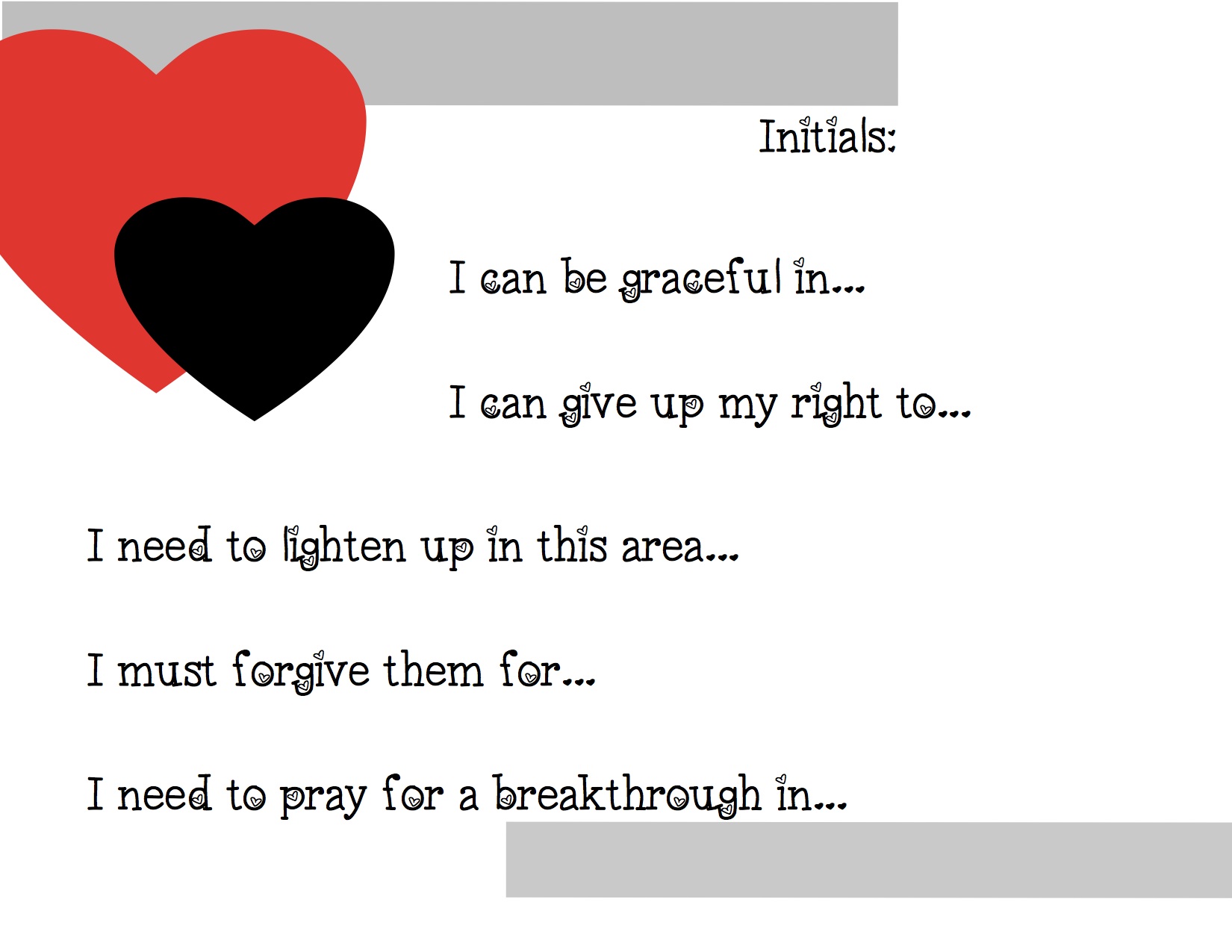
  1. I can be graceful in…
  2. I can give up my right to…
  3. I need to lighten up in this area…
  4. I must forgive them for…
  5. I need to pray for a breakthrough in…

If you would like a downloadable PDF of this worksheet, click here –> Love is… worksheet 2

If you missed any of the messages in our Loving the Unlovable series, you can check them all our here.

19 Quotes From “Who Do You Think You Are?”

Who Do You Think You AreWho Do You Think You Are? by Mark Driscoll is an insightful journey through the book of Ephesians. You can read my full book review by clicking here. Below are some of the passages that especially stood out to me.

“This world’s fundamental problem is that we don’t understand who we truly are—children of God made in His image—and instead define ourselves by any number of things other than Jesus. Only by knowing our false identity apart from Christ in relation to our true identity in Him can we rightly deal with and overcome the issues in our lives.”

“What you do doesn’t determine who you are. Rather, who you are in Christ determines what you do.”

“Our worship never starts and stops. It’s not limited to a building in which we attend sacred meetings and sing worship songs. Rather, our entire life is devoted to pouring ourselves into someone or something. Saying it another way, we’re ‘unceasing worshippers.’ We aren’t created to worship, but rather we’re created worshipping.”

“While it’s not a sin to plan and strive for a better tomorrow, it is a sin to set one’s joy and identity on who we will be, what we will do, or what we will have tomorrow in our own efforts rather than on Christ today and who He will make us, what He will have us do, and what He will give to us tomorrow.”

“While it’s true that sin has affected the totality of our persons, including our minds, wills, and emotions, we fail to say all that the Bible does regarding our identity when we place undue focus on our depravity as fallen sinners and ignore our dignity as created image bearers and our new identity as redeemed Christian saints. While a non-Christian is totally depraved, a Christian is in Christ.”

“A saint does sin. But a Christian is one who has saint as their constant identity and sinner as their occasional activity. For the Christian, there is a vital difference between having sin and being sin.”

“Sin may explain some of your activity, but it’s not your identity. Your identity is in Christ, and because of your new identity, by God’s grace through the Holy Spirit’s power, you can change your activity. Because you are a new person positionally in Christ, you can live a new life practically by the power of the Holy Spirit. This truth is deeply helpful and vitally practical.”

“Pride is our enemy and humility is our ally. Pride compares us to other sinners; humility compares us to our sinless Savior. Pride covets the success of others; humility celebrates it. Pride is about me; humility is about Jesus and other people. Pride is about my glory; humility is about God’s glory. Pride causes separation from God; humility causes dependence on God. Pride is pregnant with all sins; humility is pregnant with all joys. Pride leads to arrogance; humility leads to confidence. Pride causes me to do things in my own strength; humility compels me to do things in God’s strength. …None of us, with the exception of Jesus Christ, can ever say we’re truly humble. Instead, all we can say is that we’re proud people pursuing humility by the grace of God.”

“In Christ, you’re graced. You’re chosen by grace, saved by grace, kept by grace, gifted by grace, empowered by grace, matured by grace, and sanctified by grace. You persevere by grace, and one day will see Jesus, the best Friend you’ve ever had, face-to-face, by grace.”

“God is as equally glorified when we praise Him for His unmediated grace as when we’re thankful for those through whom He chooses to deliver it. …We’re to thank God for being faithful to His people and to thank His people for being faithful to Him.”

“Before we can understand and embrace our identity in Christ, we must first accept our identity apart from Christ. Becoming a Christian is not merely accepting the truth about Jesus as our Savior. It’s also accepting the truth about ourselves as needy sinners.”

“Because afflictions cost us so much, they are too precious to waste. Though God may not cause your affliction, He can use your affliction for His glory, others’ good, and your growth, if you are in Christ.”

“Our God didn’t suffer so that we wouldn’t suffer. He suffered so that when we do suffer, we can become more like Him and point more people to Him.”

“Too many Christians pit knowledge against experience and the head against the heart. The truth is, both are needed to grasp God’s love. The love of God is what happens when the truth in our heads captivates the affections of our hearts, which spurs us on to grasp the love of God in our lives. …As the love of God increasingly captivates our hearts and we grasp onto his love, we’re changed and become increasingly mature in Christ because our affections determine our actions.”

“Sometimes, Christians shy away from involvement in a local church because they see faults with the church. Ironically, the fact that they see a lack may indicate that there’s a need for them and their gifts. Rather than complaining, it’s better to humbly start serving to meet a church’s needs and invite others to also help.”

“Through the power of the Holy Spirit, God helps us live holy lives and enables us to obey Him. In this way, regeneration is the opposite of religion, which tragically teaches that if you obey God, He will then love you. The exact opposite is true. Regeneration reveals that because God loves us, we can obey Him by the power of the Holy Spirit. You have new power in Christ.”

“Your Father is perfect, loving, gracious, merciful, patient, holy, helpful, and generous. The more you get to know Him through Scripture, prayer, song, service, and time with your brothers and sisters in Christ, the more you will come to love and enjoy Him. Your desires will change from sin to holiness, and you’ll increasingly want to be like your Dad. You’ll love what He loves and hate what He hates.”

“As Christians, our goal is not to merely experience behavior modification by changing how we act and react. Our primary goal is getting to know, love, and trust God as our Father.”

“The last thing the church needs is cowards that treat the Bible like an artifact more fit for a museum than a weapon for the battlefield.”

Scared Half To Death

Mega fearHave you ever had a really good scare that turned your life around? For some people, they need to be scared half to death in order for them to make changes in their lives.

I think this is what happened to the shepherds outside Bethlehem the night Jesus was born (Luke 2:8-20). The Bible says that when the glory of the Lord shone around them they were terrified (the King James Version is very picturesque when it says they were sore afraid). The Greek word for fear is phobeo, but the phrase Luke uses here for “terrified” is megas phobeo phobos. Get the picture? They were scared half to death!!

But now, what to do what that fear? The angel gave them the first step—Go find Jesus. He didn’t tell them to get themselves cleaned up, or start going to church, or even to stop acting a certain way. Simply go find Jesus.

The shepherds obeyed and went to meet Jesus, and then something amazing happens.

  • Their fear is turned to praise—the shepherds returned, glorifying and praising God.
  • Their silence is turned to testimony—they spread the word concerning what had been told them.

Jesus was born as a Man to experience all our fears and sorrows and pains. But He took these upon Himself as He became the perfect, once-for-all sacrifice. Now there are no fears that can keep us from God’s presence. Jesus conquered all that kept us from God! 

There was nothing beautiful or majestic about His appearance, nothing to attract us to Him.He was despised and rejected—a Man of sorrows, acquainted with deepest grief. We turned our backs on Him and looked the other way. He was despised, and we did not care. Yet it was our weaknesses He carried; it was our sorrows that weighed Him down. And we thought His troubles were a punishment from God, a punishment for His own sins! But He was pierced for our rebellion, crushed for our sins. He was beaten so we could be whole. He was whipped so we could be healed.

All praise to God, the Father of our Lord Jesus Christ, who has blessed us with every spiritual blessing in the heavenly realms because we are united with Christ. Even before He made the world, God loved us and chose us in Christ to be holy and without fault in His eyes. (Isaiah 53:2-5; Ephesians 1:3-4)

This Christmas I pray you will…

Find Jesus for yourself!

Let your praises to Him ring out!

Tell others what Jesus has done for you!

If you have missed any of the messages in our Fear Not! series, you can find them all by clicking here.

Watch Out For Pride

Listen to the podcast of this post by clicking on the player below, and you can also subscribe on AppleSpotify, or Audible.

This post is especially for my fellow pastors, but it would be thoughtful reading for anyone in a leadership position.

Let me state it simply: Pastor, you need to watch out for pride.

Listen to the words of A.W. Tozer—

“A clergyman is a man, and often he has a proud little kingdom of his own, a kingdom of position and often of pride and sometimes with power.”

Pride is so insidious that it can creep into the hearts of leaders at anytime.

  • When things are going well. We think to ourselves, “Look what I’ve done” or we even spiritualize it a bit to say, “Look what God’s done through me.”
  • When things are going poorly. Pride causes us to look out the window at others, instead of looking in the mirror at ourselves.
  • When we’ve successfully handled a situation. We think, “Wow, I’ve really got it!”
  • When we’ve dropped the ball and we make excuses instead of asking for forgiveness.
  • And on and on it goes….

One of the things that has helped me immensely is the thoughts Kenneth Blanchard and Phil Hodges shared in their book Lead Like Jesus. They point out that every leader has an ego. The issue is what kind of ego is it?

It can be negative: E.G.O. = Edging God Out 

It can be positive: E.G.O. = Exalting God Only

So what do we do to make sure we have the God-honoring E.G.O.?

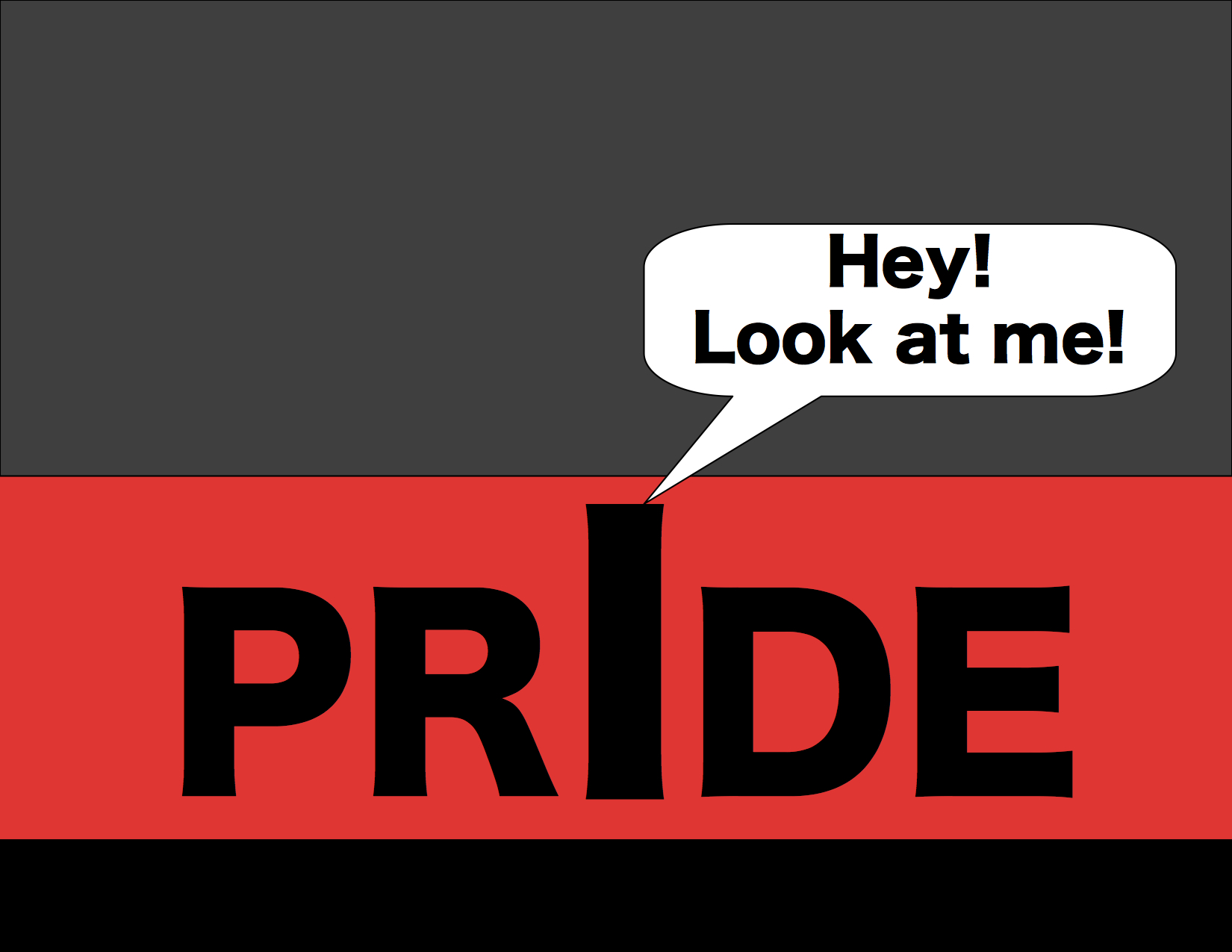
  • Look in the mirror. James says the Bible is the perfect mirror. So how does your life line up with the Scripture? Don’t sugarcoat it … Don’t make excuses … Say the words “Look at me” or “Wow, I’ve got it” out loud. Do you find those in God’s Word? If not, root it out!
  • Get some tough guys around you. You need some loving people around you that aren’t the ones writing your press releases. You need people around you that can boldly say, “Ahem! You appear to be getting off track.”
  • Monitor your gut-level responses. If you feel defensive, or if you feel the need to justify or make excuses, watch out because that’s pride’s signature.
  • Stay on your knees. Not only in prayer, but in service too. It’s awfully hard to get full of yourself when you’re washing feet, or scrubbing toilets. If you ever think any job is beneath you, watch out because you may have been infected by pride.

“Depth under depth of self-love and self-admiration. Pride! It was through Pride that the devil became the devil; it is the complete anti-God state of mind. Pride is essentially competitive in a way the other vices are not. Pride is a spiritual cancer. —C.S. Lewis

I have two companion chapters in my book Shepherd Leadership: The Metrics That Really Matter that dive deeper into this topic: “A confident leader’s attitude adjustment” and “A humble leader’s attitude adjustment.” I hope you will pick up a copy.

►► Would you please prayerfully consider supporting this ministry? My Patreon supporters get behind-the-scenes access to exclusive materials. ◀︎◀︎

Absolutely Amazing

I know I’ve read this verse before, but today it just seemed to leap off the page…

Both the One who makes men holy and those who are made holy are of the same family. So Jesus is not ashamed to call them brothers. (Hebrews 2:11)

Did you catch that word BOTH? This places me in the same category as God Himself!

I am the one made holy because Jesus died in my place. Jesus paid the price for the forgiveness of my sins, and for the righteousness of God to be given to me!

Then notice it doesn’t say we are being made holy, but made holy. It is finished.

Now Jesus is pleased to call us His brothers and sisters!

ABSOLUTELY AMAZING!!

When I read something like this, an important question comes to mind: How should I now live?

Confidently—because I am accepted into God’s family.

Humbly—because I didn’t pay the price, but Jesus paid it on my behalf.

Thankfully—because there is no greater gift I could ever receive.