In, On, And Through

Listen to the podcast of this post by clicking on the player below, and you can also subscribe on AppleSpotify, or Audible. 

I’ve talked before about the benefits of calling the Old and New Testaments the First and Second Testaments. This helps me not to subconsciously slip into the thought that “old” means outdated or that “new” means a replacement of what came before it. When I say First and Second I remember that there cannot be a Second without a First, that the First anticipates the Second and the Second fulfills the First. 

The people of the First Testament experienced the Spirit of God in an often-repeated phrase: “the Spirit of the Lord came on” someone. It usually came on them for a specific task or season. For instance…

  • 70 leaders to help Moses (Numbers 11:25)
  • the judges that delivered Israel from their enemies (Judges 3:10, 6:34, 11:29, 14:6, 15:14)
  • the anointing for Israel’s king (1 Samuel 16:13)
  • empowerment for prophets to prophesy (Ezekiel 11:5)

(Check out all of the above references by clicking here.)

When the Holy Spirit came on these men, there was a noticeable supernatural anointing and empowerment, but more times than not these men also had visible and sometimes crippling stumbles. 

What happens on the outside often stays on the outside. Sort of like the little boy whose mom brought him to church one Sunday. The little boy was constantly standing up on his chair and disturbing everyone around him. Finally, the exasperated mother whispered, “If you don’t sit down I’m going to take you to the restroom and spank you.” The little boy immediately sat down with his arms tightly crossed. He looked at his mom and said, “Outside I may be sitting down but inside I’m standing up!” 

God looks at the heart. He told the Israelites that their inward defiance didn’t outweigh their outward religious practices. And Jesus said that people who prophesied, cast out demons, and performed miracles, but still had an unrepentant heart, would hear Him say, “I never knew you” (Isaiah 1:12-13; Matthew 7:21-23). 
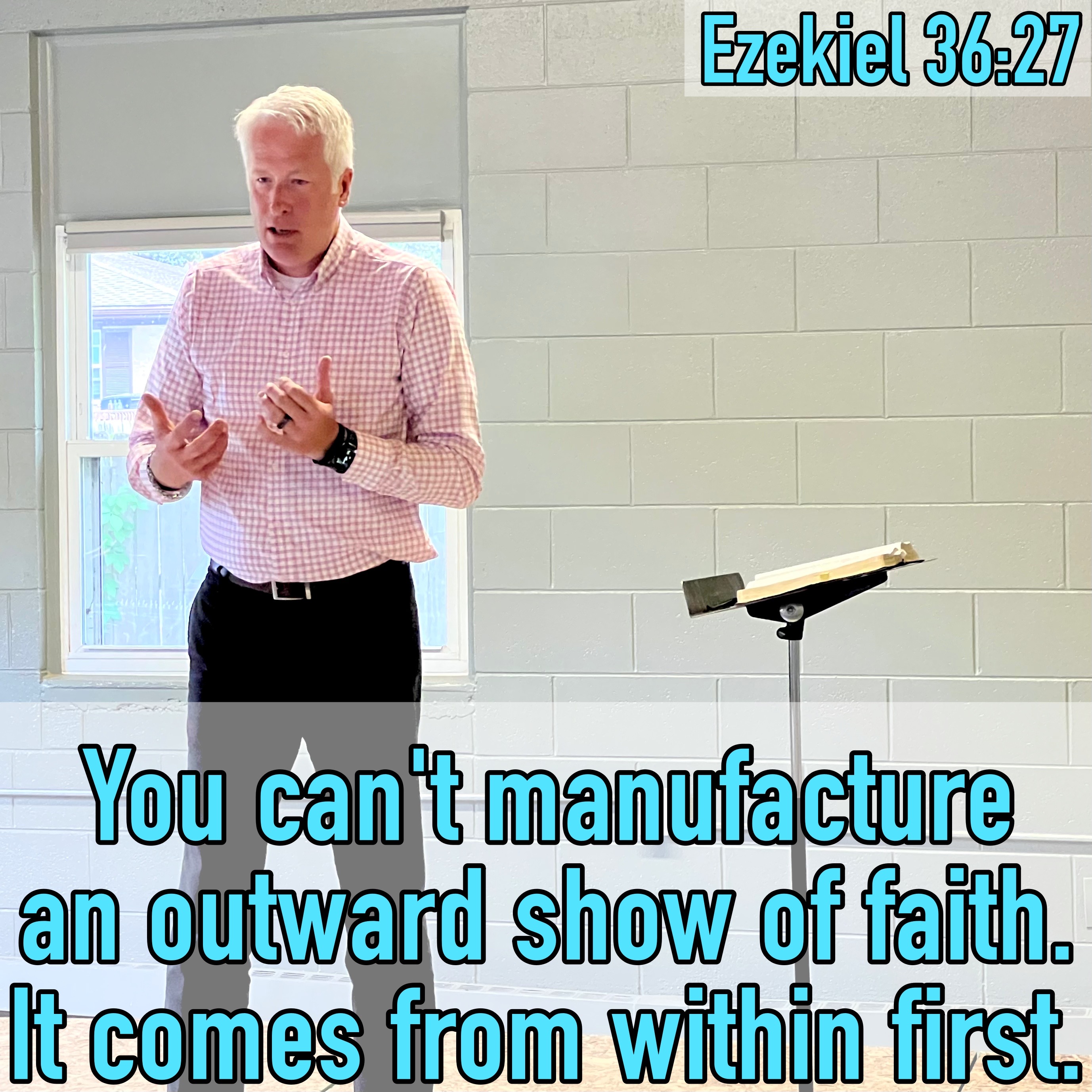
In the First Testament, we see a desire for the Holy Spirit to be more than on—a desire for Him to come in. David prayed, “Create in me a pure heart, O God, and renew a steadfast spirit within me” (Psalm 51:10). And God promised His people, “I will give them an undivided heart and put a new spirit in them … And I will put My Spirit in you and move you to follow my decrees and be careful to keep My laws” (Ezekiel 11:19, 36:27). 

That is exactly what happened on that Pentecost Sunday immediately following Christ’s resurrection and ascension. The Christians were baptized in the Holy Spirit. He came in them and brought them into the Godhead (John 14:20). 

Jesus described this “in-ness” in the picturesque language of a branch joined to the vine. The branch cannot produce any fruit on its own, but it abides in the vine so that the fruit-producing power can flow into the branch (see John 15:1-5). 

Paul identified this fruit of the Spirit as “love, joy, peace, forbearance, kindness, goodness, faithfulness, gentleness and self-control,” and he concluded with the phrase, “against such things there is no law” (Galatians 5:22-23). The law always sets limits, but when the Holy Spirit abides in us, the production of fruit is limitless! 

Being baptized in the Holy Spirit means that we allow Him to come in us and then to work on us. It’s only when the Holy Spirit has worked in us that can He flow through us to others. Jesus said that we would receive the Spirit’s empowerment to be witnesses—that’s an inward change that produces an outward fruit.

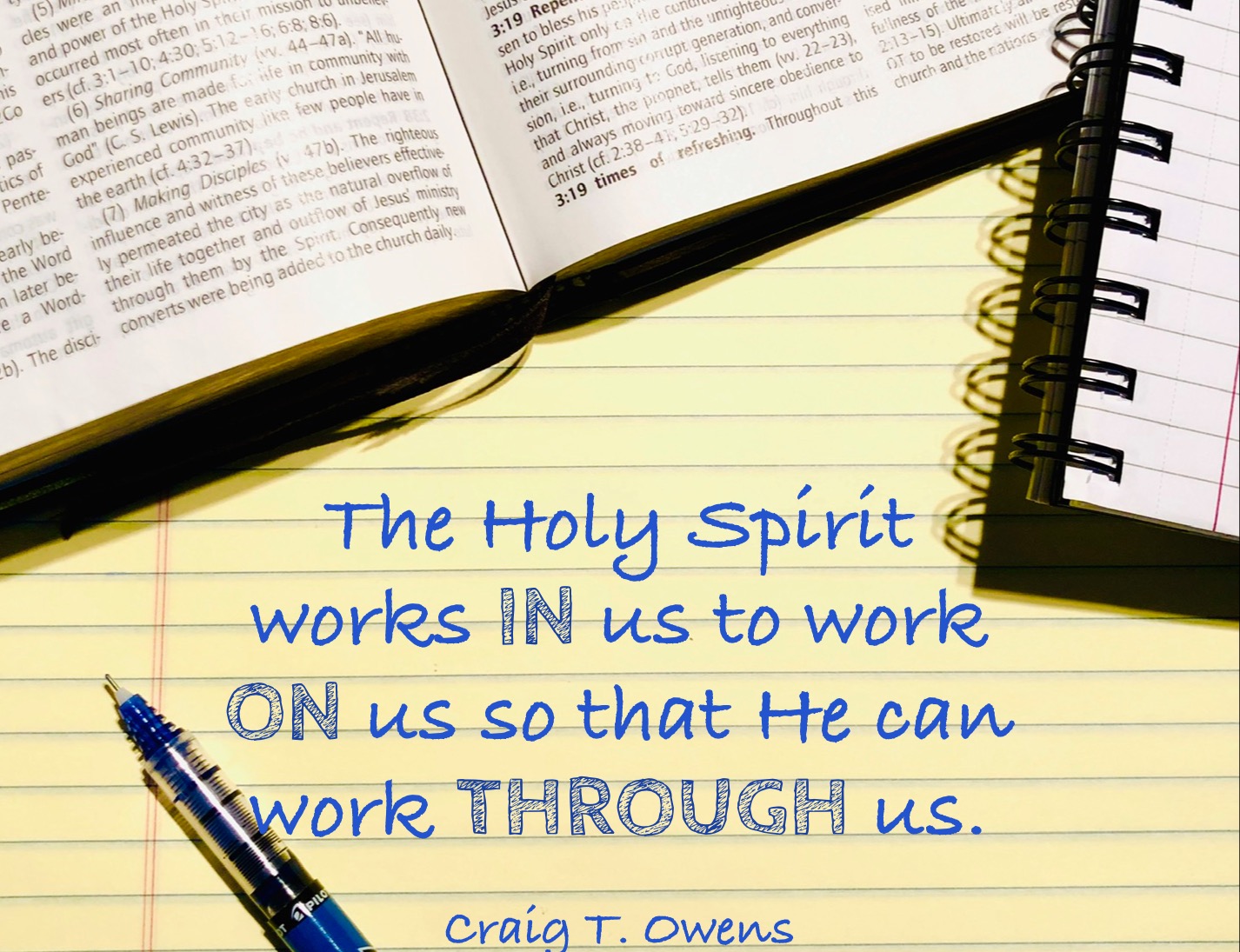
The Holy Spirit works in us to work on us so that He can work through us. So don’t stop at just salvation, but be baptized in the Holy Spirit! 

If you’ve missed any of the messages in our series on the Pentecostal experience, you can find all of those messages by clicking here. 

►► Would you please prayerfully consider supporting this ministry? My Patreon supporters get behind-the-scenes access to exclusive materials. ◀︎◀︎
Trading Truth For Popularity

Listen to the podcast of this post by clicking on the player below, and you can also subscribe on AppleSpotify, or Audible. 

I am sure everyone has heard the comical philosophical question, “Which came first: the chicken or the egg?” At Creation, the chicken clearly came first. But in other instances, sometimes the correct answer is not either-or but both-and. 

The apostle Paul warned his protege Timothy, “For the time will come when men will not put up with sound doctrine. Instead, to suit their own desires, they will gather around them a great number of teachers to say what their itching ears want to hear” (2 Timothy 4:3). In other words, the people are saying, “The truth makes us uncomfortable, so tell us something that makes us feel good. If you do, you will be rewarded by our popular support.” 

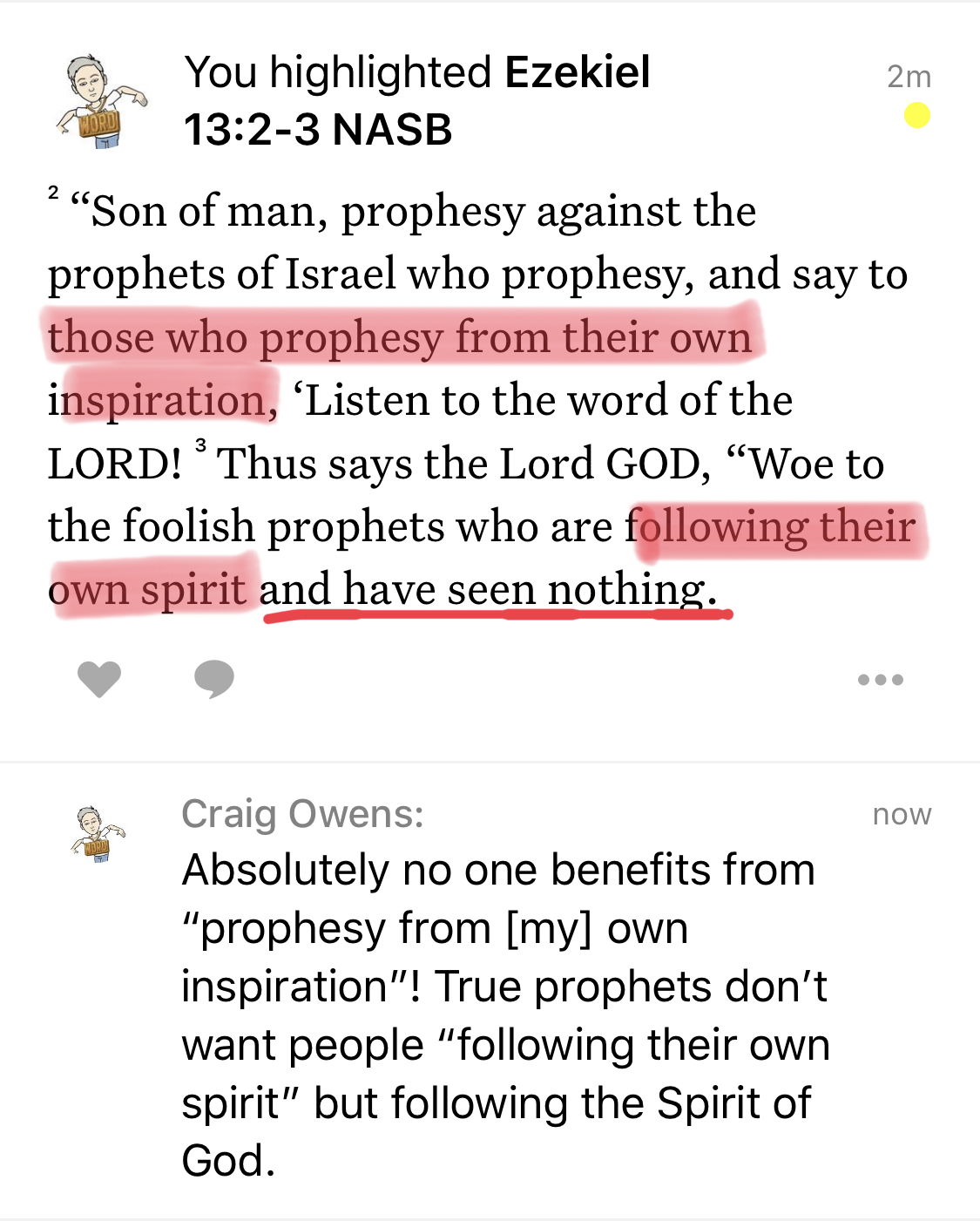
Nearly 600 years earlier, God had something to say to those popular teachers, “Woe to the foolish prophets who follow their own spirit and have seen nothing!” (Ezekiel 13:3). The New King James Version says they “prophesy out of their own heart” and the New American Standard Bible says they “prophesy from their own inspiration…following their own spirit.” In other words, they are speaking a popular message, not a truthful message. 

So which came first: the chicken of people with itching ears or the egg of false prophets with a popular message intended for itching ears? I think this is a true both-and. It’s both people looking for a feel-good message, and false prophets realizing they can be rewarded for sharing a popular feel-good message. 

Absolutely no one benefits from a prophecy from my own inspiration. True prophets of God don’t want people following their own spirit but following the Spirit of God. 

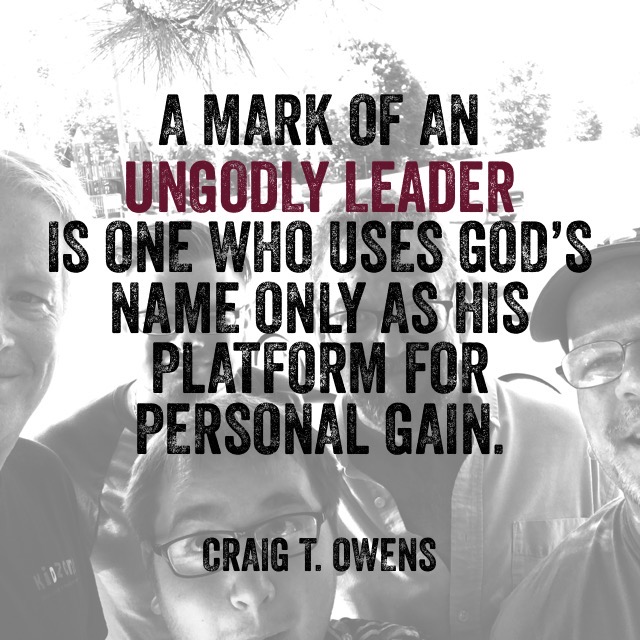
A mark of an ungodly leader is one who uses God’s name only as his platform for personal gain.

To those false prophets, God says, “Woe are you, for My judgment will fall on you.” To those with itching ears who trade popularity for truth, Paul says to Timothy, “Have nothing to do with them” (2 Timothy 3:1-5). 

This is part 72 in my series on godly leadership. You can check out all of my posts in this series by clicking here.

►► Would you please prayerfully consider supporting this ministry? My Patreon supporters get behind-the-scenes access to exclusive materials. ◀︎◀︎
God Is Infinitely Logical

Listen to the podcast of this post by clicking on the player below, and you can also subscribe on AppleSpotify, or Audible. 

Plato said, “Arguments, like men, are often pretenders.” This is both true and a logical syllogism. It is true because men often pretend, and they design their arguments to support their pretenses. 

One of my favorite classes in college was “Introduction to Logic.” In fact, it is one of my few college textbooks that is still in my personal library today. It always struck me that God created logic. That means He is infinitely logical.

So we can restate Plato’s quote like this, “God’s arguments, like God Himself, are always authentic, logical, and valid.” 

In my Bible study time, I often highlight the words that denote premisses and conclusions. In just Ezekiel 36 alone I find: 

  • therefore (6x)
  • because (2x) 
  • then (6x)
  • for (1x) 
  • so that (1x) 

We can argue against God’s logic, and we can even try to invalidate His arguments. But to do so makes me illogical. God not only gives the premisses and the conclusion, but He makes them both logical and valid. God told Jeremiah, “I am watching to see that My word is fulfilled” (Jeremiah 1:12).

So any of my attempts to redefine or re-order or invalidate what God has logically presented ultimately brings disorder, collapse, and frustration. It is far better for me to simply follow the premisses and trust God to bring about His promised—and logical—conclusion. 

I encourage you to look for these logic statements as you read the Bible yourself. Here is a Bible study from Proverbs 2 that can help get you started.

►► Would you please prayerfully consider supporting this ministry? My Patreon supporters get behind-the-scenes access to exclusive materials. ◀︎◀︎

Triumphant King

Listen to the podcast of this post by clicking on the player below, and you can also subscribe on AppleSpotify, or Audible. 

Have you ever noticed how many of our Christmas carols celebrate the dark night giving way to the bright light? For instance, the hymn O Holy Night contains the line, “long lay the world in sin and error pining until He appeared.” 

English historian and theologian Thomas Fuller was the first to put into print what has now become a cliché that so many people use: “It is always darkest just before the Day dawneth.” Indeed, Micah paints a very dark scene just before the Messiah makes His First Advent (Micah 5:1). 

The Light of Jesus that burst onto planet Earth in a Bethlehem stable revealed Him as our Great Shepherd, our Prince of Peace, and our Mighty Deliverer. And there is also one more title that Micah foretells: our Triumphant King! 

What does our Triumphant King do? He confronts and defeats the darkest foes. Check out the words in Micah 5:9-15: destroy (5x), demolish (2x), tear down, uproot, take vengeance. 

Christ’s birth in Bethlehem is our proof that God’s plan prevails. God always gets the final word, the decisive word, and the best word! 

Most of the Old Testament prophets foresaw both the first and second advents of Jesus simultaneously. The mountains of prophecy look like they are on top of each other, so it’s very common for the prophets to see events of both advents happening simultaneously. So Micah sees both the coming of Jesus in Bethlehem and His coming at the end of time as King.

There is a spiritual battle that has been raging since before Time began (Ephesians 6:12). It started when Lucifer became satan by his rebellion against God, and then he began his agenda of the destruction of God’s people (Ezekiel 28:12-17; Revelation 12:7-9, 13, 17). 

Into this dark battle, Jesus enters the scene. The reason the Son of God was made manifest (visible) was to undo—destroy, loosen, and dissolve—the works the devil has done (1 John 3:8 AMP). 

I already talked about how the death of Jesus on the Cross meant the death of Death, and Jesus became our Mighty Deliverer! The resurrection of Jesus means satan’s time is nearing an end. It may be dark now, but the darkness has to give way to the Light of the King of kings (check out these verses in Revelation). 

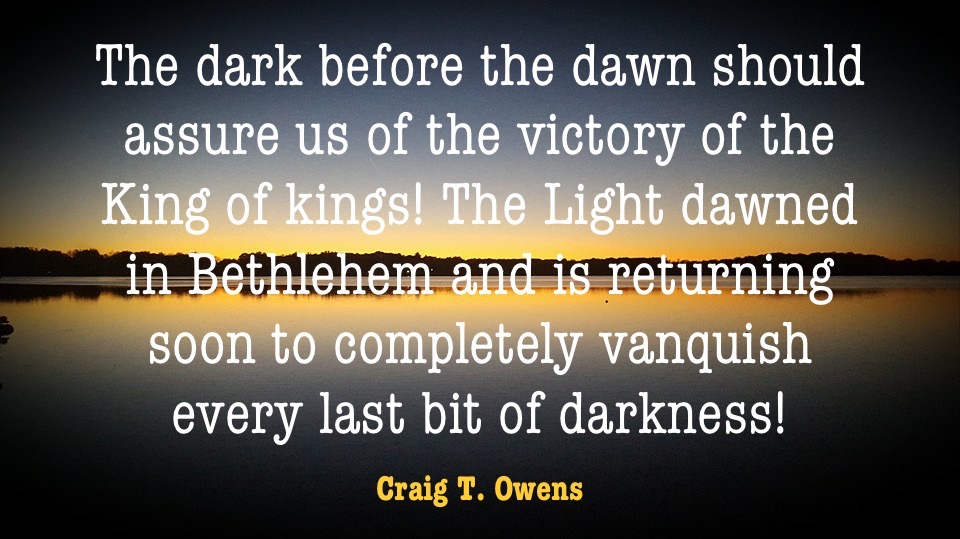
“It is always darkest just before the Day dawneth” should assure us of the victory of the King of kings! Jesus assured us that darkness is only afforded an hour, and then the Light will completely overwhelm it. The Light dawned in Bethlehem and is returning soon to completely vanquish every last bit of darkness!

If you missed any of the messages in our Advent series, you can find a list of all of those messages by clicking here. 

►► Would you please prayerfully consider supporting this ministry? My Patreon supporters get behind-the-scenes access to exclusive materials. ◀︎◀︎
A High And Holy Calling

Listen to the podcast of this post by clicking on the player below, and you can also subscribe on AppleSpotify, or Audible. 

When God spoke to the “princes of Israel,” He was speaking to those in leadership positions. They were men who had wealth, position, and a high level of influence. God called them to live up to their title as “prince” because leadership is a high and holy calling given by God. 

Leaders are to set an example for others. They are to provide what is lacking so that others can live up to their own God-given potential as well. Here’s the way God describes His leaders in Ezekiel 45-46:

They are to be peacemakers, never men of violence nor oppression (45:9). 

They are to be fair, consistent, and impartial in their interactions with others (45:10). 

They are to generously provide for the people under their care (45:15-17, 22; 46:13-14). 

They are to have a “get to do it” attitude toward their duties, not a “have to do it” attitude” (46:5, 7, 11). 

They are to be among their people, not aloof nor isolated from them (46:10). 

They are to provide for their family without impoverishing the people under their care (46:18). 

Since God calls leaders, He will also call them to account. Jesus made it clear that there are only one-of-two assessments that leaders will hear from God:

  1. Well done, good and faithful servant 
  2. You wicked, lazy servant

Let me say it again: Leadership is a high and holy calling. So…

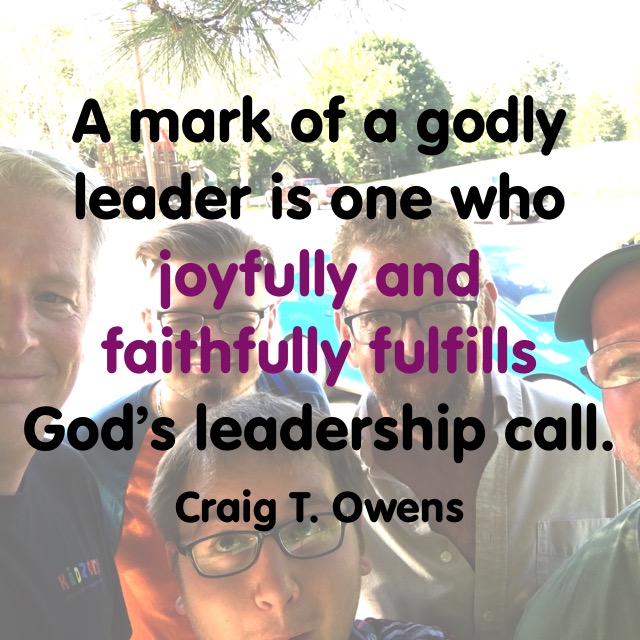
A mark of a godly leader is one who joyfully and faithfully fulfills God’s leadership call. 

This is part 67 in my series on godly leadership. You can check out all of my posts in this series by clicking here.

►► Would you please prayerfully consider supporting this ministry? My Patreon supporters get behind-the-scenes access to exclusive materials. ◀︎◀︎
Watch Out When Wants Become “Needs”

Listen to the podcast of this post by clicking on the player below, and you can also subscribe on AppleSpotify, or Audible.

There is a mistaken belief that urges or yearnings or cravings that humans have are sinful and must be quickly squelched. To that end, many will deny themselves absolutely anything that brings them pleasure. 

But what God creates, He calls “good” and even “very good” (Genesis 1:4, 10, 12, 18, 21, 25, 31). In one part of the Creation account, we read that God created “trees that were pleasing to the eye and good for food” (2:9). Things used in the way God created them are both good and good for us. The Creator knows the best uses, and He shares these with us. He also knows the harmful misuses, and He warns us of these. 

Even Lucifer was created “perfect in beauty” until his craving for more than God had given him corrupted his goodness and turned him into satan (Ezekiel 28:12-19). satan’s craving perverted his heart because he craved more than what the Creator had given him. 

He still uses the same tactic today: he attempts to turn a craving for a legitimate good into an irresistible, entitled pursuit for more. This is what he did with Adam and Even in the Garden of Eden, trying to get them to doubt God’s wisdom in forbidding them from eating that one tree (Genesis 2:16-17, 3:1-6). 

Adam and Eve needed food, and God gave them a craving for good food. But they didn’t need the fruit from the Tree of the Knowledge of Good and Evil—they just wanted that forbidden fruit. 

When wants become “needs,” “needs” become idols. 

Once again, satan tried the same strategy with Jesus. Jesus had a craving for food after 40 days of fasting, but His Father said, “Not yet.” Notice how satan again tried to get Jesus to question God’s wisdom with his “if” questions at each temptation. He even quotes a Scripture out of context to try to legitimize turning a want into a need (Luke 4:3, 7, 9). 

These longings may seem irresistible, but John counsels us: For every child of God can obey Him, defeating sin and evil pleasure by trusting Christ to help him (1 John 5:4 TLB). Jesus defeated the craving for wants-turned-to-“needs” by using the Word of God, and we would be wise to do the same (Luke 4:4, 8, 12). 

When wants become “needs,” “needs” become idols. And when “needs” become idols, our unfulfilled cravings create anxiety. And when anxiety persists, sin is usually not too far behind. 

So any anxiety in our hearts should alert us to the idols of wants-turned-to-“needs.” In other words, make sure what you are calling “needs” aren’t just wants in disguise. 

How can you do this? By asking yourself these four questions: 

  1. Is this an earthly craving or an eternal craving? Cravings for earthly things will ultimately fail because this world is temporary (1 John 2:17).  
  2. If I don’t get this thing, will I die? If I answer “no,” it’s probably a want. 
  3. Will this craving bring me closer to God? Jesus said, “Your Father knows what you need before you ask Him” (Matthew 6:8). So let’s ask ourselves, “If this longing is fulfilled, will it make me more dependent on God?” If the answer is “no,” then it’s probably a want. 
  4. Will this craving glorify God’s name? Jesus taught us to begin our prayer with an attitude of longing for God’s name to be glorified (Matthew 6:9-10). We can definitely spot wants we’ve turned into “needs” when we are looking for personal gain. Check out this verse from the prophet Isaiah— 

And therefore the Lord earnestly waits, expecting, looking, and longing to be gracious to you; and therefore He lifts Himself up, that He may have mercy on you and show loving-kindness to you. For the Lord is a God of justice. Blessed—happy, fortunate, to be envied—are all those who earnestly wait for Him, who expect and look and long for Him—for His victory, His favor, His love, His peace, His joy, and His matchless, unbroken companionship! (Isaiah 30:18 AMP) 

God longs to be gracious to you, so He puts cravings in your heart that can only be satisfied by His presence. Lucifer and Adam and Eve all lost God’s “matchless, unbroken companionship” when they tried to appease the wants-turned-to-“needs” idol. It doesn’t have to be like that for us! Ask the Holy Spirit to help you spot those wrong cravings and turn them into cravings that only God can satisfy. 

If you’ve missed any of the messages in our series called Craving, you can find the full list by clicking here. 

►► Would you please prayerfully consider supporting this ministry? My Patreon supporters get behind-the-scenes access to exclusive materials. ◀︎◀︎

Growing The Wrong Thing

Listen to the podcast of this post by clicking on the player below, and you can also subscribe on AppleSpotify, or Audible. 

In a recent teaching time with some ministry interns, I discussed the two main metrics that we can use to measure growth: quantity and quality. Sadly, too many churches and ministries have gotten so caught up in the “numbers game” of more-more-more being the only metric of success, that they’ve forgotten about quality. Or maybe they do focus on quality, but only as a means to the end of more-more-more. 

This is never a metric of success that is discussed in the Bible. Check this out…

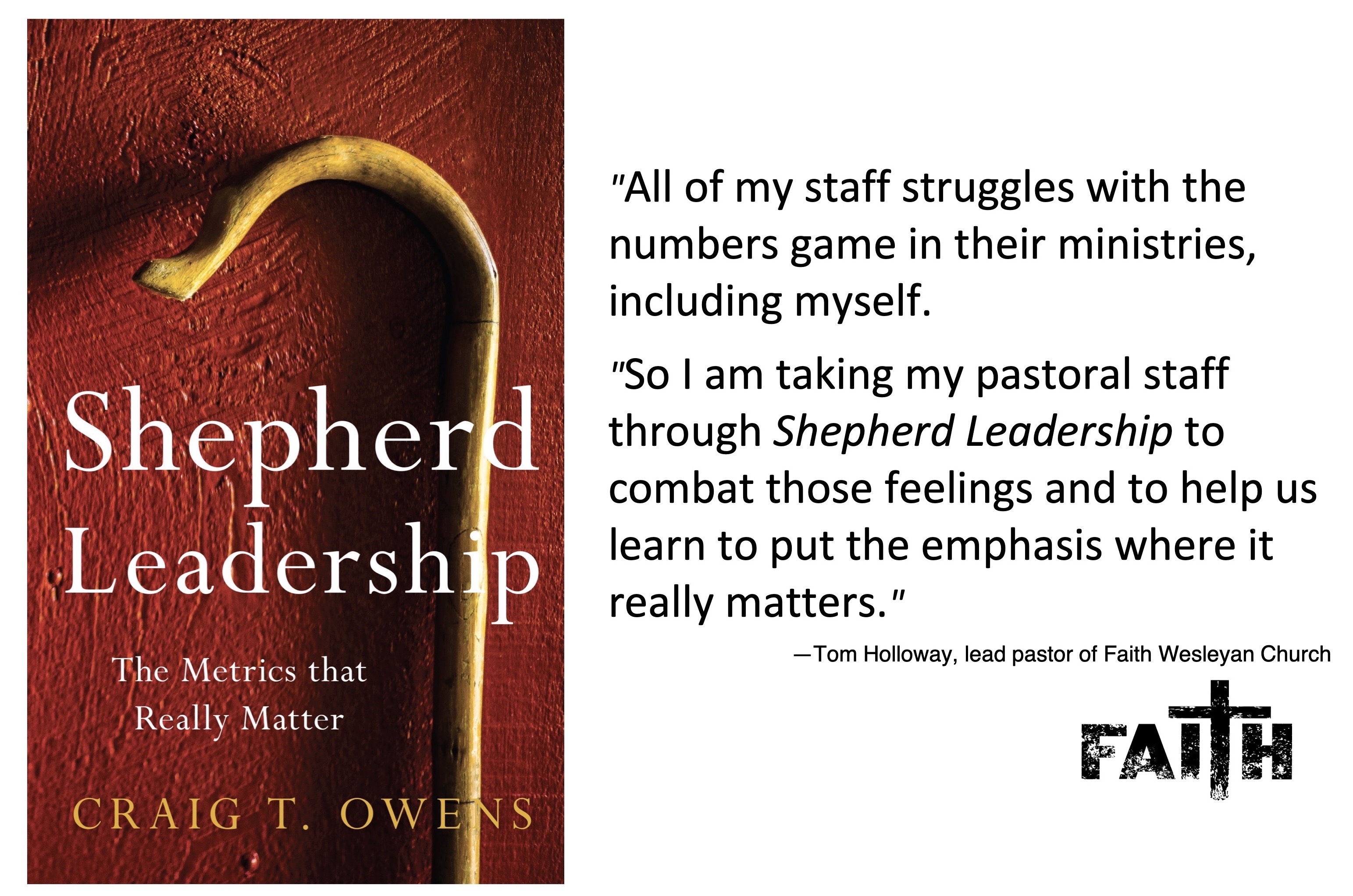
In the chapter entitled ‘Don’t Try to Grow Your Ministry’ in my book Shepherd Leadership: The Metrics That Really Matter I wrote this—

Businesses think in terms of quantitative gains—things they can count—but churches and nonprofits should be thinking in terms of qualitative gains—a quality improvement that isn’t as easily counted. I think we all know this, and yet we still persist in wanting to define success in a church or a nonprofit by those quantitative standards such as attendance growth, donations, and the like. When we think qualitative over quantitative, suddenly what seemed “small” is so significant and so valuable that it cannot be calculated! What if one of those babies that weren’t aborted discovers a cure for cancer, or deciphers a dialect to take the Gospel to an unreached people group, or becomes the loving next-door neighbor that leads your son or daughter to a relationship with Jesus? 

Just as you cannot put a price tag on a life, you cannot put a price tag on a sheep. Make no mistake about it, God views His sheep—every single one of them—as invaluable. Because His valuation is so high, we can understand why He gets so angry at those who are more concerned about their success than they are about the health of the sheep. When God uses the word “Woe!” we should definitely take that seriously. He uses that very word to warn shepherd leaders who were shirking their responsibility when He said, “Woe to those shepherds who only take care of themselves” (Ezekiel 34:2). 

When we map out our plan for success, or when we try to define success solely by quantitative measurements, we ultimately become more committed to our plans than to God’s sheep. God pulls no punches when He calls leaders with this attitude evil, mere hired hands, or even thieves (Jeremiah 23:3; John 10:8, 12). And most sobering of all, God says, “I will hold them accountable” (Ezekiel 34:10). 

Friends, let’s make sure we are focused on the metrics that really matter. Recently, a pastor shared honestly with me about his frustration with the “numbers game,” and purchased five copies of my book to use as a discussion starter with his church staff. I hope you will consider using Shepherd Leadership in a similar way. If I can be of assistance, please let me know. 

Shepherd Leadership is available in print or ebook, and in audiobook through either Audible or Apple. 

►► Would you please prayerfully consider supporting this ministry? My Patreon supporters get behind-the-scenes access to exclusive materials. ◀︎◀︎

Responsibility And Accountability

Listen to the podcast of this post by clicking on the player below, and you can also subscribe on AppleSpotify, or Audible. 

God had a rather simple message for Ezekiel, “The word of the Lord came to me: ‘Son of man, speak to your people’” (Ezekiel 33:1–2). 

I find that pronoun “your“ intriguing because you would think that God would say, “My people.” They are indeed God’s people, but God had set Ezekiel apart as His watchman (vv. 7–20), so Ezekiel had to take personal responsibility for the people. They were to be treated and spoken to as though they were indeed his people. 

This idea of responsibility gets a little tricky for some leaders because, with the responsibility to their people, they usually feel they are accountable to their people as well. 

But in the next few verses, God makes it clear that Ezekiel must be accountable to God alone.

Responsible to his people. Accountable to his God. 

When we start feeling we are accountable to people, we can get distracted, discouraged, or derailed by their unpleasant responses. 

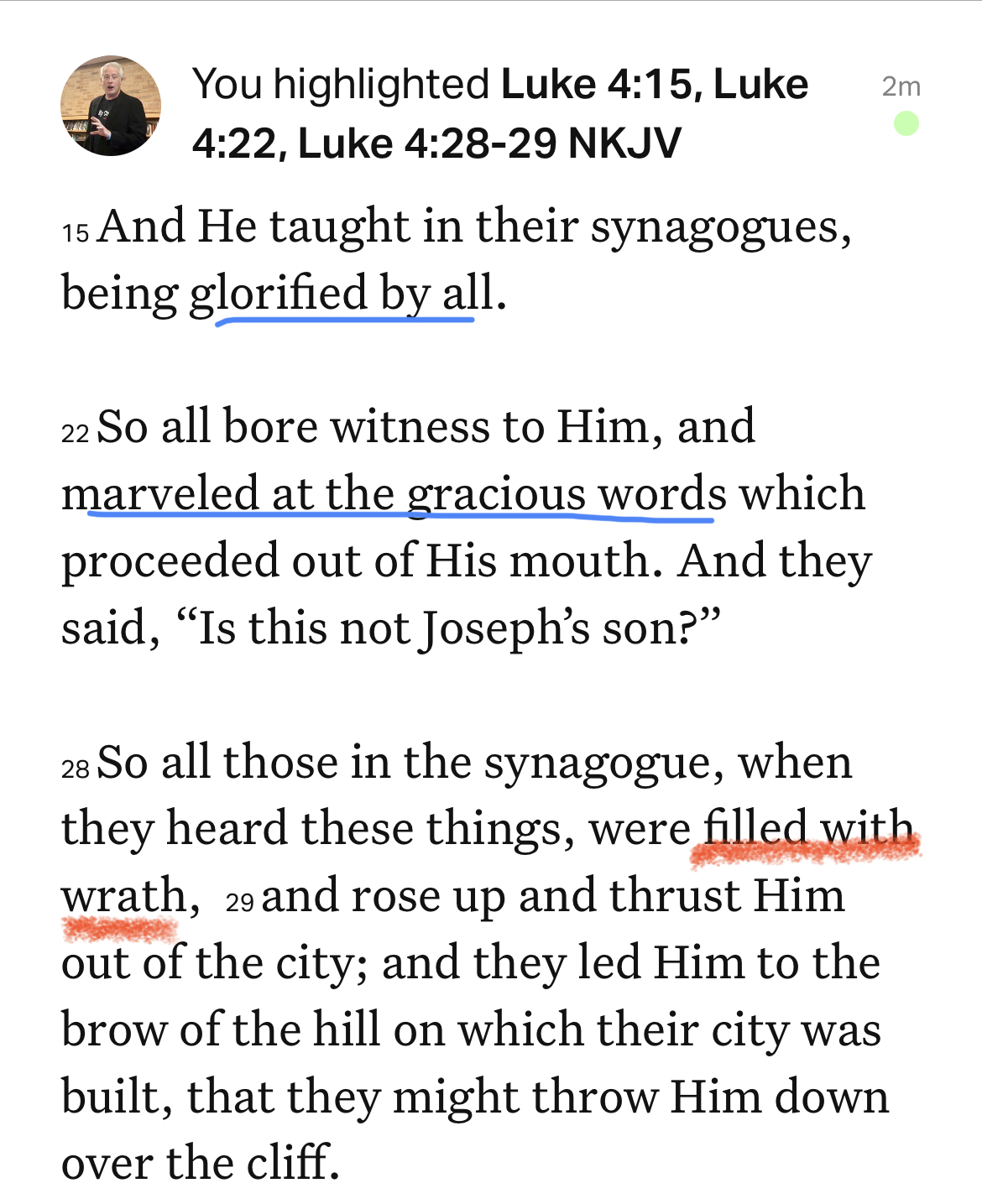
Notice that when Jesus spoke pleasing words to people, everyone spoke well of Him. But when He pointed out to them the words of God they were ignoring, they were ready to kill Him. 

People are fickle—they sing praises when they hear those words they like, and they are ready to attack the messenger when the words are upsetting. 

A mark of a godly leader is one who has a clear understanding of his responsibility and his accountability.

When you are God’s leader, He will entrust people to your care and He will entrust His message for those people to you. You are now responsible to deliver His message to your people. You are then accountable to God alone for delivering His message. Be responsible to people, accountable to God, and be careful not to mix the two. 

This is part 66 in my series on godly leadership. You can check out all of my posts in this series by clicking here.

►► Would you please prayerfully consider supporting this ministry? My Patreon supporters get behind-the-scenes access to exclusive materials. ◀︎◀︎
Be The One

Listen to the podcast of this post by clicking on the player below, and you can also subscribe on AppleSpotify, or Audible. 

John Maxwell was right: “Everything rises and falls on leadership.” 

As the leader goes, so goes the family, the neighborhood, the business, the church, the country. Just as Israel’s leaders fell into sin and took the people down with them, so too the religious and political leaders in America are leading people to sin. 

God told Ezekiel, “See how each of the princes of Israel who are in you uses his power to shed blood” (Ezekiel 22:6). These ungodly leaders were described as:

  • disintegrating the family 
  • mistreating orphans and widows 
  • despising God’s holiness 
  • slandering the righteous 
  • promoting idolatry 
  • living lewdly
  • winking at sexual depravity 
  • being dishonest in their business dealings
  • defrauding their neighbors 
  • treating people like possessions 
  • pursuing immoral gain
  • whitewashing evil (vv. 6-12, 25-28)

The bottom line: God says, “You have forgotten Me” (v. 12). 

This kind of evil must be punished by an All-Righteous God. 

But God is still merciful. He is still looking for just one who will turn away from the sins of the culture and live righteously. He is looking “for someone among them who would build up the wall and stand before Me in the gap on behalf of the land so I would not have to destroy it” (v. 30). 

God is looking for just one leader who will seek God’s glory and not personal gain, who will stand for righteousness even if he has to stand alone. 

Will you be that one? 

I pray I may be that one! 

I pray for godly leaders to stand up! “Holy God, may we stand for You in this evil culture. May Your Holy Spirit strengthen us to stand unmoved against the onslaught of depravity. Strengthen us against the evil one and against evil people, knowing that greater are You in us than the evil that is in the world. May we be the ones that refuse to bend our knee to anyone or anything but You. In the powerful name of Jesus, I pray this. Amen!” 

►► Would you please prayerfully consider supporting this ministry? My Patreon supporters get behind-the-scenes access to exclusive materials. ◀︎◀︎
Empowered To Obey

Listen to the podcast of this post by clicking on the player below, and you can also subscribe on AppleSpotify, or Audible. 

God said to Ezekiel, “Son of man, stand up on your feet” (Ezekiel 2:1). 

Ezekiel had fallen face down at the sight of God—how awesome God’s presence must have been! Now God tells Ezekiel to stand up so that He may speak with him. It seems as if God is asking Ezekiel to do the impossible. 

But we must remember this principle:

All of God’s commands are also His empowerment.

Ezekiel responded: “As He spoke, the Spirit came into me and raised me to my feet” (v. 2). 

As God spoke His commandment to Ezekiel, His empowerment to help him obey infused Ezekiel. God’s power allowed Ezekiel to obey. His word of command was also His word of enablement. 

There is no word of God that can ever be too hard for us to obey. God would never command us to do what is impossible for us to do, but with His command also comes His empowerment to obey that command.

And as Ezekiel obeyed, he was then able to hear even more of God’s word to him. 

This principle is still true for us today. When God speaks a word to our heart, never say to Him, “What? That’s too hard! I could never do that!” Instead, we need to say, “God, that seems like a hard word, but because Your word is also the empowerment I need, I will obey You.” And as you obey, God is then able to speak even more words to your heart. 

►► Would you please prayerfully consider supporting this ministry? My Patreon supporters get behind-the-scenes access to exclusive materials. ◀︎◀︎