Ephesians 4:29 Don’ts And Dos

Let no foul or polluting language, nor evil word nor unwholesome or worthless talk ever come out of your mouth, but only such speech as is good and beneficial to the spiritual progress of others, as is fitting to the need and the occasion, that it may be a blessing and give grace to those who hear it. (Ephesians 4:29 AMPC)

Don’t use…
❌ foul words
❌ polluted words
❌ evil words
❌ unwholesome words
❌ worthless words

Do use…
✅ good words
✅ beneficial words
✅ encouraging words
✅ helpful words
✅ graceful words

Let’s put Ephesians 4:29 in practice with every conversation—both in-person and online.

Check out this related post: Choice four-letter words. 

And this related video: Good words are a blessing.

Beware Of People Pleasing

Listen to the podcast of this post by clicking on the player below, and you can also subscribe on AppleSpotify, or Audible. 

The apostle Paul asked himself a question which is also a great question for every Christian to ask themselves: “Am I trying to please people?” (Galatians 1:10). 

Trying to please people is a trap, and the inevitable result is frustration. Why frustration? Because it is impossible to please everyone. Even Jesus couldn’t do that!

If I am trying to win support from people, I will have to be like a politician who is angling for votes. I will have to make concessions and modifications based on which group I may be speaking to. For a Christian trying to live by the Bible, there are no concessions or modifications that can be made. 

In Galatians 1:10, Paul goes on to say, “If I were still trying to please people, I would not be a servant of Christ.” That is because trying to please people is not serving people but serving my own ego. 

Let’s zoom-in on the question Paul uses to open this verse: “Am I now trying to win the approval of human beings, or of God?” 

He is not saying, “I hope God approves of me.” When we have welcomed Jesus into our life as our Lord and Savior, we are already fully accepted and approved of by our Heavenly Father—

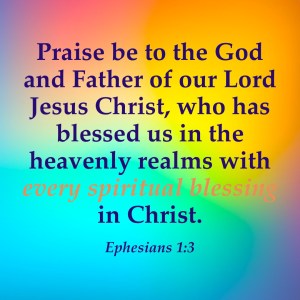
   Blessed be the God and Father of our Lord Jesus Christ, who has blessed us with every spiritual blessing in the heavenly places in Christ, just as He chose us in Him before the foundation of the world, that we should be holy and without blame before Him in love, having predestined us to adoption as sons by Jesus Christ to Himself, according to the good pleasure of His will, to the praise of the glory of His grace, by which He made us accepted in the Beloved. (Ephesians 1:3-6) 

We do not have to try to earn God’s approval, but we will have to stand before Him someday to give an account of how we lived our lives and how we proclaimed the Gospel to others. Looking ahead to this “finish line” will keep us disciplined (Philippians 3:12–14) so that we can rejoice in our reward as our end draws near (2 Timothy 4:6–8). 

Let us live, and talk, and work for the applause of nail-scarred Hands. There is only one Voice that we want to hear saying, “Well done, good and faithful servant.” Don’t fall into the people pleasing trap, but keep your eyes and ears solely on your Savior. 

Related posts:

►► Would you please prayerfully consider supporting this ministry? My Patreon supporters get behind-the-scenes access to exclusive materials. ◀︎◀︎

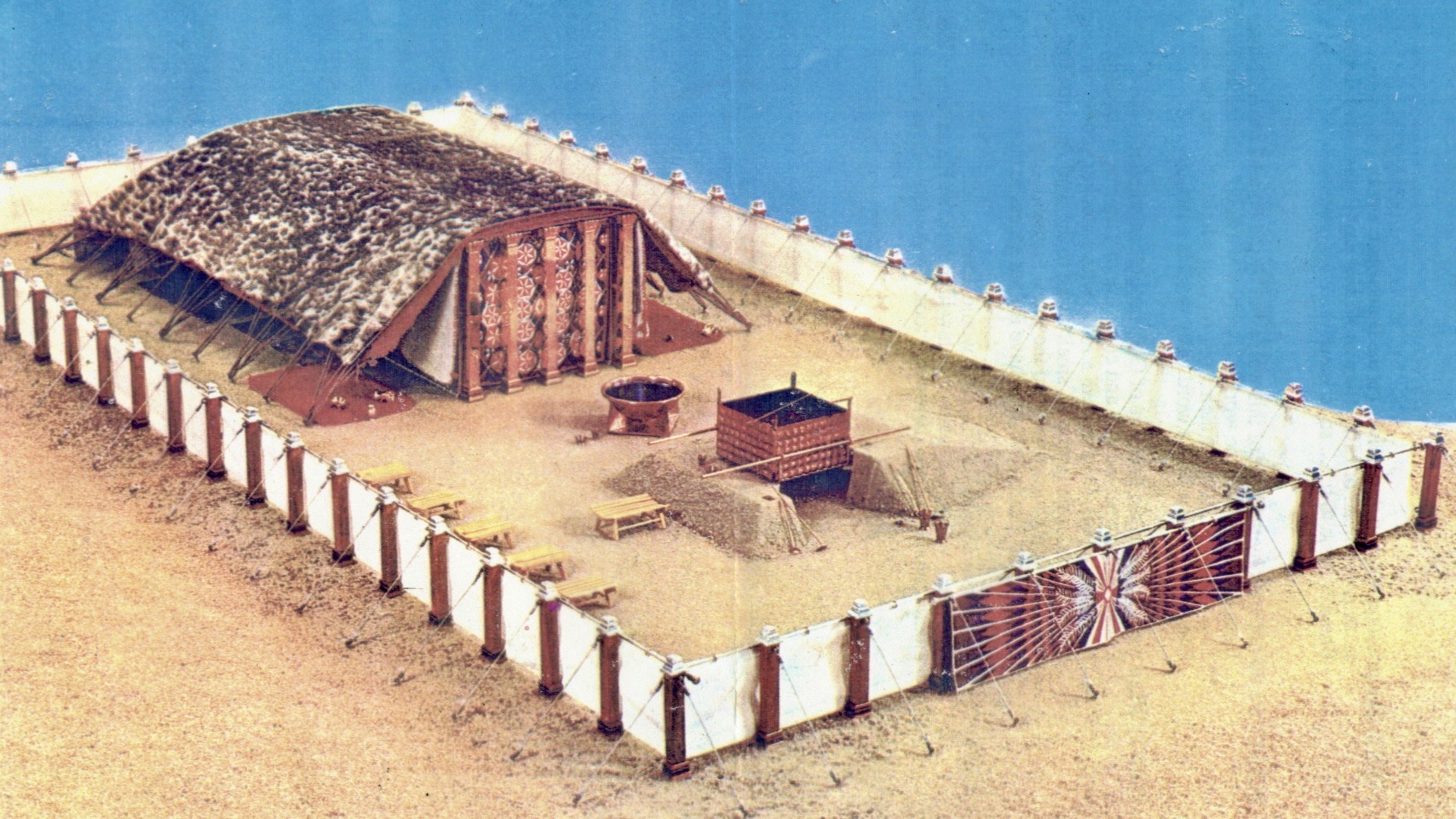
A Tour Of The Tabernacle

Listen to the podcast of this post by clicking on the player below, and you can also subscribe on AppleSpotify, or Audible. 

I was absolutely fascinated by a Messianic Jew’s insights on the Old Testament Tabernacle, and how every aspect of it pointed to Jesus the Messiah. 

The overview of the construction of the Tabernacle starts in Exodus 25 and covers the next fifteen chapters in that book. Here are a few of my main takeaways from my friend’s teaching. 

All of the Scriptures I mention can be found here. 

The materials for the Tabernacle are brought as a freewill offering given by freed slaves (Exodus 25:1-2). This gold, silver, bronze, linens, and other materials were gifts from the Egyptians when the Israelites left on the night of the Passover. 

The Tabernacle is at the center of the Israelite camp (Numbers 2:1-34), signifying God’s presence in the center of our lives. When the Israelite community moved out, the tribe of Judah went first. Judah means “praise.” What a great reminder to let praise to God be at the forefront of all we do! 

In Exodus 27:16, the materials to be used for the curtains compromising the entrance to the Tabernacle are blue, purple, and scarlet. The blue is for sky (Heaven), the purple designates royalty, and the scarlet signifies the blood of the sacrifices. Jesus came to earth as royalty from Heaven, and by His shed blood He opens the way for all of us to be with Him in Heaven forever! Jesus said He was the only way to Heaven (Hebrews 2:14-15; John 14:6). 

The bronze altar for cleansing was just inside the entrance (Exodus 27:1-8). The worshiper offered this sacrifice in place of their sin. The priests would then move to the laver to wash off the dirt of the world. It’s important to note that the priests wash at the laver, not in the laver. Jesus is the One who washes us and cleanses us (Ephesians 5:26). 

There are four different coverings over the Holy Place. As the priest progresses farther into the Holy Place, the coverings become thicker, so less outside light is visible. 

  • First covering (Exodus 26:1) was blue, purple, and scarlet yarns (like the colors at the entrance) with cherubim woven into the fabric. The priests looking up would see these angels. 
  • Second covering (v. 7) was goat’s hair. Goats were used for sin offerings, reminding the priests that there was a sacrifice to cleanse them so they could approach the presence of God. 
  • Third covering (v. 14) was a red-dyed ram skin, showing the blood that covers us. 
  • Fourth covering (v. 14) was the durable leather of a badger. Now there would have been very little light from outside, but the angels would still be seen for those inside the Holy Place. 

In the Holy Place was the showbread (sometimes called the bread of presence) pointing to Jesus as our Bread of Life (Exodus 25:23-30; John 6:35). Also in the Holy Place was the lampstand filled oil (vv. 31-37). Only one stick holds the oil and supplies the other six branches. The priests could only work by the light of God. Jesus is our light (John 8:12). And we also find the altar of incense here (30:1-7). This was a unique perfume that wasn’t used anywhere else. The prayers of the saints that arise before the throne in Heaven as said to rise as incense (Psalm 141:2; Revelation 5:8). Worshipers in God’s presence are saturated with the aroma of Jesus (2 Corinthians 2:14-15). 

In the Holy of Holies is the ark of the covenant of the Lord (25:10-22). Inside the ark were the stone tablets that contained the Ten Commandments. On top of the ark, overshadowed by the wings of two huge cherubim angels, was the mercyseat or atonement cover. Notice that mercy is over the Law, and that the blood of the sacrifice of Jesus covers my disobedience and makes me at one with God (the literal definition of atonement). 

How beautifully all of these aspects of the earthly Tabernacle point to Jesus (Hebrews 8:5, 10:1)! And even more amazingly, Jesus fulfilled every requirement in this Tabernacle to make it possible for all who put their faith in Him to enter the Heavenly Tabernacle and remain in His presence for ever and ever! 

►► Would you please prayerfully consider supporting this ministry? My Patreon supporters get behind-the-scenes access to exclusive materials. ◀︎◀︎

Refuge From The Shoving

Listen to the podcast of this post by clicking on the player below, and you can also subscribe on AppleSpotify, or Audible. 

I don’t know when the last was that you may have tried to get a dozen little kids lined up, but it’s quite an experience! Everyone is vying for their spot. Someone gets mad and yells out, “He cut!” And then the reply is yelled back, “No, I didn’t. She was saving my spot!” This usually results in lots of pushing and shoving as each person tries to reclaim their rightful place in line. 

This is the backdrop for Psalm 7. The introduction tells us that Cush is causing David grief. Maybe because Cush is from the tribe of Benjamin like King Saul, and he doesn’t want David cutting in line so he is shoving him back to his proper place. 

(Check out all of the Scriptures in this post by clicking here.)

There’s a musical term David uses, which isn’t used in any other psalm: shiggaion. This means a rhythm that isn’t normal—it’s a freewheeling, irregular, impassioned beat. This also helps set the atmosphere for what’s happening in David’s life. The root word for shiggaion implies a shakeup (or a shoving and pushing) that could lead to someone losing their way. 

David tries to do the right thing. He asks for God’s help (v. 1) so that he doesn’t get ripped to shreds (v. 2). He even takes time to ask himself if he has done anything that led to Cush’s shoving (vv. 3-5). But notice these are all David’s attempts to make things right. 

Remember that this is a Royal Psalm, but we haven’t heard anything about God as King yet. But now we come to the end of v. 5, which is also the end of David’s own striving. It’s marked by the word Selah. 

My little friends push and shove to try to get their place. But all of that stops when I say, “Johnny is my line leader, and this is the way the rest of you are going to line up behind him.” David’s Selah pause was a call to switch from doing things on his own to yielding to the King to sort things out. He was saying, “The King of kings is the Leader and He knows my place in line.” 

It’s only after the Selah that we see the royal terms for the Undisputed Leader:

  • He is the One who will decree justice (v. 6) 
  • He will rule…from on high (v. 7) 
  • He is the Supreme Judge (vv. 8, 11) so David yields his introspection to Him (vv. 3-4, 8-9) 
  • He is God Most High (vv. 10, 17) 

Our King has no rival. No one can shove Him. No one can contradict Him. No one can hide anything from Him (vv. 11-16). 

We must bow only to the King of kings (Philippians 2:10-11). 

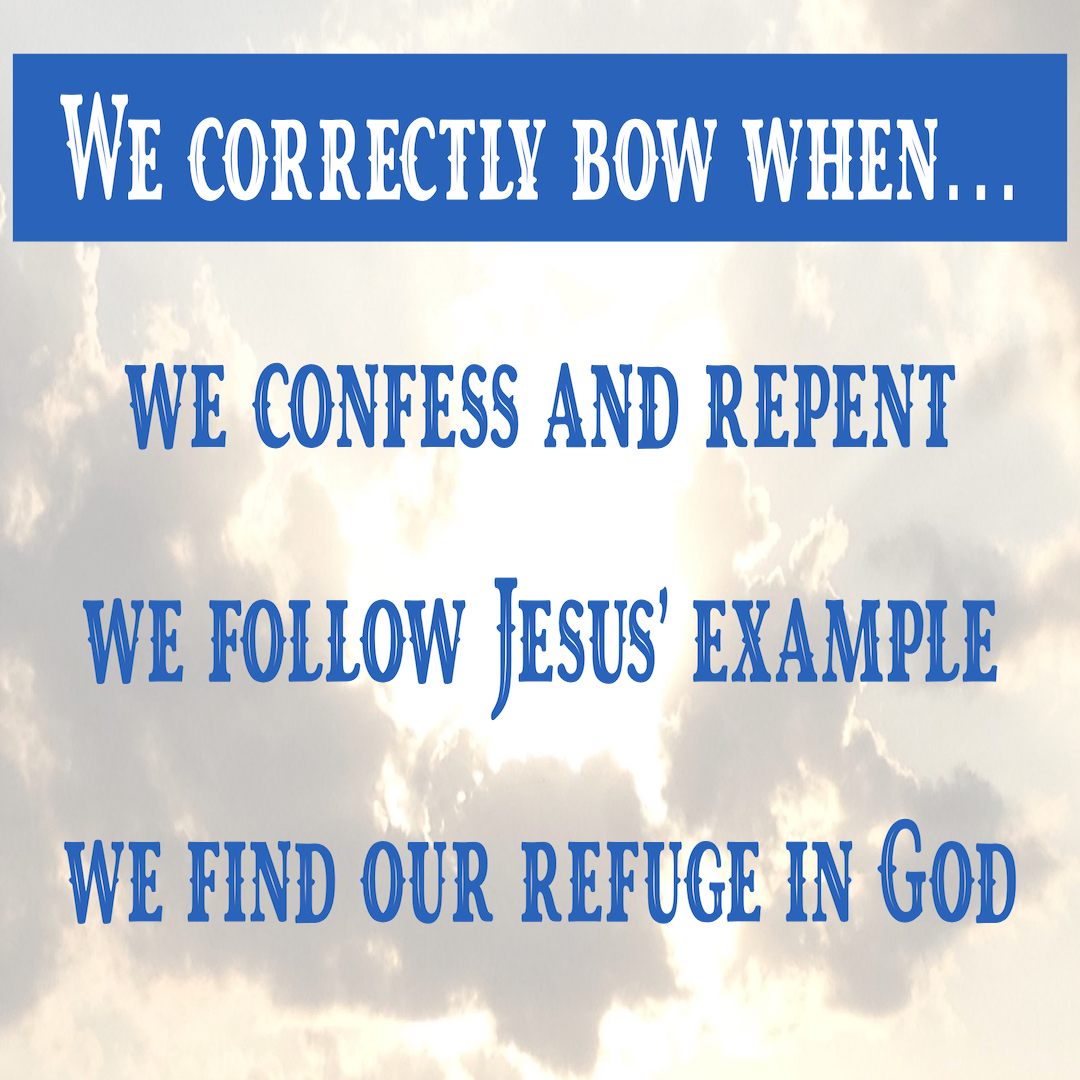
We mistakenly bow our knee to man when…

  • …we aren’t willing to own our mistakes 
  • …we try to administer our own “shove” of justice 
  • …we make our own refuge 

So we bow to the King when…

  • …we acknowledge, confess, and repent of our sins (vv. 3-5; Psalm 19:12, 69:5)
  • …we follow the example of Jesus when we’re shoved around (1 Peter 2:21-23)
  • …find our refuge solely in God (v. 1; c.f. 2:12; Ephesians 6:12; James 4:7)

Our best response in troublesome times—when you feel like you are being shoved around—is to fall to your knees in reverence to the King of kings (v. 17)! The beloved of the Lord shall dwell in safety by Him; He covers him all the day long, and makes His dwelling between his shoulders (Deuteronomy 33:12 AMPC). 

If you’ve missed any of the other messages in our series looking at the royal psalms, you can catch up by clicking here. 

►► Would you please prayerfully consider supporting this ministry? My Patreon supporters get behind-the-scenes access to exclusive materials. ◀︎◀︎
Links & Quotes

People need to know how much you love them before they will listen to any correction you may need to give them. “Real friends hurt each other.” Check out the full sermon here.

I have a lot of new video content on my YouTube channel every week. Please check it out and subscribe so you don’t miss anything.

David Mathis shares a faith-building message of confidence during times of crisis. He takes his text from Psalm 46—“Whatever trouble comes, Psalm 46 tells us, with its first word, where to turn. Not to a change in circumstances. Not to our best efforts to fix the problem. Not to our anxious strategies to avoid pain and loss. But rather, turn to God.”

“There is not a facet of our lives, not an interest or occupation, not a nook or cranny of the cosmos, where God does not intend that His glory should shine forth and be known. Indeed, even now He is showing His glory in created things, and even in much of the culture that human beings make to meet their own needs (Psalm 19:1-4; Psalm 68:18). God is manifesting His glory; it is there to be noted and pondered. The task of those entrusted with the Kingdom economy is to serve as docents of the glory of God, bringing His glory to light and making Him known for all to see in these last days. … Our mission in these last days is to glorify God by living out the reality of His indwelling Presence among the people to whom He sends us day by day (cf. Micah 4:1-8). In all our relationships, cultural activities, conversations, families, vocations, and diversions, what will it look like, and how will it appear to others when the glorious Presence of God is being refracted through us?” —T.M. Moore 

“The resurrection of Jesus from the dead was the one unvarying refrain of the apostles. This chapter [1 Corinthians 15] is the fullest discussion of it in the New Testament. It is one of the most significant and grandest chapters in the Bible because of the meaning it gives to human life. … The resurrection of Jesus from the dead is the one most important and most established fact in all history. And the story of it has come down to us through the centuries, beautifying human life with the halo of immortality; making us feel sure that because He lives again we too shall live; making our hearts thrill with the thought that we are immortal, that we have begun an existence that shall never end; that nothing can harm us; that death is merely an incident in passing from one phase of existence to another; that wether here or there we are His, doing the thing He has for us to do; that millions of ages after the sun has grown cold, we ourselves shall still be young in the eternities of God.” —Dr. Henry Halley

Would you like to get better sleep and lower your stress levels? Check this out: “If you share a bed with your sweetie, consider incorporating this step into your nighttime routine if you aren’t already: a snuggle sesh…. A study found that couples who cuddled prior to drifting off experienced less stress and more feelings of security in the relationship.”

“The Bible tells us to love our neighbours, and also to love our enemies; probably because they are generally the same people.” —G.K. Chesterton 

John Piper is asked an interesting question from Ephesians 6:12—are our adversaries merely flesh-and-blood humans or are demonic forces at work? “Flesh and blood apart from Christ is always under the sway of the spirit of the age, and it’s always under the sway of the prince of the power of the air, and it’s always acting out of its own bodily, mental desires. Therefore, in one sense, there is no separation in our warfare with human sinfulness and demonic schemes. They overlap; they’re intertwined.”

Good Grief From A Friend

Listen to the podcast of this post by clicking on the player below, and you can also subscribe on AppleSpotify, or Audible. 

After God created Adam, He said, “It’s not good for you to be alone.” That’s just as true today: God didn’t intend for us to journey on our own, but He gives us companions along the way. 

Last week we saw that God has to sometimes cause us grief to get our attention when we are straying from His path. He sometimes puts people in our lives to do the same thing. 

There’s a reason God puts the people in our lives that He does. We are called to speak the truth in love (Ephesians 4:15). But that sometimes means people will get upset with us (Galatians 4:16). “Real friends hurt each other. … Truth is the primary way faithful friends should wound each other—it is the help that hurts.” —Dick Brogden 

(Check out all of the verses in this post by clicking here.) 

The Corinthians thought they were super-spiritual, but Paul had to call them out on their foolishness (1 Corinthians 3:3; 5:1-2). Before Pauls’ letter, the Corinthians seemed happy. His letter caused them grief, but it was good grief that led to repentance and true joy (2 Corinthians 7:8-10). 

To keep silent when a brother or sister is straying is not God-honoring. We are not to be the sin police, but we are to address sinful issues (James 5:19-20). 

As King David flirted with the idea of how he could get something that he thought would make him happy, an anonymous attendant tried to get his attention. David ignored this and then tried to sweep it under the rug. In fact, he thought he got away with his sin (2 Samuel 11:1–12:7). 

But God sent Nathan to speak a hard word to David. We don’t know when Psalm 141 was written, but we know that David did write it. Perhaps it was penned at the time of Nathan’s loving confrontation. He said, “Let a righteous man strike me—that is a kindness; let him rebuke me—that is oil on my head” (Psalm 141:5). 

We do know that David wrote Psalm 51 after Nathan’s loving hard word, and in this prayer we see David’s confession, repentance, and a request for God’s joy to replace David’s grief. 

So how do New Testament-era Christians use good grief to help fellow saints? 

  1. Examine yourself first (Matthew 7:1-5). Make sure you aren’t plagued by the same sin you have noticed in a brother or sister. 
  2. Cry before you confront, just as the prophet Samuel did before he had to deliver a hard word to King Saul (1 Samuel 15:10-11). 
  3. Confront in love with the goal of restoration, but make sure you are confronting someone who know you love them and who will receive your loving word  (Proverbs 27:5; 9:8). 
  4. Pray that their grief will be turned to joy (Luke 22:31-32; Galatians 6:1; Psalm 51:12). 

Friendships with fellow saints are precious and they are vital. We need iron to sharpen iron (Proverbs 27:17) so that we will all stand before the throne together for eternity. 

This is the final message in our series Grief Into Joy. If you missed any of the messages, you can check them all out by clicking here. 

►► Would you please prayerfully consider supporting this ministry? My Patreon supporters get behind-the-scenes access to exclusive materials. ◀︎◀︎

Never Invulnerable

Listen to the podcast of this post by clicking on the player below, and you can also subscribe on AppleSpotify, or Audible. 

Before beginning His public ministry, Jesus resisted the fierce onslaught of the devil in the wilderness. After using the Word of God to defeat all three of the devil’s temptations, Luke records, “the devil…left [Jesus] until an opportune time” (Luke 4:13). 

The verb Luke uses here is suggestive of a time when the devil may think he has an advantage over his intended victim. The KJV says the devil departed for “a season.” Just like farmers know the proper season to plant, to weed, to harvest, and to rest, so does our adversary. 

Check out how some other translations of the Bible render Luke 4:13—

  • another more opportune and favorable time (AMPC) 
  • until the next opportunity came (NLT) 
  • lying in wait for another opportunity (the Message paraphrase) 

Jesus warned Peter that the devil wanted to sift him as wheat (Luke 22:31-32). Although Peter knew the “opportune time” was coming, he was unprepared when it did come and he failed in his initial time of temptation. Jesus restored Peter and told him that he was going to be the one to help prepare others to be victorious when the devil attacked them. 

Peter may have had this in mind when he warned us to be alert for our prowling enemy (1 Peter 5:8). The apostle Paul also tells us to be aware of the devil’s schemes, and to never be without our spiritual armor (2 Corinthians 2:11; Ephesians 6:11). 

There is never a time when I am invulnerable to a spiritual attack. 

The moment I think I am self-secure is an opportune season for the devil to unleash his attack on me. “If you think you are standing firm, be careful that you don’t fall” (1 Corinthians 10:12). 

Peter tells us to “resist [the devil], standing firm in the faith” (1 Peter 5:9). In the preceding three verses, Peter tells us just how to do this:

  • humble yourself before God—no feelings of self-sufficiency 
  • don’t be anxious about an impending attack 
  • remain alert and sober minded (1 Peter 5:6-9) 

Don’t be caught off-guard by giving the devil “an opportune time,” but stay utterly dependent on God. As James says, we have to first submit ourselves to God and then we will be prepared to resist the devil and watch him flee from us (James 4:7). 

►► Would you please prayerfully consider supporting this ministry? My Patreon supporters get behind-the-scenes access to exclusive materials. ◀︎◀︎

Murmuring Sheep

Listen to the podcast of this post by clicking on the player below, and you can also subscribe on AppleSpotify, or Audible. 

If you’re a shepherd leader, what do you do when the sheep under your care go, “Grrrr!”? 

To make sure that you haven’t done anything that caused the murmuring, you should humbly pray, “Search me, O God” (Psalm 139:23-24). And then, if you see you have done something wrong, repent and make things right. You may want to check out my blog post A Leader’s Sincere Apology. 

After this, Moses has given us in Exodus 16:8-9 two actions to take with murmuring sheep:

  1. If it wasn’t anything that you did, you need to remind yourself that the people are murmuring against God. 
  2. If it wasn’t anything that you did, you need to remind the sheep that they are murmuring against God. 

The other Scriptures I reference in this episode are Ephesians 4:15; Proverbs 27:5; Numbers 20:2-12. And the blog post I referred to in this video is How Are Godly Leaders To Use Their Authority. 

I would also encourage you to pick up a copy of When Sheep Bite to help you handle your murmuring sheep in a productive and God-honoring way. 

►► Would you please prayerfully consider supporting this ministry? My Patreon supporters get behind-the-scenes access to exclusive materials. ◀︎◀︎

Wolf Deterrent

Listen to the podcast of this post by clicking on the player below, and you can also subscribe on AppleSpotify, or Audible. 

As Paul is on his way to Jerusalem, he makes time to meet with the leaders of the Church in Ephesus. An important reminder Paul gives them comes from the example he lived out while he was in Ephesus: “For I have not hesitated to proclaim to you the whole will of God” (Acts 20:27). 

Some translations say “the whole counsel of God,” but I like the simple, straightforward wording in the KJV: “all the counsel of God.” In other words, Paul’s textbook was everything in the Scriptures. 

One of Paul’s traveling companions was Luke, who made frequent use of the Greek word boulē, which is translated “counsel.” He is the only Gospel writer to use this word, and then he uses it seven more times in the Book of Acts. Putting together Luke’s usage of boulē with the three other appearances in the New Testament, we can come up with a good overview of what Paul meant by “the whole will of God.” 

Boulē tells us that…

  • God’s purpose always prevails (Acts 2:23, 4:28, 5:38, 13:36; 1 Corinthians 4:5; Ephesians 1:11) 
  • Man’s counsel can be flawed (Luke 23:51; Acts 27:12, 42) 
  • God’s counsel if immutable (Hebrews 6:17) 
  • Men who mutate God’s counsel are the wolves that seek to destroy the flock (Luke 7:29-30; Acts 20:27-31)

(Check out all of these Scriptures by clicking here.)

Paul warned these Ephesians leaders: 

Keep watch over yourselves and all the flock of which the Holy Spirit has made you overseers. Be shepherds of the church of God, which He bought with His own blood. I know that after I leave, savage wolves will come in among you and will not spare the flock. Even from your own number men will arise and distort the truth in order to draw away disciples after them. So be on your guard!… (Acts 20:28-31, emphasis added) 

In my book When Sheep Bite I have a chapter called’ Driving Away the Wolves.’ In that chapter I point out—

  There is a phrase that is often associated with the behavior of wolves: a lone wolf. Normally, wolves travel and live in packs. The phrase “lone wolf” is associated with those who leave in order to find a mate, carve out their own territory, and then form their own pack. 

   Jesus said that His sheep hear His voice and follow Him. Lone wolves hear the shepherd’s voice but ignore it to follow their own pursuit of forming their own pack. Remember that these lone wolves don’t want to stay alone: they want to build their own following.

Jesus said we could spot imposters—wolves in sheep’s clothing—by their fruits (Matthew 7:15-20). Two evident fruits are: 

  1. Mutating the immutable counsel of God’s Word to suit their own needs 
  2. Ignoring or criticizing the whole counsel of God’s Word that godly shepherd leaders faithfully teach and preach

For shepherd leaders and their flocks, the whole counsel of God’s Word is the best wolf deterrent you can find! Another passage from my book says—

   David’s beautiful description of the Good Shepherd in Psalm 23 has a phrase that sounds unusual to my ears. He writes, “Your rod and Your staff, they comfort me.” How can such wooden instruments bring comfort to sheep? When the sheep know their shepherd has the rod of God’s Word in his hand and is skilled at using it, the sheep are far more relaxed around the shepherd. This is because a shepherd’s rod is not used against the sheep, but only against the enemies of the sheep. 

   Throughout the Old Testament, the rods in the hands of leaders were the symbol of their God-appointed authority (think of the staffs of Moses and Aaron). Those rods were symbolic of the words God had spoken to these shepherds to empower them to lead His sheep. In the New Testament setting, the Bible is described in similar terms. Shepherds are directed to correctly handle the rod of God’s Word, knowing that His Word is the only thing that can reliably care for the sheep by teaching, rebuking, correcting, and training (2 Timothy 2:15, 3:16). The sheep will welcome this; the wolves will fight against this. 

Pastors, immerse yourself in the whole counsel of God’s Word. Not just the parts that are comfortable for you or pleasant to preach about, but all of God’s Word! This will strengthen the rod of leadership God has given you, it will bring health and comfort to the sheep in your flock, and it will be a strong deterrent against the wolves that would seek to infiltrate your pasture. 

I would also humbly recommend that you pick up a copy of my book When Sheep Bite to help resource you to heal from old or ongoing injuries, and to fortify you to remain faithful to the call God has on your ministry. 

►► Would you please prayerfully consider supporting this ministry? My Patreon supporters get behind-the-scenes access to exclusive materials. ◀︎◀︎
3 Hindrances To Prayer

Listen to the podcast of this post by clicking on the player below, and you can also subscribe on AppleSpotify, or Audible.  I am sometimes amazed at how much Jesus accomplished in just a little over three years of public ministry. What I would have expected to see is a Man burning the candle at both ends—up early, working hard without any breaks each day, very little (if any) leisure time, and then burning the midnight oil.  But instead we see Jesus never seeming to be rushed or exhausted. He takes time for meals with friends, time away from the crowds, and still in just a short period of time He fulfilled hundreds of ancient prophecies and trained His followers to take the Gospel around the globe!  One of the keys is His priority. Notice that I said priority and not prioritieS. Jesus was singularly focused on His Father’s glory and He showed total dependence on Him. I think one of the most telling verses is Mark 1:35: “Very early in the morning, while it was still dark, Jesus got up, left the house and went off to a solitary place, where He prayed.”  If Jesus needed prayer to start His day, how much more do we need this!  Scottish pastor Robert Murray McCheyne wrote in his journal, “Rose early to seek God, and found Him whom my soul loveth. Who would not rise early to meet such company?” 

(Check out all of the Scriptures in this post by clicking here.) 

So why don’t we treat prayer like this? I think there are three main hindrances to keep us from making prayer a priority.  (1) Self-reliance. A common phrase we use is, “I need to get to work.” But this puts the emphasis on me—my plans, my abilities, my work ethic. I believe I can do more than pray, but I also believe that I shouldn’t do anything until I have prayed.  Prayer, therefore, is a reminder of my utter God-reliance.  God has a better plan than we do. God has more wisdom than we do. God has more strength than we do. So wouldn’t it be better to ask Him what we should be doing, how we should be doing it, and then ask Him for the strength to do it?  When we have this focus, our prayer time will keep us aligned with His plans and empowered with His wisdom and strength. Look at a couple of examples.
  • Sarah knew how to believe God because He showed how He kept His promise in His perfect timing (Genesis 21:1-2). 
  • Mary knew how to pray and behave in alignment with God’s word (Luke 1:31-38). Her prayer shortly after this is sautéed in Scripture, showing how she relied on God to keep His Word (vv. 46-55). 
  • Saul of Tarsus (who became Paul the apostle) had assurances of God’s direction for his life at almost every turn (Acts 9:15-16, 20:22-24, 21:10-14, 23:11, 27:21-25). Then he writes to his friends at Philippi how God received the glory throughout this whole process (Philippians 1:12-14, 25-26). 
We can live and pray with the same assurance that God is completely in control (Isaiah 55:8-11; Romans 8:26-28).   (2) Distractions. When Martin Luther was asked about his plans for the next day he said, “I have so much to do that I shall spend the first three hours in prayer.” That sounds unrealistic to most of us, but that is because we call too many things “priorities.” We need a singular priority: The knowledge of God’s will and the help that only God can give.  Stephen Covey has a very helpful tool that I use regularly: the urgent/important grid. Bible reading and prayer time is most decidedly a Quadrant II activity. We make time for these important activities by removing unimportant activities from Quadrant IV. The Bible frequently couples a “take off” with a “put on” (see 1 Corinthians 13:11; 2 Timothy 2:4; Ephesians 6:11-18), which should prompt us to ask, “What’s one thing I can take off of my Quadrant IV and put on that time for prayer in Quadrant II?”  (3) Uncertainty. Sometimes we may wonder if our prayers are doing anything. Maybe we think we are not praying the “right way” or perhaps we wonder if we are praying for something in alignment with God’s will or only our own selfishness.  The only two things Jesus said were the “wrong ways” to pray were praying to show off, and babbling like pagans (Matthew 6:5-8). As we read in Romans 8, the Holy Spirit will help us pray, if we will let Him.  One way we pray in alignment with God’s will is to pray using the Scripture. The Bible is our Prayer Book. Pastor Timothy Keller wrote, “Your prayer must be firmly connected to and grounded in your reading of the Word. This wedding of Bible and prayer anchors your life down in the real God. … Without immersion in God’s words, our prayers may not be merely limited and shallow but also untethered from reality.”  So here are three steps we need to implement to counteract those three hindrances to a consistent, meaningful prayer life: 
  1. Listen to yourself pray—replace the “I have to” with “God, I trust You to direct me and help me.” 
  2. Track your time in each quadrant and identify just one Quadrant IV activity you can replace with prayer. 
  3. Start turning Scripture into prayers. 
I will be elaborating more on the idea of using the words of the Bible to form on our prayers as we continue our series Our Prayer Book.  ►► Would you please prayerfully consider supporting this ministry? My Patreon supporters get behind-the-scenes access to exclusive materials. ◀︎◀︎