Listen to the podcast of this post by clicking on the player below, and you can also subscribe on Apple, Spotify, or Audible.
There is nothing in your spiritual armory that makes the devil afraid of you. But there is one thing that will always cause him to flee from you: When you bow to Jesus.
Listen to the podcast of this post by clicking on the player below, and you can also subscribe on Apple, Spotify, or Audible.
Jude calls Christians to contend for the faith without contention and without compromise. Instead, we are to loving serve Jesus by engaging with others mercifully, peacefully, and lovingly. This means we have to contend without quarreling.
But that’s easier said than done because people love to pick fights, and we hate to lose an argument.
Look at the ministry of Jesus. His adversaries couldn’t get around the perfect logic that He used based on Scripture, so they came up with all sorts of controversies in the hope of tripping Him up and silencing Him. They posed seemingly unanswerable dilemmas like: In heaven, which one of the seven brothers will be married to the woman they all married on earth? Should we pay taxes to Caesar? Should we pay the temple tax? What’s the greatest commandment of all? They tried to get Him to take the bait about religious traditions, laws concerning the Sabbath, and the punishment for a woman caught in adultery.
Jesus never got fluster or frustrated—He never took the bait to quarrel with them, but He simply stood unwaveringly and lovingly on God’s Word. But once again, that’s easier said than done!
King Solomon pointed out the difficulty of this in Proverbs 26:4-5. Do we answer a fool or not? Yes, but we answer wisely not foolishly.
I believe Jude would agree with Solomon, Jesus, Paul, and Peter, but then he uses three examples that could spark a controversy:
the fate of fallen angels (Jude 6)
Michael and the devil arguing over the body of Moses (v. 9)
Enoch prophesying (v. 14)
But notice that how Jude uses these examples by not addressing any more than what we already know from Scripture. In this way, Jude keeps this from becoming a foolish, quarrelsome controversy (v. 10).
Notice the consistent instruction of the Bible on how to handle critics:
Michael the archangel: The Lord rebuke you! (also 2 Peter 2:11)
Jesus: Away from Me! (Matthew 4:10) and Get behind Me! (Mark 8:33)
James: Submit to God and then resist the devil (James 4:7)
Peter: speak gently, respectfully, and with a clear conscience (1 Peter 3:15-16)
Paul: warn people without becoming quarrelsome (2 Timothy 2:14, 16, 23-25)
In Luke 13:1-5, Jesus addresses two events that could have become quite controversial, but Jesus defused the controversy by simply saying, “No matter what, everyone needs to have their sins forgiven by God.” Paul continued this singleminded focus on Jesus. I love how the Amplified Bible captures his words in 1 Corinthians 2:2. And then Paul encourages his friend Timothy to operate the same way (1 Timothy 1:15-17).
Don’t let foolish controversies sidetrack you from the faith entrusted to us, but take everything back to Jesus as He is revealed in the Scripture.
If you’ve missed any of the other messages in our series called Earnestly Contending, you can find them all here.
The verb Luke uses here is suggestive of a time when the devil may think he has an advantage over his intended victim. The KJV says the devil departed for “a season.” Just like farmers know the proper season to plant, to weed, to harvest, and to rest, so does our adversary.
Check out how some other translations of the Bible render Luke 4:13—
another more opportune and favorable time (AMPC)
until the next opportunity came (NLT)
lying in wait for another opportunity (the Message paraphrase)
Jesus warned Peter that the devil wanted to sift him as wheat (Luke 22:31-32). Although Peter knew the “opportune time” was coming, he was unprepared when it did come and he failed in his initial time of temptation. Jesus restored Peter and told him that he was going to be the one to help prepare others to be victorious when the devil attacked them.
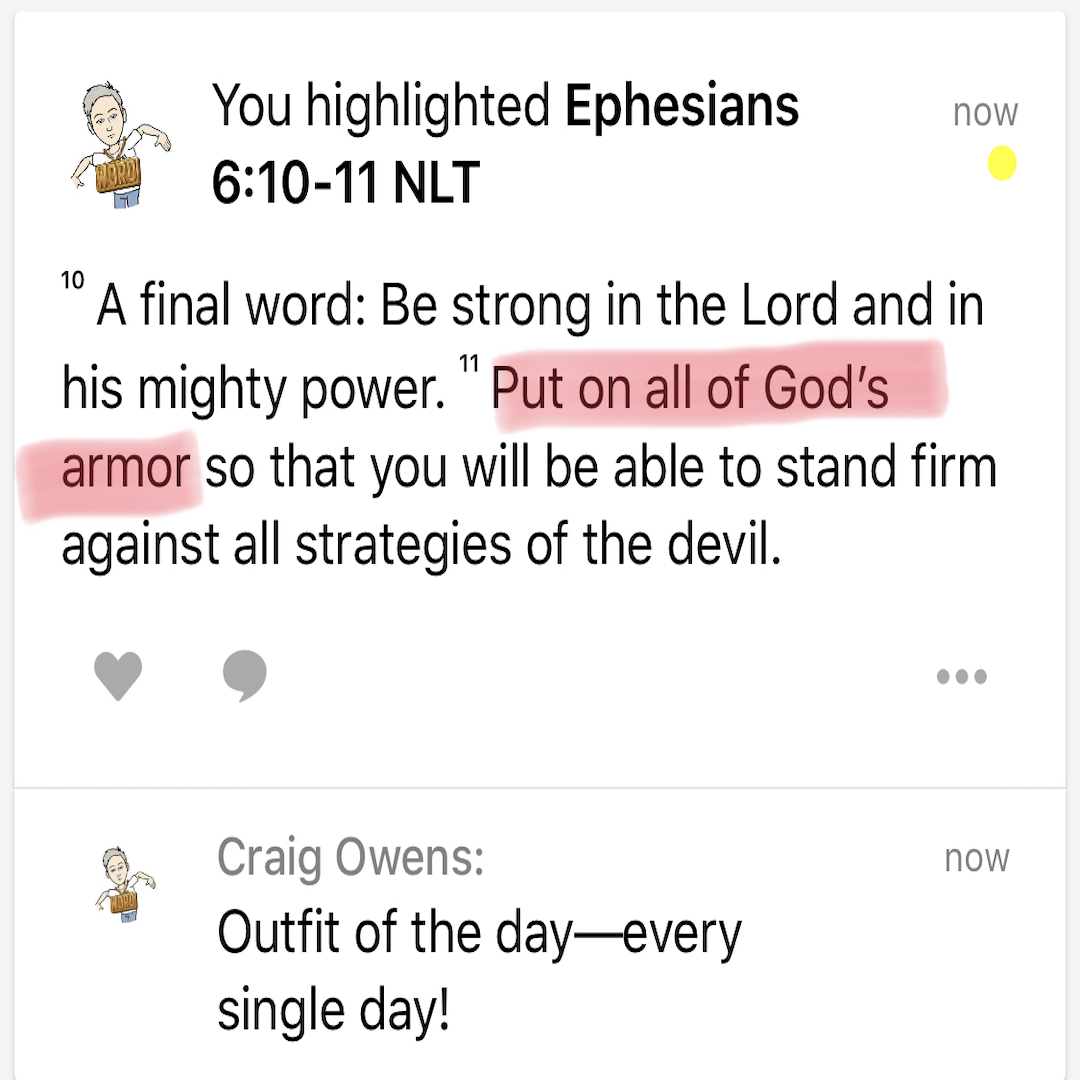
Peter may have had this in mind when he warned us to be alert for our prowling enemy (1 Peter 5:8). The apostle Paul also tells us to be aware of the devil’s schemes, and to never be without our spiritual armor (2 Corinthians 2:11; Ephesians 6:11).
There is never a time when I am invulnerable to a spiritual attack.
The moment I think I am self-secure is an opportune season for the devil to unleash his attack on me. “If you think you are standing firm, be careful that you don’t fall” (1 Corinthians 10:12).
Peter tells us to “resist [the devil], standing firm in the faith” (1 Peter 5:9). In the preceding three verses, Peter tells us just how to do this:
humble yourself before God—no feelings of self-sufficiency
Don’t be caught off-guard by giving the devil “an opportune time,” but stay utterly dependent on God. As James says, we have to first submit ourselves to God and then we will be prepared to resist the devil and watch him flee from us (James 4:7).
Listen to the podcast of this post by clicking on the player below, and you can also subscribe on Apple, Spotify, or Audible.
We as a Church are underperforming. How do I know this? Look at the way the world treats Christians; specifically, look at what’s NOT happening.
“By this all will know that you are My disciples, if you have love for one another” (John 13:35). Jesus said this right after He served His disciples by washing their feet. Is this happening today: Do people know you are a Christian by the way you put your love into servant-hearted action, or do they just know what you are against?
“Be prepared to give an answer to everyone who asks you to give the reason for the hope that you have” (1 Peter 3:15). When was the last time someone saw your hope-filled life in such contrast to everyone else’s response that they said, “How can I have what you have?”
Peter said our adversary prowls like a lion. He is perfectly willing to bide his time, picking the strategy that works best. One of his favorite strategies is lies—sometimes half-truths or out-of-context truths.
…Woe to the earth and the sea, because the devil has gone down to you! He is filled with fury, because he knows that his time is short. … The dragon was enraged with the woman and went off to make war against the rest of her offspring—those who obey God’s commandments and hold to the testimony of Jesus (Revelation 12:12, 17).
Lies are his native tongue. He lied to Adam and Eve right in the beginning (Genesis 3:1, 4-5), and he still lies now (Revelation 12:10). Jesus contrasted this with the truth that He came to proclaim (John 8:42-45).
The devil has learned that with many people, outright attacks drive them TO God. We see this in the oldest book of the Bible (Job 1:6f, 20-22), and in modern times (churches were filled after the 9-11 terrorist attacks).
What the devil would rather do is lie to you to keep you comfortable. In The Screwtape Letters, Screwtape implores Wormwood to keep his patient indifferent and comfortable. Indeed, we all have a comfort zone and we love to stay in it.
King Saul went from 3000 men to 600 men, from a full armory to only two swords, from defeating the Ammonites to being hemmed in by the Philistines. King Saul was enjoying life as the king, hanging out with his friends, sitting under a pomegranate tree, far away from his enemies. Life was good for Saul, life was familiar and comfortable. Saul was living in his comfort zone. But the comfort zone is a lousy place to live.
In the comfort zone you only tell stories, but never live an adventure. In the comfort zone, you only hear about what God has done for others, but you never experience Him move in miraculous ways for yourself.
God has given us all gifts so that we can live as overcomers and bring Him glory, but we settle for living only in our comfort zone. Our comfort zones are always way smaller than our gift zones, and the devil is perfectly happy to see us stay there.
Moses was comfortable in the desert, but God sent him in His power (Exodus 3:11, 14).
David was comfortable in the pasture, but God equipped him to lead a whole nation (2 Samuel 7:18; Psalm 78:70-71).
Jeremiah was comfortable being an anonymous priest, but God gave him words to prophesy to a wayward nation (Jeremiah 1:4-8).
Saul was comfortable as a Pharisee, but God sent him to tell the world the Jesus is the Messiah (Acts 8:3; 1 Timothy 1:16).
What lies have kept you in your comfort zone?
Maybe a parent said, “You’ll never amount to anything.”
Maybe a teacher said, “You’re slow.”
Maybe a classmate said, “You’re weird.”
Maybe the devil said, “You cannot make a difference in the world.”
You need to silence those lies with God’s truth:
God created me on purpose and for a purpose—Psalm 139:13-17
He has given me all the gifts I need to soar—2 Peter 1:3-4
He wants to help me, if I will trust Him—Isaiah 41:10, 13-14
Charles Spurgeon said, “The extent of power God can infuse into a person is immeasurable; when divine strength is granted, human weakness ceases to be a hindrance.”
So, friends, it’s time to get uncomfortable with staying comfortable. It’s time to stretch and soar out of your comfort zone and into more of your gift zone!
Listen to the podcast of this post by clicking on the player below, and you can also subscribe on Apple, Spotify, or Audible.
When we hear the word “if” we hear something that is uncertain: “If only I get that job” or “If I have enough money at the end of the month” or “If we get there in enough time.”
The dictionary tells us “if” has an element of uncertainty. Like when King George III said of George Washington’s decision to step down as the president, “If he does that, he will be the greatest man in the world.”
Sometimes we think of “if” as a condition to receive some sort of award or recognition. Like Rudyard Kipling’s famous poem If—
If you can keep your head when all about you are losing theirs and blaming it on you … [then] Yours is the Earth and everything that’s in it, and—which is more—you’ll be a Man, my son!
We need to be careful of those paradigms when we come to the next song of ascent in Psalm 124, since the word “if” appears twice in the opening two verses.
David is not saying, “Weren’t we lucky that God was there for us” or “I wonder if He will be for us again in the future.” I like how the New Living Translation renders this verse: “What if the Lord had not been on our side?” In other words, He was on our side, therefore look what we avoided!
Far from being a statement of uncertainty, this is a statement of total assurance: It’s saying, “I’m confident of what would have happened if God wasn’t there, and I’m assured of what will happen in the future.” This is why in the next verses David calls on us to praise God in the present tense.
Every one of these songs of ascent can be sung as stand-alone songs, but the Jewish sages believed that these 15 songs are like the 15 steps that go up to the center of the courtyard. No one climbs the steps from their basement, stops after three or four steps, and says, “I was lucky that the first steps held me! Now I’m wondering if the next step is going to fail me or not.” No, the fact that we have already climbed some steps gives us assurance of the stability of the next step.
Look at a quick review of the previous steps:
in Psalm 120 pilgrims climb away from the pull of the dark valleys
in Psalm 121 we read the phrase, “I lift my eyes up to the One who is watching over me”
in Psalm 122 we climb the steps knowing that we aren’t climbing to a throne of judgment but a throne of shalom because of the peace Jesus purchased for us
in Psalm 123 we are called to only have eyes for our Savior who has lavished His grace on us, and who continues to lavish His grace on us
now in Psalm 124 we continue to climb up in growing assurance
The devil loves to use “if” as a weapon to keep us from this confidence. Perhaps the doubt comes like this, “This song was written by David. If I’m not King David—or even a part of the Jewish nation—can I be assured that God is on my side?”
Or perhaps the devil’s doubt comes like this, “If I sin, will God no longer be on my side?”
No, neither our efforts nor our shortcomings increase nor decrease God’s love for us. He loved us before we even knew we needed Him, and our sin cannot diminish His love one iota (Romans 5:20-21; 2 Corinthians 5:21; Ephesians 2:4-5).
When the devil confronted Jesus, he used that little weapon “if” with all three of his temptations. Jesus dismantled those temptations to doubt God by quoting Scripture. So too with Joshua. As he contemplated leading the Israelites into the Promised Land, he may have felt a bit insecure. God told Joshua to continue to meditate on His Word and as a result, Joshua would be strong and courageous.
David’s closing words in Psalm 124:8 is the Source of our doubt-destroying confidence: “Our help is in the name of the Lord, the Maker of heaven and earth!”
Whenever the devil plagues you with doubts, keep your eyes on your Maker, keep His Word in your mouth, and then feel His confidence grow in your heart.
One of the things that contributes to “quiet quitting” is a lack of passion. But when the leader has conveyed a compelling vision for all that the organization is doing, that vision fuels the passion to work excellently. Vision can change a “have to” attitude into a “get to” attitude. Check out the full conversation Greg and I had about quiet quitting on the Craig And Greg Show. I have lots of new content every week, which you can check out on my YouTube channel.
“One important key to success is self-confidence. An important key to self-confidence is preparation.” —Arthur Ashe
“Strange as it may seem, the first rule of gracious speech is sincere listening: ‘So then, my beloved brethren, let every man be swift to hear, slow to speak, slow to wrath’ (James 1:19). Being an attentive and sincere listener is like cutting a swath through the jungle. It creates a path along which conversations can develop and people can journey together.” —T.M. Moore
J. Warner Wallace discusses how scientists who were Christians used their biblical worldview to drive their scientific pursuits. As a result, Christian scientists have been awarded more Nobel Prizes than any other group of scientific contributors!
“The devil will not stand by quietly and watch his realm decline and erode. He counterattacks with rage; his onslaught is fierce. One of the tricks he uses is to preoccupy Christian workers with issues that are detrimental to a healthy relationship with Christ. The scenario is all too familiar: a Christian worker gets busy in the ministry and work takes priority over relationship with God. He no longer has the time to sit at Jesus’ feet in quiet solitude and listen to God’s Word. Spiritual emptiness comes unnoticed and with it vulnerability to satan’s sifting (Luke 22:31-34); dishonest handling of monies or power or an illicit relationship is justified, and whoa! immorality has lured and sent such a Christian worker tumbling. He commits what he has preached against. Sin is dangerous. Sin is destructive. Its price is very costly—separation from God, irreversible stigma, damage to family relations, loss of ministry, loss of reputation, a black mark on God’s work, and the list goes on.” —Sobhi Malek
Our Creator gave us an amazing gift of the human brain! I love the fascinating new discoveries that scientists are continuing to make. Like this one: “To be spatially capable creatures, humans need their brains to tell them 1) where things are in relation to themselves and 2) where everything is in relation to everything else—the so-called allocentric map of space. To navigate an environment, the brain seems to generate a mental representation of its surroundings. This is often called a cognitive map.” Read more about our cognitive map here.
I hope you have had a chance to see the movie “Sound of Freedom.” Thankfully, this has gotten a lot of people talking about how to eliminate sex trafficking. Fight The New Drug has an excellent post on how you can spot and report human trafficking, and you should also check out Operation Underground Railroad, which was founded by Tim Ballard (whom Jim Caviezel portrays in the movie).
“It will be a comfort to me all my life to know that the scientist and the materialist have not the last word, that Darwin and Spencer, undermining ancestral beliefs, stand themselves on a foundation of sand.” —C.S. Lewis
Listen to the podcast of this post by clicking on the player below, and you can also subscribe on Apple, Spotify, or Audible.
Do you talk to yourself?
Of course you do. We all talk to ourselves: it’s called “thinking.”
But do you talk out loud when you talk to yourself?
An unhealthy habit for most of us is that our thoughts are only a one-way monologue. That is, we are listening to our thoughts but we are not talking back to them. As a result, everything negative we’ve heard from our enemies is bouncing around in our heads. The more we hear it, the more likely we are to believe it.
In Psalm 42, we hear from a psalmist who is longing to experience God’s presence but at the same time there’s a nagging thought implanted by skeptics: “Where is your God?” The psalmist reminisces how it used to be, which means there is a nagging doubt in his mind that it may never be like that again.
But finally, the psalmist does the mentally healthy thing: he talks back to his thoughts. He asks himself a question and then he gives a new response—a response that is hope-filled instead of doubt-plagued.
Why are you downcast, O my soul? Why so disturbed within me? Put your hope in God, for I will yet praise Him, my Savior and my God. My soul is downcast within me; therefore I will remember You. (Psalm 42:5-6)
When the nagging thought of “Where is your God?” comes up again just a couple of verses later, he doesn’t linger or brood over this doubt-inducing thought but immediately talks back to that negative voice with hope-filled words (vv. 10-11).
The devil has a singular agenda: to separate you from God. He does this through lies and doubts. Jesus told us the devil’s native language is lies: “He was a murderer from the beginning, not holding to the truth, for there is no truth in him. When he lies, he speaks his native language, for he is a liar and the father of lies” (John 8:44).
The Bible tells us that the devil can also put thoughts and desires in our hearts, but they are all lies (see John 13:2; Acts 5:3).
We cannot let these lies go unchallenged, so here’s our battle strategy:
For the weapons of our warfare are not physical weapons of flesh and blood, but they are mighty before God for the overthrow and destruction of strongholds, inasmuch as we refute arguments and theories and reasonings and every proud and lofty thing that sets itself up against the true knowledge of God; and we lead every thought and purpose away captive into the obedience of Christ—the Messiah, the Anointed One. (2 Corinthians 10:4-5 AMP)
There are five questions we need to use to talk to ourselves about the thoughts we hear:
Is this thought unbiblical? (2 Timothy 3:16-17)
Does this thought rob God of the glory due His name (Psalm 29:1-11)?
Does this thought stifle my love for God or others (Mark 12:28-31)?
If I linger on this thought, does it rob me of peace (Isaiah 26:3-4)?
Does this thought make me apathetic toward sin (Genesis 4:7)?
If we answer “yes” to any of these questions, we must capture that thought and put it to death, which requires the sword of the Spirit, which is the Word of God (Ephesians 6:17). Because of what Jesus has done for us on the Cross, every promise in God’s Word is “yes and amen” in Jesus, and therefore is an invincible weapon against lying thoughts (2 Corinthians 1:20).
Here’s how we use those promises:
For the accuser of our brothers and sisters, who accuses them before our God day and night, has been hurled down.They triumphed over him by the blood of the Lamb AND by the word of their testimony. (Revelation 12:10-11)
Listen to your thoughts, but don’t listen too long before you start to challenge them with these five questions. Then demolish those lies—triumph over them by the blood of the Lamb and your spoken testimony. Speak the truth out loud for all to hear.
This is part 4 in our series on a Christian’s mental health. If you’ve missed any of the other messages I’ve shared, you can find them all by clicking here.
Listen to the podcast of this post by clicking on the player below, and you can also subscribe on Apple, Spotify, or Audible.
Caiaphas’ bold claim couldn’t be backed up, but every bold claim Jesus made was backed up. In the process of looking at those claims, we’ve actually already read another bold claim—one that was repeated three times. It is a bold claim made by the Roman governor Pontius Pilate.
When Jesus was first brought to Pilate, he attempted to “pass the buck” by sending Jesus to King Herod Antipas. Since Herod sent Jesus right back to Pilate, the governor took that as support for his bold claim. Check out what Pilate said:
I have found no basis for your charges against Jesus
neither has Herod
Jesus has done nothing to deserve death
I have found in Him no grounds for the death penalty (Luke 23:13-22)
Even Pilate’s wife supported him by saying, “Don’t have anything to do with that innocent Man” (Matthew 27:19).
Pilate’s role in this case was as a modern-day judge. A judge weighs the evidence from the prosecution, compares that with the laws on the books, weighs the evidence from the defendant, and then makes his ruling. Pilate rules multiple times: Not guilty. But the accusers keep coming back with their loud voices but no more evidence. Even though “[Pilate] knew it was out of self-interest that they had handed Jesus over to him” (Matthew 27:18), the shouts of the religious leaders finally prevailed (Luke 23:23-25).
Why was Pilate’s claim of the innocence of Jesus so bold? Because the Bible tells us, “ALLhave sinned and fall short of the glory of God” (Romans 3:23).
These religious elites had been trying to find an accusation against Jesus almost since the beginning of His public ministry. Many of these same accusers were present on the day they hauled a woman caught in the act of adultery before Jesus (John 8:2-11). They claimed she deserved to be stoned to death, but Jesus simply said, “Let those without any sin throw the first stone at her.” Jesus once again allowed His eloquent silence to work on their hearts, as they knew that not one of them was without sin, so they all dropped their stones and left.
Jesus freed this woman from her sin when He refused to condemn her. After all, He was the only sinless One who could have been justified in throwing the first stone, but He knew that “God did not send His Son into the world to condemn the world, but to save the world through Him” (John 3:17).
Jesus doesn’t condemn us, but He doesn’t want us to stay in our sin either, which is why He then told this woman, “Go now and leave your life of sin.”
Jesus called all of us to live a perfect life: “Be perfect, therefore, as your heavenly Father is perfect” (Matthew 5:48). Yet like those men in John 8, we all would have to drop our stones and leave.
And satan loves to remind God’s saints of this. John shares with us that “the accuser of our brothers and sisters…accuses them before our God day and night” (Revelation 12:10). The accuser wants to keep us trapped in the guilt of our sin—wants to see us condemned to an eternity separated from God’s presence.
But when someone has placed their faith in the sacrifice Jesus made for us with His death on the Cross, Jesus takes us into Himself and there is now no condemnation for those IN Jesus because there is nothing in Jesus to be condemned! Because of what Jesus did, it’s not us who is condemned, but sin is condemned! As a result, we no longer have to live according to the sinful nature and suffer the condemnation of sin, but instead when we are in Jesus, “the righteous requirements of the law” are fully met in us (see Romans 8:1-4).
We cannot do this on our own, but only through the power of the blood of Jesus. Look at the rest of this passage from Revelation: “For the accuser of our brothers and sisters, who accuses them before our God day and night, has been hurled down.They triumphed over him by the blood of the Lamb” (Revelation 12:10-11).
What amazing news! The writer of Hebrews gives us more details in this passage:
For by one sacrifice [Jesus] has made perfect forever those who are being made holy. The Holy Spirit also testifies to us about this. First He says: “This is the covenant I will make with them after that time, says the Lord. I will put My laws in their hearts, and I will write them on their minds.” Then He adds: “Their sins and lawless acts I will remember no more.” (Hebrews 10:14-17)
When we are in Jesus—when we have accepted by faith His work on the Cross—God can make the same bold claim to the devil that Pilate made to the religious leaders: “I find no basis for a charge!” This is how we can then fulfill the righteous requirement Jesus gives us to “Be perfect, therefore, as your heavenly Father is perfect.”



 You may also be interested in these related blog posts:








 Craig T. Owens