The Old Rugged Cross

The Old Rugged CrossThe Apostle Paul traveled the known world preaching and teaching. Luke preserves some of his sermons for us in the Book of Acts, and Paul’s letters reveal the depth of and breadth of his Spirit-inspired thoughts. But of all the doctrines which this eminent apostle taught, there was one truth that stood out as the foundation for all others—

And when I came to you, brethren, I did not come with superiority of speech or of wisdom, proclaiming to you the testimony of God. For I determined to know nothing among you except Jesus Christ, and Him crucified (1 Corinthians 2:1-2).

The work that Jesus Christ did on an old rugged Cross is absolutely the most central message of all others. Without the Cross, no other doctrine makes sense.

Sadly, we spend far too little time looking at the Cross.

Join me this Sunday as we take a long look at the Cross and the Lamb of God Who was sacrificed on it. Our series is simply called The Old Rugged Cross.

9 More Quotes From “The Blood Of The Cross”

The Blood Of The CrossThere were way too many quotes from The Blood Of The Cross by Horatius Bonar that I wanted to share, so here is the second installment. You can read the first set of quotes by clicking here, and you can read my review of this must-read book by clicking here.

“It is not my looking to the blood in conjunction with my looking to my own act of seeing that brings this peace. It is my simple and direct looking to the blood. It is in looking that I am blessed; not in thinking about my looking. To look to the blood is to be cleansed; to look away from the blood, or too self, or to the world, or to sin, is to arrest the cleansing process and to neutralize the healing power. The more I see of the matchless value of that blood, and understand the substitution of life for life, which that blood proclaims, and to which it is ever pointing, the more will my peace be like a river.”

“The Lamb has been slain, the Lamb of God, as it is written, ‘It pleased the Lord to bruise Him’ (Isaiah 53:10). His blood has been shed, and sprinkled, and accepted; and that shed blood is for the remission of sin, and for reconciling us to God. That blood is intended to set us in the place of the innocent; to bring us nigh to God just as if we had never separated; to be our recommendation to God, so that coming with it as our plea, we may expect to be treated by God as HE is treated Whose blood we thus recognize and rest on.”

“To come with anything else than the blood as our introduction is most certainly to secure or for ourselves rejection; but to come with it alone is to ensure that blessed welcome which the blood has never yet failed to obtain for the vilest sinner that ever went to God with it as his only plea.”

“That blood is valuable enough to answer for yours, and God is willing to accept the exchange. Nay, it was He Who first proposed it; it is He Who is pressing this exchange upon your notice and entreating you to receive it, so that there maybe nothing left for you to pay.”

“It loses none of its efficacy by time or repetition. It is the same in this age as when it was shed at first. It is the same today as when first we applied to it for healing and for cleansing. Nothing can rob it of its potency. It has cleansed millions; it can cleanse millions more; it has washed out stains, in number past calculation, in dye most thoroughly crimson. Yet it is unpolluted. It has taken on no stain. It is still as able to pacify the conscience and to release the soul from guilt.”

“Realizing these things, the saint moves on his joyful course. The blood is ALL to him. It is his peace; it is his medicine; it is his daily comforter. And resting in it he rejoices in hope hope of the glory to be revealed.”

“Thou hast gone near enough to the gates of hell; yet go not in. Turn back. It is not yet too late. Even thou mayest be saved. The gate of light stands as widely open as the gate of darkness. The way of life, the narrow way, is as free to thee as is the way of death. There is still forgiveness. And the glad tidings of it are as glad as ever. No sin of thine has altered that gladness or made the tidings a forbidden joy to thee. We can tell you as truly as ever that ‘these things are written that thou mightest believe that Jesus is the Christ, and that believing thou mayest have life through His name’ (John 20:31).”

“That nonconductor is unbelief. It interposes between the soul and all heavenly blessing, all divine intercourse. It may seem a thing too slight to effect so great result; yet it does so inevitably. It shuts off the communication with the source of all glad tidings. It isolates man, and forbids the approach of blessing. That conductor is faith. In itself it is nothing, but in its connection everything. It restores in a moment the broken communication; and this, not from any virtue in itself, but simply as the conducting link between the soul and the fountain of all blessing above.”

“In Jesus there is salvation—salvation without a price—salvation for the most totally and thoroughly lost that this fallen earth contains. Go and receive it.”

8 Quotes From “The Blood Of The Cross”

The Blood Of The CrossAs I said in my book review of The Blood Of The Cross by Horatius Bonar (which you can read by clicking here), I have never read such a penetrating look at the beyond-all-measurement value of the blood Jesus Christ shed on the Cross. An absolutely fascinating read! There are way too many quotes from this book to share them all now, so this is the first set of quotes I’d like to share with you.

“Nothing now will keep us, but certainty. Such a storm will need a sure anchor. A man may cheat his soul into tranquility when days are prosperous and skies are blue. He may say, ‘I hope it will go well with me at last,’ and sit down contented with his meager hope. But when heaven and earth are shaken, he cannot but tremble. His peace gives way at the first ruffle of the tempest. He had no certainty to lean upon, and his false security was broken in an hour. … It is not yet too late. The Cross is still standing on the earth. The Crucified One is still upon the mercy seat. If the favor of God has hitherto been a dark uncertainty, it may yet been made sure. The way of reconciliation through the blood is as open as ever.”

“If God and we, then, are at variance, how is this variance to cease? Is it by His adopting our judgment, or by our adopting His? It cannot be the former. … What thank you, then, of the blood of Christ? Is that which is so precious in God’s eyes as precious in yours? Has the controversy between Him and you upon this point been solidly adjusted? And are you at one with Him in His estimate of the blood of His dear Son? If so, it is well. For this is faith; and it is by this faith that you are saved.”

“Most men imagine that they know its value sufficiently already, and that what they need is not a higher estimate of the blood, but a deeper impression wrought in them by the estimate which they now possess. But is it so? Is this the whole evil? Is this its root? No. Whatever they may now suppose that they have, let them know this, that it is just in their estimate of the blood that they are deficient.”

“The new estimate which God enables us to form of this at once infuses peace. If that estimate which God had given of it be true, then all that is needful for our peace has been accomplished. That infinitely precious blood sheds peace and sunshine into our souls. We see that blood as God sees it, and our consciences are unburdened—our souls are set at rest. … The blood of His Cross has finished our peace. And that finished peace is all we need to banish every fear.”

“What does God thinks of this blood? He counts it as infinitely precious—more precious than all corruptible things such as gold and silver. Its value can only be measured by the greatness of Him from Whom it flowed.”

“If a sinner of old might come into the courts of the Lord as an accepted worshipper, simply because presenting to God the blood of bulls and goats, may not a sinner now come into the real, the immediate presence of Jehovah, with still greater certainty of acceptance, simply making mention of that divine blood which has flowed from the Lamb of God—the Word made flesh—Who made His soul an offering for sin, and gave His life a ransom for the sins of many (Isaiah 53:10; Matthew 20:28)?”

“And now it is safe for the sinner to enter in, and it is honorable for God to admit him. The sanctuary is not defiled by his entrance, for the blood is there to prevent this. He does not need to be alarmed, or shrink back, for that blood which opens the way gives him also liberty and boldness in coming in, removing that terror of a guilty conscience which would keep him back, and enabling him to come ‘with a true heart, and in full assurance of faith, having his heart sprinkled from an evil conscience, and his body washed with pure water’ (Hebrews 10:22).”

“It is the sprinkling of the blood upon the soul (which takes place so soon as we take God’s Word for its efficacy) that makes it fit for being the tabernacle of the Holy One. It is the sight of this blood that makes the sinner feel safe and happy in such near contact with God; for otherwise how could he feel at home with such a Guest—the unholy with the Holy?”

** Look for another set of quotes from this book later this week. **

The Blood Of The Cross (book review)

The Blood Of The CrossI have been a Christian for a long time, and over the course of my life I have heard countless sermons about the crucifixion and about the work that Jesus Christ did for us on the Cross. But I don’t think that I’ve ever pondered this subject as deeply or as closely as Horatius Bonar does in his book The Blood Of The Cross.

Rev. Bonar starts with the mindset of the Jews who demanded that Pilate crucify Christ, to show how the same attitude exists in all of us who are separated from Jesus. He then tells us why God the Father has a controversy with a guilty world, and what He thinks of the blood His Son shed on the Cross. Then the remainder of the book goes deep into trying to somehow measure the inestimable value that is associated with Christ’s shed blood.

In a phrase this book is eye-opening, heart-searching, and paradigm-challenging for the one who has never acknowledged Christ as his own Savior, all the way through to the one who has called Jesus Savior for years and years and years.

Especially during this Lent season as we prepare our hearts and thoughts to celebrate Christ’s Passion, this is a great book to ponder.

…And Then A Miracle Occurs

The Miracle of JesusLast week I shared how important it is for us to remember what we were before meeting Christ, and what we now are after meeting Him (you can click here to read that post). But we need to spend some time looking at how we went from “were” to “are.”

First, we need to recall how bad we really were without Christ. We were…

  • …dead (Ephesians 2:1)—this is a rotting corpse.
  • …separated (2:12)—we faced a gaping, unbridgeable, uncrossable chasm.
  • …alienated (4:18)— we were completely shut-out from fellowship with God.
  • …given over (4:19)—this implies an open betrayal which resulted in us running the opposite direction from God.

“The man on the street would simply shrugged his shoulders at this charge and say, ‘Sure, no one’s perfect.’ Even we Christians talk about failures and defeats, but the Bible uses other terms. It speaks of wickedness and rebellion (Leviticus 16:21). The Bible speaks of King David as despising God (2 Samuel 12:9-10). It charges another man of God with defying the word of the Lord… (1 Kings 13:21). It is evident by these descriptive synonyms for sin—rebellion, despising, defying—that God takes a far more serious view of sin than the man on the street or even most Christians.” —Jerry Bridges, in Transforming Grace (bold font added)

…and then a miracle occurs! You who once WERE far away [dead, separated, alienated, disgustingly sinful] HAVE BEEN brought near through the blood of Christ (Ephesians 2:13). Jesus Himself becomes our salvation … He IS the miracle! Notice the wording here—

  • He Himself IS our peace (v. 14a)
  • HE has made the two one (v. 14b)
  • abolishing IN His flesh (v. 15a)
  • create IN Himself (v. 15b)
  • IN this one Body…by which HE put to death their hostility (v. 16)
  • THROUGH Him we both have access to the Father (v. 18)

Jesus Himself IS (1) our peace, (2) our reconciliation, and (3) our atonement.

Not only must we always remember what we WERE and what we ARE, but remember the MIRACLE whereby this transformation could happen: The blood of Jesus spilled for us on the Cross!

We’ll be continuing our walk through the Book of Ephesians next Sunday, and I’d love to have you join us.

Poetry Saturday—Thus Far Did I Come

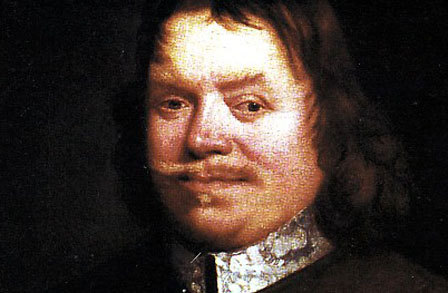
John BunyanThus far I did come laden with my sin;
Nor could aught ease the grief that I was in,
Till I came hither: what a place is this!
Must here be the beginning of my bliss?
Must here the burden fall from off my back?
Must here the strings that bound it to me crack?
Blessed Cross, blessed sepulcher! blessed rather be
The Man that there was put to shame for me! —John Bunyan’s Christian in Pilgrim’s Progress, after he lost his burden at Calvary


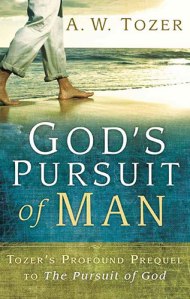
13 Quotes From “God’s Pursuit Of Man”

God's Pursuit Of ManA.W. Tozer paints such a vivid picture of God’s desire for us to be in a deeper relationship with Him. I love it! You can read my full book review by clicking here. Below are some quotes I especially appreciated from God’s Pursuit Of Man.

“We habitually stand in our now and look back by faith to see the past filled with God. We look forward and see Him inhabiting our future; but our now is uninhabited except for ourselves. Thus we are guilty of a kind of temporary atheism which leaves us alone in the universe while, for the time, God is not.” 

“Whatever else it embraces, true Christian experience must always include a genuine encounter with God. Without this, religion is but a shadow, a reflection of reality, a cheap copy of an original once enjoyed by someone else of whom we have heard. It cannot but be a major tragedy in the life of any man to live in a church from childhood to old age and know nothing more real than some synthetic god compounded of theology and logic, but having no eyes to see, no ears to hear and no heart to love.”

“Self-righteousness is an effective bar to God’s favor because it throws the sinner back upon his own merits and shuts him out from the imputed righteousness of Christ.” 

“Every man looks to his fellow men because he has no one else to whom he can look. David could say, ‘Whom have I in heaven but Thee? and there is none upon earth that I desire beside Thee’ (Psalm 73:25). But the sons of this world have not God; they have only each other, and they walk holding to each other and looking to one another for assurance like frightened children. But their hope will fail them, for they are like a group of men, none of whom has learned to fly a plane, who suddenly find themselves aloft without a pilot, each looking to the other to bring them safely down. Their desperate but mistaken trust cannot save them from the crash which must certainly follow. … Yet in their pride men assert their will and claim ownership of the earth. Well, for a time it is true that this is man’s world. God is admitted only by man’s sufferance. He is treated as visiting royalty in a democratic country. Everyone takes His name upon his lips and (especially at certain seasons) He is feted and celebrated and hymned. But behind all this flattery men hold firmly to their right of self-determination. As long as man is allowed to play host he will honor God with his attention, but always He must remain a guest and never seek to be Lord. Man will have it understood that this is his world; he will make its laws and decide how it shall be run. God is permitted to decide nothing. Man bows to Him and as he bows, manages with difficulty to conceal the crown upon his own head.”

“The degree of blessing enjoyed by any man will correspond exactly with the completeness of God’s victory over him.”

“A thousand years of remorse over a wrong act would not please God as much as a change of conduct and a reformed life. … We can best repent our neglect by neglecting Him no more. Let us begin to think of Him as One to be worshiped and obeyed. Let us throw open every door and invite Him in. Let us surrender to Him every room in the temple of our hearts and insist that He enter and occupy as Lord and Master within His own dwelling.”

“God made man in His own image and placed within him an organ by means of which he could know spiritual things. When man sinned that organ died. ‘Dead in sin’ is a description not of the body nor yet of the intellect, but of the organ of God-knowledge within the human soul. Now men are forced to depend upon another and inferior organ and one furthermore which is wholly inadequate to the purpose. I mean, of course, the mind as the seat of his powers of reason and understanding. Man by reason cannot know God; he can only know about God.” 

“The danger is that we think of ‘the power of God’ as something belonging to God as muscular energy belongs to a man, as something which He has and which might be separated from Him and still have existence in itself. We must remember that the “attributes” of God are not component parts of the blessed Godhead nor elements out of which He is composed. A god who could be composed would not be God at all but the work of something or someone greater than he, great enough to compose him. We would then have a synthetic god made out of the pieces we call attributes, and the true God would be another being altogether, One indeed who is above all thought and all conceiving.”

“Christianity takes for granted the absence of any self-help and offers a power which is nothing less than the power of God. This power is to come upon powerless men as a gentle but resistless invasion from another world, bringing a moral potency infinitely beyond anything that might be stirred up from within. This power is sufficient; no additional help is needed, no auxiliary source of spiritual energy, for it is the Holy Spirit of God come where the weakness lay to supply power and grace to meet the moral need.” 

Man, who moved out of the heart of God by sin, now moves back into the heart of God by redemption. God, who moved out of the heart of man because of sin, now enters again His ancient dwelling to drive out His enemies and once more make the place of His feet glorious.”

“To will the will of God is to do more than give unprotesting consent to it; it is rather to choose God’s will with positive determination. As the work of God advances, the Christian finds himself free to choose whatever he will, and he gladly chooses the will of God as his highest conceivable good.” 

“That terrible zone of confusion so evident in the whole life of the Christian community could be cleared up in one day if the followers of Christ would begin to follow Christ instead of each other.”

“Religious contentment is the enemy of the spiritual life always.”

Links & Quotes

link quote

Some good reading from today…

“Every deadly calamity is a merciful call from God for the living to repent.” —John Piper

“Our Father refreshes us on the journey with some pleasant inns, but will not encourage us to mistake them for home.” —C.S. Lewis

“I ask you, dear Christian friends, to come nearer to it [the blood Jesus shed on the Cross] this morning than ever you have been. Think over the great truth of substitution. Portray to yourself the sufferings of the Savior. Dwell in His sight, sit at the foot of Calvary, abide in the presence of His Cross, and never turn away from that great spectacle of mercy and of misery. Come to it; be not afraid. You sinners, who have never trusted Jesus, look here and live! May you come to Him now.” —Charles Spurgeon

“Our most pressing obligation today is to do all in our power to obtain a revival that will result in a reformed, revitalized, purified church. It is of far greater importance that we have better Christians than that we have more of them.” —A.W. Tozer

Thursdays With Oswald—Predestined Freewill?

Oswald ChambersThis is a weekly series with things I’m reading and pondering from Oswald Chambers. You can read the original seed thought here, or type “Thursdays With Oswald” in the search box to read more entries.

Predestined Freewill?

     Our destiny is not determined for us, but it is determined by us. Man’s free will is part of God’s sovereign will. We have freedom to take which course we choose, but not freedom to determine the end of that choice. God makes clear what He desires, we must choose, and the result of the choice is not the inevitableness of law, but the inevitableness of God.

From Conformed To His Image

Typically there are two schools of thought: Predestination (also called Calvinism) and freewill (also called Arminianism). The Bible has numerous verses that make the case for both of these viewpoints.

C.S. Lewis advised that in matters with two starkly different theological viewpoints, the safest action was to chart a course right between the two rocky islands. With that in mind, I don’t consider myself a Calvinist nor an Arminian, but a “Calminian.”

No matter where you find yourself on this theological issue, I think there is one thing we can all agree upon: God is Sovereign and God is Love. In both His sovereignty and His love He created us, sent His Son to die on a Cross for us, and sent His Spirit to draw us. I choose to accept His gift of salvation, and I’m not trying to find out how far I can stray and still be “saved.”

Poetry Saturday—God Answers

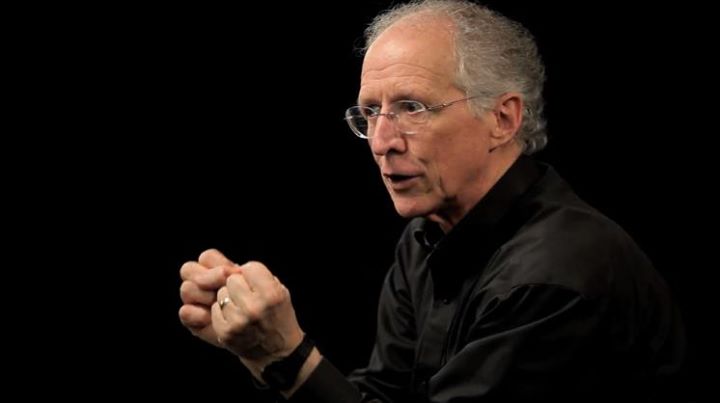
John PiperIs there a word to help us feel
the weight of Adam’s fall?
All.

How heavy will this burden weigh,
(Spare not!) on those who fell?
Hell.

O Lord, so great this forfeiture!
Was there sufficient reason?
Treason.

Then whence could any traitor hope
before Your burning face?
Grace.

But surely that will cost beyond
our wage. How is it priced?
Christ.

Entirely paid? By Him? O God,
and is that gift for me?
Free.

I would receive this gift, O Lord!
How soon would You allow?
Now. —John Piper