7 Images Of The Church

Husbands, love your wives, just as Christ loved the church and gave Himself up for her to make her holy, cleansing her by the washing with water through the Word. (Ephesians 5:25-26)

Dr. Henry Halley points to seven images the Bible portrays of how Jesus interacts with His saints.

“1. The Shepherd and the sheep emphasizes both the warm leadership and protection of Christ and the helplessness and dependency of believers (John 10:1-18). 

2. The vine and the branches points out the necessity for Christians to depend on Christ’s sustaining strength for growth (John 15:1-8).

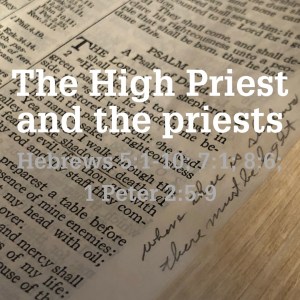
3. Christ as high priest and the church as a kingdom of priests stress the joyful worship, fellowship, and service which the church can render to God through Christ (Hebrews 5:1-10; 7:1; 8:6; 1 Peter 2:5-9). 

4. The cornerstone and building stones (Matthew 21:42) accents the foundational value of Christ to everything the church is and does, as well as Christ’s value to the unity of believers. Love is to be the mortar which solidly holds the living stones together (1 Corinthians 3:9; 13:1-13; Ephesians 2:19-22; 1 Peter 2:5). 

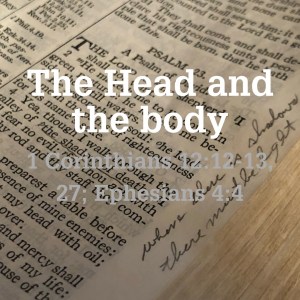
5. The head and many-membered body, the church, is a vibrant organism, not merely an organization; it draws its vitality and direction from Christ, the Head, and each believer has a unique and necessary place in its growth (1 Corinthians 12:12-13, 27; Ephesians 4:4). 

6. The last Adam and new creation presents Christ as the initiator of a new creation of believers as Adam was of the old creation (1 Corinthians 15:22, 45; 2 Corinthians 5:17). 

7. The bridegroom and bride beautifully emphasizes the intimate fellowship and co-ownership existing between Christ and the church (Ephesians 5:25-33; Revelation 19:7-8; 21:9).

You can read all of the Bible verses listed in this post by clicking here. 

Links & Quotes

When there is a misunderstanding between the leader and a team member, insecure leaders want the other person to change. Secure leaders, however, take ownership and ask, “What do I need to do differently?” Check out more from The Craig and Greg Show.

I have a lot of new video content on my YouTube channel every week. Please check it out and subscribe so you don’t miss anything.

In elaborating on the words of Jesus in Matthew 5:13 about Christians being the salt of the earth, T.M. Moore wrote, “In Jesus’ day, salt had three primary functions. Most people would have understood two of these, but only those raised in an Old Testament framework would have known about the third.” Read more about what churches should be considering about how they season the community around them.

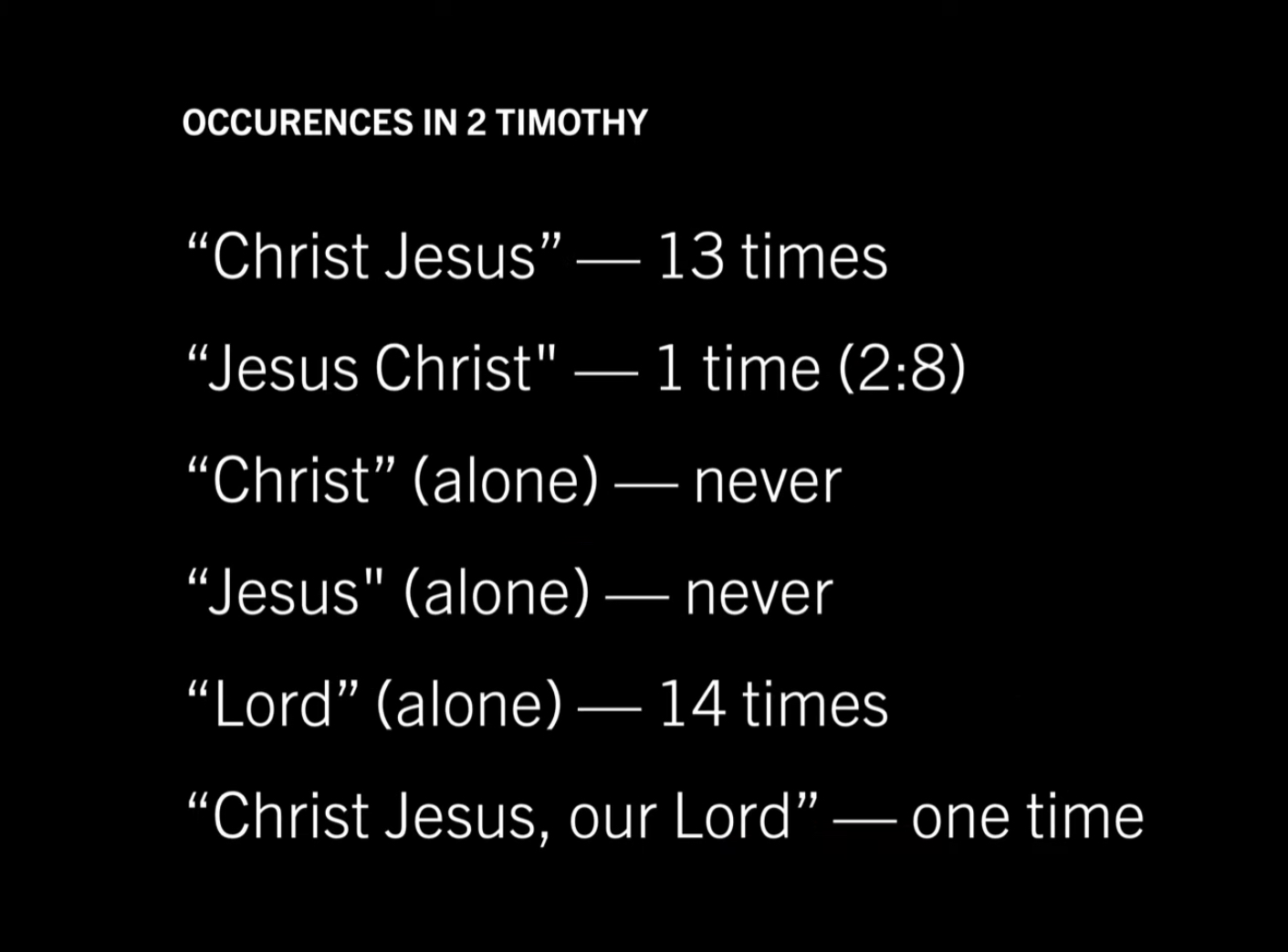
In his “Look at the Book” series, John Piper expounds on the many ways Paul refers to Jesus in his second letter to Timothy. There are several ways, but Paul’s preferred way is “Christ Jesus.” Pastor John unpacks the Hebrew and Greek origins of these words and titles, and why he thinks Paul especially gravitated toward this title.

Aerosols from penguin excrement may help trigger cloud formation, reducing solar heating and helping stabilize local areas of the Antarctic climate, study finds.” Hmmm, it’s almost like God designed His creation to take care of itself—because He did!

And an article in Science says, “According to secular models of Solar System formation, Earth, as an inner Solar System planet, should have little to no water.” And yet more than 70% of Earth is covered with water!

Aelred of Rievaulx wrote, “In friendship there is nothing more outstanding than faithfulness, which seems to be both the nurse and guardian of friendship. In all of life’s turns, in adversity and prosperity, in joy and sadness, in delightful and bitter circumstances, it reveals itself to be comparable to friendship, holding in the same regard both the humble and the exalted, the poor and the rich, the strong and the weak, the well and the infirm.”

Commenting on Aelred’s words, T.M. Moore observed, “Don’t we all want friends like that, who not only will provoke and prod us to grow in the Lord, but will stand by us in good times and bad, when we’re up and when we’re down? But if we would have such friends, we must be good stewards of their trust. This, again, is why spiritual friendships must be grounded in the Lord and focused on Jesus if they are going to bear the fruit of His indwelling Spirit.”

Evolutionary scientists claim to have made some steps forward in their understanding of the origins of life by using “the last universal common ancestor (LUCA).” But creationists like those at ICR observe that, “This mysterious LUCA is an unknown entity that existed from an unknown time ago at an unknown place by an unknown chain of unknown processes.” Clearly, the hypothesis that is the most straightforward and explainable is that God created the life in our universe just as the Bible states.

Along the same lines, Glenn Schrivener asks, “What do you think was there ‘in the beginning’—before peoples, planets, and protons? If you could hit rewind on the history of the universe and go back as far as possible, what would you find?” Then he gives us four possible things we may consider.

Links & Quotes

Leaders would help their teams by (1) having shorter meetings, and (2) ensuring their language is clear and concise. Check out the full conversation about “Jargon” on this episode of the Craig and Greg Show. 

I have a lot of new video content on my YouTube channel every week. Please check it out and subscribe so you don’t miss anything.

In a fascinating article about the ways the planet Jupiter protects Earth, the conclusion is spot-on: “Jupiter is more than merely a beautiful planet in the tapestry of the night sky. Its massive size and powerful gravity make it a mighty guardian of Earth. From protecting us from dangerous space debris to helping maintain stable orbits, Jupiter’s influence is essential for life on our planet. Proof of our solar system’s complex design is everywhere around us. It’s easy to see that our world seems purposely made rather than just being a result of random chance causes. From the stars to the tiniest particles, everything in our universe is balanced and works together in a coordinated system. As science progresses and uncovers more about our solar system, scientists keep finding out how perfectly suited our solar system is for life.”

T.M. Moore encourages us to pray for the Church. “The Church is the in-time agency through which the Kingdom comes on earth as it is in heaven. The Kingdom is a spiritual realm; the Church is a physical entity. But is is also a spiritual one; thus it partakes of two worlds at once, and is able to channel the spiritual into the physical to make all things new. The Church is both the sign that the Kingdom has come and the outpost from which the Kingdom advances in the world. Our text is a watershed moment of Jesus’ earthly ministry, and it signals an important focus for every believer’s life and prayers.”

“Celebrate what you’ve accomplished, but raise the bar a little higher each time you succeed.” —Mia Hamm

Links & Quotes

The apostle Paul lists three indispensable qualities of a godly leader. Remove even one of those qualities, and you no longer have a godly leader. I dive deep on these qualities (and more) in my book Shepherd Leadership.

I have lots of new content every week, which you can check out on my YouTube channel.

T.M. Moore wrote, “We are God’s poems, as Paul says in Ephesians 2:10, where the Greek word for ‘workmanship’ is ποίημα, poiema—poem. Perhaps this is why we find it pleasurable when others take an interest in us and want to get to know us better. They’re asking us to ‘read’ our ‘poem’ to them. What fun! And God wants us to know, love, enjoy, and serve Him by all the things He has freely given to us and which He seeks to ‘read’ to us day by day.”

“Saints” is always plural in the Bible. That means we always need to be looking out for our brothers and sisters in Christ. I love the words James uses to close his letter to the saints.
✅ Gather frequently to encourage others
✅ Reach out to those who are absent
✅ Speak the truth in love
✅ Exhort and encourage
✅ Forgive and ask for forgiveness
✅ Restore quickly and gently

Anthony Kidd warns about something I address in my book When Sheep Bite. “Inherent to our calling as shepherds is the task of looking out for the flock of God and protecting it from savage wolves and false shepherds. However, Paul emphasizes here that one of the greatest threats to the church can emerge from within its own leadership ranks, making self-awareness a critical aspect of pastoral leadership.” Read this full article about the earning signs of diseased leadership.

More amazing findings that show the incredible beauty and wisdom of our Creator! The ICR reports, “Insects, such as the winged insects in the order Lepidoptera, continue to reveal incredible abilities with some facets that zoologists thought were reserved only for vertebrates.”

Delighted To Go To Church

And from there the brothers and sisters, when they heard about us, came as far as the Market of Appius and the Three Inns to meet us; and when Paul saw them, he thanked God and took courage. (Acts 28:15) 

We have to be careful of thinking of Paul as some sort of super-evangelist. Yes, he was sustained by his faith in God, but look what happens to him when he is in the assembly of fellow saints—it prompted him to thank God and brought courage to his heart. 

Do you have to go to church to be a Christian? Of course not. But you will be encouraged and you will be the source of encouragement to others when you gather together regularly. 

As the writer of Hebrews tells us—

Let’s hold firmly to the confession of our hope without wavering, for He who promised is faithful; and let’s consider how to encourage one another in love and good deeds, not abandoning our own meeting together, as is the habit of some people, but encouraging one another; and all the more as you see the day drawing near. (Hebrews 10:23-25) 

You may also be interested in these related posts:

Let’s Grow Together

Listen to the podcast of this post by clicking on the player below, and you can also subscribe on AppleSpotify, or Audible. 

We’ve now learned about all three circles that help us discover our God-implanted gifts: 

  • Passion—what thrills you? 
  • Pain—what kills you? 
  • Proficiency—what fulfills you? 

What do you do with these gifts? What’s the whole purpose in learning about them? I think the goal as saints is to help the Body of Christ mature in ways that brings God glory (Ephesians 4:12-16). 

(Check out all of the Scriptures in this post by clicking here.) 

Solomon also gives a great word picture of friends using their gifts for each other—“As iron sharpens iron, so a friend sharpens a friend” (Proverbs 27:17 NLT). 

In an earlier message in this series, I talked about the thousands of enzymes in our human bodies. Each enzyme has just one task, and each task is indispensable to the health of the whole body. It is exactly the same in the Body of Christ—your gift-in-action is indispensable to the health of the whole Body.

How do you squander your grace gift? I think these are five basic ways:

  1. Not discovering it—“I have a gift?” 
  2. Devaluing it—“My gift is nothing special.” 
  3. Overvaluing it—“My gift is super-important.” 
  4. Laziness—“My gift is fine just the way it is.” 
  5. Selfishness—“My gift is just for me.” 

We need to discover our own gifts, but then we need to work on making the switch from “me” to “we.” I want to excel in using my gift so that I can help you excel in using your gift so that we can help another brother or sister excel in using their gift. 

Oswald Chambers said, “The Book of God is insistent on this: we cannot develop a holy life alone, it would be a selfish life, without God in it and wrong. … Beware of isolation; beware of the idea that you have to develop a holy life alone. It is impossible to develop a holy life alone, you will develop into an oddity and a peculiarism, into something utterly unlike what God wants you to be. The only way to develop spiritually is to go into the society of God’s own children, and you will soon find how God alters your set.” 

Frequently we need another brother or sister in Christ to help nudge us into discovering and using our gifts. For example, look how…

  • Mordecai assured Esther (Esther 4:13-14) 
  • Matthias was chosen by those in the upper room (Acts 1:21-26) 
  • The first deacons were unanimously chosen by the Church (Acts 6:3-6) 
  • Barnabas and Saul were chosen by the Holy Spirit and confirmed by other prophets and teachers in the church (Acts 13:1-3) 
  • Paul encouraged his proteges to appoint elders who were recognized by others in the church (Titus 1:5; 1 Timothy 3:1f) 

Consider this poem—

For want of a horseshoe nail the shoe was lost.
For want of a shoe the horse was lost.
For want of a horse the rider was lost.
For want of a rider the message was lost.
For want of a message the battle was lost.
For want of a battle the kingdom was lost.
And all for the want of a horseshoe nail.


Listen to the Holy Spirit. Listen to the confirming words from fellow saints—words like “You are gifted,” “You are so good at…,” and “How did you know how to do that?” Then step out of your comfort zone and soar into your gift zone! 

If you’ve missed any of the other messages in our Living in your gift zone series, you can check them all out here. 

►► Would you please prayerfully consider supporting this ministry? My Patreon supporters get behind-the-scenes access to exclusive materials. ◀︎◀︎
Not That Other Stuff, But Prayer

Listen to the podcast of this post by clicking on the player below, and you can also subscribe on AppleSpotify, or Audible. 

The Church heard the threats from the Sanhedrin, warning them not to talk about Jesus anymore. Their first response was to go to God: “When they heard this, they raised their voices together in prayer to God“ (Acts 4:24). 

Not signing a petition or organizing a protest, but praying.
Not telling their friends to gain support, but praying.
Not attacking, but praying.
Not discussing, but praying.
Not strategizing, but praying.
Not complaining, but praying.
Not individually, but together.
Not later, but immediately.
Not going through the motions, but passionately.
Not aimlessly, but guided by Scripture.
Not humdrum, but expecting God’s power from on high.
Not for vengeance, but for a testimony.

God answered the Church powerfully! 

Then the people moved out boldly—“And when they had prayed, the place where they were assembled together was shaken; and they were all filled with the Holy Spirit, and they spoke the word of God with boldness” (Acts 4:31). 

Oh, for this type of unifying action today! It starts with prayer!

You may also like my blog post and sermon 4 Holy Spirit-Enhanced Habits, and my whole series on prayer called Be A First Responder.  

►► Would you please prayerfully consider supporting this ministry? My Patreon supporters get behind-the-scenes access to exclusive materials. ◀︎◀︎
Do Not Judge?

Listen to the podcast of this post by clicking on the player below, and you can also subscribe on AppleSpotify, or Audible. 

As we learned last week, we are not the judge, nor the jury, nor the prosecution, nor even the sin police in deciding appropriate retribution. With that in mind, let’s consider Statement #15 in our series—Do not judge. Is that in the Bible? 

Yes, those three words are there, spoken by Jesus, in Matthew 7:1. But then again, we need to say, no, because these words don’t mean we are not to make determination about the rightness or wrongness of something. 

(Check out all of the Scriptures in this post by clicking here.)

Let’s zoom-out a bit get the context of the words Jesus spoke. Who was His audience for these words? This is a part of the Sermon on the Mount (Matthew 5–7). Notice in the opening words, “His disciples came to Him, and He began to teach them” (5:1-2). So Jesus isn’t speaking to the world at-large, but He is talking with His disciples. 

Jesus was very specific in His wording. In talking about the world, He uses words like people (5:11) or men (5:16; 6:1, 5). When talking about His disciples, He uses one word quite frequently: brother (3x in 5:22-24). 

Matthew 7:1 is still in this sermon, and the word brother appears 3x in vv. 3-5. So these are instructions primarily for Christians to use with other Christian brothers and sisters. 

The words judge here in the Greek means, “Those who judge severely (unfairly), finding fault with this or that in others.” To me, “this or that” sounds like a deliberate searching for something wrong, but Jesus assures us that this will boomerang on the judgmental person (v. 2; Luke 6:37). 

In modern psychology, we find terms like:  

  • mirroring = a psychological term the means quickly seeing what’s in others because it’s in me 
  • projection = taking the negative things in me and projecting them onto others

Paul addresses both of these thoughts in Romans 2:1-3, where the word for judging here is the same Greek word Jesus uses in Matthew 7.

Paul concludes his remarks by reminding us that God treats us kindly (Romans 2:4). David echos this same thought in Psalm 103:8-10, 13-14. 

When you read the whole passage in Matthew 7:1-5, please notice the words “brother,”  “first,” and “then.”  

Jesus does not mean that I am not to point out to my brothers and sisters any areas of concern. Jesus did this, as well as nearly every epistle writer. What it does mean is that correction needs to be gentle and never condemning. In other words, I want to lovingly help someone before they have to stand before The Judge. 

That’s why I need to first humbly recognize that what I see in others may be apparent to me because I am afflicted with the same thing. That’s why Jesus says first deal with my own plank. Examine myself  before I try to correct a brother or sister (1 Corinthians 11:28; 2 Corinthians 13:5). 

After I have allowed the Holy Spirit to deal with my plank, I will then have the empathy to help my brother or sister (2 Corinthians 1:3-4). Trying to get someone else to repent of something that still exists in my life is hypocritical. 

If I see something wrong in someone else:

  1. First ask the Holy Spirit to search me. 
  2. If necessary, confess it, repent from it, ask forgiveness, make things right. 
  3. Then lovingly and humbly share with your brother or sister (Ephesians 4:15). 

If someone else sees something wrong in me, I should follow the exact same steps! 

This is not easy, but it is vital for the Body of Christ to grow in a healthy way. 

If you’ve missed any of the other messages in this installment of our series Is That In The Bible?, you can find them all here. 

►► Would you please prayerfully consider supporting this ministry? My Patreon supporters get behind-the-scenes access to exclusive materials. ◀︎◀︎
Week Of Prayer (2024)

I grew up with a phrase ringing in my ears, “The Church moves forward on its knees.”

I believe this is true! We cannot expect to be effective in any kingdom-building endeavor if we are not empowered by heavenly help. So we like to begin each new year with a dedicated week of prayer. I invite you to join us in kicking off the new year with a renewed passion for prayer.

It Takes All Of Us

Listen to the podcast of this post by clicking on the player below, and you can also subscribe on AppleSpotify, or Audible. 

In my book Shepherd Leadership I talk about some strong, godly men who gave into temptation at a moment of weakness—David who behaved so poorly toward Bathsheba and Uriah, Elijah who got depressed and suicidal, and Peter who denied knowing Jesus. 

One common factor for all of these guys is that their moment of giving in came when they were alone. They were isolated from others who may have been able to help them overcome the temptations that tripped them up. 

The principle is clear: Christians are stronger when they are with other Christians.  

Have you ever heard of the law of the weakest link? 

If I have a chain with links that can handle 400, 300, 250, 175, and 500 pounds, how much weight can the chain hold? You don’t really need a calculator for this one because the answer is the capacity of the weakest link: 175 pounds. This is why it’s to my advantage to not only strengthen myself, but to help others grow their strength as well. 

In Galatians 6:2-5, the apostle Paul talks about the strength we need for ourselves and our fellow Christian brothers and sisters. First, he says that each of us should test our own actions. I can only know my breaking point if I’m tested, and the Holy Spirit knows how to do this perfectly. After this testing, Paul says then I can take pride in myself without saying, “Well, at least I’m better than him!” 

Quite simply, Paul tells each of us that we must be able to carry our own loads. Why? Because only a strong Christian can help someone else with their load. We each have to get stronger individually so that we have strength for others! 

This is just like what we’ve been learning in our look at the Songs of Ascent: the goal is for all of the pilgrims to get to Zion together!

In this series, we are going to learn about six spiritual disciplines. Much like a physical workout, the Holy Spirit will start with us where we are. Not everyone will be at the same level nor will everyone progress at the same rate. But all of us will need these four things.

(1) Discipline. This is saying no to the easy thing or the thing that brings only fleeting happiness so that I can say yes to the things that bring eternal joy. 

(2) Stick-to-it-iveness. I have to be committed to this process for a lifetime. 

(3) Grace for yourself. There are going to be moments of struggles, plateaus, and even stumbles. Those are all a part of the journey, so we must extend grace to ourselves to learn, repent, and move forward. 

(4) Patience for others. As I just mentioned, we are all on our own journey and we all progress at different rates. Let’s be patient with each other. 

All of these spiritual disciplines are to strengthen us individually so that we have something to share with other saints (2 Corinthians 1:3-6). 

These spiritual disciplines shouldn’t become legalistic. Don’t make the way you do it the way everyone has to do it. After all, a 175-pound link will be different than a 250-pound link. 

What I am calling spiritual disciplines, C.S. Lewis called religious practices. In a letter to a friend, he wrote about the safety and beauty that result from these pursuits—

“I think about the practices what a wise old priest said to me about a ‘rule of life’ in general—‘It is not a stair but a bannister’…i.e. it is, not the thing you ascend by but it is a protective against falling off and a help-up. I think thus we ascend. The stair is God’s grace. One’s climb from step to step is obedience. Many different kinds of bannisters exist, all legitimate. It is possible to get up without any bannisters, if need be: but no one would willingly build a staircase without them because it would be less safe, more laborious, and a little lacking in beauty.” (C.S. Lewis)

The New Testament always has the words “saints” in the plural, so these disciplines will help us grow from strong individual saints to a healthy and effective collection of saints. 

Each of us needs all of us, and all of us need each of us! It does, indeed, take all of us.  

If you would like to follow along as we learn about these six spiritual disciplines, you can find all of the messages by clicking here. 

►► Would you please prayerfully consider supporting this ministry? My Patreon supporters get behind-the-scenes access to exclusive materials. ◀︎◀︎