Thursdays With Oswald—God’s Surgery

Oswald ChambersThis is a weekly series with things I’m reading and pondering from Oswald Chambers. You can read the original seed thought here, or type “Thursdays With Oswald” in the search box to read more entries.

God’s Surgery

     It is difficult to realize that it is God who arranges circumstances for the whole mass of human beings; we come to find, however, that in the Providence of God there is, as it were, a surgical knife for each one of us individually, because God wants to get at the things that are wrong and bring us into a right relationship to Himself. … 

     The nature of any dominating lust is that it keeps us from arriving at a knowledge of ourselves. For instance, a covetous man will believe he is very generous. Thank God for the surgery of providence by means of which He deals with these absurdities. … The surgery of the providence of God will break up all ignorance of ourselves. … 

     The Holy Spirit continually urges us to sign away our right to our individual self to Jesus. “Learn of Me,” says Jesus, “for I am meek and lowly in heart.” How few of us do learn of Him! We cling to our individuality like a drowning man to a straw. … Individuality must be transfigured by the indwelling of the Holy Spirit, and that means a sword going through the natural. … 

     God’s providence seems to pay no attention whatever to our individual ideas because He is after only one thing—“that they may be one, even as We are one.” It may look like a thorough breaking up of the life, but it will end in a manifestation of the Christian self in oneness with God. 

From The Soul Of A Christian

In Psalm 139 David confesses how thoroughly God already knows him, but then he prays, “Search me!” David recognizes that there may be part of his individuality that is keeping God from using him completely.

Jesus taught us to pray, “Your kingdom come; Your will be done.” That means my kingdom has to go, and my will has to be set aside.

Christian, we must continually allow the Holy Spirit to search our heart and then perform the necessary surgery to remove the unhealthy clinging to our own kingdom. This is the only way for us to fully know the manifestation of the Christian self in oneness with God.
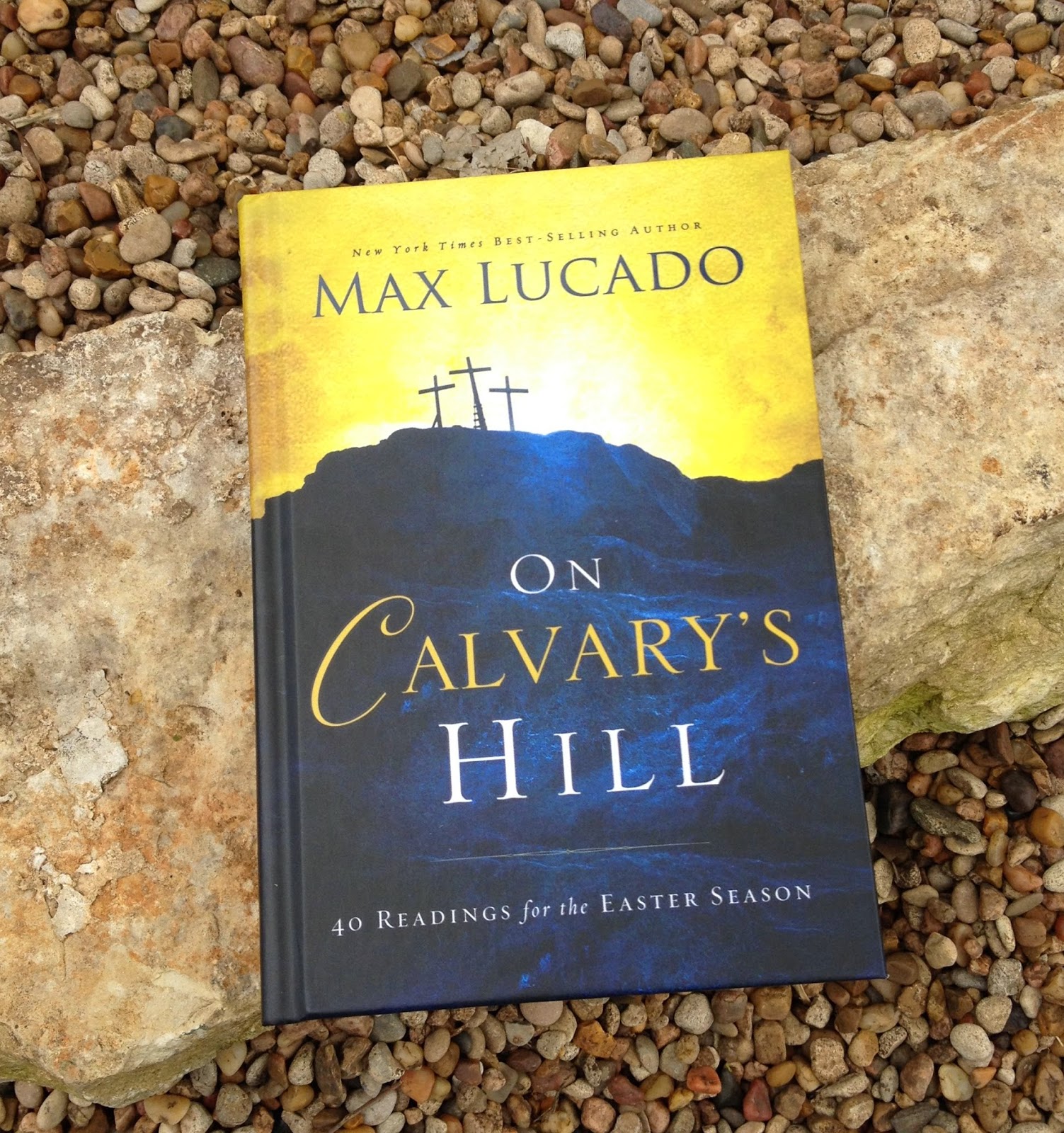
Just Christians

“I’m thinking we aren’t so unlike these soldiers [see John 19:23-24]. (I’m sorry to say.) We, too, play games at the foot of the Cross.

“We compete for members. We scramble for status. We deal out our judgments and condemnations. Competition. Selfishness. Personal gain. It’s all there. So close to the Cross, yet so far from the blood. We are so close to the world’s most uncommon event, but we act like common crapshooters huddled in bickering groups and fighting over silly opinions.

“We major in the trivial, constantly finding fault with others. We split into little huddles and then, God forbid, we split again. Another name. Another doctrine. Another ‘error.’ Another denomination. Another poker game.

“So close to the Cross but so far from the Christ. ‘May they all be one,’ Jesus prayed. One. Not one in groups of two thousand. But one in One. One church. One faith. One Lord. Not Baptist, not Methodist, not Adventist. Just Christians. No denominations. No hierarchies. No traditions. Just Christ.” —Max Lucado, On Calvary’s Hill

Thursdays With Oswald—Whose Temple Is My Body?

Oswald ChambersThis is a weekly series with things I’m reading and pondering from Oswald Chambers. You can read the original seed thought here, or type “Thursdays With Oswald” in the search box to read more entries.

Whose Temple Is My Body?

     If you have been laid hold of by the Spirit of God don’t think it strange concerning the spring-cleaning God is giving you, and don’t clamor for anything because it will have to go. … My body is designed to be a “temple of the Holy Ghost,” and it is up to me to stand up for the honor of Jesus Christ in my bodily practices. … 

     The Spirit of God will not allow me to use my body for my own convenience; the whole limit must be God’s. I am not to serve my own ends with my body, I am to serve the ends of Jesus Christ and be a devoted disciple of His. … 

     The historic Temple was twice cleansed by our Lord; and when He came again to Jerusalem He no longer spoke of it as “My Father’s house,” but “Behold, your house is left onto you desolate” [Matthew 23:37-38]. A terrible pronouncement, and a terrible possibility in our own lives. It is appallingly true that we may get to the place where Jesus can no longer say of us, “My Father’s house”; where He can no longer give us the benefit of scourging and cleansing, but can only retire, a weeping Christ, over our willfulness. “How often would I … and ye would not!” … 

     I am responsible before God for conducting my body as the temple of the Holy Ghost. Am I doing it, or is my body dictating to God, telling Him what it must do? … “Let not sin therefore reign in your mortal body, that ye should obey it in the lusts thereof” [Romans 6:12]. 

From The Soul Of A Christian

This is the key question: Is my body my house or is it my Father’s house?

In other words, after becoming a Christian am I saying, “I can do whatever I want with my body” or am I saying, “My body is Yours, God, to do with as You see fit”?

Whose temple is your body?

Good Religion Must Be Practical

“Religion which has no practical impact on our daily lives quickly becomes a vague, abstract notion that amounts to nothing. Yet many have nothing more than an empty profession to prove they are Christians. …

“A good Christian but a nagging wife, a godly man but a negligent father—these are contradictions that cannot be reconciled. The man who does not walk uprightly in his own house is nothing more than a hypocrite at church. If you are not a Christian in your shop, you are not a Christian in your closet—even though you may pray there.” —William Gurnall, in The Christian In Complete Armor

More quotes from this book can be found here and here.

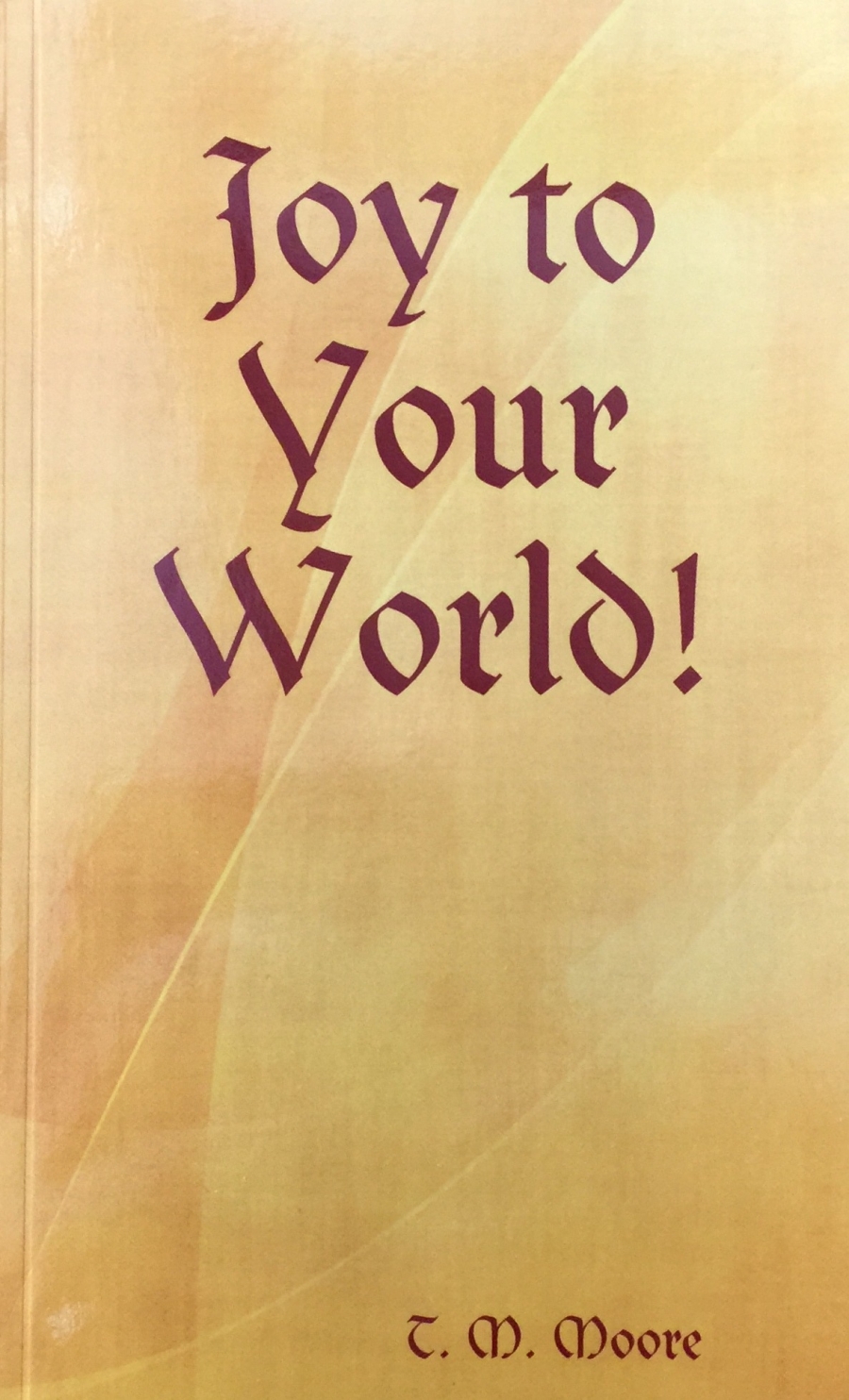
6 Quotes From “Joy To Your World”

In Joy To Your World, T.M. Moore encourages Christians to view joy as the fuel for their testimony to others about their vibrant relationship with Jesus. Check out my book review by clicking here.

“The Christian life is joy, the joy Jesus glimpsed as He went to the Cross, that sustained Him through all His betrayal and suffering, and in which He now dwells, at the right hand of God.”

“The joy which infects those who receive the gift of eternal life in Jesus Christ causes them to see creation and all culture in an entirely new light. Whereas formally such things were merely taken for granted and used as we saw fit, now they are received as gifts and servants of the joy-giving God, to be redeemed, renewed, and redeployed with joy to the praise of His glorious grace.”

“First, we need to make sure our own lives makes sense, that the way we live supports the reasons we might give for why we live this way. … Second, we must make sure that we know the Gospel. … Finally, we need to make sure we can explain the Gospel’s impact on our own lives. How has the Gospel brought new hope, new purpose, new direction, and new life to us?”

“It is not our task to convert those who ask a reason for the hope that is within us. It is our task to make sure, to the best of our ability, that we have explained the Good News of Jesus as clearly as we can.”

“Joy is not determined by what we can see in our immediate environment. Instead, joy is a condition that attaches to knowing the Lord and being able to see past or through what is seen to engage what is not seen (Hebrews 12:1).”

“When, because of our knowledge of God, the joy that fills our souls comes to expression as joy lived, then our lives will make sense, our salvation will be visible to the watching world, and we can offer any who may ask, sound reasons for how that joy can be theirs as well.”

Joy To Your World (book review)

“Joy To The World” is a Christmas song, right? Well, we do often sing it during the Advent season, but T.M. Moore persuasively makes the case in his book Joy To Your World that this message is a year-round blessing.

Quite simply, Moore reminds us that “the Christian life is joy.” Joy is what distinguishes the Christians from others, and joy is what attracts others to the Christian faith more than anything else.

Jesus sent His followers out to make disciples, and the empowering force behind the Christian’s testimony is the joy that Jesus is the One who has conquered hell, death, and the grave. So of all people, Christians should be brimming over with joy.

T.M. Moore writes: “When, because of our knowledge of God, the joy that fills our souls comes to expression as joy lived, then our lives will make sense, our salvation will be visible to the watching world, and we can offer any who may ask, sound reasons for how that joy can be theirs as well.”

This is an excellent message to be read at anytime, not just at Christmas.

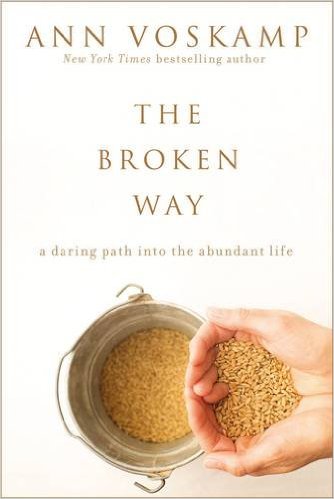
13 More Quotes From “The Broken Way”

Ann Voskamp’s book The Broken Way is a whole new way of looking at pain, disappointment, shortcomings and brokenness. You’ve got to read this book! You can check out my full book review by clicking here.

“The only way to the abundant life is to love the right things in the right ways.”

“The self is ultimately never really sacrificed in giving, but our real self is ultimately found.”

“Sacrifice isn’t so much about losing what you love, but giving your love on to whom you love more. When you sacrifice for what you love, you gain more of what you love.” 

“What matters most is not if our love makes other people change, but that in loving, we change.”

“Be the bread so broken and given that a hungry world yearns for more of the taste of such glory. Be bread so broken and given to a hungry world that your own hunger is filled in communion with God.”

“Until you see the depths of brokenness in you, you can’t know the depths of Christ’s love for you.”

“Reduce repentance to a single act at the beginning of your Christian life and you reduce your whole Christian life to an act.” 

“Relationships only get to exist as long as they keep breathing in the air of mutual forgiveness.”

“The best investment of your life is to love exactly when it’s most inconvenient.”

“The greatest danger to our soul is not success or status or superiority—but self-lies. When you listen to the self-lies hissing that you’re unlovable, unacceptable, unwanted, that’s when you go seeking your identity in success or status or superiority and not in your Savior. Self-lies are the destroyer of the soul because they drown out the sacred voice that can never stop whispering your name: Beloved.”

“Every belittling of self is a belittling of God, a kind of blaspheming of God’s sufficiency and enoughness.”

“Grace embraces you before you prove anything, and after you’ve done everything wrong. Every time you fall down, at the bottom of every hole is grace. Grace waits in broken places. Grace waits at the bottom of things. Grace loves you when you are at your darkest worst, and wraps you in the best light. Grace seeps through the broken places and seeps into the lowest places, a balm for wounds.”

“Believers in Christ are seen by God exactly as Christ is seen by God.”

You can check out the first set of quotes I shared from The Broken Way by clicking here.

New Name = New Nature

All throughout the Old Testament we find hints about Jesus. Then as the New Testament dawns, the brilliant light of Jesus makes sense of all the hints we had previously seen.

One of the way God hints at the arrival of Jesus and what He would do for mankind is found in the names of people. Hebrew names are interesting things. Sometimes they are quite literal. For instance…

    • A baby who was born at one of Israel’s lowest points was named Ichabod = God’s glory has departed.
    • A baby who was born with quite a lot of hair was named Esau = hairy baby.
    • Esau’s twin brother was hanging on to his heel when he was born, so they named him Jacob = the one who grabs the heel.

At other times God tells parents what to name their babies before they are born. These names tell a story in themselves of what is coming…

    • After a time of upheaval in Israel’s history, God directed the parents to give their son two names: Solomon (which means peace) and Jedidiah (which means beloved by God). This brought reassurance to the parents and to the country.
    • When God was about to bring a quick answer to a problem, He directed the parents to name their son Maher-Shalal-Hash-Baz, which means God will bring the reward sooner than you think.

But what is most interesting to me is when God changes someone’s name to reflect the new nature in their life.

Abram’s name meant exalted father, but God changed his name to Abraham, which means father of a multitude. His wife’s birth name was Sarai (princess) and it was changed to Sarah (a noble woman).

In these name changes, two things happened (see Genesis 17:1-15):

  1. God put His own name into theirs. God’s name means I AM. We sometimes pronounce it Yahweh, but that is only a guess since the Jews wrote His name without the vowels. That means His name was the unpronounceable YHWH, sort of a breath-sound. So Abram became Abrahaaam and Sarah became Saraaaaah. 
  2. God took the burden off them and put it on Himself. It was no longer Abram’s responsibility to become an exalted father, or Sarai’s responsibility to make herself a princess. God said, “Only with Me in you can you become who I want you to be!”

As you follow Abraham and Sarah’s descendants, you will see time and time again God reminding people: You can’t do it on your own. You must have Me in you in order to live the life I have for you!

Hoshea was born as an Israelite slave in Egypt, yet his parents gave him this name that means deliverer. Before God could use Hoshea to bring the Israelites into the Promised Land, He first changed his name to Joshua, which means God is the ultimate deliverer.

Joshua in the BC Hebrew language is the same as Jesus in the AD Greek language.

Jesus Christ is the ultimate example of being able to fully deliver people not just from physical slavery, but from the eternal consequences of sin. Man cannot save himself, but Jesus Christ can.

That’s why when you surrender to Christ and allow Him to be your Lord and Master, He puts His name in you: CHRISTian! A new name, and a brand new nature because of what it means to have Christ in you.

Check out this video where I explain the cool story behind more name changes—

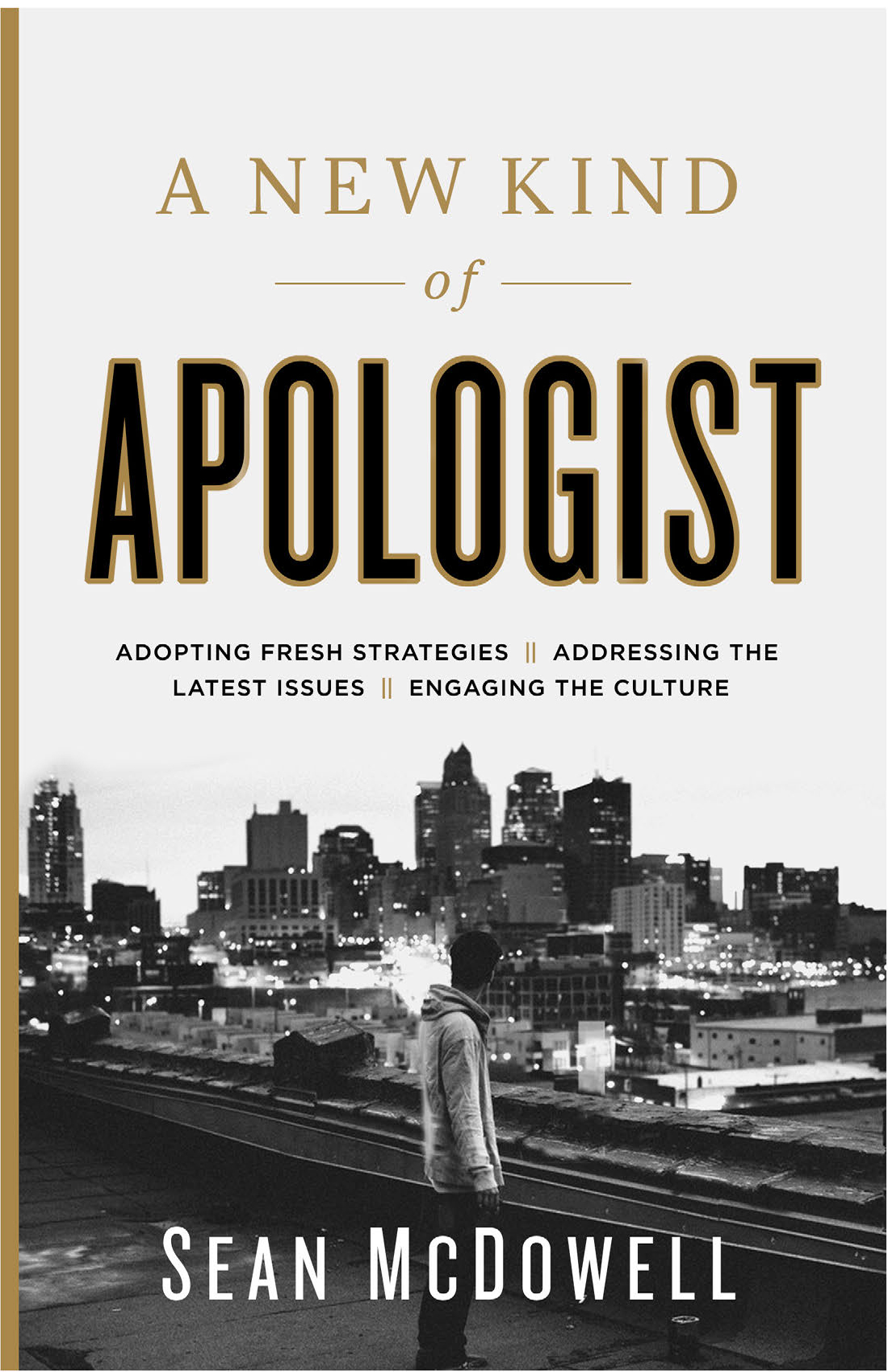
A New Kind Of Apologist (book review)

For years, Josh McDowell has been ranked as a first-class Christian apologist: one who can persuasively defend the Christian faith. Sean McDowell grew up in this environment, being well mentored by his apologist father, and has become a world-renown apologist himself. So when Sean speaks of the need for a new kind of apologist, Christians should take notice.

A New Kind Of Apologist is a collection of essays edited by Sean McDowell. The book also contains short interviews which Sean has conducted with both those defending and opposing Christianity. This book covers everything from how apologists can be the most effective in a new generation of skeptics and seekers, as well as some thoughtful ways to address the issues at the forefront of the minds of this new generation.

The essays in this book are written by seasoned veterans of Christian apologetics, and some who are newer to the scene. But all of them write with a voice that is relevant to this current generation.

Not only will this book inform your brain, but it will challenge your heart as well. The overriding theme through all of these excellent essays is this—Christians must seek to love people more than win an intellectual argument. The new apologist knows his “stuff” but also knows how to develop genuine, caring relationships with those skeptics and seekers that need to hear the good news that Christianity offers.

I loved this book! It is clearly one that I am going to be referring to again and again and again as I seek to hone my apologetic and relationship-building skills.

I am a Harvest House reviewer.

Proof Of Impossibilities

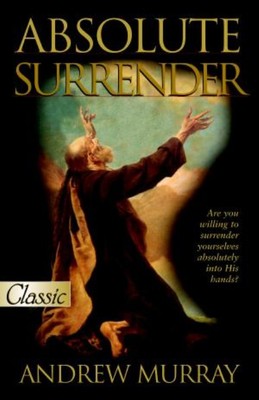
“Your religious life is every day to be a proof that God works impossibilities; your religious life is to be a series of impossibilities made possible and actual by God’s almighty power. That is what the Christian needs. He has an Almighty God that he worships, and he must learn to understand that he does not need a little of God’s power, but he needs—with reverence be it said—the whole of God’s omnipotence to keep him right, and to live like a Christian.” —Andrew Murray, in Absolute Surrender (emphasis mine)