Links & Quotes

link quote

Some great reading (and watching) from the past couple of days.

“This generation has yet to prove all that prayer can do for believing men and women.” —A.W. Tozer

Come, my heart, be calm and hopeful today. Clouds together, but the Lord can blow them away. Since God will not fail me, my faith shall not fail; and as He will not forsake me, neither will I forsake Him.” —Charles Spurgeon

[VIDEO] This is priceless! Watch as a young man with Down Syndrome reads a special letter.

John Piper shares The Greatest Prayer In The World.

Tim Elmore discussing Generation Y: The Inverse Relationship Between Empathy And Narcissism.

This is why I love loving on our missionaries: Home Without A Home.

Some powerful Good Friday quotes compiled by Chilly Chilton in his post Cross Walk.

“Right now you may feel abused and unloved. The devil would have you believe that God has left you to your own devices—that you deserve to suffer, that it’s all over for you, that there is no hope. Beloved, those are lies from hell. God wants more than anything else to rid you of your perverted concept of Him.” —David Wilkerson

The Horrors Of Crucifixion

Good FridayWilliam Barclay, in his commentary on the Gospel of John, wrote graphically about the horrors of crucifixion—

   There was no more terrible death than death by crucifixion. Even the Romans themselves regarded it with a shudder of horror. Cicero declared that it was “the most cruel and horrifying death.” Tacitus said that it was a “despicable death.” It was originally a Persian method of execution. It may have been used because, to the Persians, the earth was sacred, and they wished to avoid defiling it with the body of an evil-doer. So they nailed him to a cross and left him to die there, looking to the vultures and the carrion crows to complete the work. The Carthaginians took over crucifixion from the Persians; and the Romans learned it from the Carthaginians.

   Crucifixion was never used as a method of execution in the homeland, but only in the provinces, and there only in the case of slaves. It was unthinkable that a Roman citizen should die such a death. Cicero says: “It is a crime for a Roman citizen to be bound; it is a worse crime for him to be beaten; it is well nigh parricide for him to be killed; what am I to say if he be killed on a cross? A nefarious action such as that is incapable of description by any word, for there is none fit to describe it.” It was that death, the most dreaded in the ancient world, the death of slaves and criminals, that Jesus died.

   The routine of crucifixion was always the same. When the case had been heard and the criminal condemned, the judge uttered the fateful sentence: Ibis ad crucem, “You will go to the cross.” The verdict was carried out there and then. The condemned man was placed in the centre of a quaternion, a company of four Roman soldiers. His own cross was placed upon his shoulders. Scourging always preceded crucifixion and it is to be remembered how terrible scourging was. Often the criminal had to be lashed and goaded along the road, to keep him on his feet, as he staggered to the place of crucifixion. Before him walked an officer with a placard on which was written the crime for which he was to die and he was led through as many streets as possible on the way to execution. There was a double reason for that. There was the grim reason that as many as possible should see and take warning from his fate. But there was a merciful reason. The placard was carried before the condemned man and the long route was chosen, so that if anyone could still bear witness in his favor, he might come forward and do so. In such a case, the procession was halted and the case retried. (emphasis added)

Always remember that Jesus willingly went through this for you and me.

Surely He took up our pain
    and bore our suffering,
yet we considered Him punished by God,
    stricken by Him, and afflicted.
But He was pierced for our transgressions,
    He was crushed for our iniquities;
the punishment that brought us peace was on Him,
    and by His wounds we are healed. (Isaiah 53:4-5, emphasis added)

Thursdays With Oswald—The Historicity Of The Cross

This is a weekly series with things I’m reading and pondering from Oswald Chambers. You can read the original seed thought here, or type “Thursdays With Oswald” in the search box to read more entries.

The Historicity Of The Cross 

     It is essential to have an historic basis for our Christian faith: our faith must be centered in the Life and Death of the historic Jesus. Why is it that that Life and Death have an importance out of all proportion to every other historic fact? Because there the Redemption is brought to a focus. 

     Jesus Christ was not a Man who twenty centuries ago lived on this earth for thirty-three years and was crucified; He was God Incarnate, manifested at one point of history. All before look forward to that point; all since look back to it. The presentation of this fact produces what no other fact in the whole of history ever could produce, viz.: the miracle of God at work in human souls. The death of Jesus was not the death of a martyr, it was the revelation of the Eternal heart of God. That is why the Cross is God’s last word.

From Conformed To His Image

This is THE Fact of history—

For God loved the world so much that He gave His One and Only Son, so that everyone who believes in Him will not perish but have eternal life. God sent His Son into the world not to judge the world, but to save the world through Him. (John 3:16-17)

Passion Week Infographic

Passion week infographicJosh Byers produced a great resource for the Passion Week. It lists chronologically all of the events recorded in the Gospels for the week from Palm Sunday to Resurrection Day, along with each of the Scripture references for those events. This would be meaningful way to read your Bible this week.

You can click the image to the left to view it magnified on your screen, or you can download a PDF version by clicking here → Passion week infographic.

If you really love Josh’s work, click here to go to his site to purchase a physical print.

But whatever you do, let’s observe this Passion Week with Bible reading and prayer.

Thursdays With Oswald—The Production Of A Saint

This is a weekly series with things I’m reading and pondering from Oswald Chambers. You can read the original seed thought here, or type “Thursdays With Oswald” in the search box to read more entries.

Oswald Chambers

The Production Of A Saint

     The production of a saint is the grandest thing earth can give to Heaven. A saint is not a person with a saintly character: a saint is a saintly character…. 

    A saint is a living epistle written by the finger of God, known and read of all men. A saint may be any man… who discovering himself at Calvary, with the nature of sin uncloaked to him, lies in despair; then discerning Jesus Christ as the Substitute for sin and rising in the glamour of amazement, he cries out—“Jesus, I should be there.” And to his astonished spirit, he receives justification from all his sinfulness by that wonderful Atonement. 

     Then, standing in that great light, and placing his hands, as it were, over his Savior’s crucified hands, his feet over His crucified feet, he crucifies forever his right to himself, and He baptizes him with the Holy Spirit and fire, substituting in his a new principle of live, and identity of holiness with Himself, until he bears unmistakably a family likeness to Jesus Christ. 

From Christian Disciplines 

YES!!

14 Quotes From “It Is Finished”

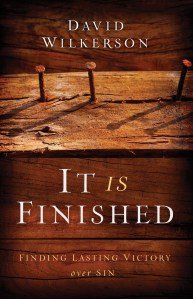
It Is FinishedIt Is Finished was an amazingly confronting and encouraging book. You can read my full book review by clicking here, but below are some of the quotes from David Wilkerson that especially caught my attention…

“Jesus was speaking as co-signer of the covenant. He said, ‘Now I am no longer in the world, but these are in the world, and I come to You. Holy Father, keep through Your name those whom You have given Me, that they may be one as We are’ (John 17:11). He was saying to the Father, ‘We agreed that I could bring into Our covenant everyone who trusts in Me. Now, Father, I ask You to bring these beloved ones under the same covenant promises You made to Me.”

“The covenant, cut before the world was formed, has in it the sworn oath of almighty God to save and deliver His people from the power and dominion of satan. Faith in Christ brings us into God’s covenant oath to keep us as faithfully as He kept His own Son.”

“This is an ongoing problem with many Christians. We look to the Holy Spirit as some kind of booster shot to empower or energize our human will. We expect Him to build up our supply of grit and determination, so we can stand up to temptation the next time it comes. We cry, ‘Make me strong, Lord! Give me an iron will, so I can withstand all sin.’ But God knows this would only make our flesh stronger, enabling it to boast. … Scripture says the Spirit of God actually ‘subdues’ our sins and turns us from them: ‘He will again have compassion on us, and will subdue our iniquities. You will cast our sins into the depths of the sea’ (Micah 7:19). Think of it! Not I, but my God, will subdue and conquer all my sins, by the inner working of the Holy Spirit.”

“God’s Spirit will accomplish in us what our flesh never has been able to do. How? By indwelling us. The New Covenant is all about the Holy Spirit coming to live and work in us, by promise in answer to faith.”

“It is vital for every follower of Jesus not to judge God’s New Covenant promises according to past experiences.”

“God says, ‘There is one work the Spirit must perform in you before any of these others. He is going to put in you the true fear of God concerning sin. He will implant in you a profound awe of My holiness so you will not depart from My commands. Otherwise, your sin will always lead you away from Me.’ Very simply, the Holy Spirit changes the way we look at our sin. … So He shows us how deeply it grieves and provokes Him.”

“Many flesh-driven Christians try to shake off the guilt that God’s convicting arrows produce. They do not want to feel the dread of their sin, so they constantly claim the verse, ‘There is therefore now no condemnation to those who are in Christ Jesus’ (Romans 8:1). But they neglect to read the last part of this verse: ‘who do not walk according to the flesh, but according to the Spirit.’ If you continue in sin, you are walking in the flesh—and you have no claim on God’s promise of ‘no condemnation.’ The guilt we feel under Holy Spirit conviction is actually a work of God’s grace. It is meant to expose the deceitfulness of sin in us.”

“Ask the Holy Spirit to accomplish in you the precedent work of instilling godly fear in you, to keep your heart open and accepting of God’s Word. When you do, the Spirit promises to give you a soft heart, one that is pliable in His hand. … The implantation of godly fear by the Holy Spirit is designed to produce obedience through surrender, rather than through discipline.”

“God the Father gave His Son, Jesus, access to all of His own riches and wealth. In other words, He invested in Him all the wisdom, knowledge, power and glory of Heaven. And by being made wealthy in all these things, Jesus became the only One worthy to be co-signer of the covenant. ‘By so much more Jesus has become a surety [guarantor, sponsor, co-signer] of a better covenant’ (Hebrews 7:22). Could there be any greater mercy than this? God so loved us that He made His Son rich beyond all comprehension. Then He made Him both our kinsman and our co-signer. He has become the person responsible to settle all our debts. He pays when we cannot.”

“In this covenant, God pledges to do the following four things:

  1. He swears to write His law on our hearts and minds.
  2. He takes an oath that He will be God to us, and that we will be His children.
  3. He promises we will know Him and His ways because we will be taught by the Holy Spirit.
  4. He pledges to be merciful to our unrighteousness, forgiving all our sins and iniquities.”

“A stronghold is an accusation planted firmly in your mind. satan establishes strongholds in God’s people by implanting in their minds falsehoods and misconceptions, especially regarding God’s nature.”

“The only weapon that scares the devil and his armies is the same one that scared him in the wilderness temptation of Jesus. That weapon is the truth of the New Covenant—the living Word of God. Only the Lord’s truth can set us free.”

“This is the doctrine of God’s preventing goodness: He has anticipated all our struggles—all our battles with sin, flesh and the devil—and in His mercy and goodness, He has paid our debt before it can even come due. Through the covenant, He has prepaid for all our failures and relapses. His covenant oath assures us of His preventing goodness in our lives.”

“In God’s eyes, our problem is not sin, it is trust. Jesus settled our sin problem once and for all at Calvary. He does not constantly harp on us now, barking, ‘What have you done this time?’ or ‘Now you’ve gone too far,’ or ‘This time you’ve crossed the line.’ No, never! Our Lord’s attitude toward us is just the opposite. His Spirit is constantly wooing us, reminding us of the Father’s lovingkindness—even in the midst of failure.”

No Conspiracies Here

Listen to the podcast of this post by clicking on the player below, and you can also subscribe on AppleSpotify, or Audible. 

Could it really be this simple? Could it be that Jesus died and rose again just like the Bible says? Or does it need to be more complicated than that? Are there other theories that seem to fit the facts?

At the feast of Pentecost where Jewish people from all over the world convened in Jerusalem just 50 days after the resurrection of Jesus, Peter stood up to address them:

  • He began, “Fellow Jews and all of you who live in Jerusalem…” (Acts 2:14). He addressed both local residents and guests from faraway lands.
  • Peter began by saying, “Jesus of Nazareth was a Man accredited by God to you by miracles, wonders and signs, which God did among you, as you yourselves know” (v. 22). No one shouted Peter down or disputed this claim. Quite possibly because there were those in this audience who had personally seen or experienced one of Jesus’ miracles.
  • The he announced, “God has raised this Jesus to life, and we are all witnesses of the fact” (v. 32). Anyone could have easily refuted this claim because the tomb of Jesus was within walking distance of where they were standing, and yet no one disputed this claim.

(Check out all of the Scripture references in this post by clicking here.)

A short time later, after healing a lame man outside of the temple, Peter and John were hauled before the Sanhedrin (the rulers and elders of the people [Acts 4:8]). This was the very group who had convinced the Roman governor Pontius Pilate to have Jesus crucified.

  • They addresses this group by saying, “It is by the name of Jesus Christ of Nazareth, Whom you crucified but Whom God raised from the dead, that this man stands before you healed” (v. 10). Once again, they didn’t dispute this, but they just told them to stop preaching in this name of Jesus (v. 17).

Paul was a devout member of this Jewish religious leadership until he had a personal encounter with Jesus. It became awfully difficult for Paul to argue that Jesus was dead, when he had personally seen Him and talked with Him!

Paul’s former colleagues had him arrested to stand trial before the Romans. The Roman governor Festus noted that the claims of the Jews against Paul were “about a dead man named Jesus Who Paul claimed was alive” (Acts 25:19). This is nearly 30 years after the resurrection of Jesus occurred. King Agrippa didn’t scoff this off. In fact, Paul said he was glad to talk to the king since “the king is familiar with these things…. I am convinced that none of this has escaped his notice, because it was not done in a corner” (Acts 26:26). Again, Agrippa didn’t dispute the claim of Jesus’ resurrection, but simply accused Paul of trying to convert him to Christianity.

There is something in our hearts that wants the resurrection to be true.

  • We don’t want to work all our lives for nothing.
  • We don’t want to invest in a relationship, only to have that end when the other person dies.
  • We want there to be something more. We want there to be something that makes sense of the world.
  • Only the resurrection of Jesus the Christ helps us make sense of life. Only His resurrection gives us lasting hope. 

An old song by the band Kansas says:

Deep within the hardest heart

There is something there that knows

There’s a hunger life can never fill

Til you face the One Who rose

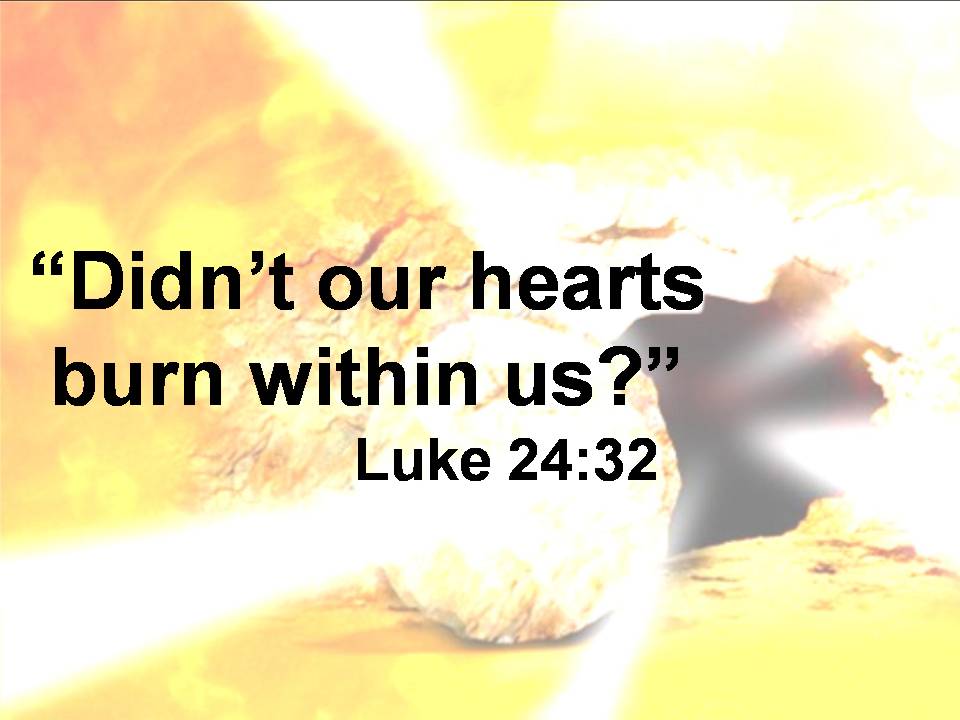
There were two followers of Jesus who were out for a walk on the evening of the day of the resurrection. They, too, were trying to figure out if the news reports they heard about Jesus’ resurrection was fact or fiction. Jesus met them on the road (although they didn’t recognize Him) and He walked and talked with them. He explained how all of the things in the Bible pointed to these facts: a Savior would come, a Savior would die, and a Savior would be raised to life again. As Jesus sat down to eat with them, they recognized Who He was, and then He disappeared from their sight. As they hurried back to tell the other disciples, they said, “Didn’t our hearts burn within us as He talked” (Luke 24:32).

Does it take faith to believe the biblical resurrection story? Yes!

Does it take faith to believe the conspiracy theories? Yes!

But I believe that not only is the resurrection account more plausible, but it’s more satisfying too. The resurrection of Jesus rings true because IT IS TRUE, and because you were created by God to believe this truth so you could be in a relationship with Him forever.

►► Would you please prayerfully consider supporting this ministry? My Patreon supporters get behind-the-scenes access to exclusive materials. ◀︎◀︎

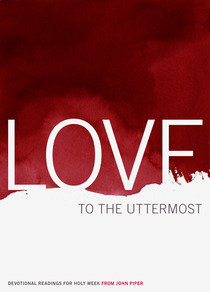
5 Quotes From “Love To The Uttermost”

Love To The UttermostI suggested last week that John Piper’s book Love To The Uttermost is an excellent resource to help guide you through the Holy Week with some fresh insights (you can read my review of this book by clicking here). Here are a few of the fresh insights that stood out to me.

“Luke 12:32 is a verse about the nature of God. It’s a verse about what kind of heart God has. It’s a verse about what makes God glad—not merely about what God will do or what He has to do, but what He delights to do, what He loves to do, and what He takes pleasure in doing. ‘Fear not, little flock, for it is your Father’s good pleasure to give you the kingdom.’ … This is what the word means: God’s joy, His desire, His want and wish and hope and pleasure and gladness and delight, is to give the kingdom to His flock.”

“Jesus was not accidentally entangled in a web of injustice. The saving benefits of His death for sinners were not an afterthought. God planned it all out of infinite love to sinners like us, and He appointed a time. Jesus, who was the very embodiment of His Father’s love for sinners, saw that the time had come and set His face to fulfill His mission: to die in Jerusalem for our sake. ‘No one takes my life from Me,’ Jesus said, ‘I lay it down of my own accord’ (John 10:18).”

“First, we know the depth of someone’s love for us by what it costs him. Second, we know the depth of someone’s love for us by how little we deserve it. Third, we know the depth of someone’s love for us by the greatness of the benefits we receive in being loved. Fourth, we know the depth of someone’s love for us by the freedom with which they love us.”

“[God] does not need us. If we stay away He is not impoverished. He does not need us in order to be happy in the fellowship of the Trinity. But He magnifies His mercy by giving us free access through His Son, in spite of our sin, to the one Reality that can satisfy us completely and forever, namely, Himself.”

“The resurrection of Jesus is given to us as the confirmation or evidence that He was indeed free in laying down His life. And so the resurrection is Christ’s testimony to the freedom of His love. … Of all the great things that Easter means, it also means this: it is a mighty ‘I meant it!’ behind Christ’s death. I meant it! I was free. You see how free I am? You see how much power and authority I have? I was able to avoid it. I have power to take up My life out of the grave. And could I not, then, have devastated My enemies and escaped the Cross? My resurrection is a shout over My love for My sheep: It was free! It was free! I chose it. I embraced it. I was not caught. I was not cornered. Nothing can constrain Me to do what I do not choose to do. I had power to take My life from death. And I have taken My life from death. How much more, then, could I have kept My life from death! I am alive to show you that I really loved you. I freely loved you. Nobody forced Me to it. And I am now alive to spend eternity loving you with omnipotent resurrection love forever and ever. Come to Me, all you sinners who need a Savior. And I will forgive you and accept you and love you with all My heart forevermore.”

Such Wondrous Love

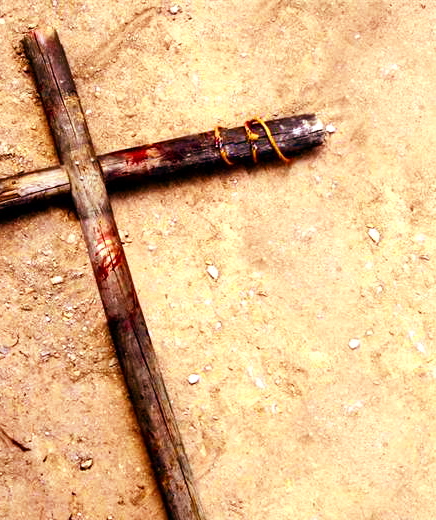
CrossAs I am preparing both a Good Friday message and an Easter message, I am immersed in the details of Christ’s passion for us. There are so many thoughts swirling through my head about the amazing, unequaled, undeserved, overflowing love that Jesus has for us.

See from His head, His hands, His feet / Sorrow and love flow mingled down! / Did e’er such love and sorrow meet, / Or thorns compose so rich a crown? (Isaac Watts, When I Survey The Wondrous Cross)

You see, at just the right time, when we were still powerless, Christ died for the ungodly. Very rarely will anyone die for a righteous person, though for a good person someone might possibly dare to die. But God demonstrates His own love for us in this: While we were still sinners, Christ died for us. (Romans 5:6-8)

That Christ should join so freely in the scheme / Although it meant His death on Calvary / Did ever human tongue find nobler theme / Than love divine that ransomed me?

Such love, such wondrous love / Such love, such wondrous love / That God should love a sinner such as I / How wonderful is love like this!

That for a willful outcast such as I / The Father planned, the Savior bled and died / Redemption for a worthless slave to buy / Who long had law and grace defied (C.Bishop, Such Love)

Because of the joy awaiting Him, Jesus endured the Cross, disregarding its shame. Now He is seated in the place of honor beside God’s throne. (Hebrews 12:2)

I hope this week you will reflect on God’s amazing grace, Christ’s great love, and the Holy Spirit’s persistent drawing of your heart. Jesus died for us so that we could be brought into a loving relationship with our Heavenly Father!

If you are in the Cedar Springs area, please join me in celebrating with our churches our combined Good Friday service, or our Easter morning breakfast drama called Conspiracy!

At Last!

Jesus is our atonementThe Day of Atonement was a very special day for the Jewish people. It was called by some the Sabbath’s Sabbath, as it was the most holy day of the year. It was the day everyone looked forward to, because finally they could have forgiveness for their sins.

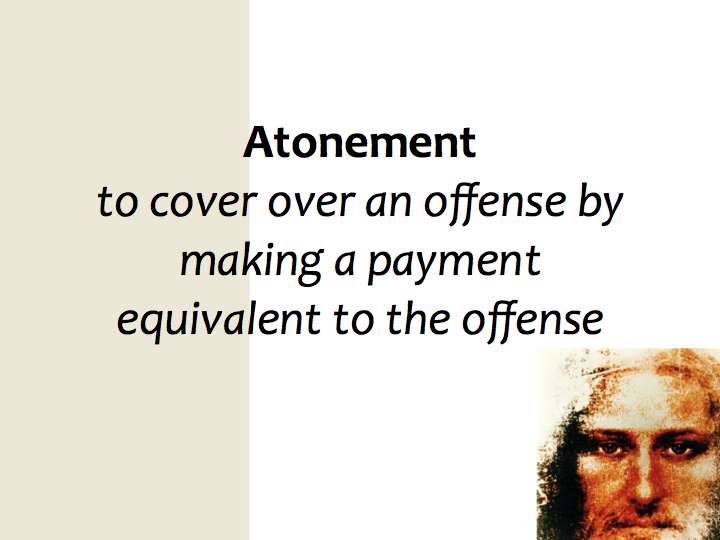
The word atonement in the Hebrew meant that a payment was made that was equivalent to the offense that was committed. The offense was huge: Sin was open rebellion against Almighty God, it was to spit in the face of our Heavenly Father, it was to slap away His hands that were reaching out to embrace us. Nothing short of a death could atone for that sort of offense!

So the high priest would go through an elaborate ceremony of washing himself and putting on special garments that were only to be worn on this Day of Atonement. Because the high priest was also a sinner himself, his first sacrifice was a bull. The blood from this sacrifice was taken by the high priest into the Most Holy Place of the temple to cover his own sins, before he could even approach God to ask for the forgiveness of the sins of anyone else.

After having completed this step, the high priest could then proceed. He would sacrifice a goat as a sin offering for the people. As he did with the bull’s blood, he would take the goat’s blood back into the Most Holy Place to ask God to show mercy toward people who had sinned, to turn away His holy wrath against their rebellion. Then the priest would lay his hands on a second goat, one that was still alive, and confess all of the sins of the people. This goat (called the scapegoat) was then taken out into the desert. This symbolized the removal of the people’s guilt, making it possible for them to be in relationship with God once again.

This was repeated year after year after year. It was repeated because the people continued to sin. It was repeated because these rituals were only a shadow of what God really wanted to accomplish. David wrote about the futility of these sacrifices—

Sacrifice and offering You did not desire—but a body You have given me—burnt offerings and sin offerings You did not require. Then I said, “Here I am, I have come—it is written about me in the scroll. I desire to do Your will, my God; Your law is within my heart.” (Psalm 40:6-8)

A beautiful thing happened through the ministry of Jesus on earth. Jesus came to be both the perfect high priest (one without sin, who did not need to purify Himself), and the perfect sacrifice. Jesus is called the once for all sacrifice of atonement for us, as He embodied the cry David made nearly 1000 years earlier. Hebrews 10:5-7 says that the words uttered by David prophetically were repeated by Jesus: “Here I am, I have come—it is written about me in the scroll. I desire to do Your will, my God; Your law is within my heart. I will be the once for all sacrifice.”

When Jesus told us the the new covenant was in His shed blood on Calvary’s Cross, He was saying that no longer would we have to wait until the Day of Atonement to find forgiveness; no longer would we have to wait upon an imperfect earthly priest to offer a sacrifice for us; no longer would we have to carry around the guilt of our sin and feel separated from God’s presence while waiting for a special ceremony. AT LAST! We can have immediate forgiveness, eternal redemption, and an everlasting relationship with God because of what Jesus did for us once for all!

As you celebrate Holy Week, be thrilled with the truth that Jesus’ death on the Cross makes it possible for you to have complete atonement. Our Savior has redeemed us AT LAST!

If you have missed any of the messages in this series called Who Is Jesus?, you can find them all here.