Is Sin For Me Sin For You?

In our recent Q Series, I was asked a great question: If God has told me that something is a sin for me, does that mean that it is a sin for everyone?

Using a personal example from my life, and using two biblical examples (in Samson and John the Baptizer) I shine some light on this question …

You might also be interested to check out some other Q&As regarding the Bible, end-times prophecy, parables, and prayer.

How “Alien” Is Your Christianity?

Peter pulls no punches as he calls Christians for what they are (or perhaps what they really should be): aliens … strangers … peculiar people.

But how can that be, especially in the United States of America? Survey after survey says that upwards of 95% of Americans claim to believe in God, and fully 8-out-of-10 of every American call themselves a Christian.

You only need to take a look at our schools, our government, or our entertainment to see how “alien” biblical values are with current cultural trends. I think all of us have experienced that when we try to live by a biblical standard, people roll their eyes at us (at best) or maybe outright mock us. Perhaps the term “aliens” is not so much for what we say we believe, but how we live what we believe.

That’s why Peter calls us peculiar (1 Peter 2:9). This word means a people so focused on what God wants, that they don’t have time to worry about what the world wants. Peculiar people are so focused on “Your kingdom come and Your will be done” that they don’t pay attention to “keeping up with the times.”

Peter says that the inevitable outcomes of this peculiar lifestyle are accusations of wrong doing, unjust treatment, insults, and slander, just to name a few (see 1 Peter 2:12, 19, 21-23; 3:16).

When we are treated this way, Peter tells Christians about their alien response:

  • Love one another deeply
  • Live good lives doing good deeds
  • Do not retaliate with insults or threats
  • Live in such a hope-filled way that others can’t help to ask you about it (see 1:22; 2:12, 23; 3:15)

So… how “alien” is your Christianity? Are you doing so many good things that it catches the attention of others? Are you responding to mistreatment in a Christ-honoring manner? Do you speak with others gently and respectfully? Is your life so full of hope in your eternal home in Heaven that people can’t help but ask you for the reason for the hope you have?

Don’t worry about being popular; be peculiar. Be so alien to this world’s values that you compel others to encounter Jesus Christ as you have! 

If you’ve missed any messages in this series, you may find the complete list by clicking here.

Saturday In The Psalms—Delight & Meditate

Blessed is the man who does not walk in the counsel of the wicked or stand in the way of sinners or sit in the seat of mockers. But his delight is in the law of the Lord, and on His law he meditates day and night. (Psalm 1:1-2)

This chapter sets the agenda for the entire book of the Psalms by contrasting those whose ear is to the culture, and those whose ear is to God.

The one who prospers in God’s kingdom is one who delights in God’s Word and meditates on it.

Delights to know God more, to grow in Him more, to walk in His ways more. It is his passion. It sets his agenda.

Meditates prayerfully on God’s Word. He is constantly evaluating his world, his thoughts, his decisions on what God has revealed in Scripture. It is in meditation that the Holy Spirit Who inspired the Word can now illuminate it to the particular situation in which the godly man finds himself.

Delight and Meditate—it’s a Your-kingdom-come-Your-will-be-done lifestyle that not only pleases God, but brings His blessings on the delightful meditator’s life.

Can A Christian Lose Their Salvation?

As a part of our annual Q Series, this was a question that was turned in: Can a Christian lose his or her salvation?

Check out the video below…

Some of the Scriptures I reference in this answer:

For other Q&As from this series, check out discussions here and here.

11 Quotes From Important Islam Booklets

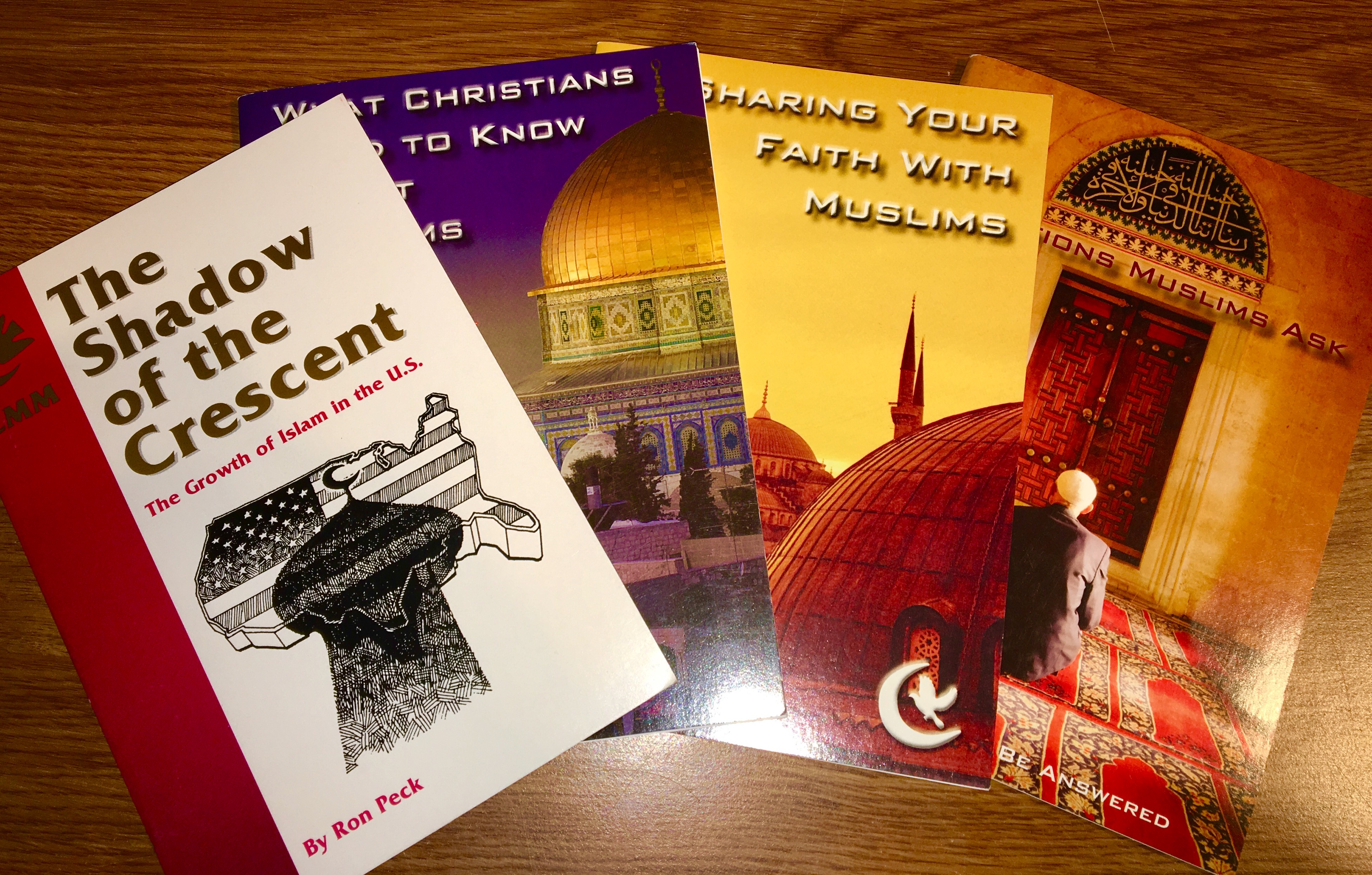
I recently read four very insightful booklets on how Christians can best prepare themselves to share their faith in Jesus with their Muslim neighbors. You can read my complete review of these booklets by clicking here. Below are just a few quotes that caught my attention.

“‘America’s mosques are loaded with people who grew up in church’ [says Carl Ellis]. Ellis says that many converts to Islam are African-American males who see traditional churches as male unfriendly and as failing to address their real needs.”

“God is bringing thousands of Muslim immigrants to our shores every year. These people are coming from Islamic nations where they could not be evangelized before. Yet here in America, they are free to listen and respond to the Gospel. In this ‘land of the free’ they do not have to fear horrible consequences if they believe the gospel and accept Jesus Christ as their Savior.”

“Our hearts should be increasingly burdened not only by the enormous spiritual need of the 1.4 billion Muslims, but also by the apathy of the missionary movement towards them. …  Instead of being evangelized, Muslims are evangelizing. …

“It is reported that Muslims are counting on Europe, the birthplace of the Reformation and the modern missionary movement, to become completely Islamic within the next few decades. In England more than 300 closed churches have been converted into mosques. … Muslims are now a majority in 44 countries of the world.”

“When you are discussing the Bible with the Muslim, it is important that you read the Bible verses in context. The Muslim has developed an intricate system of ‘abrogation’ or substitution of one verse for another, due to the random way the Qur’an is written. He will have a tendency to try to find verses in the Bible that ‘contradict’ each other. Anyone witnessing to a Muslim must know the Scriptures thoroughly and be able to lead the Muslim to understand the meaning of passages in relation to the setting in which they are found.”

“The Muslim will be impressed with a Christian’s words only if he experiences genuine friendship from the Christian and sees him living a consistent moral life. A Christian’s lifestyle must match his testimony.”

“It is better to win the Muslim as a friend than to win an argument and lose his friendship.”

“Christians should be aware that Muslims are people who seek after God!”

“Here, surely, is a key to witnessing to Muslims, both in the United States and around the world: Love them as Jesus loves us. … You must give your SELF to your Muslim friend—not just the gospel!”

“A cardinal rule is: Never become involved in arguments—especially theological ones! Nominal and even irreligious Muslims often become fanatical advocates of their faith when pushed by argument. The truth is: We have argued and debated for hundreds of years without success. Let us now become witnesses—not debaters!”

“No religion on the face of the earth deals with forgiveness of sins except Christianity. … The concept of God as a loving Heavenly Father is completely foreign to a Muslim. … Show him from the Bible how God has provided a way whereby all sins can be forgiven, and every trace of guilt can be completely removed. This is a very powerful tool in witnessing.”

“One way the power of the Holy Spirit is demonstrated is through physical healing. If your Muslim friend or a member of his family is sick, offer to go and pray for him. He will deeply appreciate your concern, and when the person is healed, this demonstration of the Holy Spirit’s power will be convincing—often the key to his accepting Christ as Savior and Lord.” 

Some other helpful resources on this topic are two books from Nabeel Qureshi: Seeking Allah, Finding Jesus and Answering Jihad. Also, check out Praying For Muslims.

The Q Series—Parables, End Times, And Prayer

Our annual Q Series is where folks send their questions to me on a variety of subjects and we do our best to answer them. This week we tackled questions like:

  • What does Christ’s Parable of the Sower mean?
  • Can people lose their salvation?
  • Are micro-chips implanted in humans the start of “the mark of the beast”?
  • What does “666” stand for?
  • Why aren’t all of my prayers answered?

Here’s what we discussed, along with the time this discussion appears on the video:

  • The Parable of the Sower [1:27]
  • What is a parable? [2:19] **Be sure to check out What Was Jesus Teaching In The Parables? on Biblegateway
  • Who is the farmer in this parable? [4:30]
  • “The best commentary on Scripture is Scripture” [5:14]
  • Can someone lose their salvation? [7:42]
  • Keep sowing seed [11:51]
  • Eternal security? [13:50]
  • The Scripture has “a lot of faces” [17:20]
  • Are micro-chips “the mark of the beast”? [20:37]
  • What is gematria? How does this fit with 666? [22:58]
  • 666 falls short of God’s perfection [25:54]
  • The antichrist is a parody of Jesus Christ [26:08]
  • What is the significance of 666 on the right hand and forehead? [27:31]
  • To understand the future, look to an historic event [29:05]
  • A lesson from the socialism of the Nazis and Adolf Hitler [29:49]
  • A quote from Dr. Erwin Lutzer [31:15]
  • Why did Jesus talk about material possession so much? [32:48]
  • Why aren’t all my prayers answered? [36:36] **Be sure to check out Praying With Authority on Biblegateway.
  • How do we pray “in Jesus’ name”? [37:07]
  • How did Jesus speak to His Father in prayer? [39:10]
  • James on unanswered prayers [41:32]
  • Perseverance in prayer [43:30]

We will be answering your questions one more time next Sunday. Please click here to find all the ways you can submit your questions.

15 More Quotes From “Run Today’s Race”

Oswald Chambers’ book Run Today’s Race was originally published as a thought-a-day calendar. Here are a few more short, thought-provoking quotes.

“When we say ‘Thy will be done,’ do we say it with a sigh? If so, we have never realized that the character of God is holy love; nothing can ever happen outside His purposeful will.”

“‘Why does God bring thunderclouds and disasters when we want to green pastures and still waters?’ Bit by bit we find, behind the clouds, the Father’s feet; behind the lightning, an abiding day that has no night; behind the thunder, ‘a still small voice’ that comforts with a comfort that is unspeakable.”

“Beware of interpreting Scripture in order to make it suit a pre-arranged doctrine of your own.”

“The New Testament view of a Christian is that he is one in whom the Son of God has been revealed, and prayer deals with the nourishment of that life.”

“In order to be able to wield the Sword of the Spirit, which is the Word of God, we must obey, and it takes a courageous heart to obey.”

“The Bible talks plentifully about joy, but it nowhere talks about a ‘happy Christian.’ Happiness depends on what happens; joy does not. Remember, Jesus Christ had joy, and He prays ‘that they might have My joy fulfilled in themselves.’”

“If God has made your cup sweet, drink it with grace; if He has made it better, drink it in communion with Him.”

“We must distinguish between the burden-bearing that is right and the burden-bearing that is wrong. We ought never to bear the burden of sin or doubt, but there our burdens placed on us by God which He does not intend to lift off. He wants us to roll them back on Him.”

“The reason we know so little about God’s wisdom is that we will only trust Him as far as we can work things out according to our own reasonable common sense.”

“Take time, strangle some other interests and make time to realize that the center of power in your life is the Lord Jesus Christ and His Atonement.”

“The essence of Christianity is that we give the Son of God a chance to live and move and have His being in us.”

“God rarely rebukes us for our impulsive plans because those plans work their own distress.”

“God will never begin to teach me His will in other matters until I do what I know.”

“‘Ye are the light of the world.’ We have the idea that we are going to shine in heaven, but we are to shine down here ‘in the midst of a crooked and perverse nation’ (Philippians 2:15). We are to shine as lights in the world in the squalid places, and it cannot be done by putting on a brazen smile, the light must be there all the time.”

“Have you ever noticed what Jesus said would choke the Word He puts in? The devil? No, the cares of this world. It is the little worries always. … All our fret and worry is caused by calculating without God.”

Please check out my full book review of Run Today’s Race by clicking here, and the first set of quotes I posted from this book is here.

The Q Series—The Bible

Our annual Q Series is where folks send their questions to me on a variety of subjects and we do our best to answer them. This week many of the questions were about the Bible. Questions like:

  • What books should be included in the Bible?
  • What about Bible translations?
  • Is it okay for the Bible to have pictures in it?

Here’s what we discussed, along with the time this discussion appears on the video:

  • How was it decided what books would be included in the New Testament? [5:38] **Be sure to check out this post: How We Got The Bible on Biblegateway.
  • J. Warner Wallace’s list of criteria for New Testament books [9:45]
  • Did contemporary sources support or refute the New Testament authors? [11:45]
  • How did the final 27 books of the New Testament make the list? [15:02]
  • How was it decided what books would be included in the Old Testament? [18:22]
  • Evidence presented by the Apostle Paul [20:31]
  • How do we know the Scriptures were accurately transcribed? [22:50] **Be sure to check out this post: Why Trust The Bible? on Biblegateway.
  • The history surrounding the complete Latin Bible and the Dead Sea Scrolls [23:45]
  • What are Bible translations and paraphrases (with references to the Wycliffe Bible and the discovery of the Rosetta Stone)? [25:45]
  • Some cautions about Bible paraphrases [33:23]
  • Is it okay for a Bible to have pictures in it? [35:16]
  • Are icons of the Cross acceptable or a blasphemy? [37:42]
  • How can someone better understand the Bible when they read it for themselves? [41:32]
  • Why ask questions? [48:39]

We’ll be discussing more questions this upcoming Sunday, so be sure to send them my way. For all of the ways you can send questions, please click here.

The Cure For Spiritual Fanaticism

“Some time after Pentecost a group of believers met to pray for strength and power to meet the emergency then facing them, and to enlist the help of God on their behalf. ‘And when they had prayed, the place was shaken where they were assembled together; and they were all filled with the Holy Ghost, and they spake the Word of God with boldness’ (Acts 4:31). Some of these were of the original number filled at Pentecost. It is hardly conceivable that God acted contrary to His own will in filling them again after Pentecost. Still other outpourings are recorded in Acts 8, Acts 10 and Acts 19. All these occurred some years after the original act.

“In brief, the teaching of the New Testament is that the outpouring at Pentecost was the historic beginning of an era which was to be characterized by a continuous outpouring of the Holy Spirit. …

“This anti-emotionalism, though it is sponsored by some good people and travels in pretty orthodox company, is nevertheless an unwarranted inference, not a scriptural doctrine, and is in violent opposition to psychology and common sense. Where in the Bible are feeling and faith said to be at odds? The fact is that faith engenders feeling as certainly as life engenders motion. We can have feeling without faith, it is true, we can never have faith without feeling. Faith as a cold, unemotional light is wholly unknown in the Scriptures. …

“The Holy Spirit is the cure for fanaticism. Not the cause of it.”

—A.W. Tozer, in Paths To Power

Godly Leaders Prayerfully Plan

“… I pray…grant me mercy in the sight of this man [King Artaxerxes]…” (Nehemiah 1:11).

Nehemiah prayed this in the month of Chislev. Four months later—in the month of Nisan—we read Nehemiah’s words, “So I prayed to the God of heaven” (2:4).

It took four months before God began to answer Nehemiah’s prayer, but he definitely wasn’t idle during this time!

During these four months, Nehemiah did more than pray; he planned. In Nisan, the king asked Nehemiah why he seemed heartsick.

“This is nothing but sorrow of heart,” said the king. “What’s bothering you, Nehemiah?”

“My hometown is in ruins,” replied Nehemiah.

Then the king asked, “What would you like to do?”

“So I prayed to the God of heaven. And then I said to the king…” (vv. 2-5).

Nehemiah’s request to King Artaxerxes was very specific.

  • He told the king how long he would be gone
  • He told him the building supplies he would need
  • He requested a letter from the king granting him safe passage
  • He requested another letter authorizing him to have access to the forest for lumber

“And the king granted them to me according to the good hand of my God upon me” (v. 8). Not only that, but the King gave Nehemiah an armed escort back to Jerusalem!

Nehemiah prayed and planned, allowing God to determine the perfect timing. Nehemiah didn’t just pray and wait; he worked while he waited.

A mark of a godly leader is one who prayerfully plans his strategy.

My prayer—May all my plans be made with prayer to You for guidance. You know the best plans and the perfect timing, so I will pray and plan; plan and pray.

This is Part 4 in my series on godly leadership. To read my other posts, please click here.