Certainty In Uncertain Times

… Perhaps the Lord will act in our behalf … The God we serve is able to save us from the furnace…but even if God does not save us… (1 Samuel 14:6 and Daniel 3:17-18).

We often remember and even hold in high regard those leaders who rise up in times of crisis or uncertainty. But I think we might be shocked if we knew exactly how scared these seemingly unflappable leaders actually were! 

The Philistines really had the Israelites on the ropes. Israel’s army was slowing melting away, as soldiers one by one were deserting and heading home. The Philistines had captured all of the sword-makers, so that there were only two swords left—one for King Saul and one for his son Jonathan. 

And to make matters even more desperate, the Philistines occupied all the strategic high ground, so that even if the Israelites were going to attempt an attack, they would have to scale the cliffs in order to do so.

For Jonathan, this situation was unbearable. So he said to his armor-bearer (keep in mind that this armor-bearer didn’t really have any armor to bear!), “Let’s go attack the Philistines.” And then he adds this line that probably didn’t instill too much confidence in anyone, “Perhaps the Lord will give us victory.” 

Perhaps?!

Many years later, when the nation of Israel was in exile in Babylon, three Jewish young men found themselves in a literal hot spot. King Nebuchadnezzar had built an enormous statue of himself and commanded that everyone bow down and worship it. Shadrach, Meshach, and Abednego had been promoted into leadership positions in the capital city of Susa, so there was no hiding in the outreaches of the countryside for them. Their disobedience to the king’s command would make them stand out to everyone. The king had ordered that anyone who disobeyed his edict would be thrown into a fiery furnace. 

Shadrach, Meshach, and Abednego were God-fearing men and knew that they could not worship any other god except Yahweh. When the king confronted their disobedience, they also responded with words that didn’t sound very confident, “God can save us, but we’re not sure if He will save us. But even if He doesn’t, we’re not going to bend our knee.” 

If?!

“Perhaps” and “if” don’t sound like very confident words, do they? 

And yet these godly leaders were totally certain in their uncertain times. They weren’t certain of the outcome, but they were certain of God’s ability to bring the ultimate victory. Even in dark times of crisis, godly leaders are certain that God is greater than their uncertain circumstances. 

A mark of a godly leader is one who has a certain confidence in God even in an uncertain crisis.

Jonathan, and Shadrach, and Meshach, and Abednego would all tell us, “Whether God was going to give us victory in the moment of crisis or not, we will remain in God’s presence! We will not compromise. We will not give in to fear. We will not disobey God. We will continue to cling to Him—rescue or not—knowing that He will be glorified in whatever way He chooses to respond.” 

These young men teach an invaluable lesson for all of us even today: Trust God no matter how uncertain the times are. 

This is part 45 in my series on godly leadership. You can check out all of my posts in this series by clicking here.

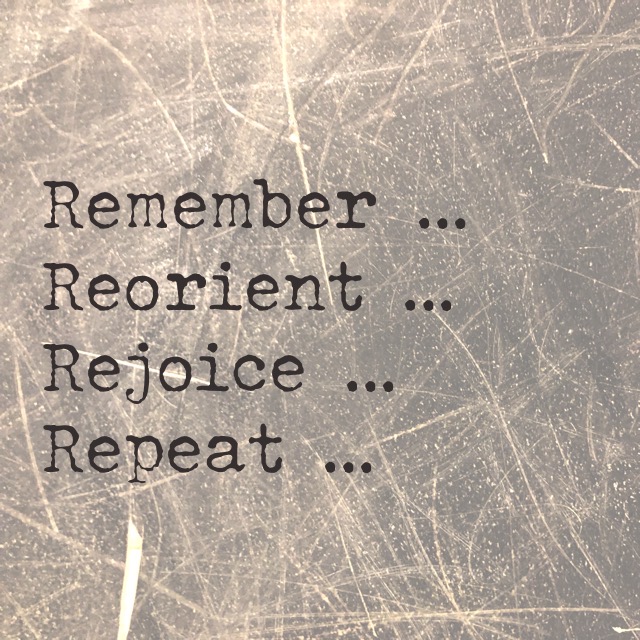
Remember … Reorient … Rejoice … Repeat …

…remember… (Deuteronomy 16).

As Moses called the Israelites to keep three main feasts each year—Passover, Weeks (or Pentecost), and Tabernacles—he said the purpose was to remember.

Closely linked to all three of these feasts was another important word: celebrate (vv. 10, 13, 15). 

This remembering and rejoicing on a regular schedule was to keep God’s people aligned with God’s intimate and ongoing involvement in their lives. As a result, an attitude and an action should become just as ongoing in the lives of God’s people—

  • The attitude: joyful gratitude (vv. 11, 14)
  • The action: joyful giving (vv. 10, 15, 17)

These three set times were to be a time of reorientation. They were not supposed to be the only three times God’s people remembered what God had done, celebrated His goodness, let joy overflow their hearts, and let giving overflow to others. These reorientation times should excite us to live like this every single day! 

That’s why Paul wrote, “Rejoice in the Lord always. I will say it again: Rejoice!” (Philippians 4:4). 

What celebrations can you build into your life that will help you 

Remember … Reorient … Rejoice … Repeat …

Where’s God When I Feel Abandoned?

Have you ever felt abandoned by someone? 

You stood up for someone, but when you needed someone to stand up for you they disappeared Or you did what was right, but no one recognized you for it? Or you were the encourager, but when you needed encouragement no one was around for you? Or maybe even you obeyed God down to the very last detail, and yet it seemed God abandoned you when you needed Him most? 

Jesus knows what every single one of these scenarios feel like! He stood up for the downtrodden, but they screamed, “Crucify Him!” He poured His life into teaching and encouraging His friends, but they all ran when the heat was on, leaving Jesus all by Himself. He obeyed God down to the very last detail, and yet it seemed like God abandoned Him when He needed Him most. 

Have you ever felt abandoned by God? 

Jesus did. 

Hanging from the Cross He cried out, “My God, My God, why have You forsaken Me?!” 

I cannot help but notice two things about the state of mind Jesus was in heading to the horrific treatment He would face (see Matthew 26:31-44; 27:27-46). 

  1. Jesus knew all of this was going to happen to Him. Notice the phrases “for it is written” and “so that the Scriptures would be fulfilled” and “so that the writings of the prophets might be fulfilled. Even His cry from the Cross was a literal quotation of Old Testament Scripture (Psalm 22:1).
  2. God was silent. Even though Jesus called out to His Father three times in prayer, “My Father!” there was no heavenly response. 

Why would God remain silent during this trial? God didn’t need to speak to His Son during the trial because He had already spoken to Him before the trial! 

It’s the same in our trials—

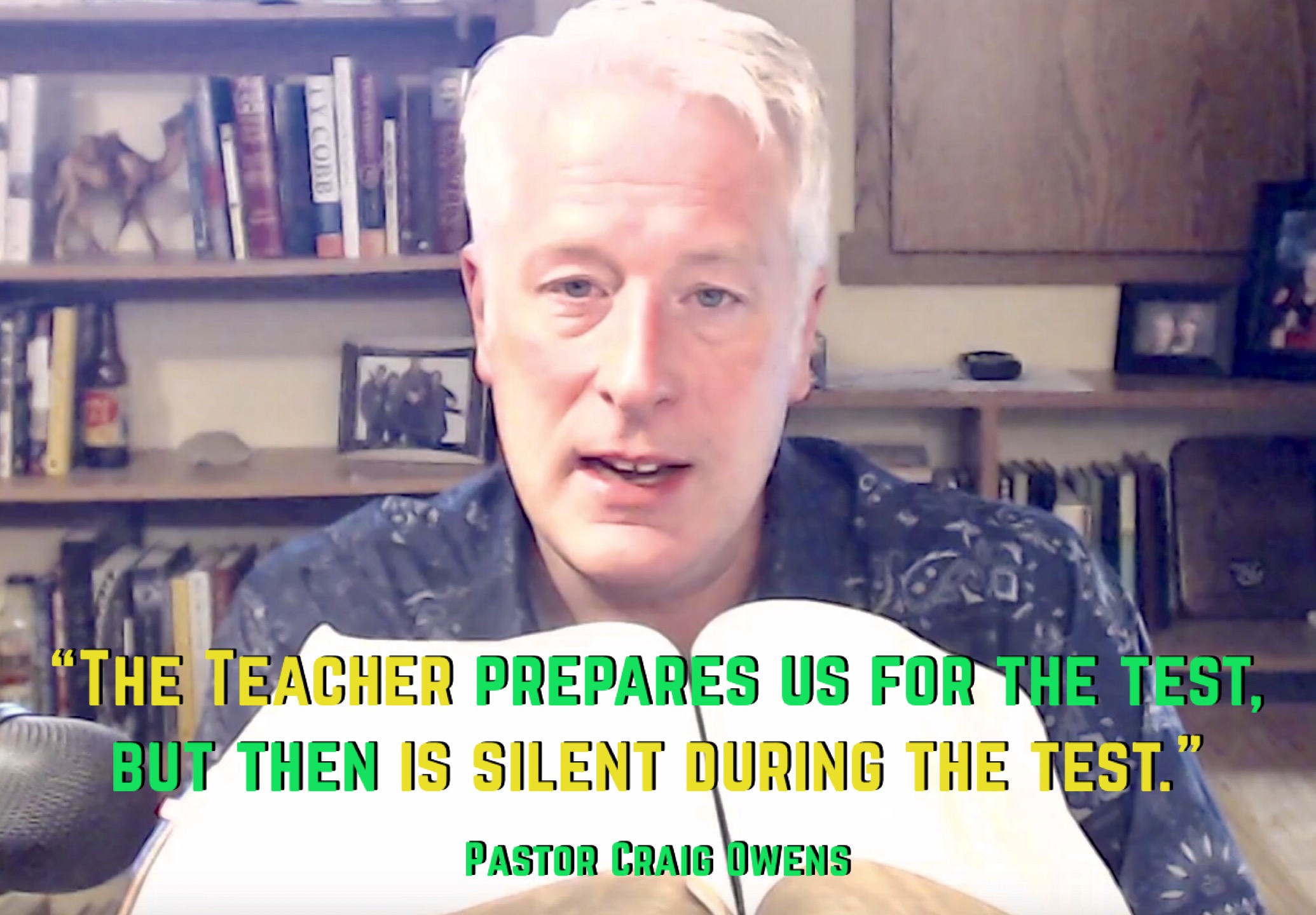
The Teacher prepares us for the test, but then is silent during the test. 

God’s silence is not His rejection or abandonment. Just as God provided for Jesus in His moment of trial, God has provided for us in our trials too—For no temptation (no trial regarded as enticing to sin), [no matter how it comes or where it leads] has overtaken you and laid hold on you that is not common to man [that is, no temptation or trial has come to you that is beyond human resistance and that is not adjusted and adapted and belonging to human experience, and such as man can bear]. But God is faithful [to His Word and to His compassionate nature], and He [can be trusted] not to let you be tempted and tried and assayed beyond your ability and strength of resistance and power to endure, but with the temptation He will [always] also provide the way out (the means of escape to a landing place), that you may be capable and strong and powerful to bear up under it patiently. (1 Corinthians 10:13 AMP) 

So let’s learn three invaluable lessons we can learn from Christ’s time of supreme suffering. 

1. Be honest in God’s presence 

Jesus didn’t hide His feelings, nor did He try to couch His vocabulary in “churchy” sounding words. God already knows what’s in your heart, so pour it out raw and honestly! Go to the Psalms and see raw emotions on full display in prayer. 

2. Lean all your weight on Jesus

Jesus prayed, “My Father!” and He cried out from the Cross, “My God!” His death on the Cross took away the barriers that kept up from coming into God’s presence (see 2 Corinthians 5:21). After His resurrection, Jesus sent this message to His friends: “Go instead to my brothers and tell them, ‘I am ascending to MY Father and YOUR Father, to MY God and YOUR God’” (John 20:17). 

3. Go to the Word of God

This is what Jesus did. In His moment of abandonment, He quoted Psalm 22 from the Cross. Jesus fulfilled ALL of the Scriptures, so now we can pray with greater assurance—For no matter how many promises God has made, they are “Yes” in Christ. And so through Him the “Amen” is spoken by us to the glory of God (2 Corinthians 1:20). 

God’s silence is NOT God’s abandonment. God’s silence is His invitation for us to be honest, to lean on Jesus, and to trust every promise in His Word. Every single promise that is Yes! and Amen! 

If you’ve missed any of the other messages in our Where’s God? series, please check out: 

And join me this Sunday as we take a look at how Jesus has conquered humanity’s ultimate enemy. 

The Artisan Collection Bible (book review)

How do “Bible” and “artisan” belong in the same title? They’re more connected than you may have previously thought, and The Artisan Collection Bible is the perfect place to explore this connection. 

If you were to ask someone what occupation Jesus had while He was on earth, it would be a safe bet that most people would say He was a carpenter. Indeed, the Greek word tekton is translated as “carpenter” for both Joseph and Jesus (see Matthew 13:54-56 and Mark 6:2-3). However, the consensus among Greek scholars today is that the word tekton is more likely to mean an artisan than just merely a wood-working carpenter. 

That makes sense, doesn’t it? After all, you would expect boundless creativity from the Creator. The One who fashioned our beautiful universe would certainly still be interested in expressing Himself in creative and beautiful ways. 

For myself, reading the Bible sparks in me a desire to be creative with words, and images, and colors, and designs. This is exactly what The Artisan Collection Bible gives you the space to do. And I literally mean “space.” 

One of the most attractive features to me about this Bible is the extra-wide margins along every single page. As you read God’s Word and the beauty of the Creator is illuminated in your heart and mind, you have readily available space to express your own creativity as worship to the Creator. Try crafting a poem, or turning the passage into a personal prayer, or drawing a picture that captures the vibrancy of God’s love letter written to you. The design of this Bible helps you to do more than just read the Word of God, it invites you to interact with the God of the Word. 

The Artisan Collection Bible would make an excellent gift for your creative friend or loved one. 

I am a Zondervan book reviewer and a member of the Bible Gateway Blogger Grid. As a book reviewer I received a free copy of this book from the book publisher. I am not compensated for my review. Although I may have received the book free of charge, I am under no obligation to write a favorable review. I am free to express my honest opinion about the book’s content. If I say it’s a good book, it’s because I think it’s a good book! 

Refined By The Fire

Where is God in our trials? When we call, Jesus runs to our cry. He is able to help us because He knows exactly what our cries sound like. Aren’t you glad He does?! 

While we are in these difficult times, you might find yourself asking a question I have asked, “Okay, God, I believe You are doing something, but what exactly are You doing?” 

I can’t tell you specifically what God is doing in your life, because your story is unique and special. But I can tell you that during the hard, painful chapters of our lives, God is accomplishing at least five things in all of us.

  1. God is opening our eyes to new paradigms

We will learn lessons in these fiery trials that we couldn’t possibly learn any other way. 

  1. God is building empathy in us which we didn’t have before

One dictionary defines empathy as “the power of understanding and imaginatively entering into another person’s feelings.” It’s only because of our trials that we no longer have to imagine what someone else is feeling, but instead we know exactly what they’re feeling and how we can help. 

  1. God is growing our patience 

It’s been said that patience is the “mother of all other virtues.” Paul said that “these troubles produce patience” (Romans 5:3). As God grows your patience, He will also help you to grow all of the other Christlike virtues. 

  1. God is refining His character in us 

Paul went on to add that not only does trouble produce patience, but “patience produces character” (Romans 5:4). During the times of difficulty and uncertainty, we become more aware of deficiencies in our character. 

  1. God is building in us an unshakable hope in His future grace 

Hope is not wishful thinking; it’s well-founded believing! 

I want to circle back to that word refining because I think that best sums up what God is doing in our painful times. Romans 8 tells us—The Spirit Himself thus testifies together with our own spirit, assuring us that we are children of God. And if we are His children, then we are His heirs also: heirs of God and fellow heirs with Christ—sharing His inheritance with Him; only we must share His suffering if we are to share His glory. But what of that? For I consider that the sufferings of this present time—this present life—are not worth being compared with the glory that is about to be revealed to us and in us and for us and conferred on us! (Romans 8:15-18) 

So where’s God in this time of fire? He is overseeing our trial as a Perfect Refiner. Do you know how the silversmith knows he has purified the impurities from the silver ore? The silver is pure when he can see his own reflection in the silver! 

In the heat of your trial, God is close to you. He knows the perfect temperature and the precise time that it will take to allow His face to be seen in you! 

Sometimes you will see what God is doing through your furnace time, sometimes you won’t. But don’t ever bail out! God IS working! He is giving you a new perspective, a deeper empathy, more patience, an unshakable hope, and most of all—He is removing the impurities that will allow His face to be seen more clearly in you! 

Join me this Sunday as we continue to learn where God is in our darkest times. And if you didn’t catch the previous messages in this series, please check out The God That Runs To You and How Long Will This Last?

How Long Will This Last?

Chaos is all around us! There’s infighting both politically and religiously. Government officials are imposing new laws and regulations and restrictions. Lots of rival voices are clamoring to be heard. Loss of personal freedoms, civil liberties, and even the freedom of worship. Uncertainty about the future. Fear in the present. 

Although this may sound like current conditions in the USA, I’m actually describing life in Israel around 31 BC. 

The people of Israel were frustrated beyond words with the restrictions they faced. They thought they were living in their land and that they should be able to govern themselves as they saw best. 

Have you ever been in that place of utter frustration? Are you there now? “What’s happening? Why is this not going according to plan? Isn’t there anything I can do? How long is this going to last? God, where are You in all of this?! 

We humans like to think we are in control. Or at least we like to think that we know God’s timetable. Throughout the Bible—and still today—the questions persist: 

  • How long will this last? 
  • When will this take place? 
  • What about him? 
  • Is this the right time? 

(see Psalm 13:1-2; Matthew 24:3; John 21:21; Acts 1:6; Revelation 6:9-10) 

When we ask God, “How long?” He never answers us by pointing to the calendar or the clock, but He points us to principles in His Word.

Here are four principles that we need to ask the Holy Spirit to help us grasp: 

  1. God’s timing was determined before Time even started. 
  2. God is using this “How long?” time to perfect us for His service.
  3. God is using this “How long?” time to empower us to point others to Him.
  4. God is calling us to trust Him alone during our “How long?” times. 

(see Psalm 90:2; Isaiah 46:10; Psalm 13:5-6; Romans 5:3-4; Matthew 24:13-14; Acts 1:7-8; John 21:21) 

Those Israelites I described earlier were so frustrated with asking “How long?” and apparently getting no answer, that they frequently took matters into their own hands. This never turned out well for them. But God’s perfect timing was heading toward His perfect fulfillment.  

We may not perceive it, but God IS doing more than we will ever know during our “How long?” times. 

God’s perfect timing for His people couldn’t be until Caesar Augustus came on the scene and brought an end to the political uncertainty that kept everything in chaos. Nearly 30 years before Jesus was to be born in Bethlehem, Augustus was launching the pax Romana—the peace of Rome—all over the world. Pax Romana was creating the perfect environment in which Jesus could be born and minister, as well in which His followers could then take the Good News all over the world. 

Jesus was born “in the fullness of time” (Galatians 4:4), around 5 BC, in a land where a Jordanian king (Herod the Great) served an Italian emperor (Caesar Augustus) to a people frustrated with waiting. But God knew exactly when and where and how to send His Son to be our Savior!

So, my friends—Trust God in the “How long?” times! 

God’s perfect plan includes YOU, so guard against any anxious thoughts that would make you bail out of His perfectly-timed plan early. (see Psalm 139:16, 23-24)

Join me this Sunday as we continue our series called Where’s God? 

The God That Runs To You

I’m sure you’ve experienced what I’ve experienced. My nice, orderly world came crashing down all around me. It totally blindsided me! I got on my knees to do some serious soul searching and I prayed, “God I know you called me here. I know I’ve done what You’ve asked me to do. What’s happening? Why am I being attacked? Where are You, God?

I’m sure you’ve been there too. “Where’s God?” has been the cry of countless people from the oldest book of the Old Testament until this very day. In dark times our world seems to shrink, and the weight of the entire world seems to rest on our shoulders. We begin to at first sigh and say, “Why me?” and then those sighs become sobs of “God, where are You?!” 

“Left to ourselves we tend immediately to reduce God to manageable terms. We want to get Him where we can use Him, or at least know where He is when we need Him. We want a God we can in some measure control. We need the feeling of security that comes from knowing what God is like.…” —A.W. Tozer 

Here’s the truth: We are always in a spiritual battle. It’s just hard to see it in the “good ol’ days.” But in the “bad ol’ days” we realize we don’t have it all figured out! The dark days are simply the reality of spiritual warfare revealed. 

Answers don’t come easily because there are no easy answers!

One of Job’s friends named Zophar thought he had God all figured out. He concluded his easy answer that the wicked have a bad life and the righteous have a good life. So if things were going badly for Job, he must have messed up somewhere. Except Zophar was wrong! God Himself pronounced Job righteous (see Job 20:1-8; 1:8). Zophar’s easy answer now doesn’t seem so easy, does it? 

I’ll say it again: In the hard times, answers don’t come easily because there are no easy answers. 

In fact, Jesus told us, “I have told you these things, so that in Me you may have peace. In this world you will have trouble. But take heart! I have overcome the world” (John 16:33). 

How did Jesus overcome the world of hurt and pain? He did it by taking a hands-on approach—Since the children have flesh and blood, [Jesus] too shared in their humanity…. For this reason He had to be made like His brothers in every way…. Because He Himself suffered when He was tempted, He is able to help those who are being tempted (Hebrews 2:14, 17-18). 

The phrase “He is able to help” literally means that He runs to the cry! 

In order to be able to run to our cry, Jesus has to know what our cries sound like and what our pain feels like. He had to taste all our pain for Himself. He had to feel all of them in a human body. The Limitless God was incarnated in limited flesh to experience everything we would ever feel. 

Now that Jesus has died and been resurrected, our cries bring Him running to us with ALL of His LIMITLESS love and power and empathy! 

In the good ol’ days we may not recognize just how close God is to us. But when the bad days come and we cry out to Him, He comes running. Jesus may be closer when you say, “I don’t know where You are!” than He’s ever been before. 

Go ahead and cry out. Jesus knows those cries. He hears you, He knows your pain, He runs to your cries, He comes close to help.

Join me next week as we continue this series asking “Where’s God?” in the specific difficulties that we face. We’ll ask questions like, “Where’s God in my depression?” and “Where’s God in my divorce?” and “Where’s God in this national calamity?” Please don’t miss these encouraging messages! 

Where’s God?

We’ve all asked that question. Something happens that rocks our world, and we wonder where in the world God is. 

We call out to God and He seems silent. We search our hearts to see if we can discern something we’ve done wrong, and seeing nothing amiss we cry out again, “God, where are You?” 

So where is God in our heartache? In our abandonment? In our sorrows? In our distress? In death? Believe it or not, God may be closer in His silence than you’ve ever perceived before. 

Join me this Sunday as we begin a new series called Where’s God? I hope you can join me in person, but if you can’t, please join me on Facebook Live.

In case you missed any of the posts in this series, you can find them all here:

Fasting Power

We are always engaged in an intense spiritual battle. Sometimes we feel the intensity of the battle, sometimes we don’t. But it’s always happening. 

This is why we need to make prayer an ongoing discipline. If we do, we will be much more likely to turn to prayer when we feel the intense moments, and our faith in those intense moments will be strengthened and ready to respond. 

Every day we are either preparing or repairing. Prayer is either helping us prepare for the challenges we will be facing, or it’s helping us recover from the battle we just fought. Believe me: it’s much better to be preparing than it is to be repairing!

One time the disciples of Jesus got stymied in a spiritual battle. A father brought his demon-possessed son to them, asking that they cast out the demon. But this distraught father then had to report to Jesus, “They couldn’t do it” (see Matthew 17:14-21). 

Why couldn’t they? These men had been taught how to pray by Jesus Himself, and they already had experienced ministry success (Matthew 6:9-13; Mark 6:13). So were they stumped now? 

Jesus told them, “It’s because you have so little faith.” He went on to tell them that these intense spiritual battles require an ongoing lifestyle of prayer. Jesus wasn’t suggesting that they should have said to that father, “Come back in a few days after we have prayed and fasted.” 

But what Jesus was really saying was that all of us need to stay connected to the Source of our spiritual power at every single moment (John 15:5, 7). Sometimes this requires taking our eyes off ourselves and our own appetites. 

In a word: we need to fast. 

The word fasting means “to cover the mouth” or “to close the mouth.” 

  • often fasting is in response to calamity or as a sign of mourning 
  • sometimes it’s alongside an intense prayer 
  • ideally it should be a regular discipline in our lives. In Matthew 6:16-18, notice the phrase “when you fast.” Not “if you fast,” but when. Jesus assumed that we would do this, and since this teaching appears right after Jesus teaches us how to pray, it makes sense that prayer and fasting go well together.  

Fasting is not…

Fasting intensifies our focus on God in the quiet times so that we can keep our eyes on Him in the crashing storms. 

Fasting helps us tune in to the unmistakable Voice of the Holy Spirit in the peaceful moments so that we can still recognize His Voice in the tumult of battle. 

Is there a comfort food you tend to run to? Is there a coping activity that you typically use to de-stress? Is there someone or something other than God that is your go-to in times of trouble? Perhaps we should start there and fast from those things for a short period of time. 

Fasting in the quiet times will strengthen us for the intense battle times. 

Let’s prepare daily for victory, instead of having to repair after a failure.

Thursdays With Spurgeon—Comments On Commentaries

This is a weekly series with things I’m reading and pondering from Charles Spurgeon. You can read the original seed thought here, or type “Thursdays With Spurgeon” in the search box to read more entries.

Comments On Commentaries

     It has been said that the passage I have taken for my text [Isaiah 7:1-17] is one of the most difficult in all the Word of God. It may be so. I certainly did not think it was until I saw what the commentators had to say about it, and I rose up from reading them perfectly confused! One said one thing, and another denied what the other had said. And if there was anything that I liked, it was self-evident that it had been copied from one to the other and handed through the whole of them! 

     One set of commentators tells us that this passage refers entirely to some person who was to be born within a few months after this prophecy….

     Well, that seems a strange frittering away of a wonderful passage, full of meaning, and I cannot see how they can substantiate their view when we find the evangelist Matthew quoting this very passage in reference to the birth of Christ [Matthew 1:22-23]….

     I find, moreover, that many of the commentators divide the sixteenth verse from the fourteenth and fifteenth verses, and they read the fourteenth and fifteenth verses exclusively of Christ, and the sixteenth verse of Shear-Jashub….

     Then another view, which is the most popular of all, is to refer the passage, first of all, to some child who was then to be born, and afterward, in the highest sense, to our blessed Lord Jesus Christ. … 

     But I think that if I had never read those books at all, but had simply come to the Bible without knowing what any man had written upon it, I would have said, ‘There is Christ here as plainly as possible! Never could His name had been written more legibly than I see it here.’ 

From The Birth Of Christ

Spurgeon was not advocating that we never consult commentaries because elsewhere he said about the use of commentaries: “I find it odd that he who thinks so highly of what the Holy Spirit teaches him speaks so little of what the Holy Spirit teaches others also.” 

But what I believe Spurgeon is advocating here is this important principle—The best commentary on a passage of Scripture is another passage of Scripture. Which is why he used the passage in Matthew to help him understand the passage in Isaiah.

God makes Himself clear in His Word. The same Holy Spirit that inspired the pen of those who wrote the words in the Bible is the same Holy Spirit in you that can illuminate those words to your heart and mind. 

Commentators have their place. I believe that place is after you have prayed through and wrestled with a passage of Scripture for yourself. Think of commentators as the answers in the back of your math book. After you have worked through the equations for yourself, go to the answer key to verify your answers. If you simply look up the answer before you wrestle with the problem, how have you benefitted yourself? 

And always remember that God’s Word is infallible, but men are fallible. Commentators may provide an insight that helps you see something more clearly, but they are never a substitute for God’s very own word on a matter. 

Should you use commentaries? Sure! Find a good one, but consult it only after you have asked the Holy Spirit to help illuminate the passage, and after you have allowed the commentary of Scripture itself to shine its light on the difficult verse or passage.