Don’t Cross The Line

Listen to the podcast of this post by clicking on the player below, and you can also subscribe on AppleSpotify, or Audible. 

The apostle Paul writes something pretty straightforward: “Do not be anxious about anything” (Philippians 4:6). What might not seem so straightforward for us is this: What exactly is anxiety? 

The root word for anxious simply means to care for something or to care about something. Paul uses this word in a positive sense earlier in this letter when he praises Timothy for his concern for the wellbeing of the saints (2:19-22). In another letter, Paul told the Corinthians he had a deep concern for their spiritual growth (2 Corinthians 11:28) and that he desired for them to care in a similar way for their fellow saints (1 Corinthians 12:25). All of these instances use the same Greek word. 

(Check out all of the Scriptures in this post by clicking here.) 

The problem is when care crosses the line to become worry. 

A clear example of this is seen in the activities of Martha. She cared deeply about providing for the needs of Jesus, wanting to provide appropriate hospitality for Him, but her focal point switched from Jesus to food (Luke 10:38-42). Luke tells how Martha crossed the line from concern to anxiety by stating that “Martha was distracted by all the preparations.” Jesus redirected her to the one thing that “is better,” which was a devotion to Him. 

Care can turn to worry in the simplest of areas. 

Being careful about my physical health—food, clothing, shelter—is a legitimate concern, but Jesus warns about these things becoming a focal point and causing me to cross the line from concern to worry (Matthew 6:25-34). Wanting to answer well those who criticize my Christian faith is a noble concern, but obsessing over my word choices crosses the line (Matthew 10:19). Desiring to please my wife is perfectly natural and even commendable, but putting her on a pedestal crosses the line into worry (1 Corinthians 7:32-34). 

The crucial discipline to keep me from crossing the line from concern to worry and anxiety is to keep the right focal point. I am not my own provider; God is (James 1:17; Matthew 6:8; Luke 11:11-13). 

So in the same verse that Paul tells us “do not be anxious about anything” he also tells us to pray about everything. Peter says essentially the same thing this way, “Give all your worries and cares to God, for He cares about you” (1 Peter 5:7 NLT). God cares about me and the things I care about more than I do. He wants me to focus on Him, not on the things I care about, because He can provide for me perfectly. His provision keeps me from worrying about anything. 

Don’t worry about anything; pray about everything. 

That is my safeguard against crossing the line from legitimate concern to anxiety-causing worry. 

►► Would you please prayerfully consider supporting this ministry? My Patreon supporters get behind-the-scenes access to exclusive materials. ◀︎◀︎

Avoiding Foolish Controversies

Listen to the podcast of this post by clicking on the player below, and you can also subscribe on AppleSpotify, or Audible. 

Jude calls Christians to contend for the faith without contention and without compromise. Instead, we are to loving serve Jesus by engaging with others mercifully, peacefully, and lovingly. This means we have to contend without quarreling. 

But that’s easier said than done because people love to pick fights, and we hate to lose an argument. 

Look at the ministry of Jesus. His adversaries couldn’t get around the perfect logic that He used based on Scripture, so they came up with all sorts of controversies in the hope of tripping Him up and silencing Him. They posed seemingly unanswerable dilemmas like: In heaven, which one of the seven brothers will be married to the woman they all married on earth? Should we pay taxes to Caesar? Should we pay the temple tax? What’s the greatest commandment of all? They tried to get Him to take the bait about religious traditions, laws concerning the Sabbath, and the punishment for a woman caught in adultery. 

Jesus never got fluster or frustrated—He never took the bait to quarrel with them, but He simply stood unwaveringly and lovingly on God’s Word. But once again, that’s easier said than done! 

King Solomon pointed out the difficulty of this in Proverbs 26:4-5. Do we answer a fool or not? Yes, but we answer wisely not foolishly. 

(Check out all of the Scriptures in this post by clicking here.)

I believe Jude would agree with Solomon, Jesus, Paul, and Peter, but then he uses three examples that could spark a controversy:  

  • the fate of fallen angels (Jude 6) 
  • Michael and the devil arguing over the body of Moses (v. 9) 
  • Enoch prophesying (v. 14) 

But notice that how Jude uses these examples by not addressing any more than what we already know from Scripture. In this way, Jude keeps this from becoming a foolish, quarrelsome controversy (v. 10). 

Notice the consistent instruction of the Bible on how to handle critics: 

  • Michael the archangel: The Lord rebuke you! (also 2 Peter 2:11) 
  • Jesus: Away from Me! (Matthew 4:10) and Get behind Me! (Mark 8:33) 
  • James: Submit to God and then resist the devil (James 4:7) 
  • Peter: speak gently, respectfully, and with a clear conscience (1 Peter 3:15-16) 
  • Paul: warn people without becoming quarrelsome (2 Timothy 2:14, 16, 23-25) 

In Luke 13:1-5, Jesus addresses two events that could have become quite controversial, but Jesus defused the controversy by simply saying, “No matter what, everyone needs to have their sins forgiven by God.” Paul continued this singleminded focus on Jesus. I love how the Amplified Bible captures his words in 1 Corinthians 2:2. And then Paul encourages his friend Timothy to operate the same way (1 Timothy 1:15-17). 

Don’t let foolish controversies sidetrack you from the faith entrusted to us, but take everything back to Jesus as He is revealed in the Scripture. 

If you’ve missed any of the other messages in our series called Earnestly Contending, you can find them all here. 

►► Would you please prayerfully consider supporting this ministry? My Patreon supporters get behind-the-scenes access to exclusive materials. ◀︎◀︎
7 Images Of The Church

Husbands, love your wives, just as Christ loved the church and gave Himself up for her to make her holy, cleansing her by the washing with water through the Word. (Ephesians 5:25-26)

Dr. Henry Halley points to seven images the Bible portrays of how Jesus interacts with His saints.

“1. The Shepherd and the sheep emphasizes both the warm leadership and protection of Christ and the helplessness and dependency of believers (John 10:1-18). 

2. The vine and the branches points out the necessity for Christians to depend on Christ’s sustaining strength for growth (John 15:1-8).

3. Christ as high priest and the church as a kingdom of priests stress the joyful worship, fellowship, and service which the church can render to God through Christ (Hebrews 5:1-10; 7:1; 8:6; 1 Peter 2:5-9). 

4. The cornerstone and building stones (Matthew 21:42) accents the foundational value of Christ to everything the church is and does, as well as Christ’s value to the unity of believers. Love is to be the mortar which solidly holds the living stones together (1 Corinthians 3:9; 13:1-13; Ephesians 2:19-22; 1 Peter 2:5). 

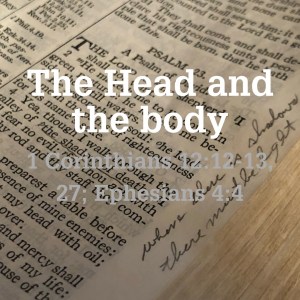
5. The head and many-membered body, the church, is a vibrant organism, not merely an organization; it draws its vitality and direction from Christ, the Head, and each believer has a unique and necessary place in its growth (1 Corinthians 12:12-13, 27; Ephesians 4:4). 

6. The last Adam and new creation presents Christ as the initiator of a new creation of believers as Adam was of the old creation (1 Corinthians 15:22, 45; 2 Corinthians 5:17). 

7. The bridegroom and bride beautifully emphasizes the intimate fellowship and co-ownership existing between Christ and the church (Ephesians 5:25-33; Revelation 19:7-8; 21:9).

You can read all of the Bible verses listed in this post by clicking here. 

Training For The Fight

Listen to the podcast of this post by clicking on the player below, and you can also subscribe on AppleSpotify, or Audible. 

Last week I challenged all of us to ask the Holy Spirit to check our attitude to ensure we indeed have the attitude of a secure servant. This is especially true when we remember that we are in the midst of a spiritual battle and that Jude writes this letter to us to encourage us to “contend for the faith.” 

When Jesus told His parable about the sower, here’s what He said about the seed that fell on the hard path (Mark 4:15 AMPC). Jesus said the forces of evil want to try to bring down the Kingdom of God (Matthew 11:12).

(All the Scriptures I use in this post may be viewed here.)  

Are we willing to engage in this intense battle? Will we strive with the forces of darkness for the sake of seeing lost people saved? God told Isaiah that it was so easy to give in—to throw our hands up (Isaiah 64:5-7). Paul extolled a Christian brother named Epaphras for his willingness to wrestle in prayer for the saints (Colossians 4:12). 

Indeed wrestling for the saints is what Jude had in mind. 

I like the phrase “contend for the faith” in the Message paraphrase: “Fight with everything you have in you.” 

The Greek word Jude uses here is the only time it’s used in the New Testament. It means:

  1. To enter a contest—1 Corinthians 9:24-26 
  2. Contend with adversaries—Colossians 4:12; Ephesians 6:12 
  3. Struggle through difficulties—Colossians 1:28-29 
  4. Endeavor with strenuous zeal to obtain victory—1 Timothy 6:12; 2 Timothy 4:7 

The root word is agonizimai which sounds a lot like our English word “agonize.” This is an all-in mentality. Sitting on the sidelines, casually interacting, dabbling in it every once in a while won’t lead to victory. 

The stakes are too high, our enemy is cunning and desperate, so nothing less than agonizing training that will not quit no-matter-what will do! 

What exactly are we training to do? 

Too many view salvation as just saved from Hell. That’s part of it, but not all of it. We’re also saved to display the glory of God. The first part is accepting Jesus as Savior; the second part is accepting Jesus as Lord. The salvation we share is not either-or, but it is both-and: Jesus is both our Savior and Lord. 

We need to strive to obtain the fullness of Christ’s nature in us. People should be able to see and feel a difference in our lives without us even opening our mouths. Francis of Assisi said, “Preach always; if necessary, use words.” To that end, he offered this prayer—

“Lord, make me a channel of Thy peace, that
where there is hatred, I may bring love;
where there is wrong, I may bring the spirit of forgiveness;
where there is discord, I may bring harmony;
where there is error, I may bring truth;
where there is doubt, I may bring faith;
where there is despair, I may bring hope;
where there are shadows, I may bring light;
where there is sadness, I may bring joy.”

Will you be all-in?
Will you wrestle in prayer?
Will you let go of earthly things so you can cling to Jesus?
Will you display His light through your life?
Will you be ready to use words, if necessary?

Let’s make sure we are ready to contend for the faith the right way! 

P.S. Speaking of prayer, my new book Amen Indeed is a prayer guide for pastors. Please consider giving a copy of this book to your pastor! 

If you’ve missed any of the other messages in our series Earnestly Contend, you can find them all here. 

►► Would you please prayerfully consider supporting this ministry? My Patreon supporters get behind-the-scenes access to exclusive materials. ◀︎◀︎

The Servant Stands Strong

Listen to the podcast of this post by clicking on the player below, and you can also subscribe on AppleSpotify, or Audible. 

The second-to-last book of the New Testament is a short letter to the Church in which Jude felt urged by the Holy Spirit to challenge Christians to “contend for the faith that was once for all entrusted to the saints.” Does contend mean Christians are supposed to be combative about sharing their faith? We can learn a lot from the way Jude opens this letter. 

First, let’s look at who wrote this book. 

The names of the brothers of Jesus are listed twice (Mark 6:3; Matthew 13:55), and Jude is either the youngest or second youngest of these male siblings. He was a part of the family delegation that went to bring Jesus home because they thought He was out of His mind (Mark 3:21, 31). Later on, Jude would also mockingly taunt Jesus (John 7:5). 

(Check out all of the Scriptures in this post by clicking here.)

James is the oldest brother after Jesus. When Paul writes that Jesus appeared to James after the resurrection (1 Corinthians 15:7), it’s possible that it means Jesus appeared to all of his brothers, because Paul also mentions that the brothers of Jesus had become evangelists (9:5). It’s not surprising that Jude calls himself a brother of James, but it is quite shocking that he calls himself a servant of Jesus Christ. 

In fact, he calls Jesus:

  • our only Sovereign and Lord (v. 4) 
  • the One who gives us eternal life (v. 21) 
  • the only One who is our entrance into Heaven (vv. 24- 25) 

We need to adopt this servant’s mindset as we interact with others. 

Second, let’s notice who Jude’s audience is. 

Jude writes to people who are called, sanctified, preserved (NKJV). 

  • called = invited to the banquet 
  • sanctified = hagiazo = holy ones or saints 
  • preserved / kept = carefully attended to  

Finally, let’s consider how Jude expects saints to be living each day. 

Jude says in verse 2 that we are to live…

  • mercifully = not wanting people to get the punishment they deserve 
  • peacefully = having our soul so secure that we fear nothing from God 
  • lovingly = agape love like Jesus (John 3:16, 13:1) and like us (13:35, 15:9) 

And all of these things are to be in abundance—ever multiplying! 

After all of this, we are now in a place to consider how to live contending for the faith (v. 3). 

We are servants of Jesus, called to His banquet, set apart and preserved for His glory; we are intimately aware of His mercy, peace, and love, which we want others to know for themselves. 

Before we learn how to contend, let’s ask the Holy Spirit to check our attitude to ensure we indeed have the attitude of a secure servant. 

Follow along with all of the sermons in this series called Earnestly Contend. 

►► Would you please prayerfully consider supporting this ministry? My Patreon supporters get behind-the-scenes access to exclusive materials. ◀︎◀︎

Serving The Body

Listen to the podcast of this post by clicking on the player below, and you can also subscribe on AppleSpotify, or Audible. 

Last week we were reminded that sanctification (or as I call it “saint-ification”) is an ongoing process that usually involves the help of other saints. There is something else we need to do with other saints: serve them. 

We are all a part of the same Body so it is beneficial for the whole Body if we care for every part of the Body (1 Corinthians 12:25 AMPC; Ephesians 5:30). 

(Check out all of the Scriptures in this post by clicking here.) 

In order to serve others, we are going to have to check our attitude. We have been called to have the attitude that Jesus had about the Church (Ephesians 5:29; Philippians 2:3-7; John 13:3-5, 14-17). 

We must all know: 

  • I have a gift—notice the phrase each of you in 1 Peter 4:10 
  • I must use my gift to serve the Body of Christ (Luke 17:10)

In the early Church, we see so much togetherness that they rewrote the definition of the Greek word koinonia (see Acts 2:42). Here’s what koinonia looks like in the Church:

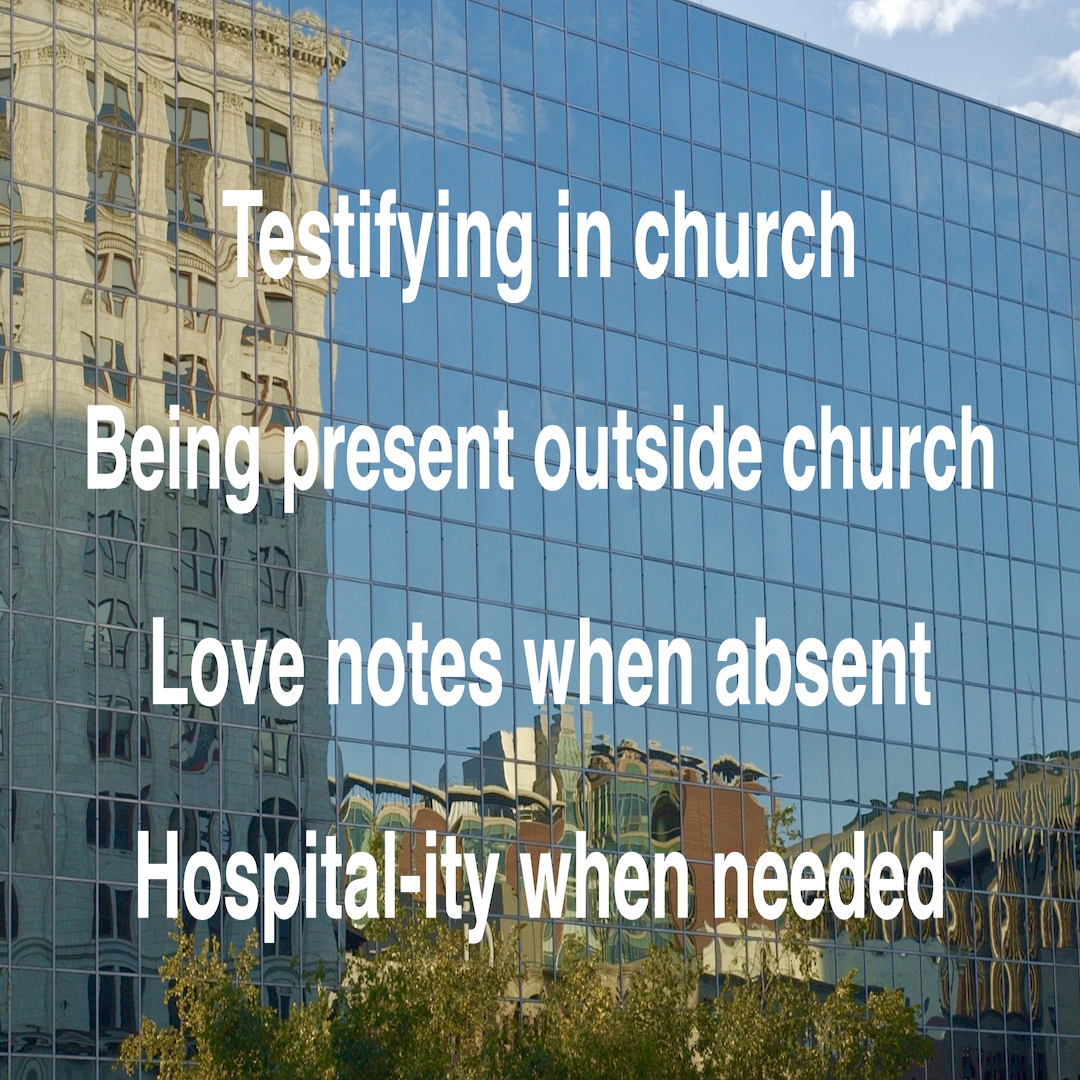
(1) Testifying in church (Psalm 40:9-10 NLT) 

(2) Being present with saints outside of church. From Acts 20-28, the pronouns “we” and “us” are used over 80 times! Paul was blessed simply by Luke being with him, just as saints are blessed when you are truly with them. 

(3) Love notes when a saint is absent. The apostle John was brilliant at this. Look at his three epistles: 

  • dear children 9x in 1 John  
  • chosen / dear lady 2x in 2 John  
  • dear friend 4x in 3 John  

(4) Hospital-ity whenever it’s needed. Be a place of healing and refreshment for the saints God has placed in your life, just as Philemon did (Philemon 2-7, 22). 

What a testimony it is when we live this way (Romans 12:10, 13)! 

Remember the saint-ification process brings fruitfulness, joy-fullness, and an enhanced testimony. I love this quote from Richard Stearns, “The beautiful simplicity of our faith is that it distills down to the exact same bottom line for both the brilliant theologian and the five-year-old child: love God and love each other—period. Everything else derives from that.” 

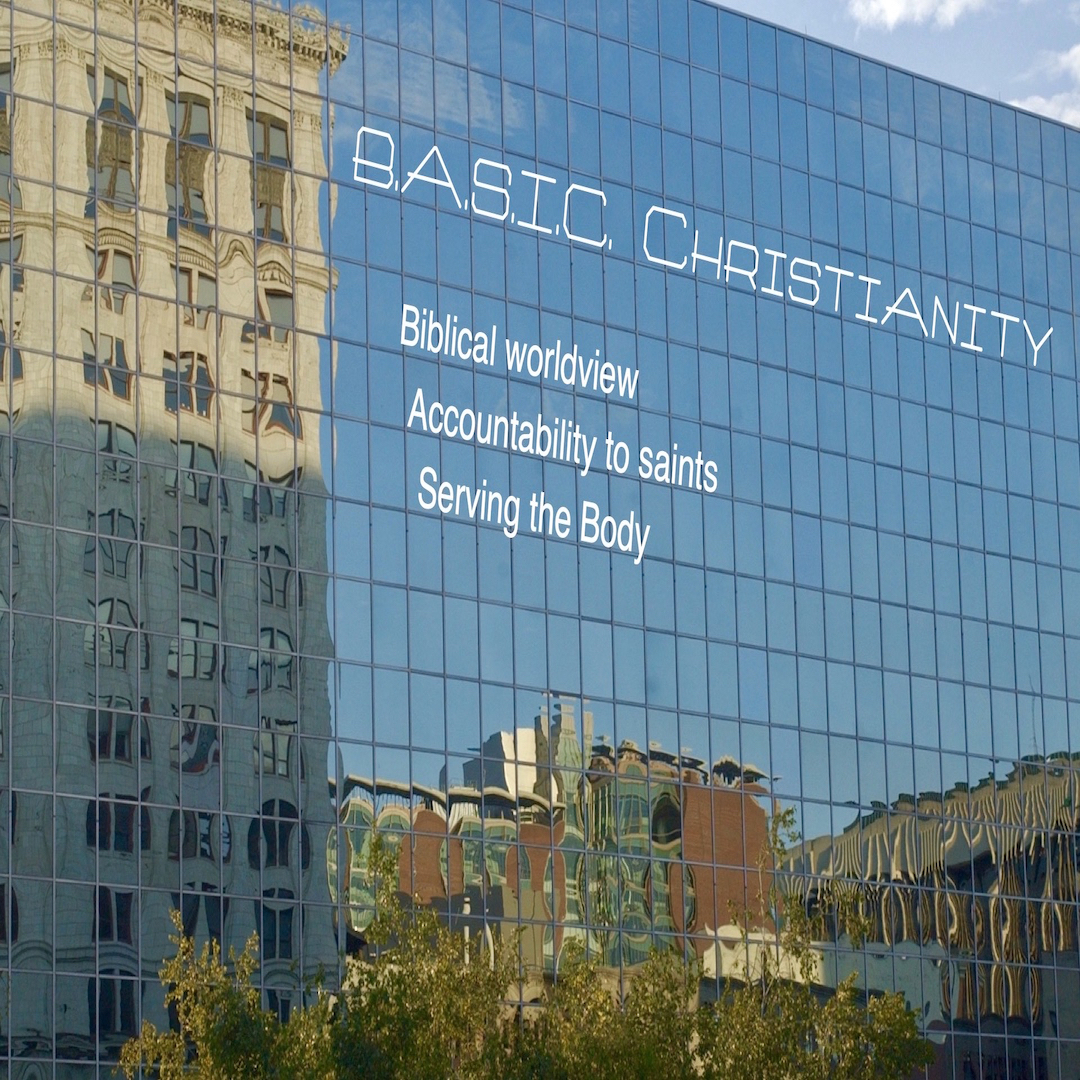
If you’ve missed the “B” or “A” in our series B.A.S.I.C. Christianity, you can check those out here. 

►► Would you please prayerfully consider supporting this ministry? My Patreon supporters get behind-the-scenes access to exclusive materials. ◀︎◀︎

Biblical Worldview

Listen to the podcast of this post by clicking on the player below, and you can also subscribe on AppleSpotify, or Audible. 

The definition of salvation comes from Romans 10:9. When we believe in our heart that Jesus paid the penalty for our sins and we confess that with our mouth, we are now justified. I can now stand before God just as if I had never sinned. But the Christian life is more than merely going to heaven at some point. It’s about glorifying God and pointing others to Jesus while we’re on our way to heaven. 

(Check out all of the Scriptures in this post by clicking here.)

We are immediately justified but sanctification (or as I like to call it “saint-ification”) is an ongoing process. 

  • The sanctified life is fruitful 
  • The sanctified life is joy-filled
  • The sanctified life is a testimony to others  

Paul wrote to saints in Corinth (1 Corinthians 1:2; 2 Corinthians 1:1) but he also called them “mere human beings” in 1 Corinthians 3:1-3. Paul points out that there is a difference between viewing this life from a worldly viewpoint and a biblical viewpoint (2 Corinthians 5:16). 

A naturalistic world view is constantly shifting as new discoveries are made. A biblical worldview knows there is nothing new under the sun, that everything is addressed in Scripture. 

In order to not view this world through the lens of “mere human beings” we have to read, study, meditate on, and apply the whole counsel of God’s Word. We put it in and the Holy Spirit helps us live it out. Just like our prescription glasses won’t do a thing to correct our vision of they aren’t on our face, Scripture won’t help us navigate this world in a God-glorifying way if we haven’t put it in our heart. 

Each day before I ready my Bible I pray Psalm 119:18, which asks the Holy Spirit to open my eyes to the amazing things in Scripture. I read, I journal, and I pray over the passage that I have read. Then the Holy Spirit makes good application of that Scripture (John 14:26, 16:13; 1 John 4:6). I want to be sure to read the whole counsel of God’s Word, not just cherrypicking my favorite parts. And I always want to be going deeper (Hebrews 6:1). 

One place that we see contrasting world views—the natural worldview versus the biblical worldview—is in 2 Timothy 2:14-19. 

  • Natural worldview #1—quarreling about words 
  • Biblical worldview #1—correctly handling the Word of truth 
  • Natural worldview #2—engaging in godless chatter 
  • Biblical worldview #2—standing on the firm foundation of Scripture 

The results of a biblical worldview are amazing: 

  1. A sure foundation (Matthew 7:24-27) 
  2. The attention of others (Matthew 7:28-29) 
  3. Useful treasures to share with others (Matthew 13:52) 
  4. A strong defense against critics (Acts 6:9-10; Psalm 119:99) 

Let’s not get stuck in the “mere human being” level of a natural worldview, but let’s commit to studying our Bibles diligently so that the Holy Spirit can develop a robust biblical worldview in us. This worldview is fruitful, joyful, and enhances our testimony. 

Follow along with all the other messages in our series on B.A.S.I.C. Christianity by clicking here. 

►► Would you please prayerfully consider supporting this ministry? My Patreon supporters get behind-the-scenes access to exclusive materials. ◀︎◀︎

Servants And Stewards

Listen to the podcast of this post by clicking on the player below, and you can also subscribe on AppleSpotify, or Audible. 

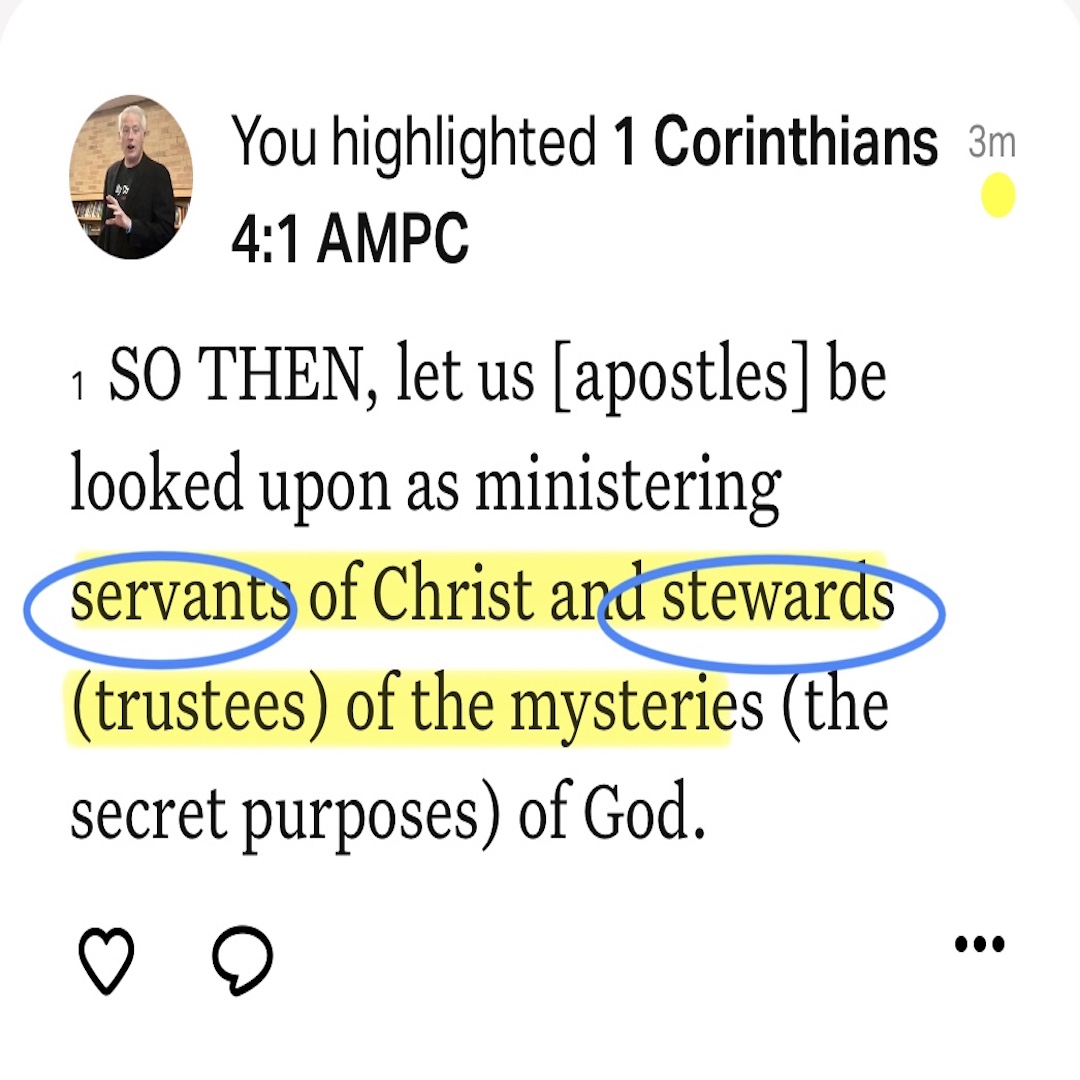
Godly leaders should be secure enough to think of themselves as servants and stewards—nothing more, nothing less. And people in the church should look on their leaders as servants and stewards—nothing more, nothing less.

So then, let us apostles be looked upon as ministering servants of Christ and stewards (trustees) of the mysteries (the secret purposes) of God. (1 Corinthians 4:1 AMPC)

Q: How do I know if I am a servant?
A: People treat me like one.

Q: How do I know I have a servant’s attitude?
A: I don’t mind being treated like a servant.

Paul lived this out—Now, brothers and sisters, I have applied these things to myself and Apollos for your benefit, so that you may learn from us the meaning of the saying, “Do not go beyond what is written.” Then you will not be puffed up in being a follower of one of us over against the other (1 Corinthians 4:6).

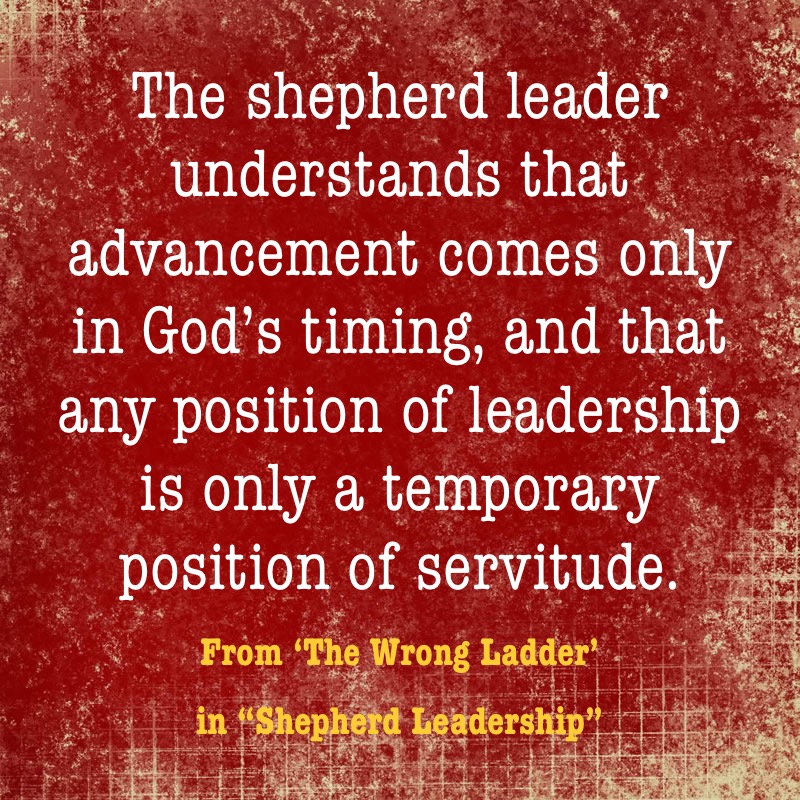
I closed the chapter ‘Secure to Serve’ in my book Shepherd Leadership like this—

     God wants to use you as a leader. He has called you to great things. Just remember that He does the calling and the equipping so that you can serve and shepherd others. It may be a prominent, noticeable position, or it may be an obscure position unseen by very many. It may be a position God keeps you in until the day He calls you home, or it may be a temporary position. A humbly confident leader doesn’t fight to climb a ladder nor strive to keep a position on a higher rung of the ladder. The shepherd leader is confident to serve where God places him, and humble enough to be moved, or even removed, as God sees best. But most of all, a secure shepherd leader knows that God’s desire for His leader in any position is a heart to serve others. 

Related posts:

►► Would you please prayerfully consider supporting this ministry? My Patreon supporters get behind-the-scenes access to exclusive materials. ◀︎◀︎
7 Quotes From “God in the Dock”

God in the Dock is quite a challenging read, but it has an amazing payoff for those who will persevere to grasp the immense intellect of C.S. Lewis. You can check out my full book review here. 

“The miracles in fact are a retelling in small letters of the very same story which is written across the whole world in letters too large for some of us to see. Of that larger script part is already visible, part is still unsolved. In other words, some of the miracles do locally what God has already done universally: others do locally what He has not yet done, but will do. In that sense, and from our human point of view, some are reminders and others prophecies.” 

“Men look on the starry heavens with reverence: monkeys do not. The silence of the eternal spaces terrified [Blaise] Pascal, but it was the greatness of Pascal that enabled him to do so. …  If the world in which we found ourselves were not vast and strange enough to give us Pascal’s terror, what poor creatures we should be! Being what we are, rational but also animate, amphibians who start from the world of sense and proceed through myth and metaphor to the world of spirit, I do not see how we could have come to know the greatness of God without that hint furnished by the greatness of the material universe. Once again, what sort of universe do we demand? If it were small enough to be cozy, it would not be big enough to be sublime. If it is large enough for us to stretch our spiritual limbs in, it must be large enough to baffle us. Cramped or terrified, we must, in any conceivable world, be one or the other. I prefer terror. I should be suffocated in a universe that I could see to the end of.” 

“The doctrines that God is love and that He delights in men, are positive doctrines, not limiting doctrines. He is not less than this. What more He may be, we do not know; we know only that He must be more than we can conceive. It is to be expected that His creation should be, in the main, unintelligible to us.” 

“Christianity does not replace the technical. When it tells you to feed the hungry it doesn’t give you lessons in cookery. If you want to learn that, you must go to a cook rather than a Christian. If you are not a professional Economist and have no experience of Industry, simply being a Christian won’t give you the answer to industrial problems.” 

“That definite distinction that Christians make between hating sin and loving the sinner is one that you have been making in your own case since you were born. You dislike what you have done, but you don’t cease to love yourself. You may even think that you ought to be hanged. You may even think that you ought to go to the Police and own up and be hanged. Love is not affectionate feeling, but a steady wish for the loved person’s ultimate good as far as it can be obtained.” 

“Now as myth transcends thought, Incarnation transcends myth. The heart of Christianity is a myth which is also a fact. The old myth of the Dying God, without ceasing to be myth, comes down from the heaven of legend and imagination to the earth of history. It happens—at a particular date, in a particular place, followed by definable historical consequences. We pass from a Balder or an Osiris, dying nobody knows when or where, to a historical Person crucified (it is all in order) under Pontius Pilate. By becoming fact it does not cease to be myth: that is the miracle. I suspect that men have sometimes derived more spiritual sustenance from myths they did not believe than from the religion they professed. To be truly Christian we must both assent to the historical fact and also receive the myth (fact though it has become) with the same imaginative embrace which we accord to all myths. The one is hardly more necessary than the other.” 

“We are defending Christianity; not ‘my religion.’ When we mention our personal opinions we must always make quite clear the difference between them and the Faith itself. St. Paul has given us the model in 1 Corinthians 7:25: on a certain point he has ‘no commandment of the Lord’ but gives ‘his judgement.’ No one is left in doubt as to the difference in status implied.” 

As always, my Patreon supporters had access to this quotes—and many, many more—ahead of time. Please consider joining them to get access to early releases and exclusive materials.


Praise In The Park

Listen to the podcast of this post by clicking on the player below, and you can also subscribe on AppleSpotify, or Audible. 

Calvary Assembly of God joined with Hillcrest Community Church of God for a service to send a message. We want to show that the Body of Christ is more than just multiple buildings where people meet on Sundays. 

Pastor Caleb Claybaugh and I are going to be joining our congregations together again for two more outdoor gatherings over the next two months, and I would love to have you join us! Leave me a comment and I will get back to you with all of the details. 

►► Would you please prayerfully consider supporting this ministry? My Patreon supporters get behind-the-scenes access to exclusive materials. ◀︎◀︎