Am I On My Own?

This is the only thing I want to find out from you: did you receive the Spirit by works of the Law, or by hearing with faith? Are you so foolish? Having begun by the Spirit, are you now being perfected by the flesh? (Galatians 2:2-3) 

Some people try to live as though the Bible says, “God helps those who help themselves.” This is exactly what Paul refutes.

In essence, Paul asks, “Does it make sense that after the Holy Spirit reconciled you to the Father through your faith in Jesus that then God would say, ‘You’re now on your own—figure it out yourself’?”

Of course not! 

When the Bible says that God opposes the proud, that means that He stands back from those who say, “I can do it by myself.” But the Scripture goes on to assure us that God gives more grace to the humble. That means that God is an ever-present help to those who say, “I cannot do this by myself.”

Different Thinking In Difficult Places 

Listen to the podcast of this post by clicking on the player below, and you can also subscribe on AppleSpotify, or Audible. 

The Israelites had just been released from the slavery in Egypt when they faced one of the most difficult places they would know. God taught them how to thinking differently in this hard place. 

The Scriptures I reference in this video—1 Corinthians 10:11; Exodus 14:1-3, 10-14. 

You can watch the full sermon from which I took this clip here. 

You may also be interested in my blog post Between a Rock and a Hard Place, and a whole series of messages about difficult settings called Where’s God? 

►► Would you please prayerfully consider supporting this ministry? My Patreon supporters get behind-the-scenes access to exclusive materials. ◀︎◀︎

A Book Review of “When Sheep Bite”

I was honored when T.M. Moore agreed to write an endorsement for my book When Sheep Bite, but I am beyond thrilled with the book review he wrote of my book! 

Here’s how he opens his review—

     Shepherding the Lord’s flock can be challenging in the best of times. I recall a comment by John Muir, the father of the national parks movement, who served as a shepherd in Yellowstone valley for some time. He observed that the sheep were difficult to move and to keep going in a single direction. They didn’t always respond well. In fact, he wrote, “It takes a whole flock of sheep to make a single dumb animal.”

     Since we are all the Lord’s sheep, we can probably identify with that—slow to learn, hard-headed, cold-hearted, lazy, complacent, and easily irritated. Not all the time, of course, but some of it, at any rate.

     But when your calling from the Lord is to be a shepherd in the Lord’s flock, to feed and nurture His sheep, protect them from spiritual harm, guide them into a richer and fuller experience of Jesus, and help them find their proper place of service in the Kingdom of God, tending the sheep can be especially challenging.

You can read the rest of his review here. And you can also check out my interview with Moore and his co-host Rusty Rabin on the Ailbe podcast. 

If you are a pastor—or if you love your pastor—please check out When Sheep Bite.

The Above-And-Beyond Disciple

Listen to the podcast of this post by clicking on the player below, and you can also subscribe on AppleSpotify, or Audible. 

It is nearly impossible to overstate how fearful Christians in the first century were of the Jewish zealot named Saul of Tarsus. Saul called himself “extremely zealous for the traditions of my fathers” (Galatians 1:14) as he sought to seek out and destroy all who were followers of The Way. 

(Check out all of the verses in this post by clicking here.)

Not only was he personally bent on his ruthless mission, but he had the full sanctioning of the Sanhedrin (Acts 8:3, 9:1-2). This was the religious body that had successfully goaded Pontius Pilate into crucifying Jesus. 

So you can imagine the apprehension in Ananias’ heart when Jesus calls him to visit with Saul after he had encountered Jesus for himself. Ananias said, “I’ve heard all about this man and the harm he has done. And I also know he has come to my city with the authority to drag Christians off to prison” (Acts 9:13-14). 

Ananias’ interaction with Jesus seems to me to echo the prayer that Jesus prayed in the Garden of Gethsemane. It is as if Ananias is praying, “Is there another way? But not my will but Yours be done, Lord” (see Luke 22:42). 

Ananias is called a disciple of Jesus (Acts 9:10), and Paul even refers to him later as “a devout observer of the law and highly respected by all the Jews” (22:12). In other words, Ananias is an early church leader. What he does or doesn’t do here will set the pace for other Christians. 

So I love the fact that Ananias didn’t just begrudgingly do only what Jesus instructed him, but he said and did only what Christ’s love could empower him to say and do. 

Jesus told Ananias to lay his hands on Saul and pray for the restoration of his sight (9:12). Ananias did more. He laid his hands on him in such a loving way (9:17), that Luke uses the same word as when Jesus laid His hands on people for their healing (c.f. Luke 13:13). Ananias even called him “brother Saul” (9:17). 

Jesus told Ananias to simply pray for Saul’s physical healing, but Ananias did more: he prayed for Saul to be baptized in the Holy Spirit as well (9:17, 22:13). 

Jesus told Ananias what His plan was for Saul’s ministry, but He didn’t tell Ananias that he had to repeat that to Saul. Ananias did more: He reaffirmed to Saul what Jesus had already said to him and encouraged him to get up, be baptized, and began to do what Jesus had told him to do (9:15-16, 22:14-16). 

When Ananias called Saul “brother,” he used the term that fellow Christians used for each other (Philippians 4:1; Hebrews 2:11; 1 John 3:14). That means that Ananias is the first one to recognize the genuine conversion of Saul the persecutor to Paul the Christian. 

When the love of Jesus is in us, we will not be looking for ways to begrudgingly obey what Jesus tells us, but we cannot wait to lavishly do more loving things out of the overflow of Christ’s love in us. What a fantastic example Ananias has give all of us who call ourselves Christians! 

►► Would you please prayerfully consider supporting this ministry? My Patreon supporters get behind-the-scenes access to exclusive materials. ◀︎◀︎
Grateful Remembering Fortifies Us Against Temptation

Listen to the podcast of this post by clicking on the player below, and you can also subscribe on AppleSpotify, or Audible. 

It is so much easier to complain than to compliment. We can slide into the negative conversations almost without thinking about it. 

In one of the last things that Paul wrote to Timothy—as he’s in prison, quite possibly awaiting execution—he warns his friend against the darkness of the last days (2 Timothy 3:1-5). We need to engage our minds, our wills, and our emotions to not go with the flow of culture’s negativity. 

(Check out all the Scriptures I mention in this post by clicking here.) 

Remember the wise words from George Santayana: “Those who do not learn from history are doomed to repeat it.” The apostle Paul said this before Mr. Santayana (1 Corinthians 10:1-6). We need to learn the lessons of the dangers of forgetfulness that leads us to ingratitude. 

Even before Paul, the Old Testament is filled with repeated reminders to remember God’s blessings and gratefully look to Him to supply every need. Let’s unpack some lessons on the importance of gratitude from Israel’s history in Psalm 106. 

  1. In Psalm 106:7, the Israelites forget what God has done for them in Egypt. Now that they appear to be pinned between the Red Sea and the onrushing Egyptian army, their forgetfulness becomes grumbling against God (Exodus 14:10-12). 

Here’s the lesson for us to learn: Even when we are in a tough spot, God put us there on purpose so that His glory could be displayed (Exodus 14:1-3, 13-14). This should remind us to be grateful. 

  1. In Psalm 106:13-14, instead of being grateful for the miraculous supply of manna, the Israelites are grumbling about the meat they don’t have (Numbers 11:4-6). 

Here’s the lesson for us to learn: God wants to teach us to be thankful for His daily provisions for us (Joshua 5:12; Matthew 6:11). 

  1. In Psalm 106:21, 28-29, the next generation of Israelites didn’t remember to be thankful because they had seldom heard their parents express gratitude (Judges 2:10-11). 

Here’s the lesson for us to learn: Our daily thankfulness fortifies future generations (Psalm 37).  

Here is the repeated pattern we see—

  • Thankfulness → Forgetfulness → Fearful / Selfish attitudes → Susceptible to the temptation to grumble against God 
  • Thankfulness → Remembering → Joyful / Secure attitudes → Fortified against the temptation to grumble against God

Jim Cymbala said, “Ingratitude to God is the first step toward backsliding and departure from God. So, it is to our benefit to have a thankful heart toward God.” 

Let’s put into practice this lesson from King David: “Praise the Lord, O my soul, and forget bot all His benefits” (Psalm 103:2). 

You can check out all of the other messages in our Be Thankful series here. 

►► Would you please prayerfully consider supporting this ministry? My Patreon supporters get behind-the-scenes access to exclusive materials. ◀︎◀︎
Links & Quotes

I shared this video last week with my Patreon supporters. When we’re unclear about all that God has asked us to do, the first step is to obey the part that is clear to us. Check out my blog post Clearing up the Confusion for more insight on how Peter handled this.

I have lots of new content every week, which you can check out on my YouTube channel.

T.M. Moore calls on Christians to recognize the God-given authority our leaders have. Not just recognize, but submit to that authority: “We show that we believe the Lord and trust in His Word, and we demonstrate the evidence of that faith when we submit to our church leaders as unto the Lord (Colossians 3:23-24). Submitting to proper authorities is an integral component of full faith. If we want to gain the benefit God intends for us from those appointed to lead, we’re going to have to learn to submit.”

“Talent is never enough. With few exceptions the best players are the hardest workers.” —Earvin Magic Johnson

“Take your job seriously, but don’t take yourself too seriously.” —Alex Trebek

The American Bible Society reports that Gen Z is engaged with Scripture less than any other generation. But here is a sad outcome: “Scripture Engagement is associated with significantly lower anxiety levels among all Americans, but especially among Generation Z. The anxiety score for Bible Engaged Gen Z respondents (3.4) is less than half that of the anxiety score for Bible Disengaged Gen Z respondents (7.1).”

What if the qualifications in Acts 6:3 were the only qualifications we used for selecting folks for ministry assignments: (a) good reputation, (b) full of the Holy Spirit, and (c) full of wisdom?

Unwittingly Fulfilling

For those who live in Jerusalem, and their rulers, recognizing neither Him [Jesus] nor the declarations of the prophets which are read every Sabbath, fulfilled these by condemning Him. And though they found no grounds for putting Him to death, they asked Pilate that He be executed. When they had carried out everything that was written concerning Him, they took Him down from the Cross and laid Him in a tomb. (Acts 13:27-29) 

The prophetic words about Jesus were fulfilled by people who didn’t even realize they were fulfilling God’s pre-ordained plan! It is still true today: Nothing can thwart or delay God’s design, and people are still unwittingly fulfilling that design. 

God always gets the final word, the decisive word, and the best word. 

Here is an example from the public ministry of Jesus: A Christlike Response To Skeptics. 

Jesus is fulfilling every promise that His Father made, so we can live confidently and joyfully in that assurance. Check out my post Walking Boldly In Dark Places.

The Craig And Greg Show: The Business Baton

Listen to the audio-only version of this podcast by clicking on the player below, or scroll down to watch the video.

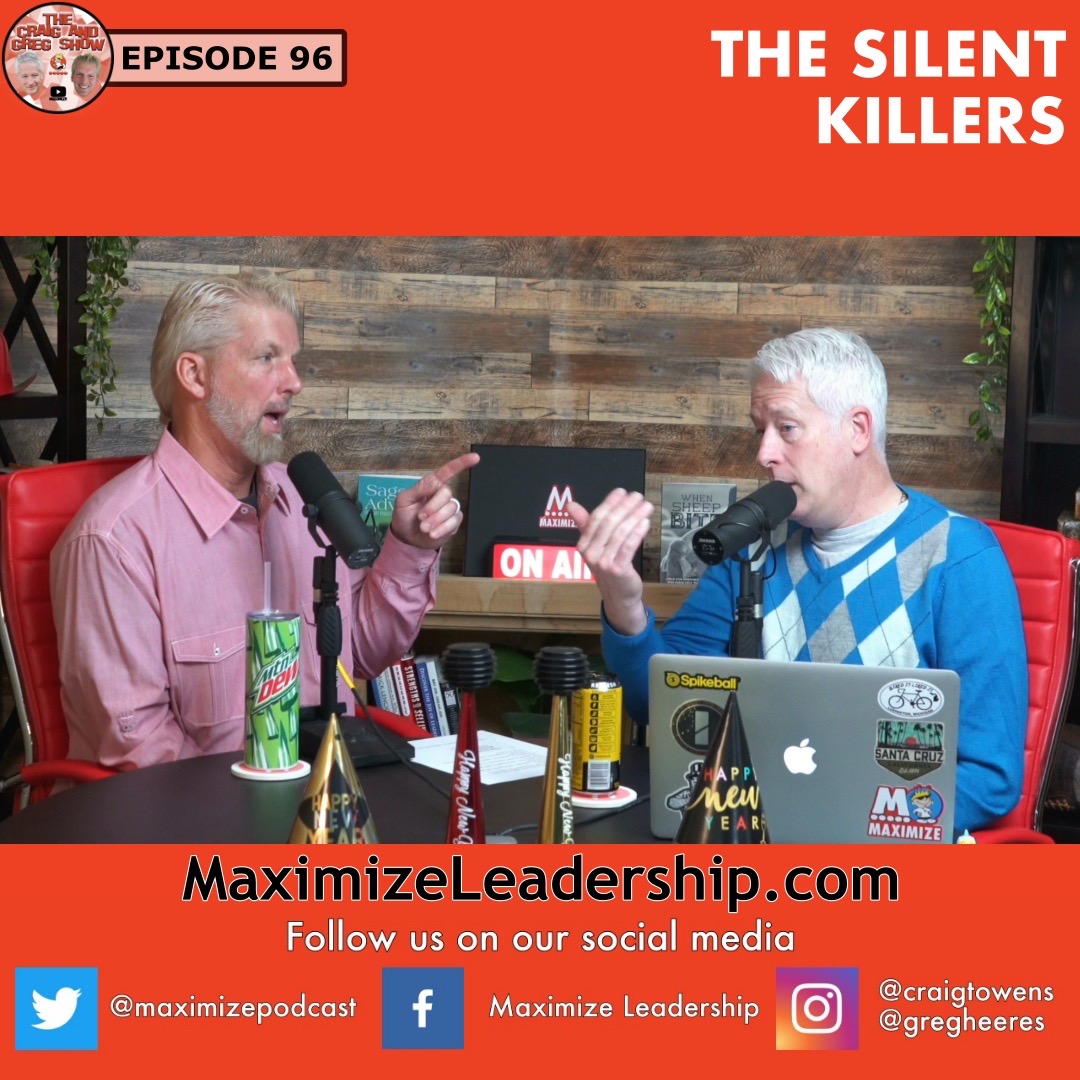
One of my friend Greg’s passions is helping business owners with the final step of their journey—succession of the organization. It was this passion that drove him to write his new book The Business Baton. In today’s episode Greg and I discuss the new book, and Greg lays out his philosophy for a smooth succession process.

  • [0:15] Greg has written a new book called The Business Baton.
  • [0:53] Greg opened his book with a chapter that surprised me.
  • [1:51] What makes a person ill-prepared to hand off the baton in their organization?
  • [3:26] The questions Greg asks to make sure a business is really ready to hand off the baton.
  • [6:34] Greg’s book has a lot of statistics and case studies to help guide readers who are considering handing off the baton.
  • [8:18] In Greg’s new book he continued a trend he started in his previous book Sage Advice.
  • [10:07] Sometimes a succession navigator has to push for some emotional choices to help you get your business across the finish line.
  • [12:21] Greg discusses the readiness, formation, increase, selection, and succession steps needed to get to a place where a business is ready to sell.
  • [17:02] I really appreciated the voices of other business leaders that Greg included in the book.
  • [17:31] The end of The Business Baton reminds exiting leaders to lead well. 
  • [19:45] Greg gives his final thoughts on writing this book and the role of a succession navigator in the process.
  • [24:03] Visit Maximize Leadership to learn more about how Greg can help you as a succession navigator.

Check out this episode and subscribe on YouTube so you can watch all of the upcoming episodes. You can also listen to our podcast on Spotify and Apple.

Can Criticism Ever Be A Good Thing?

Listen to the podcast of this post by clicking on the player below, and you can also subscribe on AppleSpotify, or Audible. 

Don’t be too quick on this one: I’m wondering if criticism can ever be a good thing?  

Check out this episode of The Podcast. 

The Scriptures that I reference in this video are found in Acts 10-11 

I mentioned my blog post where I talk more about Peter’s rooftop vision and how we went from confused to enlightened. The post is Clearing Up the Confusion.

In the chapter on the bite of criticism, I wrote this—

     Treating our critic as an opponent we have to defeat is sure to injure them and provide an opening for the enemy of our souls to pounce. Perhaps instead we should consider these wise words from A.W. Tozer: “Never be afraid of honest criticism. If the critic is wrong, you can help him; and if you’re wrong, he can help you. Either way, somebody’s helped.” 

     On the other hand, if you come into your meeting with a critic with a humble, willing-to-learn attitude, you will immediately soften the mood in the room. This kind of quietness keeps tempers from flaring (Proverbs 15:1). 

     See beyond the criticism to the critic. … Keep reminding yourself that this is a person to be loved, not an argument to be dismantled. 

Get more information on When Sheep Bite here. 

►► Would you please prayerfully consider supporting this ministry? My Patreon supporters get behind-the-scenes access to exclusive materials. ◀︎◀︎
Clearing Up The Confusion

Listen to the podcast of this post by clicking on the player below, and you can also subscribe on AppleSpotify, or Audible. 

The apostle Peter had a very unusual encounter with a vision and with the voice of Jesus. 

It was so unusual that Luke records that Peter was “wondering“ and later on “still thinking“ about what he had seen and heard, and what the implications of the vision were (Acts 10:17, 19). In the KJV, the word for “wondering” is translated “doubted within himself.” The Greek words that Luke uses here mean perplexed and entirely at a loss. In essence, Peter was asking, “What did I just see? What in the world does this even mean?!” 

(Check out all of the Scriptures in this post here.) 

The vision came to Peter as he was praying on the roof of Simon‘s house. Because he was still on the roof when some men from Cornelius the centurion arrived, I believe this means that Peter stayed in an attitude of prayer while he was still wondering. That is an excellent posture for us to remain in as well when we are unclear as to what to do next. 

As I mentioned, Luke says that Peter “was still thinking” about what he had seen and heard (v. 19). This is a different Greek word which means to revolve in mind. In other words, Peter didn’t brush it off or think it was simply too complex for him to grasp, but he continued to look at it, wondering about what it could mean. 

I believe Peter is desirous to obey God, but he just doesn’t know what that obedience is supposed to look like. Instead of shutting down or launching out too quickly, Peter continues to wait for some illumination. 

It was at this point—while still in a prayerful, thoughtful posture—that the Holy Spirit could speak to him. The Holy Spirit simply said, “there are some men here to see you. You must not hesitate to go with them“ (vv. 19-20). 

Although Peter couldn’t see this yet, his obedience would actually be the first step toward understanding and applying the vision. 

It was as Peter talked with his visitors that afternoon, and then as he heard Cornelius‘ story the next day, that the application became clear to him. We can gather this when we hear Peter say, “God has shown me“ (v. 28). As he was retelling this story to some Jewish Christians later, he also said, “then I remembered what the Lord had said” (11:16). 

For Peter and his companions that traveled with him, God’s message in the vision became crystal clear when they all saw “that the gift of the Holy Spirit had been poured out even on Gentiles” (10:45-47). 

Here are some important takeaways for all of us. When God speaks a word to us that seems to be confusing, we must stay in a prayerful, expectant posture. Don’t brush it off, and don’t jump to any conclusions. Like Peter, stay in prayer and wait for a clearer word from the Holy Spirit. When the Holy Spirit reveals something else to you, walk forward in the part that is clear. It is as you are walking in obedience that God‘s full message will become clear to you. 

►► Would you please prayerfully consider supporting this ministry? My Patreon supporters get behind-the-scenes access to exclusive materials. ◀︎◀︎