Becoming Spiritually Fit

To me this sounds weird: Jesus grew spiritually strong. Think about that: Isn’t He already God?!

When Jesus came to Earth as a man, the writer of Hebrews says He was made like us humans in every way. So just as you and I have a spiritual health to maintain, so did Jesus while He was on earth.

Dr. Luke noticed this as well when he noted that Jesus grew mentally, physically, spiritually and emotionally. Luke notes His spiritual growth by saying Jesus “grew…in favor with God.” In other words, God was more and more pleased by what He saw developing in His Son.

Yesterday I listened to Pastor Josh Schram explain the parallels between our physical health and our spiritual health. He said that we all know what we need to do to grow physically strong—eat the right food, exercise, get proper rest, and have some way of monitoring our health.

It’s exactly the same way spiritually! We need…

…a good dietMan does not live on bread alone but on every Word that comes from the mouth of the Lord (Deuteronomy 8:3). Jesus repeated this truth when He was confronted by the devil, and lived it out every day.

…proper exercise—All the health food in the world won’t do us a bit of good if we just sit around. It’s the same with the Bible: we can read it, memorize it, and talk about it, but if we don’t exercise it we won’t get spiritually fit. Be doers of the Word, and not hearers only (James 1:22).

…the right amount of rest—We can’t be in perpetual “go” mode if we want to be healthy physically or spiritually. Jesus knew the value of rest, and frequently He would “withdraw to deserted places and pray” (Luke 5:16).

…to monitor our progress—James talks about the Word of God being a mirror for us, and Paul advises us to “examine yourselves to see whether you are in the faith” (2 Corinthians 13:5).

But here was the most important takeaway for me in Josh’s message…

Health is not just one big one-time choice. Health is small daily choices.

A good question for all of us to ask ourselves: Am I making good daily choices which will help me grow spiritually fit like Jesus.

I so enjoy sharing the teaching duties with a couple of really solid pastors-in-training in our church. They have helped me develop this series called Wholly Healthy, and have taken part in sharing messages in various aspects of this series. Please watch how Josh lays out the plan for our spiritual fitness.

Poetry Saturday—All Must Be Well

Through the love of God our Savior,
All will be well;
Free and changeless is his favor,
All, all is well.
Precious is the blood that heal’d us,
Perfect is the grace that seal’d us,
Strong the hand stretch’d out to shield us,
All must be well.

Though we pass through tribulation,
All will be well;
Ours is such a full salvation,
All, all is well.
Happy, still in God confiding,
Fruitful, if in Christ abiding,
Holy, through the Spirit’s guiding,
All must be well. 

We expect a bright tomorrow,
All will be well.
Faith can sing, through days of sorrow,
All, all is well.
On our Father’s love relying,
Jesus ev’ry need supplying,
Or in living, or in dying,
All must be well. —Mary Bowley Peters

4 Essential Qualities To Be An Effective Leader

November 5, 1920

General John S. Mallory
15 University Place
Lexington, Virginia

My Dear General Mallory,

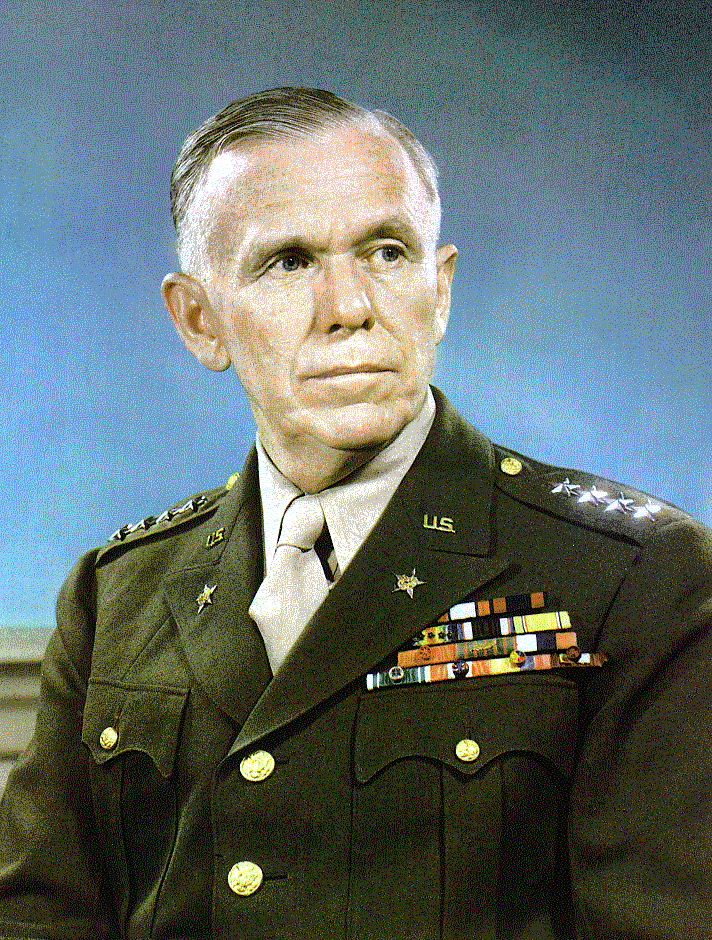
Last summer during one of our delightful rides I commented on the advice I would give a young officer going to war, based on my observation of what had constituted the success of the outstanding figures in the American Expeditionary Forces, and you asked me to write out what I had said. A discussion with Fox Conner this morning reminded me of my promise to do this, so here it is.

To be a highly successful leader in war four things are essential, assuming that you possess good common sense, have studied your profession and are physically strong.

When conditions are difficult, the command is depressed and everyone seems critical and pessimistic, you must be especially cheerful and optimistic.

When evening comes and all are exhausted, hungry and possibly dispirited, particularly in unfavorable weather at the end of a march or in battle, you must put aside any thought of personal fatigue and display marked energy in looking after the comfort of your organization, inspecting your lines and preparing for tomorrow.

Make a point of extreme loyalty, in thought and deed, to your chiefs personally; and in your efforts to carry out their plans or policies, the less you approve the more energy you must direct to their accomplishment.

The more alarming and disquieting the reports received or the conditions viewed in battle, the more determined must be your attitude. Never ask for the relief of your unit and never hesitate to attack.

I’m certain in the belief that the average man who scrupulously follows this course of action is bound to win great success. Few seemed equal to it in this war, but I believe this was due to their failure to realize the importance of so governing their course.

Faithfully yours,

George C. Marshall
Major, General Staff
Aide-de-Camp [emphasis mine]

Thursdays With Oswald—Not Everything Good Can Be Explained

Oswald ChambersThis is a weekly series with things I’m reading and pondering from Oswald Chambers. You can read the original seed thought here, or type “Thursdays With Oswald” in the search box to read more entries.

Not Everything Good Can Be Explained

     We are apt to imagine that if we cannot state a thing in words it is of no value to us. What counts in talking and in reading is the atmosphere that is produced and what is opened up that would not be otherwise. There is a literature of knowledge and a literature of power. The former gives us in forming stuff and we can say—This is what I have got; by the latter you cannot say what you have got but you are the better for it, your mind and heart are enlarged. We need more than the information. The domain of things represented by the literature of power is that which comes with a knowledge of God’s Book. …  

     The basis of Christianity is not primarily virtue and honesty and goodness, not even holiness, but a personal relationship to God in Jesus Christ. … 

     It is a haphazard life, and we have to bank on God’s wisdom, not on our own.

From Shade Of His Hand

Oswald Chambers is not an anti-intellectualist; quite the contrary! Numerous times in his works he counsels Christians to sharpen their thinking.

However, here he is commenting on Solomon’s words in Ecclesiastes, and he is noting that not everything has a “satisfactory” explanation. I love to think of it this way: The one with an experience is never at the mercy of the one with an argument.

Let me explain it this way. Someone can list all of their scientific facts that they say explain that there is no God. However, I know by personal experience the difference a relationship with Jesus Christ has made in my life. Can I explain this by “literature of knowledge”? No. Can I explain this by “literature of power” and by my enlarged heart and mind? Yes, yes, yes!

Sharpen your intellect with knowledge, but don’t ever discount the power that is demonstrated by your changed life!

9 Quotes From “Seeing Jesus”

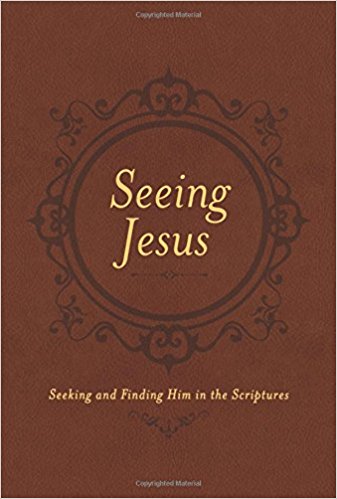
Nancy Guthrie marvelously shows us how Jesus links the Old Testament prophesies with His New Testament activities. This book makes the Old Testament come alive! Check out my full book review by clicking here, and then enjoy a few quotes from this book.

“satan’s power is wielded in the world in the form of death. What gives him that power is sin and the estrangement from God it brings. But on the Cross, Jesus did what was necessary for sinners to be reconciled with God. The devil thought he was defeating Christ, but in reality Christ was reconciling us to God, defeating the devil, and delivering us out of his clutches.”

“It has always been God’s way to use the weak, the foolish, the imperfect—even the shamefully sinful but ultimately repentant—in His redemptive plan. It is His glory to do so, and will be into eternity.”

“God has always wanted His people to know Him—not in a generic or shallow way, but personally, as He truly is. So He revealed Himself in a progressive way, not only through His name, but also through His glorious presence that dwelt in the Temple, through the Law, and through His mighty deeds on behalf of His people. But these revelations all led up to a definitive revelation in the Person of Jesus.”

“Our security in Christ frees us to enjoy His Sabbath rest. Christ fills our hearts with the same love He has for His Father so that we can honor our parents. Christ fills us with His very own faithfulness so that we can live in sexual purity. He convinces us of all that is ours in Him eternally so that we can stop coveting the things other people have that will not last beyond this life. As we refuse to allow anything else to be a god to us; we honor His name, His day, and our parents; as we value life; as we live in sexual purity and fidelity; as we nurture contentment and integrity, we’re not being merely legalistic. The grace of God is at work in our lives, making us holy and happy in God.”

“Jesus was less interested in explaining Himself to Nicodemus than in offering Himself to Nicodemus. … Jesus wanted Nicodemus to understand that we, too, have been bitten—not by a poisonous snake, but by the poison of sin. We, too, need a cure or we face certain death. And just as God provided the cure to His people in the desert, so has He provided a cure to us. But to experience healing requires something of us. We have to look to Jesus.”

“Jesus came into the world to make God knowable so that we can truly love Him with all our hearts, souls, and minds.”

“Jesus came the first time to offer forgiveness rather than bring down fire. He came down the first time to experience the fiery judgment of God in the place of guilty sinners. But the day is coming when Jesus will ‘come with His mighty angels, in flaming fire, bringing judgment on those who don’t know God and those who refuse to obey the Good News of our Lord Jesus’ (2 Thessalonians 1:7-8).”

“Whereas Proverbs describes a way of wisdom that leads to life and to God, Jesus defined that way in much more personal terms. He said, ‘I am the way, the truth, and the life. No one can come to the Father except through Me’ (John 14:6). The decision, as Jesus made clear, is not merely a matter of behavior or companions, but a choice about how we respond to Him, whether or not we will choose Him as our path, our life.”

“The people of Israel had the law; they knew what God wanted from them and for them. But they didn’t have the power or strength to obey. They knew what to do, but they didn’t have the ‘want-to’ to live as God commanded and to love Him as He desired. God’s commands in the covenant of the law were just a list of external rules. …

“In the new covenant, God’s law would be written on the hearts of His people rather than on stone tablets. He would put His Spirit inside His people. In this way, He would give them a love for His will and His ways, and a hatred of sin. His people would finally be able to love His will and walk in His ways because they would want to.”

Thinking Christianly

“If you read history you will find that the Christians who did most for the present world were just those who thought most of the next. The Apostles themselves, who set on foot the conversion of the Roman Empire, the great men who built up the Middle Ages, the English Evangelicals who abolished the Slave Trade, all left their mark on Earth, precisely because their minds were occupied with heaven. It is since Christians have largely ceased to think of the other world that they have become so ineffective in this.” —C.S. Lewis

“To think secularly is to think within a frame of reference bounded by the limits of our life on earth: it is to keep one’s calculations within this-worldly criteria. To think christianly is to accept all things with the mind as related, directly or indirectly, to man’s eternal destiny as the redeemed and chosen child of God…. There is nothing in our experience, however trivial, worldly, or even evil, which cannot be thought about christianly.” —Harry Blamires

Most of us do not think; we live healthy ordinary lives and don’t bother about thinking at all; but when an upheaval comes from underneath proving that the basis of things is not rational, we find the value of the Bible attitude, which is that the basis of things is tragic and not rational…. We have to live based on our relationship to God in the actual condition of things as they are.” —Oswald Chambers

God wants a child’s heart, but a grownup’s head. He wants us to be simple, single-minded, affectionate, and teachable, as a good children are; but He also wants every bit of intelligence we have to be alert at its job, and in first-class fighting trim.” —C.S. Lewis

“Don’t let anyone capture you with empty philosophies and high-sounding nonsense that come from human thinking and from the spiritual powers of this world, rather than from Christ.” —Apostle Paul (Colossians 2:8)

“We do not think on the basis of Christianity at all. We are taught to think like pagans for six days a week and to reverse the order for one day, consequently in critical moments we think as pagans and our religion is left in the limbo of the inarticulate.” —Oswald Chambers

[Emphasis in these quotes added by me]

To read thought-provoking quotes like this every day, please follow me on Twitter and Tumblr.

Seeing Jesus (book review)

seeing-jesusB.B. Warfield once commented that the Old Testament is like a beautiful mansion, but the lights are turned off; with the Advent of Jesus, the lights have come on and we can now appreciate the beauty that was always there. In Seeing Jesus, Nancy Guthrie shows us the beauty of Jesus that is on full display from the opening words of the Bible, shining a bright light on passages that many may have previously missed.

Sadly, a lot people mistakenly believe that Jesus first shows up at His birth in Bethlehem, forgetting that Jesus Himself said that all the Scriptures point to Him. Nancy does just what Jesus said: She links together passages from both Testaments to show how all the Scripture finds its fulfillment in Jesus Christ.

Each chapter opens with a passage from the Old Testament and a passage from the New Testament. Then Nancy masterfully shows how Jesus links the two Testaments by the work He completed at Calvary. I appreciate how there is a satisfying conclusion to each chapter, but also how there is an open door to explore each particular topic more in my own Bible study time.

Especially for those who have thought the Old Testament is confusing, or outdated, or even boring, Seeing Jesus will bring a whole new excitement and insight into your Bible study time.

I am a Tyndale book reviewer.

This Is War!

light-and-truth-revelationIt is inner warfare—The 7th [chapter] of Romans is the description of this, the battle between faith and unbelief, between the spirit and the flesh. This war is private, solitary, with no eye upon the warrior; fought in the closet, on the knees, with the Bible as his weapon. …

It is outer warfare—The enemies are legion; the world, with all its enmities, snares, pomps, pleasures; satan, with his principalities and powers; both of these in combination hating, persecuting, attacking. This is ‘the great fight of afflictions’ (Hebrews 10:32). Thus it is so far public, before men; ‘we are made a spectacle to the world, and to angels, and to men.’ …

It is daily warfare—It is not one great battle, but a multitude of battles, constant warring: there is no intermission and no discharge in this war. The enemy wearies not, ceases not; nor must we. We wake to warfare each morning, and go out to warfare each day. Everywhere we find the enemy posted, sometimes openly, sometimes in ambush. The conflict is life-long, and it is daily.

It is warfare not fought with human arms—The weapons of our warfare are not carnal. We do not war after the flesh. It is in divine strength; with the sword of the Spirit; clothed in the whole armor of God. …

It is warfare in which we are sharers with Christ—He first fought the good fight, as the Captain of our salvation, the Lord strong and mighty; the Lord mighty in battle. The inner warfare indeed was not His, but all the rest was. He fought, when here, the same battles as we; and it is into His warfare that we are called to enter.” —Horatius Bonar, in Light & Truth: Revelation

Jesus—100% God And 100% Human

Listen to the podcast of this post by clicking on the player below, and you can also subscribe on AppleSpotify, or Audible.

On paper, it seems so simple: “We believe in the Deity of the Lord Jesus Christ. As God’s Son, Jesus was both human and divine.” But trying to wrap our finite human minds around the concept of the full humanity and the full deity of Jesus is challenging!

First off, Jesus was fully human. Both Matthew and Luke record details about Christ’s physical birth, and the writer of Hebrews says that Jesus was made every bit as human as us (Hebrews 2:17).

But Jesus was also fully God. John records how God became flesh in the Person of Jesus (John 1:1-2, 14), and Paul tells us how Jesus chose not to use His deity when He came to earth as a human (Philippians 2:6-8).

I know that anytime we say, “God is like…” we’ve already sold ourselves short, but I’d like to try one analogy that’s been helpful for me.

Imagine a coin that has two distinct sides. While we are looking at one side (heads), we cannot see the other side (tails) but that doesn’t mean the other side has ceased to exist. In fact, if we were able to split that coin in half, so that there was only a heads and a tails, we haven’t cut the value of the coin in half, but we’ve made the coin of no value at all! 

In the Greek language of the New Testament, there are a couple of words for “knowing”: one is gnosis and the other oido. Together these words combine head knowledge and heart knowledge, or knowledge by study and knowledge by experience.

C.S. Lewis captures the idea this way: “It is Christ Himself, not the Bible, who is the true Word of God. The Bible, read in the right spirit and with the guidance of good teachers, will bring us to Him.”

Just as Jesus was both God and Man, we are to use both our mind and our heart to know Him.

To focus on the “heads” side—the deity of Jesus—is to pervert gnosis into gnosticism, and deny the humanity of Jesus. To focus on the “tails” side—the humanity of Jesus—is to pervert gnosis into agnosticism, and deny the deity of Jesus. True gnosis keeps both sides in mind: Deity and humanity.

To truly know THE Word of God (Jesus) in all His humanity and in all His deity, we need to study the Word of God. We also need the help of the Holy Spirit. I like the Old English wording of this verse—Ye have an unction [charisma] from the Holy One, and ye know [gnosis] all things (1 John 2:20).

So read your Bible, but not just to read your Bible. Ask the Holy Spirit to make THE Word known to you. Live in the balance of gnosis as you get to know Jesus more deeply and personally.

(When Jesus proclaimed His “I Am” statements in the New Testament, He was tying Himself to all of the “Jehovah” titles of the Old Testament. Check out I Am Jehovah.)

This post is a part of our series studying our foundational beliefs. If you would like to read more about the first foundational beliefs we have discussed, check out this post on the inspiration of Scripture, and this post on the Trinity.

►► Would you please prayerfully consider supporting this ministry? My Patreon supporters get behind-the-scenes access to exclusive materials. ◀︎◀︎

Poetry Saturday—Wait, Trust, Rest

butterflyWait patiently wait,
God never is late;
Thy budding plans are in Thy Father’s holding,
And only wait His grand divine unfolding.
Then wait, wait,
Patiently wait.
Trust, hopefully trust,
That God will adjust
Thy tangled life; and from its dark concealings,
Will bring His will, in all its bright revealings.
Then trust, trust,
Hopefully trust.
Rest, peacefully rest
On thy Savior’s breast;
Breathe in His ear thy sacred high ambition,
And He will bring it forth in blest fruition.
Then rest, rest,
Peacefully rest! —Mercy A. Gladwin