10 Quotes From “As Kingfishers Catch Fire”

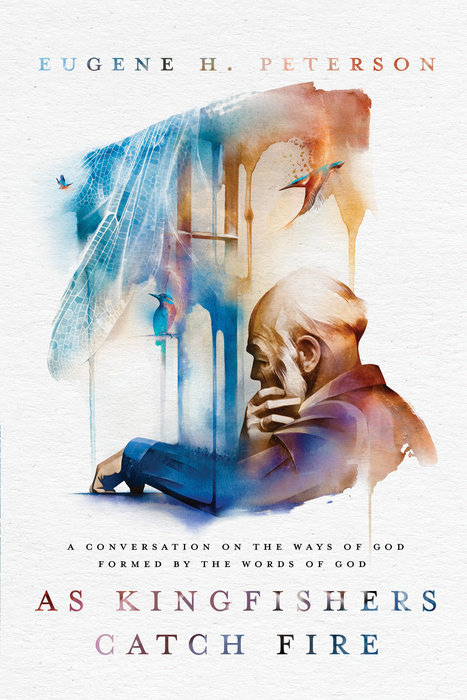
As Kingfishers Catch Fire is a collection of 49 sermons from Eugene Peterson. Check out my full book review by clicking here. Below are a few quotes that caught my attention.

“The Christian life is the lifelong practice of attending to the details of congruence—congruence between ends and means, congruence between what we do and the way we do it, congruence between what is written in Scripture and our living out what is written, congruence between a ship and its prow, congruence between preaching and living, congruence between the sermon and what is lived in both preacher and congregation, the congruence of the Word made flesh in Jesus with what is lived in our flesh.”

“Science and religion are opposites, the way your thumb and forefinger are opposites: if you are going to get a grip on things, you need them both.”

“Friendship is not a way of accomplishing something but a way of being with another in which we become more authentically ourselves.”

“Naming an event a miracle doesn’t mean we can’t understand it. It means we can’t anticipate it. It means we can’t reproduce it. We cannot control it. There is more going on then we can comprehend.”

“There are people today who mistakenly look at those [Ten] Commandments as restrictive, not realizing that for those who first heard them—and for those who hear them still, in faith—they provide for and preserve the values of the free life. The reality and truth of God is protected from commercialization and manipulation. Human life is honored. The dignity of work is protected. Close personal relationships are preserved. Truth is respected. Each of the commands articulates a reality and a value that protects a free life.”

“Aaron made a god, a golden calf. At that moment Aaron quit being their pastor and became their accomplice. There are some people who are always looking for a religion that makes no demands and offers only rewards, a religion that dazzles and entertains, a religion in which there is no waiting and no emptiness. And they can usually find someone like Aaron who will help them make it up, some sort of golden calf religion.”

“Acts of love cannot be canned and then used off the shelf. Every act of love requires creative and personal giving, responding, and serving appropriate to—context specific to—both the person doing the loving and the person being loved.”

“Our habit is to talk about God, not to Him. We love discussing God. The psalms resist these discussions. They are not provided to teach us about God but to train us in responding to Him.”

“The Christian life is not, in the first place, something we do. It consists of the healthy and mature formation of our lives by the Spirit, the Holy Spirit. Christian living goes off the rails badly when it is conceived as a program or routine that we engage in or skills that we master.”

“In prayer we do not act. God does. In prayer we do not develop a technology that sets the gears and pulleys of miracle in motion. We participate in God’s action. ‘Not my will but Yours.’”

Fear God, Honor The King

Give to Caesar what belongs to Caesar, and give to God what belongs to God (Matthew 22:21).

The Bible has much to say to God-followers about how to interact with earthly governments:

  • Wise King Solomon told us to “fear the Lord and the king” and not go along with rebels against the government (Proverbs 24:21)
  • Daniel said several times that “the Most High is sovereign over all kingdoms on earth and gives them to anyone He wishes” (Daniel 4 & 5)
  • The Apostle Paul declared he was no rebel to either the civil or religious governors: “I have done nothing wrong against the Jewish law or against the temple or against Caesar” (Acts 25:8)
  • Later on, Paul reminded the church that government officials are God’s servants, and that we need to give them the respect that is owed to them (see Romans 13:1-7)
  • Peter counseled Christians: “Submit yourselves for the Lord’s sake to every human authority: whether to the emperor, as the supreme authority, or to governors … Show proper respect to everyone, love the family of believers, fear God, honor the emperor” (1 Peter 2:13-17)

But a man that exemplifies this balance between fearing God and honoring the king best is Mordecai. Mordecai was a Jew who served the Babylonian king faithfully—

  • He protected the king from would-be assassins
  • But disobeyed the king when the law of the land conflicted with God’s law
  • Then Mordecai helped the king get out of a bad law written by an evil man

A mark of a godly leader is one who knows the difference between fearing God and honoring earthly kings.

How can today’s leaders live out this principle? This is something that should lead us to prayerfully search the Scriptures, and then boldly live out what the Holy Spirit reveals to us.

This is Part 13 in my series on godly leadership. You can check out all of my posts by clicking here.

As Kingfishers Catch Fire (book review)

Eugene Peterson may be best known for his work on The Message: a paraphrase of the Bible in more modern English. But before he worked on The Message, he was already putting the Bible into modern English in his weekly sermons. As Kingfishers Catch Fire is a collection of 49 of these sermons.

Peterson says, “When I prepare and preach a sermon, I need constant reminding that I am part of a company that has a rich and varied genealogy. I do not start from scratch. I do not make up something new.” These sermons are divided into seven categories, in which Peterson states he is “preaching in the company of Moses, David, Isaiah, Solomon, Peter, Paul, and John.”

To be honest with you, this collection of sermons was a bit of a disappointment to me. I was anticipating sermons that were much more expositional in nature, but instead I read sermons which were Peterson’s poetic thoughts about a passage of Scripture. I found this curious since Peterson himself says in the introduction to this book that “the Christian life is the lifelong practice of attending to the details of congruence…between preaching and living, congruence between the sermon and what is lived in both preacher and congregation” (emphasis mine). And yet I found in these sermons very few details to actually attend to and live out.

If you prefer poetic discussions of Scripture in which you will have to find your own way of applying biblical principles to your life, you will probably enjoy this collection. But if you are looking for a meatier walk through the Bible, these sermons will probably leave you—as they did me—a bit flat.

I am a WaterBrook book reviewer.

7 Ways For Christians To Point Others To Jesus

Have you ever had a really bad job? How about a job that you said, “This job is killing me”? They probably weren’t as bad as the job Ernest Shackleton advertised for:

“Men Wanted for Hazardous Journey. Small wages, bitter cold, long months of complete darkness, constant danger, safe return doubtful. Honor and recognition in case of success.”

And probably not as bad as the help wanted ad for the Pony Express:

“Wanted. Young, skinny, wiry fellow not over 18. Must be expert riders, willing to risk death daily. Orphans preferred.”

Several times in his letter to Christians, the Apostle Peter tells Christians that living in a Christ-honoring way on earth is going to be tough. So are Christians just supposed to grin and bear it? Are they just supposed to slap a smile on their face and hang on until the end?

In a word: No! 

Instead, Peter points out seven ways Christians can live so that they will point others to Jesus.

  1. Live in reverent fear of an All-Righteous Judge who doesn’t miss a thing we say or do (1:17)
  2. Live such good lives that consistently glorify God (2:12)
  3. Live as the best of citizens, respecting those in leadership (2:13-17)
  4. Live as good employees (2:18)
  5. Live as Christ’s ambassadors by following the example of Jesus (2:19-24)
  6. Live with your spouse faithfully and submissively (3:1, 7)
  7. Live focused on eternity (4:1-2)

(you can read all the passages from 1 Peter here)

When the first Christians lived this way, everyone spoke well of them and held them in high regard because Christians…

  • Transformed life for women
  • Built the first hospitals
  • Founded the first free medical dispensaries
  • Established orphanages and homes for the aged
  • Made life better for children
  • Brought a dignity to marriage

“Anyone who asks the question: ‘What has Christianity done for the world?’ has delivered himself into a Christian debater’s hands. There is nothing in history so unanswerably demonstrable as the transforming power of Christianity and of Christ on the individual life and on the life of society.” —William Barclay 

Bottom line—We need to live so that people will say “I those Christians!”

If you’ve missed any messages in this series, you may find the complete list by clicking here.

Saturday In The Psalms—Why?

Why? (four times in five verses of Psalm 43).

We seem to ask this question a lot! Just listened to a small child trying to learn about his world, “Why … why … why…?” And in this psalm, we find a grown man still asking, “Why … why … why…?

“God, You are my strength, so why does it seem like You’re ignoring me? why are my enemies seeming to prevail?”

The psalmist then asks for enough light to find his way to the place of worship—here is where he finds reassurance of God’s majesty; here is where he is filled with joy.

Now his why? is directed to himself—not to God. He asks his soul, “What reason do you have to be downcast? God is on His throne—hope is still burning brightly—His help is coming. Now is the time to worship His majesty!”

My whys? need to be pointed the right direction: “My soul, why are you downcast when you have access to such a loving and powerful Father?”

Go ahead and ask your whys? Your loving Heavenly Father wants to hear from you!

13 Introspective Questions From “Longing For A Changed World”

As Ralph Lehman made his case for Christian to (re)establish a prayer focus for revival in his book Longing For A Changed World, he asked several penetrating questions. Here are a few of them for you to consider.

“[Josiah’s revival] was one revival that began with the leaders of government. Are we praying for our leaders?”

“Our government has entered many areas that were once considered to be the Church’s sphere of ministry. How can we lead our churches back into these areas?”

“Have you considered that you are grieving the Spirit when you deprive Him of conversing with God by choosing not to pray?”

“As men of prayer, should we not strive to be like the great prayer warriors of the Bible?”

“Tertullian, a church father who lived in the Roman Empire around 200 A.D., stated that the Roman emperor and his armies benefited greatly from the prayers of the Christians who interceded on their behalf. Can we present the same argument to our political leaders today?”

“What would we be willing to leave or to set aside for the sake of more time in prayer, seeking the Kingdom and righteousness of God?”

“Do we seek the Lord of revival, or merely desire His blessings?”

“If we do not enjoy God’s presence, through His Word and prayer, we are missing the true blessing God intends for us—the blessing of Himself. If we will not seek the presence of God day by day, how can we expect Him to go with us in our daily lives?”

“If God was willing to take the Israelites into the Promised Land without His presence [Exodus 33:3-4], what does this say to the proponents of the ‘health and wealth’ gospel?”

“Even though we have been blessed immeasurably by living here in the United States, do our hearts long for God’s rule to be acknowledged in our land? Do we yearn to abide in His presence? Or are we idle in our contentment with the milk and honey?”

“Sometimes, our areas of giftedness become spheres where we fail to ask God for strength. Have you considered your strengths may be the very areas that satan exploits?”

“Are we praying for revival, are we also praying that we would conduct ourselves in such a way that the world would take notice, even if this meant for us to suffer?”

“Is the God of today’s church big enough to surprise us?”

You can check out some other quotes from Longing For A Changed World by clicking here, and my full book review is available here.

Welcomed Into God’s Presence

“Jesus hasn’t left us with an unapproachable God. ‘There is one God and one mediator between God and men, the Man Christ Jesus” (1 Timothy 2:5). When Jesus’ flesh was torn on the Cross, the curtain was torn in two. It was as if the hands of heaven had been gripping the veil, waiting for this moment. One instant it was whole; the next it was ripped in two from top to bottom. No delay. No hesitation. We are welcome to enter into God’s presence—any day, any time. God has removed the barrier that separates us from Him. The barrier of sin? Down. No more curtain. But we have a tendency to put the barrier back up with the curtain of our heart. Sometimes, no, oftentimes, we allow our mistakes and guilty conscience to keep us from God. Don’t allow a veil of guilt to keep you from your Father. Trust the Cross. The curtain is down, the door is open, and you are welcome in God’s presence.” —Max Lucado, On Calvary’s Hill (emphasis mine)

Thursdays With Oswald—What Is A Missionary?

Oswald ChambersThis is a weekly series with things I’m reading and pondering from Oswald Chambers. You can read the original seed thought here, or type “Thursdays With Oswald” in the search box to read more entries.

What Is A Missionary?

     A missionary is a saved and sanctified soul detached to Jesus. The one thing that must not be overlooked is the personal relationship to Jesus Christ and to His point of view; if that is overlooked, the needs are so great, the conditions so perplexing, that every power of mind and heart will fail and falter. We are apt to forget that the great reason for missionary enterprise is not first the elevation of the people; nor first the education of the people; nor even first the salvation of the people, but first and foremost the command of Jesus Christ—“Go ye therefore, and make disciples of all the nations.” If we are going to remain true to the Bible’s conception of a missionary, we must go back to the source—a missionary is one sent by Jesus Christ as He was sent by the Father. … 

     In revising the lives of men and women of God and the history of the Church of God, there is a tendency to say—“How wonderfully astute those men and women were! How perfectly they understood what God wanted of them!” The truth is that the astute mind behind these men and women was not a human mind at all, but the mind of God. We give credit to human wisdom when we should give credit to the Divine guidance of God through childlike people who were foolish enough in the eyes of the world to trust God’s wisdom and supernatural equipment, while watching carefully their own steadfast relationship to Him. … 

     The special person called to do missionary work is every person who is a member of the Church of Christ. The call does not come to a chosen few, it is to everyone of us.

From So Send I You

Are you a Christian? Then Jesus calls you His missionary too!

Do you feel equipped to be a missionary? Jesus said all that is required for missionary service is a total reliance on Him.

With that in mind, go be Christ’s missionary to your world today!

Correctly Handling Your Strong Emotions

And it grieved me bitterly… (Nehemiah 13:8).

Leaders believe so strongly in what they have been called by God to do, that opposition to God’s plan arouses very strong emotions in a leader!

When Nehemiah was angered at those who either deliberately or unintentionally sinned, his anger brought swift and decisive action—

  • He threw away people’s stuff
  • He issued explicit commands
  • He confronted other leaders
  • He issued strong threats
  • He beat people up (really!)
  • He excommunicated

Yet in all these actions he did not sin. He prayed in between many of these episodes, “God, remember what I have done. Show me mercy. Reward me for this good I have done.” And nowhere after these prayers do we see God rebuking Nehemiah for mishandling his emotional responses.

A mark of a godly leader is one who handles his strong emotions in a God-honoring way.

A leader’s prayer: Father, in my anger keep me from sin. May even my strongest of emotional responses bring glory to You.

This is Part 12 in my series on godly leadership. You can check out all of my posts by clicking here.

10 Quotes From “Longing For A Changed World”

Longing For A Changed World will help you (re)establish a prayer focus that could be the beginning of the next great revival! You can check out my full book review here, and then enjoy some of the quotes that especially caught my attention.

“Our age, severed from its Biblical moorings, is neglecting history’s lessons.”

“Another characteristic of today’s Church is a lack of prayer. Instead of communing and listening to God, lifting our needs and concerns to the Lord, we rely on our own abilities and in technology to compensate for any inadequacy we may have. Thus armed, we are confident in taking on the challenges of our day, even those spiritual in nature.”

“True revival impacts all aspects of life, even to the concerns of the last, the least, and the lost. A people who uphold justice and righteousness and seeks to alleviate the plight of the poor and needy, are a people truly gripped with revival. For when we are consumed with God’s holiness and how blessed we are by His grace, we are compelled to take this Gospel to all aspects of our culture.”

“Our propensity is to focus on being doers—to be on the battlefield, sword in hand, fighting for the Kingdom and for righteousness. But as in the battle with the Amalekites, battles are won by God’s people lifting up their arms to the Lord.”

“I have been more focused on what I wanted to say in my prayer than on Whom I am approaching in prayer. This often leads to prayer that amounts to a tallying-up of my wants, without proper regard for the One into Whose presence I have come.”

“Our prayers as a whole, and prayers for revival, should reflect our poverty and powerlessness before a God who is forgiving and gracious.”

“Pray for boldness in the church—boldness to proclaim God’s Word and to firmly stand on it. Pray for boldness to confront sin yet boldness accompanied with humility as the church is aware (painfully aware) of its own sinfulness. And pray for boldness to present Christ as the Way and the Truth.”

“Praying expectantly requires us to pray to God in line with His Word and His promises. Thus a decline in biblical literacy has resulted in our prayer life wavering as well.”

“Our pleas for revival will go unheeded until we stand up for God’s Word, forsake the idols of our age, shake off the trappings of our secular and materialistic age, and embrace God’s truth.”

“As we pray for revival—for changed lives, renewed churches, and a transformed culture—our tendency might be to enlist the charismatic, the eloquent, and those who project confidence and success, traits that so readily appeal to us. But God’s manner of bringing revival has often been through ordinary people who endure affliction, hardship, and suffering, much as he did with Paul and Timothy and the Apostles.”

I’ll be sharing more resourced and thoughts from this book soon, so stay tuned!