


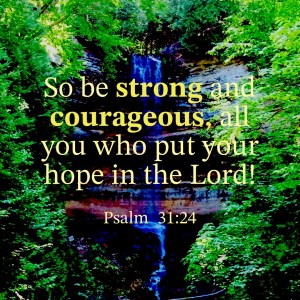
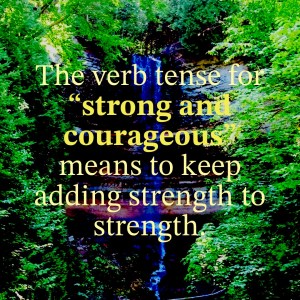
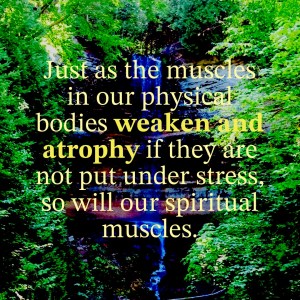
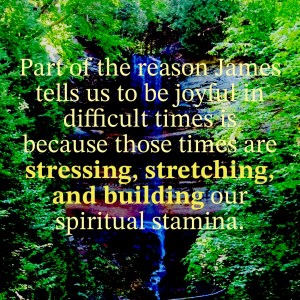
When the Bible calls Christians to be strong, it is really calling them to be stronger and more courageous than they were previously. This requires a workout plan for our spiritual muscles!

The King’s Aroma
August 14, 2025 — Craig T. OwensListen to the podcast of this post by clicking on the player below, and you can also subscribe on Apple, Spotify, or Audible.
Throughout history, kings had their own “signature scent”—an incense that was exclusively theirs.
This is true for King Jesus as well!
The Scriptures I reference in this clip are Song of Songs 1:3, 12; 2 Corinthians 2:14-15.
You can check out the full sermon from which this clip came here.
I’ve blogged previously about the powerful things the Bible says about this aroma from Jesus and the aroma from our lives too:
►► Would you please prayerfully consider supporting this ministry? My Patreon supporters get behind-the-scenes access to exclusive materials. ◀︎◀︎
The I AM Is Infinitely More
August 12, 2025 — Craig T. OwensOh, how great is Your goodness, which You have laid up for those who fear, revere, and worship You, goodness which You have wrought for those who trust and take refuge in You before the sons of men! (Psalm 31:19 AMPC)
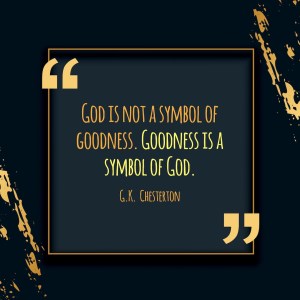
“God is not a symbol of goodness. Goodness is a symbol of God.” —G.K. Chesterton
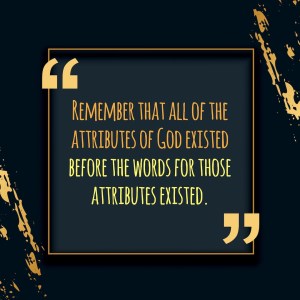
Remember that all of the attributes of God existed before the words for those attributes existed. Words like love and awesome and power and goodness were created to point us to the I AM.
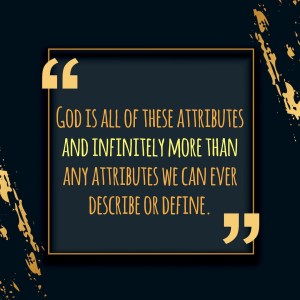
God is all of these attributes and infinitely more than any attributes we can ever describe or define.

Related posts:
Servants And Stewards
August 12, 2025 — Craig T. OwensListen to the podcast of this post by clicking on the player below, and you can also subscribe on Apple, Spotify, or Audible.
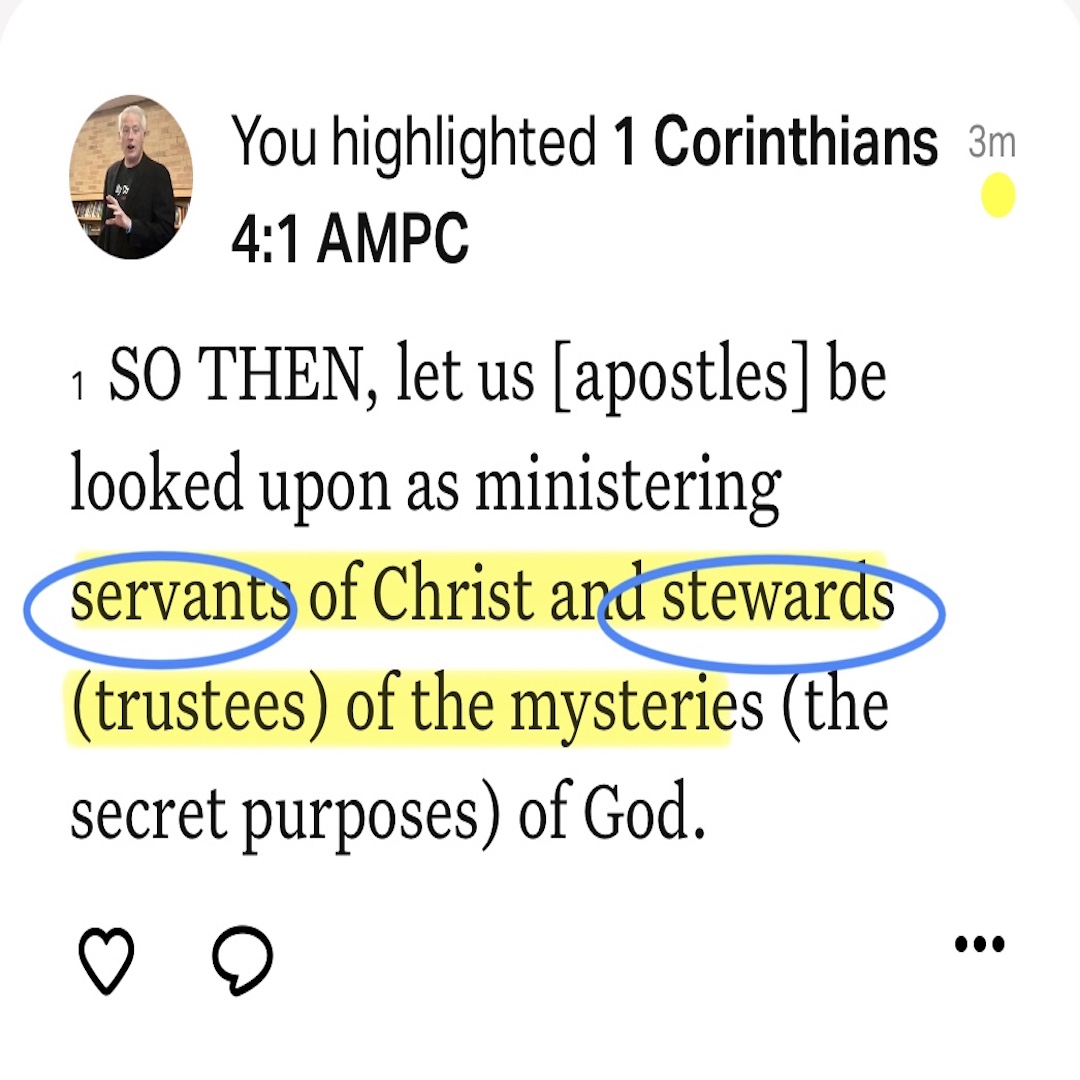 Godly leaders should be secure enough to think of themselves as servants and stewards—nothing more, nothing less. And people in the church should look on their leaders as servants and stewards—nothing more, nothing less.
So then, let us apostles be looked upon as ministering servants of Christ and stewards (trustees) of the mysteries (the secret purposes) of God. (1 Corinthians 4:1 AMPC)
Q: How do I know if I am a servant?
A: People treat me like one.
Q: How do I know I have a servant’s attitude?
A: I don’t mind being treated like a servant.
Paul lived this out—Now, brothers and sisters, I have applied these things to myself and Apollos for your benefit, so that you may learn from us the meaning of the saying, “Do not go beyond what is written.” Then you will not be puffed up in being a follower of one of us over against the other (1 Corinthians 4:6).
I closed the chapter ‘Secure to Serve’ in my book Shepherd Leadership like this—
 God wants to use you as a leader. He has called you to great things. Just remember that He does the calling and the equipping so that you can serve and shepherd others. It may be a prominent, noticeable position, or it may be an obscure position unseen by very many. It may be a position God keeps you in until the day He calls you home, or it may be a temporary position. A humbly confident leader doesn’t fight to climb a ladder nor strive to keep a position on a higher rung of the ladder. The shepherd leader is confident to serve where God places him, and humble enough to be moved, or even removed, as God sees best. But most of all, a secure shepherd leader knows that God’s desire for His leader in any position is a heart to serve others.
Related posts:
►► Would you please prayerfully consider supporting this ministry? My Patreon supporters get behind-the-scenes access to exclusive materials. ◀︎◀︎
7 Quotes From “God in the Dock”
August 11, 2025 — Craig T. Owens God in the Dock is quite a challenging read, but it has an amazing payoff for those who will persevere to grasp the immense intellect of C.S. Lewis. You can check out my full book review here.
“The miracles in fact are a retelling in small letters of the very same story which is written across the whole world in letters too large for some of us to see. Of that larger script part is already visible, part is still unsolved. In other words, some of the miracles do locally what God has already done universally: others do locally what He has not yet done, but will do. In that sense, and from our human point of view, some are reminders and others prophecies.”
“Men look on the starry heavens with reverence: monkeys do not. The silence of the eternal spaces terrified [Blaise] Pascal, but it was the greatness of Pascal that enabled him to do so. … If the world in which we found ourselves were not vast and strange enough to give us Pascal’s terror, what poor creatures we should be! Being what we are, rational but also animate, amphibians who start from the world of sense and proceed through myth and metaphor to the world of spirit, I do not see how we could have come to know the greatness of God without that hint furnished by the greatness of the material universe. Once again, what sort of universe do we demand? If it were small enough to be cozy, it would not be big enough to be sublime. If it is large enough for us to stretch our spiritual limbs in, it must be large enough to baffle us. Cramped or terrified, we must, in any conceivable world, be one or the other. I prefer terror. I should be suffocated in a universe that I could see to the end of.”
“The doctrines that God is love and that He delights in men, are positive doctrines, not limiting doctrines. He is not less than this. What more He may be, we do not know; we know only that He must be more than we can conceive. It is to be expected that His creation should be, in the main, unintelligible to us.”
“Christianity does not replace the technical. When it tells you to feed the hungry it doesn’t give you lessons in cookery. If you want to learn that, you must go to a cook rather than a Christian. If you are not a professional Economist and have no experience of Industry, simply being a Christian won’t give you the answer to industrial problems.”
“That definite distinction that Christians make between hating sin and loving the sinner is one that you have been making in your own case since you were born. You dislike what you have done, but you don’t cease to love yourself. You may even think that you ought to be hanged. You may even think that you ought to go to the Police and own up and be hanged. Love is not affectionate feeling, but a steady wish for the loved person’s ultimate good as far as it can be obtained.”
“Now as myth transcends thought, Incarnation transcends myth. The heart of Christianity is a myth which is also a fact. The old myth of the Dying God, without ceasing to be myth, comes down from the heaven of legend and imagination to the earth of history. It happens—at a particular date, in a particular place, followed by definable historical consequences. We pass from a Balder or an Osiris, dying nobody knows when or where, to a historical Person crucified (it is all in order) under Pontius Pilate. By becoming fact it does not cease to be myth: that is the miracle. I suspect that men have sometimes derived more spiritual sustenance from myths they did not believe than from the religion they professed. To be truly Christian we must both assent to the historical fact and also receive the myth (fact though it has become) with the same imaginative embrace which we accord to all myths. The one is hardly more necessary than the other.”
“We are defending Christianity; not ‘my religion.’ When we mention our personal opinions we must always make quite clear the difference between them and the Faith itself. St. Paul has given us the model in 1 Corinthians 7:25: on a certain point he has ‘no commandment of the Lord’ but gives ‘his judgement.’ No one is left in doubt as to the difference in status implied.”
 As always, my Patreon supporters had access to this quotes—and many, many more—ahead of time. Please consider joining them to get access to early releases and exclusive materials.
God-ability
August 11, 2025 — Craig T. OwensListen to the podcast of this post by clicking on the player below, and you can also subscribe on Apple, Spotify, or Audible.
 The last time we were together, Pastor Caleb mentioned that I was the only one he knew that put hot sauce on my eggs. But then several of you let him know that you do that too. After the service, someone told me that they like Tabasco sauce on their pizza, which isn’t something I enjoy.
We all have different tastes. Our tastebuds are just one of the things that makes us unique creations. Unique means one-of-kind, no one else like me. We don’t need to add something like “very unique” because just by itself the word means that God made a once-in-eternity masterpiece when He made you and me.
It’s a good thing that we are unique. I see what you don’t see, and you see what I don’t see. There are some things I know how to do well, but perhaps you struggle doing them. That’s okay because there are things you can do that I won’t have the opportunity to do. Combined together we saints make an amazing team!
The apostle Paul understood the value of unique individuals.
(Check out all of the Scriptures in this post by clicking here.)
Titus was probably the one who carried Paul’s letter to the Corinthians and then had the responsibility to teach those saints how to carry out what was in the letter (2 Corinthians 2:12-13; 7:6-7, 13-15; 8:6, 16-17). Titus was the pastor that Paul sent to Crete. Paul quoted a poet who said, “Cretans are always liars, evil brutes, lazy gluttons” (Titus 1:12). Titus was confident and bold to stand his ground for what he believed (Galatians 2:1-3).
Timothy was more soft-spoken and tenderhearted, so Paul had to encourage him more (1 Timothy 4:7, 12), but he was the one who could soothe troubled spots. Timothy stepped in to help behind the scenes (Acts 18:1-5) and he was the one Paul reached out to with his last letter form prison, asking Timothy to come to him (2 Timothy 4:12).
What a great thing it is to have unique saints in our lives!
One person—not matter how gifted—cannot do it all. Look at Moses in Exodus 18:13-18. Even an anointed team like the 12 apostles cannot to it all. Look at Acts 6:1-2.
These leaders recognized the need to other uniquely gifted people to come alongside them. Moses was advised to choose capable men. In other words, those with the ability to judge disputes wisely (Exodus 18:19-25). The apostles chose those who were full of the Holy Spirit and wisdom (Acts 6:3-6). The Greek word for wisdom (sophia) means someone with heaven-sent wisdom that also has the ability to apply that wisdom effectively.
Israel in the Old Testament and the Church in the New Testament would have been constricted if those other people hadn’t agreed to let their God-given abilities be used.
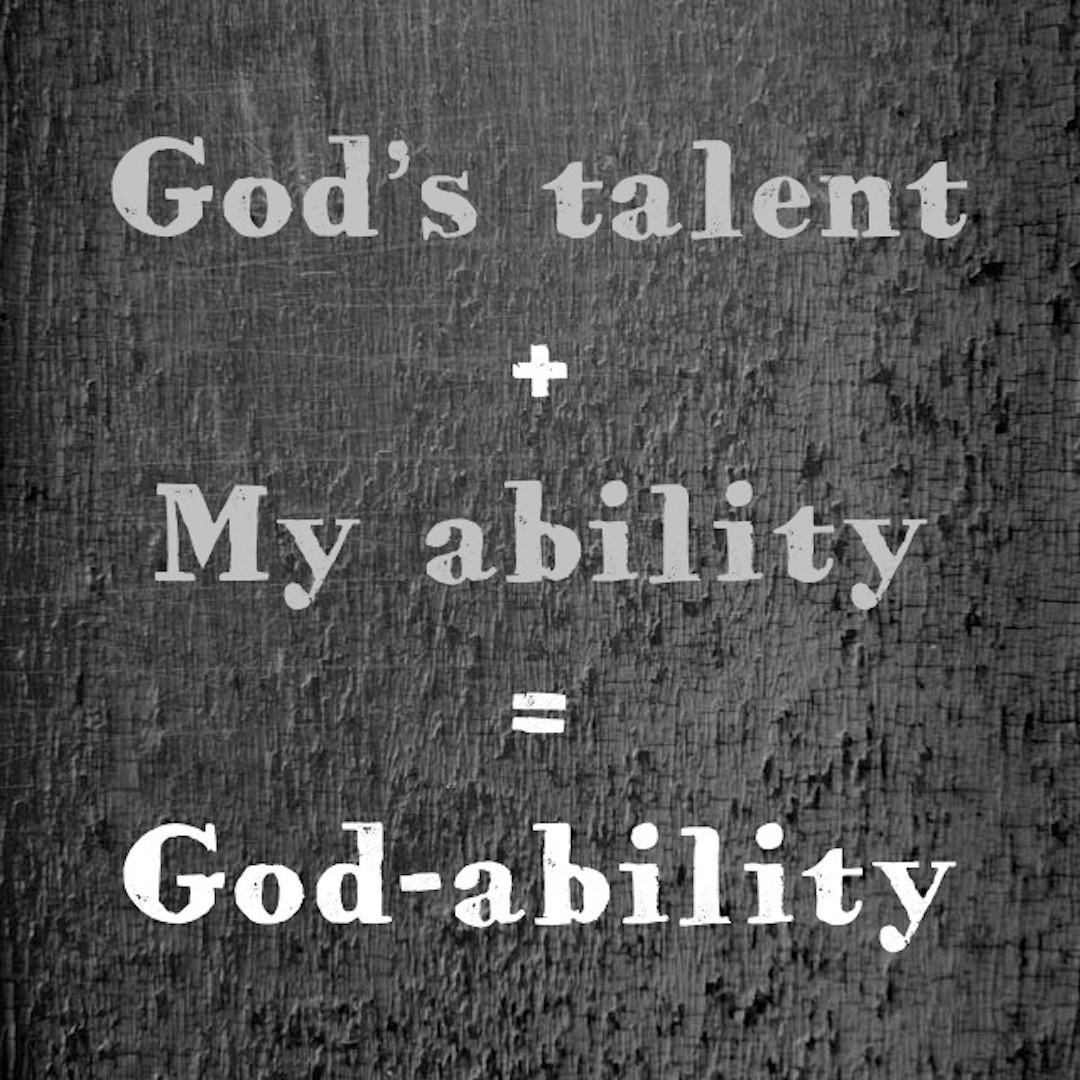
God’s talent + My ability = God-ability
In 2 Corinthians 8-9, Paul is specifically talking about the ability of people to give their offerings to help the growing church, but there is a phrase that I think is appropriate for any application of our gifts: They gave themselves first of all to the Lord (2 Corinthians 8:5).
When what we do is a cheerful “get to” and not an obligatory “got to” it is noticed by everyone. Those two chapters in 2 Corinthians are filled with words like cheerful, eagerness, and enthusiasm.
In our Hand2Hand food ministry, some people have…
- Give-ability to give financially
- Shop-ability to find deals
- Organize-ability to make all the parts work
- Strength-ability to lift and move
- Deliver-ability to get the needed items to those who need them
But none of these work without availability. This is the attitude that makes our God-ability a blessing and not a chore.
There is a place in ministry for every Christian. When you are available, God will allow the talent that He has given you to be a blessing to the Church. You benefit, the other saints benefit, and the watching world sees a living witness that will draw them to Jesus.
►► Would you please prayerfully consider supporting this ministry? My Patreon supporters get behind-the-scenes access to exclusive materials. ◀︎◀︎
Links & Quotes
August 9, 2025 — Craig T. Owens The armor of God is not for us to fight in but to shield us while we pray. Prayer is the weapon!
I have a lot of new video content on my YouTube channel every week. Please check it out and subscribe so you don’t miss anything.
“Psychologists, since the beginning of the discipline, have argued about the essence of what it means to be human. Some, like [Sigmund] Freud, insist that we are motivated by physical pleasure, while others, like Victor Frankl or Abraham Maslow, believe that some higher purpose…. Human beings, made in the image and likeness of God, only realize their full potential and pleasure as they participate in the very being of God and know and experience the pleasure He takes in Himself and His glory.” —T.M. Moore
“If you are persevering in faith today, you owe it to the blood of Jesus. The Holy Spirit, who is working in you to preserve your faith, is honoring the purchase of Jesus. God the Spirit works in us what God the Son obtained for us. The Father planned it. Jesus bought it. The Spirit applies it—all of them infallibly.” —John Piper
“The Hebrew word Davar (דבר, pronounced ‘daw-var’) reveals something profound about God’s Word—it’s not merely information, but transformation. … Throughout Scripture, God’s Word consistently proves both living and active. It has the power to create worlds (Genesis 1), transform lives (Psalm 119:105), and accomplish God’s purposes (Isaiah 55:11).” —Dave Adamson
More fascinating archeology that supports the Bible’s historicity. This is a look at the library of letters found at Tell el-Amarna in Egypt. “The most obvious connection between the Amarna Letters and biblical history is that some of the letters appear to be describing, in real-time, the attacks of the Israelites during the period of the conquest. Remember, the initial conquest battles took a period of some 5–6 years, but the attempts by various tribes to conquer their allotted territories lasted into the period of the Judges. The letters from the rulers of some of the very cities named in the biblical conquest calling for help from the attacking ʿapîru/ḫa-bi-ru, provide a poignant backdrop to this period of biblical history.”
“Because I am your constant Companion, there should be a lightness to your step that is observable to others. Do not be weighed down with problems and unresolved issues, for I am your burden-bearer.” —Jesus in Sarah Young’s Jesus Calling, based on Psalm 31:19–20; John 16:33
Get Some More
August 8, 2025 — Craig T. Owens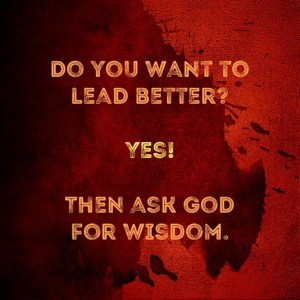
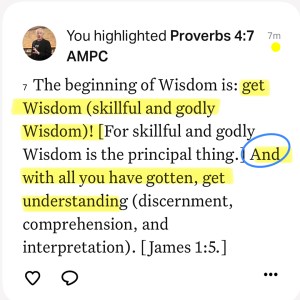

Do you want to lead better?
Yes!
Then ask God for wisdom.
Got it?
Yes!
Good!
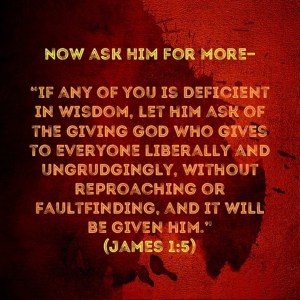
Now ask Him for more—“If any of you is deficient in wisdom, let him ask of the giving God Who gives to everyone liberally and ungrudgingly, without reproaching or faultfinding, and it will be given him.” (James 1:5)
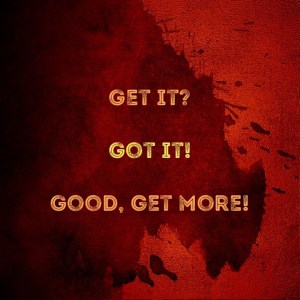
Get it?
Got it.
Good, get more!
Related posts:
Learning From Mistakes
August 7, 2025 — Craig T. OwensListen to the podcast of this post by clicking on the player below, and you can also subscribe on Apple, Spotify, or Audible.
Have you made any mistakes lately? Let’s talk about what we do next on this episode of The Podcast.
The Scriptures I referenced in this video are Psalm 25:4, 8, 10; James 1:5; Jeremiah 33:3.
I also referenced my blog posts Self-Talk During Fearful Times and Refined By Fire.
My book When Sheep Bite is all about recovering after difficulties—whether they were created by your mistakes or someone else’s mistakes. In the Introduction to my book I wrote:
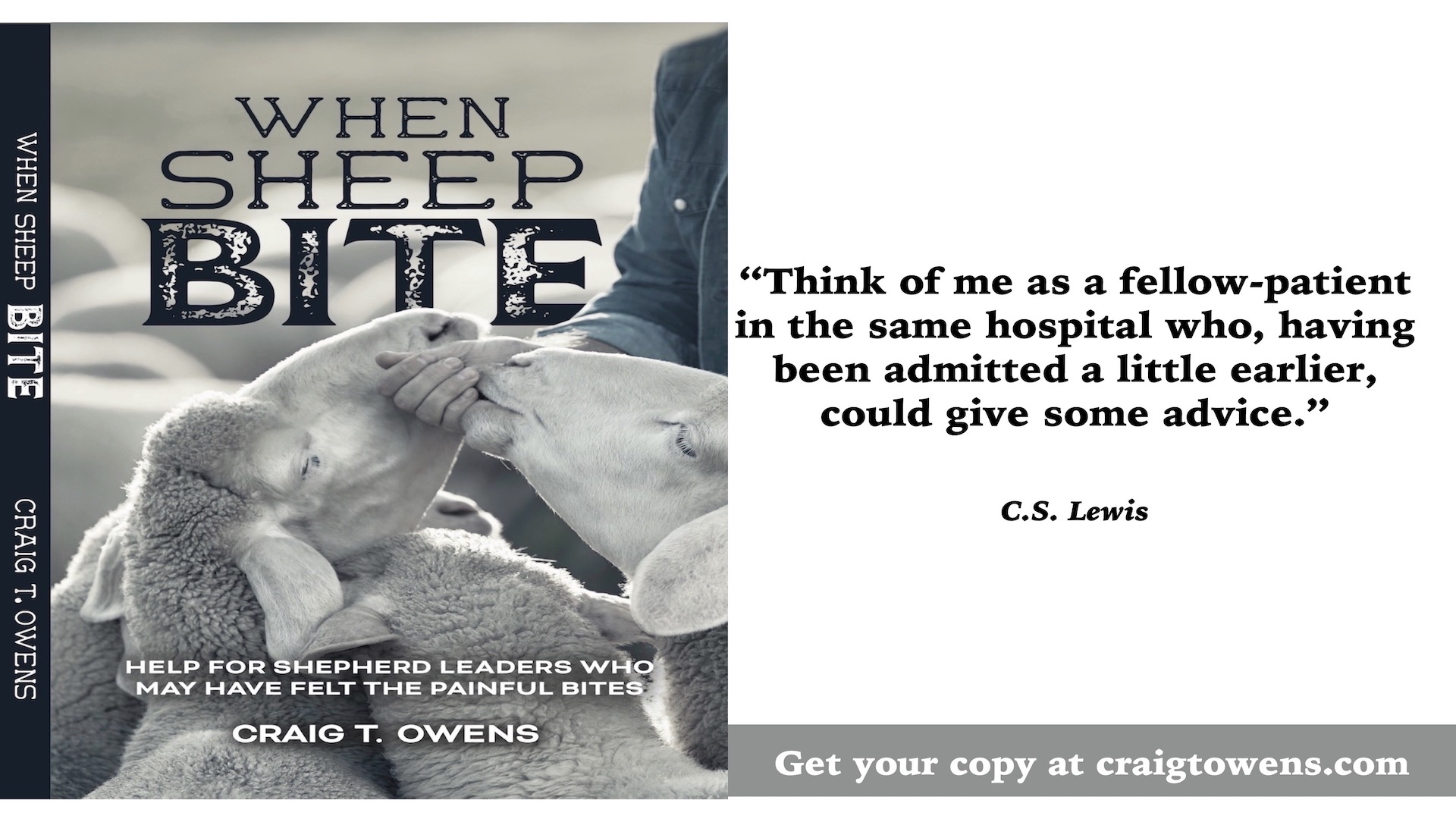 I want to give you what I wanted when this happened to me: empathy, insight, a helpful perspective, and a manual of help that God has provided in the Bible. I don’t want to try to one-up your story of pain, because I’m confident that no one could truly know how deeply you’ve been hurt. But I do want to give you some assurance that I know what I’m talking about. …
Your pain and your circumstances are unique. Your pain is real, and it is incomparable to anyone else’s pain. But the biblical principles that God revealed to me—those things that helped me heal and the thoughts I want to share with you—are applicable for any shepherd. These tried-and-true principles can help you not just survive this pain but thrive in spite of this pain. I would say to you something that C.S. Lewis wrote, “Think of me as a fellow-patient in the same hospital who, having been admitted a little earlier, could give some advice.”
Check out When Sheep Bite for yourself.
►► Would you please prayerfully consider supporting this ministry? My Patreon supporters get behind-the-scenes access to exclusive materials. ◀︎◀︎
My most-viewed posts


 Craig T. Owens