A Leader’s Intercession

As for me, far be it from me that I should sin against the Lord by failing to pray for you (1 Samuel 12:23).

Leaders teach, and encourage, and train, and correct, and sometimes even warn. But despite all of this effort sometimes people still do wrong—and even sinful—things. And sometimes there are consequences for these poor choices that even a leader cannot deflect away from them. 

  • Position-conscious leaders say, “It’s not my fault, and I hope this doesn’t reflect poorly on me!” 
  • Selfish leaders say, “I’m glad I’m not in trouble!” 
  • Vindictive leaders say, “It serves you right!” 

Godly leaders say, “How can I serve you?” 

The Israelites grumbled against God, and God was angry. It would have been understandable if Moses would have said, “You complained so you’re going to have to bear the consequences.” But instead, Moses interceded before God on their behalf (Numbers 11:1-2). 

The people rejected God as their King and chose instead a man named Saul to lead them. Samuel could have said, “You’re in big trouble now!” But instead, he said, “Far be it from me that I should sin against the Lord by failing to pray for you” (1 Samuel 12:23). 

What about you? Have you ever grumbled against God or chosen a path that wasn’t best for you? Jesus could say, “Well, you should have known better!” But instead, we read that He intercedes before God’s throne on our behalf (Job 9:33-34; Hebrews 4:15-16; 7:25). 

The mark of a godly leader is one who intercedes for his people.

If you are a Christ-follower and you are a leader of people, then follow Christ’s example. Yes, continue to teach, encourage, train, correct, and warn. But if people mess up, don’t write them off; instead, intercede before God on their behalf! 

This is part 32 in my series on godly leadership. You can check out all of my posts in this series by clicking here.

Putting CHRIST In Christmas

Does it seem like many people substitute “Happy holidays” for “Merry Christmas”? Or that more and more people prefer spelling it “X-mas” instead of Christmas? 

This isn’t something new in our culture. Francis of Assisi dealt with this same situation in the 12th century. 

“Many people spell Christmas without Christ, the glory of a Holy Day being supplanted by the glitz of a holiday—a problem that reaches back to the days of St. Francis of Assisi. 

“Francis was born in 1182 in central Italy, son of a rich merchant. After a scanty education, he joined the army and was captured in war. He came to Christ shortly after his release, and soon he began traveling around the countryside, preaching the gospel. At a February 1209 Mass, Francis was gripped by words being read from Matthew 10: As you go, preach this message: ‘The kingdom of heaven is near.’ Heal the sick, raise the dead, cleanse those who have leprosy, drive out demons. Freely you have received, freely give. Do not take along any gold or silver or copper in your belts; take no bag for the journey, or extra tunic, or sandals or a staff … (NIV). 

“Francis felt that Christ Himself was speaking directly to him. He decided to obey those words as literally as possible, preaching the kingdom and possessing nothing. It is as though a 1,200-year bridge were crossed, putting Francis in the shoes of the original wayfaring apostles themselves. 

“He spent his remaining days making Christ real to everyone he met—a passion leading to history’s first living nativity scene. On December 24, 1223, Francis found a cave near Greccio, Italy, and brought in animals traditionally associated with the birth of Christ. (Francis loved animals and sometimes even preached to them.) He built the crib, arranged the hay, and finished the scene. Crowds gathered full of curiosity and wonder; and there on Christmas Eve Francis preached the wonder of God made man, born a naked infant and laid in the manger. ‘Behold your God,’ he said, ‘a poor and helpless Child, the ox and donkey beside Him. Your God is of your flesh.’ 

“Glitz gave way to glory that evening as the people of Greccio learned afresh how to spell the word Christmas.” —From On This Day 

This Advent season, let us remember that there is no Christmas without Christ! 

Joining The Angel Choir

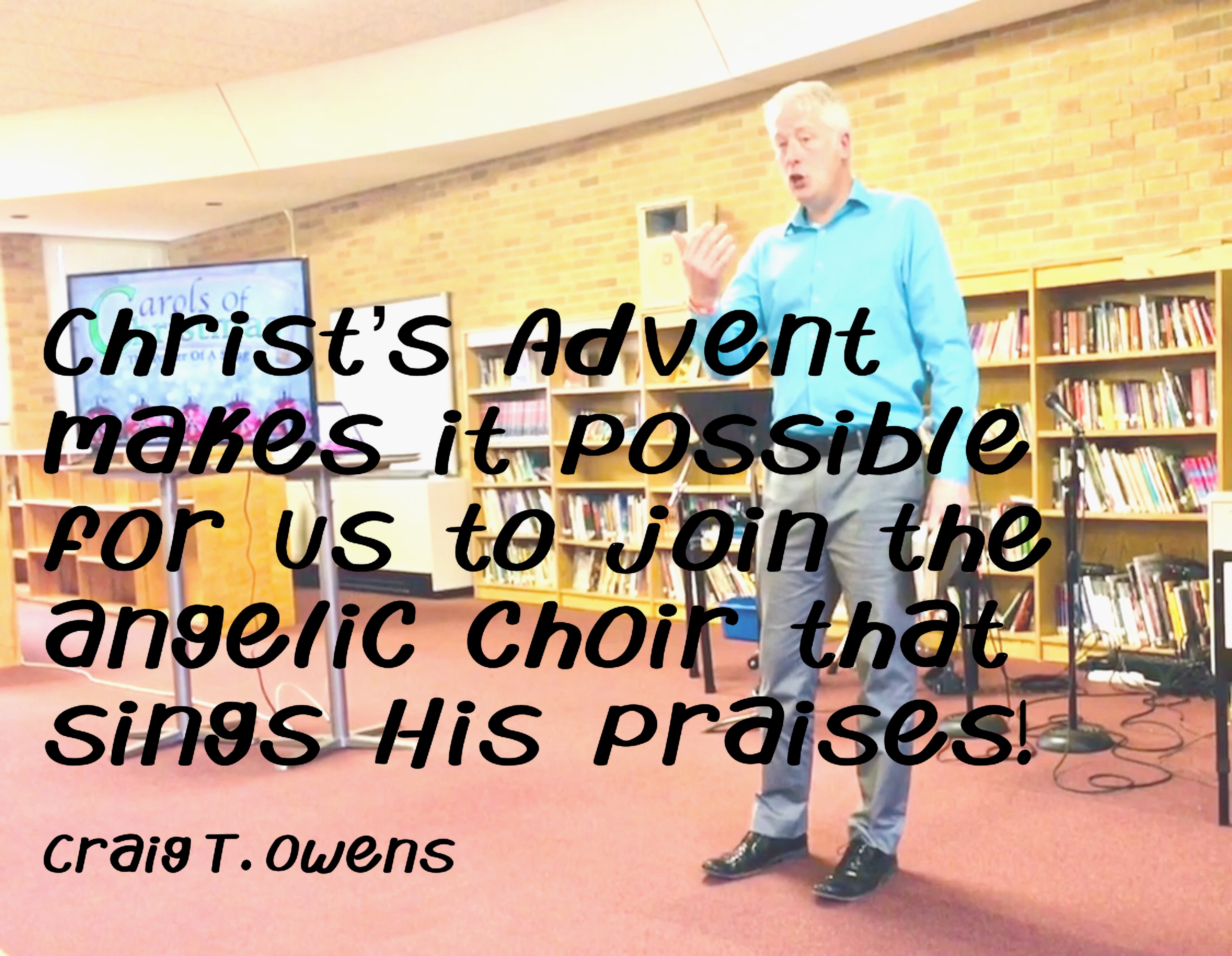
The angels are highly visible around the birth of Jesus Christ in Bethlehem, but here’s the amazing thing—we are invited to join the angelic choir singing praise to Jesus! 

Nowhere else do we see such a concentration of angels as during Christ’s time on earth, and especially at His birth. In the Old Testament prior to Christ’s birth, and in the New Testament following Christ’s ascension, we don’t see as many angels clustered together on Earth— 

  • Gabriel brings a birth announcement to Zechariah 
  • Gabriel brings a birth announcement to Mary
  • an angel talks to Joseph in a dream (three times!) 
  • an angel gives instructions to the wise men in a dream
  • angels minister to Jesus in the wilderness after His battle with the devil 
  • angels are poised for action in case Jesus calls on them prior to His crucifixion
  • angels are present at Christ’s tomb after His resurrection
  • and a massive angel choir sings at Christ’s birth (Luke 2:8-14) 

Charles Wesley wrote a Christmas carol called Hark! The Herald Angels Sing. In the first stanza, we’re invited to “join the triumph in the skies.” But how can someone sing a song grand enough, majestic enough, or worthy enough to honor Almighty God?! That would be like me being asked to compose a song or play something on the piano to honor Mozart—how could I play anything worthy of his musical talent? 

In a similar way, when the Israelites thought about coming into God’s presence, they were gripped with knee-knocking, gut-churning fear (Exodus 19:16-19; 20:18-19)! 

But notice that the angels didn’t sing, “God is born in Bethlehem.” They sang, “Christ is born in Bethlehem.” Christ: the Messiah; the One who sets things right. No wonder this is such good news of great joy that brings peace and God’s favor (Luke 2:10, 14). 

The simple fact is that we couldn’t approach God and join in their angelic song. Instead, Jesus approached us as our Messiah, our Deliverer. How could this happen? Wesley’s carol reminds us that Jesus came so that God and sinners are reconciled! 

The First Advent is God approaching us. If we allow Jesus to reconcile us to our Holy Heavenly Father, then we have no fear of Christ’s Second Advent. His Second Advent will be attended to by angels just like His First Advent (Matthew 25:31-32; Mark 8:38; Jude 1:14-15). Those who haven’t had their sins forgiven will hear a song that is soul-crushing to them, while those who have accepted the reconciling work of Jesus will join with the angelic host in a victorious song bringing glory to God forever and ever (Revelation 14:9-11; 15:1-4). 

We don’t have to wait until we get to Heaven to join the triumph of the skies. We can join the angelic choir right now in singing our praise to God today. And every day! 

To take a look at the other stanzas of this Christmas carol, please click here.

Poetry Saturday—Smiles

Smile a little, smile a little, 
    As you go along, 
Not alone when life is pleasant, 
    But when things go wrong. 
Care delights to see you frowning, 
    Loves to hear you sigh; 
Turn a smiling face upon her, 
    Quick the dame will fly.

Smile a little, smile a little, 
    All along the road; 
Every life must have its burden, 
    Every heart its load. 
Why sit down in gloom and darkness, 
    With your grief to sup? 
As you drink Fate’s bitter tonic 
    Smile across the cup.

Smile upon the troubled pilgrims 
    Whom you pass and meet; 
Frowns are thorns, and smiles are blossoms 
    Oft for weary feet. 
Do not make the way seem harder 
    By a sullen face, 
Smile a little, smile a little, 
    Brighten up the place.

Smile upon your undone labor; 
    Not for one who grieves 
O’er his task, waits wealth or glory; 
    He who smiles achieves. 
Though you meet with loss and sorrow 
    In the passing years, 
Smile a little, smile a little, 
    Even through your tears. —Ella Wheeler Wilcox

Thursdays With Oswald—Standing Pure Against The Onslaught Of Lust

Oswald ChambersThis is a weekly series with things I’m reading and pondering from Oswald Chambers. You can read the original seed thought here, or type “Thursdays With Oswald” in the search box to read more entries.

Standing Pure Against The Onslaught Of Lust

     God does not give a man a new body when he is saved: his body is the same, but he is given a new disposition. God alters the mainspring; He puts love in the place of lust. What is lust? The impatience of desire—I must have it at once. Love can wait seven years; lust cannot wait two seconds. …  

     A disciple has to be free from the degradation of lust, and the marvel of the Redemption is that Jesus Christ can free him from it. … 

     You have heard that it was said, “Do not commit adultery.” But I tell you that anyone who looks at a woman lustfully has already committed adultery with her in his heart. If your right eye causes you to sin, gouge it out and throw it away. It is better for you to lose one part of your body than for your whole body to be thrown into hell. And if your right hand causes you to sin, cut it off and throw it away. It is better for you to lose one part of your body than for your whole body to go into hell [Matthew 5:27-30].

     What does that mean? It means absolute unflinching sternness in dealing with the right things in yourself that are not the best. “The good is the enemy of the best” in every man, not the bad, but the good that is not good enough. Your right hand is not a bad thing, it is one of the best things you have, but Jesus says if it offends you in developing your spiritual life, and it hinders you in following His precepts, cut it off and cast it from you. Jesus Christ spoke rugged truth, He was never ambiguous, and He says it is better to be maimed and damned, better to enter into life lame in man’s sight and lovely in God’s than to be lovely in man’s sight and lame in God’s. …  

     In the beginning of the Holy Spirit will check us in doing a great many things that may be perfectly right for everyone else but not right for us. No one can decide for another what is to be cut off, and we have no right to use our present limitations to criticize others. Jesus says we must be prepared to be limited fools in the sight of others, in order to further our spiritual character. If we are unwilling to give up the wrong things only for Jesus, never let us talk about being in love with Him.

From Studies In The Sermon On The Mount

God’s love is stronger than flesh’s lust. The real question is—Are you willing to obey the Holy Spirit Who tells you what things need to be gouged out or cut out of your life in order to defeat lust? 

Don’t make excuses. Don’t compare yourself to others. Don’t delay in obeying. Lust can—and must!—be defeated in the life of a Christian. How true that it is “better to enter into life lame in man’s sight and lovely in God’s than to be lovely in man’s sight and lame in God’s”! 

The Carols Of Christmas

Carols Of ChristmasI heard the bells on Christmas Day
Their old familiar carols play,
And wild and sweet the words repeat
Of peace on earth, goodwill to men. (Henry Wadsworth Longfellow)

How many “old familiar carols” have you heard Christmas after Christmas until the words have almost lost their meaning? If we’re not careful, any song repeated too often can lose the richness of its original intent.

There are some amazing messages in many of our old familiar Christmas carols because many of those messages are saturated with the old familiar story of Redemption that the Bible tells over and over again.

Please join me this Sunday as we take a new look at the old familiar messages in our Christmas carols. These messages will bring a new appreciation of God’s love that was sung at Christ’s Advent, and reawaken the sweetness of meaning for this Christmas Day.

This has been an ongoing series for us. To take a look at the Christmas carols we’ve already talked about, check them out here, here, here, and here. We have only looked at one Christmas carol this year, but we looked at each stanza:

11 Quotes On The Gospel Of Mark

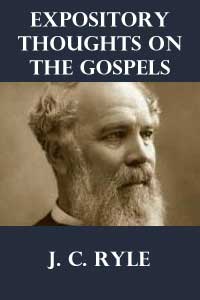
Alongside my daily Bible study time in the Gospels of the New Testament, I have been reading J.C. Ryle’s Expository Thoughts On The Gospels. You can check out my review of this book by clicking here. 

These are a few of the quotes I especially appreciated from Ryle’s comments on the Gospel of Mark. 

“We should always read the Old Testament with the desire to find something in it about Jesus Christ.” [cf John 5:39] 

“It will always be found that when prayers are few, grace, strength, peace, and hope are small. We shall do well to watch our habits of prayer with a holy watchfulness. Here is the pulse of our Christianity. Here is the true test of our state before God. Here true religion begins in the soul, when it does begin. Here it decays and goes backward, when a man backslides from God. Let us walk in the steps of our blessed Master in this respect as well as in every other. Like Him, let us be diligent in our private devotion. Let us know what it is to ‘depart into solitary places and pray.’” 

“What extravagant importance is attached to trifles by those who are mere formalists in religion!” 

“Christ’s service does not exempt His servants from storms.” 

“The assaults of persecution from without have never done half so much harm to the church as the rise of false doctrines within. False prophets and false teachers within the camp have done far more mischief in Christendom than all the bloody persecutions of the emperors of Rome. The sword of the foe has never done such damage to the cause of truth as the tongue and the pen.” 

“Incredible is the bondage in which men live to the opinion of the world! Let us all pray daily for faith and courage to confess Christ before men. … In spite of laughter, mockery, and hard words, let us boldly avow that we serve Christ.” 

“It is a dreadful fact, whether we like to allow it or not, that pride is one of the commonest sins which beset human nature. We are all born Pharisees. We all naturally think far better of ourselves than we ought. We all naturally imagine that we deserve something better than we have. It is an old sin. It began in the garden of Eden, when Adam and Eve thought they had not got everything that their merits deserved. It is a subtle sin. It rules and rains in many a heart without being detected, and can even wear the garb of humility. It is a most soul-ruining sin. It prevents repentance, keeps men back from Christ, checks brotherly love, and nips in the bud spiritual desires. Let us watch against it, and be on our guard. Of all garments, none is so graceful, none wears so well, and none is so rare as true humility.” 

“It is not so much the having money, as the trusting in it, which ruins the soul. Let us pray for contentment with such things as we have.” 

“Above all, let all who desire to walk in Christ’s steps labor to be useful to others. … Let them never forget that true greatness does not consist in being an admiral, or a general, a statesman, or an artist. It consists in devoting ourselves, body, and soul, and spirit to the blessed work of making our fellow man more holy and more happy. … Let us strive to leave the world better, holier, happier than it was when we were born.” 

“The dark ages of Christendom were times when the Bible was kept back from the people. The Protestant Reformation was mainly effected by translating and circulating the Bible. The churches which are most flourishing at this day are churches which honor the Bible. The nations which enjoy the most moral light are nations in which the Bible is most known. … The godliest families are Bible-reading families. The holiest men and women are Bible-reading people.” 

“Let us remember that for our sakes Jesus voluntarily endured the most painful, horrible, and disgraceful death. Surely the thought of this love should constrain us daily to live not unto ourselves but unto Christ.” 

You can read the quotes I shared from Ryle’s thoughts on the Gospel of Matthew by clicking here. 

Returning Home

And Abram went on his journey from the south as far as Bethel, to the place where his tent had been at the beginning … to the place of the altar which he had made there at first. And there Abram called on the name of the Lord (Genesis 13:3, 4).

While he was in Egypt, Abram pitched no tents nor did he set up any altar of worship. In fact, it was probably unwise of him to go to Egypt in the first place, as there is no record of God telling him to do so. While he was sojourning there, Abram also perpetrated a lie as an attempt to protect himself.

Whenever we take an unwise detour—and then realize it—part of repentance is to return to where we know we previously had met with God. Abram returned it to the place where he had first set up his tents, and worshipped God once again at the altar he had built at first. There he once again “called on the name of the Lord.”

It was from this place (not from Egypt) that God could say to Abram, “Arise, and walk in the land through its length and width, for I give it to you” (v. 17). “THEN” (v. 18)—and only then—was it safe for Abram to move his tents and set up a new altar of worship. 

Prayer—Father, I am sure I have strayed into an Egypt before, sojourning where my wits—and not Your voice—have led me. Thank You, Lord, for protecting me there, and for allowing me to “return home” to the place You intended for me, to the place where Your blessings flow. May I not move forward again unless You direct me. In Jesus name, Amen.

12 Huge Mistakes Parents Can Avoid (YouVersion reading plan review)

Tim Elmore has fantastic insights for those who work with today’s youth. Whether you are a parent, a teacher, a youth pastor, or a coach, you are always guaranteed some great content when you study what Dr. Elmore presents. 

YouVersion has a reading plan based on Tim Elmore’s book 12 Huge Mistakes Parents Can Avoid. The reading plan has three advantages over the book—(1) Daily Scripture readings which augment the material covered each day; (2) A video message from Dr. Elmore explaining how we can avoid these mistakes; and (3) A place to have an honest dialogue with another parent/coach/teacher, if you are doing this reading plan as a shared plan. 

There is also one huge advantage the book has over the reading plan—lots more content, including warning signs, and ideas for recovering from past mistakes. 

So the real winning combination is not either-or, but both-and. You should both read the book (you can check out my review by clicking here) and do the YouVersion reading plan along with another adult or two (or three or four…). 

Don’t get blindsided by these 12 mistakes. After all, they are all avoidable and correctable! 

(You can also check out some quotes I shared from the book by clicking here.)

Reversing The Distress Cycle

God wants you to live in a place where your heart has unshakable security and tranquility. The Hebrew word is shalom, and the Bible gives us a “Shalom Cycle” that keeps us centered and grounded in God’s peace. 

But the Shalom Cycle begins to break down when…

  • …gratitude is replaced by grumbling 
  • …trust in God’s future grace is replaced by unbelief
  • …taking our worries to God is replaced by self-reliance

Anxiety causes our mind to race through all sorts of “what if” scenarios. My friend Josh Schram points out, “There are no benefits at all to having anxieties!” 

The disciples of Jesus were in an anxiety-producing situation—they were in a boat going through stormy seas. Jesus was in the boat with them, but He was sound asleep. Instead of going to Jesus with their worries, the disciples tried to get themselves out of the situation. As they did, the “what ifs” began to mount. 

What if the boat sinks … What if we get smashed on the rocks … What if not everyone can swim … What if (gasp!) Jesus doesn’t make it out alive … What if … What if… WHAT IF?!?

Until finally they screamed at Jesus, “Don’t You even care?!” 

Sadly, their last thought was to go to Jesus, instead of making Him their first thought. 

But Jesus cared more than they knew. Years later, Peter—who was in this storm-tossed boat—wrote, “Casting all your cares—all your anxieties, all your worries, and all your concerns, once and for all—on Him, for He cares about you with deepest affection, and watches over you very carefully (1 Peter 5:7). 

Not—only your big concerns. 

Not—most of your concerns. 

But—ALL of your concerns; every single thing that robs you of even a moment’s peace. 

“Jesus, do You even care?” And Jesus responds with a loving, resounding, “YES! I care about every single thing that causes you anxiety, and worry, and care. Give them all to Me!” 

Paul wrote, “Don’t worry about anything; instead, pray about everything. Tell God what you need, and thank Him for all he has done” (Philippians 4:6). 

If we allow the Shalom Cycle to break down, the inevitable result in the exact opposite: The Distress Cycle


The arrows are going the wrong way, and we’re being pulled farther and farther down. We need an about-face, a 180-degree-turn, a new direction. The Bible has a word for this: repentance. Instead of the wrong direction, turn around and go the right direction: 

  • Instead of anxiety—prayer
  • Instead of worry—worship
  • Instead of tests—testimonies 

“Jesus is more concerned about changing our hearts than about changing our circumstances. He uses our circumstances to change our hearts, IF we will trust Him.” —Josh Schram