


 “I saw more clearly than ever, that the first great and primary business to which I ought to attend every day was, to have my soul happy in the Lord. The first thing to be concerned about was not, how much I might serve the Lord, how I might glorify the Lord; but how I might get my soul into a happy state, and how my inner man may be nourished…. I saw that the most important thing I had to do was to give myself to the reading of the Word of God and to meditation on it. The first thing I did, after having asked in a few words for the Lord’s blessing upon His precious Word, was to begin to meditate on the Word of God, searching, as it were, into every verse to get blessing out of it; not for the sake of the public ministry of the Word, not for the sake of preaching on what I had meditated on, but for the sake of obtaining food for my own soul. … So that, though I did not, as it were, give myself to prayer, but to meditation, yet it turned almost immediately more or less into prayer.” —George Mueller, in his Autobiography (emphasis mine)
George Mueller On Meditation
February 19, 2020 — Craig T. OwensWhose Fight Is It?
February 19, 2020 — Craig T. OwensIn great fear and distress Jacob divided the people who were with him into two groups… (Genesis 32:7).
 Jacob’s brother Esau is approaching with 400 men!
Esau is the man who sold his birthright to Jacob, and then had his father’s blessing swindled away from him by Jacob. And now he is rapidly approaching Jacob and his entourage.
Jacob’s natural response is, well, natural: great fear and distress grip his heart (v. 7). In his agitated state of mind “he thought” of a strategy to try to appease his brother and save as many of his family members and possessions as he could.
And then another strategy popped into Jacob’s agitated mind: Then he prayed (v. 9). He concocted his own plans first and then he prayed. Prayer should have been his first response, but at least he finally did get around to praying!
In his prayer, Jacob twice reminds God, “You said” (vv. 9, 12), and in-between those reminders he confesses to Him, “I am afraid” (v. 11).
As he speaks to God, reminds God of His promises, and confesses his own heart-quaking, knee-knocking fear, God says: [crickets chirping in the warm evening].
God is silent.
So Jacob returns to his own strategizing—once again we read “for he thought” (v.20)—until he is utterly out of options. All he can do now is wrestle with God (vv. 22-30). All out of his own options, Jacob now tenaciously clings to God and will not let Him go!
In the Hebrew language, the name Jacob means a man who struggles, thinks, and strategizes using his own abilities*.
After finally submitting to God, Jacob’s name is changed to Israel**. Now Israel lets God do the strategizing and the fighting. Jacob tried to figure things out on his own; Israel lets God’s plan prevail. When Israel bought his first plot of ground after his name had been changed, he built an altar there and named it El Elohe Israel—The Almighty God is my God (33:20).
Israel now says, “I’m done striving with men on my own. I’m done fighting people and trying to figure out how to make things happen for me. From now on I will only wrestle with God, and I’ll let Him fight the battles for me!”
How often do I strategize on my own first, and only after I have run out of options do I run to God in prayer? This is a Jacob spirit in me! I don’t want to live this way. I want to be like Israel—clinging to God as my first and only Source of help.
How about you?
* In the Faithlife Illustrated Study Bible, there is an interesting note on Jacob’s name. For instance, when Esau says, “Isn’t he rightly named Jacob?” (Genesis 27:36), the FSB editors offer this commentary: “Esau uses the Hebrew word ‘aqab here, which is a wordplay on Jacob’s name in Hebrew, ya-aqov. … Esau suggests that Jacob’s name actually has to do with him being a person who supplants or cheats other people.”
** Your name will no longer be Jacob, but Israel (Genesis 32:28). The FSB commentary points out, “Jacob’s name must be changed due to its association with his misdeeds. Here, the reasoning for the name Israel (yisra’el in Hebrew) is the verbal phrase ‘you have striven with (or struggled with) God.’ This suggests the name derives from the Hebrew verb sarah, meaning ‘to struggle,’ ‘to strive’ or ‘to fight.’ The name yisra’el itself could mean ‘God will struggle,’ ‘May God struggle’ or ‘God fights’….”
As You Wish (book review)
February 18, 2020 — Craig T. Owens I was visiting in my wife’s 3rd-grade classroom and I was asked by her class what my favorite movie was. Without hesitating, I said, “The Princess Bride.” Not surprisingly, several of these young children knew this movie! For a movie that is over 30 years old, that would meet the definition of a “classic movie.” Cary Elwes famously portrays a pivotal character—the man in black—in this wonderful movie, so he is the perfect person to give us a behind-the-scenes tour of this film in his book As You Wish.
I chose to get the audiobook version, and I’m so glad I did. This is a delightful remembrance of how this movie came to the big screen, but hearing Cary reading these remembrances in his own voice (and sometimes hearing him impersonate some of the people he is quoting) was an added dimension that I had not expected. In addition to Cary’s voice, you will also be treated to the voices of Princess Buttercup, Count Rugen, Prince Humperdinck, Miracle Max and his wife Valerie, and Vezzini, as well as director Rob Reiner and producer Andy Scheinman.
In As You Wish, you will hear about the cast selection, the struggles of getting a studio to agree to make this movie, the lengthy training that went into the amazing sword duel between Westley and Inigo, the injuries, the ad-libs, the faux pas, and so much more!
Whether you have seen this movie or not, As You Wish is an excellent primer before watching this movie (again)!
The Need For Confession
February 17, 2020 — Craig T. Owens Jesus taught us to pray to OUR Father. This speaks of community and accountability. Ken Blanchard noted: “Accountability means: We owe each other for something we’ve agreed upon.” What have the saints of God agreed upon? That God is our Father, that Jesus is His Son and our Brother, and that the Holy Spirit is our Helper. We’ve agreed that if we are brothers and sisters in God’s family, we are mutually accountable to one another.
The part of accountability that some people don’t like is the realization that I make mistakes: I let people down; I sin. In a community of saints, my shortfall not only affects me but the rest of the community too. But there is a remedy—The remedy for my sin starts with my confession of my sin.
If people like David, Isaiah, Daniel, Nehemiah, and Paul confessed their sin and called themselves sinners, what makes me think that I’m exempt from that diagnosis or that cure?!
Confession is an owning of my sin. It’s saying to God, “I have sinned. I need forgiveness. I will repent of this. I need Your mercy.” And it’s saying to my fellow saints, “I need your help so I don’t have to repeat this sin.”
Unconfessed sin is life-draining (Psalm 32:1-5). The word confess in the Old Testament Hebrew means to “throw out your hand.” Expose it all! In the New Testament Greek confess means to acknowledge that my life does not measure up to God’s standard.
Confession may start in my personal prayer closet, but it needs to move to the public domain of the community of saints. Jesus made it plural, “Forgive US OUR debts, as WE have forgiven OUR debtors.”
Sometimes I cannot see my own debts that need to be forgiven (Psalm 19:12), so I need the conviction of the Holy Spirit and the loving confrontation of someone who loves me (Psalm 139:23-24; Proverbs 27:6, 2 Samuel 12:1-13).
The apostle James helps us see how a loving community brings healing, deliverance, and restoration. The key components that James lists are prayer and confession (James 5:13-16).
Dietrich Bonhoeffer echoed James when he wrote, “A man who confesses his sins in the presence of a brother knows that he is no longer alone with himself; he experiences the presence of God in the reality of the other person. As long as I am by myself in the confession of my sins everything remains in the dark, but in the presence of a brother the sin has to be brought into the light.”
Confession may be the most under-used resource for Christians to gain power in prayer and victory over falling into temptation!
Let’s continually make use of this wonderfully freeing discipline.
Poetry Saturday—How Good Is The God We Adore
February 15, 2020 — Craig T. Owens How good is the God we adore!
Thursdays With Spurgeon—All The Trinity In Salvation
February 13, 2020 — Craig T. Owens This is a weekly series with things I’m reading and pondering from Charles Spurgeon. You can read the original seed thought here, or type “Thursdays With Spurgeon” in the search box to read more entries.
All The Trinity In Salvation
We are, alas, too apt to forget that while there are distinctions as to the persons in the Trinity, there are no distinctions of honor—and we do frequently ascribe the honor of our salvation, or at least the depths of its mercy and the extremity of its benevolence, more to Jesus Christ than we do to the Father. This is a very great mistake.
What if Jesus came? Did not His Father send Him? If He were made a Child, did not the Holy Spirit beget Him? If He spoke wondrously, did not His Father pour grace into His lips that He might be an able minister of the new covenant? If His Father did forsake Him when He drank the bigger cup of gall, did He not love Him still? And did He not, by and by, after three days, raise Him from the dead and at last receive Him up on high, leading captivity captive?
Ah, beloved, he who knows the Father, the Son, and the Holy Spirit as he should know them never sets one before another. He is not more thankful to one than the other; he sees them at Bethlehem, at Gethsemane, and on Calvary all equally engaged in the work of salvation.
From The Incarnation And Birth Of Christ
All of the Godhead is involved in our salvation. God doesn’t separate Himself—He is One.
God the Father planned our salvation and sent His Son (Micah 5:2; Matthew 10:40; Ephesians 1:4-5).
God the Son proclaimed the Father’s good news and purchased our salvation (Mark 10:45; John 3:17; Ephesians 1:9-10).
God the Holy Spirit seals and confirms our salvation (Galatians 4:4-6; Ephesians 1:13-14).
We come to the Father, through the Son, by the drawing of the Spirit. We need the full Trinity to bring us fully into His presence forever and ever!
Earthly Pursuits Can Inhibit Prayer
February 12, 2020 — Craig T. Owens “To pray for ‘things’ without a heavenly end in mind is close to idolatry. Use your material wealth with holy fear, dear saint, lest earth should rob heaven, and your temporal enjoyments endanger your heavenly interests. …
“Sometimes God lavishes us with things, not so we can hang on to them, but so we will have something to let go of to show our love for Him. … What enterprise will pay more lasting dividends than to invest what you possess in the cause of Christ? … You cannot labor for heavenly possessions if your hands and heart are loaded down with earthly pursuits.” —William Gurnall, The Christian In Complete Armour (emphasis added)
What’s In A Name?
February 12, 2020 — Craig T. OwensLeah became pregnant and gave birth to a son… (Genesis 29:32).
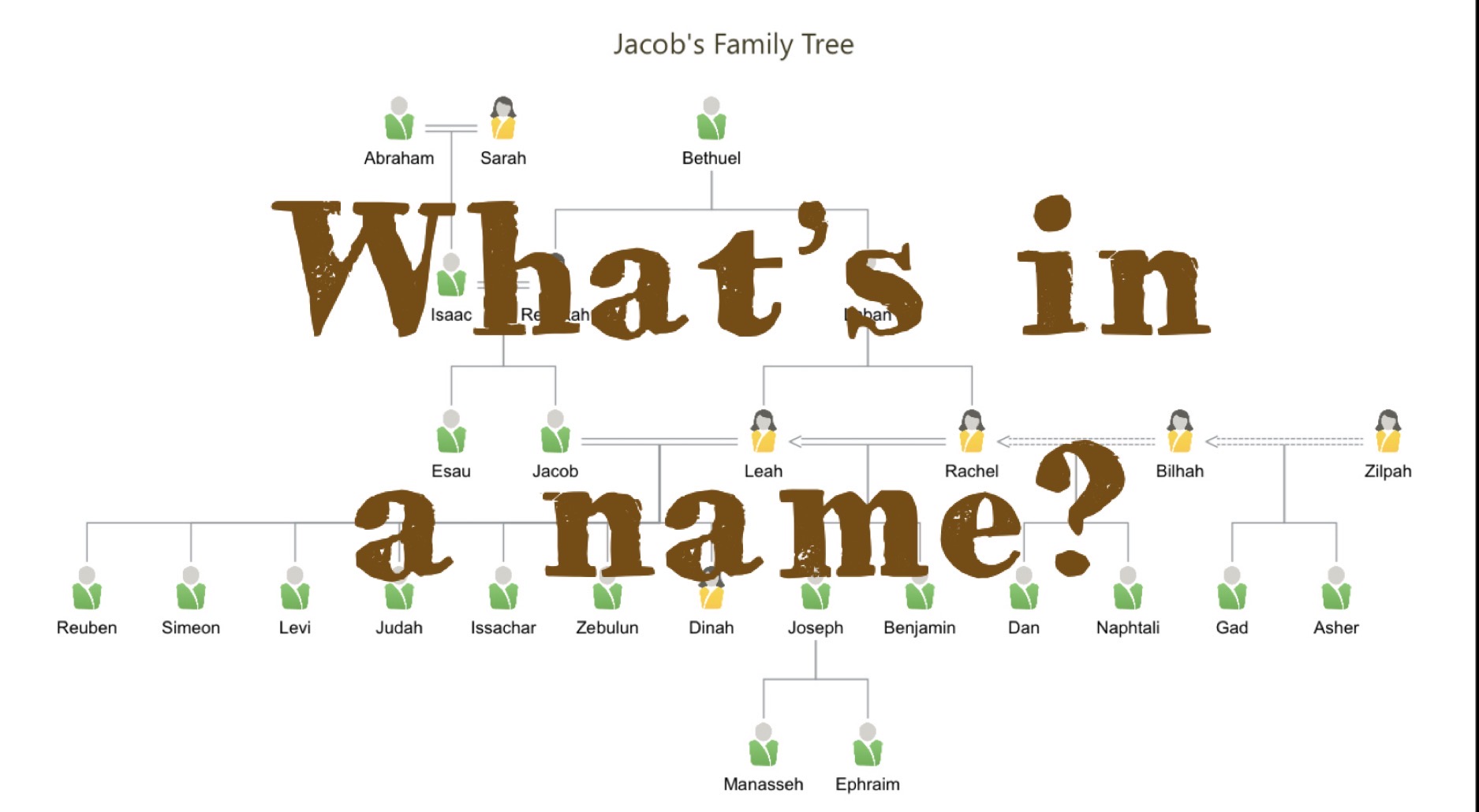 Jesus said that ALL the Scripture pointed to Him (John 5:39). That means even the various names of people in the Scripture give us some insight into the nature of Jesus.
Consider Jacob and his sons, who become the fathers of the tribes of the nation of Israel. Jacob the deceiver is transformed into Israel the guileless, and the names of his sons point to what Jesus does to transform all of us into His righteous brothers and sisters.
[Check out the links posted below to read all the Scripture references.]
Reuben—God sees my misery and sends His Son (Genesis 29:32; John 3:16).
Simeon—God sent His Son when I was unlovable (Genesis 29:33; Romans 5:6-8).
Levi—after I am saved from my sins, I am joined to God (Genesis 29:34; Ephesians 2:1-5).
Judah—my salvation brings praise to God (Genesis 29:35; John 15:8).
Dan—God has vindicated me in Jesus (Genesis 30:6; John 8:11).
Naphtali—Christ’s righteousness has given me victory over my struggles (Genesis 30:8; Romans 8:1; 1 Corinthians 15:54-56).
Gad—God’s favor now advances toward me like an unstoppable troop (Genesis 30:11; Romans 8:31-39).
Asher—I am now able to enjoy God’s happiness (Genesis 30:13; Matthew 25:21, 34).
Issachar—God IS my reward (Genesis 30:18; Revelation 3:20-21).
Zebulun—my Husband (Jesus) honors me (Genesis 30:20; Ephesians 5:22-23; Hebrews 2:11).
Joseph—God has taken away my disgrace and added His blessing (Genesis 30:24; Romans 8:1, 32).
Manasseh—God has made me forget my past (Genesis 41:51; Psalm 103:12).
Ephraim—God has made me abundantly fruitful (Genesis 41:52; 1 Peter 2:9-10).
Benjamin—I am God’s son (Genesis 35:18; Ephesians 2:6)!
God has done ALL this—and more!—through Jesus!
When you read the Bible, don’t rush through it. Slow down. Meditate on it. Soak in it. And then see how the Holy Spirit will illuminate truth to you.
[Please check out the Bible references I’ve listed above for yourself. All of the Genesis references are here, and all of the other references are here.]
God Keeps His Word
February 11, 2020 — Craig T. Owens…as He had said… (Genesis 21:1-7).
 This thought—and even the phrase itself—permeates the Bible. From the very beginning of Time itself, whatever God says—happens!
His word is His bond: What He had promised (v. 1b). There are no loopholes, no equivocations. When God says it, it is signed, sealed, delivered!
When is His word accomplished? From the moment He says it. His word cannot be altered nor delayed. We simply wait for its fulfillment: At the very time God had promised (v. 2).
This also means that I must obey what God says. If His word is immutable, my faith and obedience must be just as steadfast. Just like Abraham: Abraham circumcised him, as God commanded him (v. 4).
Jesus said that the Holy Spirit would help remind us of everything God has said. The same Word that tells us God’s promises is also the same Word that sparks the faith to believe His Word (Romans 10:17).
A Praying Family
February 10, 2020 — Craig T. Owens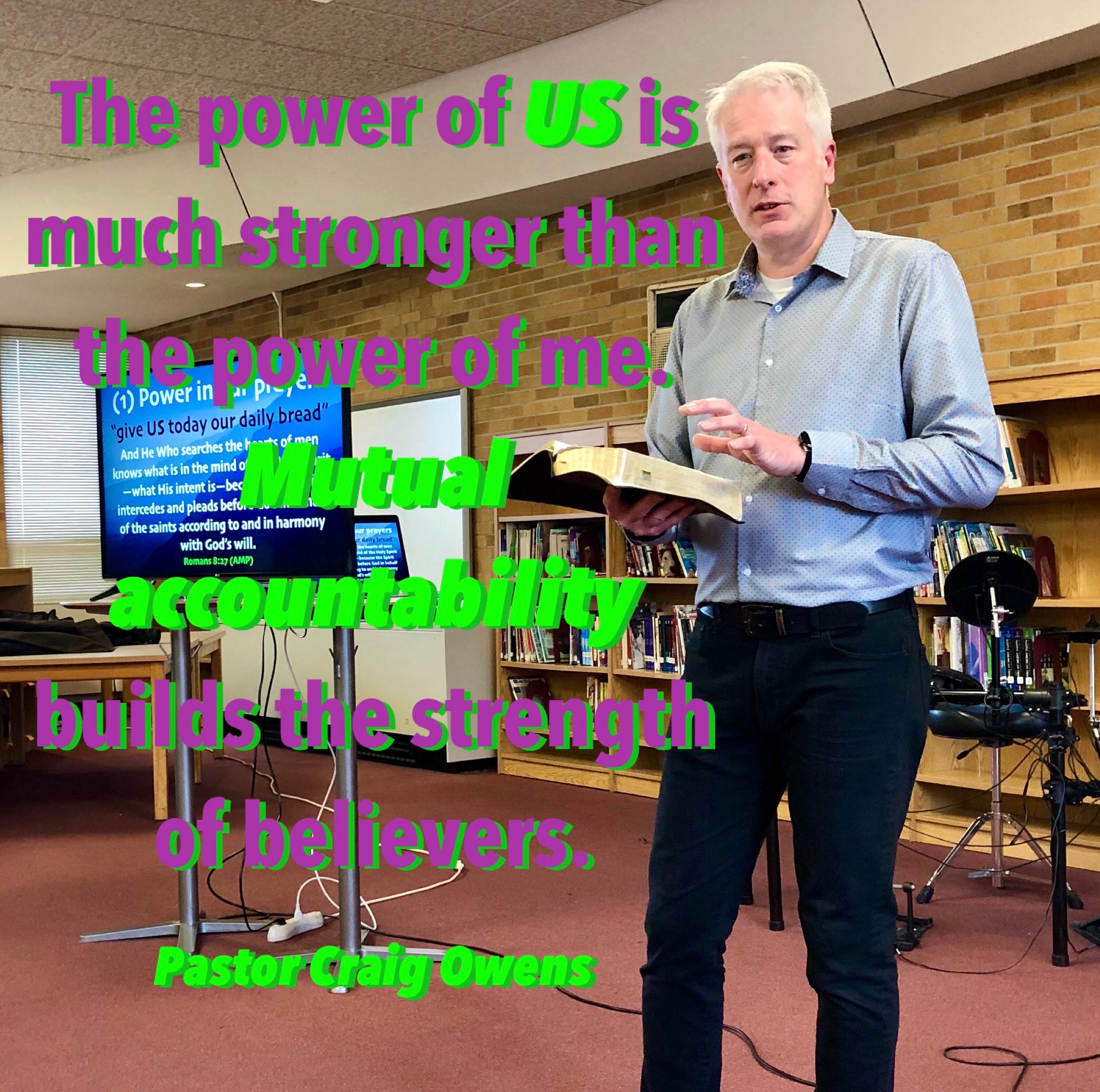 Not one word in Scripture is wasted: not one word is redundant or replaceable. When Jesus taught us to pray to a Heavenly Father, He taught us to say, “OUR Father.” That means we are all His children, with His Holy Spirit helping us to grasp this—The Spirit Himself testifies with our spirit that WE are God’s children. Now if WE are children, then WE are heirs—heirs of God and co-heirs with Christ… (Romans 8:16-17).
Did you know that the word saints never appears in the singular in Scripture? No one person is singled out for his or her saintliness. Because we are saintS, praying together to OUR Father, this means accountability. For some people, accountability is a bad word. It seems to them to feel like someone is looking over their shoulder or checking up on them. But Christians should never feel this way! I like how Ken Blanchard defines this: “Accountability means: We owe each other for something we’ve agreed upon.”
What have the saints of God agreed upon? That God is our Father, that Jesus is His Son and our Brother, and that the Holy Spirit is our Helper. We’ve agreed that if we are brothers and sisters in God’s family, we are mutually accountable to one another.
In the context of the prayer Jesus taught us to pray, being mutually accountable means:
- Power in our prayers—give US today our daily bread. Jesus talks about the power in agreement, and the apostle Paul emphasizes how the Holy Spirit helps believers harmonize in prayer with each other and with God’s will (Matthew 18:19-20; Romans 8:27).
- Strengthening of our character—forgive US our debts, as WE also have forgiven our debtors. Jack Hayford points out that, “The believer’s best defense against self-deception is through mutual accountability to one another.” In order for our character to be strengthened, we have to allow others to speak into our lives—even the lovingly painful words (Proverbs 27:17, 6).
- Protection from falling to temptation—lead US not into temptation, but deliver US from the evil one. Samson became entangled with a prostitute when he was all by himself; Elijah became depressed when he sent his servant away; David fell into sin when he was alone; Peter denied Christ when all of the other disciples had run away. That’s why the writer of Hebrews counsels us to stick close to our Christian family members (Hebrews 10:21-25).
In an earlier post, I noted that how we view God is going to determine what we pray and what we expect after we pray. Coming together and praying together will help us see God better. Just as the angels around the throne are always crying out to each other “Holy! Holy! Holy!”, when we come together we can show our fellow saints what we’ve learned about our holy Father’s love and power. This is both an encouragement to others and allows others to be an encouragement to us too. Then together we can pray more boldly and expect great things in response to our prayer.
Being mutually accountable to the saints in prayer…
-
… hallows God as our Father
-
… glorifies Jesus as our Brother
-
… honors the Spirit as our Helper
God never intended that you would have to walk through life alone. He wants us to share the journey with fellow saints—His family made up of our brothers and sisters. This praying family truly honors God’s name!
Join me on Sunday as we continue to learn more about prayer.
My most-viewed posts


 Craig T. Owens