This is a weekly series with things I’m reading and pondering from Charles Spurgeon. You can read the original seed thought here, or type “Thursdays With Spurgeon” in the search box to read more entries.
Turn The Scriptures Into Your Cries
‘My God, My God, why have You forsaken Me?’ … This cry is taken from ‘the Book.’ Does it not show our Lord’s love of the sacred Volume, that when He felt His sharpest grief, He turned to the Scripture to find a fit utterance for it? Here we have the opening sentence of the twenty-second Psalm. Oh, that we may so love the inspired Word that we may not only sing to its score but even weep to its music! …
When you are delirious with pain, think of your Bible. When your mind wonders, let it roam toward the mercy seat. And when your heart and your flesh fail, still live by faith and still cry, ‘My God, my God.’ …
Grief has small regard for the laws of the grammarian. Even the holiest, when in extreme agony, though they cannot speak otherwise than according to purity and truth, yet use a language of their own that only the ear of sympathy can fully receive.
From My God, My God Why Have You Forsaken Me?
Grief is a time to get real. As Spurgeon said, “Grief has small regard for the laws of the grammarian.” Grief is not a time to carefully choose our words.
Get real with God in your prayer closet. Tell Him everything that frustrates you. I promise you, God is not going to fall off His throne and say, “What?! I had no idea you felt that way!” He already knows what’s in your heart, but it will do you much good to get it out. Much like someone with food poisoning needs to vomit out the poison, God will not be offended when you vomit out your “My God, my God, why have You forsaken me?” in His presence.
Many scholars believe that Jesus probably sang the entirety of the 22nd Psalm from the Cross. Whether He did or not, listen to the assurances that Jesus had from just this psalm alone, even in the midst of His heart-wrenching cry—
My God, my God, why have You forsaken me? Why are You so far from saving me, so far from my cries of anguish? My God, I cry out by day, but You do not answer, by night, but I find no rest. Yet You are enthroned as the Holy One; You are the one Israel praises. In You our ancestors put their trust; they trusted and You delivered them. To You they cried out and were saved; in You they trusted and were not put to shame. … But You, Lord, do not be far from me. You are my strength; come quickly to help me. … I will declare Your name to my people; in the assembly I will praise You. … From You comes the theme of my praise in the great assembly; before those who fear You I will fulfill my vows. The poor will eat and be satisfied; those who seek the Lord will praise Him. (vv. 1-5, 19, 22, 25-26)
Jesus turned to the Scriptures to find the words He cried out to His Father in His darkest moment, and He invites you to follow His example. Make the psalms your own—turn them into your own prayers. God is close to you when you cry out, “My God!” to Him.
Whether it’s a doctor’s diagnosis of cancer, or a rapidly-spreading virus, or a painful relationship, Lynn Eib helps us keep these unexpected things in perspective. These may have taken us by surprise, but nothing takes God by surprise. No diagnosis nor prognostication can limit God’s power and love.
As David learned in his painful time: “God has spoken once, twice have I heard this: that power belongs to God. Also to You, O Lord, belong mercy and loving-kindness” (Psalm 62:11-12). He is All-Powerful and All-Loving.
Let these declarations Lynn made when receiving her cancer diagnosis help put things in perspective for you—
I refuse to believe my diagnosis is a death sentence.
I believe God is on the side of my healing because His unbreakable Word says so.
I believe treatment is effective against this illness, especially the skillful efforts of scientific medicine with my strategies for replacing lying thoughts with truth.
I believe my hormones and immune system are on the side of my healing and are even now working to overcome this illness.
I believe I am personally responsible for my treatment and for managing it.
My major aim is to have a mind fully submitted to the Spirit of God and His truth, not just to see better lab results or improvement in physical symptoms.
I believe I am on earth to share Christ, hope, and joy with others. I am here only to love others, regardless of my physical condition.
I believe that God’s will is good.
I believe that He loves me and wants only the best for me—whatever He is allowing me to experience right now.
I can recover from this illness and live a rich, productive life of service. But whether I recover or not, I am going to leave this life someday regardless. Until then I can live a full life of service every day for as long as I am given.
—Lynn Eib, in Peace In The Face Of Cancer
…430 years, to the very day… (Exodus 12:41).
The end of all things is near. Therefore be alert and of a sober mind so that you may pray. (1 Peter 4:7)
The Old Testament picture of slavery in Egypt is a picture of slavery to sin, with the Passover being the moment of salvation.
But it is also a picture of the times in which we now live—people rely on their gods, not listening to the Word of God; a time that people live pleasing themselves, “living in debauchery, lust, drunkenness, orgies, carousing and detestable idolatry”; a time that the Judge is approaching and people are ignorant or apathetic about His arrival (see 1 Peter 4:1-6).
The application of the blood of the sacrificial Passover lamb is a one-time choice (salvation), but the remembrance and lifestyle application is a series of ongoing, daily, even moment-by-moment choices.
People will think it strange that Christians don’t join them in their worldly-focused lifestyle, but we must be alert and sober and prayerful. The Day is coming when God will fulfill everything “to the very day”—and no one can buy or bargain another moment.
If you, dear Christian, are ready for The Day of the Lord’s appearing, then I plead with you to also be actively telling others to be ready to meet their King as well. May they be able to meet the very day with rejoicing because their beloved Savior has arrived, not with quaking fear because the All-Righteous Judge has arrived.
Chaos is all around us! There’s infighting both politically and religiously. Government officials are imposing new laws and regulations and restrictions. Lots of rival voices are clamoring to be heard. Loss of personal freedoms, civil liberties, and even the freedom of worship. Uncertainty about the future. Fear in the present.
Although this may sound like current conditions in the USA, I’m actually describing life in Israel around 31 BC.
The people of Israel were frustrated beyond words with the restrictions they faced. They thought they were living in their land and that they should be able to govern themselves as they saw best.
Have you ever been in that place of utter frustration? Are you there now? “What’s happening? Why is this not going according to plan? Isn’t there anything I can do? How long is this going to last? God, where are You in all of this?!”
We humans like to think we are in control. Or at least we like to think that we know God’s timetable. Throughout the Bible—and still today—the questions persist:
(see Psalm 13:1-2; Matthew 24:3; John 21:21; Acts 1:6; Revelation 6:9-10)
When we ask God, “How long?” He never answers us by pointing to the calendar or the clock, but He points us to principles in His Word.
Here are four principles that we need to ask the Holy Spirit to help us grasp:
(see Psalm 90:2; Isaiah 46:10; Psalm 13:5-6; Romans 5:3-4; Matthew 24:13-14; Acts 1:7-8; John 21:21)
Those Israelites I described earlier were so frustrated with asking “How long?” and apparently getting no answer, that they frequently took matters into their own hands. This never turned out well for them. But God’s perfect timing was heading toward His perfect fulfillment.
God’s perfect timing for His people couldn’t be until Caesar Augustus came on the scene and brought an end to the political uncertainty that kept everything in chaos. Nearly 30 years before Jesus was to be born in Bethlehem, Augustus was launching the pax Romana—the peace of Rome—all over the world. Pax Romana was creating the perfect environment in which Jesus could be born and minister, as well in which His followers could then take the Good News all over the world.
Jesus was born “in the fullness of time” (Galatians 4:4), around 5 BC, in a land where a Jordanian king (Herod the Great) served an Italian emperor (Caesar Augustus) to a people frustrated with waiting. But God knew exactly when and where and how to send His Son to be our Savior!
So, my friends—Trust God in the “How long?” times!
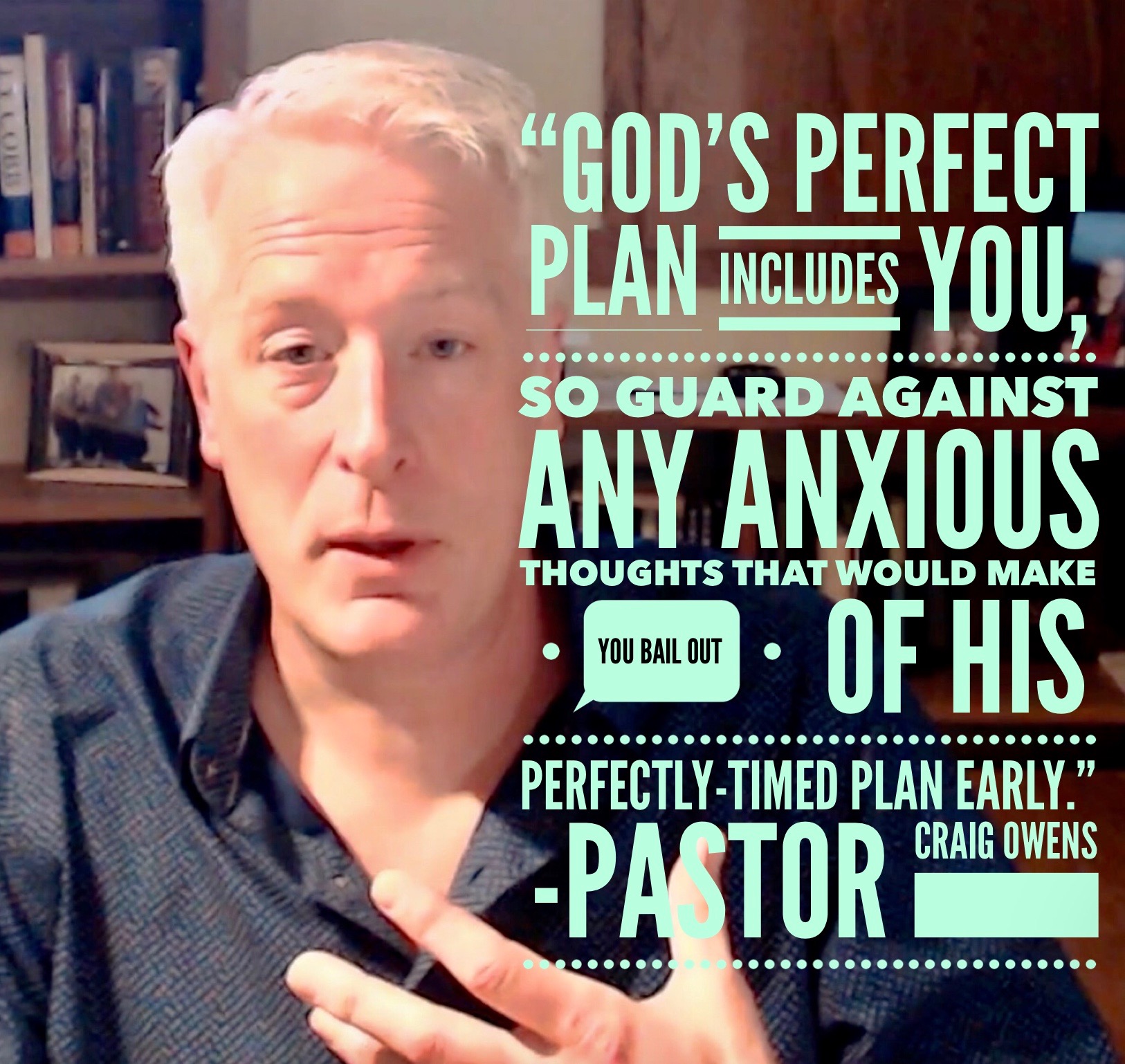
God’s perfect plan includes YOU, so guard against any anxious thoughts that would make you bail out of His perfectly-timed plan early. (see Psalm 139:16, 23-24)
Join me this Sunday as we continue our series called Where’s God?
This is a weekly series with things I’m reading and pondering from Charles Spurgeon. You can read the original seed thought here, or type “Thursdays With Spurgeon” in the search box to read more entries.
God With Us
‘And you shall call His name Immanuel.’ …
This is His name, ‘God with us.’ … He has not lost that name. Jesus had that name on earth, and He has it now in heaven! He is now ‘God with us.’ Believer, He is God with you to protect you! You are not alone, because the Savior is with you! …
But if you would know this name most sweetly, you must know it by the teaching of the Holy Spirit. … Unless the Holy Spirit takes the things of Christ and applies them to our heart, it is not ‘God with us.’ Otherwise, God is a consuming fire. …
Immanuel—it is wisdom’s mystery, ‘God with us.’ Just look at it and wonder. Angels desire to see it. The plumb line of reason cannot reach halfway into its depth. The eagle wings of science cannot fly so high, and the piercing eyes of the vulture of research cannot see it! ‘God with us.’ It is hell’s terror! satan trembles at the sound of it. His legions fly apace; the black-winged dragon of the pit quails before it! Let satan come to you suddenly and do you but whisper that word, ‘God with us,’ and back he falls, confounded and confused! satan trembles when he hears that name, ‘God with us.’ It is the laborer’s strength. How could he preach the gospel, how could he bend his knees in prayer, how could the missionary go into foreign lands, how could the martyr stand at the stake, how could the confessor acknowledge his Master, how could men labor if that one word were taken away? ‘God with us’ is the sufferer’s comfort, it is the balm of his woe, it is the alleviation of his misery, it is the sleep that God gives to His beloved, it is the rest after exertion and toil.
Ah, and to finish, ‘God with us’ is eternity’s sonnet, it is heaven’s hallelujah, it is the shout of the glorified, it is the song of the redeemed, it is the chorus of angels, and it is the everlasting oratorio of the great orchestra of the sky! ‘God with us!’
From The Birth Of Christ
Jesus is—always was and always will be—God with us!
Do you know Jesus personally? He wants you to know Him. He came to earth so that you could know Him. His heart’s desire is to be with you today and have you with Him forever!
If you have questions about this, please send me a message and let’s chat.
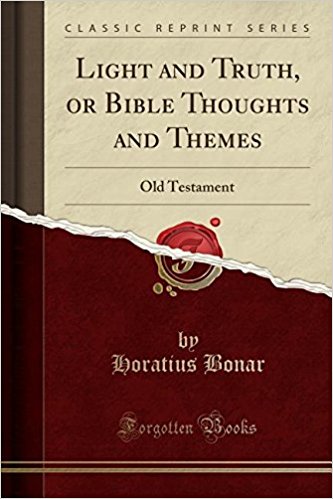
“How much we lose by the closed ear! … Other speakers may win the ear of the multitude, but it is to God the Lord that the saint listens. His voice is powerful. Its tones are penetrating; its words attractive. God speaks as One entitled to be heard, expecting to be heard. He speaks with authority, waiting for our obedience to the heavenly voice. …
“A saint then is one who has listened to God; who has heard the words of peace from His lips; who has believed them; who has been reconciled; and who knows that he is so. Therefore he seeks to be holy. He hates his former folly. He does not return to it. He does not make his free pardon a reason for returning to it.
“Brethren, be consistent! Beware of sin, folly, unholiness of every kind. Be Christians out and out. Show that the peace you have received is a holy peace.” —Horatius Bonar, in Light & Truth—The Old Testament
So the people grumbled against Moses … The people gathered in opposition to Moses and Aaron (Exodus 15:24; Numbers 20:2).
People with limited vision have limited faith too. As a result, they frequently grumble when things don’t go their way. Ironically, their grumbling is almost always directed at the leader who does have far-reaching vision and God-honoring faith!
For most of his tenure as leader, Moses handled the grumbling of the people well. Sometimes, though, the complaints seemed more personal:
These complaints may seem like a personal attack, but in the end, we find out that these attacks weren’t really against Moses at all—“the Israelites quarreled with the Lord” (Numbers 20:13).
God tried to help Moses and Aaron see that this was not a personal attack on them. He instructed them to “speak to that rock” so that water would be provided for the grumbling people. But sadly, Moses and Aaron missed this point. They said to the Israelites, “must we bring you water out of this rock?” And then in total frustration with the quarrelsome Israelites, Moses “struck the rock” instead of speaking to it.
Moses made himself the focal point, not God. God responded: “you did not trust in Me enough to honor Me as holy in the sight of the Israelites” (v. 12).
Previously, Moses responded to the grumblers better—
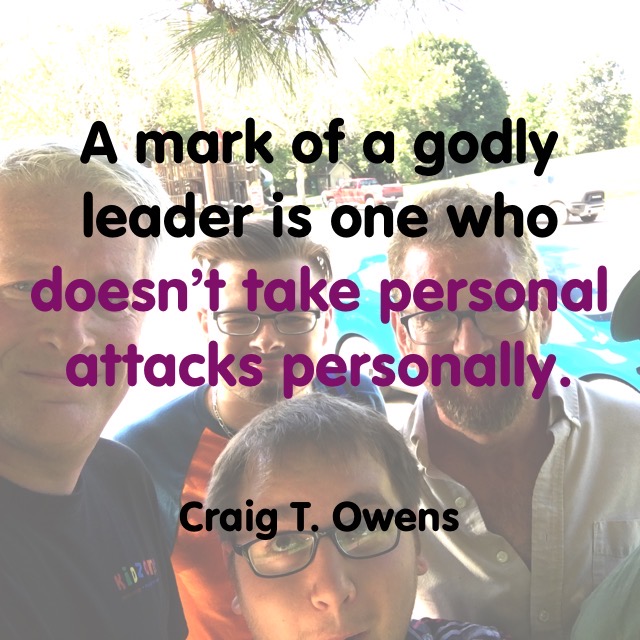
If God has called you to lead, people will bring their quarrels and complaints to you. It will feel like a personal attack, but it’s not. When attacked or when people grumble, you need to humble yourself before the Holy Spirit and ask, “Did I do something wrong?” and then listen attentively for His answer.
If the answer is yes: repent, ask forgiveness, make things right.
If the answer is no: don’t take it personally, stay humble before God and the people, and obey the specific directions God will give you. Don’t get frustrated and cut short your tenure as a leader.
This is part 44 in my series on godly leadership. You can check out all of my posts in this series by clicking here.