Check out this episode and subscribe on YouTube so you can watch all of the upcoming episodes. You can also listen to our podcast on Spotify and Apple.
Listen to the podcast of this post by clicking on the player below, and you can also subscribe on Apple, Spotify, or Audible.
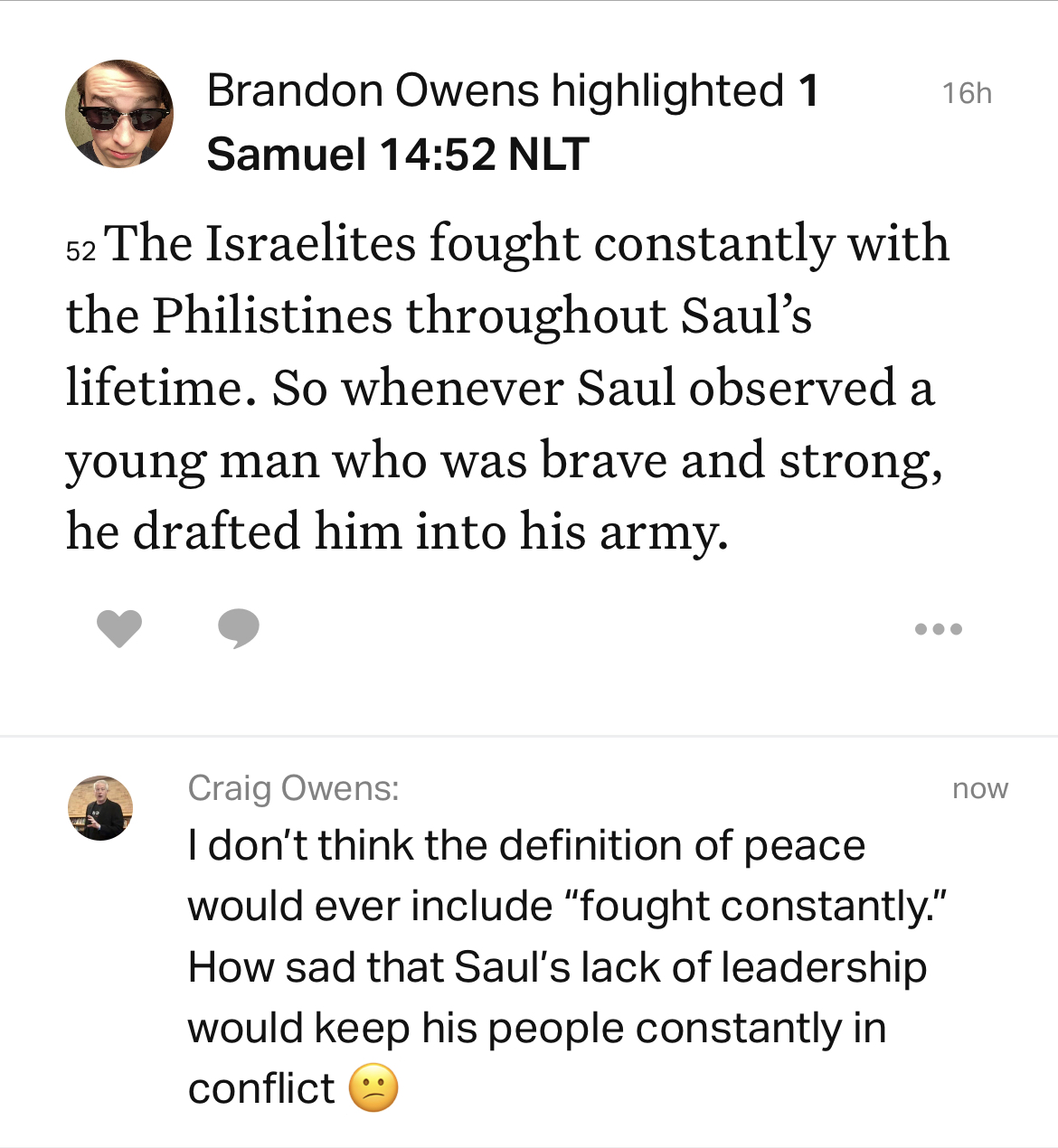
The Israelites fought constantly with the Philistines throughout Saul’s lifetime… (1 Samuel 14:52).
Have you ever worked in a hostile environment? I was involved with one organization where all of the staff members called the weekly meeting the “staff beating” instead of the staff meeting. This was largely because the senior leader started off every meeting by asking for problems that needed to be addressed, but then he “addressed” the problem by attacking the person who shared the problem.
I was reminded of this recently when I was scrolling through YouVersion and saw that my son had highlighted 1 Samuel 14:52 that said that Saul’s reign as king was noted for the constant fighting. I added the comment, “I don’t think the definition of peace would ever include ‘fought constantly.’ How sad that Saul’s lack of leadership would keep his people constantly in conflict.”
Make no mistake about it: It was his poor leadership that created this environment. We often read of his jealousy of anyone else who was successful, and we see that although he had a loyal army, he kept them bottled up.
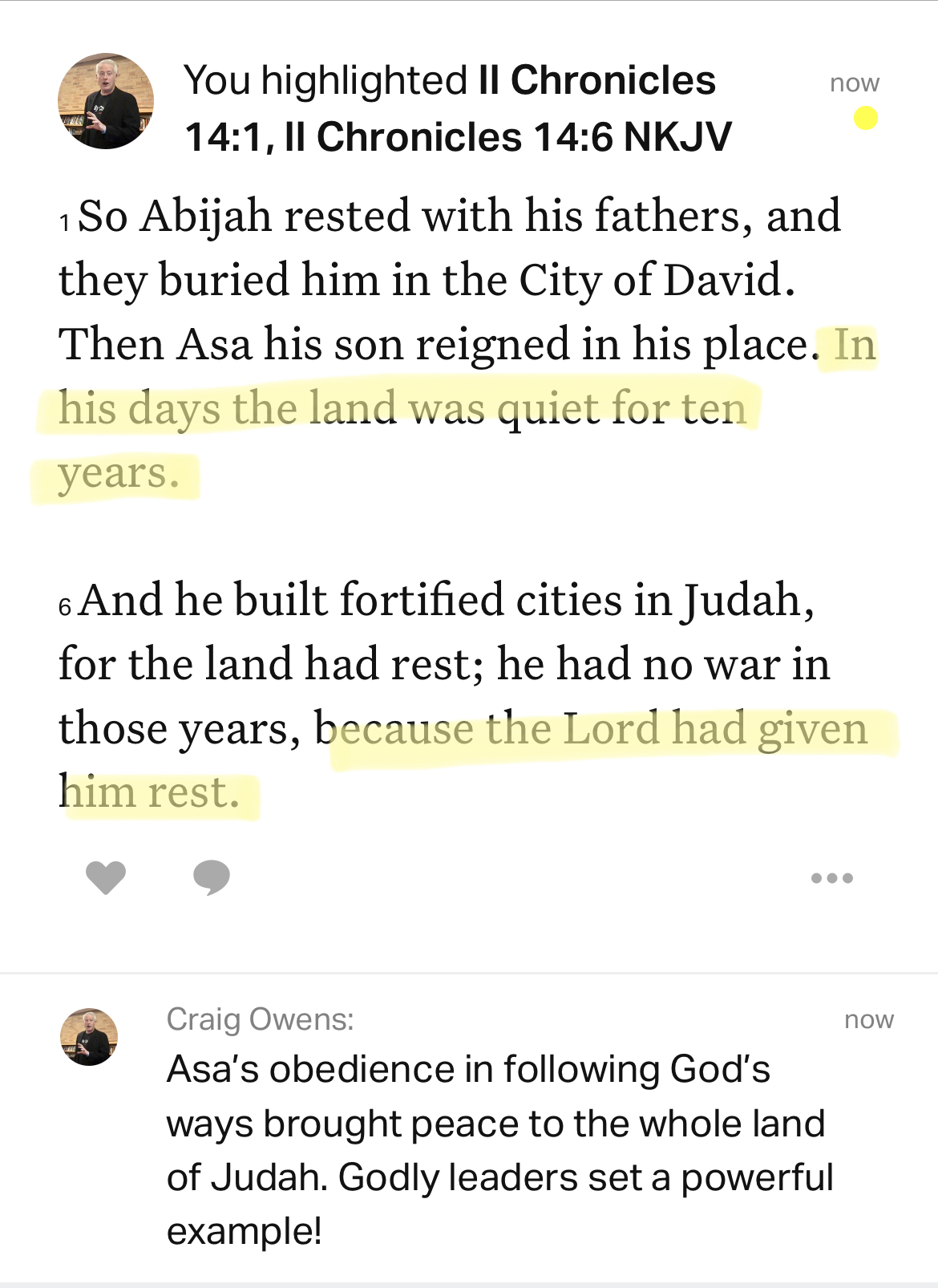
On the other hand, consider this statement about the reign of king Asa: “In his days the land was quiet for ten years. … He had no war in those years, because the Lord had given him rest” (2 Chronicles 14:1, 6). This peace and quiet and rest is directly tied to Asa’s obedience to God’s laws.
A mark of a godly leader is one whose obedience to God fosters an environment of peace for his people.
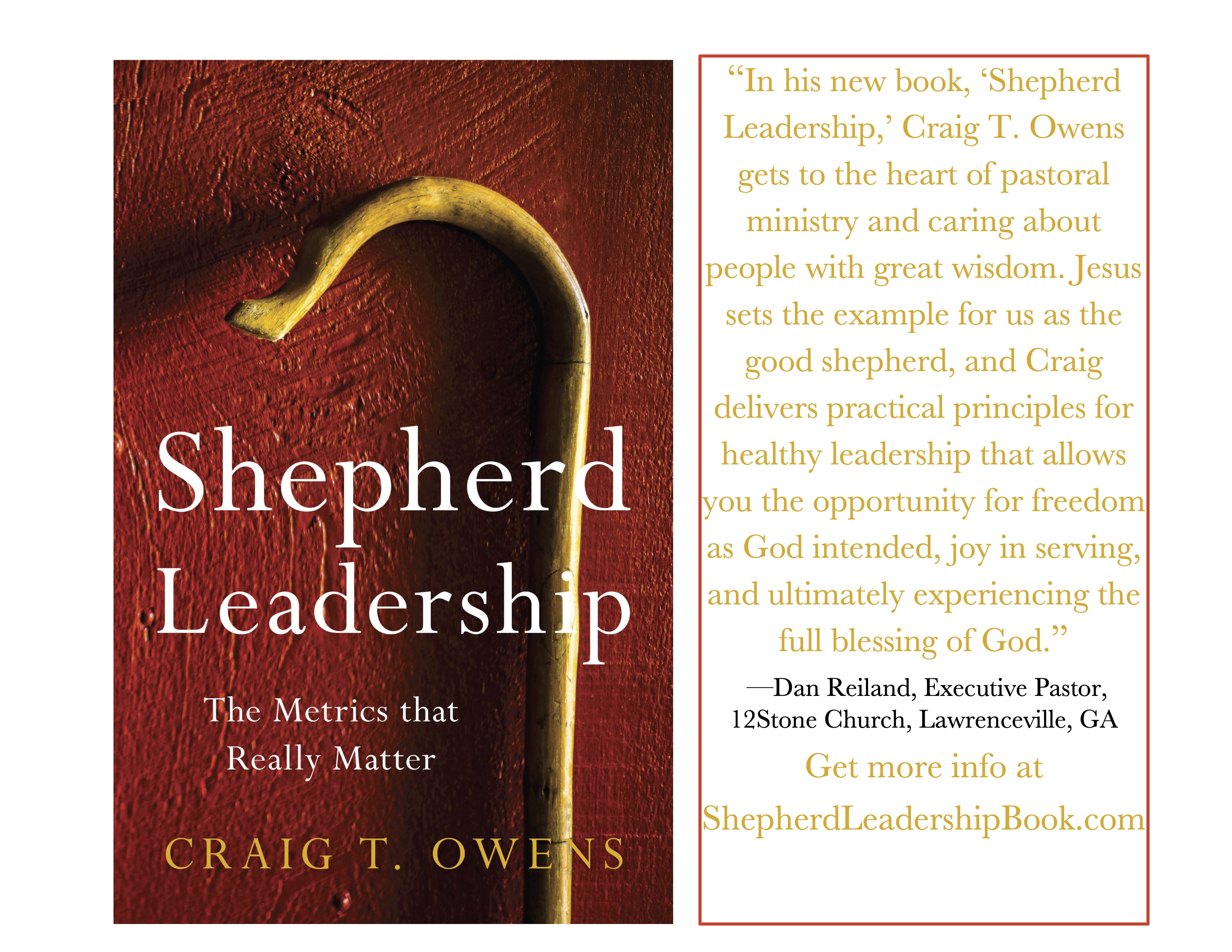
This is part 62 in my series on godly leadership. You can check out all of my posts in this series by clicking here. And I would also encourage you to check out my book Shepherd Leadership: The Metrics That Really Matter, where I outline in more detail the characteristics of godly leadership.
Listen to the podcast of this post by clicking on the player below, and you can also subscribe on Apple, Spotify, or Audible.
Have you ever seen kids tearing into a Christmas present and then being disappointed that what they got wasn’t what they wanted? They may say something like, “This isn’t what I put on my wish list!”
From the response of the religious leaders in the Gospels, it appears that the gift of Jesus on that original “Christmas morning” was very similar. It’s almost like they were saying, “This isn’t the type of Messiah we wanted!” They wanted someone to give them freedom from the Romans, but their Heavenly Father wanted them to have something far bigger and greater: Eternal freedom from the penalty of sin.
The first humans had the joy of being innocent in God’s presence, where they had everything they needed. But satan got Adam and Eve to focus on something they wanted, and thatsin of disobedience brought an immediate separation. They now feared the nearness of God.
There were immediate and painful consequences for their sin, but God wanted the heaviest of penalties to fall on Himself. To foreshadow this, God sacrificed an innocent animal to cover their nakedness, showing us what the gift of Jesus would do for us (Genesis 3:1-21).
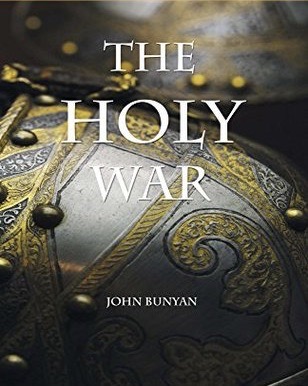
In The Holy War, John Bunyan tells the story of the town of Mansoul enslaved to Diabolus. The crafty serpent plays on their fears by reminding them how terrible it would be if they allowed Holy God to come near them while they were in their sinful state:
“‘Gentlemen,’ quoth he, ‘and my faithful subjects, if it is true that this summoner hath said concerning the greatness of their King, by His terror you will always be kept in bondage, and so be made to sneak. Yea, how can you now, though He is at a distance, endure to think of such a Mighty One? And if not to think of Him while at a distance, how can you endure to be in His presence?’”
Diabolus even tried to make their slavery to sin look like freedom: “I, your prince, am familiar with you, and you may play with me as you would with a grasshopper. Consider, therefore, what is for your profit, and remember the immunities that I have granted you.’”
As John Piper reminds us, “Christmas is for freedom.” Indeed, that’s just what we see on the first “Christmas morning” in words like salvation, no fear, and great joy (Matthew 1:21; Luke 2:10-11).
Turning again to The Holy War, here’s what the Father said to His Son: “Wherefore the King called to Him Emmanuel, His Son, who said, ‘Here am I, My Father.’ Then said the King, ‘Thou knowest, as I do Myself, the condition of the town of Mansoul, and what We have purposed, and what Thou hast done to redeem it. Come now, therefore, My Son, and prepare Thyself.’”
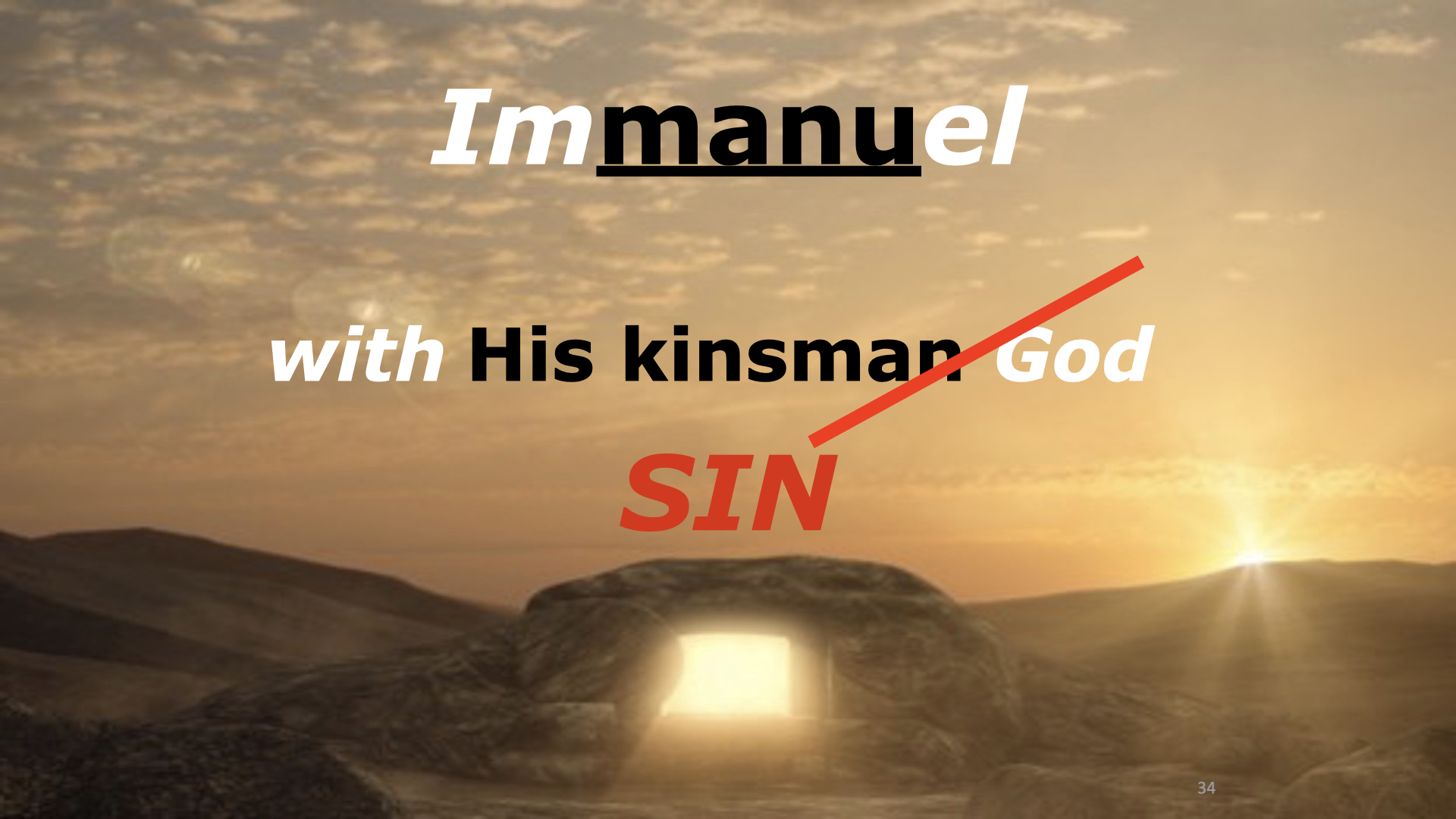
Immanuel (or the Romanized spelling Emmanuel) is the One who removes the separation caused by our sin, and rejoins us to God. That prefix “im” means with, and the suffix “El” means God. The root word means God’s kinsmen. Immanuel comes to repair what was severed by taking sin’s penalty on Himself, and allowing us to once again enjoy the closeness of kinship with our Heavenly Father (Matthew 1:22-23; Galatians 4:4-7).
When the people saw this Gift on Christmas morning, they said, “This isn’t what we wanted! We wanted a rich, powerful, conquering King. One who would send the Romans running in fear!” As a result, very few unwrapped this Heavenly Gift. But God reminded them, “That may be what you wanted, but I have given what you need. I want you to have not just temporary freedom from the Romans, but eternal freedom from your sin so that you can be forever in My presence!”
This is what Jesus rejoiced to do for us with the Gift of His life, death, and resurrection. One more passage from The Holy War tells us, “Then said the King’s Son, ‘Thy law is within My heart: I delight to do Thy will. This is the day that I have longed for, and the work that I have waited for all this while. … I will go and will deliver from Diabolus, and from his power, Thy perishing town of Mansoul. My heart has been often pained within Me for the miserable town of Mansoul; but now it is rejoiced, but now it is glad.’” (The timing for the Incarnation of Jesus and even these words of Immanuel Himself are found in Hebrews 2:14-15; 10:5-7).
God’s love is too great to be limited to just meeting our wants because in our immaturity and sinfulness we don’t know what we really need—but He does. So His love sent Immanuel to us.
The Gift was given to us at Christmas, but in our immaturity and shortsightedness, we didn’t realize the full impact of this Gift until Jesus rose victoriously from the grave! Now by placing our faith in His completed work, we can be rejoined to God and live in unshakable hope of an eternity with Him!
Listen to the podcast of this post by clicking on the player below, and you can also subscribe on Apple, Spotify, or Audible.
I had a great time on the Thriving In Ministrypodcast with Kyle Willis and Dace Clifton.
Their podcast is all about helping pastors avoid burnout. That’s definitely a message that resonates with my heart too! Long before I stepped into the pastorate, I was actively involved in encouraging pastors and helping protect them from the many slings and arrows that get thrown at them.
Pastors, we need to remain healthy. Only healthy shepherds can create a healthy environment for the sheep under their care. Jesus not only gave us the example for mental, physical, spiritual, and relational health, but the Holy Spirit wants to help us today to be that kind of wholly healthy leader.
If you’re a pastor, I believe you will be energized by reading or listening to my book. Shepherd Leadership: The Metrics That Really Matter is available in print or ebook, and in audiobook through either Audible or Apple.
If you love your pastor, get a copy to give as a gift. If you believe that your pastor would benefit from reading my book, but you don’t have the funds available to purchase it at this time, please leave me a comment below and I’ll make sure I get a copy to you.
It takes everyone in the Body of Christ being actively involved for both the shepherd and sheep to remain healthy!
If you’ve missed any of the other clips I’ve shared from this interview, please check them out here:
This is a weekly series with things I’m reading and pondering from Charles Spurgeon. You can read the original seed thought here, or type “Thursdays With Spurgeon” in the search box to read more entries.
Listen to the podcast of this post by clicking on the player below, and you can also subscribe on Apple, Spotify, or Audible.
Logical Conclusions
Every doctrine of the Word of God has its practical bearing. … Hence you will find the apostle Paul very full of ‘therefores.’ … I marvel that our excellent translators should have divided the argument from the conclusion by making a new chapter where there is least reason for it.
From The Watchword For Today: “Stand Fast”
The Bible is the most practical, applicable, and timeless Book I know! In order for this Book to be of both immediate and eternal help to us, it has to be a book that is logical. The Bible is a logical book, but far too many readers miss the logic unfolding right before their eyes.
In this particular sermon, Charles Spurgeon takes his text from Paul’s letter to the Philippians, so let me use that epistle as an example. There are three logic signposts that I would ask you to look for: therefore, so that, and if…then.
Let’s start with “therefore.” I have trained myself—and I endeavor to train the folks in my church—to ask this question every time they come to the word “therefore” in the Bible: What’s that there for?Therefore always signals a logical conclusion to a set of premises that are constructing the argument. As Spurgeon mentioned, sometimes the verse and chapter breaks can obscure this, so we must always go back from the “therefore” to see what the argument was.
I find the word “therefore” used three times in this letter in the New International Version:
Therefore God exalted Him [Jesus] to the highest place and gave Him the name that is above every name (2:9). What’s it there for? Because Jesus was obedient, therefore God exalted His name.
Therefore, my dear friends, as you have always obeyed—not only in my presence, but now much more in my absence—continue to work out your salvation with fear and trembling (2:12). What’s it there for? Because Jesus has conquered death and purchased our salvation, therefore this is how Christians should now live.
Therefore, my brothers and sisters, you whom I love and long for, my joy and crown, stand firm in the Lord in this way, dear friends! (4:1). What’s it there for? Because our citizenship is in Heaven, we must stand firm in that hope.
A second logical statement to watch for when you’re reading is “so that.” This logical phrase, much like “therefore,” is telling us what comes next in light of what came before. I see this phrase multiple times in Philippians (1:10, 13, 20, 26; 2:15, 19, 28; 3:21).
Finally, watch for those “if…then” statements. These also follow the logical argument of, “If you do this, then this will happen” or “If you ignore or disobey this, then you can expect this to follow.” I see this quite clearly in Philippians 2:1-2 and 4:8-9.
Don’t rush through your Bible reading time. Slow down and watch for these very logical and practical arguments—the Bible is absolutely full of them! By reading your Bible this way, you will be getting your doctrine directly from the Holy Spirit, which is the best way to know the heart of God.
If you’re interested in digging deeper into this, I’ve shared some other Bible studies you can try:
Remember as a kid when you would unwrap a gift and discover it wasn’t something you really wanted, but then your parents explained that it was something you needed? The birth of Jesus in Bethlehem was a little like that—it wasn’t exactly what people were hoping for, but it was exactly what they needed.
The real meaning of that Christmas gift wasn’t realized until after Jesus was crucified and resurrected back to life.
Join us this Sunday as we begin a 4-part series called Christmas Unwrapped At Easter. We would love to have you join us either in person or online for this eye-opening time together.
If you’ve missed any of the messages in this series, you can check them out here:
Listen to the podcast of this post by clicking on the player below, and you can also subscribe on Apple, Spotify, or Audible.
Lord, I know that people’s lives are not their own; it is not for them to direct their steps (Jeremiah 10:23 NIV).
I didn’t create my life—You did!
So “people do not control their own destiny” (NET)—You do!
“Mere mortals can’t run their own lives” (MSG)—You can!
“The way of man is not in himself” (NKJV)—it’s in You!
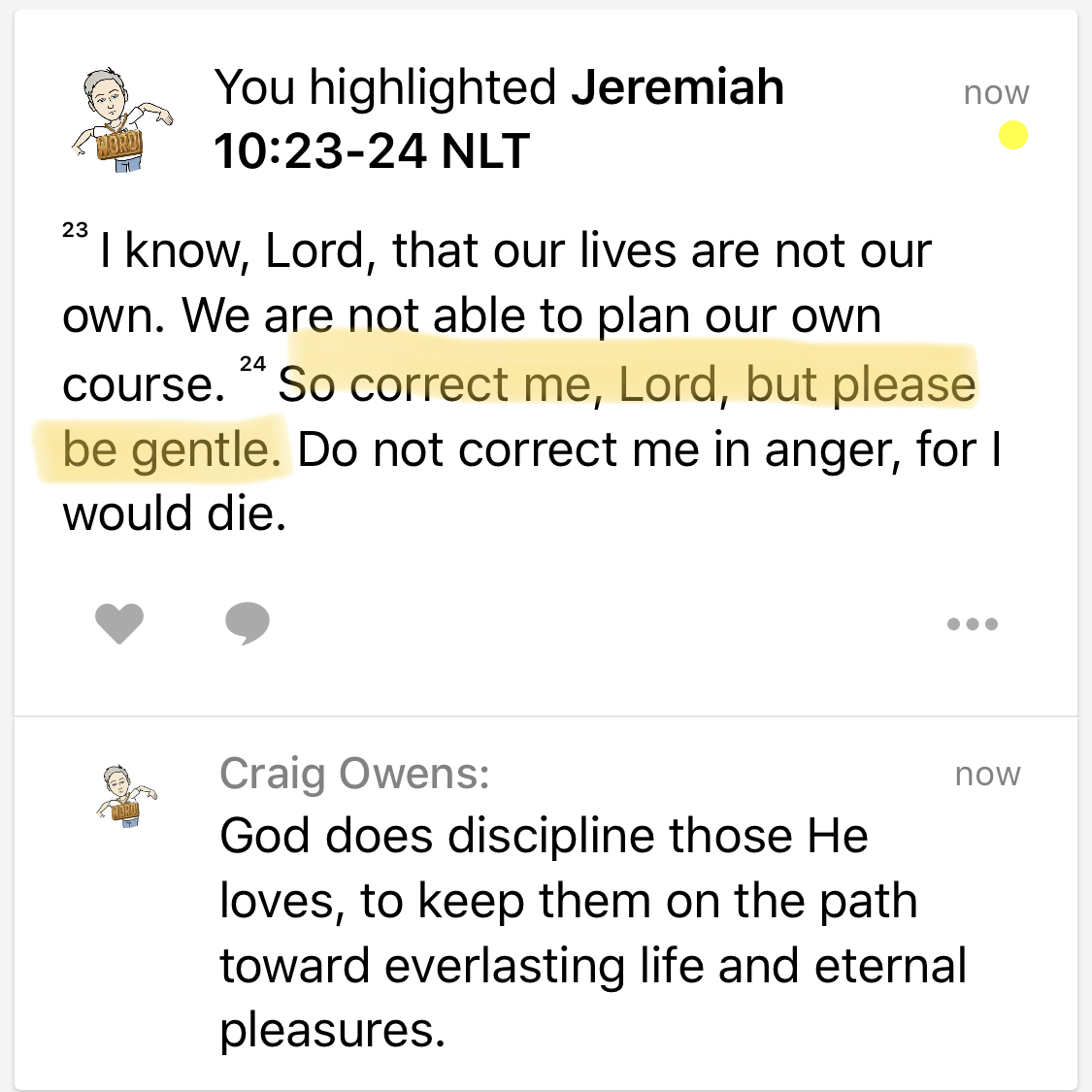
Discipline me, Lord, but only in due measure—not in Your anger, or You will reduce me to nothing (Jeremiah 10:24 NIV).
You can correct me “with justice” (NKJV)—I can’t!
You know how to “be gentle” (NLT)—I don’t!
God, You correct “as You see best” (MSG)—I can’t!
I’d say it’s pretty clear that there is only One who can lead me in the way I should go. So my prayer should always be: Heavenly Father, You are Sovereign, You are Love, and I trust You completely to guide me into paths of righteousness for Your name’s sake, as only You know how. Holy Spirit, help me to trust You in this journey. In Jesus’ name, amen.
I used only two verses to write this post, but I read them in multiple translations. This is another great Bible study tool that any of us can use. If you would like to read more about the various translations of the Bible and how to access them, please check out this post.
After God had taken away his voice, Ezekiel picked up his pen and wrote chapters 25–32 as prophetic warnings. It was after all of these warnings were written down that God renewed His call to Ezekiel to be His watchman (33:7 and 3:17).
How many times do I want to check out because I am not able to do things as I had been doing them before? Any one of us can fall into that all-or-nothing mindset—if I can’t do everything as I have been doing it, I won’t do anything at all.
Ezekiel teaches us three important lessons:
No complaints to God
No excuses for discontinuing his ministry
Full obedience to God’s call on his life
What an outstanding lesson for all of us!
►► I dive deeper into this topic in a video that I shared exclusively with my Patreon supporters. Would you please prayerfully consider supporting this ministry? For just $5 per month you will be supporting all of the free content I make available on my blog, my podcast, and my YouTube channel, and you will be getting access to all of my exclusive content too. ◀︎◀︎
Listen to the podcast of this post by clicking on the player below, and you can also subscribe on Apple, Spotify, or Audible.
Have you noticed some people just say, “Morning,” but not “Good morning”? Almost as if they are waiting to see if it’s actually going to be good. I think many people wake up overwhelmed before their feet hit the floor. If the cliche says, “When it rains it pours,” to them it seems like it’s always pouring!
In our series, we’ve been asking if certain statements are in the Bible. Statement #7 is God won’t give you more than you can handle. Is that in the Bible? Well, kinda.
Many people would say, “Yes, it’s in the Bible” based on 1 Corinthians 10:13 which says, “No temptation has overtaken you except what is common to mankind. And God is faithful; He will not let you be tempted beyond what you can bear. But when you are tempted, He will also provide a way out so that you can endure it.”
Remember that context is king, so we need to look at the whole setting. For this verse, I would suggest going back to the beginning of the chapter (1 Corinthians 10:1-14). Paul is telling us that Israel’s bad examples are a warning for us. What’s the warning? It boils down to not becoming overconfident in our own abilities—“So, if you think you are standing firm, be careful that you don’t fall!” (v. 12).
Overconfidence exposes us to temptation. James does a really good job of defining temptation as our own evil desires that have met an opportunity to give in (James 1:13-14). When the pressure is on, perhaps I’m tempted to…
…cut corners
…water down the truth
…tell a little white lie
…justify helping myself to something that isn’t mine
One phrase reminds us that “no temptation or trial has come to you that is beyond human resistance and that is not adjusted and adapted” to us. God is helping us grow through those tempting times.
Another phrase from this verse says that God “can be trusted not to let you be tempted and tried and assayed beyond your ability and strength of resistance and power to endure.” God knows the perfect time and temperature of our trials to remove the impurities from our lives.
Paul’s conclusion—his “therefore”—is found in the next verse: “Therefore, my dear friends, flee from idolatry” (1 Corinthians 10:14). “Flee” means we are to take hold of ourselves to stay away from dangerous places, and “idols” are anything we put in place of God.
Notice the verse says, “God…will not let you be tempted beyond what you can bear.” Sometimes I set myself up to stumble when I’m…
…physically tired
…hangry
…spiritually drained
…emotionally frazzled
Even in these things God will give us wisdom if we ask Him (James 1:5), but we must apply the wisdom He gives us.
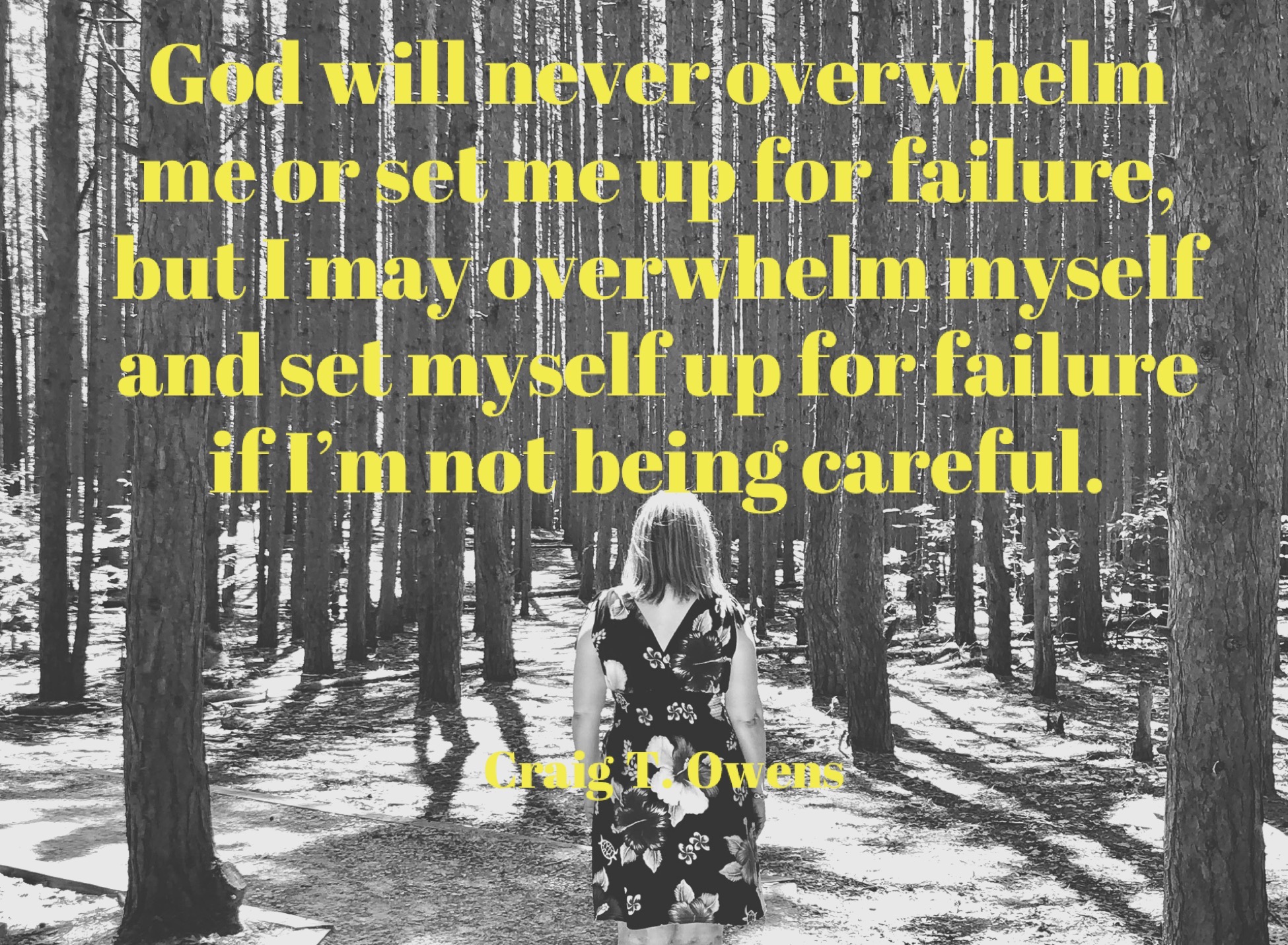
So God tests me to purify and strengthen me. God will never overwhelm me or set me up for failure, but I may overwhelm myself and set myself up for failure if I’m not being careful about the idols I set up in my life.
So If you are feeling overwhelmed, if you are feeling like there’s too much, if you feel like you’re giving in to temptations, ask yourself:
Am I getting enough sleep?
How’s my diet?
Have I made Bible reading and prayer a priority this week?
Are there any relationships that are draining me?
Have I confessed my shortcomings?
Have I asked God for wisdom?
Have I obeyed what God has already shown me?
God will never give me more than I can handle in His tests, but sometimes I give myself more than I can handle. It’s time to remove those idols and stumbling blocks from my life.



 On this episode of “The Craig And Greg Show” we talk about:






 Craig T. Owens