God Loves Wicked People

Listen to the podcast of this post by clicking on the player below, and you can also subscribe on AppleSpotify, or Audible.

The first two Selah pauses we see in Psalm 140 are pauses to remember two things: 

  1. There, but for the grace of God, go I. 
  2. God is doing something in me through wicked people and evil times. 

But there is one more Selah in this chapter that we need to consider—Do not grant the wicked their desires, O Lord; do not let their plans succeed, or they will become proud. Selah. (v. 8) 

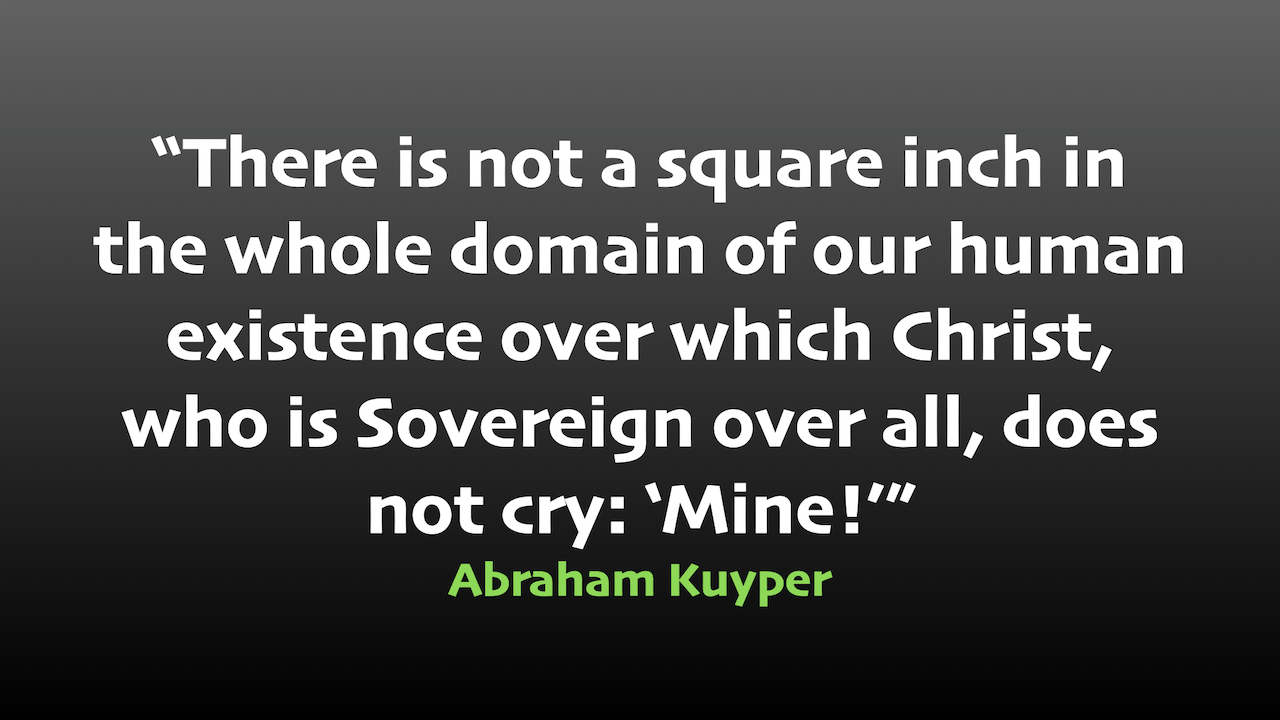
Most of  us would probably agree with Abraham Kuyper who said, “There is not a square inch in the whole domain of our human existence over which Christ, who is Sovereign over all, does not cry: ‘Mine!’” 

But the amazing thing here is that God allows David—and you and me—to call Him mine! “O LORD, I say to You, ‘You are MY God’” (v. 6). David goes on to say that God is my strong deliverer who shields me against evildoers (v. 7). 

But isn’t David’s God also the God of the wicked? Aren’t they a part of “the whole domain of human existence” that is His? Yes! 

So that must mean that God wants even wicked people to call Him, “My God”! 

This is exactly what Jesus told us: For God so loved the world [including wicked people] that He gave His one and only Son, that whoever [including wicked people] believes in Him shall not perish but have eternal life. For God did not send His Son into the world to condemn the world, but to save the world [including wicked people] through Him (John 3:16-17). 

Just before this third Selah in verse 8 David prays that the plans of the wicked might be thwarted so that proud people don’t become even more proud. That seems okay. But after the Selah David seems to be asking God to let everything that wicked people have planned to boomerang back on them (vv. 9-11).  
Isn’t that hateful? Not if we understand “hate” correctly. 

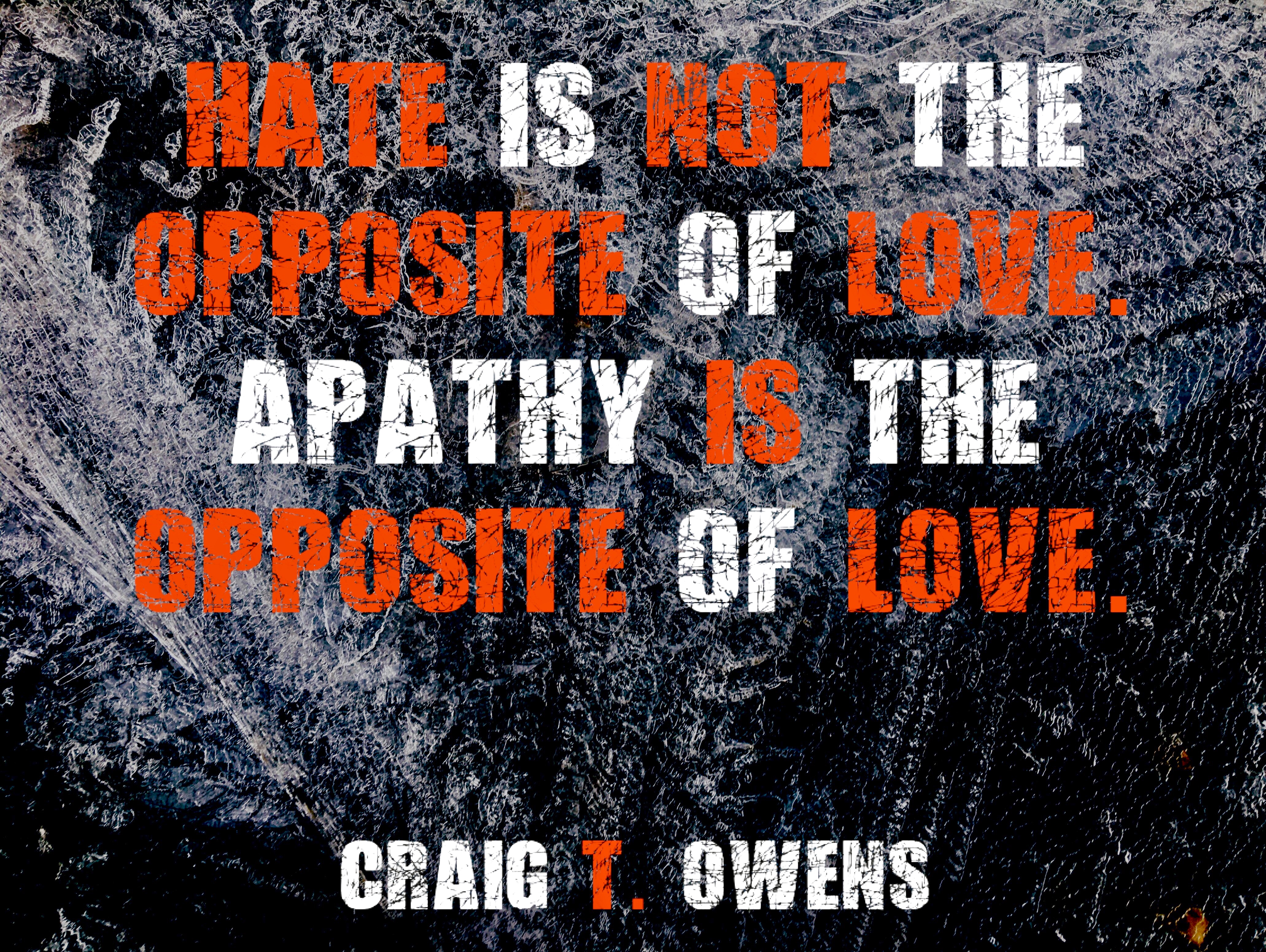
Hate isn’t the opposite of love, but apathy is the opposite of love. Hate is a very strong emotion that usually comes out when something we love or desire is thwarted or kept from us. 

Just as we learned last week that God allows evil people and their slander and wickedness to prune us and make us more fruitful, can’t God give back to evil people exactly what they need to get their attention? Can’t He use their own evil plans for them just as He used them for us? Yes! 

If God loves us—and He does—then He must hate anything that keeps us from Him. 

If God loves wicked people—and He does—then He must also hate anything that keeps them from accepting the atoning work Jesus did for them on the Cross. 

God is love. There is nothing you can do to make God love you any more. There is nothing an evil person can do to make God love them any less. 

David’s third Selah is really his reminder that he must leave evil people to the only One who can discipline them in perfect measure. We have to leave evil people to God’s care—the only One who can rescue them. That’s why Jesus told us to “love your enemies and pray for those who persecute you” (Matthew 5:44). 

David’s prayer in verses 9-13 does leave evil people in God’s hands, and it’s a prayer you and I can personalize for those whom we desire to know Jesus as their Savior. 

It’s not God’s desire that any should perish. So let’s Selah to call God, “My God,” but to also pray that even the wicked people around us will come to the realization that through faith in Jesus, they too can cry out, “My God!” 

God gave me a unique story when I was walking through a challenging time with a friend that I needed to leave to God’s care. I called the story The Parable of the Lifeguard. You can watch it in the video below, or you can read it by clicking here. 

If you have missed any of the messages in our Selah series, you can find a list of all of those messages by clicking here. 

►► Would you please prayerfully consider supporting this ministry? My Patreon supporters get behind-the-scenes access to exclusive materials. ◀︎◀︎

Links & Quotes

T.M. Moore wrote to pastors, “Effective ministry and fruitful Christian living are not automatic. They don’t just happen. Each requires that we receive the gifts of God, develop them according to His Word, and put them to proper use day by day. We must work out our salvation and work at our calling with focus and vigor.” Check out the rest of his post 

Speaking of pastors: In order for us pastors to be at our peak, we need to take care of ourselves. Here is a short video where I talk about the principle of sabbathing (a topic I explore in-depth in my book Shepherd Leadership: The Metrics That Really Matter).

This study from PennMedicine tells us that our brains can continue to learn new things until the day we die. So apparently you can teach an old dog new tricks!

My friend Greg and I have always tried to combine work and play. We’ve found that fun can really help leadership lessons stick. Check out this clip from a recent Craig And Greg Show leadership podcast.

Some really fast-moving stars in our Milky Way galaxy have further called into question the dating of our universe. These stars seem to indicate a universe that was created by God recently.

“When you’re good at something, you’ll tell everyone. When you’re great at something, they’ll tell you.” —Walter Payton

How does the word of man become the Word of God? Great teaching from John Piper in his “Look at the Book” series.

Go Deep—The Operational Gifts Of The Holy Spirit

According to 1 Corinthians 12-14, the Holy Spirit operates in nine different gifts to both evangelize the sinner and edify the saints. The apostle Paul says that these gifts are available to all Christians who will allow the Holy Spirit to operate through them.

This is the introductory lesson in this series. You may download the participant’s notes here → Go Deep – operational gifts introduction

In our previous study, we learned about the motivational gifts listed in Romans 12. You can check out all of those lessons by clicking here.

If you would like to join us in person for this class, here is where you can find us. If you have missed any of the classes in this series, check them out here:

Thursdays With Spurgeon—Froth Or Substance?

This is a weekly series with things I’m reading and pondering from Charles Spurgeon. You can read the original seed thought here, or type “Thursdays With Spurgeon” in the search box to read more entries.

Listen to the podcast of this post by clicking on the player below, and you can also subscribe on AppleSpotify, or Audible. 

Froth Or Substance?

     Many of you will read a novel from beginning to end, and what have you got? A mouthful of froth when you have done. But you cannot read the Bible—that solid, lasting, substantial, and satisfying food goes uneaten, locked up in the cupboard of neglect, while anything that man writes, as a catch of the day is greedily devoured. ‘I have written for him the great things of My law, but they were considered a strange thing’ [Hosea 8:12].

From The Bible

The Bible is the most important book anyone can read, contemplate, and apply to their lives. Yet far too many people say, “I just don’t have enough time to sit down to read the Bible.” Sadly, these same people take a lot of time on much less meaningful activities. 

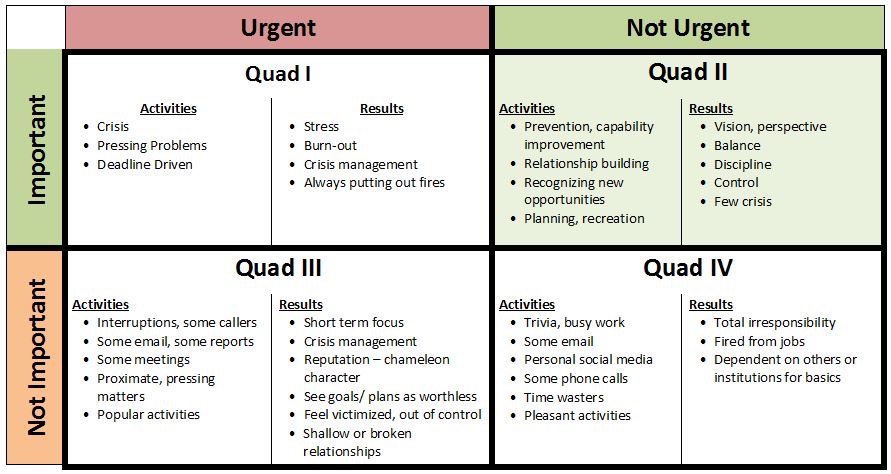
One thing that has been immensely helpful to me is the Urgent/Important grid Stephen Covey talks about in his book The Seven Habits Of Highly Effective People. Your Bible reading is never urgent—that is, an alarm will not go off to tell you it is time to read. However, your Bible reading is hugely important. 

Covey discusses how we can put all of our activities into one of the four quadrants in this chart:

Your Bible reading time is definitely a Quadrant II activity, and the best place to find time for this activity is by eliminating things in Quadrant IV—the activities Spurgeon would call froth. In my book Shepherd Leadership: The Metrics That Really Matter, I discuss how leaders can use this grid to increase their leadership effectiveness. 

The bottom line: We all must make sure we are eliminating the froth so that we have time for the great Substance that can only be found in God’s Word. 

You can download Covey’s Urgent/Important grid here → Urgent Important [Covey quadrants]

And then check out chapter 10 in Shepherd Leadership—“Can’t, Won’t or Don’t”—to learn how to use this grid to help you make the time for those important Quadrant II activities.

►► Would you please prayerfully consider supporting this ministry? My Patreon supporters get behind-the-scenes access to exclusive materials. ◀︎◀︎
My Unique History

Listen to the podcast of this post by clicking on the player below, and you can also subscribe on AppleSpotify, or Audible. 

I had a great time on the 200churches podcast with Jeff Keady. 

Jeff and I talked about my unique background and how that contributed to not only the book I wrote but also to the activities in which I am presently involved.

God took me on a long journey before I came to be a shepherd in Cedar Springs, MI. There were times in my younger life when I questioned why my path didn’t look like a straight line that was heading toward a career or vocation, but God showed me the truthfulness of the promise in Romans 8:28—He is using ALL THINGS to accomplish what He needs for me and for His Kingdom. (Check out the short video below where I share a bit of my autobiography.)

I hope this is a word of encouragement for you too. God IS directing every single one of your steps, He IS using all of your education and experiences to accomplish His purpose. Don’t bail out of this process, and don’t ever get discouraged that your path seems different than those around you. God is being as unique with you as He is with everyone else. 

If you are a church leader, I encourage you to pick up a copy of my book Shepherd Leadership: The Metrics That Really Matter. I believe you will find many more encouraging thoughts that will keep you engaged in the work to which God has called you.

I’ll be sharing more clips from this 200churches interview soon, so please stay tuned. Shepherd Leadership: The Metrics That Really Matter is available in print or ebook, and in audiobook through either Audible or Apple. 

►► Would you please prayerfully consider supporting this ministry? My Patreon supporters get behind-the-scenes access to exclusive materials. ◀︎◀︎

Is “Bigger” An Unbiblical Metric?

Listen to the podcast of this post by clicking on the player below, and you can also subscribe on AppleSpotify, or Audible. 

Many “church growth experts” will tell people how to grow their church. But when we say “grow,” what exactly do we mean? Does that mean more people? Does that mean more engaged church members? Or is it a combination of both? 

But more importantly: What does the Bible say about church growth? Does it give us any indication about whether church growth should be quantity or quality?

I taught on this subject with some summer ministry interns. Take a look…

I unpack this idea in much greater depth in my book Shepherd Leadership: The Metrics That Really Matter. My book is available in print or ebook, and in audiobook through either Audible or Apple.

►► Would you please prayerfully consider supporting this ministry? My Patreon supporters get behind-the-scenes access to exclusive materials. ◀︎◀︎
Protected To Be Fruitful 

Listen to the podcast of this post by clicking on the player below, and you can also subscribe on AppleSpotify, or Audible. 

We just finished a 2-week look at Psalm 88 & Psalm 89 which reminded us of the reality of temporary darkness and the certainty of eternal light. We said our dark days are meant to get our attention to rely on God’s covenant promise. 

Something else we should be aware of: Whenever we run to or return to Jesus, the enemy of our souls prepares an attack (1 Samuel 7:3-10; 1 Peter 5:8). 

The next psalm with a Selah is David’s prayer in Psalm 140. Selah appears 3 times in this short, 13-verse psalm. 

We’ve said that Selah can mean a pause to carefully consider, a pause to observe the contrasts, or a pause to prepare for a crescendo. The Selahs after verses 3 and 5 don’t appear to fit the second or third definitions, but why would David ask us to pause to consider what wicked men are doing? I believe it is because we need to pause to contemplate two vital things, which I’ll share with you in a moment. 

But first, notice the wicked men and evil times that David is confronting. He speaks of evildoers, violent people, wicked men, arrogant people, and slanderers (vv. 1, 4-5, 8, 11). 

Surrounding the first two Selahs, check out David’s prayer for God to…

  • …rescue me (v. 1a)—get me out of here, or take the evil away from me  
  • protect me (v. 1b, 5b)—don’t let me be defeated or even diminished  
  • keep me (v. 4a)—we might say David is asking God to “watch my six” or guard the places I cannot see (notice the words net and traps in v. 5b) 

The first Selah lesson we should take away is: There, but for the grace of God, go I. 

If I hadn’t accepted Jesus as my Savior and had a new nature imparted to me, I would be doing exactly what these wicked people are doing. Paul tells Timothy what evil people will do, and he tells the Corinthian Christians that they used to be those same kinds of people (2 Timothy 3:1-5; 1 Corinthians 6:11). 

When I see evil men, men of violence, and wicked people who are proud and slandering, I need to Selah to pray that the light and love of Jesus will be revealed to them. 

The second Selah lesson we should take away is: God is doing something in my life through wicked men and evil times. 

The words the Holy Spirit prompted David to pen have a richer definition than what I previously shared with you. Check this out…

  • rescue me (v. 1a) also means make me strong and well-armed for battle  
  • …protect me (v. 1b, 5b) envisions a gardener carefully watching over his vineyard to bring the plants to fruitful maturity (like in John 15:1-2)  
  • keep me (v. 4a) can mean “fight for me”  

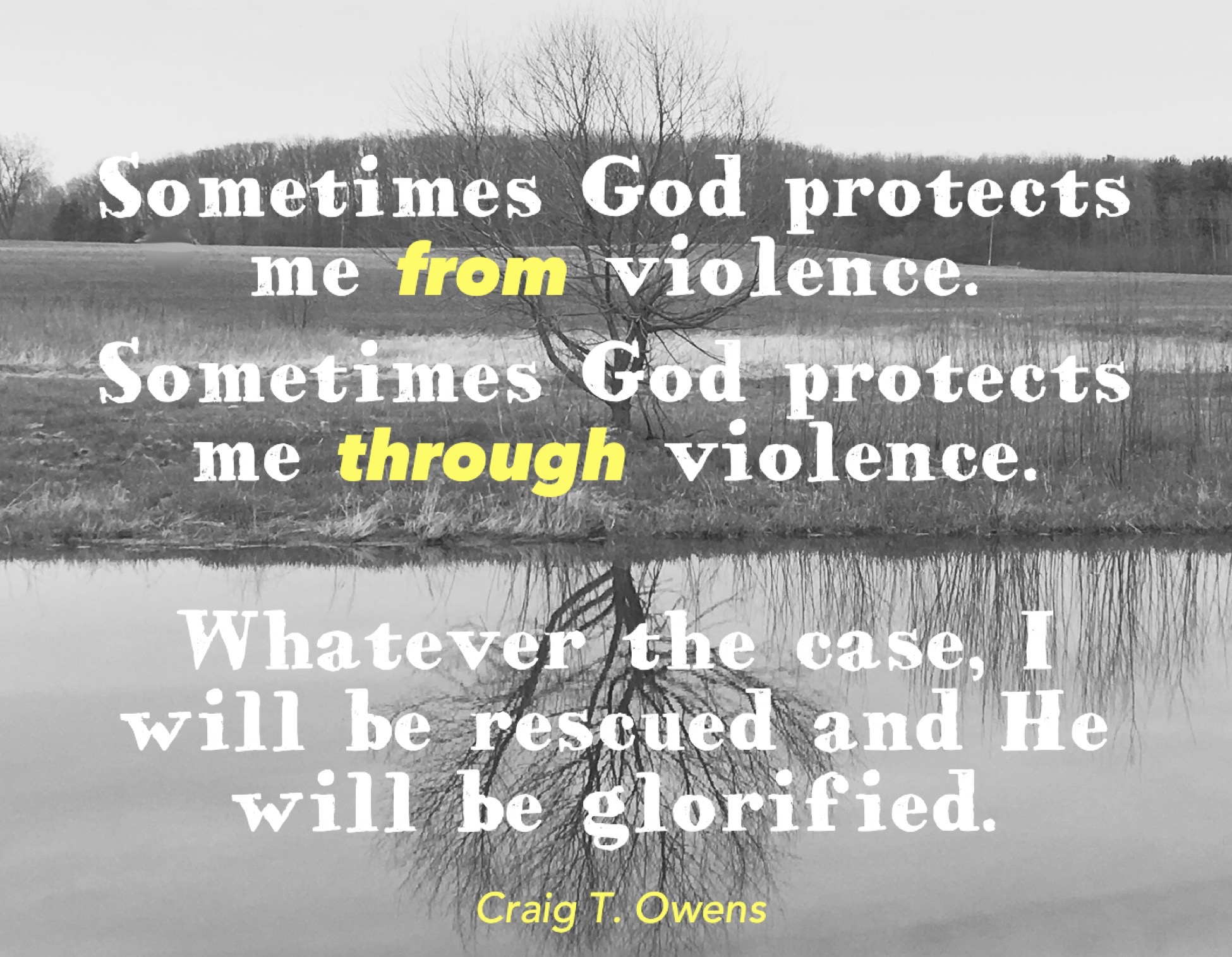
Sometimes God protects me from violence. Sometimes God protects me through violence. Whatever the case, I can be assured that I will be rescued and He will be glorified. This prayer in Psalm 140 is a prayer for protection so that we can be fruitful for God’s kingdom.

We need to Selah during the evil times we live in and whenever we have to endure wicked attacks. 

  1. Selah to thank God that you have been redeemed from that evil lifestyle by your faith in Jesus, and then pray for your attackers (Matthew 5:44). 
  2. Selah to thank God that He is using even evil people to make you more fruitful, to arm you for battle, and to glorify His name (Mark 13:9). 

If you’ve missed any of the messages in our Selah series, you can check them all out by clicking here. 

►► Would you please prayerfully consider supporting this ministry? My Patreon supporters get behind-the-scenes access to exclusive materials. ◀︎◀︎
Poetry Saturday—The True Aaron

Listen to the podcast of this post by clicking on the player below, and you can also subscribe on AppleSpotify, or Audible. 

See Aaron, God’s anointed priest,
Within the veil appear;
In robes of mystic meaning dressed,
Presenting Israel’s prayer.

The plate of gold which crowns his brows,
His holiness describes;
His breast displays, in shining rows,
The names of all the tribes.

With the atoning blood he stands,
Before the mercy-seat;
And clouds of incense from his hands,
Arise with odor sweet.

Urim and Thummim near his heart,
In rich engravings worn;
The sacred light of truth impart,
To teach and to adorn.

Through him the eye of faith descries,
A greater Priest than he;
Thus Jesus pleads above the skies,
For you, my friends, and me.

He bears the names of all His saints,
Deep on His heart engraved;
Attentive to the state and wants
Of all His love has saved.

In Him a holiness complete,
Light and perfections shine;
And wisdom, grace, and glory meet;
A Savior all divine.

The blood, which as a Priest He bears
For sinners, is His own
The incense of His prayers and tears
Perfume the holy throne.

In Him my weary soul has rest,
Though I am weak and vile
I read my name upon His breast,
And see the Father smile. —John Newton [Levitcus 8:7-9]

►► Would you please prayerfully consider supporting this ministry? My Patreon supporters get behind-the-scenes access to exclusive materials. ◀︎◀︎
Links & Quotes

John Stonestreet wrote, “The moment Roe v. Wade was overturned last month, desperate activists began to dust off the oldest and oddest arguments for abortion. These “gotcha” scenarios are supposed to prove that pro-lifers don’t really value human life or consider preborn babies from the earliest stages of development to be human. Instead, these pretend scenarios demonstrate that pro-lifers are simply hypocrites.” Check out the rest of his post 

“When the facts are not clear [in a relationship issue] it is better to consider someone innocent until proven guilty. That is the law of mercy, which we all want applied to us as well.” —Dr. John Townsend, Who’s Pushing Your Buttons

Pornography is contributing to the over-sexualization of young people, which is reaping some painful consequences…

I love when archeology confirms yet another facet of the historicity of the Bible! Check out this archeological biography of King Menahem.

Just a reminder that YOU were made on purpose …

A good friend of mine, Pastor Kristi Rhodes, is in a battle with cancer and I’m fighting alongside her! If you want to join Team Kristi, join the team by clicking here.

Go Deep—Mercy And Wrap-up

According to Romans 12, all Christians have been given a unique gift package by God. We are to use these motivational gifts to make God’s Kingdom more visible and more desirable. 

This week we discuss the gifts of teaching and exhortation. You may download the participant’s notes and the gifts assessment I use in this lesson:

If you missed any of the lessons in this class, you can find them all here.

If you would like to join us in person for this class, here is where you can find us.