How Far?

How far are you willing to go to make sure someone learns something from you?

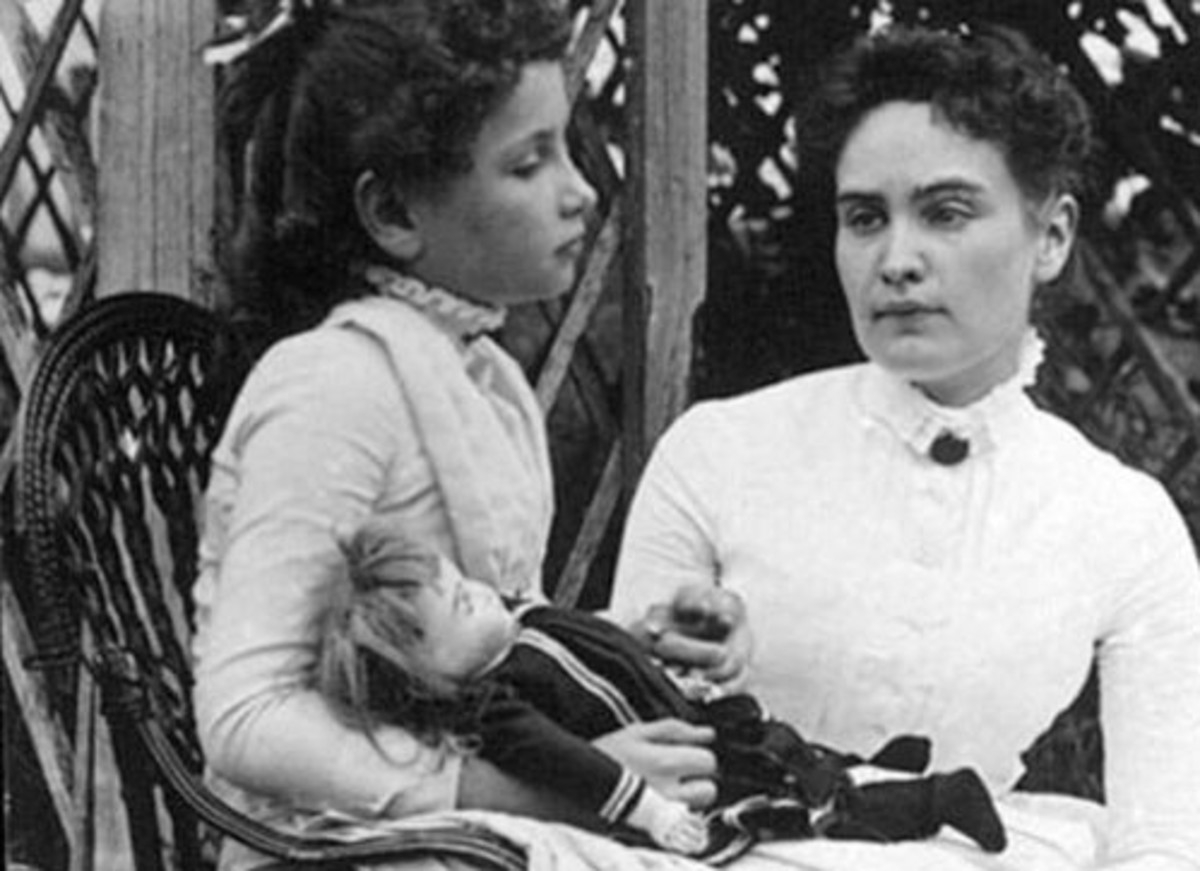
I’m reading a biography about Helen Keller and her teacher Annie Sullivan. As you may have heard before, Annie taught Helen how to communicate using her hands and fingers to spell out words. But after Helen heard about a deaf-blind student in Norway who was learning to speak audibly, Helen was determined to speak this way as well.

How do you teach someone who is deaf how consonants, vowels, blends, and words are supposed to sound? Eventually, Helen could “listen” to someone speak by placing her middle finger on the speaker’s nose, her index finger on their lips, and her thumb on their throat.

To get to this point of “listening” Helen had to know how sounds and words were formed with the lips and tongue. Initially, Annie would place Helen’s fingertips on her lips as she made sounds, but that only works so far. One of Helen’s cousins wrote, “Many times it was necessary for Helen to put her sensitive fingers in Teacher’s [Annie’s] mouth, sometimes far down her throat, until Teacher would be nauseated, but nothing was too hard, so Helen was benefited.”

Nothing was too hard.” Not even being gagged by an eager pupil! What amazing dedication!

So how far are you willing to go to help someone learn something valuable? Can you find a new way to say it? Are you willing to humble yourself to make yourself heard? Will you find a new way to communicate? A way that’s outside of your comfort zone? Can you communicate without even using words?

The Apostle Paul communicated the good news about Jesus this way: “I’ve become just about every sort of servant there is in my attempts to lead those I meet into a God-saved life. I did all this because of the Message. I didn’t just want to talk about it; I wanted to be in on it!” (1 Corinthians 9-:22-23, The Message)

How far are you willing to go to make sure someone hears the good news of Jesus from you?
Still Learning

I live by the axiom, “If you’re through learning, you’re through.” So I try to learn something new every day.

I just finished a class called New Testament Survey: a quick overview of the 27 books that compromise the New Testament of the Bible. Here’s a couple of interesting factoids I picked up from my studies:

  • The earliest-written book was James. Interesting, because at one point James thought Jesus (his half-brother) was nuts.
  • Only Matthew uses the term kingdom of heaven; all of the other writers use kingdom of God.
  • Mark uses the word immediately more times than anyone else. Perhaps because his source (Peter) was always doing things so quickly… sort of a ready, FIRE!, aim kinda guy.
  • Luke wrote what is called “the global gospel” for everyone, so he included 45 teachings/events that no one else records.
  • John doesn’t record any of Jesus’ parables.
  • John uses the word believe nearly 100 times— way more than any other writer.
  • Luke talks about the Holy Spirit nearly 60 times in the 28 chapters of Acts.
  • Romans is the longest of Paul’s epistles with 7101 words; Philemon is the shortest with just 355 words.
  • With the exception of the pastoral epistles (1 Timothy, 2 Timothy, Titus) Paul’s letters are arranged in the Bible from longest to shortest.
  • In 1 & 2 Thessalonians (only 136 verses) Paul refers to God, Christ, the Holy Spirit, or a combination thereof more than 150 times.
  • Paul gives Timothy seven word pictures to describe the kind of pastor he should be: son, soldier, athlete, farmer, workman, instrument, and servant.
  • Hebrews is called “the book of better things” so better is used 13 times. This word is used only six times in the remaining 26 books of the New Testament.
  • James wrote 108 verses but issues 50+ direct commands.
  • In John’s three short epistles he uses the word know 33 times, and the word dear ten times.

Keep on learning! There’s a lot of good stuff out there. What have you learned lately?

Ultimate Devotion

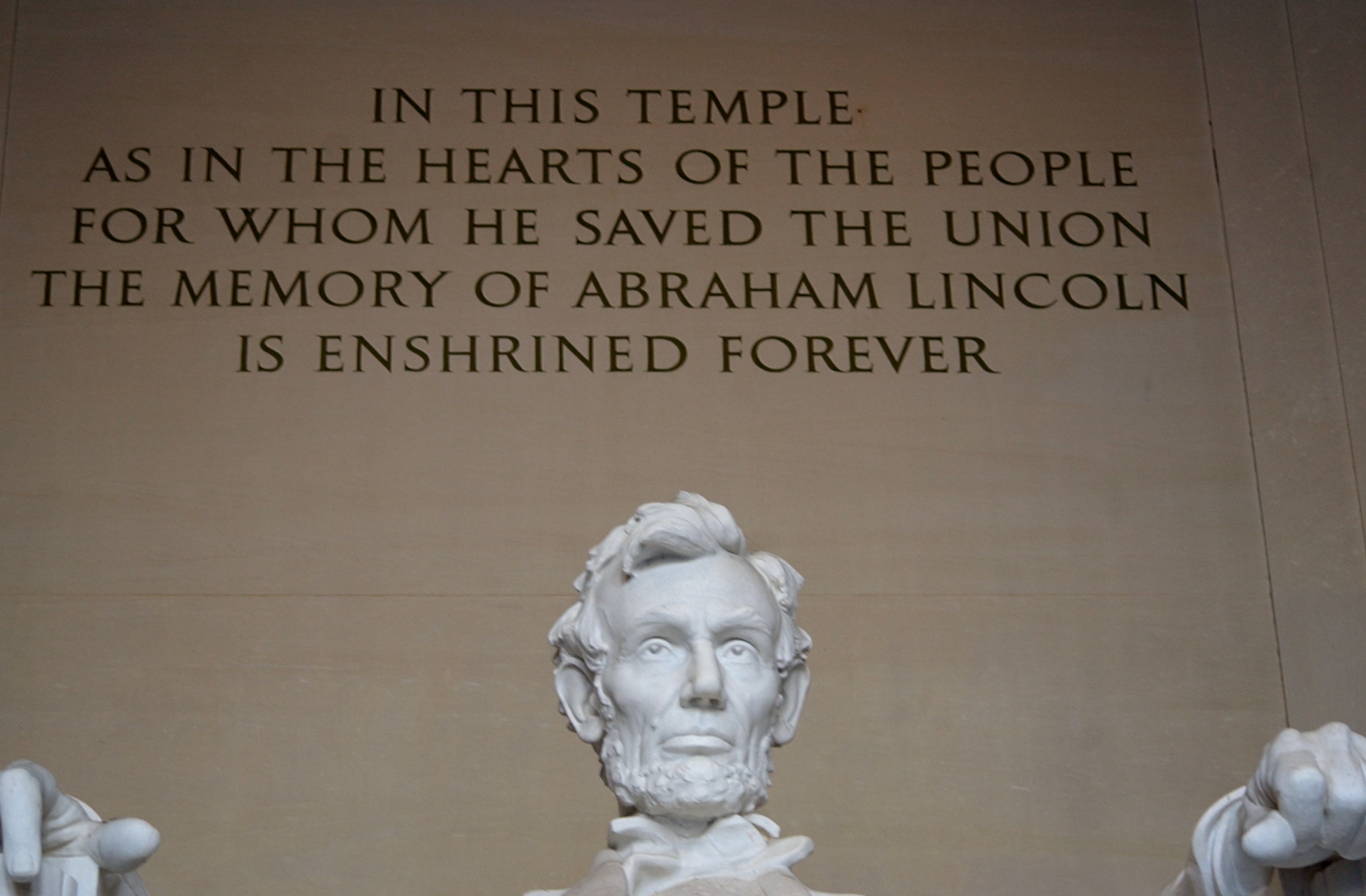
Usually I awaken each morning with some song echoing in my mind, but this morning was different. This morning I heard the last lines of Abraham Lincoln’s Gettysburg Address resounding in my mind—

It is for us the living, rather, to be dedicated here to the unfinished work which they who fought here have thus far so nobly advanced. It is rather for us to be here dedicated to the great task remaining before us—that from these honored dead we take increased devotion to that cause for which they gave the last full measure of devotion—that we here highly resolve that these dead shall not have died in vain—that this nation, under God, shall have a new birth of freedom—and that government of the people, by the people, for the people, shall not perish from the earth.

America is still an unfinished work. She is a work which has been nobly advanced by the blood of patriots who believed in the work which had been birthed on this soil. These honored dead gave their last full measure of devotion to this nation “conceived in Liberty” by the guiding hand of God Himself.

Just 87 years earlier the Founding Fathers closed the Declaration of Independence with these words—

And for the support of this Declaration, with a firm reliance on the protection of Divine Providence, we mutually pledge to each other our Lives, our Fortunes, and our sacred Honor.

Today is called Memorial Day, and it is right and proper that we memorialize the last full measure of devotion given by our fallen soldiers and patriots. It’s also a day to reflect on why they died—they were willing to shed their blood for this country conceived in Liberty under the watchful care of Divine Providence.

May we continue to honor the memory of our honored dead by upholding the values for which they died to preserve and protect. And may God continue to bless the United States of America as we remember and honor Him!

God Bless America,

Land that I love.

Stand beside her, and guide her

Through the night with a light from above.

From the mountains, to the prairies,

To the oceans, white with foam

God bless America, My home sweet home.

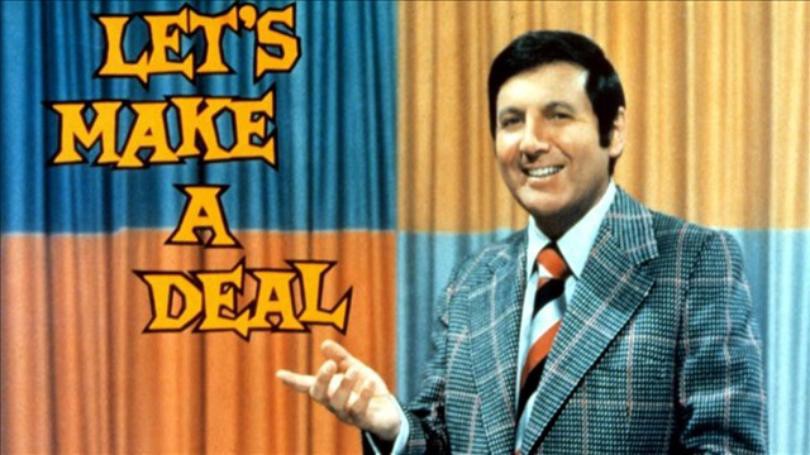
Let’s Make A Deal

Have you ever seen the 1970s game show Let’s Make A Deal? Contestants were given some tricky choices to make. They usually held something in their hand that was fairly valuable and were given the opportunity to trade what they could see for what they couldn’t see.

The anxiety about making this decision almost caused some people to have a nervous breakdown on the spot! And, oh, the emotional highs and lows when the contestants discovered what they won or lost!

I was reading about a let’s-make-a-deal moment in the Bible. Jerusalem is facing an imminent threat from an incredibly powerful man (2 Kings 18-19). Sennacherib sent this message to King Hezekiah, “Let’s make a deal” (18:23).

And he made a pretty compelling argument to take the deal. Sennacherib said, “No one who has ever stood up to me has survived before. I’m undefeated. I have a bigger, meaner army than you; more horses and chariots than you; and I’ve blocked your attempts to call on someone else to come rescue you. There’s no way out of this. C’mon, let’s make a deal!”

What makes a deal like this so appealing is that it’s all visible. It’s hard to say “no” to what you can see and say “yes” to what you can’t see.

Hezekiah knew God could deliver them, but would He deliver them? Hezekiah couldn’t see God, but he could see all of Sennacherib’s forces. What to do, what to do??

Hezekiah made the right deal. He put his trust in God! Although He was unseen, Hezekiah believed that God’s deal was better than Sennacherib’s deal. And Hezekiah was not disappointed in the deal he made (19:35-37).

What about you? Are you facing insurmountable odds today? Do you feel like you need to make a deal? Is what you can see more compelling than what you can’t see? I can promise you that any deal that you might make that doesn’t throw your trust entirely on God is a bad deal. A very bad deal!

So we’re not giving up. How could we! Even though on the outside it often looks like things are falling apart on us, on the inside, where God is making new life, not a day goes by without His unfolding grace. These hard times are small potatoes compared to the coming good times, the lavish celebration prepared for us. There’s far more here than meets the eye. The things we see now are here today, gone tomorrow. But the things we can’t see now will last forever. (2 Corinthians 4:16-18, The Message)

Don’t give up! Don’t make a bad deal! Trust God. His way is always the best deal!

Wise Guys

I’m facing a big decision. I have an idea of the right way to go, but I’m taking some time to run my options by some wise guys. After all, even King Solomon—who was wiser than any other man, and probably could advise himself—wrote, “The more wise counsel you follow, the better your chances” (Proverbs 11:14, Message).

I also like what George Washington Carver said, “How much of God are we missing because we don’t stop to listen to the many voices God uses to speak to us?”

Of all the voices speaking to me, how am I choosing which wise guys to listen to?

Friendship—I have to know that my counselors are my friends. William Shakespeare asked the question, “Can he that speaks with the tongue of an enemy be a good counselor, or no?” I would answer “no.” I need wise guys that want me to be successful.

B.T.D.T.—I choose wise guys who have Been There Done That. Guys who have walked through the same scenario I’m facing now. Not a travel agent to point the way, but a tour guide who knows the path and will walk it with me.

Scarred—It’s hard to be helpful to someone else when you still have a gaping wound. I need wise guys who have been wounded in the past but now have the scars to show where they’ve been healed. It’s from this vantage point that they can be of the most help to me.

Successful—Finally, I choose to listen to wise guys who are successful. I don’t need some to tell me what should work—I want to hear what does work.

There’s an old attorney’s adage that says, “He who represents himself has a fool for a client.” If you have a decision to make I would modify this to say, “He who takes advice only from himself is taking counsel from a fool.”

What else would you look for in a wise guy? 

More Today?

I have shared before how I often wake up with a particular song on my mind. This morning it was a 1969 classic that I added to my iPod a few weeks ago: “More Today Than Yesterday” by The Spiral Starecase. (Go ahead and listen to the song while you read on.)

So as I was attempting to wake up Betsy, I sang part of the chorus to her. “I love you more today than yesterday. But not as much as tomorrow.” Which got me thinking: How do I do this?

Betsy and I have been “an item” for 8,935 days. I thought I loved her tons yesterday, so how do I love her more today than yesterday? Let me take a couple of cues from the song:

“I’ll be spending time with you”—the greater the quantity of time I spend with her the more likely I’ll have quality time with her.

“Everyday’s a new day in love with you”—love keeps no record of wrongs. If I’m holding grudges against her or beating myself up over mistakes I made, I’m keeping a record. Forgiveness is the key to wiping the slate clean so I can love her more today than yesterday.

“With each day comes a new way of loving you”—there’s a reason why the apostle Paul talks about “growing up” in the great love chapter of 1 Corinthians 13. My love should be maturing and growing up every day. So today I should be able to love Betsy in a more mature way.

“I thank the Lord for love like ours that grows ever stronger”—as my relationship with Jesus becomes more intimate I will learn how to love Betsy more today than yesterday. As C.S. Lewis put it, “When I have learned to love God better than my earthly dearest, I shall love my earthly dearest better than I do now.”

What special relationships do you have? Do you love that earthly dearest more today than yesterday? With quality time, forgiveness, maturity, and a closer relationship with Jesus, you can truly love that special someone more today than yesterday. Give it a try!

Every day’s a new day, every time I love you.

Every way’s a new way, every time I love you!

Mixed Signals

The Methodist church by my house has a marquee that faces a busy expressway. Today, as I drove by I, read their latest message: “Pay attention to your destination, not your speed.”

“Hmmm,” thought, “I wonder how the police department feels about that?”

No sooner had the thought passed through my head and I saw the flashing lights of a police officer with a car pulled over on the shoulder! I can almost imagine the driver’s frantic plea to the officer, “But, officer, the church back there told me…!”

This humorous scene reminded me of two quotes:

  • “It is no use walking anywhere to preach unless our walking is our preaching.” —Francis of Assisi
  • “Where one man reads the Bible, a hundred read you and me.” —Dwight L. Moody

May the “signs” of our lives never send mixed signals to the people “reading” us.

The Not-So-Little Stuff

Listen to the podcast of this post by clicking on the player below, and you can also subscribe on AppleSpotify, or Audible.

My youngest son showed up at the dinner table one evening with a swollen left eyelid. I looked at it a little more closely and could see what looked to be a bug bite in the corner of his eye.

“No big deal,” I thought. “It’s just a mosquito bite. Happens all the time in Michigan.” (After all the mosquito is slated to become our new state bird!)

But when he woke up the next morning, his left eye was only open a slit. By the time I got him to the urgent care, his eyelid was a deep pink color and he was feeling very lethargic.

Guess what? It’s not such a little thing anymore!

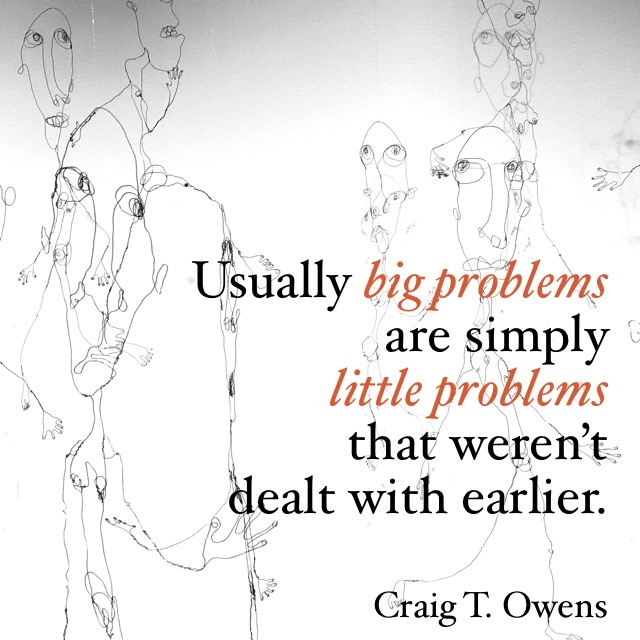
Frequently I hear people saying, “Don’t sweat the small stuff.” And I suppose to a certain extent that’s true. But typically the big stuff started off as the little stuff. Usually big problems are simply little problems that weren’t dealt with earlier.

  • Someone says, “My marriage failed last night” (big stuff). But the small warning signs had been there for months, but they weren’t taken care of.
  • Someone says, “My finances just hit rock bottom” (big stuff). But the small unnecessary purchases over time led to this moment.
  • Someone says, “I gave in to temptation” (big stuff). But the little flirting with the temptation created just the right environment for the big tumble.

Charles Simmons wrote —

“Life is made up of little things. It is very rarely that an occasion is offered for doing a great deal at once. True greatness consists in being great in the little things.”

On the flip side, rarely is a big problem presented all at one; it’s usually just the little things compounded over time.

The apostle Paul warned the church at Corinth about the little things that can blow up into the big things:

Your flip and callous arrogance in these things bothers me. You pass it off as a small thing, but it’s anything but that. Yeast, too, is a “small thing,” but it works its way through a whole batch of bread dough pretty fast. So get rid of this “yeast.” (1 Corinthians 5:6-7, The Message paraphrase)

A final thought from Paul to his protégé Timothy: “Keep a close watch on how you live” (1 Timothy 4:16 NLT). Great advice!

By the way, my son was fine after a little steroid treatment and some Benadryl, but some people never recover from their lack of attention to the little things.

Don’t let this happen to you! Watch out for the little things because you may find that they’re not so little after all!

►► Would you please prayerfully consider supporting this ministry?  My Patreon supporters get behind-the-scenes access to exclusive materials, like a 10-minute video I just shared on study tips for the poetic books of the Bible. ◀︎◀︎

Soap Opera Drift

Listen to the podcast of this post by clicking on the player below, and you can also subscribe on AppleSpotify, or Audible.

Disclaimer: My aggregate soap opera viewing time for my entire life is about 52 minutes, but I still think I know what I’m talking about <grin!>.

Soap operas are usually pretty predictable. If you’ve watched them for even a short time it’s not hard to figure out who’s who and what’s what. In fact, the plot lines are typically so predictable that you can stop watching a particular soap opera for months—or even years—and when you tune in again it will only take a day or so to once again know who’s who and what’s what.

One of the main reasons for this is the simplicity of the plot lines. There are three types of characters: good guys, bad guys, and wishy-washy guys that are swayed by the good guys or bad guys.

We applaud when the good guys win and the bad guys get what’s coming to them. We groan when the good guys get unfairly treated and the bad guys seem to get away with their badness. If we could give advice to the soap opera characters it would be pretty straightforward: “If you’re a good guy, we’ll cheer for you!”

But here’s the problem: it’s becoming harder and harder to tell the difference between the good guys and bad guys. It seems like more of them fall into the wishy-washy category. Over time, the characters have become mostly good but can be swayed to take revenge or cut corners. Or they’re mostly bad but still have a soft place in their heart to help the little orphan child.

There are very few really good guys left.

There’s a drift from good to mostly good. But mostly good is only one step away from mostly bad. And only one more step from mostly bad to just-plain-bad.

I’ve been reading through the soap opera history of the kings of Israel and Judah. Like our modern soap operas there are three types of kings: (a) the good kings did what was right in God’s eyes; (b) the bad kings did what was evil in the God’s eyes; and (c) the wishy-washy kings usually did what was right but had a “however” attached to their reign.

Unfortunately, most of the good kings tended to drift from good to mostly good, and eventually to mostly bad. The drift continued each generation toward mostly bad until God was hard-pressed to find any king who wasn’t bad. How sad: God’s blessing was right there for any good king to claim, but they kept drifting away!

Drifting happens so easily, which is why we have to be so diligent.

     You’re blessed when you stay on course, walking steadily on the road revealed by GOD. You’re blessed when you follow His directions, doing your best to find Him. That’s right—you don’t go off on your own; you walk straight along the road He set. You, GOD, prescribed the right way to live; now You expect us to live it. Oh, that my steps might be steady, keeping to the course You set; then I’d never have any regrets in comparing my life with Your counsel. I thank You for speaking straight from Your heart; I learn the pattern of Your righteous ways. (Psalm 119:1-7, The Message paraphrase)

Just like those soap opera characters or soap opera kings, we can get some pretty straightforward advice from the Bible: “If you stay on course, walk straight along the road God set for you, He will bless your life.”

Don’t drift.

Don’t settle for mostly good.

Don’t assume you’re doing right in God’s eyes; KNOW that you’re doing right in God’s eyes by following His Word.

►► Would you please prayerfully consider supporting this ministry? My Patreon supporters get behind-the-scenes access to exclusive materials. ◀︎◀︎

A Cup Of Tea

Green. Black. White. Red. Bagged. Loose. Hot. Iced. Home-brewed. Starbucks. I really enjoy all sorts of tea. Every day my morning routine includes sitting down with a nice cup of fresh tea. Not only am I sipping a cup right now (in my Life Is Good mug), but I will probably have a few more cups throughout today.

In large part because of the British Empire’s presence for so long in so many places around the world, their love for tea is still prominent in most of the world. Outside of the USA the favorite household social drink is tea.

Big deal, right? For me, it is. I use tea as an important reminder.

It all started with some great friends who are missionaries to Africa. Jayne, a lovely British woman, sent me some tea from the country in which they were serving. So naturally every time I brewed a cup of tea from Mozambique I thought of my friends. And prayed for them.

Now tea and prayer are inseparably intertwined—

  • Malawi tea = prayer for missionary friends in Malawi
  • Tea in a Western Michigan University mug = prayer for a Chi Alpha pastor
  • Indian tea = prayer for a dear friend who pastors in India
  • Loose tea = prayer for my cousin who serves as a missionary in an Arabic country
  • Apricot tea = prayer for my Mom & Dad who gave me this tea
  • Tangawizi tea = prayer for some other special family members
  • Chinese green tea = prayer for a family in China who tell people there about Jesus

You get the idea.

Paul wrote to his dear friends at the church in Philippi, “I thank God for you every time I think of you.” The key is to use something we do as part of our regular routine as a reminder to pray. It’s not hard. It’s not even taking time to bow your head and close your eyes.

Whenever you think of someone, pray for them. Use pictures, a piece of jewelry, a cup of tea, a bookmarker, special coffee cups, or anything else you handle every day as a reminder to pray.

Mother Teresa said, “Prayer enlarges the heart.” If you want to love others the way God loves, pray for them. If you want to love someone more deeply, pray for them more often. Prayer is one of the best habits we can develop.

Now, I must get back to my tea and my remembrances. Oh, by the way, if you have any tea recommendations, I would love to hear them!