Links & Quotes

On our 100th episode, Greg and I talk about how important it is for leaders to let people learn through their struggle, so we need to reject the temptation to jump in to help them too soon. Check out the full conversation The Struggle is Real (but Necessary).

I have a lot of new video content on my YouTube channel every week. Please check it out and subscribe so you don’t miss anything.

John Piper was asked how to identify false teachers or prophets, and he gives four biblical tests to determine this. But I also appreciate this admonition: “Don’t set the bar so low that you only stop listening to people if they can be properly called false teachers. Lots of people are teachers who are simply misguided and unhelpful in many ways but might not come under the ban of being called a false teacher. Set your standards high. Listen to people who are truly God-centered, Christ-exalting, Bible-saturated, Spirit-dependent, who bear the marks in their lives of authenticity.” 

In imploring Christians to not shrink back from difficult trials but to rise and conquer in the strength of the Spirit, Greg Morse makes this observation: “When the risen Christ walked among His early churches (as He walks among them still), His eye was very keen to observe and His heart very ready to address a particular kind of person in every assembly: ‘the one who conquers’ (Revelation 2:7, 11, 17, 26; 3:5, 12, 21). To each of the seven churches, He summons and strengthens the one who would overcome, prevail, hold fast, keep strong, stand firm, and move forward—the victors in Christ amid a larger group in the church who only profess to know Him.”

Two separate geological studies found a period in history where rock formations were impacted by massive amounts of water. ICR adds, “Because conventional geologists deny the historical accuracy of Genesis, they operate at a loss. They see evidence of massive erosion and tremendous water flow at the end of the Tejas Megasequence and just prior to the Ice Age but are hampered by their uniformitarian thinking to explain it. But the Bible gives us answers. Genesis describes a global flood that peaked on Day 150. The sedimentary rocks across all of the continents confirm this peak occurred at the end of the Zuni Megasequence (at the K-Pg). And the rocks confirm that the Tejas Megasequence records the subsequent receding phase.”

There was a Man who
dwelt in the east centuries ago,
And now I cannot look at a
sheep or a sparrow,
A lily or a cornfield,
a raven or a sunset,
A vineyard or a mountain,
without thinking of Him. —G.K. Chesterton


Clinton Manley addresses the place of physical exercise in the life of a Christian. Before sharing three astute observations about this interaction, he notes, “Body or soul is a false dichotomy. As Paul makes clear in 1 Corinthians 9:24–27, physical fitness and spiritual fitness don’t have to be either-or; they’re best as both-and. The body and soul have an inseparably reflexive relationship: the body affects the soul, and the soul affects the body. God created us to glorify Him by enjoying Him, and the body is the soul’s training partner in the pursuit of spiritual pleasures.”

“Who will trust me with a spiritual body if I cannot control even an earthly body?”  —C.S. Lewis 
Humility Sustains Lifelong Learning

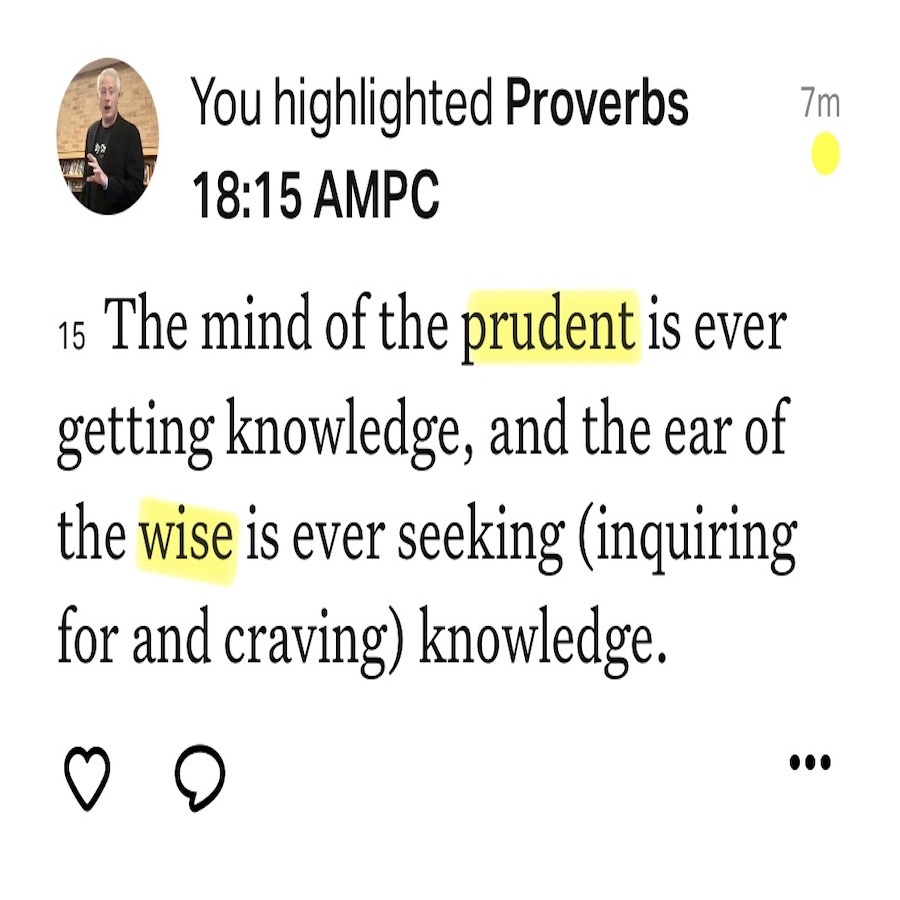
The mind of the prudent is ever getting knowledge, and the ear of the wise is ever seeking (inquiring for and craving) knowledge. (Proverbs 18:15 AMPC) 

It is a humble person who says, “I don’t know it all; there is so much more to learn.” Thus  the humble person becomes a lifelong learner. This pursuit increases the learner’s knowledge base, which requires diligence to make sure a know-it-all arrogance doesn’t creep in and block future learning. 

Humility starts the process and humility can keep the process going for a lifetime. But be on guard: the more you learn, the easier it is to become proud of your learning. This arrogance will derail future learning and growth. 

You may be interested in a couple of related posts about lifelong learning—Continuing to Learn and Lifelong Learning (a study on Proverbs 30).

To maintain your gains and to continue to learn more, you have to fight to remain humble. Check out the blog post and flowchart Humility is a Daily Choice.

Listen, Listen, And Listen Some More

Listen to the podcast of this post by clicking on the player below, and you can also subscribe on AppleSpotify, or Audible.

We rob ourselves and diminish the other person with whom we’re conversing if we aren’t fully listening. Listen, listen, and (really!) listen some more before you share your opinion.

Solomon said, “He who states his case first seems right, until his rival comes and cross-examines him” (Proverbs 18:17 AMPC).

And I like this thought from John Maxwell:

     “The best way to understand people is to listen. The best way to learn from others is to listen. The best way to receive people’s best contribution is to listen. The best way to learn what others need from you is to listen. The best way to gain people’s buy-in is to listen.” —from John Maxwell’s book High Road Leadership 

I shared several quotes on this topic in the posts Leaders Listen and How to be Wise with your Mouth and Ears. 

►► Would you please prayerfully consider supporting this ministry? My Patreon supporters get behind-the-scenes access to exclusive materials. ◀︎◀︎

P.S. After posting this, I came across an article on the Desiring God website called Listen Well to Love Well. She wrote, “Listening is hard work. While our ears automatically welcome sound waves and ship them to our brains, it doesn’t mean we always hear other people. We might even wonder if listening well is worth the effort. … We have a long history with listening that makes it essential to who we are yet difficult to get right. Sarah Clarkson writes, ‘We are by nature a listening people. If we were spoken into being by the Word of God, then at our core we are to be listeners, and to attend to the word that spoke us into life.’”

Integrity And Godly Sincerity

Listen to the podcast of this post by clicking on the player below, and you can also subscribe on AppleSpotify, or Audible. 

The apostle Paul had spent 18 months living and teaching in Corinth, he had likely visited them at least a couple of times, he had written two letters to them, and his associates had visited Corinth on his behalf. Bottom line: The Corinthians knew Paul well. 

With that in mind, Paul boldly states, “Now this is our boast: Our conscience testifies that we have conducted ourselves in the world, and especially in our relations with you, with integrity and godly sincerity” (2 Corinthians 1:12). 

Integrity means “the virtue of one who is free from pretense and hypocrisy.” Some biblical translations use the word holiness here. Indeed, for Christians integrity and holiness should be synonymous. The conclusion of this verse goes on to state that Paul could live this way “not according to worldly wisdom but according to God’s grace.” Paul knew that even more than the Corinthians, God knew Paul’s holy integrity. 

Paul also says that his conduct was with godly sincerity. You might think that the idea of sincerity or mental honesty is implied in the word integrity, but godly sincerity is a pureness that stands up to intense scrutiny. It’s not just a public act, but it is a consistently God-honoring way of living both publicly and privately. 

These two qualities give a godly leader moral authority like nothing else can. It’s authority that is felt as well as seen—it’s the “It Factor” that marks the Holy Spirit’s anointing on a leader. 

Paul is aware that his lifestyle could cause people to think well or to think poorly of the Gospel of Jesus. Just a few verses later, Paul uses the phrase “yes and no” twice (vv. 18-19). 

First, Paul reminds the Corinthians that he doesn’t “in the same breath say both ‘Yes, yes’ and ‘No, no.’” This means he doesn’t want his lifestyle to negate his preaching. 

Second, Paul wants to assure them that all of the promises of God are “‘Yes’ in Christ” (v. 20). He knows that a preacher who lives contrary to his preaching—whose walk doesn’t align with his talk—is not only a hypocrite before God, but a stumbling block to all who have put their faith in Jesus as a result of that preacher’s message. 

Integrity and godly sincerity are absolutely essential for those who proclaim the Gospel. 

Godly leaders must be vigilant. They must be ruthless with themselves so there isn’t even the slightest lapse of integrity. Any infractions in a leader’s integrity and godly sincerity could cause others to doubt that Christ’s “Yes” is truly a trustworthy “Yes.” 

May we all live in such a way that we, like Paul, can stand before those who know us best and assuredly say, “I have lived with all integrity and godly sincerity before both God and you!” 

►► Would you please prayerfully consider supporting this ministry? My Patreon supporters get behind-the-scenes access to exclusive materials. ◀︎◀︎

What Are You Reading?

Listen to the podcast of this post by clicking on the player below, and you can also subscribe on AppleSpotify, or Audible. 

I would like to ask you a simple question: What are you reading? 

You may have heard the phrase, “Leaders are readers.” Is that true? Is that the best use of your time? If this phrase is true, how do we know what to read? 

Here are some related blog posts I would suggest you peruse: 

The post from Scott Hubbard that I mentioned is called “What Should I Read Next? 

If you are a pastor or ministry leader, I would humbly suggest that my books might be a good addition to your reading list:

►► Would you please prayerfully consider supporting this ministry? My Patreon supporters get behind-the-scenes access to exclusive materials. ◀︎◀︎

Light In The Darkest Of Times

Listen to the podcast of this post by clicking on the player below, and you can also subscribe on AppleSpotify, or Audible. 

One of the reasons I appreciate the Bible—in fact, one of the main reasons that continually convinces me of the truthfulness of the Bible—is the way it portrays life as it really is. It doesn’t avoid the difficult subjects, nor does it sugarcoat the bitterness of life. The Bible tells it as it is. 

The songs that have us singing praises to God “when the sun’s shining down on me and the world’s all as it should be” are great, but when we can also find hope when we’re “found in the desert place” is the real test. 

Dark times come to all of us. 

David is anointed king of Israel and given a promise by God for a lasting legacy (2 Samuel 7:8-9, 16, 27-29; Psalm 110:1). And yet David cried out one of the most painful phrases ever uttered in Psalm 22:1-2, “My God, my God, why have You forsaken me?”  

(Check out all of the Scriptures in this post by clicking here.) 

Despite the promises that God gave David, when any of us are in a dark place, there is a natural human tendency to focus on the darkness around us and second-guess what is happening to us. You know the questions:

  • How did I get here? 
  • How will I get out of here? 
  • When will I get out of here? 
  • Have I offended God and perhaps missed out on His promise? 
  • Has He forgotten me? 

The Bible does tell us, “If You, Lord, kept a record of sins, Lord, who could stand?” and we also know it’s true that “all have sinned and fall short of the glory of God” (Psalm 130:3; Romans 3:23). 

That’s for us, not for Jesus. He is the sinless One. He obediently became human to rescue us, knowing full well that He was the fulfillment of the promise God made to David (Matthew 1:1; 22:41-44). Yet He ended up uttering the same painful words David did (Matthew 27:41-46). 

Remember I said that King David was a visible picture to help us see the coming King of kings. David was inspired by the Holy Spirit with this knowledge (Acts 2:29-30, 25-28). 

The old hymn says, “When darkness veils His lovely face, I rest on His unchanging grace” and “When all around my soul gives way, He then is all my hope and stay.” Look at David’s preaching to himself:

  • I am feeling forsaken (Psalm 22:1-2) … YET You are on Your throne (vv. 3-5) 
  • I am scorned by others (vv. 6-8) … YET You are closer than my scorners (vv. 9-11) 
  • I am completely cut off (vv. 12-18) … BUT You are my rescue (vv. 19-24) 

What did Jesus know:

  • He would sit on the throne of Heaven—Matthew 26:62-64 
  • His Father was completing everything—John 19:30; Psalm 22:25-31 
  • He would conquer every enemy—Revelation 1:8, 18 

Jeremiah cries out about his dark time, and then like David he says, “YET this I call to mind and have hope.” Jeremiah then talks about the never-ending love and mercy of God, and concludes by preaching to himself, “I say to myself, ‘The Lord is my portion; therefore I will wait for Him’” (Lamentations 3:19-24). 

The Lord is my portion” means the Lord is my King who declares promises and fulfills promises. 

The help in suffering is not found in focusing on the present darkness—and all the questions—but to focus on God’s promises. Like David’s “yet” and “but” we need to preach to ourselves about God’s past deliverance and then be assured of our future hope. 

Just assuredly as our King of kings said, “I will be resurrected from the dead to sit on the throne of Heaven,” He also said, “I will come to take you where I am”! 

Take your eyes off the present, temporary darkness and put them on the eternal King! 

If you have missed any of the messages in this series on the Royal Psalms, you can find them all here. 

►► Would you please prayerfully consider supporting this ministry? My Patreon supporters get behind-the-scenes access to exclusive materials. ◀︎◀︎

Links & Quotes

Some human employers may ask us to do business for them without giving us a good example or enough resources. But when Jesus told us to be about the Father’s business, He gave us an example and the full empowerment of the Holy Spirit! Check out this full sermon.

I have a lot of new video content on my YouTube channel every week. Please check it out and subscribe so you don’t miss anything.

“Compromise is a costly word; non-compromise, even more so.” —Bono 

Shane Morris said, “But as much as AI’s potential can cause harm, blaming it alone misses the point and likely makes these problems worse. Humans are the fallen ones, and that fallenness manifests in all kinds of destructive ways. Machines, strictly speaking, don’t have morals or intentions. They can only reflect ours.” Check out his podcast AI is not the problem, we are.

“I do not believe that a nation dies save by suicide. To the very last every problem is a problem of will; and if we will we can be whole. But it involves facing our failures as well as counting our successes.” —G.K. Chesterton 

I love reading and I have a long list of what I would like to read next. Scott Hubbard addresses this question: “Perhaps the question ‘What should I read or listen to?’ would come into sharper focus if we had a better sense of why we read at all. ‘Why read?’ has more than one right answer. We read to learn, to rest, to deepen friendship with fellow readers, to enjoy the craft of skilled wordsmiths. But alongside these good reasons, consider three others that put our reading into the service of greater loves.” 

“I only hope that we never lose sight of one thing—that it was all started by a mouse.” —Walt Disney 

“The scientific man does not aim at an immediate result. … His duty is to lay the foundation for those who are to come, and point the way.” —Nikola Tesla 

This week marked the 100th anniversary of a court case that was known as “the trial of the century,” perhaps you have heard it called the Scopes Monkey Trial. It was, and has been, more sensation than substance. Check out this post that puts this trial in its proper perspective.

The Benefits Of Humility

(1) God allows the humble to know Him more intimately. For though the Lord is high, yet has He respect to the lowly—bringing them into fellowship with Him—but the proud and haughty He knows and recognizes only at a distance (Psalm 138:6). 

(2) God gives the humble help to overcome evil. But He gives us more and more grace—power of the Holy Spirit, to meet this evil tendency and all others fully. That is why He says, “God sets Himself against the proud and haughty, but gives grace continually to the lowly (those who are humble enough to receive it)” (James 4:6). 

(3) God gives His favor to the humble. …Clothe (apron) yourselves, all of you, with humility—as the garb of a servant, so that its covering cannot possibly be stripped from you…. For God sets Himself against the proud—the insolent, the overbearing, the disdainful, the presumptuous, the boastful—and He opposes, frustrates, and defeats them, but gives grace (favor, blessing) to the humble (1 Peter 5:5). 

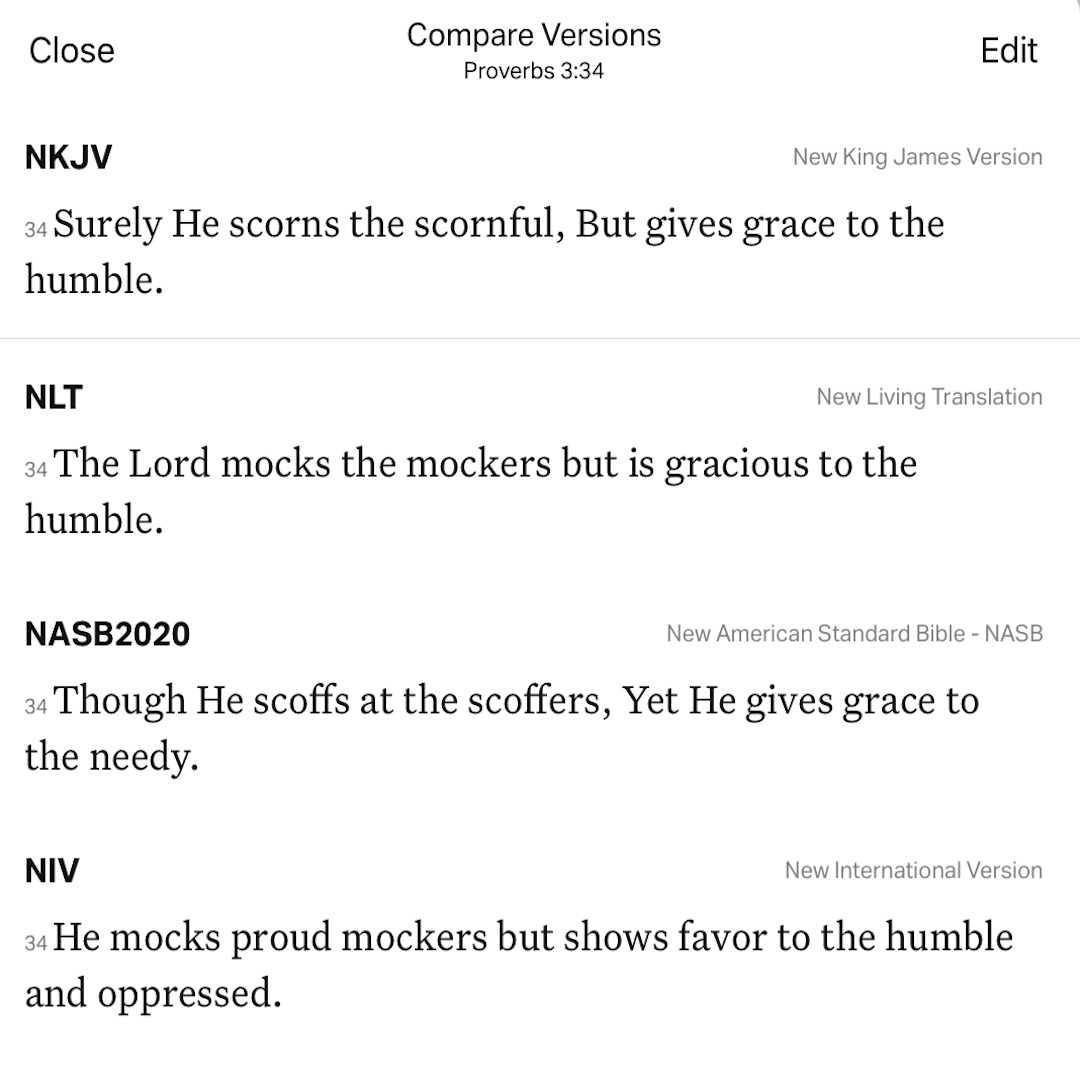
The bottom line—God mocks proud mockers but shows favor to the humble and oppressed (Proverbs 3:34).

Clarifying Questions Avoid Trouble

Listen to the podcast of this post by clicking on the player below, and you can also subscribe on AppleSpotify, or Audible. 

Misunderstandings happen all the time. Leaders can help their teammates navigate these verbal landmines—and avoid a lot of trouble—by asking the clarifying questions that will bring the whole team together. 

Check out the full conversation Greg and I had about unifying your team. 

We would love to serve as your leadership coach, so get in touch with us. My book Shepherd Leadership also has some biblical principles that leaders can immediately apply to their organizations. 

►► Would you please prayerfully consider supporting this ministry? My Patreon supporters get behind-the-scenes access to exclusive materials. ◀︎◀︎

Stoop To Serve

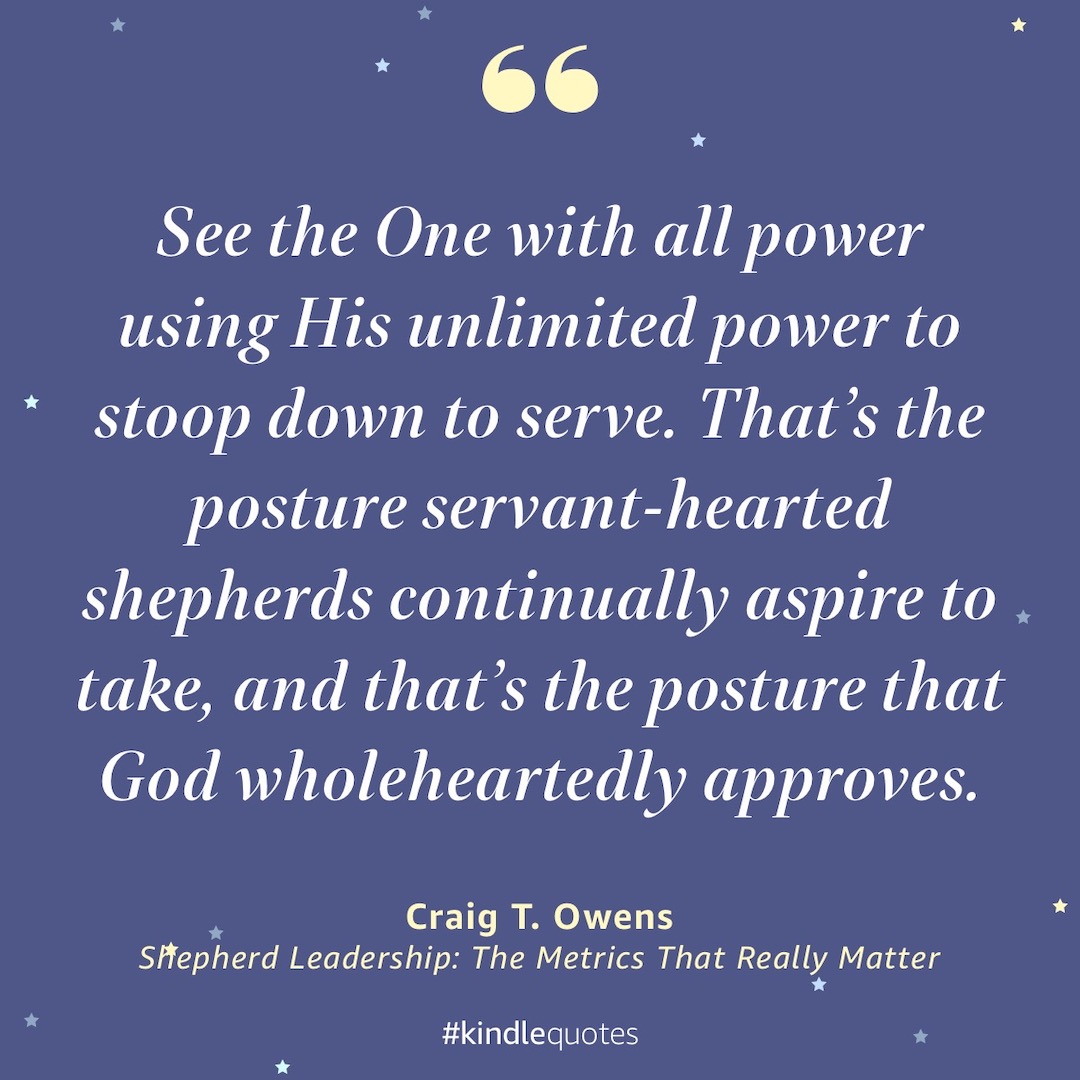
“If we truly want to be considered successful, we must turn our backs on what is typically termed ‘success’ so that we can keep our eyes on our Chief Shepherd. See the One with all power using His unlimited power to stoop down to serve. That’s the posture servant-hearted shepherds continually aspire to take, and that’s the posture that God wholeheartedly approves.” (From the chapter ‘The Wrong Ladder’ in my book Shepherd Leadership)