Links & Quotes

On the latest episode of The Craig And Greg Show, Greg and I talked about Christmas traditions. I have lots of new content every week, which you can check out on my YouTube channel.

“Always be sure of your ground and be sure that you are honoring God. If there is anything about the situation that will make you special, it will bring you sorrow. Your whole ministry has to be along the lines of His grace and blessing.” —Smith Wigglesworth 

“Leaders have the responsibility to keep evil out. Government is incapable of making men and women moral and, in fact, it is not given that assignment, for it does not have that power. God grants government the right to make laws to hold back the power of evil, for only the church through the gospel can help men and women be good. Conversely, leadership and government can do much harm if they, through injudicious application or partial enforcement of law, let evil in. Government cannot make people good, but it can certainly make them bad. We need leadership and government to build barriers against what is wrong, but neither leaders nor external human powers can usher us to what is right. Only Jesus, full of grace and truth, can do that.” —Dick Brogden, in Proverbs: Amplified and Applied

The celebration of Christmas is obviously not seen in the Bible, but it has always seemed to be closely connected to the church’s calendar. Scott Hubbard has an eye-opening history of Christmas in his post The Curious History of Christmas.

Scientists have learned from butterflies’ amazing vision how to better detect cancer cells. The way our Creator has designed these winged marvels is truly astounding!  
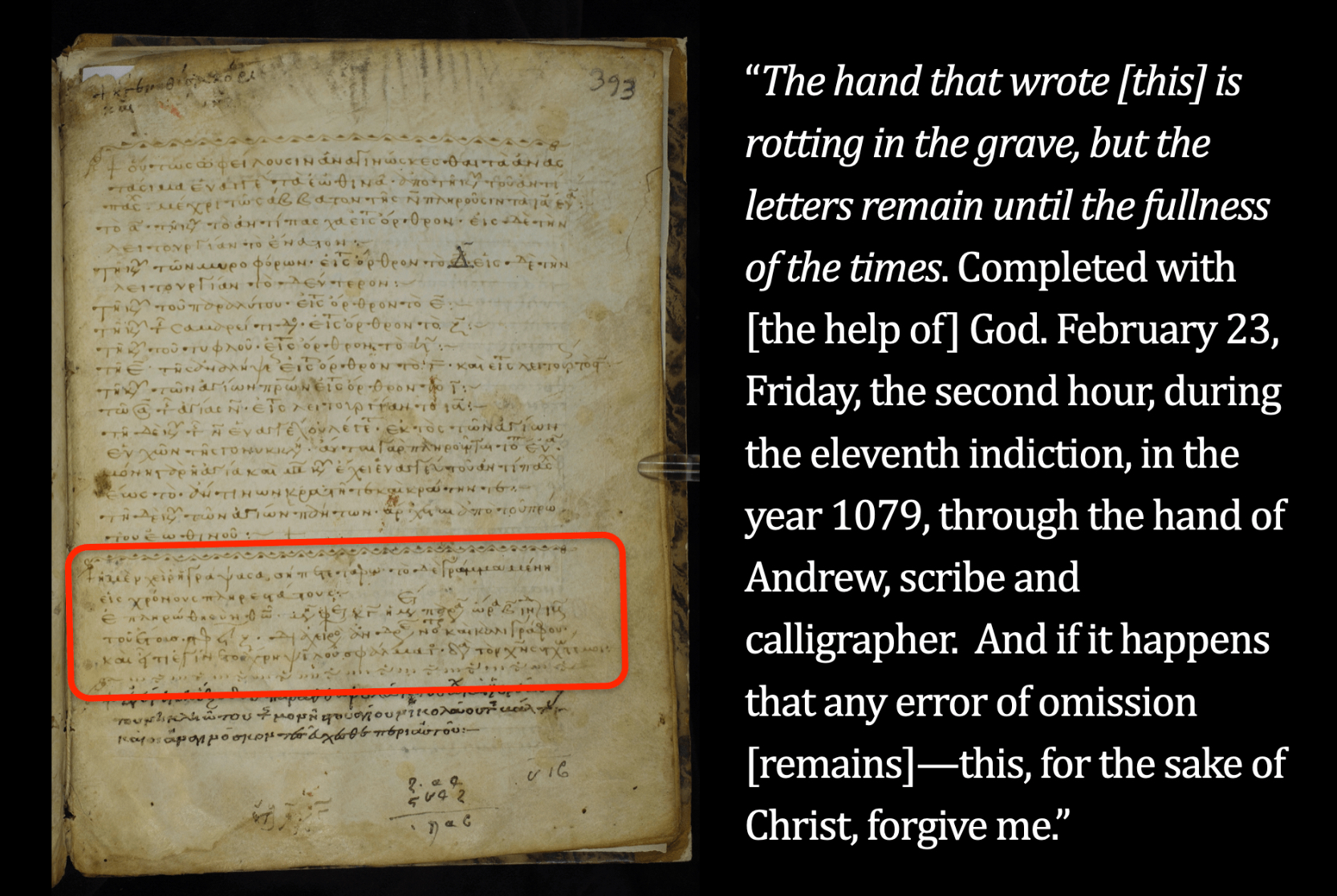
The ways the biblical text has been preserved and transmitted down to us today is nothing short of miraculous! Daniel Wallace is at the forefront of continuing to preserve the Word of God for future generations. Here is an example of the dedication of the biblical scribes: “The hand that wrote [this] is rotting in the grave, but the letters remain until the fullness of the times. Completed with [the help of] God. February 23, Friday, the second hour, during the eleventh indiction, in the year 1079, through the hand of Andrew, scribe and calligrapher. And if it happens that any error of omission [remains|—this, for the sake of Christ, forgive me.”

Just as archeological finds continue to confirm biblical accounts, fossil discoveries continue to confirm the biblical claim of Creation. Paleontologists have now created the term “problematica” to try to address fossil finds that don’t fit their evolutionary models.

T.M. Moore is sharing a thought-worthy series of posts on the biblical view of our economic activities, including a look at how governments and businesses should operate under God’s laws. Moore says, “Since God has written the works of the Law on the heart of all His image-bearers (Romans 2:14, 15), we should expect that awareness (if only subconsciously) to find expression. Put another way, whether they know it or not, people long for an economy guided by Biblical principles and guidelines.”

Don’t Steal God’s Glory

Belshazzar gave his gods credit for what Jehovah God had done. I think we are in danger of doing the same things when we toast our own success with words like:

  • “That was a lucky break!”
  • “I’m so smart!”
  • “Look what I have accomplished!”
  • “Fortune favors the brave!”
  • “I’m glad the ball finally bounced my way!”

This attitude raises a glass to our own accomplishments or the gods of luck and fortune. This attitude forgets God. This attitude grieves God’s heart. 

Let’s pay attention to our words and our heart’s attitude that gave birth to those words.

Infinitesimal

Listen to the podcast of this post by clicking on the player below, and you can also subscribe on AppleSpotify, or Audible. 

I do my best to take care of my physical body. I exercise every day, l try to watch what I am eating, and I attempt to get the correct amount of sleep. I attend to all of these things because I want to keep my body as healthy as I can.

But in all of these efforts, I would never presume that I could determine how long I’m going to live. I thought of this the other day when I read an interesting statement from Jesus.

In my Bible, this section of Luke’s Gospel has been given the heading “Do Not Worry.” Jesus tells us that we shouldn’t fret about our lives, our food, or our clothing because our Heavenly Father will take care of those things. Then Jesus says, “Since you cannot do this very little thing, why do you worry about the rest?” (v. 26).

What is this “very little thing” Jesus says I cannot do? In the previous verse, He says, “Who of you by worrying can add a single hour to his life?” 

I don’t know about you, but that seems like a very big thing to me! How could I add any time to my life!? I have no idea when my time is up. If I think that controlling the number of days I have left to live is a big thing, then the daily concerns of providing food, clothing, and shelter, seem small by comparison. 

But Jesus says determining the length of my days is a very little thing. If that’s how He sees it, how infinitesimal it must be for Him to provide the basics of life for His trusting children!

This is why Jesus says to us over and over again, “Do not worry.”

If anything will rob my life of years and my years of life, it is worry. Every time worry creeps into my heart, I need to be quick to turn that fretful concern over to my Heavenly Father. He loves me so much that Jesus promised, “Your Father has been pleased to give you the [eternal] kingdom.”

If God is giving me eternity, that means there is never a cause for me to worry about infinitesimal things!

►► Would you please prayerfully consider supporting this ministry? My Patreon supporters get behind-the-scenes access to exclusive materials. Like this video where I talk about the logic in Psalm 119. ◀︎◀︎

I Am Being Watched

Listen to the podcast of this post by clicking on the player below, and you can also subscribe on AppleSpotify, or Audible. 

I just discovered a way that Michael Jackson was like Jesus Christ.

Check out this episode of The Podcast.

Some resources to go along with this video:

►► Would you please prayerfully consider supporting this ministry? My Patreon supporters get behind-the-scenes access to exclusive materials. Like this video where I talk about the logic in Psalm 119. ◀︎◀︎

Faith Fueled By The Promise

Listen to the podcast of this post by clicking on the player below, and you can also subscribe on AppleSpotify, or Audible. 

Last week we looked at the amazing genealogy in Matthew 1 that connects Jesus to King David! 

After this genealogy, we read that an angel says to Joseph, “Joseph son of David, do not be afraid to take Mary home as your wife, because what is conceived in her is from the Holy Spirit” (Matthew 1:20). And then notice this commentary from Matthew—

All this took place to fulfill what the Lord had said through the prophet: “The virgin will conceive and give birth to a Son, and they will call Him Immanuel” (which means “God with us”). (Matthew 1:22-23)

Matthew says, “all this took place to fulfill what the Lord had said.” All what? Everything that came before that statement: the genealogy with all its exceptional items, the 70-year exile of the Jewish people, the Immaculate Conception, the fulfillment of a 700-year-old prophecy. 

I find this absolutely astounding! And so, apparently, did Joseph!  

But remember that Jesus is not only “the son of David” but He is also called a “son of Abraham.” This means that Jesus came to be more than just the King of the Jews. 

We have a cliché that says something like, “Don’t miss the forest for the trees.” By this, we mean that sometimes in the moment we only see one large tree or obstacle in front of us and we miss seeing the majesty of the whole forest. Or maybe we only see the obstacle and not the path that would take us where we need to go. 

We are living between the Advents now so you would think that we have a good “forest” perspective, but even we sometimes get bogged down in the moment, wondering what God is doing. The story of Abraham should help us to see the whole forest of God’s plan a little better. 

In Genesis 12:1-3 we read God’s promise to Abraham that all people on earth would be blessed by his obedience to God’s call. Listen to the opening words of Stephen’s sermon as he looked back on this—

The God of glory appeared to our father Abraham while he was still in Mesopotamia, before he lived in Harran. “Leave your country and your people,” God said, “and go to the land I will show you.” So he left the land of the Chaldeans and settled in Harran. After the death of his father, God sent him to this land where you are now living. (Acts 7:2-4) 

Stephen reminds us that God spoke to Abraham while he was still living in Mesopotamia. Abraham must have shared this promise with his father because in Genesis 11:31 we read that Terah takes Abraham, Sarah, and Lot with him to make this journey, but they only traveled as far as Harran. 

Why did they stop here? We’re not sure. Perhaps Terah was still grieving the death of his youngest son who had died before they left. Maybe Terah was concerned about his middle son Nahor who chose not to travel with them. Or maybe Terah was paralyzed by the magnitude of the journey still ahead of them. Whatever the reason, Terah allowed a “tree” to obscure his view of the whole “forest” of God’s plan. 

Stephen then says that Abraham continued the journey to Canaan “after the death of his father.” But if we do the math, it appears that Terah was still biologically alive when Abraham left (see Genesis 11:26, 32; 16:3, 16). 

Abraham had to trust God more than he respected his father, even to the point of considering his father as dead. 

Later on, God gave Abraham a similar test with his own son. Abraham passed this test and God repeated His promise about blessing all people through Abraham (see Genesis 22:1-18). 

In Romans 4, Paul explains that Abraham’s faith in God’s promise was rewarded, and that through our faith in Jesus we are connected to this same promise. 

Just as there was an “all this took place to fulfill what the Lord had said” about Jesus—including the faith-filled obedience of Abraham and David—God has an “all this” for your life too. 

God saw you before you were born. He had a plan for your life. He gave you gifts and talents to be used for His glory. There is not a single part—not a single experience—of your life that is accidental (Psalm 139:16; Ephesians 2:10; Romans 8:28). 

Just as He used all this for Jesus, He is using all this for your life too. Will you trust Him? 

Through David, God fulfilled the promise that Jesus would be King of the Jews. Through Abraham, God fulfilled the promise that Jesus would be King of all nations. Through Jesus, God fulfilled the promise that Jesus would be our Righteousness. 

Abraham died without seeing the promise fulfilled. But we have seen the promise fulfilled, and that should fuel our faith to trust God to fulfill the promise He has for each of us. I pray that this assurance will be renewed in your heart as you celebrate Advent this year. 

If you’ve missed any of the messages in our series called Long Live the King of Kings, you can check them all out here. 

►► Would you please prayerfully consider supporting this ministry? My Patreon supporters get behind-the-scenes access to exclusive materials. Like this video where I talk about the logic in Psalm 119. ◀︎◀︎

Links & Quotes

Are you looking for a Christmas gift for your pastor? Check out my book Shepherd LeadershipI have lots of new content every week, which you can check out on my YouTube channel.

“We rise no higher when we pull others down, yet when we stoop to serve, we conquer.” —Dick Brogden, in Proverbs: Amplified and Applied 

“Truth is incontrovertible. Panic may resent it. Ignorance may deride it. Malice may distort it. But there it is.” —Winston Churchill

The amazing history of the authors of the New Testament epistles, and their connections with each other.

“Nothing is really work unless you would rather be doing something else.” —J.M. Barrie

“God has made His Word so precious that if I could not get another copy of it, I would not part with my Bible for all the world. There is life in the Word. There is power in it. I find Christ in it, and He is the One I need for spirit, soul, and body. It tells me of the power of His name and the power of His blood for cleansing.” —Smith Wigglesworth

“Christians can most directly affect the shape of our economy by practicing love for God and neighbor in all our transactions. Beyond that, we should make the most of every opportunity and means for influencing the shape of public policy so that honesty, fairness, justice, and love guide all the policies that bind us together as we the people.” —T.M. Moore

Christian apologist Sean McDowell goes head-to-head with ChatGPT—

The Craig And Greg Show: Christmas Traditions

Listen to the audio-only version of this podcast by clicking on the player below, or scroll down to watch the video.

Christmas seems to be the one time of year when everyone loves to share their traditions, both in their families and in their organizations. As leaders we should embrace organizational traditions, and use them to show our team the culture of our organization. We also need to be aware that the personal traditions of our team members might make their lives a bit more hectic, and understanding and flexibility on our part will go a long way for them.

Books make great Christmas gifts! Pick up a copy of my and Greg’s new books to give to the leader in your life. Greg wrote Sage Advice and I wrote Shepherd Leadership.

  • [0:22] Christmas has more traditions than probably any other holiday—both in our families and in our organizations. 
  • [2:22] Organizational culture isn’t written down, so holiday traditions can help us convey the culture to our teammates.
  • [3:28] I share one of my family Christmas traditions.
  • [6:00] What does generosity have to do with traditions?
  • [7:14] Greg shares one of his Christmas traditions with his family.
  • [9:02] Traditions bring comfort in uncertain times, but we can still adapt them as some situations change.
  • [12:25] Leaders need to be aware of the stress our teammates may feel during the holidays.
  • [15:17] Leader should be especially aware of our staff members’ needs during this time of year.
  • [18:00] Greg shares a mistake that his organization made that generated a lot of stress, and how they corrected it.
  • [21:18] We both share some fun stores about Christmas.
  • [24:23] Leader need to really leverage what Christmas really means.

Check out this episode and subscribe on YouTube so you can watch all of the upcoming episodes. You can also listen to our podcast on Spotify and Apple.

An Octopus And God’s Word

Listen to the podcast of this post by clicking on the player below, and you can also subscribe on AppleSpotify, or Audible. 

Watching a documentary about an octopus reminded me of something new about God’s Word.

Check out this episode of The Podcast.

Some resources to go along with this video:

►► Would you please prayerfully consider supporting this ministry? My Patreon supporters get behind-the-scenes access to exclusive materials. ◀︎◀︎

Done With Intentional Sinning

The writer of Hebrews assures us that Jesus had to be made like us in every way so that He could experience every temptation that plagues us.

If Jesus hadn’t come to earth in the flesh and lived here victoriously over sin, we would have a loophole to keep on sinning. But He did indeed live a sinless life, die to pay our penalty, and was resurrected to indwell and empower us to overcome sinful lusts. 

So, since Christ suffered in the flesh for us, for you, arm yourselves with the same thought and purpose—patiently to suffer rather than fail to please God. For whoever has suffered in the flesh—having the mind of Christ—is done with intentional sin—has stopped pleasing himself and the world, and pleases God—so that he can no longer spend the rest of his natural life living by his human appetites and desires, but he lives for what God wills. (1 Peter 4:1-2 AMPC)

What a gift Jesus has purchased for us: Freedom from the ensnaring power of sin!

The Promise Of The King

Listen to the podcast of this post by clicking on the player below, and you can also subscribe on AppleSpotify, or Audible.

My podcast partner Greg and I just recorded an episode of our leadership podcast about Christmas traditions. I think there more traditions associated with this time of year than with any other event on our calendars. Traditions keep us connected to our roots, but they also help us feel like we can be in control of things. 

There has been a tradition in countries with monarchies that whenever a king died, the people would say something like, “The king is dead. Long live the king!” They would say this because the next king ascended to the throne immediately after his predecessor died. Except when a nation had been defeated, the traditional cry of, “The king is dead” was unanswered by, “Long live the king!” 

It appears at this moment that a new tradition has to be started—one where we take leadership over our own fates. 

The apostle Peter noted that people awaiting the Second Coming of Jesus would question if that event was ever going to happen. And the prophet Malachi closed the Old Testament with people saying much the same thing: “There doesn’t seem to be any advantage to following God’s laws, so maybe we should just do things our own way” (2 Peter 3:3-4; Malachi 3:13-15).

But then we turn the page to the dawn of the New Testament, and Matthew writes his Gospel about the First Advent of Jesus. He wants to show us that although the line of earthly kings in Israel may have been broken, the promised King of kings had now come to earth. 

I’m intrigued by the exceptions Matthew lists in his opening genealogy to illustrate this truth. First, as you might expect, the phrase “the father of” appears 39 times. This tells us a biological fact of life. These men didn’t know if they had fathered a son or a daughter, what their child’s contribution to the world might be, or even if their child would live faithfully to God. 

Matthew opens his genealogy by saying “the son of” twice. First, Matthew lists Jesus as the son of David—the king to whom God gave a very special promise of an eternal King coming from David’s family line. Then Matthew traces the genealogy back further to say “the son of Abraham”—the one through whom God said He would bless all nations (2 Samuel 7:11-16; Genesis 12:1-3). 

And what about the exceptional women Matthew records in this male-dominated genealogy? We have Tamar, Judah’s daughter-in-law, who tricked him into fathering a child by her; Rahab, a Canaanite prostitute who put her faith in God; Ruth, a Moabitess who left her homeland because she trusted God; Bathsheba, an adulteress who became David’s wife; and then Mary, the mother of Jesus, who was called “highly favored” of God (Luke 1:28). 

The phrase “son of” appears one more time when the angel calls Joseph by this title (Matthew 1:20). Jospeh is also called “the husband of Mary” (Matthew 1:16). 

Whereas Abraham and David were rewarded for their faithfulness to God and were told of future blessings, Joseph’s act was different. Joseph had a choice. He was told that the Child in Mary’s womb would be the Messiah. Now Jospeh had to decide: Would he choose to believe this? Would he choose to bear the shame and reproach to accept his role as father? 

We have the a similar choice today: Will we choose to believe that God has announced His plan and that He is fulfilling His plan? 

Here’s the simple truth. It appears as two statements, but it is really the same thought—

The Advent of Jesus has come. The Advent of Jesus will come. 

The First Advent of Jesus should build our anticipation for the Second Advent. His First Advent should be proof that God keeps His promise. 

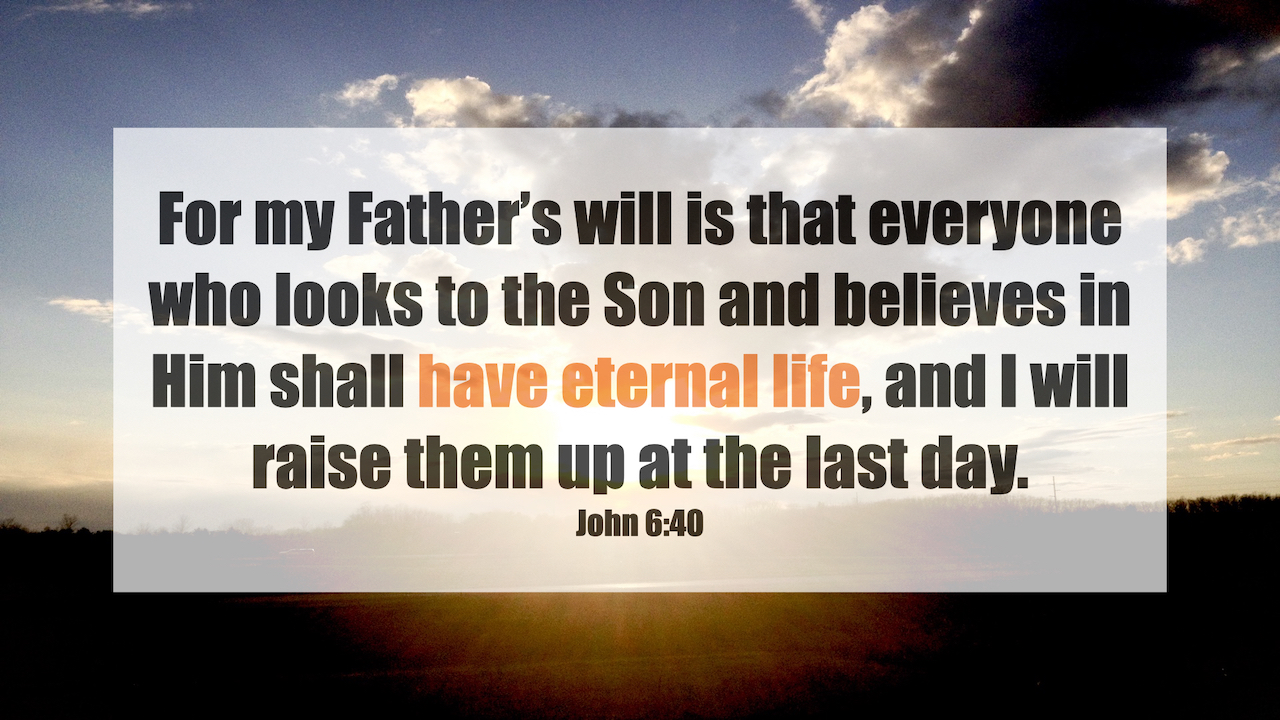
Jesus told us that believing God’s promise would bring us into God’s family. Jesus said, “For My Father’s will is that everyone who looks to the Son and believes in Him shall have eternal life, and I will raise them up at the last day” (John 6:40). 

The apostle Paul also assures us, “So in Christ Jesus you are all children of God through faith” (Galatians 3:26). 

Let’s not blindly follow the traditions of previous generations, but let us chose for ourselves to believe in God’s promised Messiah, to trust that He alone can give us eternal life, and then let us live in both celebration of His First Advent and expectation of His Second Advent. 

If you’ve missed any of the messages in our Christmas series called Long Live The King Of Kings, you can find them all by clicking here. 

►► Would you please prayerfully consider supporting this ministry? My Patreon supporters get behind-the-scenes access to exclusive materials. ◀︎◀︎