[12:42] How can leaders use the priority vs. priorities paradigm to create margin in their life?
[14:36] We throw out the “Not-To-Do List Challenge” for leaders.
Check out this episode and subscribe on YouTube so you can watch all of the upcoming episodes. You can also listen to our podcast on Spotify and Apple.
Listen to the podcast of this post by clicking on the player below, and you can also subscribe on Apple, Spotify, or Audible.
…the fear of the Lord is the key to this treasure (Isaiah 33:6).
What treasure is Isaiah referring to? There is an amazing list of blessings in this chapter! Things like…
God’s graciousness
God’s strength
Salvation
God’s justice
God’s righteousness
A sure foundation
“A rich store of salvation and wisdom and knowledge”
Eternally secure in God’s presence
Seeing God’s beauty
Having evil people removed from my life
Peace
How do I get the key to this treasure? By placing my faith in Jesus. Jesus paid the price, so He could take the key from the devil and hold it securely. When I am in Him, I have access to this key to God’s riches!
With all of this treasure accessible to me, how do I now live? In a word: Nobly. “But the noble make noble plans, and by noble deeds they stand” (Isaiah 32:8). I am a child of God, a joint-heir with Jesus. I lack no good thing, so I can live securely, gracefully, and nobly. I must live this way to bring glory to my Lord and my Master every single day!
Listen to the podcast of this post by clicking on the player below, and you can also subscribe on Apple, Spotify, or Audible.
I was teaching a class for my team members, and at one of the breaks a new employee came up to me to say how much he was enjoying the day, and to tell me that he would like to do what I was doing. I asked him, “But do you want to do what I did in order to do what I’m doing?” When I explained that I read about 10-12 books for this training time, and that it took me about 40 hours to prepare for our 4-hour class, he didn’t seem as interested.
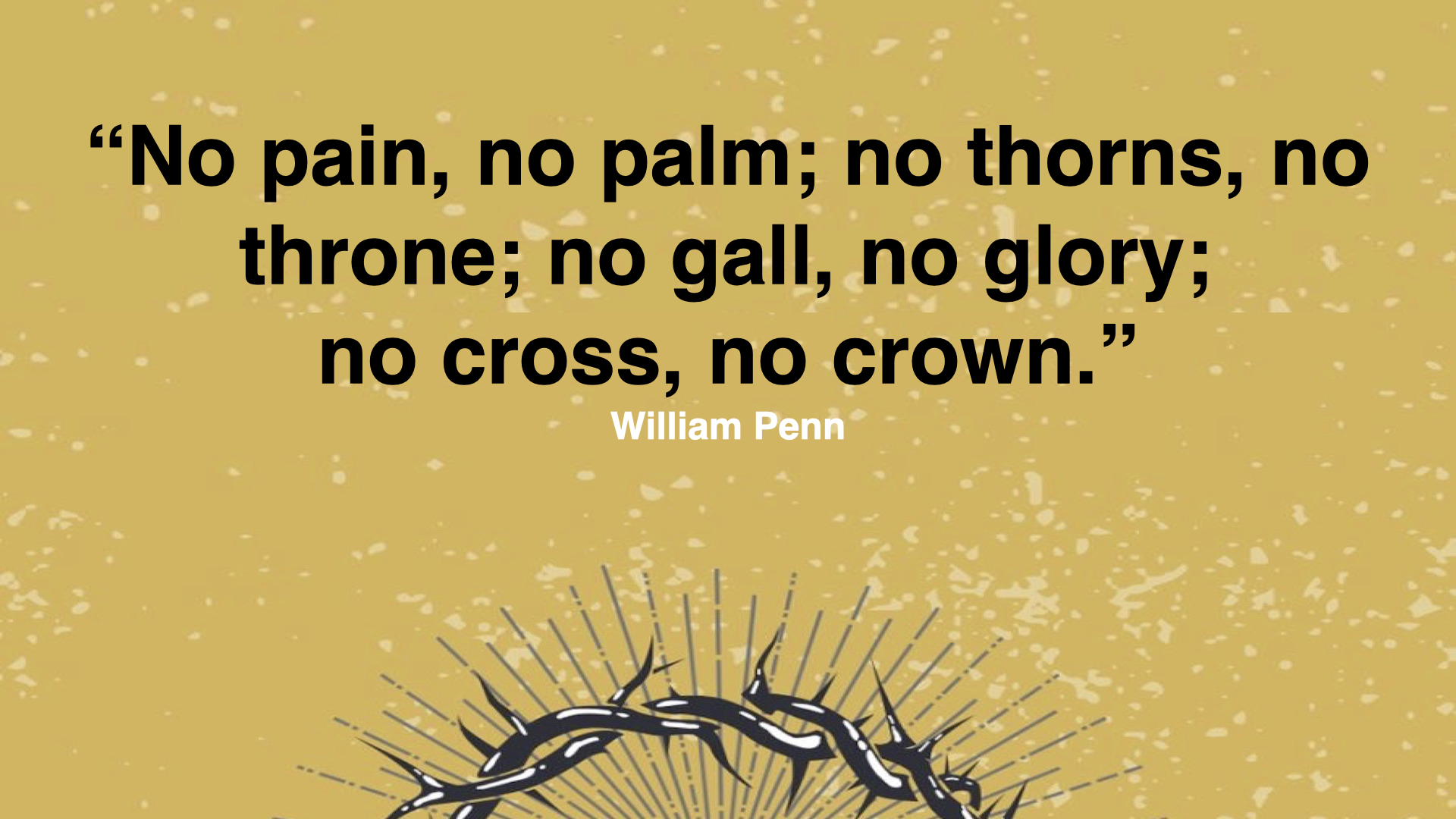
Most people don’t want to put in the work, but they just want the results. As Christians we need to remember these words from William Penn: “No pain, no palm; no thorns, no throne; no gall, no glory; no cross, no crown.”
The human Jesus understands and empathizes with our painful struggles, and the divine Jesus helps us endure through these painful struggles to get the rewards on the other side.
What do we mean by divine? The dictionary simply defines it as things relating to God or gods, so we need to use some context to help us understand who this divine Jesus is. After all, the New Testament refers to both Jesus and Artemis as divine (Romans 1:20; Hebrews 1:1-3; Acts 19:27).
One way we can distinguish is by doing what the writer of Hebrews advised: “Remember your leaders, who spoke the word of God to you. Consider the outcome of their way of life and imitate their faith” (Hebrews 13:7). We see that the so-called worshippers of Artemis were more interested in their own financial gain than they were her divinity (Acts 19:23-27). In contrast, the apostle Paul demonstrated a totally Jesus-focused lifestyle: “However, I consider my life worth nothing to me; my only aim is to finish the race and complete the task the Lord Jesus has given me—the task of testifying to the good news of God’s grace” (Acts 20:24).
Paul was following Jesus, and called all Christians to do the same. He noted that Jesus gave up all of His divine privileges to become our human Jesus, but because of this obedience, God made the divinity of Jesus shine more gloriously than anything else in creation! Then Paul transitioned to a word specifically for Christians:
Therefore, my dear friends, as you have always obeyed—not only in my presence, but now much more in my absence—continue to work out your salvation with fear and trembling, for it is God who works in you to will and to act in order to fulfill His good purpose. (Philippians 2:12-13)
In essence this is like Jesus saying, “I want you to have what I have, but you will have to do what I did to get it: That is, go through the painful struggles of life. But I will be right here with you every single step of the way!”
The writer of Hebrews echoes this idea by reminding us that Jesus was made perfect through suffering, and so are we. So he calls us to “not throw away your confidence; it will be richly rewarded.” He also reminds us that although the times of suffering are not pleasant, there is an unimaginable reward on the other side (Hebrews 2:9-11; 10:35-39; 12:1-11).
I especially like this conclusion: “No discipline seems pleasant at the time, but painful. Later on, however, it produces a harvest of righteousness and peace for those who have been trained by it” (Hebrews 12:11).
The divine Jesus has made it possible for us to be rewarded as He was rewarded! His divine power leads to our divine nature. And His divine power helps us defeat the world’s weapons (2 Peter 1:3-4; 2 Corinthians 10:4)
Jesus asks, “Do you want to do what I did in order to do what I’m doing?” The power of the divine Jesus can help us be perfected, but we only get to this perfected place by suffering as He suffered. That’s why we need to know our human Jesus understands, empathizes, and helps.
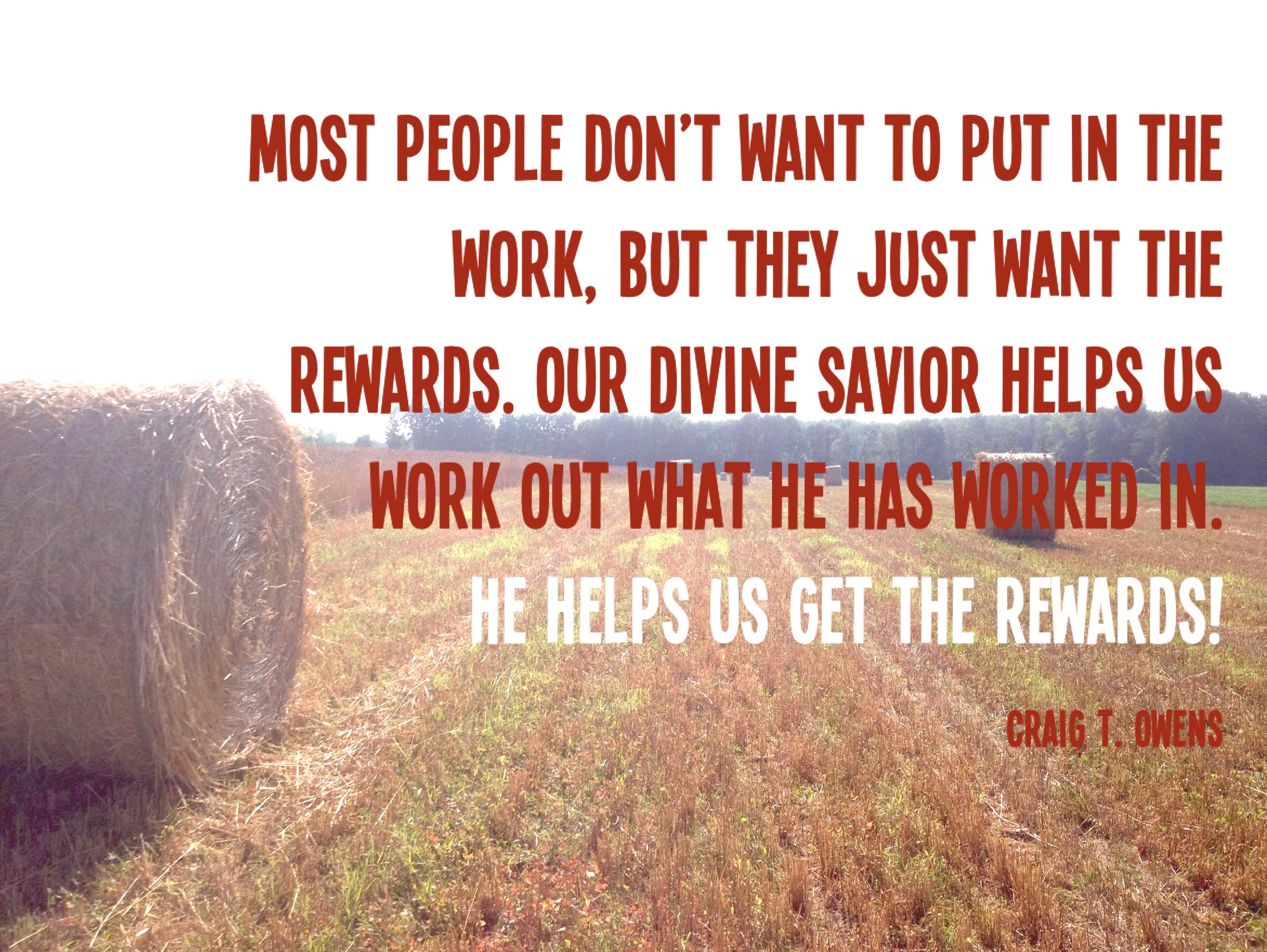
Most people don’t want to put in the work, but they just want the rewards. Our divine Savior helps us work out what God has worked in us. He helps us get the rewards!
Sorrow was beautiful, but her beauty was the beauty of the moonlight shining through the leafy branches of the trees in the wood, and making little pools of silver here and there on the soft green moss below. When Sorrow sang, her notes were like the low sweet call of the nightingale, and in her eyes was the unexpectant gaze of one who has ceased to look for coming gladness. She could weep in tender sympathy with those who weep, but to rejoice with those who rejoice was unknown to her.
Joy was beautiful, too, but his was the radiant beauty of the summer morning. His eyes still held the glad laughter of childhood, and his hair had the glint of the sunshine’s kiss. When Joy sang his voice soared upward as the lark’s, and his step was the step of a conqueror who has never known defeat. He could rejoice with all who rejoice, but to weep with those who weep was unknown to him.
“But we can never be united,” said Sorrow wistfully.
“No, never.” And Joy’s eyes shadowed as he spoke. “My path lies through the sunlit meadows, the sweetest roses bloom for my gathering, and the blackbirds and thrushes await my coming to pour forth their most joyous lays.”
“My path,” said Sorrow, turning slowly away, “leads through the darkening woods, with moon-flowers only shall my hands be filled. Yet the sweetest of all earth-songs—the love song of the night—shall be mine; farewell, Joy, farewell.”
Even as she spoke they became conscious of a form standing beside them; dimly seen, but of a Kingly Presence, and a great and holy awe stole over them as they sank on their knees before Him.
“I see Him as the King of Joy,” whispered Sorrow, “for on His Head are many crowns, and the nail prints in His hands and feet are the scars of a great victory. Before Him all my sorrow is melting away into deathless love and gladness, and I give myself to Him forever.”
“Nay, Sorrow,” said Joy softly, “but I see Him as the King of Sorrow, and the crown on His head is a crown of thorns, and the nail prints in His hands and feet are the scars of a great agony. I, too, give myself to Him forever, for sorrow with Him must be sweeter than any joy that I have known.”
“Then we are one in Him,” they cried in gladness, “for none but He could unite Joy and Sorrow.”
Hand in hand they passed out into the world to follow Him through storm and sunshine, in the bleakness of winter cold and the warmth of summer gladness, “as sorrowful yet always rejoicing.” —Lettie Cowman
“While grief is expressed in words, its resolution is in God and the hope He gives for the future. In a way, the lamentation process is one of coming to grips with all that God wants us to see about our present circumstances.” —Dr. Henry Halley
My friend Greg Heeres and I have a brand new episode in our leadership podcast called The Craig And Greg Show. This discussion is all about setting good priorities.
This is a weekly series with things I’m reading and pondering from Charles Spurgeon. You can read the original seed thought here, or type “Thursdays With Spurgeon” in the search box to read more entries.
Listen to the podcast of this post by clicking on the player below, and you can also subscribe on Apple, Spotify, or Audible.
The Best Of Neighbors
Only let your conversation be as it becometh the gospel of Christ (Philippians 1:27 KJV).
The word ‘conversation’ does not merely mean our talk with one another, but the whole course of our life and behavior in the world. The Greek word signifies the actions and the privileges of citizenship, and we are to let our whole citizenship, our actions as citizens of the New Jerusalem, be such as becomes the gospel of Christ. …
We are delighted to preach good high doctrine and to insist that salvation is of grace alone! But we are equally delighted to preach good high practice and to insist that a grace that does not make a man better than his neighbors is a grace that will never take him to heaven nor render him acceptable before God!
Whatever happens, conduct yourselves in a manner worthy of the gospel of Christ (NIV)
Above all, you must live as citizens of heaven, conducting yourselves in a manner worthy of the Good News about Christ (NLT)
Live in such a way that you are a credit to the Message of Christ (Message)
I believe that Christians are not citizens of Planet Earth. Our citizenship is in a place called Heaven, and yet we are traveling on Earth during our present lifetime. While we are here, we need to conduct ourselves in such a way that we make our Homeland desirable for other Earthlings too.
Let’s live in a such a way that Earthlings will say, “I ❤️ those Christians!”
Baruch was a faithful scribe and friend to Jeremiah. Not only did he transcribe all of Jeremiah’s dictation (twice!), but he also read all of Jeremiah’s words at the temple when the prophet was under house arrest. By identifying with Jeremiah, Baruch became the target of the false prophets’ vitriol.
Perhaps Baruch had big plans for his life, but those plans seemed thwarted because he was obedient to Jeremiah and to God. He was having a bit of a pity party which seemed to stem from his unrealized plans for himself.
I love the juxtaposition between two phrases in this chapter:
“You [Baruch] have said…” (v. 3)
“The Lord says…” (v. 4)
Baruch said, “My plans are failed.” God said, “My plans always prevail.”
Baruch said, “I’m done for.” God said, “Wherever you go, you will live.”
I have to stop listening to me. When I listen to me, my thwarted plans bring about a pity party. I have to keep listening to God. When I do, He brings life wherever He sends me.
I believe that shepherd leaders can learn a valuable lesson from Baruch’s life. In fact, in my book I talk about a time that God and my wife had to deal with me about my own pity party.
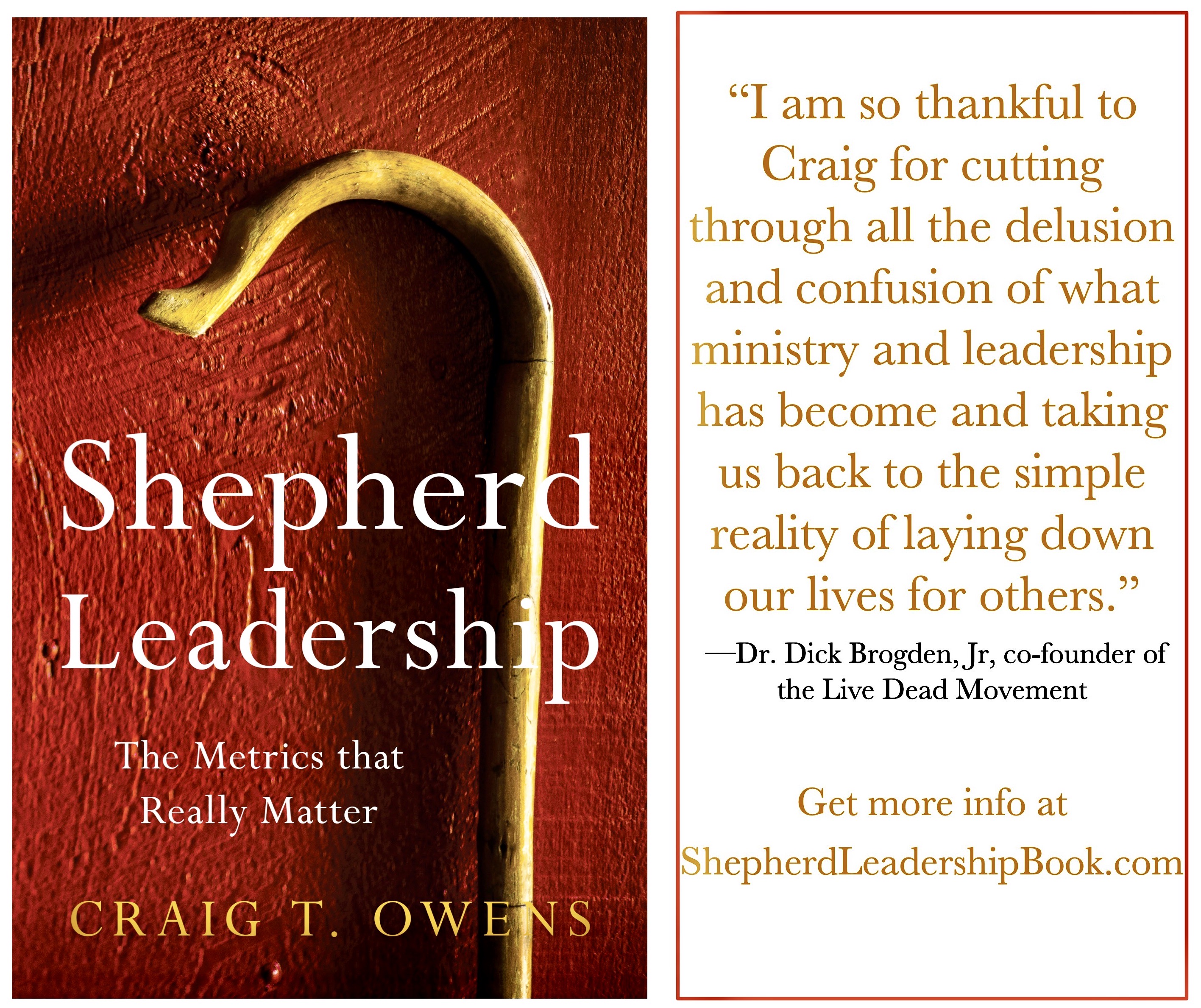
Shepherd Leadership: The Metrics That Really Matter is available in print or ebook, and in audiobook through either Audible or Apple.
Listen to the podcast of this post by clicking on the player below, and you can also subscribe on Apple, Spotify, or Audible.
Isaiah 52–53 contain a description of Jesus as a servant leader. One phrase describes Him like this: “See, My Servant will act wisely” (Isaiah 52:13).
That phrase “act wisely” is translated in some other translations of the Bible as “deal prudently.” I like that word prudently. It’s not a word that we use very often today, but it’s one that sets God’s servant leaders apart from worldly leaders.
Prudent can be described as…
circumspect
intelligently speaking and acting
teaching skillfully
having increasing understanding and insight
helping others grow in understanding
behaving appropriately
living wisely
guiding oneself and others willingly
What happens to the leader who lives and leads this way? Listen to the entire verse that I only quoted a portion of earlier—
See, My Servant will act wisely; He will be raised and lifted up and highly exalted.
Notice that this exalted person is described as a servant—not just anyone’s servant, but Jehovah’s servant. As a servant of God, Jesus becomes a servant of all. And as a servant of God, He is exalted and honored above all.
Jesus is every leader’s Ultimate Example of this. Jesus set aside every prerogative He had that would give Him the right to do things His way, in order to make Himself a servant of God and a servant of mankind (Philippians 2:6-11; Mark 10:45). Jesus gave all of His followers this example to emulate (John 13:15-17), so Paul tells us our “mindset should be the same as that of Christ Jesus” (Philippians 2:5).
I need to ask myself a question—and I would invite you to ask yourself this too: As a leader, am I growing in Christlike prudence?
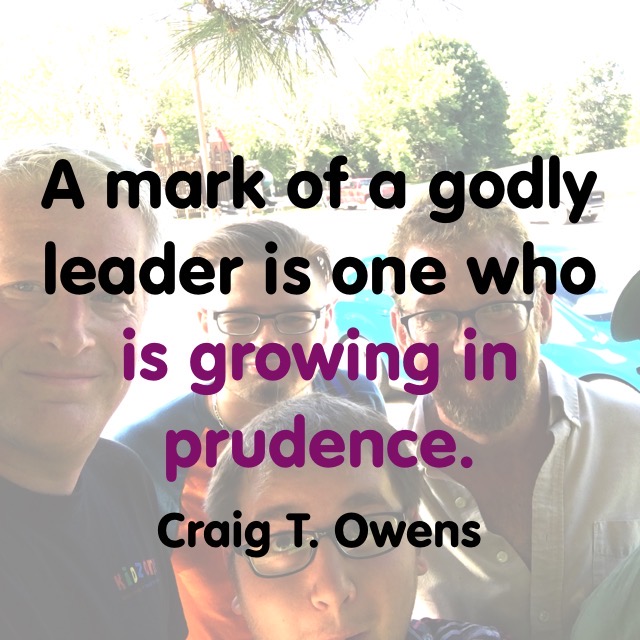
A mark of a godly leader is one who can see his growth in prudence.
Jesus, may You be pleased as I follow Your example of living and leading prudently. Holy Spirit, help me see the areas in my life where I need to submit to You. Father, may You be pleased to bless my leadership as it aligns with Your heart. I want to act wisely, lead prudently, and help others to follow this example of Jesus for themselves.
This is part 61 in my series on godly leadership. You can check out all of my posts in this series by clicking here.



 On this episode of “The Craig And Greg Show” we talk about:






 Craig T. Owens