Don’t Cross The Line

Listen to the podcast of this post by clicking on the player below, and you can also subscribe on AppleSpotify, or Audible. 

The apostle Paul writes something pretty straightforward: “Do not be anxious about anything” (Philippians 4:6). What might not seem so straightforward for us is this: What exactly is anxiety? 

The root word for anxious simply means to care for something or to care about something. Paul uses this word in a positive sense earlier in this letter when he praises Timothy for his concern for the wellbeing of the saints (2:19-22). In another letter, Paul told the Corinthians he had a deep concern for their spiritual growth (2 Corinthians 11:28) and that he desired for them to care in a similar way for their fellow saints (1 Corinthians 12:25). All of these instances use the same Greek word. 

(Check out all of the Scriptures in this post by clicking here.) 

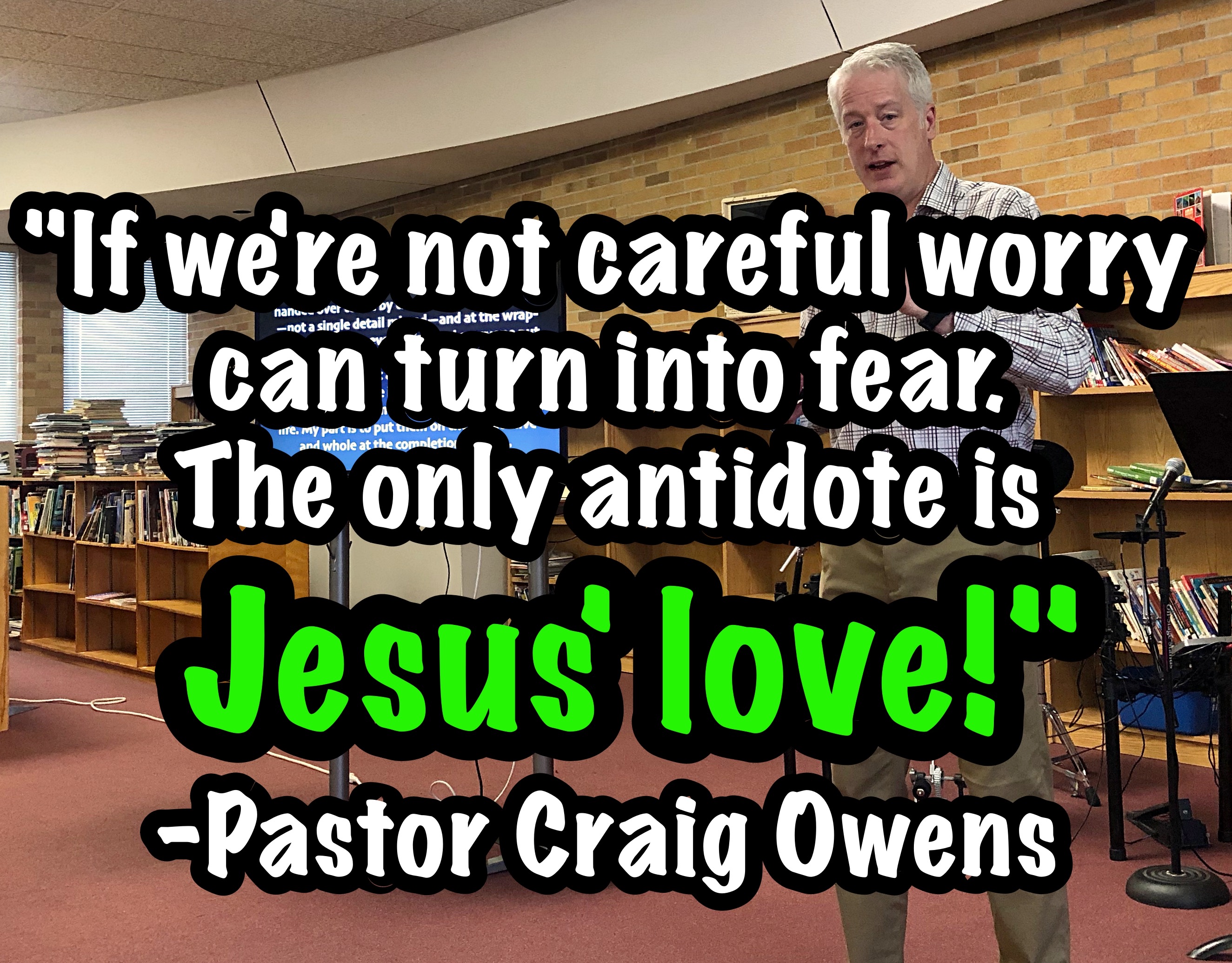
The problem is when care crosses the line to become worry. 

A clear example of this is seen in the activities of Martha. She cared deeply about providing for the needs of Jesus, wanting to provide appropriate hospitality for Him, but her focal point switched from Jesus to food (Luke 10:38-42). Luke tells how Martha crossed the line from concern to anxiety by stating that “Martha was distracted by all the preparations.” Jesus redirected her to the one thing that “is better,” which was a devotion to Him. 

Care can turn to worry in the simplest of areas. 

Being careful about my physical health—food, clothing, shelter—is a legitimate concern, but Jesus warns about these things becoming a focal point and causing me to cross the line from concern to worry (Matthew 6:25-34). Wanting to answer well those who criticize my Christian faith is a noble concern, but obsessing over my word choices crosses the line (Matthew 10:19). Desiring to please my wife is perfectly natural and even commendable, but putting her on a pedestal crosses the line into worry (1 Corinthians 7:32-34). 

The crucial discipline to keep me from crossing the line from concern to worry and anxiety is to keep the right focal point. I am not my own provider; God is (James 1:17; Matthew 6:8; Luke 11:11-13). 

So in the same verse that Paul tells us “do not be anxious about anything” he also tells us to pray about everything. Peter says essentially the same thing this way, “Give all your worries and cares to God, for He cares about you” (1 Peter 5:7 NLT). God cares about me and the things I care about more than I do. He wants me to focus on Him, not on the things I care about, because He can provide for me perfectly. His provision keeps me from worrying about anything. 

Don’t worry about anything; pray about everything. 

That is my safeguard against crossing the line from legitimate concern to anxiety-causing worry. 

►► Would you please prayerfully consider supporting this ministry? My Patreon supporters get behind-the-scenes access to exclusive materials. ◀︎◀︎
4 Benefits Of Gratitude

Listen to the podcast of this post by clicking on the player below, and you can also subscribe on AppleSpotify, or Audible. 

Do you remember this song: “If you’re happy and you know it clap your hands”? It goes on to say, “If you’re happy and you know, then your life will surely show it….” Frankly, I’m concerned about Christians that are unhappy. 

Charles Spurgeon was talking to his students and he said, “I commend cheerfulness to all who would win souls; not levity and frothiness, but a genial, happy spirit. There are more flies caught with honey than with vinegar, and there will be more souls led to heaven by a man who wears heaven in his face than by one who bears Tartarus in his looks.” Tartarus, in Greek mythology, is a sunless abyss, below Hades, in which Zeus imprisoned the Titans, which is the exact opposite of the Paradise described in the Bible. 

Unhappiness generally comes from ingratitude. An unhappy Christian gives God no praise, robs Him of glory, and paints God in a bad light. A happy Christian lifts God high and invites others to know this All-Good, All-Happy God too! 

Christians need to fight against the downward pull of negativity in which our culture seems to so easily gravitate. In his letter to the Philippians, the apostle Paul says that a Christian who doesn’t engage in the complaining that the world is known for will shine brightly. Quite simply, thankfulness is the antidote to complaining (Philippians 2:14-18). 

(Check out all of the Scriptures I reference in this post by clicking here.) 

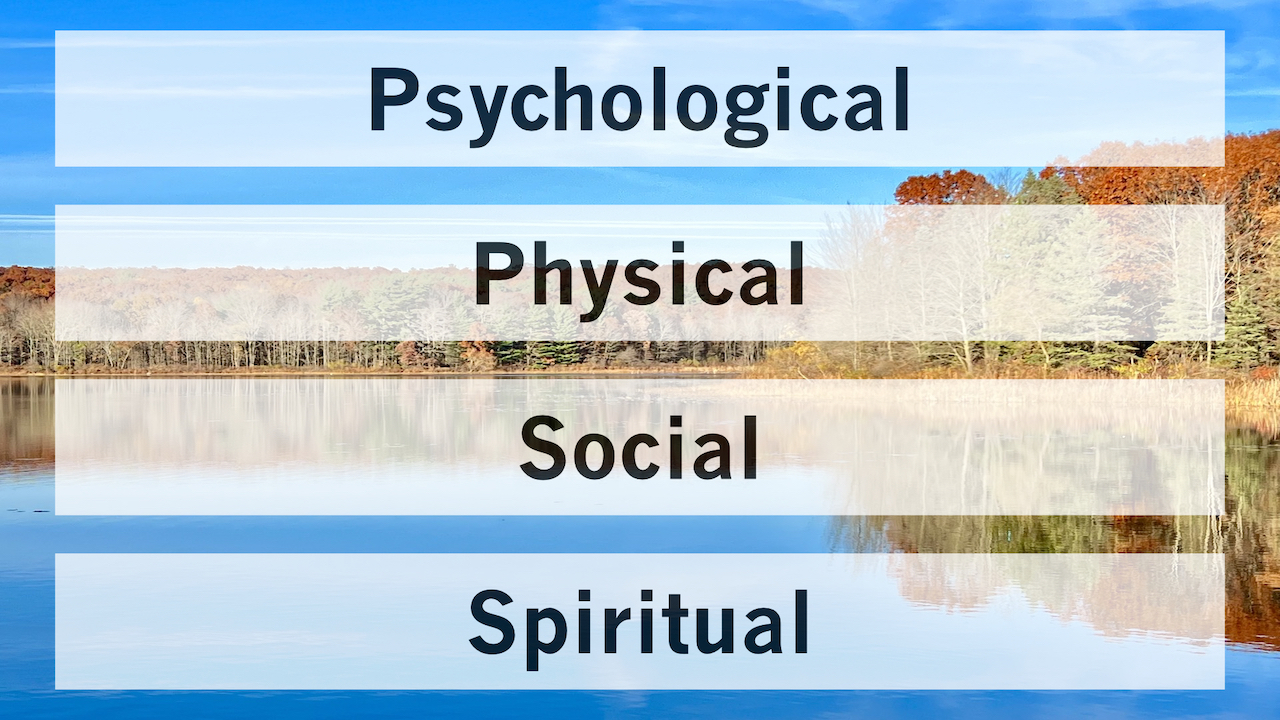
Even those who may not recognize the the authority of Scripture have extolled the benefits of gratitude. Psychologists and medical professionals have identified three benefits from a thankful heart: 

  1. Psychological benefits—more mentally alert, increased self-satisfaction, enhanced mood 
  2. Physical benefits—stronger immune system, less body aches and pains, regulated blood pressure, a better sleep-wake cycle 
  3. Social benefits—better communication with others, increased empathy, increased likability 

And Christians can add one more benefit to this list:

  1. Spiritual benefits—more dynamic corporate worship, enchanted Christian testimony, perseverance through trials, fortification against giving in to temptation 

The well-known Cleveland Clinic reported that an attitude of gratitude leads to overall wellness. When you are grateful for what you have, it improves your outlook mentally, physically, spiritually, and relationally. 

Here are five things you can start doing today that will increase your gratitude levels, enhance your Christian testimony, and generally improve your life: 

  1. Switch your perspective. Worry is focusing on what you don’t have. Make the switch to gratitude by giving thanks for what you do have (Matthew 6:25-34). 
  2. Strengthen your relationships. It’s fine to weep with those who weep, but let’s encourage others and be encouraged by others so that we can rejoice with those who rejoice (1 Thessalonians 3:6-10), 
  3. Foster healthy habits. Dr. Luke gives us the pyramid of health that Jesus demonstrated in Luke 2:52. The pinnacle is strong relationships, and grateful people are more empathetic and likable. 
  4. Keep a gratitude journal so that you don’t forget what God has done for you (Psalm 106:7).  
  5. Talk about your gratitude. This instills thankfulness in other saints (Isaiah 63:7) and in future generations of your family (Isaiah 46:4), and it becomes a testimony for seekers (1 Peter 3:15). 

Let me close with this observation from Blaise Pascal: “There are three kinds of people in the world; those who have sought God and found Him and now serve Him, those who are seeking Him, but have not yet found Him, and those who neither seek Him nor find Him. The first are reasonable and happy, the second reasonable and unhappy, and the third unreasonable and unhappy.” 

Reasonable, happy saints are the ones who lift God high and invite others to know this All-Good, All-Happy God too! Not just at the Thanksgiving season, but starting now and then going all year long! 

Follow along with all of the messages in this series called Be Thankful by clicking here. 

►► Would you please prayerfully consider supporting this ministry? My Patreon supporters get behind-the-scenes access to exclusive materials. ◀︎◀︎

Infinitesimal

Listen to the podcast of this post by clicking on the player below, and you can also subscribe on AppleSpotify, or Audible. 

I do my best to take care of my physical body. I exercise every day, l try to watch what I am eating, and I attempt to get the correct amount of sleep. I attend to all of these things because I want to keep my body as healthy as I can.

But in all of these efforts, I would never presume that I could determine how long I’m going to live. I thought of this the other day when I read an interesting statement from Jesus.

In my Bible, this section of Luke’s Gospel has been given the heading “Do Not Worry.” Jesus tells us that we shouldn’t fret about our lives, our food, or our clothing because our Heavenly Father will take care of those things. Then Jesus says, “Since you cannot do this very little thing, why do you worry about the rest?” (v. 26).

What is this “very little thing” Jesus says I cannot do? In the previous verse, He says, “Who of you by worrying can add a single hour to his life?” 

I don’t know about you, but that seems like a very big thing to me! How could I add any time to my life!? I have no idea when my time is up. If I think that controlling the number of days I have left to live is a big thing, then the daily concerns of providing food, clothing, and shelter, seem small by comparison. 

But Jesus says determining the length of my days is a very little thing. If that’s how He sees it, how infinitesimal it must be for Him to provide the basics of life for His trusting children!

This is why Jesus says to us over and over again, “Do not worry.”

If anything will rob my life of years and my years of life, it is worry. Every time worry creeps into my heart, I need to be quick to turn that fretful concern over to my Heavenly Father. He loves me so much that Jesus promised, “Your Father has been pleased to give you the [eternal] kingdom.”

If God is giving me eternity, that means there is never a cause for me to worry about infinitesimal things!

►► Would you please prayerfully consider supporting this ministry? My Patreon supporters get behind-the-scenes access to exclusive materials. Like this video where I talk about the logic in Psalm 119. ◀︎◀︎

Are You Getting Enough Sleep?

Listen to the podcast of this post by clicking on the player below, and you can also subscribe on AppleSpotify, or Audible. 

Doctors and scientists have repeatedly shown how important sleep is for us physically, mentally, emotionally, and even spiritually. So it’s an important question to ask: Are you getting enough sleep?

Check out this episode of The Podcast.

Resources mentioned in this video:

►► Would you please prayerfully consider supporting this ministry? My Patreon supporters get behind-the-scenes access to exclusive materials, like a map and an app I just shared to help with your personal Bible study time. ◀︎◀︎

Focus On Today

Listen to the podcast of this post by clicking on the player below, and you can also subscribe on AppleSpotify, or Audible. 

Without a doubt, Jesus had the most robust mental health of anyone who has ever walked planet Earth! Dr. Luke, a trained physician, captures this in just one verse (Luke 2:52) where he talks about how Jesus grew in a wholly healthy way, and Luke lists Christ’s mental health as the first priority. 

I’ve already shared five strategies that Christians can employ to enhance their mental health, and I encourage you to check them out here. 

Let me share a sixth strategy with you. 

I’m sure there have been plenty of times when someone asks you about something you like or dislike or why you do something the way you do, you probably don’t tell them the facts but you tell them a story. We have a story for everything we like, everything we do, and everything we avoid. 

It’s good to rehearse these stories and to really listen to them. If we don’t really listen to them, we cannot learn from them; if we don’t learn from them, we rob ourselves of robust mental health. 

From some of our stories, there is a regret that comes from three enemies. These enemies are all tied to our stories about our past and they are would’ve, could’ve, and should’ve—“If only I would’ve…” and “Things would be different today if I could’ve…” and “I should’ve known….”

One of the ways we need to talk back to those thoughts is like this, “I only know the would’ve, could’ve, and should’ve now because I’m older and more experienced. I didn’t know those things in the past so it was impossible for me to have done something differently.” Even the apostle Paul noted, “When I was a child, I talked like a child, I thought like a child, I reasoned like a child. When I became a man, I put the ways of childhood behind me” (1 Corinthians 13:11). 

If we don’t talk back to those regrets of yesterday, we will have doubts about today: Will I make another mistake today? Do I have what it takes to meet today’s challenges? What will others think of me if I mess up? If we don’t address those doubts we have today, that will cause us worry and stress about tomorrow. 

Regret … doubt … worry … stress. Those don’t really sound like words that contribute to positive mental health, do they? 

Here’s the thing we need to remember—Learning from our yesterdays is healthy, but trying to relive our yesterdays is both unhealthy and unproductive! 

Dr. William Osler said, “If the load of tomorrow is added to that of yesterday and carried today, it will make the strongest falter.” 

Four times in just ten verses, Jesus told His followers not to worry about tomorrow (Matthew 6:25-34). He ties that worry about tomorrow to having little faith. That lack of faith comes from our doubts, and those doubts come from our past regrets. 

T.G.I.F.—thank God it’s Friday!—is an escapism. It’s not wanting to deal with the regrets, doubts, and worry by trying to push them to some distant time. It doesn’t allow us to really concentrate on today. The Bible constantly brings us back to the present. 

  • Today is used 203 times in the NIV Bible 
  • Tomorrow is mentioned 56 times
  • Yesterday is only used 8 times 

Jesus taught us to pray, “Give us today our daily bread” (Matthew 6:11) so that we won’t let past regrets spiral downward into daily doubts and then anxiety about tomorrow. Elizabeth Elliot wisely counseled, “One reason we are so harried and hurried is that we make yesterday and tomorrow our business, when all that legitimately concerns us is today.” 

Christians that want to be mentally healthy should continually replace a T.G.I.F. mindset with T.G.I.T.—thank God it’s today! 

Taking a line from Joshua who said, “Choose for yourselves this day whom you will serve” (Joshua 24:15), here are four things we need to choose to remember each day. 

  1. Choose to remember that God uses all things—even our would’ve, could’ve, and should’ves—for our good and for His glory (Romans 8:28). 
  2. Choose to forget those old, self-limiting, stress-causing stories (Philippians 3:13).
  3. Choose to believe that God is doing something new—something I never could have planned (Isaiah 43:18-19). 
  4. Choose to believe that God can help you tell a new story about your past (Genesis 41:51). 

(Check out all of these verses here.) 

You have to choose each day to say “Thank God it’s today! Thank God that I’m not who I was yesterday! Thank God that He is using my would’ve-could’ve-should’ve moments from yesterday to prepare me for today! Thank God that He is teaching me a new story!” 

If you’ve missed any of the previous messages in our series on a Christian’s mental health, you can find them all here. 

►► Would you please prayerfully consider supporting this ministry? My Patreon supporters get behind-the-scenes access to exclusive materials. ◀︎◀︎

Known And Unknown Threats

Listen to the podcast of this post by clicking on the player below, and you can also subscribe on AppleSpotify, or Audible. 

I call on the Lord in my distress, and He answers me (Psalm 120:1). 

What power and love is packed into this short verse! “I call…He answers.” There’s nothing else I need to do—just called to my God. There is no delay or deliberation on His part—He answers me. 

Distress” comes from the root word that can mean a tight spot, or it can mean a hard pebble. The distress we face may be a full frontal assault or it may be a nagging, almost indefinable, annoyance. Since Psalm 120 is a Psalm of Ascent, whatever the distress is, the psalmist feels like it is keeping him from going up into God’s presence. He lists three known distresses: 

  1. Deceit—people around him were lying or distorting the truth. 
  2. Separation—he wants to ascend into God’s presence but feels held back by those among whom he lives. 
  3. Turmoil—he’s looking for peace, but everyone around him wants to stir up trouble and controversy. 

What about those annoying, hard-to-identify distresses? In the next Psalm of Ascent the call is for us to trust God and to not worry. But in this psalm, there’s no calling to God for help because no specific threats have been identified. Still we learn that our Heavenly Father, who does not slumber, perpetually watches over us. Our Father knows our needs before we can even perceive them, and He is fully prepared to handle them. 

So we are promised: 

  • I can sleep securely
  • I can travel safely
  • I can work each day confidently
  • I can pass through the night unharmed
  • I can move around without having to look around
  • The LORD will watch over my coming and going both today and forevermore! 

Father, may any distresses I experience today send me ascending into Your presence. Whether I know what the threats are or not, I know that You are watching over me and will answer me whenever I call to You. I thank You for this confidence that I have both today and forevermore! 

►► Would you please prayerfully consider supporting this ministry? ◀︎◀︎

10 Quotes From The Ten Booms

Listen to the podcast of this post by clicking on the player below, and you can also subscribe on Apple or Spotify.

I recently shared my book review on the heroic story of the ten Boom family during the Nazi occupation of Holland, as told in the story The Hiding Place. This story is a must-read! Please check out my full book review by clicking here. 

These are some quotes from these godly sisters. 

“Worry does not empty tomorrow of its sorrow. It empties today of its strength.” —Corrie ten Boom 

“Any concern too small to be turned into prayer is too small to be made into a burden.” —Corrie ten Boom 

“When Jesus Christ tells us to forgive our enemies, He gives us the power He demands of us.” —Corrie ten Boom 

“We must tell people how good God is. After the war, we must go around telling people. No one will be able to say that they have suffered worse than us. We can tell them how wonderful God is, and how His love will fill our lives, if only we will give up our hatred and bitterness.” —Betsie ten Boom 

“At that moment when I was able to forgive, my hatred disappeared. … Forgiveness is the key which unlocks the door of resentment and the handcuffs of hatred. It is a power that breaks the chains of bitterness and the shackles of selfishness. What a liberation it is when you can forgive.” —Corrie ten Boom 

“Never be afraid to trust an unknown future to a known God.” —Corrie ten Boom 

“When a train goes through a tunnel and it gets dark, you don’t throw away the ticket and jump off. You sit still and trust the engineer.” —Corrie ten Boom 

“If they can be taught to hate, they can be taught to love.” —Betsie ten Boom, speaking to Corrie about the Nazi prison guards 

“We never know how God will answer our prayers, but we can expect that He will get us involved in His plan for the answer. If we are true intercessors, we must be ready to take part in God’s work on behalf of the people for whom we pray.” —Corrie ten Boom 

“Holiness is the Holy Spirit, a holy God in my heart, which makes me similar to Jesus.” —Betsie ten Boom 

►► Would you please prayerfully consider supporting this ministry? ◀︎◀︎

By the way, another great book of recollections from Corrie is I Stand At The Door And Knock. 

A Radical Change In Perspective

My friend Josh Schram shared a great message yesterday, wrapping up our series called Fading Gratitude. 

Josh was transparent about some of the struggles he overcame during his younger years, explaining how his decision to be grateful even for those roadblocks completely changed his perspective.

When we’re not intentional, our gratitude naturally begins to fade. It’s not that we’re intentionally ungrateful, but we just merely forget to be thankful. 

Our fading gratitude creates a domino effect. When gratitude fades we live with… 

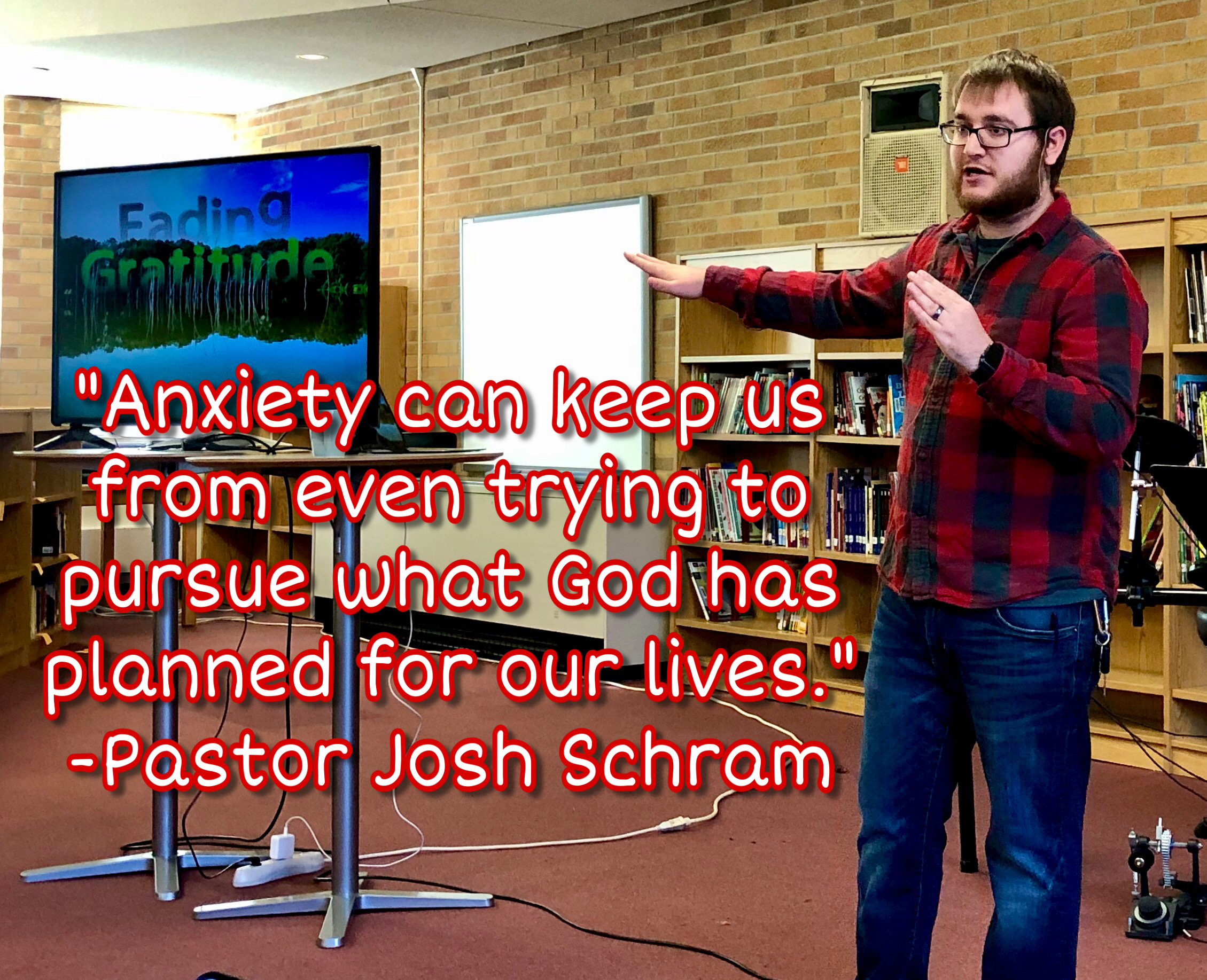
Anxiety can keep us from even trying to pursue what God has planned for our lives. 

When a large group of people needed to be fed, a couple of Jesus’ disciples forgot about the miracles Jesus had already done in the past, and as a result, they became anxious about what to do next. 

Philip replied, “Even if we worked for months, we wouldn’t have enough money to feed them!” Then Andrew, Simon Peter’s brother, spoke up. “There’s a young boy here with five barley loaves and two fish. But what good is that with this huge crowd?” (John 6:7-9)

Yet Jesus multiplied more than enough for everyone to eat AND there were more leftovers than there was food that they originally started with! “So they picked up the pieces and filled twelve baskets with scraps left by the people who had eaten from the five barley loaves” (John 6:13).

That’s why Jesus tells us, So don’t worry about tomorrow, for tomorrow will bring its own worries. Today’s trouble is enough for today” (Matthew 6:34). When we’re grateful for what God provided yesterday, and we’re thankful for what He’s providing today, it will cut short any feelings of anxiety about what God will do again tomorrow!

“No amount of regret changes the past, no amount of anxiety changed the future, but any amount of gratitude changes the present.” —Ann Voskamp 

Gratitude can radically change our perspective! 

If I’m not choosing gratitude, then gratitude is fading. I can be grateful for things I originally thought were holding me back. I can give those things to Jesus—He is not only more than enough but He also gives back to me more than I gave to Him. 


9 More Quotes from “The Way Of The Warrior”

Erwin McManus’ book The Way Of The Warrior will unleash something in you to want to become the warrior for peace that God intended you to be! Check out my full book review by clicking here. 

“There is no territory more critical or difficult for you to take than that of your inner world. … Every battle that you will ever face in the outside world must first be one in your inner world.” 

“When your mind is shaped by hope, you do not see simply two paths; you see an endless number of paths filled with opportunity, possibility, and beauty. However, if your mind-set is shaped by cynicism or fear or doubt, then the only paths you see in front of you are the ones that are filled with pain and disappointment, with failure and hardship.” 

“The warrior knows that honor is not found in the victory. Honor is found in the nobility of the battle. If the battle is not worthy of the warrior’s life, there is no honor in its victory. In the same way, the warrior knows there is no dishonor in defeat. Failure and defeat are not the same. To fear defeat is to surrender victory. There is only a good fight and a good death for the one whose life is given to the noble. The warrior never claims victory for themselves but only for others. In the same way, the warrior never gives blame for defeat but owns it for themselves. The warrior owns defeat, and therefore defeat never owns the warrior. The warrior who lives and dies with honor enters each eternity undefeated.” 

“Here is the hard reality: even if it’s not your fault, it’s still your responsibility. Though the wounding wasn’t your fault, the healing is your responsibility. Though your past may not be your fault, your future is your responsibility. Though their choices were not your fault, your choices are your responsibility. Don’t let those who are at fault keep their hold on your life by relinquishing your power to change and to be free of them.” 

“Energizing and exhausting are not diametrically opposed. The things that give you energy also cost you energy, but that cost has a return. The things that energize you the most might actually cost you the most energy. They might be the hardest things that you do. They might be the most difficult challenges in your life. But when they are energizing, you do not find yourself in a deficit of energy, because whatever it costs you, the return is greater.” 

“The warrior finds their strength because they fight only battles that matter.” 

“Worry consumes your energy without productivity. … Worry is a waste of energy. Emotions such as anxiety and stress are the result of unharnessed energy misdirected by our fears and doubts. … When you doubt, you hesitate. When the warrior hesitates, he faces certain defeat. … When you doubt, your energy wars against itself. It becomes unharnessed and unfocused and loses its power. There is a strength that comes when you have confidence that even if you fail, you’ve given yourself to the right battle. We spend too much of our lives trying to make sure we are right about the what, the where, the when, and the how, and too little time making sure we are right about the why.” 

“We transmit to one another what occupies our souls. Your soul is the conduit of your energy. If your soul is empty, you will consume energy from the world around you. … When you are full of life, you become a conduit of life. You will become a source of what is good and beautiful and true. People will naturally draw inspiration from your life. They will see you as a source of hope.” 

“This is the paradox that the warrior has come to know. They know they are not the source of their own strength. The fire that burns within the warrior is an eternal fire. The warrior knows their strength because they know their weakness. It was Jesus who said, ‘Apart from the Father I can do nothing.’ The warrior understands there is no weakness in this. The warrior has found their strengths and their weaknesses. Jesus spoke to Paul about this: ‘My power is made perfect in weakness.’ The way of the warrior is to know that God is our strength. The warrior boasts all the more gladly about their weaknesses so Christ’s power may rest on them. The warrior knows they were created by God who is Spirit. Though we appear as flesh and blood, every cell in our bodies is energy. All our energy comes from God. What we do with our energy is up to us.” 

Check out some of the other quotes from The Way Of The Warrior that I shared here. 

Sunday In Jerusalem

The Sunday before Christ’s crucifixion is typically called “The Triumphal Entry.” But was it really? One thing’s for sure—Jesus didn’t come to Jerusalem the way the people expected! 

To fully get the picture of what’s happening we need to turn back the calendar several hundred years. Ever since Jerusalem fell to invading armies, the Jews hung on to the promise that God would restore their king and their kingdom. They were awaiting a descendant from the line of King David who would drive out their overlords and restore Jerusalem to its rightful place. 

They clung to a promise in Psalm 118 that included these words—“Lord, save us! Lord, grant us success! Blessed is He who comes in the name of the Lord. From the house of the Lord we bless you. The Lord is God, and He has made His light shine on us. With boughs in hand, join in the festal procession up to the horns of the altar” (vv. 25-27). 

But Jesus was prophesied to come as the Prince of Peace, gentle and unassuming, the Servant of all people (Isaiah 9:6; 42:1-3). Jesus simply didn’t do things the way the crowds expected! He was born in a manger in Bethlehem (not as a king in Jerusalem), and hailing from Nazareth caused people to mock, “Nazareth? Can anything good come from Nazareth?!” 

So on that Sunday as Jesus approached Jerusalem, it wasn’t as a conquering King but as a humble servant. As He came near, He wept a sobbing lament over Jerusalem (Matthew 23:37). 

The crowd took palm branches (as Psalm 118 suggested) and shouted, “Hosanna!” That word means “Save us,” but what they really meant was, “Save us NOW!” Jesus came riding a mule—a lowly work animal, not a war horse—to remove any fear people may have, and to show them His servant’s heart. 

Even His disciples didn’t get this. But the Pharisees sure did: They wanted Jesus to rebuke the crowd for their insolence and blasphemy! Many of the worshippers were eyewitnesses to the resurrection of Lazarus, so Jesus said to the Pharisees, “They have to give praise to God for this!” 

Jesus made His way to the temple but there were no sacrifices, no anointing, no coronation. Mark tells us Jesus simply “looked around at everything and then left.” 

Have you ever noticed that Jesus never rushes? He’s never early. He’s never late. He’s never confused. He’s never trying to catch up. 

This is because Jesus was in complete sync with His Father. Jesus said that everything He did was directed by His Father, and every word He spoke was given to Him by His Father. 

We, too, should be able to move in that same unrushed pace. Because of what Jesus did for us on Calvary, we may have the same “oneness” with our Father as Jesus did (John 14:20). 

Worry creeps into our lives when—like those cheering crowds in Jerusalem—we try to make our agenda happen on our timetable with our own resources. But when we look to Jesus, we see such a perfect peace as He relied on His Father. 

Christ’s passionate journey was out of love for us, so that we could know peace with God as we journey through life with Jesus. 

Join me this Sunday as we take a closer look at the Monday of Christ’s Passion Week.