Judging Like God

Listen to the podcast of this post by clicking on the player below, and you can also subscribe on AppleSpotify, or Audible.

I may have heard more confusion, bad preaching, and even heresy based on Psalm 82 than almost any other passage! Most of the confusion comes from just verses 1 and 6, but if we read the entire psalm, I think confusions are quickly cleared up.

The biggest point of confusion is the use of the word “gods.” The Hebrew language doesn’t have capital and lowercase letters like we do. So the word God (with or without a capital “G”) is the same Hebrew word—el (singular) or elohiym (plural)—which means mighty One or mighty ones. Humans can be mighty ones, but only Yahweh is the Mighty One. 

Further adding to the confusion for some people is that Yahweh God is sometimes referred to in the plural in Hebrew: elohiym. This is understandable because we believe God is Three-in-One. Not three gods, but one God in three Persons. 

Bible translators have to use context clues to determine whether the biblical authors are referring to Yahweh or a pretend deity. Thankfully, English Bible translators have helped us out:

  • when the Hebrew word is Yahweh, most Bibles print it LORD 
  • when the Mighty One is implied in the text it’s God (with a capital “G”), and when it’s just a mighty person it’s typed god/gods (with lowercase a “g”). 
  • the NIV translators really helped us in Psalm 82 by designating the false deities in quotation marks (“gods”), almost as if they’re saying “the so-called gods.” 

When we were looking at the Selah in Psalm 81, I pointed out the importance of remembering that context is king. Clearly, from the context in Psalm 82, these are false gods (lowercase “g” and inside quotation marks).  

Asaph only speaks in the first and last verses of this psalm, but notice his commentary that “God presides…He gives judgment.” As in, God gets the final and decisive word. In fact, God does the most speaking in this psalm (in verses 2-7). God indicts wicked people for…

  • defending the unjust 
  • showing partiality to the wicked 
  • knowing nothing, understanding  nothing, walking around in darkness 
  • and notes “you will die like mere men” 

Now notice what the Selah pause connects. This is a pause for us to contrast two things: the righteous way and the wicked way. Or maybe we could say the contrast is between the way of the righteous Mighty One and His followers, and the way of wicked mighty ones. 

The Selah really begs an important question, “How long will your pride keep you doing these wicked things?” Notice what God calls on people to do in opposition to what the wicked are doing:

  • the wicked defend the unjust vs. the righteous are to defend the weak and fatherless 
  • the wicked show partiality to the wicked vs. the righteous maintain the rights of the poor and oppressed 
  • the wicked are concerned only about themselves vs. the righteous rescue the weak and needy from the hand of the wicked 

The Selah is intended to prompt us to ask ourselves: “Which are we? What am I doing or not doing?” 

The word for rendering a judgment is used four times in Psalm 82: 

  • God gives judgment on the activities of the “gods” 
  • the wicked defend the unjust, meaning that they condone their unjust activities 
  • the righteous defend the weak, meaning they speak up for those being oppressed by the “gods”
  • finally, Asaph declares in verse 8 that God renders the final and decisive judgement 

God wants us to exercise His righteous judgment on the earth. We have to Selah to examine ourselves first (see Matthew 7:1-5 and this short video), but then we need to act boldly and righteously (see Micah 6:8; Leviticus 5:1; Proverbs 31:8-9). 

We can judge like we are “gods,” or we can judge, defend, and speak up like ambassadors of the Mighty One—the Ultimate Judge.

Wicked people are punished for judging like “gods.” Righteous people are rewarded for judging like God. 

If you’ve missed any of the messages in our series exploring the Selahs in the Psalms, you can access the full list by clicking here. 

►► Would you please prayerfully consider supporting this ministry? ◀︎◀︎

Craig And Greg Talk Shepherd Leadership

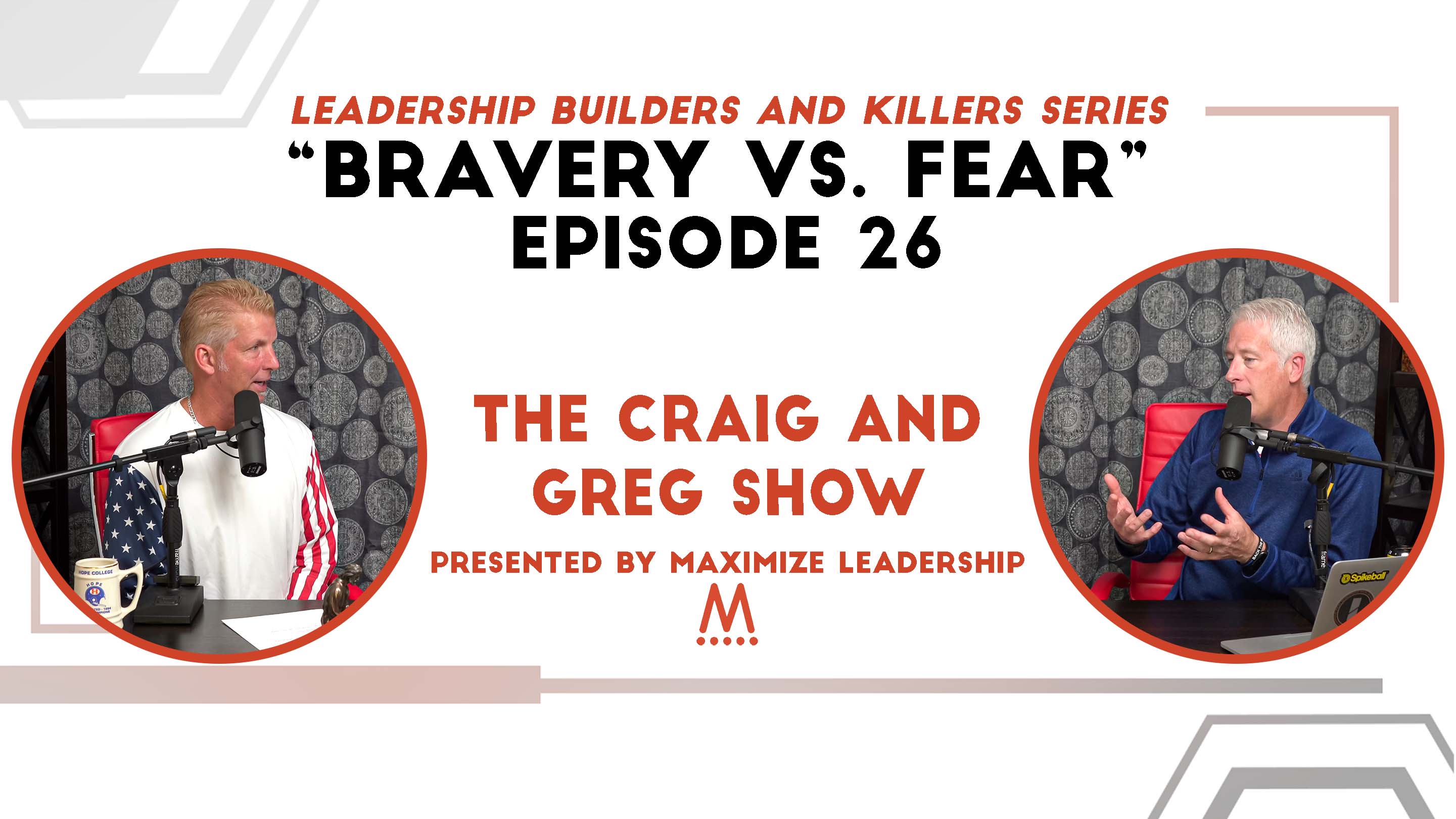
I have known Greg Heeres for almost 30 years. During that time we have grown as close as brothers, partnering on numerous projects, both personally and professionally. One of our shared passions is developing leaders. Out of this passion we began a video and audio podcast called The Craig And Greg Show. 

We switched up our format just a bit in a recent episode so that Greg could interview me about my book Shepherd Leadership: The Metrics That Really Matter. 

I was also thrilled to receive an endorsement from another church leadership blogger that I greatly admire: 

“In his new book, Shepherd Leadership, Craig T. Owens gets to the heart of pastoral ministry and caring about people with great wisdom. Jesus sets the example for us as the good shepherd, and Craig delivers practical principles for healthy leadership that allows you the opportunity for freedom as God intended, joy in serving, and ultimately experiencing the full blessing of God.”Dan Reiland, Executive Pastor, 12Stone Church, Lawrenceville, GA

You may listen to the audio-version of Greg’s interview of me on the player below, and I’ve also shared the link to watch the video of this interview.

The Craig And Greg Show: Are We Using The Right Metrics?

On this episode of “The Craig And Greg Show” we talk about: 

  • Greg toots my horn for me! [1:00]
  • I talk about how my book Shepherd Leadership: The Metrics That Really Matter came into being [1:45] 
  • Greg wonders why leaders get trapped using metrics of success that don’t really matter [4:10]
  • I talk about why the subtle shift from “servant leadership” to “shepherd leadership” is important [4:50]
  • Greg and I discuss the tension between a leader’s confidence and a leader’s humility [6:25]
  • I explain how my wife helped me see my leadership in a better light [8:00]
  • my favorite definition of humility comes from C.S. Lewis [9:45]
  • Greg asks how leaders can develop the right kinds of relationships that will help them continue to grow [10:35]
  • I share the dangers when leaders try to fly solo [11:40]
  • Greg talks about the vital need for leaders to refresh themselves [14:00]
  • who will benefit from reading Shepherd Leadership? [14:50]
  • I share a humorous story of a way I advised a church to grow their numbers overnight [16:54]

Check out this episode and subscribe on YouTube so you can watch all of the upcoming episodes. You can also listen to our podcast on Spotify and Apple.

Listening To Obey

Listen to the podcast of this post by clicking on the player below, and you can also subscribe on AppleSpotify, or Audible. 

Have you ever been confronted by someone claiming, “The Bible is full of contradictions”? 

How about this one: God says, “I tested you at the waters of Meribah” (Psalm 81:7) vs. at Meribah…[the Israelites] tested the LORD (Exodus 17:7)? 

Whenever we see a possible contradiction, remember this: Context is king. We have to look at these two accounts in their proper context. 

In the Exodus account, the Israelites have just been delivered out of slavery in Egypt and crossed the Red Sea on dry ground. The pursing Egyptian army tried to follow them, but the waters closed back over them and they drowned. Three days later we find the Israelites grumbling over a lack of drinkable water, which God miraculously supplies. A month after that they are complaining about their food supply, which God miraculously supplies. And right on the heels of that they are again complaining about not having water to drink, which God miraculously supplies (see Exodus 15-17). 

It is after this second miraculous supply of water that we read that phrase we are considering: the Israelites tested God. The Hebrew word for “tested” is nasa which equates to, “Oh yeah? Prove it!” or “I’ll believe it when I see it!” or as The Message paraphrase puts it, “Is God here with us, or not?” 

In Psalm 81, God Himself is speaking in vv. 6-16, so He is the One who claims, “I tested them at Meribah.” The Hebrew word for “tested” in this instance is bahan. This means to investigate closely, to spot and bring out the impurities in fine metals. God not only makes the claim, “I tested them,” but He is also the One who tells us to Selah—pause and calmly consider. 

Consider what? After the first instance of grumbling about water in Exodus 15, we read, “There the Lord made a decree and a law for them, and there He tested them. He said, ‘If you will listen carefully to the voice of the Lord your God and do what is right in His eyes, if you pay attention to His commands and keep all His decrees, I will not bring on you any of the diseases I brought on the Egyptians’” (Exodus 15:25-26). 

Notice the words decree, law, and commands. Asaph says something similar in Psalm 81:4, “This is a decree for Israel, an ordinance of the God of Jacob. He established it as a statute for Joseph when He went out against Egypt.” 

God is talking about laws before the Ten Commandments are given. What is the law He desires to be obeyed above all else? In a word: Listen. 

  • If you will listen carefully to the voice of the Lord your God and do what is right in His eyes (Exodus 15:25). 
  • I tested you at the waters of Meribah. Selah. Hear, O My people, and I will warn you—if you would but listen to Me, O Israel! (Psalm 81:7-8) 

God brings us to these moments of tests to see how we will respond. He doesn’t need to know, but we need to know how we will respond. When we find ourselves wringing our hands, or grumbling, or saying, “Is God here with us, or not?”, what does that tell us about our own heart? He wants us to be wholly His, so He has to bring out the impurities. That same word bahan is used when God speaks this word: “I will refine them like silver and test them like gold. They will call on My name and I will answer them; I will say, ‘They are My people,’ and they will say, ‘The Lord is our God’” (Zechariah 13:9). 

Asaph uses the Hebrew word for “listen” five times in Psalm 81. This word means listening with an attitude to obey. In order for us to hear God’s voice, we have to listen with an attitude toward obedience. This is not, “Oh yeah? I’ll believe it when I see it!” but “Oh yeah! I will obey it so I will see it!” 

As I pondered this, the Holy Spirit dropped these questions on my heart which I encourage you to ponder as well: 

  • God is always speaking to me. Am I making quiet time to listen to His voice?  
  • God sometimes has to discipline me. Am I open to His purifying? 
  • God has wise counsel for me. Am I obeying it?
  • God knows the best path for me. Am I walking in it?
  • God wants to subdue my enemies. Am I asking Him to do it?
  • God has abundant blessings for me. Am I listening to obey?

God will only speak a new word to me when I have obeyed His previous word to me.

When I am in distress, I need to train myself to Selah so that I can say, “God has brought me to this test, what do I need to learn? Am I listening to God’s voice with an attitude to obey?” 

May our heart’s posture always be, “Speak, Lord, for Your servant is listening and ready to obey whatever You speak to me.” 

If you’ve missed any of the messages in our Selah series, you can access the full list by clicking here. 

►► Would you please prayerfully consider supporting this ministry? ◀︎◀︎

The Value Of Journaling

Listen to the podcast of this post by clicking on the player below, and you can also subscribe on AppleSpotify, or Audible. 

Do you keep a journal? I’m not talking about a diary of your daily events, but a journal of your ongoing dialogue with God. This is a discipline I began over 25 years ago, and it’s been immensely helpful to me. 

Every time you read the history of Israel in the Old Testament, you are really reading a written history—a journal—of what God did for His people.

In Luke 1:46-55, we read Mary’s song about the soon-to-be-born Jesus that someone journaled to record for posterity. The same thing is true for Zechariah’s song about his son John in Luke 1:67-79. I am sure that many people found great comfort in reading and recalling these songs, perhaps even Jesus Himself and John the Baptist. 

Even Jesus told His disciple John to journal the words He spoke to him about events still to come (Revelation 1:11, 19; 2:1, 8, 12, 18; 3:1, 7, 14; 14:13; 19:9; 21:5). 

Journaling has helped me at so many crucial points in my life. Especially when I needed to look back to be reminded of something God had spoken to me. I shared one example of this in my book Shepherd Leadership: The Metrics That Really Matter

       The board was making a major decision. They were considering a change in their leadership to one who had completely different credentials and training from all of their previous leaders. Because this change would be so momentous, the board interviewed me for more than four hours. When they finally felt they had deliberated long enough, they asked me to leave the room while they prayed and voted. I stepped out into the lobby for just a couple of minutes when the door opened again and they asked me to step back inside. 

       “Well, Craig,” the spokesman began, “we prayed and we feel you are the one God has selected for this position.” I told them I would be happy to accept their offer. After they prayed over me, I began to pack up my things to head home. 

       “Hold on a minute,” one of the board members said to me, “we’re about to discuss the budget, and we think it would be good for you to be a part of this discussion.” I agreed and resumed my seat at the table. 

       I was handed both the year-to-date financial report and the projected income and expenses for the remaining quarter of the year. “As you can see,” the treasurer began, “we are projecting a $70,000 loss for this year.” Then he turned to me and asked, “What are you going to do about that?” 

       I gulped, tried not to show that my stomach was doing flips, and said, “Honestly, I don’t know.” I paused, and since no one else said anything, I continued, “But I’ll let you know what we come up with.” 

       All the way home, I kept thinking, “What have I gotten myself into? I’m walking away from a successful business to oversee an organization that’s going to go bankrupt before I even get started?!” But then I began to remind myself of something else: God chose me. 

       When I returned home, I immediately went to my journal. I flipped to the page where I had written down all of the reasons why I had concluded that God chose me for this position. I looked at the way God had spoken to me and to my wife, and the way friends who knew nothing about this decision spoke a confirming word to me. I looked at the pages where I had written down the vision I believed God had given me for this new organization, and how the board chairman’s handwritten vision for the organization matched mine thought-for-thought. Looking at these words—at the specific dates and ways God had spoken, and confirmed, and re-confirmed His direction—gave me the confidence to step into this assignment, even when facing such a huge financial mountain. (excerpt from chapter 5 “A Humble Leader’s Attitude Adjustment”) 

If you haven’t journaled in the past, I encourage you to begin this spiritual discipline today. I can tell you from both what I read in the Bible and my own personal experience how valuable this will be for you. 

►► Would you please prayerfully consider supporting this ministry? ◀︎◀︎

Three Pictures Of The Church

Listen to the podcast of this post by clicking on the player below, and you can also subscribe on AppleSpotify, or Audible. 

When you’ve been at a church service have you ever asked yourself, “What are we doing here? What exactly is ‘church’? What are we supposed to be doing?”  

 Some people think church is saints going out to tell people about Jesus, and some people think church is saints coming together to hear about Jesus (see Matthew 28:19-20; 1 Corinthians 11:18). I think this is an either-or trap. 

I think a better way of looking at this is “both-and” and “so that”: BOTH coming to a gathering of believers so that we can be equipped to go out AND going out to tell people about Jesus so that we can bring new disciples into the church. 

Our foundational truth statement says: The Church is the Body of Christ, the habitation of God through the Spirit, with divine appointments for the fulfillment of her great commission. Each believer, born of the Spirit, is an integral part of the General Assembly and Church of the Firstborn, which are written in heaven. 

To help us see where we play a vital role in all of this, the Bible gives us three pictures of the church:

  1. A Body
  2. A Building
  3. A Bride

(see Ephesians 1:22-23; 1 Corinthians 12:12-26; Ephesians 2:19-22; John 3:29; 2 Corinthians 11:2; Ephesians 5:21-33)

All of these pictures speak of multiple parts making up one unified, healthy whole. Remove any part or any function, and the whole thing is diminished. All of these pictures also speak of intentionality. No one becomes healthy by accident, or builds a sound structure by accident, or enjoys a fulfilling marriage by accident. Health, soundness, and fulfillment all result from being intentional about our choices and interactions. 

I believe these three pictures also help us see what the church isn’t and is. 

  • A healthy church isn’t about numbers  
  • A healthy church isn’t about the day of the week that we meet
  • A healthy church isn’t about an “order of service” (there is no such thing listed in the New Testament!)
  • A healthy church is about Jesus being the focal point. As Jesus said, “I will build My Church.”   
  • A healthy church is about being intentional in everything we do 
  • A healthy church is about doing everything we can to glorify Jesus, both when we come together and when we go out into the world

(see Matthew 18:20; Romans 14:5; Matthew 16:18; Acts 10:38; 1 Corinthians 10:31; Hebrews 10:23-25) 

The first Church in the New Testament showed us how they followed the example of Jesus. Before trying to fulfill the Great Commission of going into all the world, they first obeyed the directive from Jesus to stay in Jerusalem until they were empowered by the Holy Spirit. Then we see an intentionality, and an empowerment, and a complete reliance on the Holy Spirit in everything they undertook from that point on. 

(see Acts 1:8; 2:42-47; 4:29-35; 6:1-7; 8:4, 26; 10:19-20; 13:1-3; 15:1-29)  

It’s not about going to “my church” or going to “your church.” It’s about being the Church (with a capital “C”)—the Body of of Christ, the Building of Christ, the Bride of Christ. 

Bottom line:

Christians are being the Church when they are intentionally living in a way that makes Jesus known. 

This is a part of our ongoing series looking at our foundational truths. If you’ve missed any of the messages in this series, you can find the full list by clicking here.

►► Would you please prayerfully consider supporting this ministry? ◀︎◀︎
The Craig And Greg Show: Freedom Vs. Liberty

On this episode of “The Craig And Greg Show” we talk about: 

  • how does freedom differ from liberty [0:47]
  • I explain that we cannot have liberty without freedom, but we can have so much freedom that we can lose liberty [1:23] 
  • guardrails are extremely helpful for people to be succcessful [2:27]
  • liberty protects us from things that can be dangerous to a leader and his team [3:35]
  • how do controls and guardrails feel to a leader? how can leaders help their team with these feelings? [4:20]
  • why it is important to moderate our freedoms [6:00]
  • what is the difference between unity and conformity, and how do leaders promote the right thing [7:20]
  • we need to help independent people choose to be interdependent [8:27]
  • we unpack a quote Greg shares about trading doing what we want to do for doing what we ought to do [8:54]
  • we don’t want to be told what to do unless we understand why we need to do it—helping a team grasp this is how leaders get buy-in [10:23]
  • Greg shares a quote from Francis of Assisi about living out what we are talking about [12:00]

Check out this episode and subscribe on YouTube so you can watch all of the upcoming episodes. You can also listen to our podcast on Spotify and Apple.

The Story Isn’t Over Yet

Listen to the podcast of this post by clicking on the player below, and you can also subscribe on AppleSpotify, or Audible. 

One of the things I enjoy about my Apple Watch is the connection I have with others who also use an Apple Watch. For instance, I get notified when my wife has finished a workout, and one of the pre-set replies I could choose is, “I’ve got questions!” That’s a funny way of me saying, “How did you complete that workout?!” 

In Psalm 75 and Psalm 76, Asaph tells us how God will deal with the wicked. But then Psalm 77 begins with Asaph using words like, “My soul refused to be comforted, my spirit is overwhelmed,” and then he launches into the tough questions like: “How long is this going to last? Has God forgotten me? Have I fallen out of favor with God? Has His mercy dried up? Can God keep what He has promised? Is God angry with me?” When I read all this, I feel like saying, “Asaph, I’ve got questions!” 

Yet, these complaints of Asaph ring true to real life. Like when a friend called me last week and started our conversation by asking, “Why can’t things just go easy for me?”

Here’s the simple answer: The Story isn’t over yet. We are in a battle, and the enemy of our soul is still trying to take us out, or at least shut us up. 

In Psalm 77, Asaph tells his story to Jeduthun (a Levite worship leader whose name means praising) in four chapters, with a Selah for each of the breaks between the chapters. 

Chapter 1—Distress (vv. 1-3)

The word distress means confronted by an adversary. Ever been there? Every follower of God has been, so Asaph invites us to Selah: pause to contemplate things like (a) Is this distress causing me to reevaluate the foundation on which I stand? (b) What is it God is shaking in my life? When God shakes things up, it is to cause us to remember and muse about the ONLY sure foundation that can withstand any storm (see Matthew 7:24-27). 

Chapter 2—Questioning (vv. 4-9) 

Notice the words Asaph uses: thought, remembered, mused, inquired. He is asking those tough questions, but he is asking them in a way that he can carefully consider the answers. That means he is really taking a Selah pause with each question. I think he has come to this conclusion: “Aren’t all these really just rhetorical questions? And isn’t the answer to all of them a resounding ‘NO!’?” If you aren’t sure the answer to all of these questions is no, please read Romans 8:31-39.

Chapter 3—Recalling (vv. 10-15) 

Notice the continuation of the words: thought, remember, meditate, consider. He also asks another question in v. 13 which he then answers in the next two verses. His call to Selah here is another pause to reflect: “Has God lost His power? Has He changed His mind?” And once again the answer is a loud and clear, “NO!” (see Isaiah 59:1; Hebrews 13:8) 

One of the important takeaways from this stanza of Psalm 77 is this: Looking back in gratitude at what God has done allows me to look forward in hope to what He is still going to do. My remembering what God has done in the past leads to: 

  1. Release from the darkness 
  2. Renewed praise 
  3. Recovered strength 
  4. Refocused outlook 

Chapter 4—Hope (vv. 16-20) 

Asaph says, “Look what God did! And since He is the same today as He was yesterday, guess what He’s still able to do!” We know this because the Bible says, “For no matter how many promises God has made, they are ‘Yes’ in Christ. And so through Him the ‘Amen’ is spoken by us to the glory of God” (2 Corinthians 1:20). 

Remember I said earlier that God isn’t done telling His story yet? God isn’t done yet, He knows His Story, and His Story is still being told. But He’s also already told us how His story will end (see Revelation 21:4-6). And the end of His story is really just the beginning of the Real Story! 

C.S. Lewis said it this way in the closing words of The Last Battle:

“And for us this is the end of all the stories, and we can most truly say that they all lived happily ever after. But for them it was only the beginning of the real story. All their life in this world and all their adventures in Narnia had only been the cover and the title page; now at last they were beginning Chapter 1 of the Great Story, which no one on earth has read; which goes on forever; in which every chapter is better than the one before.” 

When you find yourself saying, “I’ve got questions: How long is this going to last,” Selah to remember that the Story isn’t over yet. The Storyteller knows how it ends, and He promises us: But what of that? For I consider that the sufferings of this present time—this present life—are not worth being compared with the glory that is about to be revealed to us and in us and for us and conferred on us! (Romans 8:18 AMP)

If you have missed any of the messages in our Selah series, you can find the complete list by clicking here.

►► Would you please prayerfully consider supporting this ministry? ◀︎◀︎
The Circle Of Love And Hate

Listen to the podcast of this post by clicking on the player below, and you can also subscribe on AppleSpotify, or Audible. 

Oh, how I love Your law! … Therefore I hate every wrong path (Psalm 119:97, 104). 

These bookend verses of the section called Mem form the conclusion of a logical argument, and in between are each step of the progression. Notice the word “for” (in vv. 98, 99, 100, and 102) and the words “so that” in v. 101. 

This progression forms a circle from love to hate, and back to love again. Check this out—

I love Your law so I meditate on it all day. 

Meditating on Your law makes me wiser than my enemies and my teachers. 

This wisdom helps me obey Your laws. 

Obedience keeps me on the right path. 

I stay on the right path because You Yourself teach me while I’m on that path. 

Because You are my Teacher, Your laws are sweet to me. 

Because Your laws are sweet, I hate anything contrary to Your laws. 

Hating everything that is not found in Your law helps me love Your law even more. 

[Back to the top] Since I love Your law, I keep on meditating on it all day. 

Far too often I believe Christians are known more for what they’re against than what they’re for. The author of Psalm 119 urges us over and over and over again to not only fall in love with God’s Word but to fall more deeply in love with the God revealed in His Word. When we are brimming full of love for God, we cannot help but show the world what we are for, and that is for everyone to have a personal relationship with this loving God for themselves. 

►► Would you please prayerfully consider supporting this ministry? ◀︎◀︎

You Are A Unique Masterpiece

The Bible uses two phrases that we don’t typically use today: “the horn of the wicked” and “the horn of the righteous.” 

A horn in Hebrew literature is a symbol of strength. The wicked blow their own horn—trumpeting how they are self-made people. Obviously, this God-ignoring arrogance isn’t something God can bless! 

What about “the horn of the righteous”? Is there a way to blow our horn so that God is glorified? In a word: Yes!

Check out this short 2-minute video to hear how I describe the right and wrong ways to honor your uniqueness by blowing a righteous, God-honoring horn…

Always remember this—You are God’s grace gift to the world, so you must always strive to blow a God-honoring horn! 

If you would like to check out some of the other thoughts I shared about our horns, please click here.