20 Useful Maxims

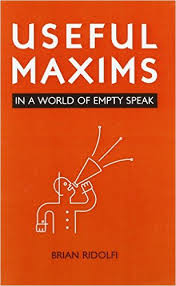
Useful MaximsI thoroughly enjoyed reading Useful Maxims by Brian Ridolfi (check out my review of his book by clicking here). Here are 20 of Brian’s useful maxims that caught my highlighter.

  1. Going to church is good; going to God is better.
  2. Progress is not good if you are progressing in the wrong direction.
  3. Good demeanor does not validate bad behavior.
  4. Broken commandments break down integrity.
  5. The Bible’s meaning is not hidden from men; men hide from its meaning.
  6. Actions are better indicators of character than rhetoric.
  7. The indifferent make no difference.
  8. Remaining weak takes strength. It takes power not to use power.
  9. Great men step in when everyone else steps out.
  10. Moral arguments which are entirely material are entirely immaterial.
  11. Peacemakers and saltshakers dispense enrichment.
  12. A grudge will keep you deep in sludge. Points of contention are points of retention.
  13. Revenge is hard to reverse.
  14. Never put faith in people who have no faith.
  15. Everything goes when anything goes.
  16. Your sin is not just your problem.
  17. Parental neglect prompts government parenting.
  18. Where no one fears God, everyone fears man.
  19. The right battle is lost with the wrong weapon.
  20. Insecurity secures instability.

Watch for more maxims soon. Or follow me on Twitter and Tumblr to read some of Brian Ridolfi’s maxims.

6 Quotes On Commitment From “The Seven Laws Of Love”

The Seven Laws Of LoveIn The Seven Laws Of Love, Dave Willis gives us some highly practical, biblically-based counsel for investing in all of our relationships. Normally when I share quotes from books, I share all of them at once, but I felt like it would be good to share these quotes a bit more slowly, to give you time to read them and apply them.

The seven laws Dave identifies are:

  1. Love requires commitment
  2. Love selflessly sacrifices
  3. Love speaks truth
  4. Love conquers fear
  5. Love offers grace
  6. Love brings healing
  7. Love lives forever

Dave writes in the introduction to his book, “God wants love to flow through our lives like a mighty river. The laws of love are the invisible banks God has placed around love for our prosperity and protection. When our relationships live with in those boundaries, everyone involved is enriched. When we dismiss or disregard the boundaries, our relationships can quickly become unhealthy and unsustainable.”

From law #1, here are some quotes on commitment—

“God created love to be a transformative force in every aspect of our lives. … Before that can happen, though, there must be commitment. Without a real commitment, there can be no real love.”

“The strength of your commitment will always determine the strength of your relationship.”

“God brought His own Son through the lineage of a poor young woman named Ruth who understood the power of commitment in the meaning of love. God wants to create a generational impact through your life as well. The level at which you’ll make an eternal impact is defined by your level of commitment to the people God has placed in your life.” 

“Our commitment to others is evident in the consistency with which we serve them. Grand, one-time gestures can be nice, it’s what we do with consistency that will ultimately shape our relationships.”

“We’ve traded true intimacy for porn. We’ve traded committed marriages for commitment-free cohabitation. We’ve traded having children for having pets. We’ve traded meaningful conversations for text messages. We’ve traded ‘till death do us part’ for divorce. We’ve traded the pursuit of holiness for the pursuit of happiness. We’ve traded love for lust. We’ve attempted to exploit all the benefits and pleasures of love without investing the commitment and self-sacrifice that love requires.” 

“Your life and your relationships will be defined by the commitments you make and how well you keep them.”

Check out my review of The Seven Laws Of Love by clicking here.

Watch for more quotes from the other laws of love explained in this book throughout the next few days.

11 Ways To Be A Good Minister

© Lori Oxford Photography

Here are 11 ways to “be a good minister of Christ Jesus” (1 Timothy 4:6)—

  1. Know the Scripture well enough to point out false doctrines (vv. 1-6a)
  2. Be a good teacher (v. 6b)
  3. Train myself to be godly (v. 7)
  4. Take care of my physical health (v. 8)
  5. Put my hope solidly in God (vv. 9, 10)
  6. Set an example worth following (vv. 11, 12)
  7. Use the Scriptures in everything I preach (v. 13)
  8. Turn my God-given gifts into strengths (v. 14)
  9. Have a good work ethic (v. 15a)
  10. Be consistently growing (v. 15b)
  11. Carefully and prayerfully evaluate my doctrine (v. 16)

Rewards And Consequences

Rewards and ConsequencesThe Bible consistently gives us—right up front—the rewards for right living, and the consequences for wrong living. No one ever has to be surprised. 

For example, take this message from Jesus in Luke 6.

  1. If you don’t want others to judge you, don’t be judgmental (v. 37).
  2. If you don’t want to be condemned by others, don’t condemn others (v. 37).
  3. If you want to be forgiven, forgive others first (v. 37).
  4. If you want to receive, be the first to give to others (v. 38).
  5. If you want to teach, find a good teacher and then be a good learner first (vv. 39-40).
  6. If you want to help others with their problems, first look in the mirror at yourself (vv. 41-42).
  7. If you want to speak good words, put good words inside yourself (vv. 43-45).
  8. If you want to stand strong through adversity, build on the right foundation (vv. 46-49).

God doesn’t miss a thing! He told us how to stay in the place where He can bless us, and how we can avoid life’s negative consequences.

We would all do well to hear these words and put them into practice (v. 47)!

Links & Quotes

link quote

“Getting ready to feast on all God’s Word is not first an intellectual challenge; it is first a moral challenge. If you want to eat the solid food of the Word, you must exercise your spiritual senses so as to develop a mind that discerns between good and evil. The startling truth is that, if you stumble over understanding Melchizedek in Genesis and Hebrews, it may be because you watch questionable TV programs. If you stumble over the doctrine of election, it may be because you still use some shady business practices. If you stumble over the God-centered work of Christ in the Cross, it may be because you love money and spend too much and give too little. The pathway to maturity and to solid biblical food is not first becoming an intelligent person, but becoming an obedient person. What you do with alcohol and sex and money and leisure and food and computers has more to do with your capacity for solid food than where you go to school or what books you read.” —John Piper

“When God is our strength, it is strength indeed; when our strength is of our own, it is only weakness.” —Augustine

In the United States of America, our presidents have had much to say about Thanksgiving. In this article, learn what those proclamations tell us.

[VIDEO] A good reminder from Dennis Prager to be thankful for what we DO have, not complaining about what we DON’T have—

Links & Quotes

link quote

“Don’t hold onto anything so tightly that Jesus can’t take it from you.” —Corrie ten Boom

“Forgiveness doesn’t diminish justice; it just entrusts it to God. He guarantees the right retribution.” —Max Lucado

“History is a vast early warning system.” —Norman Cousins

“How do we develop such trust? We seek the Lord in prayer, meditate on His Word, and walk in obedience. You may object, ‘But those things are all works.’ I disagree. They are all acts of faith. As we observe these disciplines, we are trusting that the Holy Spirit is at work in us, building up a reservoir of strength for our time of need.” Read more of David Wilkerson’s post Entering God’s Rest.

A couple of thousand years ago Socrates called the youth generation lazy, disrespectful, and lacking responsibility. Tim Elmore points out that there are 7 changes that affect every generation. Parents, teachers, coaches, and others that work with youth need to check this out.

Every summer in Cedar Springs all of the churches combine together for a huge worship service called UNITED. This year we have a special project: united to change the world.

[VIDEO] This morning I launched my first live broadcast on Periscope. You can find me there at username @craigtowens. Here is the video from my live feed—

Poetry Saturday—The Measure Of A Man

JesusNot “How did he die?”
But “How did he live?”
Not “What did he gain?”
But “What did he give?”
These are the units
To measure the worth
Of a man as a man
Regardless of birth.
Not “What was his station?”
But “Had he a heart?”
And how did he play
His God-given part?
Was he ever ready
With a word of good cheer,
To bring back a smile,
To banish a tear?
Not “What was his church?”
Nor “What was his creed?”
But “Had he befriended
Those really in need?”
Not what did the sketch
In the newspapers say?
But how many were sorry
When he passed away? —Anonymous

Poetry Saturday—Now

Ella Wheeler WilcoxI leave with God tomorrow’s where and how,
And do concern myself but with the Now,
That little word, though half the future’s length,
Well used, holds twice its meaning and its strength.

Like one blindfolded groping out his way,
I will not try to touch beyond today.
Since all the future is concealed from sight
I need but strive to make the next step right.

That done, the next, and so on, till I find
Perchance someday I am no longer blind,
And looking up, behold a radiant Friend
Who says, “Rest, now, for you have reached the end.” —Ella Wheeler Wilcox

4 Notes On Haggai

(c) Laura Kranz at The Overview Bible Project (see my note below)

(c) Laura Kranz at The Overview Bible Project (see my note below)

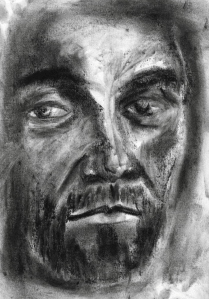
The prophet Haggai wrote one of the shortest books in the Old Testament, and his recorded ministry only spans five months(!) in 520 B.C. But in this short book I find four really cool things—

(1) God uses His people at specific times for specific purposes. All of Haggai’s messages from God have a very precise date stamp on them, so we know exactly when  they were delivered. Also, most of his messages say something like, “The word of God came through Haggai to Zerubbabel [or to Joshua, or to the people, or to the priests].” If God used Haggai like this, isn’t it likely that He is using you or I at specific times and for specific purposes?

(2) God invites us to “give careful thought” to His messages. Five times God says, “Give careful thought to your ways” (1:5, 7; 2:15, 18). This phrase literally means to take a strong hold on each thought and examine it intensely. This thought process is always connected to another phrase: “This is what the Lord Almighty says….” In other words, we are to thoughtfully examine our lifestyle with God’s Word being the standard of measurement (cf. 2 Corinthians 10:5).

(3) Obeying God’s Word brings God’s “stirring.” When God says move and we move, His Spirit will energize our spirit, and empower our lives for action. God never calls us to do something without giving us the empowerment to do it.

(4) I need to act courageously. God calls us to “be strong” (three times in 2:4) “and work, for I am with you.” Courageous action after God has stirred us up drives out fear. On the flip side, inactivity because of fear almost always leads to more fear and more inactivity.

Don’t ever let the category “minor prophet” trick you into thinking God doesn’t have a major message to share with you. Just one word from God is more powerful than we can ever imagine!

(The portrait of Haggai in this post was created by Laura Kranz at The Overview Bible Project. She and her husband Jeffrey do some amazing things that will add insight to your Bible study time. Click here to read my review of their book The Illustrated Guide To The Authors Of The Bible. And while you’re on their website, subscribe to some of the cool guides that regularly get emailed out.)

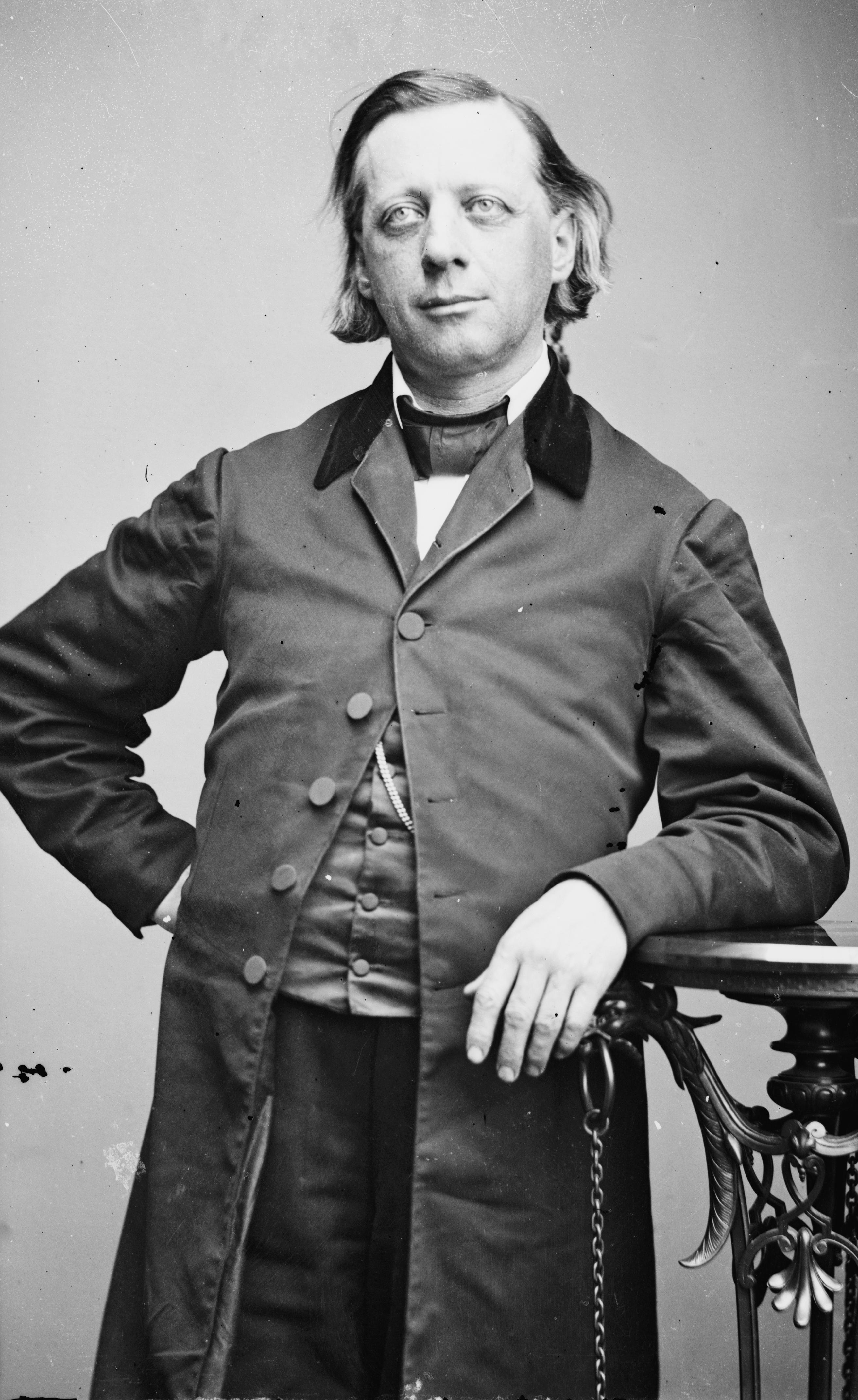
Henry Ward Beecher On Prayer

Henry Ward BeecherSome great quotes from Henry Ward Beecher on prayer―

“The world’s battlefields have been in the heart chiefly; more heroism has been displayed in the household and the closet, than on the most memorable battlefields in history.” —Henry Ward Beecher

“The strength of a man consists in finding out the way God is going, and going that way.” —Henry Ward Beecher

“Prayer covers the whole of a man’s life. There is no thought, feeling, yearning, or desire, however low, trifling, or vulgar we may deem it, which, if it affects our real interest or happiness, we may not label for God and be sure of sympathy. His nature is such that our often coming does not tire Him. The whole burden of the whole life of every man may be rolled on to God and not weary Him, though it has wearied the man.” —Henry Ward Beecher

“It is not well for man to pray cream, and live skim milk.” —Henry Ward Beecher