“When we are foolish and young, we need more rules. As we mature, we can be trusted with extended boundaries. The wiser we are, the more we appreciate those boundaries and the less they offend us. Offense at law, accountability, hedges, and boundaries is an indicator of immaturity. The wiser we are, the more unafraid and appreciative we are of those who hold us to account.” —Dick Brogden, in Proverbs: Amplified and Applied
“When public policy begins to encroach on the Christian’s freedom and duty to proclaim the Good News, or to bring the benefits of the Gospel to the community, believers must continue our mission nonetheless and be ready to bear whatever punishments those in authority may choose to inflict. Christians do not seek suffering, but we must not shun it, particularly when by our suffering we can work for public policies more in line with the centrality of the Gospel for the wellbeing of all people.” —T.M. Moore
The Golden Rule—treat others as you would want to be treated—applies to the way you treat yourself too. Stop beating yourself up when you make a mistake. You probably don’t beat up others when they stumble, so extend the same grace to yourself. Practice healthy, affirming self-talk. Check out this full conversation from episode 68 of The Craig And Greg Show.
“A thought, a sword, and a spade should never be allowed to rust.” —Irish Proverb
Dr. C. John “Jack” Collins uses some thoughts from C.S. Lewis to help us learn a little better how to read Genesis 1-11. He writes, “We should approach any biblical passage with the conviction that God inspired the Bible to be the right tool for its job. If we can get a good idea of what kind of tool our passage is, we can discern what job God intended it to perform. And that means we need to be willing to adjust what we’re looking for and be willing to find other ways of addressing some questions.”
“Failure to pray is simple unbelief. We must repent of our unbelief and take up the work of prayer with greater devotion and dedication. We shall not be able to realize progress in Christ’s Kingdom, or in returning our nation to a greater experience of justice and goodness, apart from prayer. Prayer is the starting point for public policy. Prayer must be the sustaining power of public policy. And prayer in the form of worship will be the outcome of public policies, forged in prayer, which lead to a peaceful, godly, dignified, true, and Gospel-friendly society.” —T.M. Moore
This is just one example of the power of a leader’s storytelling. Check the full conversation Greg and I had on The Craig And Greg Show. I have lots of new content every week, which you can check out on my YouTube channel.
“We are all born ignorant, but one must work hard to remain stupid.” —Benjamin Franklin
George Jeffreys was born with a limiting speech impediment, but with the empowering of the Holy Spirit, George and his brother Stephen led incredible Pentecostal revivals in England and Wales. They were said to be the greatest evangelists since George Whitefield and John Wesley. Someone asked Jeffreys how long a revival should last, and he responded, “Thank God, a revival started in my heart 30 years ago, and it has never stopped; it will never end.” He continued by saying, “As long as Jesus is kept in the front, and made the center of fellowship and blessing and unity, the revival will never end.” Check out this mini biography about his life.
John Stonestreet uses the example of C.S. Lewis’ Aslan to talk about how God can speak to us through our pain. John writes, “Pain is never the point of God’s plans, any more than it is the purpose of physical exercise. Never pushing ourselves to the point that it hurts means never improving our health. On the other hand, seeking pain is more likely to do harm than to aid our wellbeing. In and of itself, pain is not good, but it is meaningful. Pain indicates that something is wrong and needs to be addressed.”
“The best way to make a dream come true is to wake up.” —Dame Anna Wintour
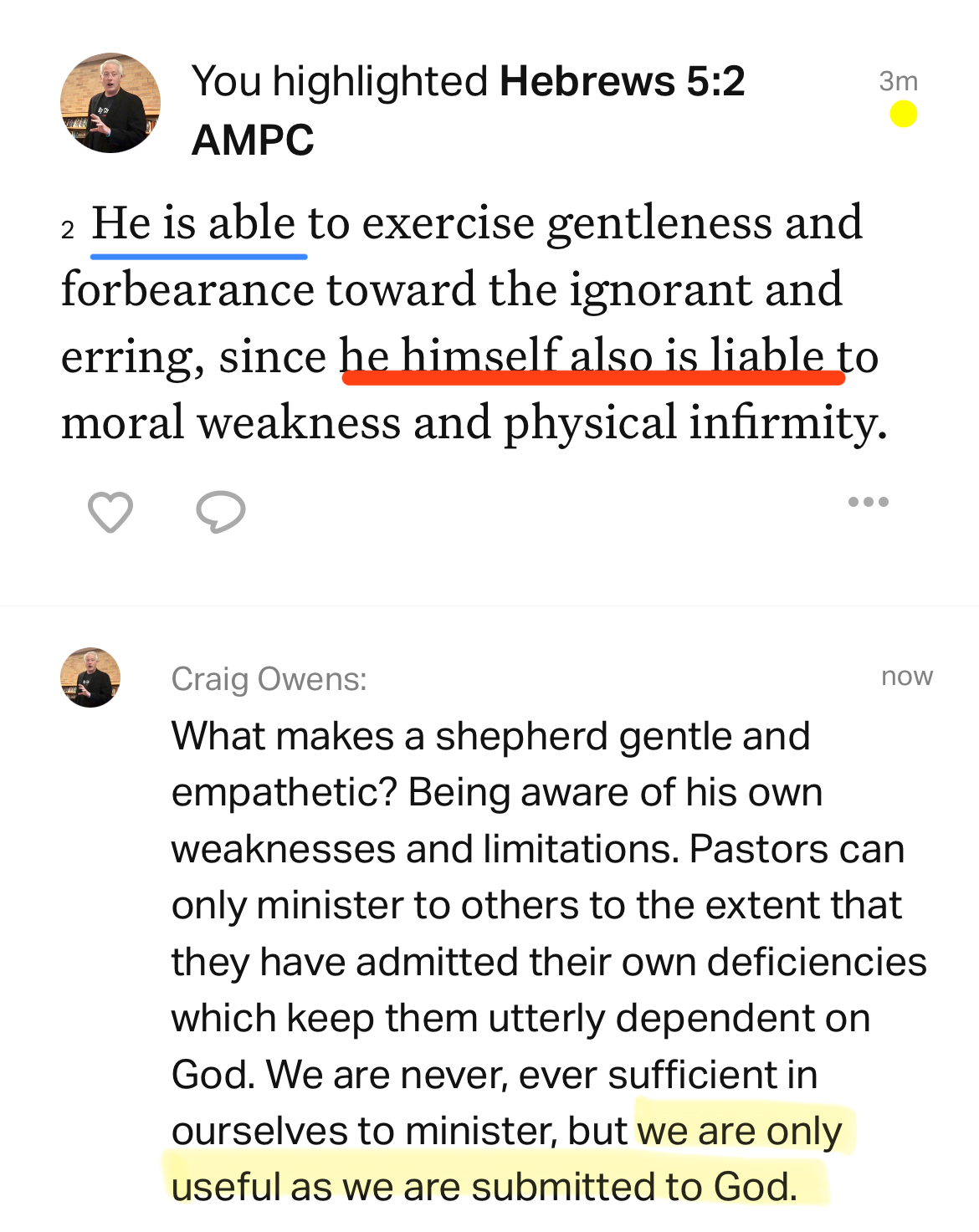
Because of the extensive prayer, research, and work I put into my book Shepherd Leadership, I am frequently drawn to passages of Scripture that reinforce the idea of pastors as shepherds. I was meditating on Hebrews 5:2 the other day, and I shared some of my thoughts with some of my pastor friends.
Listen to the audio-only version of this podcast by clicking on the player below, or scroll down to watch the video.
Everyone loves stories! Whether it be a book, movie, or even a friend’s tall tale, we love hearing stories because they connect with us on a deeply personal level. As leaders, we can use stories as a powerful tool to connect with our staff and help reinforce the point we’re trying to make. Stories aren’t just for kids, they’re a vital part of effective communication.
[0:10] “Once upon a time there was a podcast…”
[0:48] Stories portray the point better than just telling someone what to do.
[5:59] Vision casting sticks better with a story instead of a “talking point.”
[7:43] Stories are more compelling than facts. Leaders need to listen to the stories of their teammates.
[10:39] Stories are under-utilized by far too many leaders.
[12:04] Stories set the stage for everything else the leader is going to share next. But we better be sure the story is true!
[13:28] Paul Harvey illustrates how a good story can expand a leader’s influence.
[15:30] Stories get a reaction and lock it in our brains.
[16:48] Stories bridge the gap between people.
[17:28] Is storytelling a gift, a skill, or both?
[19:42] We need to tell our stories so that others can connect to their own stories.
[21:32] Leaders, you have a great story to tell! We can help coach you in how to tell your story even better.
Check out this episode and subscribe on YouTube so you can watch all of the upcoming episodes. You can also listen to our podcast on Spotify and Apple.
Listen to the podcast of this post by clicking on the player below, and you can also subscribe on Apple, Spotify, or Audible.
Without a doubt, Jesus had the most robust mental health of anyone who has ever walked planet Earth! Dr. Luke, a trained physician, captures this in just one verse (Luke 2:52) where he talks about how Jesus grew in a wholly healthy way, and Luke lists Christ’s mental health as the first priority.
I’m sure there have been plenty of times when someone asks you about something you like or dislike or why you do something the way you do, you probably don’t tell them the facts but you tell them a story. We have a story for everything we like, everything we do, and everything we avoid.
It’s good to rehearse these stories and to really listen to them. If we don’t really listen to them, we cannot learn from them; if we don’t learn from them, we rob ourselves of robust mental health.
From some of our stories, there is a regret that comes from three enemies. These enemies are all tied to our stories about our past and they are would’ve, could’ve, and should’ve—“If only I would’ve…” and “Things would be different today if I could’ve…” and “I should’ve known….”
One of the ways we need to talk back to those thoughts is like this, “I only know the would’ve, could’ve, and should’ve now because I’m older and more experienced. I didn’t know those things in the past so it was impossible for me to have done something differently.” Even the apostle Paul noted, “When I was a child, I talked like a child, I thought like a child, I reasoned like a child. When I became a man, I put the ways of childhood behind me” (1 Corinthians 13:11).
If we don’t talk back to those regrets of yesterday, we will have doubts about today: Will I make another mistake today? Do I have what it takes to meet today’s challenges? What will others think of me if I mess up? If we don’t address those doubts we have today, that will cause us worry and stress about tomorrow.
Regret … doubt … worry … stress. Those don’t really sound like words that contribute to positive mental health, do they?
Here’s the thing we need to remember—Learning from our yesterdays is healthy, but trying to relive our yesterdays is both unhealthy and unproductive!
Dr. William Osler said, “If the load of tomorrow is added to that of yesterday and carried today, it will make the strongest falter.”
Four times in just ten verses, Jesus told His followers not to worry about tomorrow (Matthew 6:25-34). He ties that worry about tomorrow to having little faith. That lack of faith comes from our doubts, and those doubts come from our past regrets.
T.G.I.F.—thank God it’s Friday!—is an escapism. It’s not wanting to deal with the regrets, doubts, and worry by trying to push them to some distant time. It doesn’t allow us to really concentrate on today. The Bible constantly brings us back to the present.
Today is used 203 times in the NIV Bible
Tomorrow is mentioned 56 times
Yesterday is only used 8 times
Jesus taught us to pray, “Give us today our daily bread” (Matthew 6:11) so that we won’t let past regrets spiral downward into daily doubts and then anxiety about tomorrow. Elizabeth Elliot wisely counseled, “One reason we are so harried and hurried is that we make yesterday and tomorrow our business, when all that legitimately concerns us is today.”
Christians that want to be mentally healthy should continually replace a T.G.I.F. mindset with T.G.I.T.—thank God it’s today!
Taking a line from Joshua who said, “Choose for yourselves this day whom you will serve” (Joshua 24:15), here are four things we need to choose to remember each day.
Choose to remember that God uses all things—even our would’ve, could’ve, and should’ves—for our good and for His glory (Romans 8:28).
Choose to forget those old, self-limiting, stress-causing stories (Philippians 3:13).
Choose to believe that God is doing something new—something I never could have planned (Isaiah 43:18-19).
Choose to believe that God can help you tell a new story about your past (Genesis 41:51).
You have to choose each day to say “Thank God it’s today! Thank God that I’m not who I was yesterday! Thank God that He is using my would’ve-could’ve-should’ve moments from yesterday to prepare me for today! Thank God that He is teaching me a new story!”
If you’ve missed any of the previous messages in our series on a Christian’s mental health, you can find them all here.
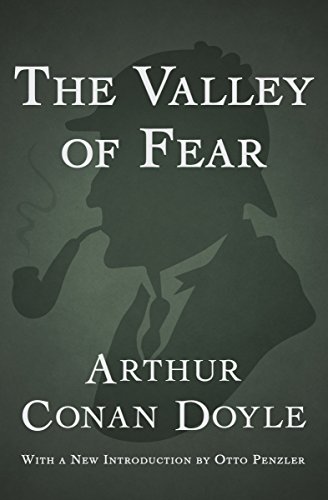
I don’t often add fictional books into my reading rotation, but when I do I want something excellent. I’ve always been fond of Sir Arthur Conan Doyle’s Sherlock Holmes stories, but The Valley of Fear is a cut above!
Doyle was a medical doctor. Probably because of my medical/science background, I’ve always found Dr. Doyle’s scientific observations through the eyes and brain of his first-rate detective to be quite intriguing. I also appreciate how Doyle gives his readers all of the same evidence that Sherlock Holmes observes so that the solution becomes an enlightening “Aha!” moment.
The Valley Of Fear had an added dimension to it. The main part of the crime is solved fairly early in the story, but then one of the characters hands Dr. Watson a written narrative that turns out to be the backdrop to the commission of the crime. Dr. Watson then spends almost all of the remainder of the book telling the story that was given to him. So the crime is committed, the crime is solved, and then we read an in-depth account of what led to the crime. Just as with all of Doyle’s stories, all of the clues are readily available in this narrative, which makes the “Aha!” culmination of this behind-the-scenes narrative all the more satisfying.
This book is a wonderful way to either start your Sherlock Holmes reading adventure or continue your enjoyment of these wonderfully-rich stories.
Tim Elmore’s books are always chockfull of the latest research and insights from multiple sources. Tim does an excellent job of synthesizing mountains of evidence to give parents and teachers actionable steps to help the students with whom they work. Here are just a few of the quotes he shared from other authors in his book Marching Off The Map.
“We all want to progress, but if you’re on the wrong road progress means doing an about-turn and walking back to the right road. In that case, the man who turns back the soonest is the one who is most progressive.” —C.S. Lewis
“Tell me a fact and I will learn. Tell me the truth and I will believe. Tell me a story, and it will live in my heart forever.” —Indian Proverb
“Start where people are before you try to take them where you want them to go.” —Jim Rohn
“Shooting above people’s heads doesn’t mean you have superior ammunition—it means you are a lousy shot.” —Oscar Handlin
“If you think our future will require better schools, you’re wrong. The future of education calls for entirely new learning environments. If you think we’ll need better teachers, you’re wrong. Tomorrow’s learners will need guides who take on fundamentally different roles.” —Dr. Wayne Hammond
“If we continue to develop our technology without wisdom or prudence, our servant may prove to be our executioner.” —Omar Bradley
“For the first time in human history, the majority of people in the developed world are being asked to make a living with their minds, rather than their muscles. For 3000 years, humankind had an economy based on farming: till the soil, plant the seed, harvest the crop. Hard to do, but fairly easy to learn. Then, for 300 years, we had an economy based on industry: mold the parts, turn the crank, assemble the product. Hard to do, but also fairly easy to learn. Now, we have an economy based on information: acquire the knowledge, apply the analytics, use your creativity. Hard to do, hard to learn, and even once you’ve mastered it, you’ll have to start learning all over again, pretty much every day.” —Michael Bloomberg
“He who has a why to live for can bear almost any how.” —Frederick Nietzsche
“Be the person you needed when you were young.” —Ayesha Saddiqi
Be sure to check out my review of Marching Off The Map by clicking here. You can also read some quotes and check out some infographics from Tim Elmore here, here, and here.
Max Lucado is a storyteller par excellent! His craft is on full display in the engaging short story The Christmas Candle.
Lucado takes us back to Victorian-era England, to the small village of Cotswolds. Nothing much seems to happen in this little village, except for a visit from an angel every 25 years to one specific family. The Haddington family have been candle-makers for as far back as anyone can remember. Every quarter-century, just before Christmas, an angel appears in the Haddington’s shop and points out one special candle. When this unique candle is given away by the Haddingtons to an individual, they can pray for a miracle and expect that God will answer that prayer.
Lucado’s story centers on a time when the angel should be appearing soon. But Mr. and Mrs. Haddington are older now, and worried that they don’t have an heir to which the candle-making trade can be passed on, the townspeople are in more desperate need than ever before, and the village’s new pastor is highly skeptical about the so-called “miracle qualities” of an ordinary looking candle. And all the while, the time of the angel’s appearing is getting closer and closer.
The message Lucado is able to drive home through this story is truly a God-given gift that will encourage your faith. Whether you read this book at Christmas time or not, you will be uplifted in your faith in God’s power to do the miraculous!
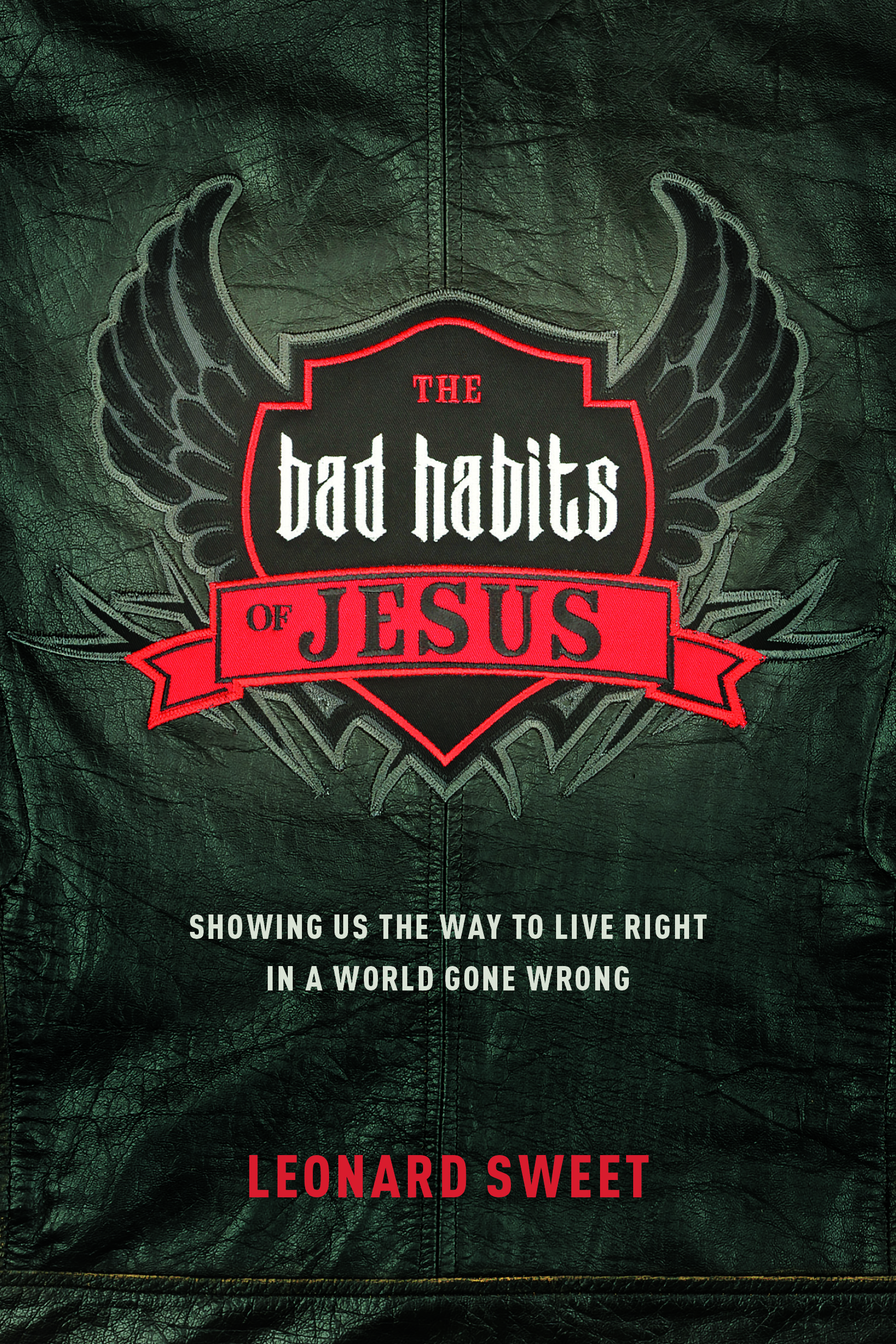
I know suggesting that Jesus might have some “bad habits” sounds a bit sacrilegious, but you’ve got to check out my review of Leonard Sweet’s thought-provoking book (which you can find by clicking here). I have already shared a few quotes from this book here, but there were just too many good ones for just one post!
“Jesus’ mysterious, open-ended, twisty endings [to His stories] were brilliantly conceived, and His lack of explanation was perfectly pitched. He wanted people not only to think about the story and to converse with each other about the story, but also to ask Him about the story. Ultimately, Jesus’ stories were about cultivating a relationship with Him. We call it discipleship.”
“The people Jesus was interested in the most, the ones Jesus celebrated the most, were those who asked questions like He did. … Jesus loves people who would not just listen to Him, but who would follow Him, learn from Him, and be in relationship with Him—and with God.”
“Why do we feel that to be good and faithful Christians, we must not look too happy, not enjoy ourselves too much, when throughout the Scriptures, God clearly loves a party?”
“For Christians, every day is a reminder of the Resurrection. Each and every day should be a grand celebration of God’s amazing gift of Jesus. Everything in life is filled with Resurrection moments. And every person is filled with Resurrection hope just waiting to be celebrated. The church above all should be a place of festivities and joy. People should look at the church and think, What joyful people!”
“The ‘Nice God’ of therapeutic culture leads one to expect that if I have a need, God needs to meet my need. This is Christianity as Niceianity. For Jesus, God is loving and merciful and true but not necessarily ‘nice.’ The holy God is dangerous, because the holy God is truth.”
“Traveling with Jesus is not always dignified, pretty, or easy. Jesus takes the common routes and dangerous pathways, seeks out the messy and the dirty and the difficult. But traveling with Jesus is also beautiful, for those who follow Jesus also bring God’s lost and dirty people home to God—to be renewed, to be cleansed, to be clothed, to be loved.”
“How often does our ‘religion’ get between us and God? Are we so filled up with religion and all its trappings that there isn’t room for the inpourings of God’s presence and the outpourings of God’s power?”
“Jesus is the way into a life of truth, not a way out of life’s problems, difficulties, failures, and missteps.”
“Jesus was inclusive, but while He accepted people as they were, He didn’t affirm them as they were; He transfigured them into the singular images of God they were created to be.”
More quotes from The Bad Habits Of Jesus coming soon. And you can also follow me on Twitter and Tumblr to read some great quotes each and every day.










 Craig T. Owens