This is a weekly series with things I’m reading and pondering from Oswald Chambers. You can read the original seed thought here, or type “Thursdays With Oswald” in the search box to read more entries.
Is Your Religion Rotten?
No man can redeem his own soul, or give himself a new heredity; that is the work of the sovereign grace of God. Man has nothing to do with Redemption, it is God’s “bit”; but God cannot give a man a good character, that is not God’s business, nor is it an inevitable thing. God will give us what we cannot give ourselves, a totally new heredity (see Luke 11:13). God will put the disposition of His Son, Holy Spirit, into any man who asks, then on that basis man has to work out a holy character. “Work out your own salvation with fear and trembling; for it is God which worketh in you….” [Philippians 2:12]
If your religion does not make you a better man, it is a rotten religion. The test of true religion is when it touches these four things—food, money, sex and mother earth. These things are the test of a right sane life with God, and the religion that ignores them or abuses them is not right. … A man needs to hold a right attitude to all these things by means of his personal relationship to God.
From Shade Of His Hand
God gives Christians a new heredity—a new way of looking at life through a relationship with Jesus Christ—by placing His Holy Spirit in us. That, as Chambers says, is God’s bit.
What we do with this new heredity—this new way of looking at life—is our bit.
So… how are you doing? Does your relationship with Jesus Christ help you handle food, money, sex and mother earth in God-honoring ways? Is the Holy Spirit able to correct your attitude so it aligns with the biblical viewpoint on these topics?
If you can answer “yes” to those questions, your religion is true. If not, Chambers says you have “a rotten religion.”
I know suggesting that Jesus might have some “bad habits” sounds a bit sacrilegious, but you’ve got to check out my review of Leonard Sweet’s thought-provoking book (which you can find by clicking here). I have already shared a few quotes from this book here, but there were just too many good ones for just one post!
“Jesus’ mysterious, open-ended, twisty endings [to His stories] were brilliantly conceived, and His lack of explanation was perfectly pitched. He wanted people not only to think about the story and to converse with each other about the story, but also to ask Him about the story. Ultimately, Jesus’ stories were about cultivating a relationship with Him. We call it discipleship.”
“The people Jesus was interested in the most, the ones Jesus celebrated the most, were those who asked questions like He did. … Jesus loves people who would not just listen to Him, but who would follow Him, learn from Him, and be in relationship with Him—and with God.”
“Why do we feel that to be good and faithful Christians, we must not look too happy, not enjoy ourselves too much, when throughout the Scriptures, God clearly loves a party?”
“For Christians, every day is a reminder of the Resurrection. Each and every day should be a grand celebration of God’s amazing gift of Jesus. Everything in life is filled with Resurrection moments. And every person is filled with Resurrection hope just waiting to be celebrated. The church above all should be a place of festivities and joy. People should look at the church and think, What joyful people!”
“The ‘Nice God’ of therapeutic culture leads one to expect that if I have a need, God needs to meet my need. This is Christianity as Niceianity. For Jesus, God is loving and merciful and true but not necessarily ‘nice.’ The holy God is dangerous, because the holy God is truth.”
“Traveling with Jesus is not always dignified, pretty, or easy. Jesus takes the common routes and dangerous pathways, seeks out the messy and the dirty and the difficult. But traveling with Jesus is also beautiful, for those who follow Jesus also bring God’s lost and dirty people home to God—to be renewed, to be cleansed, to be clothed, to be loved.”
“How often does our ‘religion’ get between us and God? Are we so filled up with religion and all its trappings that there isn’t room for the inpourings of God’s presence and the outpourings of God’s power?”
“Jesus is the way into a life of truth, not a way out of life’s problems, difficulties, failures, and missteps.”
“Jesus was inclusive, but while He accepted people as they were, He didn’t affirm them as they were; He transfigured them into the singular images of God they were created to be.”
More quotes from The Bad Habits Of Jesus coming soon. And you can also follow me on Twitter and Tumblr to read some great quotes each and every day.
Last week I asked you to imagine how your relationship grew with your best friend. You probably found that this special friendship was formed during hours andhours of talking.
I’m going to guess that at first your conversation was a little on the superficial side. You talked about “tame” topics like sports teams, or your job, or the city you lived in. But at some point you took a huge risk—you became vulnerable by sharing something really personal. Perhaps you shared a time that you got hurt, or something that makes you anxious, or maybe a big dream you carry around in your heart. But if that friend is still your friend, that means they treated what you shared reverently. They didn’t laugh at you, belittle your hurts or dreams, nor did they share with others what you said.
The relationships became deeper and more special because you now knew each other on a more intimate level.
Prayer is a conversation with a Friend. Of course, that Friend is God, so some people wonder, “What do I talk to God about?” The simple answer is anything and everything!
Time and time again God calls us to come closer to Him (see Isaiah 55:1-3), to discuss with Him things we don’t understand (Jeremiah 33:3), or to be assured that He is intimately tuned in to what’s happening in our life (Psalm 139:17; 1 Peter 3:12).
How do we get there? A good place to start is with our Bible. Dwight Moody said:
“The two first and essential means of grace are the Word of God and Prayer. … If we read the Word and do not pray, we may become puffed up with knowledge, without the love that buildeth up. If we pray without reading the Word, we shall be ignorant of the mind and will of God, and become mystical and fanatical, and liable to be blown about by every wind of doctrine.”
Scripture was written to point us to Jesus. So we don’t read the Bible just to read it; we read it to get to know God.
We don’t want to know the Word of God; we want to know the God of the Word.
A great place to start is in the book of the Psalms. Many of these were written as prayers, so it’s a good way to start our conversation with God. You can also search in the New Testament for all the places that biblical writers said, “I pray…” or “This is my prayer….”
I share a personal example of this in this video, especially if you want to fast forward to the 36:00 minute mark.
Don’t just read through the Bible this week—pray through the Bible. Use it as a means to have a conversation with the very Best Friend you could ever know!
I encourage you this week, as you think about this topic, to get together with an earthly friend and discuss these questions:
How can I use my Bible as a “conversation starter” with God?
How can I get into the regular practice of talking to God as a Friend?
Have you ever been stumped by someone’s argument against Christianity or the Bible? Has anyone ever made fun of you because the Bible sounds like a fairy tale? Over 100 years ago Oswald Chambers described how our post-Christian world was beginning to treat Christianity and the Bible on which it’s based—
“We have made ambition and competition the very essence of civilized life. No wonder there is no room for Jesus Christ, and no room for the Bible. We are all so scientifically orthodox nowadays, so materialistic and certain that rationalism is the basis of things, that we make the Bible out to be the most revolutionary, unorthodox and heretical of books.”
It’s that “rationalism” that we need to address. We need to ask scoffers and seekers alike, “What makes you so sure of your beliefs? How did you come to that conclusion?”
Every human being exercises some sort of faith—that the chair will hold them when they sit down, that their spouse will honor their marriage vows, and that their worldview is correct. We need to explore what kind of faith they (and we) have:
Unreasonable faith—believing in something in spite of the evidence.
Blind faith—believing in something without any evidence.
Reasonable faith—believing in something because of the evidence.
I want to show evidence that makes it reasonable to believe in the Bible.
Empirical evidence—
The bibliographical test: determining whether the text of the historical record has been transmitted accurately.
Josh McDowell states, “No other work in all literature has been so carefully and accurately copied as the Old Testament.” He can make this claim because the profession of “scribe” was one of the most professional and exacting of all professions. The rigorous standards employed to prove the accuracy of a copy of a biblical manuscript was higher than for any other literature.
Most of our modern-day Bibles are based on a 1000-year-old manuscript. But after the Dead Sea scrolls were discovered, we found biblical manuscripts going back to 250 B.C. that confirmed the accuracy of the manuscripts we already had. This led Dr. Peter Flint to conclude: “The biblical Dead Sea Scrolls are up to 1,250 years older than the traditional Hebrew Bible, the Masoretic text. We have been using a one-thousand-year-old manuscript to make our Bibles. We’ve now got scrolls going back to 250 BC. … Our conclusion is simply this—the scrolls confirm the accuracy of the biblical text by 99 percent.”
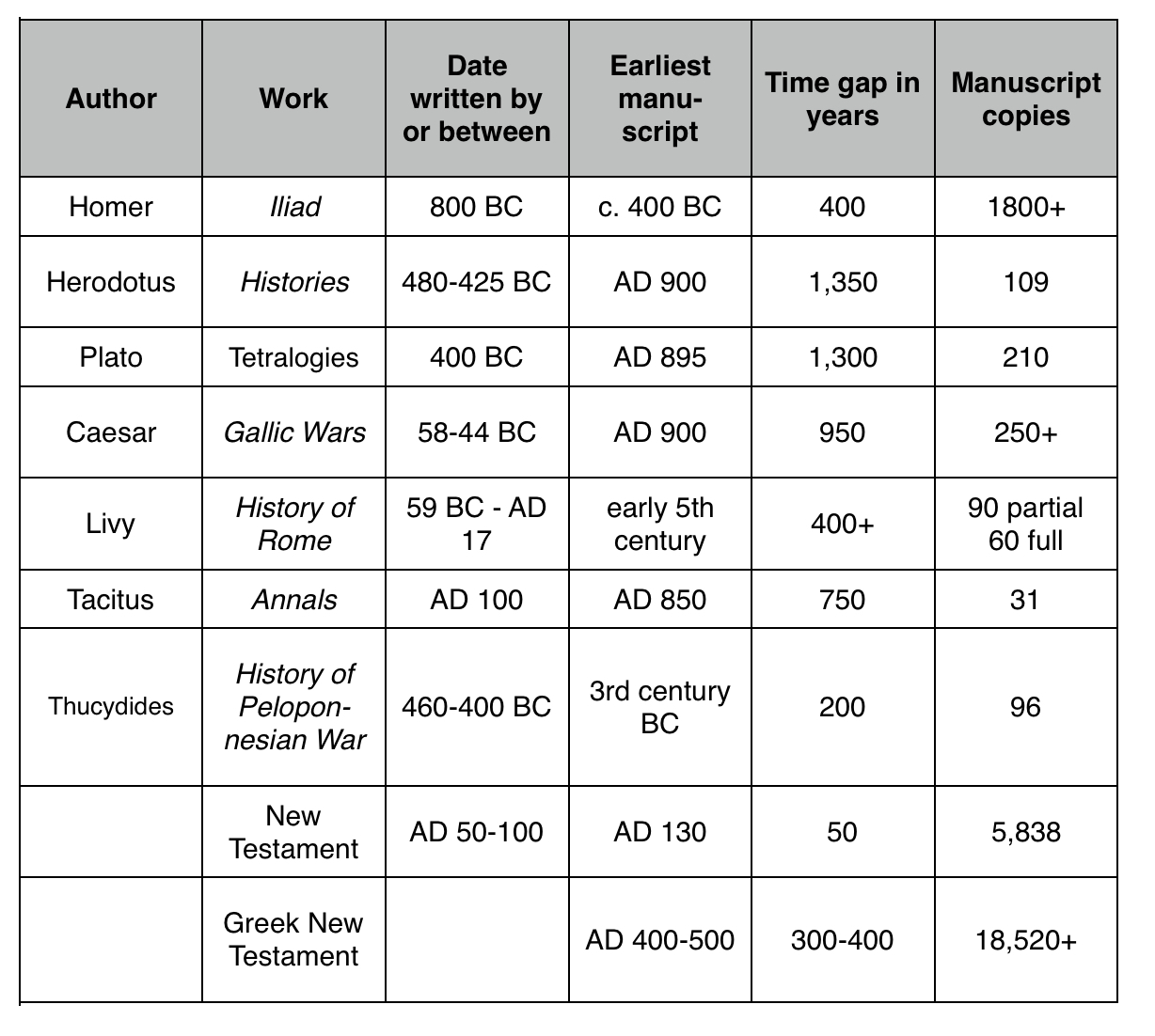
Then regarding the New Testament, Josh McDowell says, “I believe there is more evidence for the reliability of the New Testament than for any other ten pieces of classical literature put together.” Check out this chart reproduced from McDowell’s book God-Breathed to see by comparison to other literature, how close in dating the earliest biblical manuscripts are, and how many of those manuscripts have been discovered!
2. The external evidence test: determining whether the historical record has been verified or affirmed by data outside of itself.
Over one-fourth of the Bible is prophetic, and two-thirds of its prophesies have already been fulfilled. For example, 700 years before His birth, the city in which Jesus was to be born was identified by a man named Micah.
Time and time again archeologists discover articles that verify the claims in the Bible. This led archeologist Nelson Glueck to conclude, “It may be stated categorically that no archeological discovery has ever controverted a single biblical reference. Scores of archeological findings have been made which confirm in clear outline or in exact detail historical statements in the Bible.”
3. The internal evidence test: determining how of the historical record stands up to the test of internal validity.
The Bible was written by 45 different authors, over a span of 1500 years, on 3 different continents, and in 3 different languages. Yet there are no contradictions!
Anecdotal evidence—
Changed lives. My life is one that has been amazingly impacted by the God of the Bible, as was a man named Saul, who had a total about-face after encountering Jesus. As a result, Christianity was spread far and fast through his writings and world travels.
2. Changed societies. Wherever the Christian faith of the Bible has been put into practice, societies improve. Leonard Sweet notes—
“Before Christianity, there were cults that practiced all sorts of human sacrifice as well as self-mutilation and self-castration. Before Christianity, the weak were despised, the poor maligned, the handicapped abandoned. Before Christianity, infanticide was rampant, slavery run-of-the-mill, and gladiatorial combat a form of entertainment. In Jesus’ day, Corinth was famous for its temple prostitutes, continuing a long-standing tradition symbolized by the Corinthian athlete Xenophon.… Aristotle…not only condoned institutionalized slavery but provided an elaborate argument in favor of it. As if that weren’t enough, Aristotle called man ‘begotten’ and woman ‘misbegotten,’ and because a woman’s reasoning was ‘without authority’ accepted no female students.
“Only Jesus and His followers known as the church insisted on the concept of human dignity and the value of every human soul. Only the church built hospitals and took care of the abandoned and disabled. Only the church celebrated charity and selflessness as the highest virtue and elevated the status of women.”
Is all of this “proof positive” that the Bible is God’s Word? No, it’s not. But I think the evidence is compelling enough that it is certainly reasonable to reach this conclusion.
Here are some great application questions from this lesson:
Other than because it says so in the Bible, how do I know that it is God’s Word?
Sometimes I am concerned that even those who know the story of the Incarnation of Jesus miss out on the stunningly powerful miracle that took place in Bethlehem. Instead of being awed by the majesty of Christ’s First Advent, we merely give lip service to His birth. John Piper’s book The Dawning Of Indestructible Joy will give you a fresh perspective of the miracle of Christ’s birth and all that it means.
The Dawning Of Indestructible Joy is written in 25 chapters, building an exciting countdown from December 1 until Christmas morning. Each day John Piper will awaken your heart and mind again to the unimaginable gifts that Jesus Christ made available to us through His incarnation. Gifts such as freedom from sin, intimacy with God, eternal life, and soul-lifting joy.
Each chapter is short enough to serve as an ideal family reading time, perhaps each evening around the dinner table in December. The Scripture passage for each day is short enough, too, for everyone to memorize so that they are prepared to share with anyone else the joy that comes with the miracle of the Advent.
Make this book a part of your family Christmas tradition.
“I call you by name and lead you. I know you—I know every detail about you. You are never a number or statistic to Me; My involvement in your life is far more personal and intimate than you can comprehend. So follow Me with a glad heart. After My resurrection, when Mary Magdalene mistook Me for the gardener, I spoke one word: ‘Mary.’ Hearing Me say her name, she recognized Me and cried out in Aramaic, ‘Rabboni!’ (which means teacher). Beloved, I also speak your name in the depths of your spirit.When you read your Bible, try inserting your name into appropriate passages. … Take time to ‘hear’ Me speaking to you personally in Scripture, reassuring you of My love.” —Jesus (in Sarah Young’s book Jesus Always)
Do you ever feel like you need to hear a personal word from Jesus? If you do, Jesus Always by Sarah Young can give you a daily dose of personal messages.
The whole Bible is God lovingly speaking to us, but sometimes we miss that it is His personal word to us. Sarah Young has done a beautiful job in weaving together Scriptural promises, and then having them speak to us in the first-person voice of Jesus. Somehow hearing the words of The Word spoken in a format that sounds so personal made it much easier for me to apply to my life.
Each day’s message contains the encouraging or challenging word in Christ’s voice, with direct quotations from the Bible italicized. Then at the bottom of the page are listed the references in the Bible, so you can read the entire biblical passage.
I have found so many days that Christ’s word to me was just what I needed to hear, or just what I needed to pass along to a friend who was struggling. I think Jesus Always will be an excellent addition to anyone’s library.
Horatius Bonar always gives lots of thought-provoking content in his commentaries, and his commentary on the Book of Revelation is no exception. Here are a few more quotes for you.
“What man needs, then, is Jesus; not mere knowledge or wisdom. What humanity—unconsciously and ignorantly, it may be—sighs for, is Jesus. What earth, ruined and accursed because of sin, groans for, is Jesus—nothing less than this. No other prophet or priest or king can meet the exigencies of the race and its dwelling, the earth, but Jesus only.”
“What is your hope? What is judgment to do for you? What is resurrection to bring? Look at the following alternatives, and ask which is to be yours: Everlasting gladness, or everlasting sorrow? Everlasting glory; or everlasting shame? Everlasting songs, or everlasting wailing? The marriage supper of the Lamb, or the perpetual banishment from all that is good and holy? The new heavens and earth, or the eternal wilderness, with its parched and burning wastes? The heavenly Jerusalem, with the Lamb as its light, or the blackness of darkness? The fruit of the tree of life and the waters of the celestial river, or the eternal hunger and the unquenchable thirst? (Luke 16:24). The first resurrection, or the second death? These are the alternatives before you; and there is no middle room.”
“The first book of Scripture and the last fit well into each other; the first two chapters of Genesis and the last two of Revelation fit together like the two halves of a golden clasp set in gems. Enclosed between the two is the history of six thousand years. And what a history! What a beginning, and what an ending! It began with the new, and it ended with the new—the strange checkered ‘old’ lying mysteriously between. ‘In the beginning God created the heavens and the earth.’ ‘I saw new heavens and a new earth.’”
“Such is the love of God. It is the love of Father, Son, and Holy Ghost. The Father chooses in His own sovereignty; the Son washes in His own blood; the Spirit purifies and prepares by His mighty power. Behold, what manner of love the Father hath bestowed on us! It is free love; sovereign love; eternal love; unchanging love; boundless love; love which not merely delivers from wrath, but which makes the delivered one an heir of God, nay, the bride, the Lamb’s wife.”
“Our title to all this surpassing and eternal glory is simply the blood of the Lamb. He has bought it for His Church; and it is hers forever. The nightless day, the unsetting sun, the incorruptible life, the undefiled inheritance, the new name, the heavenly city, the everlasting kingdom— all are hers; hers through ‘the blood of the everlasting covenant.’ She is to walk worthy of it here—worthy of such a crown, such a heritage, such a city, such a Bridegroom, such a joy. ‘Be holy;’ ‘be perfect;’ ‘walk worthy of the Lord.’”
“Christian parents! For which of the two worlds are you training your children? For this world, or that which is to come? Be assured that the same training will not do for both.”
If you haven’t checked out my review of Light & Truth—Revelation, please click here. You can also read the first set of quotes I shared from this book by clicking here.
I love looking at the Scripture through wiser eyes. I have just completed my journey through the New Testament with Horatius Bonar pointing out things I may have otherwise missed. The fourth in his series of commentaries on the New Testament is Light And Truth—Revelation.
In reviewing the first three books in this series, I mentioned that Bonar seldom presents a verse-by-verse commentary on the Scriptures, but more of an overall theme on select passages. In Revelation he departs from this pattern. Frequently there are extensive passages which he dissects word-by-word, going deep into the implication for Christians. This was unexpected, but greatly welcomed.
Since the Bible is inspired by the Holy Spirit, He is the best source of illumination when reading Scripture. But Horatius Bonar is clearly a man immersed in the overall message of the Bible, and guided by the Holy Spirit in his writings. This is an excellent set of commentaries to enhance your study of the New Testament.
Be sure to check out my reviews of Horatius Bonar’s other Light And Truth commentaries on the New Testament:
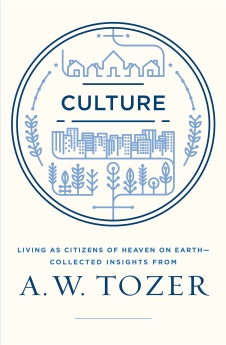
A.W. Tozer wrote almost 50 years ago, but his words to the church still ring true today. Check out my review of Culture, and then enjoy some additional quotes from this book.
“To preserve life the physician and the druggist use words of fixed meaning common to both. How much more should the pulpit and the pew have a clear understanding about the words of eternal life. The modern effort to popularize the Christian faith has been extremely damaging to that faith. The purpose has been to simplify truth for the masses by using the language of the masses instead of the language of the church. It has not succeeded, but has added to rather than diminished religious confusion.”
“The hope of the church yet lies in the purity of her theology, that is, her beliefs about God and man and the relation to each other. These beliefs have been revealed to her by the inspiration of the Holy Spirit in the sacred Scriptures. Everything there is clear-cut and accurate. We dare not be less than accurate in our treatment of anything so precious.”
“I think we make two mistakes in our attitude toward our Christian leaders, one is not being sufficiently grateful to them and the other in following them too slavishly.”
“Today we evangelicals are showing signs that we are becoming too rich and too prominent for our own good. With a curious disregard for the lessons of history we are busy fighting for recognition by the world and acceptance by society.”
“That terrible zone of confusion so evident in the whole life of the Christian community could be cleared up in one day if the followers of Christ would begin to follow Christ instead of each other.”
“The difficulty we modern Christians face is not misunderstanding the Bible, but persuading our untamed hearts to accept its plain instructions.”
“Our churches these days are filled (or one-quarter filled) with a soft breed of Christian that must be fed on a diet of harmless fun to keep them interested. About theology they know little. Scarcely any of them have read even one of the great Christian classics, but most of them are familiar with religious fiction and spine-tingling films. No wonder their moral and spiritual constitution is so frail.”
“To accept the call of Christ changes the returning sinner indeed, but it does not change the world. The wind still blows toward hell, and the man who is walking in the opposite direction will have the wind in his face. And we had better take this into account when we ponder on spiritual things.”
“Christianity’s scramble for popularity today is an unconscious acknowledgment of spiritual decline.”
“The desire to stand well with our fellow man is a natural one, and quite harmless up to a point, but when that desire becomes so all-consuming that we cannot be happy apart from the praises of man, it is no longer harmless, it is sinful in itself and injurious in its effects.”
“A Christian’s standing before God does not depend upon his standing before men. A high reputation does not make a man dearer to God, nor does the tongue of the slanderer influence God’s attitude toward His people in anyway.”
To read some additional quotes I shared from Culture, click here. You may also follow me on Twitter and Tumblr to read quotes which I share daily from Tozer and other notable thinkers.



 This is a weekly series with things I’m reading and pondering from Oswald Chambers. You can read the original seed thought here, or type “Thursdays With Oswald” in the search box to read more entries.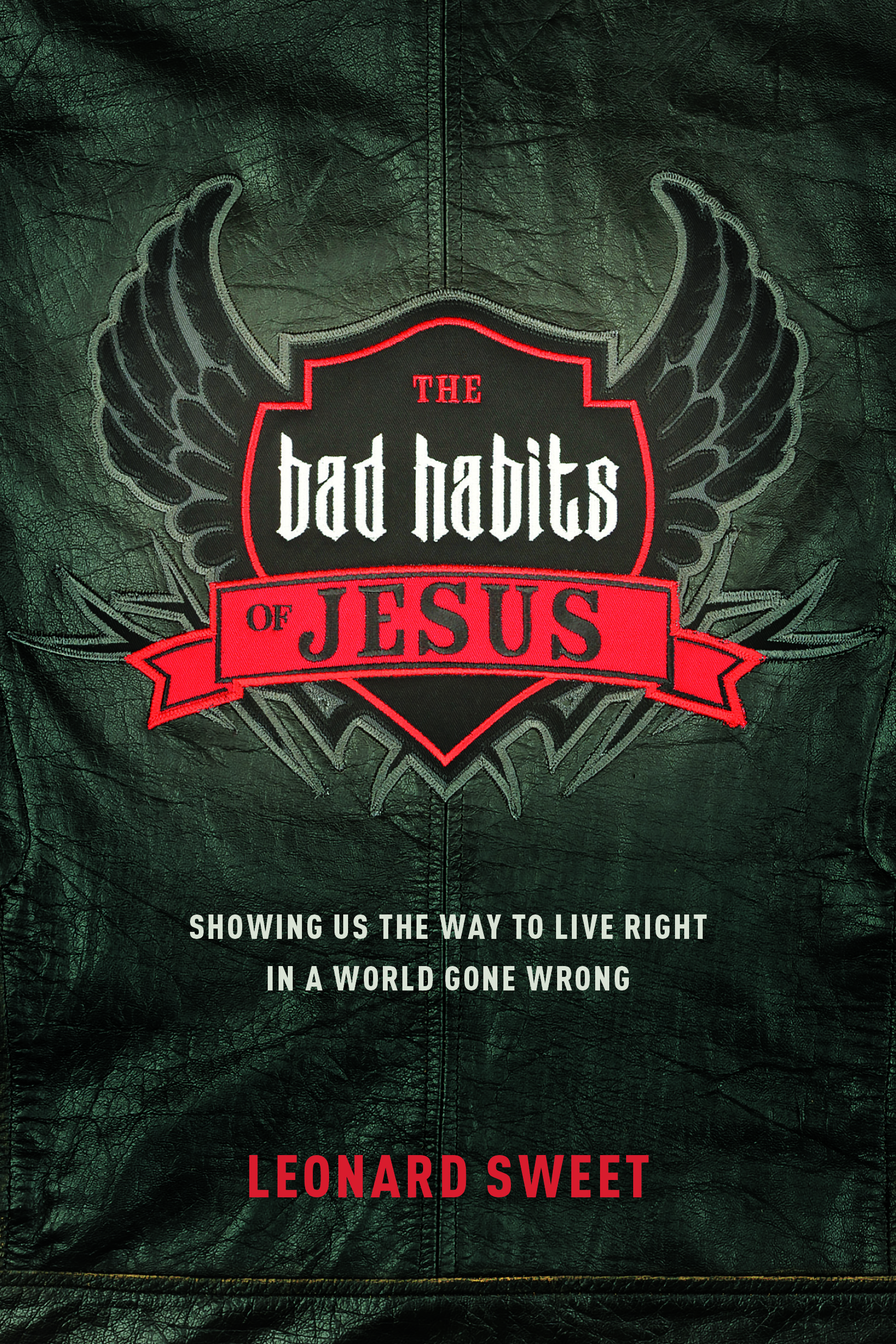




 Craig T. Owens
6 More Quotes From “Light & Truth—Revelation”
October 27, 2016 — Craig T. Owens“What man needs, then, is Jesus; not mere knowledge or wisdom. What humanity—unconsciously and ignorantly, it may be—sighs for, is Jesus. What earth, ruined and accursed because of sin, groans for, is Jesus—nothing less than this. No other prophet or priest or king can meet the exigencies of the race and its dwelling, the earth, but Jesus only.”
“What is your hope? What is judgment to do for you? What is resurrection to bring? Look at the following alternatives, and ask which is to be yours: Everlasting gladness, or everlasting sorrow? Everlasting glory; or everlasting shame? Everlasting songs, or everlasting wailing? The marriage supper of the Lamb, or the perpetual banishment from all that is good and holy? The new heavens and earth, or the eternal wilderness, with its parched and burning wastes? The heavenly Jerusalem, with the Lamb as its light, or the blackness of darkness? The fruit of the tree of life and the waters of the celestial river, or the eternal hunger and the unquenchable thirst? (Luke 16:24). The first resurrection, or the second death? These are the alternatives before you; and there is no middle room.”
“The first book of Scripture and the last fit well into each other; the first two chapters of Genesis and the last two of Revelation fit together like the two halves of a golden clasp set in gems. Enclosed between the two is the history of six thousand years. And what a history! What a beginning, and what an ending! It began with the new, and it ended with the new—the strange checkered ‘old’ lying mysteriously between. ‘In the beginning God created the heavens and the earth.’ ‘I saw new heavens and a new earth.’”
“Such is the love of God. It is the love of Father, Son, and Holy Ghost. The Father chooses in His own sovereignty; the Son washes in His own blood; the Spirit purifies and prepares by His mighty power. Behold, what manner of love the Father hath bestowed on us! It is free love; sovereign love; eternal love; unchanging love; boundless love; love which not merely delivers from wrath, but which makes the delivered one an heir of God, nay, the bride, the Lamb’s wife.”
“Our title to all this surpassing and eternal glory is simply the blood of the Lamb. He has bought it for His Church; and it is hers forever. The nightless day, the unsetting sun, the incorruptible life, the undefiled inheritance, the new name, the heavenly city, the everlasting kingdom— all are hers; hers through ‘the blood of the everlasting covenant.’ She is to walk worthy of it here—worthy of such a crown, such a heritage, such a city, such a Bridegroom, such a joy. ‘Be holy;’ ‘be perfect;’ ‘walk worthy of the Lord.’”
“Christian parents! For which of the two worlds are you training your children? For this world, or that which is to come? Be assured that the same training will not do for both.”
If you haven’t checked out my review of Light & Truth—Revelation, please click here. You can also read the first set of quotes I shared from this book by clicking here.
Share this: